YubNub Social YubNub Social
    #astronomy #pandemic #death #vaccination #biology #terrorism #trafficsafety #crime #astrophysics #assaultcar #carviolence #stopcars #nasa #mortality #notonemore
    Advanced Search
  • Login
  • Register

  • Night mode
  • © 2026 YubNub Social
    About • Directory • Contact Us • Developers • Privacy Policy • Terms of Use • shareasale • FB Webview Detected • Android • Apple iOS • Get Our App

    Select Language

  • English
Night mode toggle
Community
New Posts (Home) ChatBox Popular Posts Reels Game Zone Top PodCasts
Explore
Explore
© 2026 YubNub Social
  • English
About • Directory • Contact Us • Developers • Privacy Policy • Terms of Use • shareasale • FB Webview Detected • Android • Apple iOS • Get Our App
Advertisement
Stop Seeing These Ads

Discover posts

Posts

Users

Pages

Blog

Market

Events

Games

Forum

Classic Rock Lovers
Classic Rock Lovers  
2 yrs

Who wrote Blondie’s hit song ‘Hanging on the Telephone’?
Favicon 
faroutmagazine.co.uk

Who wrote Blondie’s hit song ‘Hanging on the Telephone’?

He was just a phone call away. The post Who wrote Blondie’s hit song ‘Hanging on the Telephone’? first appeared on Far Out Magazine.
Like
Comment
Share
Conservative Voices
Conservative Voices
2 yrs

An Armed 20-Year-Old Got Within Range of Trump. How Did That Happen?
Favicon 
spectator.org

An Armed 20-Year-Old Got Within Range of Trump. How Did That Happen?

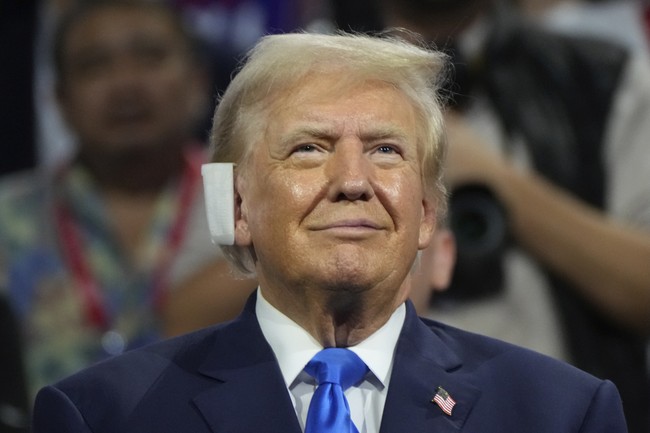
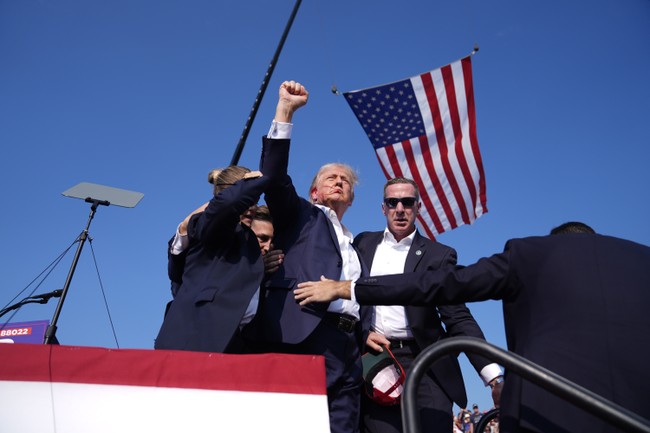
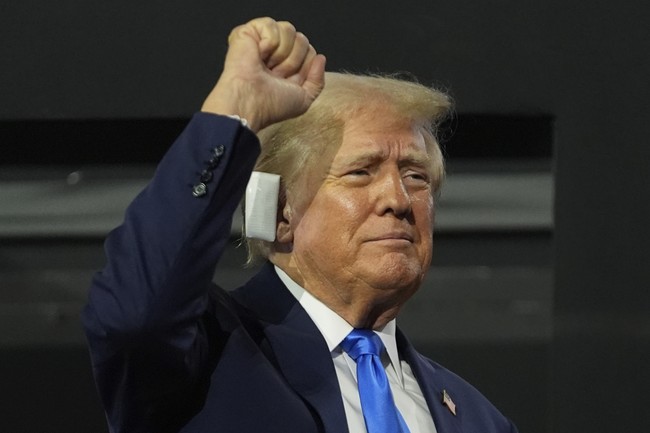
MILWAUKEE — Tuesday was “Make America Safe Once Again” night at the Republican National Convention — some 72 hours after Donald Trump was shot in the ear by a would-be assassin as the former president spoke at a rally in Pennsylvania. Corey Comperatore, a 50-year-old volunteer firefighter from Pennsylvania, died protecting his family. Pennsylvanians David Dutch, 57, and James Copenhaver, 74, were seriously wounded. Americans are divided as to how this could have happened and what can be done. Here at the RNC, people wonder how an armed 20-year-old was able to install himself within shooting range of Trump, despite Secret Service protection. “I look at this a little more as failing of Secret Service,” Scott Davis, a doctor from Fort Wayne, Indiana, told me. “How on earth did a guy get in there?” “I would certainly not have guns unlocked in the house,” Davis added. The people with whom I talked do not blame a lack of gun laws. Texas delegate Stacey Schieffelin sees “a mental illness problem in this country.” She wants to see more support and compassion for those in need. And she made sure her daughters were trained in firearm safety. That’s not how President Joe Biden’s administration sees the problem. Secret Service head Kimberly Cheatle told ABC News, “That building in particular has a sloped roof at its highest point. And so, you know, there’s a safety factor that would be considered there that we wouldn’t want to put somebody up on a sloped roof.” During Monday’s White House press briefing, Secretary of Homeland Security Alejandro Mayorkas nonetheless offered, “I have 100 percent confidence in the director of the United States — States Secret Service. I have 100 percent confidence in the United States Secret Service.” The mind boggles. It was only after this failed attempt to kill a former president that Biden ordered Secret Service protection for independent presidential hopeful Robert F. Kennedy Jr., whose father and uncle were killed by assassins. Such political decision making does no service to agents who risk their lives to protect this country. White House Press Secretary Karine Jean-Pierre referred to gun violence as an epidemic, as she referred to the awful fact that firearms were the No. 1 cause of child deaths in America. But really, that is a topic for another day. This weekend, a former president was shot. I understand why Mayorkas wants to let an investigation run its course. But 100 percent confidence? That doesn’t make sense. And really, I can’t help but think of Trump’s lament about Biden during the June 27 presidential debate: “He doesn’t fire people. He never fired people.” Contact Review-Journal Washington columnist Debra J. Saunders at dsaunders@reviewjournal.com. Follow @debrajsaunders on X. COPYRIGHT 2024 CREATORS.COM The post An Armed 20-Year-Old Got Within Range of Trump. How Did That Happen? appeared first on The American Spectator | USA News and Politics.
Like
Comment
Share
Conservative Voices
Conservative Voices
2 yrs

How to Pay for Trump’s Tax Cuts
Favicon 
spectator.org

How to Pay for Trump’s Tax Cuts

While the GOP may not speak as loudly about our fiscal situation as it once did, this week’s Republican convention offers a good chance to do so — and to offer something positive. The situation is indeed dire. The national debt has reached staggering levels, and the next president will inherit a ticking time bomb of fiscal deadlines that could significantly worsen the burden. The potential expiration of the previous (and popular) Trump tax cuts is one such fiscal cliff. However, it also represents an opportunity: Pay to extend Trump’s cuts by cleaning out the tax code of unfair, costly tax breaks that aren’t shared by enough Americans. Congress passed the Tax Cuts and Jobs Act in December 2017. By the end of 2025, roughly all the individual tax cuts and two important business provisions will expire. While deciding which provisions to extend, legislators must take two things into consideration: the impact on economic growth and on the deficit. Considering that there seems to be general bipartisan agreement on keeping a majority of the tax cuts and maintaining growth, let’s focus on the deficit question. I firmly believe that any new costs or extensions of current policies must be paid for. We simply cannot afford to keep adding to our debt without considering the long-term consequences. A sensible place to start is by examining the myriad tax expenditures that have turned our tax code into Swiss cheese. According to the Treasury Department, there are 165 tax expenditures (think revenue losses due to tax carveouts), which is up from 53 in 1970. We should start by eliminating the ones that distort economic decision-making. The goal is a neutral tax system that doesn’t favor certain activities or industries over others. That’s one reason tax expenditures aimed at social engineering should be on the chopping block. Tax expenditures that add complexity to the tax code should be prime candidates for elimination too. Simpler tax systems reduce compliance costs and are more transparent. Based on these criteria, one prime candidate for termination is the mortgage interest deduction. It’s expensive, favors relatively wealthy people, distorts the housing market, and promotes housing debt more than true homeownership. Another is the state and local tax deduction, which primarily benefits high-income earners and high-tax states. Tax-free municipal bonds should be terminated once and for all. These also disproportionately benefit high-income individuals and can lead to overinvestment and debt in municipal projects. We should also end tax exemptions on employee compensation that is not considered wages. Hear me out. In a recent study on extending some of the Trump tax cuts without additional debt, the Cato Institute’s Adam Michel explained that “employers often provide compensation in the form of health insurance, meals, parking, transportation benefits, education assistance, and child care. Not taxing these employment benefits as wage income creates an incentive to compensate employees with tax-free fringe benefits, and the tax advantage is primarily used by higher-income workers who tend to have access to more comprehensive employment arrangements.” He adds that “taxing these benefits as wage income would increase income tax revenue by $447 billion a year.” The exclusion of employer-provided health insurance is the most expensive and distortive of the tax expenditures, and one of the main reasons why the health care market is such a mess. Business subsidies are also ripe for cuts. Michel calculated that “tax credits for the energy sector reduce revenue by $119 billion a year.” They should be terminated. They distort energy markets and often benefit large corporations more than the environment. Of course, the other $133 billion in annual business subsidies should be on the chopping block. Michel suggests that “place-based tax incentives for economic development or investment in targeted locations have 40 years of research showing they fail to meaningfully increase employment, raise wages, or advance general economic opportunity.” On that note, we should repeal the state and local tax deduction for corporations. This doesn’t mean every tax expenditure should end. The preferential treatment of capital gains is one of them. Since corporate profits are already taxed, taxing capital gains at full rates can be seen as a form of double taxation and a disincentive to invest in corporate investment returns that help spur growth, innovation and hiring. Addressing these issues won’t be politically easy, as each tax expenditure has its defenders. However, the magnitude of our fiscal challenges demands bold action, especially if we are rightfully going to extend most of the Trump tax cuts and engage in further reform. Veronique de Rugy is the George Gibbs Chair in Political Economy and a senior research fellow at the Mercatus Center at George Mason University. To find out more about Veronique de Rugy and read features by other Creators Syndicate writers and cartoonists, visit the Creators Syndicate webpage at www.creators.com. COPYRIGHT 2024 CREATORS.COM The post How to Pay for Trump’s Tax Cuts appeared first on The American Spectator | USA News and Politics.

Like
Comment
Share
Conservative Voices
Conservative Voices
2 yrs

The Immaculate Protection From the Shot That Reelected Trump
Favicon 
townhall.com

The Immaculate Protection From the Shot That Reelected Trump

The Immaculate Protection From the Shot That Reelected Trump
Like
Comment
Share
Conservative Voices
Conservative Voices
2 yrs

Providence and America
Favicon 
townhall.com

Providence and America

Providence and America
Like
Comment
Share
Conservative Voices
Conservative Voices
2 yrs

An Assassin’s Bullets and a Matter (Or Question) of Faith
Favicon 
townhall.com

An Assassin’s Bullets and a Matter (Or Question) of Faith

An Assassin’s Bullets and a Matter (Or Question) of Faith
Like
Comment
Share
Conservative Voices
Conservative Voices
2 yrs

What We Must Do Now to Help Trump Stay Alive Until November
Favicon 
townhall.com

What We Must Do Now to Help Trump Stay Alive Until November

What We Must Do Now to Help Trump Stay Alive Until November
Like
Comment
Share
Conservative Voices
Conservative Voices
2 yrs

What Trump Should Say Thursday Night
Favicon 
townhall.com

What Trump Should Say Thursday Night

What Trump Should Say Thursday Night
Like
Comment
Share
Conservative Voices
Conservative Voices
2 yrs

It Really Isn't About Biden vs. Trump
Favicon 
townhall.com

It Really Isn't About Biden vs. Trump

It Really Isn't About Biden vs. Trump
Like
Comment
Share
Conservative Voices
Conservative Voices
2 yrs

God Is Back in the Public Square
Favicon 
townhall.com

God Is Back in the Public Square

God Is Back in the Public Square
Like
Comment
Share
Showing 72308 out of 106937
  • 72304
  • 72305
  • 72306
  • 72307
  • 72308
  • 72309
  • 72310
  • 72311
  • 72312
  • 72313
  • 72314
  • 72315
  • 72316
  • 72317
  • 72318
  • 72319
  • 72320
  • 72321
  • 72322
  • 72323
Advertisement
Stop Seeing These Ads

Edit Offer

Add tier


Select an image
Delete your tier
Are you sure you want to delete this tier?

Reviews

In order to sell your content and posts, start by creating a few packages. Monetization

Pay By Wallet

Payment Alert

You are about to purchase the items, do you want to proceed?

Request a Refund