YubNub Social YubNub Social
    #astronomy #pandemic #death #vaccination #biology #terrorism #trafficsafety #crime #astrophysics #assaultcar #carviolence #stopcars #nasa #mortality #notonemore
    Advanced Search
  • Login
  • Register

  • Night mode
  • © 2026 YubNub Social
    About • Directory • Contact Us • Developers • Privacy Policy • Terms of Use • shareasale • FB Webview Detected • Android • Apple iOS • Get Our App

    Select Language

  • English
Night mode toggle
Community
New Posts (Home) ChatBox Popular Posts Reels Game Zone Top PodCasts
Explore
Explore
© 2026 YubNub Social
  • English
About • Directory • Contact Us • Developers • Privacy Policy • Terms of Use • shareasale • FB Webview Detected • Android • Apple iOS • Get Our App
Advertisement
Stop Seeing These Ads

Discover posts

Posts

Users

Pages

Blog

Market

Events

Games

Forum

Conservative Voices
Conservative Voices
2 yrs

The Teamsters’ RNC Speech Represents the GOP’s Past—and Its Future
Favicon 
www.theamericanconservative.com

The Teamsters’ RNC Speech Represents the GOP’s Past—and Its Future

Politics The Teamsters’ RNC Speech Represents the GOP’s Past—and Its Future The plight of American truckers is an opportunity for the new working-class Republican coalition. Credit: ANDREW CABALLERO-REYNOLDS/AFP via Getty Images After a weekend when the world was shaken by the attempted assassination of the former (and perhaps soon to be re-elected) President Donald Trump, yet another historical event took place at the Republican National Convention in Milwaukee on Monday evening, where Trump—bandaged and having shown the world what kind of guts he has in the face of this attempt on his life—was himself a smiling witness.  For the first time ever, the leader of the International Brotherhood of Teamsters, Sean O’Brien, was invited to address the RNC. This has caused some consternation on the part of the commentariat, left and right, whom O’Brien himself invoked on stage as a reason to accept Trump’s invitation to speak.Though we often associate organized labor with the Democrats, it wasn’t always thus. The Teamsters, at one time, were the most powerful labor union in America; at the height of their power, under the leadership of Jimmy Hoffa, they supported the Republican Party, at least all the way back to 1960 in the run between Richard Nixon and JFK. This is, perhaps, an explanation of why the Kennedy clan spent years dragging Hoffa into court, and also of Nixon’s pardon of Hoffa in 1971 after a five-year stretch in prison.Hoffa, having grown up in a single-parent home after his father’s death and working full time from the age of 14, was an outsider in the labor movement; he was not an ideologue, and rejected the relationships with communism and socialism that leaders of other major unions were engaged in.1960 and 2024, however, are many worlds apart, and O’Brien rules over a much smaller kingdom. The Teamsters only represent approximately 5 percent of truckers in America, and it has been 44 years since the party of labor, under Jimmy Carter, passed the Motor Carrier Act of 1980, the consequences of which have devastated membership in the Teamsters and led to a severe reduction in truckers’ wages over the last four decades.Trucking has a lot of problems, and O’Brien is to be commended for appearing in Milwaukee, and particularly for one of his comments: “I will always speak for America and the American Worker, both union, and non union.”I have been a non-union trucker for 27 years of my adult life, across 4 different countries, including the United States, where I have put miles down in every one of the lower 48. I have some suggestions for the incoming administration—it is seems obvious now that the Dems are done—and hopefully O’Brien would agree with me about the import of the problems my suggestions seek to address. O’Brien repeatedly invokes the “American Worker”; does Mr. O’Brien understand that immigrant groups are constantly abused in the trucking industry, often by their homeboys who are already here? Does he understand that Eastern European gangsters are actively operating in the freight brokerage market, and are now holding American companies at ransom to have their loads delivered? Should America’s trucking industry be used as an ATM for those in other countries to extract value, and thus reduce the share of the pie for American workers, while illegally holding loads of valuable product hostage? O’Brien is a smart guy, and though he barely mentioned immigration or the influx of illegal migrants into the American labor market, surely he understands what is going on here. I quote his speech once again: “Never forget, American workers own this nation. We are not renters. We are not tenants. But the corporate elite treat us like squatters, and that is a crime we’ve got to fix.” I couldn’t agree more, and I hope that O’Brien works closely with President Trump and Vice President Vance to put an end to the use of foreign indentured servants on the roads in America, who not only undercut Americans wages, but also put the rest of the motoring public at great risk. The Teamsters, God bless ‘em, have, like myself, been at odds with corporate lobby groups like the American Trucking Association, who have for many decades now propagated a myth of a truck driver shortage, which has mostly been used to convince politicians that soaking the taxpayer for their truck driving schools is a solution to a retention problem that often sees large trucking firms go through nearly 100 percent of their employees annually. The Republican Party, however, has a long history of listening to such groups as the ATA, rather than truckers themselves, and being more than happy to shovel taxpayer dollars at businesses who are unwilling to fix their own labor problems. O’Brien again: “We need trade policies that put American Workers first. We need corporate welfare reform.”Once again, O’Brien and I are simpatico, as corporate welfare has been the “solution” to a problem created by the Motor Carrier Act of 1980. This “solution” has itself created many more problems—from the imposition of the surveillance state onto truckers to “nuclear verdicts” which have forced the insurance industry into a corner and made it ever more difficult for trucking companies to insure themselves and to the above mentioned reliance on foreign indentured servants to move our freight. No wonder many truckers give up on the business and look for greener pastures. The Republican Party is often associated with a pro-business platform, yet they often decry state assistance for private enterprise. With the rise of pro-worker populism in the party, as evidenced by the actions of Missouri’s Sen. Josh Hawley and the addition of Vance to Trump’s ticket, perhaps the Republicans can have some circumspection on the policies they have supported for so long—policies that have seen the taxpayer finance the further erosion of the wage floor and job conditions for one of America’s archetypal blue collar jobs. Maybe the Republicans can even bring themselves to end a wage disparity that keeps truckers from being paid the overtime that nearly every other worker in America enjoys and help put more money in the pockets of millions of American families. “Teamsters for Trump” is not without precedent in history, and perhaps the Teamsters, among other advocates for truckers like the Owner Operator/Independent Drivers Association, can work with the Trump administration to make a better future for all truckers in America, their families, and the nation. The post The Teamsters’ RNC Speech Represents the GOP’s Past—and Its Future appeared first on The American Conservative.
Like
Comment
Share
Conservative Voices
Conservative Voices
2 yrs

South Korea Must Grow Up and Defend Itself
Favicon 
www.theamericanconservative.com

South Korea Must Grow Up and Defend Itself

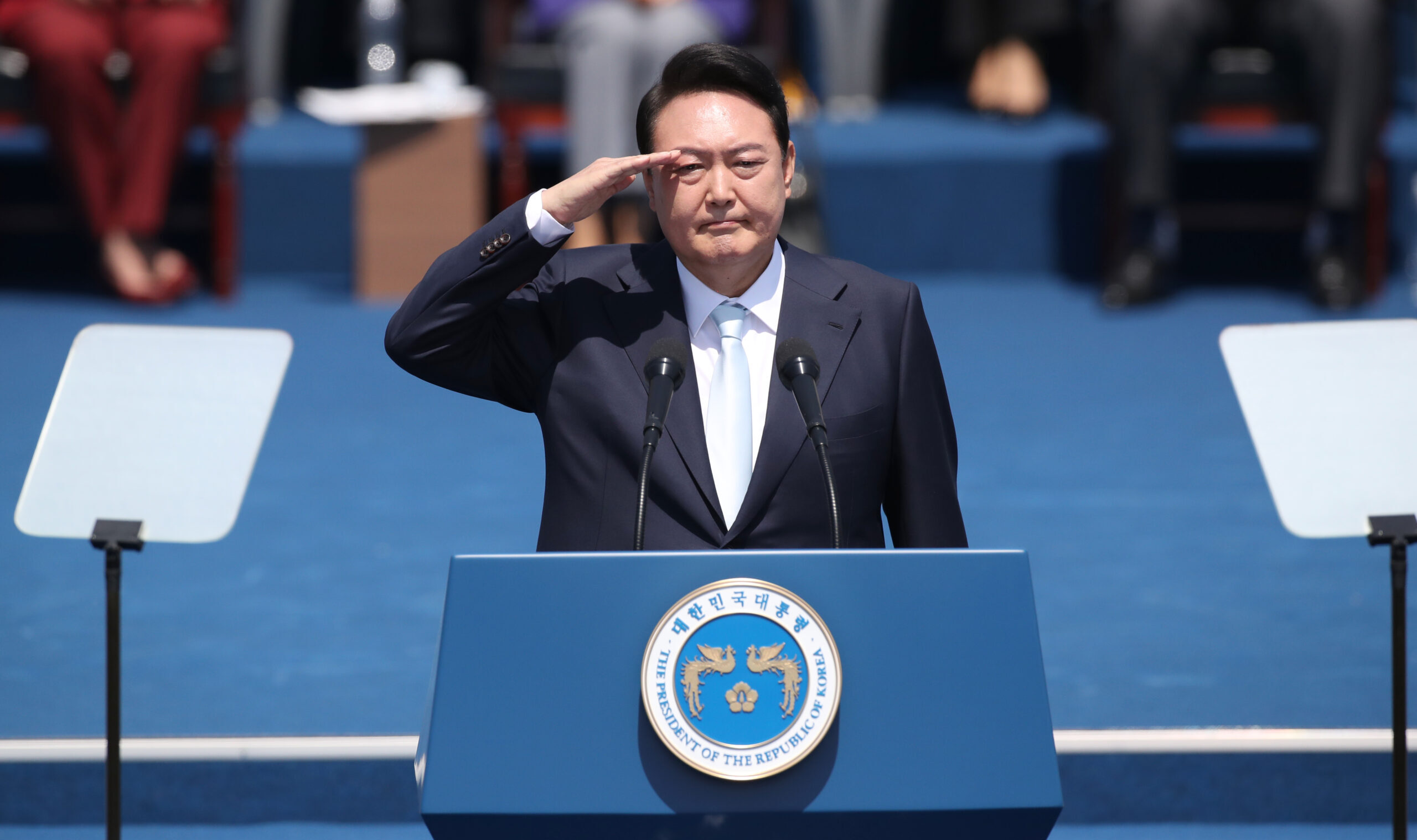
Foreign Affairs South Korea Must Grow Up and Defend Itself And it isn’t the only such country. The South Korean nation began as an American appendage 76 years ago. Washington created the new state out of a military occupation zone, defending the Republic of Korea in war, financing it in peace, and garrisoning it today.  Behind this U.S. shield, the South morphed into one of the world’s leading powers, with a top-ten economy, global trade ties, a military ranked among the world’s best, and extraordinary cultural reach. Yet South Koreans lack commensurate self-confidence.  The Washington Times recently reported on “ripples of fear” racing across the ROK. Not from the latest military maneuver by the Democratic People’s Republic of Korea. Not from the latest missile launch or nuclear test by the communist regime. Not from the latest blood-curdling threat from the North’s Supreme Leader Kim Jong-un or his sister, often deployed as the official DPRK attack dog. Instead, South Koreans are wailing, gnashing their teeth, and rending their garments on a Biblical scale because of Elbridge Colby. Colby is a onetime Pentagon official hoping to do bigger and better things in a possible—indeed, at this point likely—second Trump administration. Regarding the ROK, he questions the continued viability of the bilateral alliance, suggesting that Washington should not “break its spear” fighting North Korea, given the threat posed by China. Explained Colby: “South Korea is going to have to take primary, essentially overwhelming responsibility for its own self-defense against North Korea because we don’t have a military that can fight North Korea and then be ready to fight China.” These sentiments shouldn’t be controversial. The U.S. is overstretched. Last week NATO celebrated its 75th year, yet still effectively stands for North America (meaning the U.S., not Canada) and The Others, despite Europe’s vast advantages over Russia. Washington remains entangled in the Middle East, dedicated to defending a gaggle of Arab dictatorships and an increasingly illiberal Israel, the latter a nuclear state long capable of protecting itself. In Asia, Republicans and Democrats alike want to contain China up to its border. They also want to keep the Pacific an American lake.  Can the U.S. continue to defend most of the known world? And why should the U.S. do so when its allies vastly outstrip their enemies, as in the Korean peninsula? By the 1960s, the ROK began to surpass the Democratic People’s Republic of Korea economically. In 1987, the South Korean military finally yielded power, enabling free elections and the development of a vibrant democracy. With the end of the Cold War, the DPRK lost its military allies, who forged economic and political relations with Seoul. In succeeding years, the South ascended to the top tier of nations, with extensive diplomatic ties and an economy 50-plus times as large as the North’s. David Maxwell of the Center for Asia Pacific Strategy complained that Colby’s policy would “drive a dagger through the heart of the alliance and give Kim room to coerce concessions from the ROK and ultimately use force to unify the peninsula under the Gulag State.” But why? Why, seven decades after the end of the Korean War, are South Koreans unable to deter Pyongyang from attacking? By reducing the pressure on Seoul to act on its own, the “Mutual” Defense Treaty has encouraged cheap-riding on Americans. Even so, despite having skimped on military outlays in the past, the South’s armed forces are ranked fifth-most powerful on earth, compared to North Korea’s military at number 36, down from number 34 last year. Foreign and defense policy should change along with circumstances. In 1945, as World War II came to a merciful close, Washington was forced to consider Korea’s fate. The peninsula was never thought to be a vital interest for America, and no U.S. government would ever have gone to war over it. However, Japan’s defeat opened the peninsula’s future. Early victims of Japanese imperialism, Koreans yearned to be free, so they could not be left under Tokyo’s rule. Unfortunately, the alternative to a divided peninsula was an undivided one—initially occupied by Soviet troops with the Kim dynasty later ruling over all Koreans. Having made the ROK’s future an American interest, it was difficult for Washington to stay out of the conflict, especially given erroneous assumptions about Joseph Stalin planning the attack as a possible prelude to a similar European onslaught. Nevertheless, as Seoul raced ahead of Pyongyang, the U.S. should have devolved defense responsibilities on the ROK, preparing the latter to deter an attack and win a war. Today the South is well able to mount whatever conventional defense is necessary. A South Korean official once rebuffed my argument, complaining that Seoul had education and social needs. But so does America. There is no reason for Washington to force Americans, whose government is spending and borrowing wildly, to bear the ROK’s defense burden as well. Along with protecting Japan, a multitude of European states, and an assortment of Middle Eastern despots. With the increasingly lopsided Korean power balance, the peninsula would be a good place for the US to begin turning military responsibilities over to its longtime dependents. Yet so determined is the Biden administration to keep Seoul on the American defense dole that the administration began talks over burden-sharing early to foreclose an expected Trump administration from setting policy. The North’s possession of nuclear weapons poses a particular challenge, but Washington’s “nuclear umbrella” is an increasingly dangerous response as Pyongyang develops a larger and more sophisticated atomic arsenal, as well as ICBMs that will eventually be capable of targeting American cities. The ROK, though a good national friend, does not warrant taking that kind of risk. What U.S. president would gamble mass incineration of his or her nation’s population to defend a distant country not vital to America’s defense? It is time for Washington policymakers to consider the utility of the ROK developing its own nuclear weapons in response—a bad option, perhaps, but still better than the alternatives, especially continued US entanglement in the peninsula’s always erratic and often threatening affairs. Of course, the Colby boomlet may come to nothing even if Donald Trump returns to the Oval Office. Colby is an able policy salesman, but Trump has not publicly expressed any staff preferences. Although self-promotion fills Washington, ostentatious hype more often kills than advances such ambitions. Today, smart money on the next national security adviser is being wagered elsewhere. Nevertheless, while the election is still three and a half months away, a lot of time in American politics, it increasingly looks like a Trump victory is likely, with a possible GOP congressional sweep. President Joe Biden is evidently deteriorating mentally and physically, poorly suited to being president now and almost certain to be incapable of serving until a second term would end. The assassination attempt on Trump has turned the latter into an unexpectedly sympathetic and even heroic figure, allowing him to grab the mantle of national unity. Down-ballot Democratic races will be vulnerable as party morale and fundraising deteriorate. The corruption conviction of Sen. Bob Menendez (D-NJ), long-time chairman of the Senate Foreign Relations Committee, is a notable embarrassment. Many leading Democrats have written off the presidential race, planning to concentrate on congressional contests.  All of which suggests significant changes are likely in U.S. foreign policy. Trump’s actions did not match his rhetoric during his first term, but his prospective vice president, Sen. J.D. Vance (R-OH), has taken the lead in challenging several foreign policy shibboleths. Moreover, Trump appears to have learned that personnel are policy, and thus is more likely to choose likeminded staff, whether that includes Colby or not. Finally, Biden has inadvertently exposed the bankruptcy of the uber-interventionist status quo. Who can look at the last three and a half years and want to see a replay? Hence, it is not just South Koreans who should worry about relying on Washington. If Trump regains the presidency, he might begin reducing subsidies for Europe’s defense and Ukraine’s war. Indeed, one could imagine him handing this policy portfolio to Vance. Although Trump had a good relationship with Japan’s Prime Minister Shinzo Abe, the former might recognize the opportunity to speed the shift of responsibility for Japan’s defense onto Tokyo. And despite Trump’s supposed affection for authoritarians and despots, the need to curb fiscal deficits, address recruiting shortfalls, and minimize military risks might cause him to reconsider commitments in the Middle East. The larger the political victory, the greater the foreign policy possibilities. South Koreans should worry about the future of the alliance. Free-riding allies are likely to be targets of the next administration, whoever ends up as top foreign policy adviser. Such a shift is long overdue. With the federal government hurtling toward de facto bankruptcy, it is time for Americans to concentrate on saving their republic. The post South Korea Must Grow Up and Defend Itself appeared first on The American Conservative.

Like
Comment
Share
Conservative Voices
Conservative Voices
2 yrs

Vance Highlights the Past, Looks to the Future in RNC Stemwinder
Favicon 
www.theamericanconservative.com

Vance Highlights the Past, Looks to the Future in RNC Stemwinder

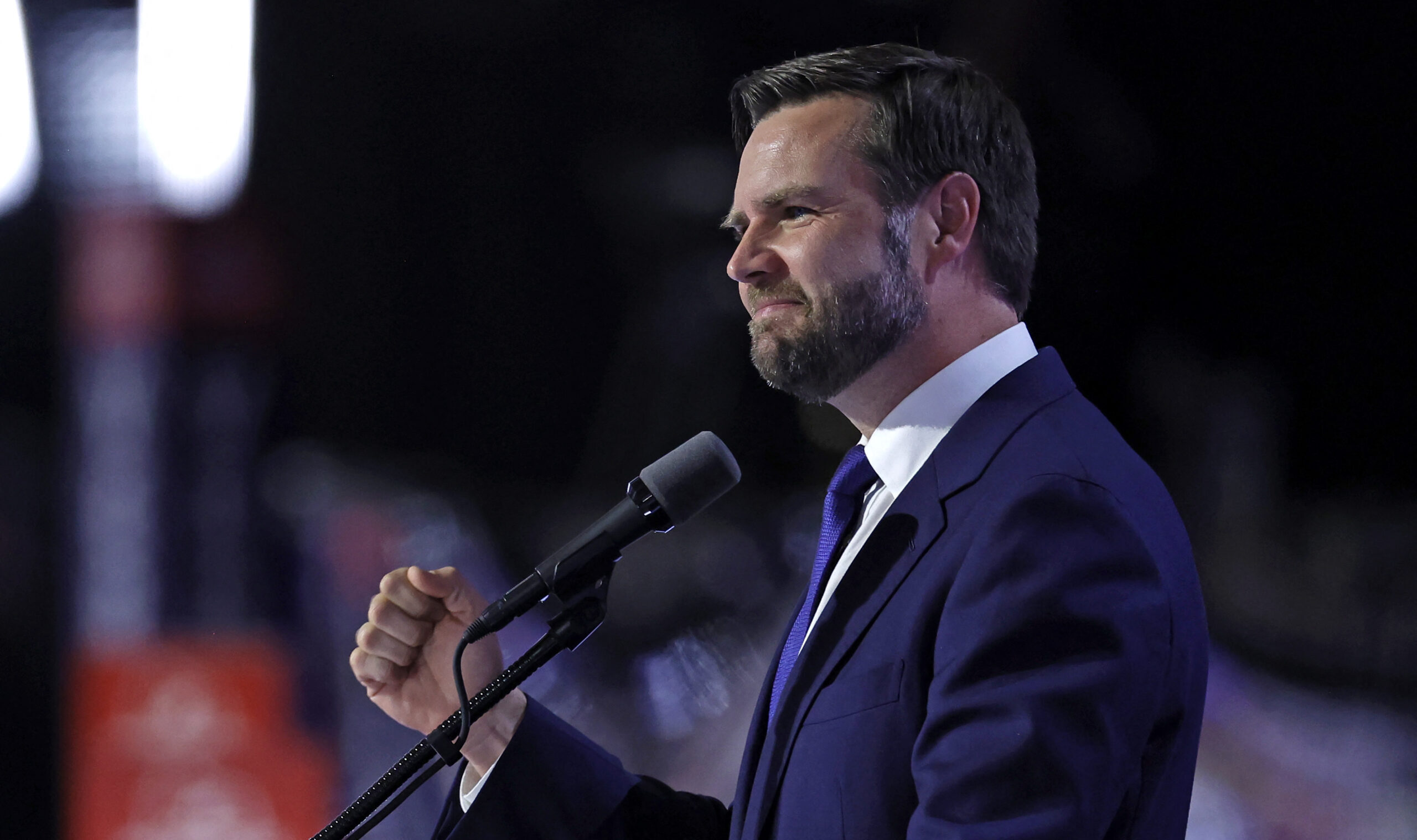
Politics Vance Highlights the Past, Looks to the Future in RNC Stemwinder The Ohio Senator attacked the failed elite consensus and contrasted it with the populist policies of Trump. Credit: KAMIL KRZACZYNSKI/AFP via Getty Images Ohio’s Sen. J.D. Vance, the Republican vice presidential nominee, used his acceptance speech Wednesday to share his own personal story of overcoming American dysfunction and hardship caused by decades of failed elite policy—and his plans to build a brighter future for the nation. “For the last eight years, President Trump has given everything he has to fight for the people of our country. He didn’t need politics, but the country needed him. Prior to running for president, he was one of the most successful businessmen in the world,” said Vance. “He had everything anyone could ever want in a life. And yet, instead of choosing the easy path, he chose to endure abuse, slander, and persecution.” Why did the country need him? Because of the policies of leaders like President Joe Biden. “When I was in the fourth grade, a career politician by the name of Joe Biden supported NAFTA, a bad trade deal that sent countless good American manufacturing jobs to Mexico. When I was a sophomore in high school, a career politician by the name of Joe Biden gave China a sweetheart trade deal that destroyed even more good middle class jobs,” Vance said. “And when I was a senior in high school, Joe Biden supported the disastrous invasion of Iraq. And at each step of the way, in small towns like mine in Ohio, or next door in Pennsylvania, or in Michigan and other states across our country, jobs were sent overseas and children were sent to war.” But this establishment agenda was not to go without challenge. “Somehow, a real estate developer from New York by the name of Donald Trump was right on all of these issues while Joe Biden was wrong,” Vance said. “Donald Trump knew, even then, that we needed leaders who would put America first.” JD Vance:"America is not just an idea. It is a group of people, with a shared history and a common future." pic.twitter.com/K0tlIJzi8b— The American Conservative (@amconmag) July 18, 2024 Amid the chaos brought to the heartland and to Vance’s own family by the hollowing out of American industry, the Ohioan’s extended family stepped into the gap to keep the young man’s life together.  “Now, I was lucky. Despite the closing factories and the growing addiction in towns like mine, in my life, I had a guardian angel by my side. She was an old woman who could barely walk but was tough as nails,” he said. “Mamaw raised me as her own as my own mother struggled with addiction. Thanks to Mamaw, things worked out for me.” The speech was not all backward-looking; the vice presidential candidate discussed America’s future under the second Trump administration. “We will build factories again, put people to work making real products for American families, made with the hands of American workers” Vance said. “Together, we will protect the wages of American workers—union and non-union alike—and stop the Chinese Communist Party from building their middle class on the backs of our hard-working citizens.” Nor is it a change only to the business-as-usual economic policies. “We will make our allies share in the burden of securing world peace: no more free rides for nations that betray the generosity of the American taxpayer,” said Vance. “Together, we will send our kids to war only when we must.” This 3 minutes and 14 seconds from @JDVance1 is everything that America First means.America is not just an idea. It is a nation."People will not fight for abstractions but they will fight for their home." pic.twitter.com/BOreOAaVkz— Greg Price (@greg_price11) July 18, 2024 Vance’s actionable message throughout was clear: “Donald Trump represents America’s last best hope to restore what—if lost—may never be found again.” Vance’s comments align with comments Vance’s close acquaintance, conservative media personality Charlie Kirk, made to The American Conservative. “It’s a rags-to-riches story. He grew up in rural poverty. We usually only hear about urban poverty. Rural poverty is the forgotten element of the underclass of this country. And J.D. Vance went from the underclass to the ruling class to now a class-traitor to go fight for the underclass,” said Kirk, speaking on Vance’s background.  “We are not focused on abstractions, but instead on real issues that are concerning, the legitimate concerns of the citizenry. We are a country, not a colony” Kirk said. “J.D. Vance was effective in helping people learn who he is and what he believes in,” Will Ruger, president of the American Institute of Economic Research, told The American Conservative. “If Vance was targeting those in suburbs and exurbs around the country who might be wary of voting for the Republican ticket, he succeeded by sounding mature, non-scary, and with a good story.” “It is incredibly satisfying, as it was in 2016 with President Trump, to see a Republican VP candidate repudiate the failed foreign policy of the George W Bush era—from the debacle of Iraq, to free riding by our allies, to the foolishness of fighting for abstractions,” Ruger added. Nor was Ruger the only one impressed by the substance of the speech. “Senator Vance did an incredible job tonight. He’s a real champion for working men and women everywhere,” said Riley Moore, a candidate for West Virginia’s Second Congressional District. “In West Virginia, Joe Biden and the Washington Establishment have killed off energy, manufacturing, and agricultural jobs by the thousands. Senator Vance speaks directly to those communities hurt at the hands of their own government. He laid out in definitive terms the America First doctrine of Donald Trump that will define this united Republican Party moving forward.” “President Trump will have a strong partner in our fight to save America,” he added. Moore wasn’t the only enthusiastic listener. “In one speech J.D. demonstrated why he is the perfect choice for President Trump’s running mate” said Saurabh Sharma, the president of American Moment. “He’s a living embodiment of the American dream, he champions the ideological revolution Trump began in 2015, he knows the threats to the American dream, and he loves his fellow countrymen from the bottom of his heart.” The post Vance Highlights the Past, Looks to the Future in RNC Stemwinder appeared first on The American Conservative.

Like
Comment
Share
Bikers Den
Bikers Den
2 yrs ·Youtube General Interest

YouTube
Biker or Drivers Fault?
Like
Comment
Share
Conservative Voices
Conservative Voices
2 yrs

‘Eliminate Him’: A Look At The Left’s Violent Rhetoric Against Donald Trump (Video)
Favicon 
conservativefiringline.com

‘Eliminate Him’: A Look At The Left’s Violent Rhetoric Against Donald Trump (Video)

The following article, ‘Eliminate Him’: A Look At The Left’s Violent Rhetoric Against Donald Trump (Video), was first published on Conservative Firing Line. (Natural News) While the attempted assassination of Donald Trump has been roundly condemned by his political opponents, liberal politicians and pundits have – implicitly and explicitly – called for his death before. (Article republished from RT.com) Trump narrowly avoided death at a campaign rally in Butler, Pennsylvania, on Saturday, when an assassin’s bullet apparently clipped his … Continue reading ‘Eliminate Him’: A Look At The Left’s Violent Rhetoric Against Donald Trump (Video) ...
Like
Comment
Share
Intel Uncensored
Intel Uncensored
2 yrs

Some good advice on how to gain MUSCLE MASS
Favicon 
api.bitchute.com

Some good advice on how to gain MUSCLE MASS

There is a way to 100% guarantee results with fat loss and muscle gains. UTL COMMENT:- I am in my 50's and I am back gymming again.....twice a week.....am getting gains and following simple rules such as what he has given here...... Impatience is a very big mental hindrance. People with that issue should weigh themselves and if they're after mass, then take body measurements. I do. Once there's a number that goes up or down people will have something to go by. Personally, I am solid but I am just trying to lose my smallish fat (Dad) gut.....that's my goal.....and so I shall measure it every couple of days to see progression... Am also back to Gymming twice per week..... Lower weights and more repetitions.... Uncommon Sense Bodybuilding eBook: https://uncommonsensefitness.gumroad.... Membership: / @uncommonsense Patreon: / uncommonsensetheo PayPal: https://www.paypal.com/paypalme/uncom... Reach out for coaching here: Instagram: / uncommonsensefitness uncommonsensetheo@gmail.com
Like
Comment
Share
Intel Uncensored
Intel Uncensored
2 yrs

CNN Host Is Stunned By Former Army Sniper Saying Trump Assassination Attempt Could Have Been Setup
Favicon 
api.bitchute.com

CNN Host Is Stunned By Former Army Sniper Saying Trump Assassination Attempt Could Have Been Setup

On July 16, 2024, Collin Rugg @CollinRugg writes: JUST IN: CNN host loses it after former US Army sn*per Cory Mills suggests the July 13 assas*ination attempt on Trump *could have been* a setup. Holy sh*t. Mills explained how everything about the incident made no sense. CNN anchor Kate Bolduan was visibly stunned and desperately tried to combat Mills' statements. Mills made it *very* clear that he was simply examining all options for what may have happened. Let me say that again: Mills made it very clear that he was not asserting the incident was a setup but said it should be considered during an investigation. Cory Mills served in the U.S. Army as a member of the 82nd Airborne Division and Joint Special Operations Command.
Like
Comment
Share
Classic Rock Lovers
Classic Rock Lovers  
2 yrs

Who wrote Blondie’s hit song ‘Hanging on the Telephone’?
Favicon 
faroutmagazine.co.uk

Who wrote Blondie’s hit song ‘Hanging on the Telephone’?

He was just a phone call away. The post Who wrote Blondie’s hit song ‘Hanging on the Telephone’? first appeared on Far Out Magazine.
Like
Comment
Share
Conservative Voices
Conservative Voices
2 yrs

An Armed 20-Year-Old Got Within Range of Trump. How Did That Happen?
Favicon 
spectator.org

An Armed 20-Year-Old Got Within Range of Trump. How Did That Happen?

MILWAUKEE — Tuesday was “Make America Safe Once Again” night at the Republican National Convention — some 72 hours after Donald Trump was shot in the ear by a would-be assassin as the former president spoke at a rally in Pennsylvania. Corey Comperatore, a 50-year-old volunteer firefighter from Pennsylvania, died protecting his family. Pennsylvanians David Dutch, 57, and James Copenhaver, 74, were seriously wounded. Americans are divided as to how this could have happened and what can be done. Here at the RNC, people wonder how an armed 20-year-old was able to install himself within shooting range of Trump, despite Secret Service protection. “I look at this a little more as failing of Secret Service,” Scott Davis, a doctor from Fort Wayne, Indiana, told me. “How on earth did a guy get in there?” “I would certainly not have guns unlocked in the house,” Davis added. The people with whom I talked do not blame a lack of gun laws. Texas delegate Stacey Schieffelin sees “a mental illness problem in this country.” She wants to see more support and compassion for those in need. And she made sure her daughters were trained in firearm safety. That’s not how President Joe Biden’s administration sees the problem. Secret Service head Kimberly Cheatle told ABC News, “That building in particular has a sloped roof at its highest point. And so, you know, there’s a safety factor that would be considered there that we wouldn’t want to put somebody up on a sloped roof.” During Monday’s White House press briefing, Secretary of Homeland Security Alejandro Mayorkas nonetheless offered, “I have 100 percent confidence in the director of the United States — States Secret Service. I have 100 percent confidence in the United States Secret Service.” The mind boggles. It was only after this failed attempt to kill a former president that Biden ordered Secret Service protection for independent presidential hopeful Robert F. Kennedy Jr., whose father and uncle were killed by assassins. Such political decision making does no service to agents who risk their lives to protect this country. White House Press Secretary Karine Jean-Pierre referred to gun violence as an epidemic, as she referred to the awful fact that firearms were the No. 1 cause of child deaths in America. But really, that is a topic for another day. This weekend, a former president was shot. I understand why Mayorkas wants to let an investigation run its course. But 100 percent confidence? That doesn’t make sense. And really, I can’t help but think of Trump’s lament about Biden during the June 27 presidential debate: “He doesn’t fire people. He never fired people.” Contact Review-Journal Washington columnist Debra J. Saunders at dsaunders@reviewjournal.com. Follow @debrajsaunders on X. COPYRIGHT 2024 CREATORS.COM The post An Armed 20-Year-Old Got Within Range of Trump. How Did That Happen? appeared first on The American Spectator | USA News and Politics.
Like
Comment
Share
Conservative Voices
Conservative Voices
2 yrs

How to Pay for Trump’s Tax Cuts
Favicon 
spectator.org

How to Pay for Trump’s Tax Cuts

While the GOP may not speak as loudly about our fiscal situation as it once did, this week’s Republican convention offers a good chance to do so — and to offer something positive. The situation is indeed dire. The national debt has reached staggering levels, and the next president will inherit a ticking time bomb of fiscal deadlines that could significantly worsen the burden. The potential expiration of the previous (and popular) Trump tax cuts is one such fiscal cliff. However, it also represents an opportunity: Pay to extend Trump’s cuts by cleaning out the tax code of unfair, costly tax breaks that aren’t shared by enough Americans. Congress passed the Tax Cuts and Jobs Act in December 2017. By the end of 2025, roughly all the individual tax cuts and two important business provisions will expire. While deciding which provisions to extend, legislators must take two things into consideration: the impact on economic growth and on the deficit. Considering that there seems to be general bipartisan agreement on keeping a majority of the tax cuts and maintaining growth, let’s focus on the deficit question. I firmly believe that any new costs or extensions of current policies must be paid for. We simply cannot afford to keep adding to our debt without considering the long-term consequences. A sensible place to start is by examining the myriad tax expenditures that have turned our tax code into Swiss cheese. According to the Treasury Department, there are 165 tax expenditures (think revenue losses due to tax carveouts), which is up from 53 in 1970. We should start by eliminating the ones that distort economic decision-making. The goal is a neutral tax system that doesn’t favor certain activities or industries over others. That’s one reason tax expenditures aimed at social engineering should be on the chopping block. Tax expenditures that add complexity to the tax code should be prime candidates for elimination too. Simpler tax systems reduce compliance costs and are more transparent. Based on these criteria, one prime candidate for termination is the mortgage interest deduction. It’s expensive, favors relatively wealthy people, distorts the housing market, and promotes housing debt more than true homeownership. Another is the state and local tax deduction, which primarily benefits high-income earners and high-tax states. Tax-free municipal bonds should be terminated once and for all. These also disproportionately benefit high-income individuals and can lead to overinvestment and debt in municipal projects. We should also end tax exemptions on employee compensation that is not considered wages. Hear me out. In a recent study on extending some of the Trump tax cuts without additional debt, the Cato Institute’s Adam Michel explained that “employers often provide compensation in the form of health insurance, meals, parking, transportation benefits, education assistance, and child care. Not taxing these employment benefits as wage income creates an incentive to compensate employees with tax-free fringe benefits, and the tax advantage is primarily used by higher-income workers who tend to have access to more comprehensive employment arrangements.” He adds that “taxing these benefits as wage income would increase income tax revenue by $447 billion a year.” The exclusion of employer-provided health insurance is the most expensive and distortive of the tax expenditures, and one of the main reasons why the health care market is such a mess. Business subsidies are also ripe for cuts. Michel calculated that “tax credits for the energy sector reduce revenue by $119 billion a year.” They should be terminated. They distort energy markets and often benefit large corporations more than the environment. Of course, the other $133 billion in annual business subsidies should be on the chopping block. Michel suggests that “place-based tax incentives for economic development or investment in targeted locations have 40 years of research showing they fail to meaningfully increase employment, raise wages, or advance general economic opportunity.” On that note, we should repeal the state and local tax deduction for corporations. This doesn’t mean every tax expenditure should end. The preferential treatment of capital gains is one of them. Since corporate profits are already taxed, taxing capital gains at full rates can be seen as a form of double taxation and a disincentive to invest in corporate investment returns that help spur growth, innovation and hiring. Addressing these issues won’t be politically easy, as each tax expenditure has its defenders. However, the magnitude of our fiscal challenges demands bold action, especially if we are rightfully going to extend most of the Trump tax cuts and engage in further reform. Veronique de Rugy is the George Gibbs Chair in Political Economy and a senior research fellow at the Mercatus Center at George Mason University. To find out more about Veronique de Rugy and read features by other Creators Syndicate writers and cartoonists, visit the Creators Syndicate webpage at www.creators.com. COPYRIGHT 2024 CREATORS.COM The post How to Pay for Trump’s Tax Cuts appeared first on The American Spectator | USA News and Politics.
Like
Comment
Share
Showing 72487 out of 107116
  • 72483
  • 72484
  • 72485
  • 72486
  • 72487
  • 72488
  • 72489
  • 72490
  • 72491
  • 72492
  • 72493
  • 72494
  • 72495
  • 72496
  • 72497
  • 72498
  • 72499
  • 72500
  • 72501
  • 72502
Advertisement
Stop Seeing These Ads

Edit Offer

Add tier


Select an image
Delete your tier
Are you sure you want to delete this tier?

Reviews

In order to sell your content and posts, start by creating a few packages. Monetization

Pay By Wallet

Payment Alert

You are about to purchase the items, do you want to proceed?

Request a Refund