www.optimistdaily.com
Why cities are becoming an unlikely refuge for wildflowers
BY THE OPTIMIST DAILY EDITORIAL TEAM
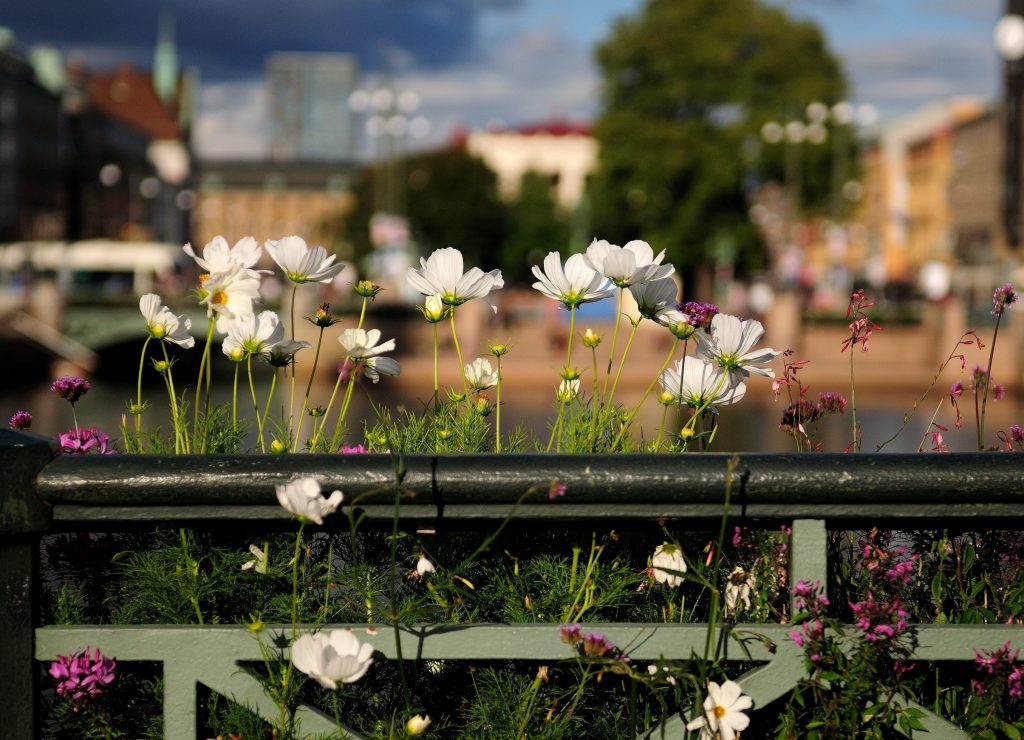
Wildflowers are associated with rolling meadows, ancient grasslands, and a pastoral world that is rapidly disappearing. The UK has lost 97 percent of its wildflower meadows over the past century, driven largely by agricultural intensification. As Nadine Mitschunas, a pollinator ecologist at the UK Centre for Ecology and Hydrology, puts it: “Arable land is heavily managed, and everything that’s not a crop is taken out.”
But the conditions that make cities hostile to most plants are exactly what wildflowers love. Stress keeps competition down, Mitschunas explains, and without competition, wildflowers can establish and spread. “They need an unstable environment, because in stable environments, only a few species survive.” A perfectly fertilised, well-watered lawn is, paradoxically, a harder place for wildflowers than a cracked pavement or a neglected roadside verge.
Cities as patchwork habitats
Part of what makes urban environments so hospitable is their variety. Pavements, walls, rooftop patches, riverbanks, and railway sidings each create their own microclimate. That fragmentation, which would be a liability in conventional ecology, becomes an asset for species that would otherwise lose out to dominant grasses or shrubs. “In urban areas they can find their niche, because there are all these specialist habitats,” says Mitschunas.
Even defining what counts as a wildflower gets complicated in this context. Cicely Marshall, a research fellow at the University of Cambridge’s Department of Plant Sciences, notes that the line between weed and wildflower is rarely objective. “A weed is any plant growing in the wrong place; one person’s weeds are another person’s wildflowers,” she says. That ambiguity is part of what makes urban ecology so interesting: a neglected strip of scrub that looks like an eyesore to one person may represent prime habitat to another.
The brownfield surprise
Nowhere is this clearer than on brownfield land, former industrial and commercial sites now largely abandoned on the edges of cities. Contaminated soil, heavy metals, alkaline ground, and low nutrients are conditions that would devastate a conventional garden. For wildflower communities, they can be ideal.
Heather Rumble, senior lecturer in healthy urban environments at the University of the West of England in Bristol, notes that the contaminants left behind by industry are not always the enemy. “Sometimes they also have pollutants that some species love, such as heavy metals,” she says. “Species have evolved to use what’s around; heavy metals are naturally occurring, we just move them and concentrate them.” Historically, miners used certain plants, sheep’s fescue and spring sandwort, to locate lead veins underground. The relationship between plants and disturbed soil is nothing new.
Low footfall, thin soil, and chemical stress together create conditions where many competing plants cannot survive, leaving space for a surprising range of specialists to move in.
What happens when wildflowers take hold
The effects reach well beyond the plants themselves. Marshall’s research at King’s College Cambridge found that a single small patch of unmown lawn, converted to a wildflower meadow in 2020, had three times as many species of plants, spiders, and insects as the surrounding grass, and attracted more bats, including more species of bats.
“The higher the population of wildflowers, the more invertebrates you have in terms of species richness and overall numbers, and this has effects up the food chain,” Marshall says. Research from Warsaw, Poland, found no meaningful difference in the diversity of species visiting urban wildflower meadows compared with natural ones, suggesting that location matters far less than the presence of the flowers.
The timing advantage of urban patches has also begun reshaping pollinator behaviour in ways researchers are still tracking. Bumblebees, which typically disappear in autumn, have now established winter colonies in cities, feeding on non-native wildflowers that bloom outside the traditional season. “In winter you also find other pollinators, like hoverflies, still active in urban areas because of wildflowers, which are a food source,” says Mitschunas.
The culture war over long grass
Not everyone welcomes the shift. Rumble identifies a social friction running through any attempt to introduce managed wildness into public spaces. “There’s a culture war over urban meadows,” she says. “Local authorities like planting them because it gives them good biodiversity credentials and they’re lower maintenance, but people complain that it looks scruffy at certain times of the year.”
That complaint, she argues, is rooted in a cultural preference for manicured green lawns that has come to define what a well-kept public space looks like. In colder months, wildflower meadows are mostly long brown grass, and for many people, that reads as neglect rather than intention.
Rumble also notes that the field has long been under-resourced: “There aren’t many urban ecologists and it’s generally an overlooked area in ecology. The research is really complicated, with people getting in the way and all the private land, but it’s getting more attention as people realise how important nature is for people.”
Mitschunas sees the attitude shift as necessary, not optional. “We need to accept a bit of wildness and untidiness. We can’t exist as humans alone; we’re part of nature and we need to let nature in.” Across the UK, local authorities are beginning to let verges go unmown, and results are accumulating. Changing the ecology turns out to be the straightforward part; the harder work is persuading people that long grass and abandonment are not the same thing.
Did this solution stand out? Share it with a friend or support our mission by becoming an Emissary.The post Why cities are becoming an unlikely refuge for wildflowers first appeared on The Optimist Daily: Making Solutions the News.








 New Posts (Home)
 ChatBox
 Popular Posts
  Game Zone
 Top PodCasts