YubNub Social YubNub Social
    #freedom #law #civilrights #ai #fourthamendment #utah #privacy #lawenforcement #warrant #environmentalscience #surveillancestate #eff #alpr #flocksafety #licenseplate
    Advanced Search
  • Login
  • Register

  • Day mode
  • © 2026 YubNub Social
    About • Directory • Contact Us • Developers • Privacy Policy • Terms of Use • shareasale • FB Webview Detected • Android • Apple iOS • Get Our App

    Select Language

  • English
Community
New Posts (Home) ChatBox Popular Posts Reels Game Zone Top PodCasts
Explore
Explore
© 2026 YubNub Social
  • English
About • Directory • Contact Us • Developers • Privacy Policy • Terms of Use • shareasale • FB Webview Detected • Android • Apple iOS • Get Our App
Advertisement
Stop Seeing These Ads

Discover posts

Posts

Users

Pages

Blog

Market

Events

Games

Forum

Intel Uncensored
Intel Uncensored
9 w News & Oppinion

rumbleBitchute
Deranged, deluded and weak Donald Chump folds AGAIN as Iran holds the line and their composure.
Like
Comment
Share
RetroGame Roundup
RetroGame Roundup
9 w ·Youtube Gaming

YouTube
James Bond Assassinates James Pond! - The Laird's Lowdown
Like
Comment
Share
Classic Rock Lovers
Classic Rock Lovers  
9 w

The 1956 song David Gilmour considered perfect: “Just magic”
Favicon 
faroutmagazine.co.uk

The 1956 song David Gilmour considered perfect: “Just magic”

The essence of rock and roll in a few strokes. The post The 1956 song David Gilmour considered perfect: “Just magic” first appeared on Far Out Magazine.
Like
Comment
Share
Conservative Voices
Conservative Voices
9 w

I Wish You Knew What Memorial Day Really Was, I Wish We Didn’t Have To
Favicon 
townhall.com

I Wish You Knew What Memorial Day Really Was, I Wish We Didn’t Have To

I Wish You Knew What Memorial Day Really Was, I Wish We Didn’t Have To
Like
Comment
Share
The Lighter Side
The Lighter Side
9 w

What We’re Reading: Sperm Whales — They’re Just Like Us
Favicon 
reasonstobecheerful.world

What We’re Reading: Sperm Whales — They’re Just Like Us

Welcome back to our weekly behind-the-scenes glimpse at what’s getting our team talking. Tell us what you’ve been reading at info@reasonstobecheerful.world and we just might feature it here. When things click How much do you have in common with a sperm whale? More than it would seem: New research has found that sperm whale communication closely resembles humans, according to a story from the Guardian shared by RTBC Contributing Editor Michaela Haas. Sperm whale vocalizations — clicking sounds known as codas — are “highly complex and represent one of the closest parallels to human phonology of any analyzed animal communication system,” the new study explains. Michaela says: A fascinating update from Project CETI (which I wrote about two years ago). I’m fully convinced sperm whales are highly intelligent. Worth its salt Some news you might not expect from a West Coast city: San Diego now has so much water that it can share some with its drought-plagued neighbors. That’s thanks to the desalination plant in Carlsbad, the largest in North America. As the Wall Street Journal reports in a story shared by Executive Editor Will Doig, Arizona and Nevada are hoping to swap water access rights with San Diego — meaning that in exchange for funding the water generated by the Carlsbad plant, those states would get to take San Diego’s share of Colorado River water. Will says: Desalination has drawbacks (it’s an energy suck, for one, though new technologies are making it more sustainable) but with California facing a parched summer after a very dry winter, this kind of arrangement could help stave off a crisis. What else we’re reading Maui residents are rebuilding Lahaina for locals, not tourists: ‘In Hawaii, we take care of one another’ — shared by Editorial Director Rebecca Worby from the Guardian The Help That Many Older Americans Need Most — shared by Will Doig from the New York Times The state of solar: Despite partisan rhetoric, the industry is still booming — shared by Rebecca Worby from Grist From our readers… Inspired by a story we shared in last week’s What We’re Reading, we asked our readers: What kind thing would you do with $500? We received lots of great responses. Check out some of the highlights on our Instagram. The post What We’re Reading: Sperm Whales — They’re Just Like Us appeared first on Reasons to be Cheerful.
Like
Comment
Share
Front Page Mag Feed
Front Page Mag Feed
9 w

Busting Asian Brothels is Racist
Favicon 
www.frontpagemag.com

Busting Asian Brothels is Racist

Covering up sex trafficking with accusations of racism. The post Busting Asian Brothels is Racist appeared first on Frontpage Mag.
Like
Comment
Share
BlabberBuzz Feed
BlabberBuzz Feed
9 w

Sen. Cory Booker In A Deranged Speech
Favicon 
www.blabber.buzz

Sen. Cory Booker In A Deranged Speech

Like
Comment
Share
The Lighter Side
The Lighter Side
9 w

Germany’s coal mines are now Europe’s largest lake district
Favicon 
www.optimistdaily.com

Germany’s coal mines are now Europe’s largest lake district

BY THE OPTIMIST DAILY EDITORIAL TEAM When the last miners left the open-cast lignite pits of eastern Germany’s Lusatia region, they left behind craters stretching more than 200 feet (60 meters) deep. What followed was not restoration in any conventional sense. It was construction: the deliberate, painstaking work of building a landscape that had never previously existed. The Lusatian Lakeland, now Europe’s largest artificial water landscape, reaches a new milestone this month when Lake Sedlitz, the final piece of a 23-lake complex, opens for swimming and boating. The total water surface will eventually reach 144 square kilometers (56 square miles), almost exactly the size of Italy’s Lake Como. Dr. Uwe Steinhuber of the Lausitz and Central-German Mining Administration Company (LMBV), which has overseen the project since the early 1990s, frames the scale plainly: “This is a process that will take two generations.” Building a lake from scratch Left alone, the craters would fill naturally over 80 to 100 years through groundwater and rainfall. The LMBV chose not to wait. Water has been extracted from three rivers, the Neisse, Spree, and Schwarze Elster, and channeled directly into the former mines. The process requires careful coordination. Flooding can only proceed when conditions allow: power stations, shipping routes, and the fishing industry must not be disrupted. Each lake presents its own engineering problems. Embankments need geotechnical stabilisation, mineral-laden groundwater has to be managed, and in some cases, the rapid introduction of neutral river water is essential to prevent acidic runoff from reaching the lakes. The cost has been substantial. Lusatia’s reorganisation has run to around 7 billion euros (approximately $7.6 billion). Total costs across all LMBV projects reach roughly 13.8 billion euros (about $15 billion), and a further 4.8 billion euros (around $5.2 billion) will likely be needed over the next 25 years. A single stable lake costs between 200 and 600 million euros ($220 to $660 million) to create, funded 75 percent by the federal government and 25 percent by the relevant state. More than a tourist attraction The results have attracted visitors from across Europe. In 2025, around 800,000 overnight stays were recorded in the region, with Czech tourism growing 12.7 percent year over year. The tourism association is now targeting the Polish market, with a long-term goal of 1.5 million annual overnight stays. But the lakes serve a second, less obvious function. They have become water reservoirs for the Spree and Schwarze Elster rivers during drought periods, a role that grows more important as the region faces hotter, drier summers. The complex, which will eventually be linked by a navigable canal network spanning 7,000 hectares (about 27 square miles), is climate infrastructure as much as a recreation destination. The economic shift has been felt in the communities that built their lives around coal. “The local population benefits in many ways,” says Winkler of the regional tourism association, pointing to new jobs in hospitality, leisure, and tourism infrastructure, including for former miners and their families. The region even has a town called Neu-Seeland, which translates as New Zealand, around which the artificial water landscape has grown. A blueprint that other coal regions are watching Winkler believes the project offers a transferable template. “The combination of comprehensive mining restoration, sustainable landscape design and the targeted development of a tourism value-added cycle provides impetus for regions facing similar structural change,” he says. International workshops began during the International Building Exhibition between 2000 and 2010, and exchanges with partners from other coal-dependent countries have continued since. Those conversations are likely to intensify. Lausitz Energie Bergbau AG, which still operates active open-cast mines in Lusatia, plans to wind them down from 2030, with the last expected to close by 2038. Those pits will then need flooding too, extending the transformation for decades more. Across Europe, dozens of coal regions face the same question: what do you do with the land after extraction ends? Germany has been running this experiment longer than almost anywhere else. Lusatia’s answer is that it can be built with intention, lake by lake, over two generations, into something that draws people in.     Did this solution stand out? Share it with a friend or support our mission by becoming an Emissary.The post Germany’s coal mines are now Europe’s largest lake district first appeared on The Optimist Daily: Making Solutions the News.
Like
Comment
Share
The Lighter Side
The Lighter Side
9 w

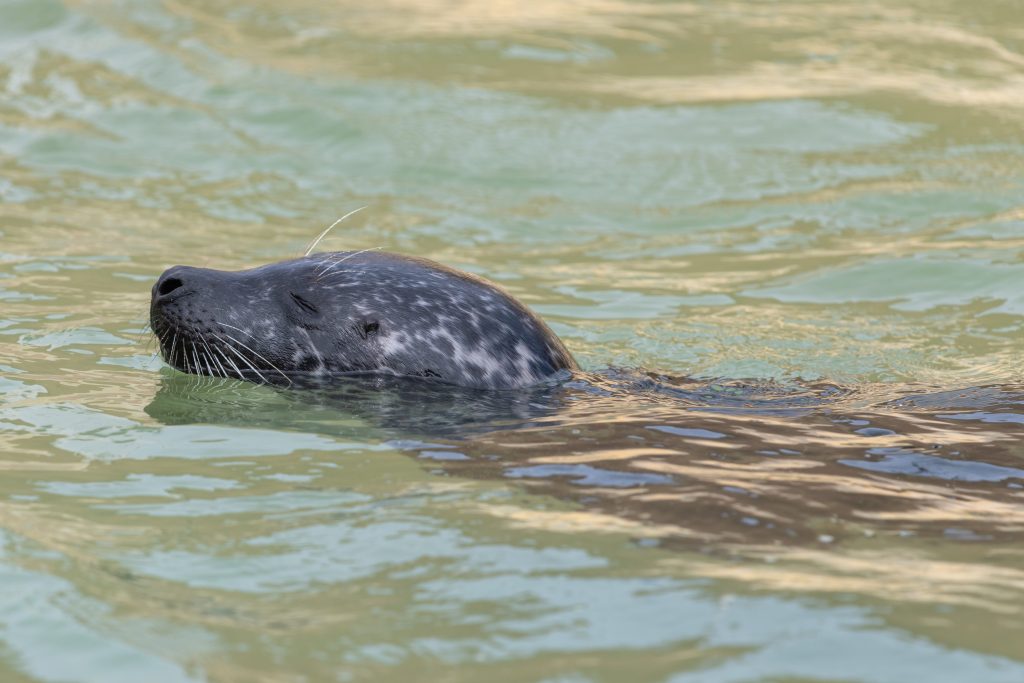
The sensory superpower that lets seals hunt in total darkness
Favicon 
www.optimistdaily.com

The sensory superpower that lets seals hunt in total darkness

BY THE OPTIMIST DAILY EDITORIAL TEAM When a fish moves through water, it doesn’t simply pass through and vanish. It leaves a trail of disturbed water behind it, something like the contrail of a plane across a clear sky. That trail is invisible to human eyes and fades within seconds, but to a harbor seal, it carries usable information: which direction the fish went, how fast it was moving, and possibly even what species it is. “These are sensory hairs in the facial region,” says Yvonne Krüger, a biologist at the University of Rostock in Germany, describing the roughly 100 whiskers a harbor seal carries on its face. “And with these whiskers, they can sense the water movements that are generated by fish.” The result is a sensory ability that lets seals track prey they cannot see, in water that is dark, murky, or both. “If you look at an airplane, you can see a trail left behind,” Krüger explains by way of analogy. “And this is similar to what you have if a fish is swimming through the water column. You can’t see it, but you can sense it, with the whiskers.” When the fish tries to disappear Harbor seals are effective hunters, but their prey has not evolved without defenses. Rainbow trout, which seals actively pursue, have developed a particularly well-timed evasive move. “Rainbow trout are able to camouflage their swimming direction by bending into a C-shape,” says Krüger, “and then they swim away in a different direction than they have been swimming before.” That abrupt shift in body position generates two opposing vortex rings in the water, think of them as smoke rings made of water. Only one of those rings moves in the direction the fish is actually heading. The other points the opposite way, a decoy built into the physics of the escape itself. Any predator chasing the wrong ring loses the fish. Krüger wanted to know whether a harbor seal could see through that trick. Could one learn to identify the correct vortex ring, the real trail, even when both rings were present and pointing different ways? Filou, the seal who got frustrated when he made mistakes To find out, Krüger spent close to two years working with Filou, an adult male harbor seal at a marine science center in Germany. She describes him with obvious affection. “He looks very beautiful,” she says. “We have a very strong bond. Filou likes to do everything correct. He likes learning new things. If he has one mistake, he gets frustrated.” In short, “he’s a nerd,” she says. Krüger trained Filou to select the larger of two vortex rings generated artificially underwater, a task designed to mimic the real-world problem of distinguishing a real fish trail from a decoy. “You have to be patient with animals,” she says. “You have to give them time to learn.” After nearly two years, Filou could reliably distinguish between the rings, even when the difference in size was less than the width of a human thumb, far smaller than what any seal would need to detect in the wild. When Krüger covered his whiskers with a nylon stocking, he could no longer do it. The whiskers were doing the work. What this means for hunting at night The results, published in the Journal of Experimental Biology, point to a capacity that likely extends to harbor seals more broadly. “If we think about a harbor seal swimming in the ocean, trying to find its food, they are actually able to read where a fish had been and where it’s going to,” Krüger says. “So if they hunt in murky waters or if they hunt at night, they don’t have to see the fish.” Vision, it turns out, may be close to optional for a seal that can read hydrodynamic trails with enough resolution to cut through a fish’s built-in decoy. Robyn Grant, a sensory biologist at Manchester Metropolitan University who was not involved in the research, called the work “a really important step in working out how the seals use their whiskers to extract tiny bits of information from these hydrodynamic trails.” She added that understanding this sensory system matters beyond basic biology: extreme weather events could disrupt the very signals seals rely on to hunt, making this kind of research relevant to conservation work too. The technology angle Grant also pointed to an unexpected application. The mechanics of how a seal whisker reads subtle disturbances in water could inform the design of sensors for underwater robots used in archaeological surveys, subsea mapping, and biological monitoring. A mechanism refined over millions of years of marine predation might turn out to be a useful blueprint for human-made machines navigating the seafloor. Krüger’s two years of patient work with one nerdy seal have opened questions that will take considerably more time to answer fully. But the core finding is already clear: the ocean is not as blank as it appears to us. For a harbor seal, it is covered in readable trails, and they have been decoding them all along.     Did this solution stand out? Share it with a friend or support our mission by becoming an Emissary.The post The sensory superpower that lets seals hunt in total darkness first appeared on The Optimist Daily: Making Solutions the News.

Like
Comment
Share
The Blaze Media Feed
9 w

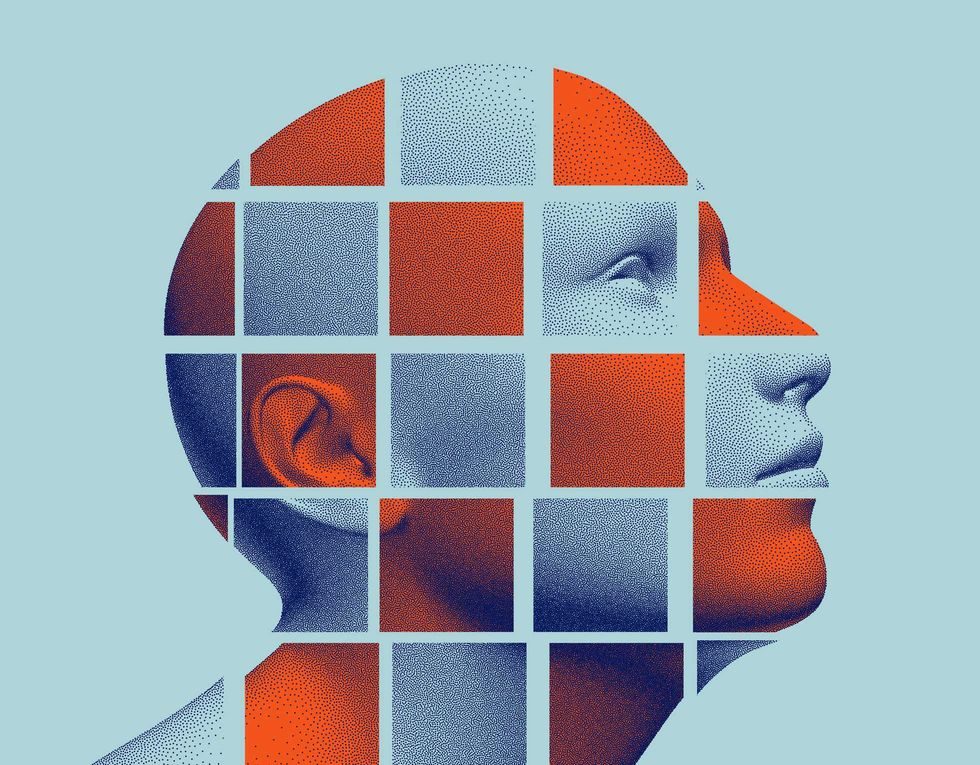
The founders demanded the Bill of Rights. AI also needs one.
Favicon 
www.theblaze.com

The founders demanded the Bill of Rights. AI also needs one.

In September 1787, the Constitutional Convention in Philadelphia came to a close. Delegates had spent months debating and negotiating the structure for a new American government. When the final document was presented for signatures, most of the delegates agreed to support it. But one of the most influential figures in the room refused.George Mason of Virginia would not sign the Constitution.Mason’s refusal did not stem from radical opposition to the new proposed government. In fact, he played a major role in shaping America’s early political philosophy. Yet when the convention concluded, Mason believed something essential was missing. The proposed Constitution created a powerful federal government, but it contained no explicit protections for individual liberty. Without a Bill of Rights, Mason warned, citizens would have little protection against abuses of power.If artificial intelligence is going to help shape the future of our society in profound ways, should it not also be built to respect the same freedoms that Americans have fought for since the founding of the republic?History ultimately proved his concerns justified. Mason’s refusal helped spark the debate that led to the adoption of the Bill of Rights a few years later. His message was simple. When a new, powerful institution is created, the protection of liberty cannot be an afterthought.A new power is emergingMore than two centuries later, we find the United States again standing at the edge of a transformative moment. Today, the institution taking shape is artificial intelligence. And this institution may end up being just as consequential to society as the shaping of the country in the late eighteenth century.The most advanced AI systems are already beginning to shape our culture and how people access information, businesses make decisions, institutions function, and public discourse unfolds. These systems are being integrated into everything from banking and education to media and health care. In many cases, AI models act as intermediaries between humans and the world of information around them.This development carries enormous promise. Artificial intelligence could accelerate medical research, improve productivity, and unlock scientific discoveries that once seemed impossible.At the same time, the growing influence of AI raises an important question. What values will guide the systems that increasingly shape our society?AI is not neutral by default. Every model reflects decisions made by its designers. The data used to train it, the rules used to filter its responses, and the priorities embedded in its algorithms all influence how it interacts with users. Beyond just answering questions and responding to prompts, these systems influence what information people encounter and how issues are understood.In other words, the institutions building AI today are quietly creating the informational infrastructure of the future.Where are the safeguards for freedom?George Mason understood that powerful institutions require clear limits. His concern centered on ensuring that a strong central government would respect the rights of the people it serves.Artificial intelligence deserves the same scrutiny.Recent controversies surrounding AI tools have revealed how easily political or ideological assumptions can shape technological systems. A growing body of studies has found that many leading AI models tend to reflect left-leaning political assumptions in their outputs, raising concerns about viewpoint bias. Major AI platforms have faced backlash for producing historically inaccurate outputs to satisfy modern ideological expectations, as seen in widely publicized image-generation failures.Social media platforms, powered by similar AI-driven algorithms, already curate what users see, amplifying certain viewpoints while quietly burying others. Even leaders within the AI industry have acknowledged the risk that these systems could influence public discourse in ways that are difficult for users to detect.More egregious examples can be seen with Chinese AI models, such as DeepSeek, which have been shown to avoid or redirect discussion on topics that conflict with official government positions, reflecting the priorities of the state rather than the pursuit of truth.Taken together, these examples demonstrate how AI can be shaped to filter reality itself, whether by governments, corporations, or the assumptions embedded by developers.These examples illustrate a basic reality. Artificial intelligence can either serve as a tool for expanding human freedom or as an instrument for shaping and controlling public discourse and, by extension, society. The outcome will depend on the values embedded in these systems today.A meaningful step forward would be the adoption of clear, principled guidelines for building and deploying these systems. At minimum, AI development should prioritize truth-seeking over narrative-shaping, ensuring that systems are designed to inform rather than steer users toward predetermined conclusions.Developers should also commit to transparency in training data sources, so the public has a clearer understanding of what informs these models.Just as important, developers should resist coercion from governments or corporations seeking to suppress lawful speech or manipulate outcomes. They should reject internal policies that seek to bury dissenting views under the vague banner of “safety,” a term that too often masks subjective judgment.These principles may not solve every problem, but they would begin to align AI with the values of a free society.George Mason’s warning for the AI ageGeorge Mason refused to sign the Constitution because he believed liberty needed stronger protection before a new federal government was enacted. His insistence on a Bill of Rights helped ensure that the American experiment would endure longer by providing explicit protections for individual freedom.The United States now faces a similar moment as artificial intelligence becomes woven into the fabric of modern life. AI will influence how people learn, communicate, and understand the world. The values guiding these systems will shape society in ways that are difficult to predict.Before this technological infrastructure becomes fully embedded in our daily lives, it is worth asking a question that George Mason would likely recognize.If artificial intelligence is going to help shape the future of our society in profound ways, should it not also be built to respect the same freedoms that Americans have fought for since the founding of the republic?The founders believed liberty required clear protections before a new, powerful structure was fully unleashed. As we enter the age of artificial intelligence, their lesson remains as relevant as ever.
Like
Comment
Share
Showing 7781 out of 126751
  • 7777
  • 7778
  • 7779
  • 7780
  • 7781
  • 7782
  • 7783
  • 7784
  • 7785
  • 7786
  • 7787
  • 7788
  • 7789
  • 7790
  • 7791
  • 7792
  • 7793
  • 7794
  • 7795
  • 7796
Advertisement
Stop Seeing These Ads

Edit Offer

Add tier


Select an image
Delete your tier
Are you sure you want to delete this tier?

Reviews

In order to sell your content and posts, start by creating a few packages. Monetization

Pay By Wallet

Payment Alert

You are about to purchase the items, do you want to proceed?

Request a Refund