YubNub Social YubNub Social
    #satire #democrats #loonylibs #iran #comedy #exodermin
    Advanced Search
  • Login
  • Register

  • Night mode
  • © 2026 YubNub Social
    About • Directory • Contact Us • Developers • Privacy Policy • Terms of Use • shareasale • FB Webview Detected • Android • Apple iOS • Get Our App

    Select Language

  • English
Night mode toggle
Featured Content
Community
New Posts (Home) ChatBox Popular Posts Reels Game Zone Top PodCasts
Explore
Explore
© 2026 YubNub Social
  • English
About • Directory • Contact Us • Developers • Privacy Policy • Terms of Use • shareasale • FB Webview Detected • Android • Apple iOS • Get Our App
Advertisement
Stop Seeing These Ads

Discover posts

Posts

Users

Pages

Blog

Market

Events

Games

Forum

YubNub News
YubNub News
5 d

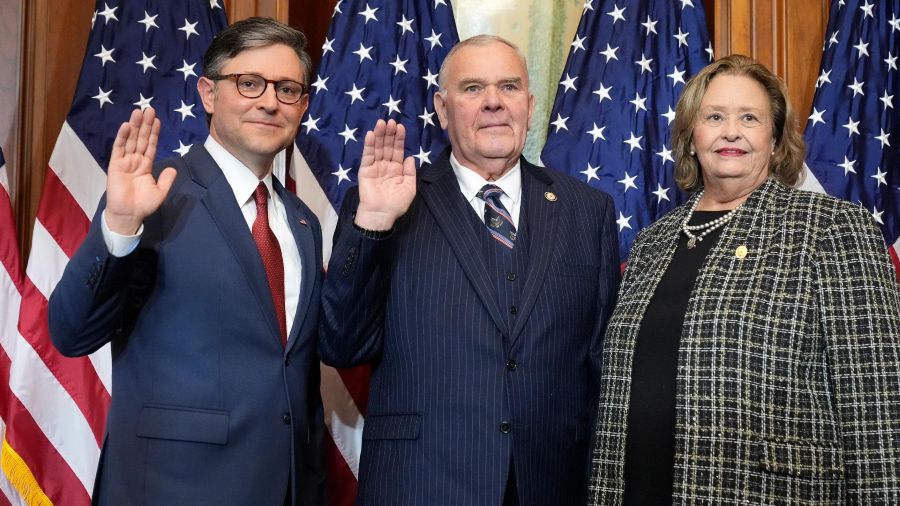
GOP Congressman’s Wife Passes Away After Hit-And-Run
Favicon 
yubnub.news

GOP Congressman’s Wife Passes Away After Hit-And-Run

Rep. Jim Baird’s wife, Danise Baird, has died after complications from the serious injuries she suffered in a January hit-and-run crash, the Indiana Republican’s office announced Sunday. She and the…
Like
Comment
Share
YubNub News
YubNub News
5 d

‘I HAVE AGREED’: Trump Reveals Potential Breakthrough In Talks With Iran’s Depleted Leadership
Favicon 
yubnub.news

‘I HAVE AGREED’: Trump Reveals Potential Breakthrough In Talks With Iran’s Depleted Leadership

President Donald Trump said Sunday that Iran’s new leadership is already looking to cut a deal, just one day after a sweeping U.S.-Israeli strike wiped out Supreme Leader Ayatollah Ali Khamenei and…
Like
Comment
Share
Classic Rock Lovers
Classic Rock Lovers  
5 d

Why Paul Stanley Thinks This Kiss Album Cover 'Sucks'
Favicon 
ultimateclassicrock.com

Why Paul Stanley Thinks This Kiss Album Cover 'Sucks'

In a new interview, Gene Simmons takes the blame and suggests an easy fix. Continue reading…
Like
Comment
Share
cloudsandwind
cloudsandwind
5 d ·Youtube

YouTube
The Government Denies Planning For Conscription!
Like
Comment
Share
Comedy Corner
Comedy Corner
5 d ·Youtube Funny Stuff

YouTube
Trading Freedom for Comfort Didn’t Work | Brad Stine
Like
Comment
Share
Heroes In Uniform
Heroes In Uniform
5 d

America’s ongoing quest to stop firing $4 million missiles at $30,000 drones
Favicon 
www.wearethemighty.com

America’s ongoing quest to stop firing $4 million missiles at $30,000 drones

In the past few years, many a defense analyst has spent countless sleepless, sweaty nights worrying about the future of drone warfare. The era of exquisite air defense is passing gently into that good night. Counter-drone tech is still struggling to keep up.For decades, the Pentagon and its allies operated under the wonderful delusion that air superiority was a birthright, bought with billion-dollar toys and protected by $4 million interceptors.Also Read: Lessons Learned: How Iran was able to bruise the US Navy’s 5th Fleet If you were to casually saunter into any modern command meeting today, you’ll see the same haunting realization on every face: we are currently trying to win duels by throwing bricks of gold at a swarm of hornets.Air power used to be the exclusive domain of nations with aerospace industries that relied on light oversight and deep pockets. Now, it belongs to anyone with a soldering iron, a 3D printer, and a Costco card.During recent clashes involving Iran and its regional proxies, we saw waves of “moped” drones, costing less than a used sedan, force the most advanced militaries on earth to burn through their interceptor stockpiles like a trust-fund kid on a Vegas bender. Questioning whether or not we can shoot down drones is moot. Quickly, it’s become more about whether we can afford to keep doing it before we are out of stock and shooting blanks, or the budget collapses under the weight of asymmetric attrition. (Omar Zaghloul/Anadolu via Getty Images) 84mm of Focused Sunlight: The Iron Beam The most closely watched autopsy of the old way of war is happening in Israel, which has been using its Iron Beam tech more frequently than it had possibly hoped. For years, laser weapons were the novelty tool of the defense industry, always five years away and ten billion dollars over budget. Since late 2025, the dream is officially operational, baking threats in mid-air like dinner rolls. The appeal is pure, unadulterated Einsteinian art. Instead of launching a sophisticated interceptor that requires a PhD to maintain, the Iron Beam focuses a 100kW high-energy laser onto a target until its structural integrity ceases to exist. There is no explosion, no exhaust trail to track, and, magically, no reload time. As long as the generator has that sweet, sweet diesel, you have an infinite magazine. The real “FAFO” factor here will be the price tag. A single laser shot costs around $2-5. To put that in perspective, a soldier spends more money buying Rip Its than they do countering an incoming suicide drone. It effectively creates a “laser wall” that makes traditional saturation tactics financially impossible for the enemy… and Dr. Evil smile. If they send a thousand drones, we spend $3,000. That is how you win the future wars of attrition. Microwave that Swarm Throughout history, humans have looked to the Gods for assistance; today is no different. The U.S. Air Force’s THOR (Tactical High-Power Operational Responder) is the military’s answer to the “swarm” nightmare we wake up in sweats about. Lasers are great, but they have to linger on a target, killing one drone at a time. In a saturation attack, you don’t have that luxury. HPM systems like THOR or Epirus’ Leonidas don’t care about precision. They emit massive bursts of microwave energy that fry the delicate silicon brains of anything with a circuit board. It doesn’t matter if there are two drones or 50; if they are in the beam’s path, they turn into falling scrap metal instantly (Skynet might want to rethink their strategy of sending pairs of scary robot legs to finish off humanity). There were trade-offs, of course, that were as heavy as the hardware itself. Breakthroughs have been made since,  particularly regarding Epirus’ Leonidas. While the early high-power microwave (HPM) systems required massive infrastructure, modern solid-state HPM systems like Leonidas are specifically designed to be highly mobile, with lower power and cooling demands, allowing them to support fast-moving maneuver units humping through a conflict. The Reusable Kamikaze: Roadrunner Perhaps the most interesting entry in this race is Anduril’s Roadrunner. Well, what is known about it is interesting. It solves what we call the “Patriot Problem”, a paralyzing hesitation of a commander who doesn’t want to fire a $4 million explosive pole at a $30,000 Shahed drone. The Roadrunner is a twin-jet autonomous vehicle that looks like a retro spaceship and behaves like a flying guard dog. It launches vertically, hunts for a target at high subsonic speeds, and then makes a life-or-death decision. If the threat is real, it becomes a warhead and dives toward the target. However, if the threat turns out to be a flock of birds or a false radar return, it doesn’t self-destruct. It flies back to base and lands on its tail to be refueled for the next sortie. It is the first time a “kamikaze” weapon has included “boomerang” functionality. The Meat in the Seat We can talk about lasers all day, but the biggest failure point in air defense isn’t the weapon; it’s the detection. Small drones are the ghosts of the modern SERP. They have minimal radar signatures, they fly low enough to hide in the clutter of buildings, and some don’t even emit radio signals for us to jam. This is where the hyper-competent, tech-literate warfighter becomes the most critical piece of gear on the battlefield. We are increasingly relying on a hybrid sensor fusion approach, combining infrared, acoustic, and optical tracking with AI algorithms that can distinguish a suicide drone from a seagull in milliseconds. Has the margin for error thinned to the point of evaporating into the ether? We are asking 19-year-olds to operate autonomous interceptor drones and directed-energy weapons while sleep-deprived and under fire. The tools have changed, but the job description is still the same: adapt and overcome. A view of damage after a kamikaze drone struck several buildings during Iran’s retaliatory attack following US and Israeli strikes in Manama, Bahrain on March 01, 2026. (Anadolu via Getty Images) Since the proliferation of inexpensive, commercially created drones, the power gap between global superpowers and regional actors has shrunk. The workmanlike approach, combining simplicity and reliability, is being forced to merge with Star Trek-esque tech just to keep the fight on. We are currently in a transition phase where the gear is smarter than many of the people using it. There is no silver bullet. Radio jamming is useless against autonomous flight paths, and lasers struggle in heavy fog or dust. For now, the solution is a layered defense that combines smarter guns, directed energy, and kamikaze interceptors into a single, networked system. Make no mistake, this is now the drone age. It didn’t arrive with a press release or great fanfare; it arrived with the sound of a lawnmower engine over a darkened base. Our tools are now officially entering the Terminator era; the outcomes of these conflicts, on the other hand, depend on a human making a decision that a computer simply cannot…yet. So, welcome to the future: It’s smokey, it’s anxiety-inducing, and it’s just getting started. Don’t Miss the Best of We Are The Mighty • The God-Switch: What Elon Musk’s Starlink can actually be used for• How the US deleted Venezuela’s air defenses so quickly • An autopsy of Venezuela’s $2 billion Russian S-300VM missile system Iran Weapons America’s ongoing quest to stop firing $4 million missiles at $30,000 drones By Adam Gramegna Military News Lessons Learned: How Iran was able to bruise the US Navy’s 5th Fleet By Adam Gramegna Special Operations Operation Eagle Claw: The story behind the failed hostage rescue in Iran By Blake Stilwell Military News Iran ‘unlikely to capitulate’ to Trump’s demands for a deal to avoid military action Kian Sharifi, Radio Free Europe/Radio Liberty Military News The military options the US has to use against Iran Ray Furlong, Radio Free Europe/Radio Liberty The post America’s ongoing quest to stop firing $4 million missiles at $30,000 drones appeared first on We Are The Mighty.
Like
Comment
Share
Constitution Watch
Constitution Watch
5 d

SCOTUStoday for Monday, March 2
Favicon 
www.scotusblog.com

SCOTUStoday for Monday, March 2

If you are looking for a great introduction to this morning’s argument in United States v. Hemani, please check out this animated explainer, done in partnership with Briefly. Our live blog begins at 9:30 a.m. EST, with argument to start at approximately 10 a.m. At the Court On Friday, the court indicated that it may announce opinions on Wednesday at 10 a.m. EST. We will be live blogging that morning beginning at 9:30 a.m. Also on Friday, the justices met in a private conference to discuss cases and vote on petitions for review. Orders from that conference are expected this morning at 9:30 a.m. EST. Tomorrow, the court will hear argument in Hunter v. United States, on whether a federal appeals court properly dismissed a Texas man’s appeal of a mandatory-medication condition when he had signed an appellate waiver as part of his plea agreement but the judge who imposed the condition told him that he had a right to appeal. Morning Reads Trump’s Unilateral Attack on Iran Paves Way for Broader Dispute Over War Powers Charlie Savage, The New York Times The United States’ military operation in Iran has reignited “a recurring debate over who rightfully wields war powers in American democracy,” according to The New York Times. President Donald Trump is facing “accusations that he is violating the Constitution by starting a war without congressional authorization,” but he is far from the first president “to commit forces to combat without congressional authorization.” The spotlight is now on the War Powers Resolution, which outlines “a limited set of situations in which a president can unilaterally deploy forces into hostilities: essentially, when the country is under attack.” When it was passed in 1973, the law gave Congress the power “to force presidents to immediately withdraw American forces from unauthorized deployments” through a veto-proof resolution. But in 1983, the Supreme Court ruled that lawmakers must “send such measures to the White House – meaning they would need two-thirds majorities in both chambers to override a presidential veto.” Trump touted support for gun rights but has defended restrictions in court Lawrence Hurley, NBC News Ahead of Monday’s argument in United States v. Hemani, in which the Trump administration is defending gun restrictions, NBC News spoke with gun rights advocates about how what Trump said about the Second Amendment on the campaign trail compares to how his administration has approached it over the past year. “The Trump administration has been very good on gun rights issues that are coming up in the states. The same isn’t true at the federal level,” said Cody Wisniewski, president of the Firearms Policy Coalition Action Foundation, to NBC News. Specifically, “the administration has … oppos[ed] a Hawaii measure barring people possessing guns from entering private property open to the public without permission” in a separate Supreme Court case and “also sued the District of Columbia, the U.S. Virgin Islands and the Los Angeles County Sheriff’s Department, claiming various gun rights infringements,” while at the same time “defending long-standing federal gun restrictions in court.” Trump Administration Seeks Delay in Tariff Refund Fight Zoe Tillman, Bloomberg In a Friday filing, lawyers for the Justice Department asked the U.S. Court of Appeals for the Federal Circuit “to wait as long as four months before reviving litigation” on tariff refunds, according to Bloomberg. “Complexity in the future counsels appropriately careful process, not breakneck speed,” the government wrote, contending that “a delay wouldn’t hurt companies because ‘monetary loss is a classic harm that can be remedied by payment of money with appropriate interest.’” The filing came after President Donald Trump again expressed his displeasure with the Supreme Court’s tariffs ruling on social media. “Is a Rehearing or Readjudication of this case possible???,” the president wrote. Retail customers file lawsuits over tariffs against FedEx and Ray-Bans maker Mae Anderson, Associated Press As of Friday, “[a]t least two retail customers pursuing tariff-related refunds [had] filed proposed class-action lawsuits in U.S. Courts against companies that also sued to recoup costs from the import taxes” that were struck down by the Supreme Court, according to the Associated Press. The lawsuits against FedEx and “EssilorLuxottica, which makes Ray-Ban sunglasses, seek to ensure that consumers get a share of any refunds the businesses get.” The FedEx lawsuit was filed after the company promised to share any refunds it manages to secure with its customers but noted that the promise is not “legally enforceable.” Barry Appleton, co-director of the Center for International Law at New York Law School, told the Associated Press that he expects “many more such consumer lawsuits to surface” in the months ahead. Catholic bishops: Trump’s assault on birthright citizenship affronts Catholic teaching Jack Jenkins and Aleja Hertzler-McCain, Religion News Service The U.S. Conference of Catholic Bishops is among the organizations that have filed amicus, or friend-of-the-court, briefs with the Supreme Court in support of the groups challenging President Donald Trump’s executive order on birthright citizenship. The USCCB’s brief states that doing away with birthright citizenship “would undermine church teaching and the ‘moral foundations’ of the country,” according to Religion News Service. “The brief is the latest in growing pushback from Catholic leaders about the president’s immigration policies, with the conservative-leaning conference of prelates increasingly at odds with the Republican administration’s efforts to pursue mass deportations.” On Site SCOTUS Videos United States v. Hemani: an animated explainer On Friday, we released the first in a series of animated videos, done in partnership with Briefly, on some of the most important upcoming cases of the 2025-26 term. As noted above, Friday’s video offered an introduction to United States v. Hemani. Case Preview Supreme Court to consider whether freight brokers can be held liable for negligent hiring In Montgomery v. Caribe Transport II, to be argued on Wednesday, March 4, the court will consider whether a federal law initially designed to deal with state trucking regulations supersedes state common-law claims holding freight brokers liable for negligently selecting dangerous motor carriers or drivers. That may not sound particularly fascinating, but the issue before the court could have broad liability implications for transportation logistics. Argument Analysis Justices appear dubious of challenge to constitutionality of foreclosure sales During Wednesday’s argument in Pung v. Isabella County, several justices seemed ready to reject the idea that the customary practice of selling real estate at an auction to recover delinquent taxes amounts to a taking without just compensation. At the same time, many appeared incensed at what seemed to them to be the high-handed treatment of the taxpayer by the local government. Contributor Corner The major debate over major questions in the tariffs decision is only the beginning In her Clear Statements column, Abbe R. Gluck reflected on the role of the “major questions” rule – the judicial presumption that Congress doesn’t delegate big questions to the executive branch without being clear that it’s doing so – in the Supreme Court’s tariffs ruling. “All seven of the opinions in the case mention the rule … and each takes a different position,” Gluck wrote, adding that the debate “offers a mere harbinger of more drama and doctrinal shifts to come.” A Closer Look: The Fight Over Footnotes Given the seriousness of current events (some of which are described in the Morning Reads), we thought it might be healthy to offer a lighter Closer Look. And so we turn to: footnotes. If you ever find yourself in a room full of litigators (given you’re a SCOTUSblog reader, you likely know one or two), and want some decent conversation, bring up this topic. Even the justices disagree on what to do with “those pesky footnotes.” (In fact, there’s an entire book, The Supreme Court Footnote: A Surprising History, that purports to cover “[a] history of the humble footnote and its impact on the highest court in the land.”) Interestingly, heavy footnote usage is relatively new to the court, with a steep increase in density over the 20th century. Indeed, Justices Oliver Wendell Holmes, Jr. and Benjamin Cardozo wrote without any dependence on footnotes, and Chief Justice Charles Evans Hughes reportedly said (but never wrote) “I will not be bound by a footnote.” Some, but not all, more recent justices have claimed to be on the same page. Justice Lewis F. Powell Jr. once wrote a memo to his law clerks asking them to avoid long, heavily footnoted opinions: “[A] frequent and justified criticism of this Court is that opinions are too long and – like many law review articles and notes – are overburdened with footnotes.” Likewise, Justice Arthur Goldberg said that footnotes “cause more problems than they solve.” When President Bill Clinton nominated Justice Stephen Breyer to the Supreme Court in 1994, Breyer echoed Goldberg’s advice to him as his clerk (“Clear writing, he always told me, reflects clear thinking, and it makes legal opinions accessible and understandable, not just to the lawyers but to all the people whom they touch. And so today, I will make this public promise to Justice Goldberg: No footnotes. Or as few as possible.”). Breyer kept his promise. Another footnote-skeptic could be found in Justice Sandra Day O’Connor. A former law clerk for the justice once wrote simply: “Justice O’Connor doesn’t like footnotes in her opinion,” and added that this “was a bracing lesson for a young lawyer fresh from a law review where a legion of footnotes, packed with authorities and afterthoughts, marched halfway up almost every page.” After he wrote his first memo, O’Connor apparently told the clerk, “If you have something to say, just say it. Don’t weasel around down in the brush.” O’Connor seems to have followed her own advice – her majority opinions averaged 474 footnoted words, a good deal lower than her colleagues (the average in opinions of all the justices being 1,811). Perhaps Justice Ruth Bader Ginsburg put it best, calling for “opinions that both get it right, and keep it tight, without undue digressions or decorations.” Oh, and for those keeping score: Although we previously noted that the longest majority opinion is Buckley v. Valeo, if one focuses only on footnotes, the 1961 opinion of McGowan v. Maryland (on the legality of certain “Sunday closing laws” or “Blue laws”) is the clear winner, with 17,197 footnoted words that constitute nearly 41% of the opinion’s overall length. The main culprit: Justice Felix Frankfurter, with an impressive 143 of them. SCOTUS Quote JUSTICE KAGAN: “Mr. Frank –” JUSTICE GORSUCH: “We – we – I’m sorry.” JUSTICE GORSUCH: “Oh, please go ahead.” JUSTICE KAGAN: “No.” CHIEF JUSTICE ROBERTS: “Justice Kagan.” JUSTICE KAGAN: “I was going to change the subject.” (Laughter.) JUSTICE GORSUCH: “So was I.” (Laughter.) JUSTICE GORSUCH: “Jurisdiction?” JUSTICE KAGAN: “Yes.” JUSTICE GORSUCH: “Go for it.” — Frank v. Gaos The post SCOTUStoday for Monday, March 2 appeared first on SCOTUSblog.

Like
Comment
Share
Entertainment News
Entertainment News
5 d ·Youtube Cool & Interesting

YouTube
Marc & Michelle Griffith | 2026 Movieguide Awards Red Carpet
Like
Comment
Share
Young Conservatives
Young Conservatives
5 d ·Youtube General Interest

YouTube
Students union votes to make plant-based menu the dining facility default
Like
Comment
Share
Young Conservatives
Young Conservatives
5 d

CENTCOM: Fourth U.S. Service Member Killed in Iran’s Initial Counterattck
Favicon 
legalinsurrection.com

CENTCOM: Fourth U.S. Service Member Killed in Iran’s Initial Counterattck

"The fourth service member, who was seriously wounded during Iran’s initial attacks, eventually succumbed to their injuries." The post CENTCOM: Fourth U.S. Service Member Killed in Iran’s Initial Counterattck first appeared on Le·gal In·sur·rec·tion.
Like
Comment
Share
Showing 833 out of 112947
  • 829
  • 830
  • 831
  • 832
  • 833
  • 834
  • 835
  • 836
  • 837
  • 838
  • 839
  • 840
  • 841
  • 842
  • 843
  • 844
  • 845
  • 846
  • 847
  • 848
Advertisement
Stop Seeing These Ads

Edit Offer

Add tier


Select an image
Delete your tier
Are you sure you want to delete this tier?

Reviews

In order to sell your content and posts, start by creating a few packages. Monetization

Pay By Wallet

Payment Alert

You are about to purchase the items, do you want to proceed?

Request a Refund