YubNub Social YubNub Social
    #racism #elections #conservatives #gerrymandering
    Advanced Search
  • Login
  • Register

  • Night mode
  • © 2026 YubNub Social
    About • Directory • Contact Us • Developers • Privacy Policy • Terms of Use • shareasale • FB Webview Detected • Android • Apple iOS • Get Our App

    Select Language

  • English
Night mode toggle
Featured Content
Community
New Posts (Home) ChatBox Popular Posts Reels Game Zone Top PodCasts
Explore
Explore
© 2026 YubNub Social
  • English
About • Directory • Contact Us • Developers • Privacy Policy • Terms of Use • shareasale • FB Webview Detected • Android • Apple iOS • Get Our App
Advertisement
Stop Seeing These Ads

Discover posts

Posts

Users

Pages

Blog

Market

Events

Games

Forum

SciFi and Fantasy
SciFi and Fantasy  
2 yrs

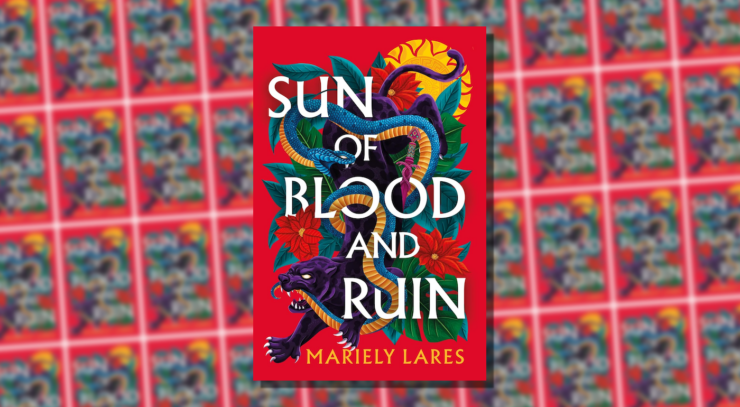
A Breathless Panther Chase: Mariely Lares’ Sun of Blood and Ruin
Favicon 
reactormag.com

A Breathless Panther Chase: Mariely Lares’ Sun of Blood and Ruin

Book Recommendations book review A Breathless Panther Chase: Mariely Lares’ Sun of Blood and Ruin A review of Mariely Lares’ historical fantasy novel reimagining Zorro. By Maura Krause | Published on March 21‚ 2024 icon-comment 0 Share New Share Twitter Facebook Pinterest RSS Feed I’ll admit it. I wanted to read Sun of Blood and Ruin because it’s marketed as a reimagining of Zorro featuring a swashbuckling sorceress. 1998’s Mask of Zorro was my first PG-13 movie and I loved it‚ despite being forever haunted by that head in a jar scene (iykyk). My inner adolescent’s attachment to that film may have brought me to Mariely Lares’ debut novel‚ but her story is so much more than a twist on the classic Zorro legend—though at times‚ almost too much more.  Set in sixteenth century New Spain‚ which is present-day Mexico‚ Sun of Blood and Ruin is the first in a duology. It is narrated by eighteen-year-old Leonora‚ a noblewoman whose elegant façade hides her double identity as folk hero Pantera. The daughter of the first viceroy of New Spain and the Mexica woman he loved‚ Leonora is caught between worlds even when she isn’t wearing the panther’s mask. For while the book is speculative history‚ the horrors of colonialism remain central. The regime of New Spain seems determined to crush the indigenous people of the land—the Nahuas‚ a term encompassing the seven tribes of the area. As a member of the court led by her fourteen-year-old half-brother‚ Viceroy Jerónimo‚ and his scheming mother vice regent‚ Leonora is a political voice for the native residents. As Pantera‚ our heroine meets violence with violence‚ fighting in the streets against the cruel Captain Nabarres and his persecution of all who adhere to Nahua ways.  Pantera’s power itself grows from the world depicted in indigenous lore. As a girl‚ Leonora wandered away from the palace and was lost in the forest for ten years. During this time she lived in Tamoanchan‚ a mythological paradise where she was trained as a Nagual—a shapeshifter. Though Pantera did not complete her training‚ she returned to the city able to wield her tonalli (life force) in battle‚ shift into a panther‚ and cross swords with the best of them.  The novel begins with both Pantera and Leonora in crisis. As Pantera‚ our protagonist fails to save a beloved local wise man from Nabarres‚ and loses her magical Sword of Integrity. As Leonora‚ she faces an unwanted betrothal to the Crown Prince of Spain‚ which will take her away from her land and her calling. In both guises‚ our narrator was born during the cursed Nemontemi‚ the Dead Days at the end of the year‚ and is thus destined to die young in battle. As the prophesied collapse of the Fifth Sun approaches‚ Leonora-Pantera can feel her violent fate drawing nearer—not to mention the end of the world at the hands of demons and vengeful goddesses. Over the course of the following 350 pages‚ this multifaceted character navigates political intrigue‚ meets a roguish guardsman with tonalli too powerful to be what he seems‚ discovers the truth about her betrothed‚ goes in search of the indigenous resistance La Justicia‚ and negotiates with the gods themselves.  Buy the Book Sun of Blood and Ruin Mariely Lares Buy Book icon-close Sun of Blood and Ruin Mariely Lares Buy this book from: AmazonBarnes and NobleiBooksIndieBoundTarget Lares’s intricate plot is a wonder‚ full of surprising connections and revelatory twists. She unfolds the sumptuous world of the book with care and patience‚ weaving new aspects of magic and startling creatures throughout the story. Her extensive research is brought to visceral life‚ and I felt she held my uninformed hand just enough. I appreciated that Lares guides this many-layered story to a satisfying conclusion‚ her only indication of a sequel being a rather filmic teaser scene at the very end.  Yet‚ this astonishing plot would be more suited to two or even three novels. The disguised folk hero and revolution narrative would be enough to fill the covers of a book‚ as would the saga of the gods’ cyclical struggles over the fate of humanity. With so much richness crammed into one book‚ every event is on the heels of the one before. I quickly became overwhelmed by revelations and lightning-quick action sequences‚ and couldn’t slow down to appreciate the characters’ arcs or the dazzling settings. At one point in the novel‚ a character seems to die‚ only to reappear five pages later; within those same five pages‚ a new character is introduced and the main character has a major revelation about her inner self. As this sequence might suggest‚ some character development is lost to the demands of this juggernaut of a plot‚ which is frustrating when the characters have been so well set up.  I came away from all this hoping Lares’ duology gets optioned for TV someday‚ despite the fact that I’m not much of a TV person. If I got the conflicted Pantera and a universe shaped by Quetzalcoatzin instead of another medieval Europe-inspired fantasy epic‚ I would be glued to that screen. Lares’ ideas are magnificent‚ but I craved more immersiveness‚ which actors and production design could provide. Though my love of Zorro might seem to inform my desire for such an adaptation‚ by the final page of this gripping and original tale‚ I’d forgotten all about him. Sun of Blood and Ruin presented a world and characters I desperately wanted to get lost in‚ but its frenetic pace and overambitious scope wouldn’t quite let me. [end-mark] The post A Breathless Panther Chase: Mariely Lares’ <;i>;Sun of Blood and Ruin<;/i>; appeared first on Reactor.

Like
Comment
Share
SciFi and Fantasy
SciFi and Fantasy  
2 yrs

New Animated Short Set in the Spider-Verse Focuses on Mental Health
Favicon 
reactormag.com

New Animated Short Set in the Spider-Verse Focuses on Mental Health

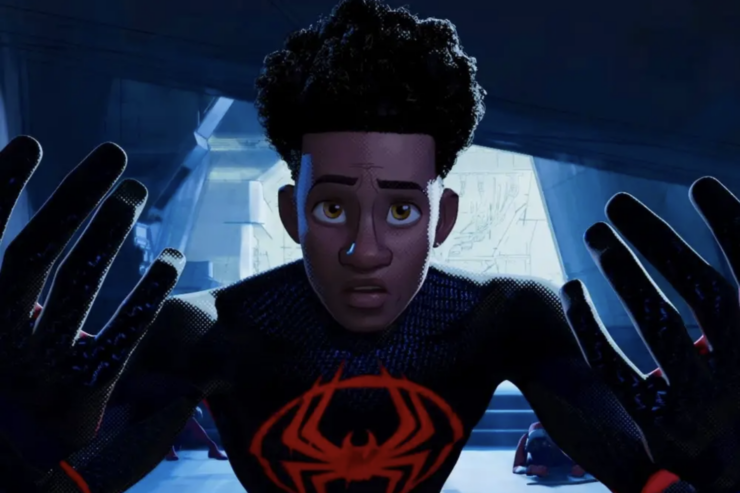
News Spider-verse New Animated Short Set in the Spider-Verse Focuses on Mental Health a reminder that your feelings are valid‚ and you’re not alone By Vanessa Armstrong | Published on March 21‚ 2024 icon-comment 0 Share New Share Twitter Facebook Pinterest RSS Feed There’s a new animated short in the Into the Spider-Verse universe that is aimed to address mental health. The short is titled “The Spider Within: A Spider-Verse Story” and was created in partnership with the Kevin Love Fund as part of the organization’s mental health-centered lesson plan. In the short‚ as reported by Variety‚ Miles Morales “struggles to balance his responsibilities as a teenager‚ friend‚ student and Spider-Man. In navigating those pressures‚ Miles experiences a panic attack that forces him to confront the manifestations of his anxiety and learn that reaching out for help can be just as brave an act as protecting his city from evil.” “Miles represents so many of us doing the best we can in our day-to-day lives‚” Jarelle Dampier‚ director of “The Spider Within‚” said in a statement. “We don’t often realize all that we’ve been through until our own body forces us to become aware of its experience. My intention is that ‘The Spider Within’ can motivate deeper conversations amongst friends &; family about their own mental health journeys—and I hope it feels like a love letter to those who adore Miles Morales.” KLF founder‚ professional basketball player and mental health advocate Kevin Love said in the same statement‚ “My hope for the short film would be for everyone‚ especially young people‚ to understand that your feelings are valid and that you are not alone in this.” He added‚ “You see it with Spider-Man in the short film‚ where Miles has a trusted confidante. He is able to take a walk with his dad and express what he’s going through. We can all learn from that – how important it is to reach out to someone‚ express your true emotions‚ speak your truth and not hold everything inside.” “The Spider Within: A Spider-Verse Story” was written by Khaila Amazan and will become available on Sony Pictures Animation’s YouTube channel starting at 6:00 a.m. PT on March 27. [end-mark] The post New Animated Short Set in the Spider-Verse Focuses on Mental Health appeared first on Reactor.
Like
Comment
Share
Daily Signal Feed
Daily Signal Feed
2 yrs

‘Woke Kindergarten’ in California Blows Money on Odd Curriculum‚ Pensions
Favicon 
www.dailysignal.com

‘Woke Kindergarten’ in California Blows Money on Odd Curriculum‚ Pensions

Topline: A California school spent $250‚000 in federal funds to hire a teacher training service called Woke Kindergarten‚ but after two years student performance got even worse‚ according to the San Francisco Chronicle. An audit by researchers at OpenTheBooks.com revealed that almost two-thirds of employees at the low-income‚ underperforming Glassbrook Elementary School are making six-figure salaries. Retired educators are also collecting pensions of more than $200‚000. Key facts: Woke Kindergarten’s website says it supports “children‚ families‚ educators‚ and organizations in their commitment to abolitionist early education and pro-black and queer and trans liberation.” The teacher training program is designed to help students “resist‚ heal‚ liberate‚ and create.” It was paid for through a federal grant meant to help the country’s lowest-performing schools. Glassbrook Elementary said it terminated Woke Kindgergarten’s contract earlier this year because the for-profit group’s public statements “did not align” with the school’s values. Woke Kindergarten ounder Akiea Gross recently said in an Instagram video that the U.S. and Israel are both “demons” and “villains” that have “no right to exist” because of their treatment of Native Americans and Palestinians. Glassbrook Elementary still defended its decision to hire Woke Kindergarten. The Chronicle reported that school district officials claimed the school was no longer on the state watch list for low performance‚ only to be told its ranking actually had gotten worse. The California Department of Education is required by law to monitor how low-performing schools use federal funds. That means the department either approved the $250‚000 Woke Kindergarten contract or did not follow proper oversight procedures. U.S. Sen. Bill Cassidy‚ R-La.‚ who leads the Senate Health‚ Education‚ Labor and Pensions Committee‚ recently opened an investigation into Woke Kindergarten and the California Department of Education’s oversight of Glassbrook Elementary. Background: Less than 4% of students at Glassbrook Elementary are proficient in math and only 12% can read at grade level. The school is in a low-income community where two-thirds of students are English learners and 80% are Hispanic. But records from OpenTheBooks.com show that in 2022‚ when Woke Kindergarten was hired‚ the Hayward Unified School District spent almost $136 million on payroll‚ including doling out six-figure salaries to 814 educators—60% of all employees. Superintendent Matthew Wayne made $295‚000 that year‚ $80‚000 more than California Gov. Gavin Newsom‚ a Democrat. The school district also paid $5 million in pensions in 2022. Eighty-one retirees collected six-figure pensions up to $211‚248. Supporting quote: A school spokesperson told Fox News: “Anti-bias/Anti-racist teaching‚ restorative practices‚ multi-language learning‚ literacy‚ and mathematics will remain a focus for Glassbrook‚ building on the work that school has undertaken over the past several years.” Summary: Regardless of one’s opinion on diversity education in schools‚ perhaps $250‚000 is better used to teach first-graders to read and write instead of tackling global politics. Originally published by RealClearInvestigations and made available via RealClearWire. Have an opinion about this article? To sound off‚ please email letters@DailySignal.com‚ and we’ll consider publishing your edited remarks in our regular “We Hear You” feature. Remember to include the URL or headline of the article plus your name and town and/or state. The post ‘Woke Kindergarten’ in California Blows Money on Odd Curriculum‚ Pensions appeared first on The Daily Signal.
Like
Comment
Share
Daily Signal Feed
Daily Signal Feed
2 yrs

The More the Feds ‘Borrow‚’ the More We Pay for Mortgages‚ Credit Cards‚ Student Loans
Favicon 
www.dailysignal.com

The More the Feds ‘Borrow‚’ the More We Pay for Mortgages‚ Credit Cards‚ Student Loans

If you think the Treasury Department borrowing trillions of dollars is a problem only for future generations‚ think again. The interest rates on your credit cards‚ student loans—and even your mortgage—are all up now because of the Treasury’s borrowing spree‚ and it’s costing you thousands. The runaway spending in Washington has been a problem for decades‚ but it got a violent shove into overdrive during the past several years. The Biden administration and their big-spender allies in Congress—from both parties—have already racked up $6.8 trillion of additional debt. And that money had to come from somewhere. For the first couple years of the Biden administration‚ it came from the Federal Reserve‚ which simply created the money. That devalued the currency and caused 40-year-high inflation. When the Fed stopped its printing presses‚ however‚ the Treasury had to borrow from the public. That forced interest rates on Treasury bills‚ notes and bonds to rise—and fast. Many Treasury yields have quadrupled in less than four years. Some yields have increased 75-fold. The reason is simple: The Treasury is competing with everyone else to borrow trillions of dollars annually. You may not realize it‚ but when you apply at a bank for a mortgage‚ or online for a credit card‚ or at a dealership for an auto loan‚ you’re actually competing to borrow money. A lender has many options when it comes to lending out his money. And that means loan pricing is a competitive process. We call the price to borrow money the interest rate. A higher interest rate means it’s more expensive to borrow‚ while a lower interest rate reduces the cost of borrowing. (Photo: Jim Vallee/iStock/Getty Images) Like other markets‚ when there is a surge in demand for loanable funds‚ the price rises. Hence‚ if people want to borrow much more money‚ interest rates offered on loans will march upward. Those borrowers who are willing to pay more will receive loans; the other would-be borrowers receive nothing. The Treasury has provided just such a demand surge—in spades. The federal government is running a $3 trillion annualized deficit for the current fiscal year. To lure lenders away from private borrowers‚ the Treasury was forced to offer higher interest rates. But that left less money available for those private borrowers‚ individuals and businesses alike. With potential borrowers competing for fewer dollars‚ the interest rate for private loans also rose. To add insult to injury‚ 40-year-high inflation has so increased people’s cost of living that they’re able to save less‚ if anything at all. The average savings rate today is less than half of its pre-pandemic level‚ and the reduction in savings has decreased the amount of money available for lending. The smaller supply of loanable funds has also pushed up the price of borrowing‚ driving interest rates even higher. Furthermore‚ Treasurys are viewed as essentially guaranteed‚ having no default risk. Any individual‚ no matter how creditworthy‚ will have some level of risk for which the lender will ask to be compensated. That means private borrowers will pay an interest rate premium compared with the federal government. The result has been a tripling of mortgage interest rates for many borrowers‚ record high interest rates on credit cards‚ and the highest student and auto loan interest rates in more than a decade. Americans are paying more than $240 billion annually just in credit card interest‚ before they put a dime toward actually paying down their balances. For the first time ever‚ interest on non-mortgage debt has caught up to the interest families are paying on their mortgages. Speaking of mortgages‚ higher interest rates have increased the monthly payment on a median price home by over $1‚000 compared to three years ago. That’s an extra $12‚000 each year—for 30 years—for the same house. It’s the same story with student and auto loans: The typical American family is paying thousands more annually in interest payments now than in 2021. The high borrowing costs punishing American families are here to stay as long as Congress continues its breakneck pace of deficit spending. Until that stops‚ the Treasury will continue sucking all the oxygen out of the room‚ while American families suffocate financially. Distributed by Tribune News Service Have an opinion about this article? To sound off‚ please email letters@DailySignal.com and we’ll consider publishing your edited remarks in our regular “We Hear You” feature. Remember to include the url or headline of the article plus your name and town and/or state. The post The More the Feds ‘Borrow‚’ the More We Pay for Mortgages‚ Credit Cards‚ Student Loans appeared first on The Daily Signal.
Like
Comment
Share
Reclaim The Net Feed
2 yrs

ACLU Targets a Whistleblower‚ Accused of Rejecting Its Free Speech Roots
Favicon 
reclaimthenet.org

ACLU Targets a Whistleblower‚ Accused of Rejecting Its Free Speech Roots

If you're tired of censorship and dystopian threats against civil liberties‚ subscribe to Reclaim The Net. The clearly emerging bias of the American Civil Liberties Union (ACLU) over many years now – although the organization either does‚ or likes to appear to keep up the appearance of a principled actor by taking on some cases opposed to its political philosophy – has led to it being branded by some as a “former civil liberties group.” The reason is the decision to wade into a transgenderism controversy‚ where it concerns children – and in the process‚ according to reports‚ try to subpoena a whistleblower. The whistleblower‚ Jamie Reed‚ is critical of medical procedures that allow gender transition of minors. The ACLU was behind the subpoena filed in Missouri‚ that asked for all communications Reed had with journalist Jesse Singal. Singal revealed the goings-on in a post on X in early March. And by “all” – ACLU meant all documents the two parties exchanged regarding “gender-affirming care” provided at or through the Washington University Transgender Center at St. Louis Children’s Hospital. “Strange evening‚” Singal posted‚ adding that in response he emailed the group by saying (politely) – “WTF‚ you’re the ACLU.” Apparently‚ a lawyer got in touch with Singal next‚ claiming there was “a mistake.” You can say that again – free speech enthusiasts might react to all this. But the case is not that simple. The subpoena has been revised in the meantime – to remove demands that Singal surrenders all her communications with the journalist‚ and other media outlets. But the original of the revised subpoena is still available on the Missouri courts website‚ reports say. Reed is a former staffer at the Transgender Center whose doubts that proper attention was given to long-term effects of allowing children to undergo gender transition surgery‚ or use puberty blocking drugs‚ prompted the state to impose a ban on those medical practices last year. “Medically appalling‚” is how Reed described all this. ACLU’s involvement here is as a party challenging the Missouri legislation. But‚ some observers are particularly struck by this group of all – given its past role as an uncompromising defender of First Amendment rights – now trying to get whistleblowers in trouble. Once upon a time‚ the ACLU defended even the Ku Klux Klan and Nazis’ right to free speech. But now the line in the sand seems to be drawn at transgenderism. The post ACLU Targets a Whistleblower‚ Accused of Rejecting Its Free Speech Roots appeared first on Reclaim The Net.
Like
Comment
Share
Hot Air Feed
Hot Air Feed
2 yrs

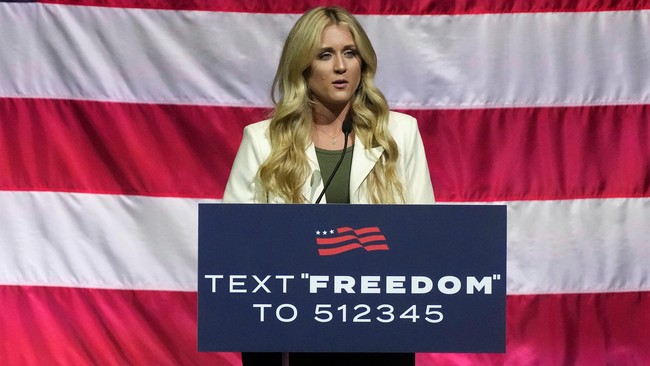
Resolution to Ban Trans Athletes Approved in... Manhattan?
Favicon 
hotair.com

Resolution to Ban Trans Athletes Approved in... Manhattan?

Resolution to Ban Trans Athletes Approved in... Manhattan?
Like
Comment
Share
Hot Air Feed
Hot Air Feed
2 yrs

Canadian Librarian Fired For Arguing That Libraries Should Be Ideologically Neutral
Favicon 
hotair.com

Canadian Librarian Fired For Arguing That Libraries Should Be Ideologically Neutral

Canadian Librarian Fired For Arguing That Libraries Should Be Ideologically Neutral
Like
Comment
Share
Hot Air Feed
Hot Air Feed
2 yrs

Punish Success: DOJ Sues Apple for iPhone Monopoly
Favicon 
hotair.com

Punish Success: DOJ Sues Apple for iPhone Monopoly

Punish Success: DOJ Sues Apple for iPhone Monopoly
Like
Comment
Share
Science Explorer
Science Explorer
2 yrs

Should Death Be Taught In Schools? Study Calls For Death Education Overhaul
Favicon 
www.iflscience.com

Should Death Be Taught In Schools? Study Calls For Death Education Overhaul

As adults‚ we know death is a part of life; but for children‚ learning about it often comes down to your first brush with loss‚ be that a pet or parent. Is there a better way to prepare children for grief than waiting for a death to happen? New research suggests so‚ proposing that all children could benefit from better death education in schools‚ not just those who have already lost someone.Grief doesn’t care if you’ve graduated‚ and yet 90 percent of teachers say they don’t feel sufficiently trained to support bereaved children‚ according to Child Bereavement UK. The stat seems counterintuitive in the face of the 86 percent of teachers who recognize that death is something that is going to come up within the school community.A new small-scale study suggests that death education in schools should see an overhaul‚ advocating for its inclusion as a vital part of the curriculum. It worked closely with a bereavement charity to conduct interviews and activities with children‚ which included writing stories about grief‚ drawing pictures‚ and writing letters to imaginary people. They also asked them about their experiences of adults talking to them about loss‚ and it revealed a theme among advice given by adults.“Children reported that adults often said – 'you will feel sad'‚ or 'you need to be brave for your mum'‚" said study author Dr Sukhbinder Hamilton from the University of Portsmouth in a statement. "This isn’t helpful; the reality of grief is that it’s not constant and it comes and goes. For children‚ it is even more variable than adults. On the surface‚ children can seem fine but when adults try to put expectations onto them it adds confusion and emotional turmoil. What we should be doing is saying things like – 'it’s ok to feel however you feel'. This way the adult is giving the child the control and space to deal with their grief.”By introducing grief coping strategies and death education into the curriculum‚ the paper suggests we could better prepare both staff and students so that the school community can be a more productive place of healing for children who have lost loved ones. “Teachers often lack the time or feel ill-equipped to address the complex needs of students dealing with the loss of a loved one‚” explained Hamilton. “The reality is that on average there will be two children in every class dealing with a bereavement of this kind. By providing a supportive environment‚ children are more likely to feel safe and thrive emotionally and academically.”Death education is something Professor Ines Testoni of the University of Padova has been advocating for‚ urging that it can help us to process the loss of a loved one rather than resorting to clinging on to the relationships. It was something we discussed in an interview about whether technology helps or harms grief‚ which you can catch in the March issue of CURIOUS.“Since the 1980s‚ researchers of Terror Management Theory have shown that our life is totally conditioned by the anguish of death and yet we are totally unaware of it‚” explained Testoni. “In fact‚ society‚ on the one hand‚ helps us to do this by setting up ideologies (such as religious ideologies) that deny death and‚ on the other hand‚ by systematically removing serious thoughts and discourses concerning death.” “The need to keep at bay the paralysing terror that derives from the knowledge that we are mortal‚ however‚ means that many of our dysfunctional behaviours are caused by the removal of this awareness which also continues to act at an unconscious level‚ leveraging socially constructed beliefs as consolatory discourses.”Perhaps it’s time that awareness began in the classroom.The study is published in Mind‚ Brain and Education Journal.
Like
Comment
Share
Science Explorer
Science Explorer
2 yrs

The Toba Supervolcano Potentially Almost Destroyed Humanity – But May Have Also Helped Us Spread
Favicon 
www.iflscience.com

The Toba Supervolcano Potentially Almost Destroyed Humanity – But May Have Also Helped Us Spread

The eruption of the Toba supervolcano is thought to have been the largest in our species’ existence. Inevitably‚ it changed the climate of the planet for a period. Findings from Ethiopia have now led some anthropologists to think Toba could also be key to one of the great mysteries of human evolution: what caused our final expansion out of Africa. It might even overturn a central assumption of how migrations from Africa occurred.The genus Homo is thought to have left Africa close to a million years ago in the form of H. erectus‚ if not well before. Yet modern humans seem to have found it much more difficult. Whether this was because conditions had changed‚ or because of competition from our already established near relatives‚ we don’t know. However‚ it seems that H. sapiens expanded into western Asia and Europe on several occasions‚ without being able to stay.Why then did a subsequent migration quickly lead to us reaching all parts of Eurasia and even Australia‚ followed much later by the Americas and Pacific islands? According to a large team of scientists‚ it might have been the result of an eruption thousands of kilometers from the closest population of Homo sapiens‚ in what is now Indonesia.There is no doubt that the Toba eruption was enormous‚ releasing at least 2‚000 cubic kilometers of material. Given the much smaller Tambora eruption produced a “year without a summer” from all the dust and ash blocking the Sun‚ it’s almost certain Toba caused cooling‚ possibly for several years. Quite how much is debated‚ but one estimate suggests a drop of 5°C (9°F)‚ briefly returning the planet to ice age conditions.Even though the climate would have returned to normal within a few years‚ our ancestors' stores of food would have been almost non-existent at the time. This has inspired the Toba catastrophe theory‚ which proposes that post-eruption conditions reduced the human population to less than 10‚000‚ creating a genetic bottleneck. The idea is much debated‚ with many arguing the climatic effects were smaller and the bottleneck’s timing is wrong.Professor Curtis Marean of Arizona State University thinks the two mysteries might be connected‚ based on diggings in the horn of Africa‚ particularly Shinfa-Metema 1 in northwestern Ethiopia. Marean and colleagues found tiny volcanic glass shards known as cryptotephra at sites where humans lived‚ and that occupation of those sites continued after the layer in which the particles are found was deposited.A tiny glass shard from the Toba supereruption‚ shows humans occupied the site before‚ during and after the volcanic winter.Image credit: Racheal Johnsen"This study confirms the results from Pinnacle Point in South Africa—the eruption of Toba may have changed the environment in Africa‚ but people adapted and survived that eruption-caused environmental change‚" Marean said in a statement. The Shinfa-Metema 1 site could have even deeper implications‚ Marean and colleagues think. The standard explanation of expansion out of Africa‚ by modern humans‚ other Homo species‚ and even other large mammals‚ is that they followed “green corridors” during wet periods that turned normally forbidding regions like the Sinai Desert to grass.However‚ Shinfa-Metema 1‚ which is by the banks of a tributary of the Nile‚ tells a different story. Almost 16‚000 pieces of chipped stone‚ mostly very small in size‚ have been found on one small patch‚ indicating a long-term human presence. Dating suggests it was occupied when conditions in the region were dry. Even when the river didn’t flow‚ the riverbed became a series of waterholes‚ the authors propose‚ and humans survived by hunting the animals that came to drink‚ unsporting as it may have been. Fish intake rose in these times‚ presumably because they were easier to catch as the water levels fell.Toba may have produced a particularly extreme dry season in northeastern Africa. Triangular stone tools found at Shinfa-Metema 1 from around the Toba era are thought to be the oldest evidence of archery in the world.Stone points found at Shinfa-Metema 1 are more consistent with arrowheads than the tips of spears‚ making this the oldest evidence of archery in the world‚ coinciding with the Toba eruption.Image credit: Blue Nile Survey Project"As people depleted food in and around a given dry season waterhole‚ they were likely forced to move to new waterholes‚" said Professor John Kappelman. "Seasonal rivers thus functioned as 'pumps' that siphoned populations out along the channels from one waterhole to another‚ potentially driving the most recent out-of-Africa dispersal."Instead of a “green corridor”‚ humans may have migrated to the edge of Africa along “blue highways”‚ and eventually found points to cross.“This scenario makes it probable that the dispersing population would be reduced in size and is perhaps linked to the low genetic diversity of the modern humans that departed Africa‚” the authors note.The team doubt those who left their mark at Shinfa-Metema 1 were the ones to make the great migration‚ or even their ancestors. Nevertheless‚ they think the skills this population developed would have been common among survivors elsewhere in Africa‚ including close to potential crossing points into Asia.The study is published in Nature.
Like
Comment
Share
Showing 100702 out of 120911
  • 100698
  • 100699
  • 100700
  • 100701
  • 100702
  • 100703
  • 100704
  • 100705
  • 100706
  • 100707
  • 100708
  • 100709
  • 100710
  • 100711
  • 100712
  • 100713
  • 100714
  • 100715
  • 100716
  • 100717
Advertisement
Stop Seeing These Ads

Edit Offer

Add tier


Select an image
Delete your tier
Are you sure you want to delete this tier?

Reviews

In order to sell your content and posts, start by creating a few packages. Monetization

Pay By Wallet

Payment Alert

You are about to purchase the items, do you want to proceed?

Request a Refund