YubNub Social YubNub Social
    #music #tew #tuba #euphonium #tew2026 #militarymusic #armymusic #armyband #band #concertband #uk #tusab #jazz #armyorchestra #orchestra
    Advanced Search
  • Login
  • Register

  • Night mode
  • © 2026 YubNub Social
    About • Directory • Contact Us • Developers • Privacy Policy • Terms of Use • shareasale • FB Webview Detected • Android • Apple iOS • Get Our App

    Select Language

  • English
Night mode toggle
Featured Content
Community
New Posts (Home) ChatBox Popular Posts Reels Game Zone Top PodCasts
Explore
Explore
© 2026 YubNub Social
  • English
About • Directory • Contact Us • Developers • Privacy Policy • Terms of Use • shareasale • FB Webview Detected • Android • Apple iOS • Get Our App
Advertisement
Stop Seeing These Ads

Discover posts

Posts

Users

Pages

Blog

Market

Events

Games

Forum

Hot Air Feed
Hot Air Feed
2 yrs

Unsealed Divorce Docs: So Much for Fani-Mas?
Favicon 
hotair.com

Unsealed Divorce Docs: So Much for Fani-Mas?

Unsealed Divorce Docs: So Much for Fani-Mas?
Like
Comment
Share
Hot Air Feed
Hot Air Feed
2 yrs

EU's Implacable Plod to NetZero Suddenly Tripping Over Itself
Favicon 
hotair.com

EU's Implacable Plod to NetZero Suddenly Tripping Over Itself

EU's Implacable Plod to NetZero Suddenly Tripping Over Itself
Like
Comment
Share
Science Explorer
Science Explorer
2 yrs

Forbidden Frozen Alligator Popsicles Seen In North Carolina And Texas – But Don't Lick Them
Favicon 
www.iflscience.com

Forbidden Frozen Alligator Popsicles Seen In North Carolina And Texas – But Don't Lick Them

Animals have a whole range of means to survive the cold‚ from thick fur and warm dens to simply sleeping through the cold winter months. Alligators might not be the first creatures that come to mind when thinking about survival tactics for cold weather‚ but videos reveal that freezing right along with the lake is the best way for them to get through a cold snap.In Texas and North Carolina‚ videos are emerging on social media of “gatorcicles”. Found in frozen bodies of water‚ these are alligators that have let the water freeze solidly around them. Only their noses and mouths poke out of the surface of the ice‚ allowing the animals to breathe. One video shared by gatorcountytx on TikTok showed exactly that.         IFLScience is not responsible for content shared from external sites.According to the South Carolina Aquarium‚ this is a process called brumation‚ a period of dormancy where the heart rate and other processes within the body slow down in response to cold weather. In alligators and other reptiles‚ it consists of a decreased body temperature‚ lethargy and decreased metabolism. As these animals are cold-blooded and require warmth from the sun for their metabolism‚ if the temperatures get too cold‚ they can die. However‚ this period of brumation typically lasts 4-5 months in response to cold weather. It's similar to hibernation as the animals go without eating‚ but it is distinct in that they will continue to drink and are not in quite as deep of a sleep state.The TikTok account 2guysandsomeland also shared a video of "swamp puppies" frozen in their habitat and it gives a good idea of how out of it these alligators are – the person in the video is able to "boop the snoot"‚ although that's definitely not recommended. And neither is licking them‚ even if they have been compared to popsicles.        IFLScience is not responsible for content shared from external sites.Elsewhere in the US‚ more frozen animals are causing chaos‚ as it's "dodge the falling iguana" time again in Florida. 
Like
Comment
Share
Science Explorer
Science Explorer
2 yrs

Watch Two Connected Solar Flares Explode Half-Way Across The Sun From Each Other
Favicon 
www.iflscience.com

Watch Two Connected Solar Flares Explode Half-Way Across The Sun From Each Other

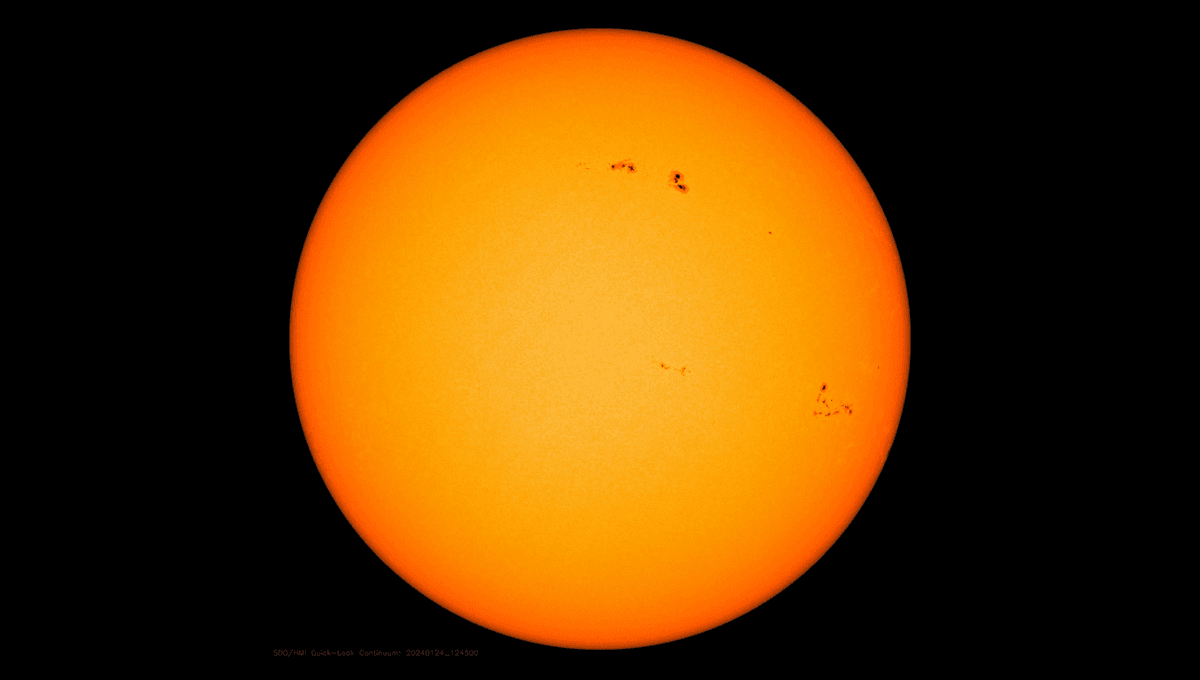
In a rare event‚ the Sun has simultaneously released two mighty solar flares separated by 500‚000 kilometers (300‚000 miles).The last 48 hours have seen remarkable behavior on the Sun‚ even by the standards of its last‚ highly active‚ year. Two sunspots‚ AR3559 and AR3561‚ have been filmed flaring simultaneously. The flares do not reach X-class‚ even together‚ instead having a combined value of M5.1 (halfway through the second highest energy flare class). Nevertheless‚ the explosive duet is a rare phenomenon and a sign of the Sun’s current activity.Rather than a coincidence‚ the paired explosions are an example of “sympathetic solar flares‚” where magnetic loops in the solar corona trigger simultaneous explosions. Astronomers have known about sympathetic solar flares for decades‚ and analyzed thousands for patterns‚ but until recently we have lacked the ability to film them in all their glory. Moreover‚ with the flares sometimes more than 90 degrees apart‚ it’s often the case that only one is directly visible from Earth. One of the sunspots responsible‚ AR3561‚ has been labeled as hyperactive‚ having released more than a dozen M-class flares within 36 hours‚ along with at least seven C-class flares. AR3561 looks smaller and less intensely dark than AR3559. Indeed‚ in still photographs it doesn’t stand out next to the nearby cluster of sunspots collectively known as AR3556. However‚ it has developed exceptionally fast‚ not having been present at the start of the week‚ and is accompanying that growth with flares almost every hour. Solar astronomers say its magnetic complexity indicates an increased potential for more‚ and possibly more powerful‚ flares to come. Some of the flares have brought coronal mass ejections with them. According to Spaceweather.com‚ none of these are large enough‚ or approaching Earth directly enough‚ to be expected to produce major impacts here. However‚ minor geomagnetic storms (G1-class) are considered possible over the next three nights from glancing blows to Earth’s magnetosphere‚ particularly on Thursday and Friday. This is likely to be accompanied by auroral activity‚ but probably only at high latitudes.The combined flares‚ the majority of whose energy came from AR3359‚ managed to produce moderate radio blackouts‚ according to NOAA‚ mostly affecting the southern hemisphere.After the unexpected strength of solar activity last year‚ debate raged as to whether solar cycle 25‚ initially expected to peak in 2025‚ had reached its maximum early‚ or if this year would be bigger still. The last five months of 2023 had fewer sunspots than June-August‚ favoring the early peak theory. However‚ AR3561 appears to be trying to change that story on its own‚ and this year may be the most active we’ve seen for decades.
Like
Comment
Share
Science Explorer
Science Explorer
2 yrs

Jeff Bezos Is Building A Giant Clock That'll Keep Time For 10‚000 Years
Favicon 
www.iflscience.com

Jeff Bezos Is Building A Giant Clock That'll Keep Time For 10‚000 Years

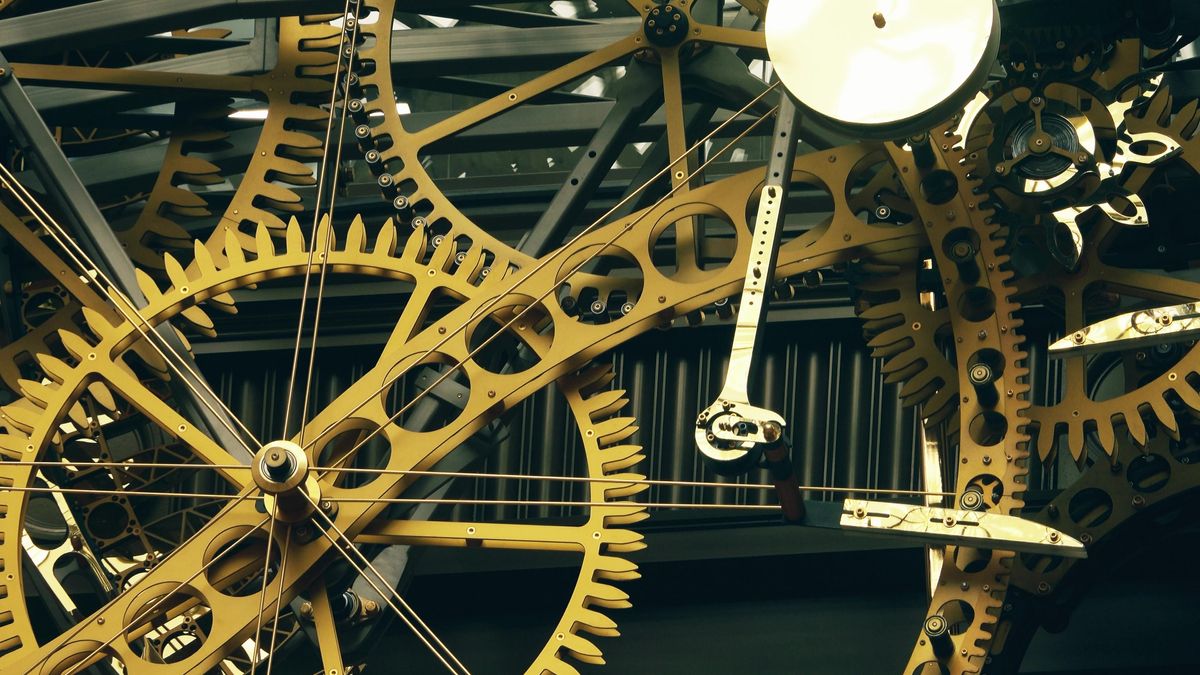
Amazon founder Jeff Bezos and a clutch of like-minded folks are constructing a monumental clock that’s designed to last for 10‚000 years. Its purpose‚ apparently‚ is to be an icon of “long-term thinking” and inspire people to dream far beyond the limited scope of a human lifetime.The project is the brainchild of computer scientist Danny Hillis who first drummed up the idea in the 1980s. Writing in an essay for WIRED Magazine in 1995‚ Hillis explained: “I want to build a clock that ticks once a year. The century hand advances once every 100 years‚ and the cuckoo comes out on the millennium… If I hurry‚ I should finish the clock in time to see the cuckoo come out for the first time.”His plan didn’t remain a lofty pipedream. To get the ball rolling‚ Hillis partnered up with Stewart Brand and founded the Long Now Foundation‚ a nonprofit that aims to “foster long-term thinking.” They’ve received support from Bezos‚ who’s reportedly injected $42 million into the construction of the giant clock. "Civilization is revving itself into a pathologically short attention span [...] Some sort of balancing corrective to the short-sightedness is needed‚” Brand said in a post explaining the philosophy of the clock.“Such a clock‚ if sufficiently impressive and well-engineered‚ would embody deep time for people. It should be charismatic to visit‚ interesting to think about‚ and famous enough to become iconic in the public discourse. Ideally‚ it would do for thinking about time what the photographs of Earth from space have done for thinking about the environment. Such icons reframe the way people think‚” he added.The 10‚000-Year Clock will be “hundreds of feet tall‚” although there’s no word yet on exact measurements‚ and will sit deep within a mountain in West Texas. It will feature dozens of vast dials that are built to last and a chime generator‚ which has been designed by ambient music wizard Brian Eno.         Installation of the clock began in 2018 (or the year 02018 as the Long Now Foundation likes to call it). However‚ preparation work – namely excavating the site for the clock – started long before. In 2012‚ Bezos released an update explaining they had just finished digging the 152-meter (500-foot) deep vertical shaft for the clock.According to the project’s website‚ no completion date has been set. I guess there’s no rush if you think in millennia-long timespans. For the time being‚ there is a scaled-down prototype of the clock on display at the Science Museum in London.The 10‚000-Year Clock has its critics. For some‚ the clock is a demonstration of ivory tower thinking‚ Silicon Valley utopianism‚ and obscene wealth. WIRED‚ which gave the clock its first public debut‚ published an article in 2020 titled The 10‚000-Year Clock Is a Waste of Time‚ which denounced the project as a "Gilded Age distraction".But hey‚ let’s see who’s laughing in 10‚000 years. 
Like
Comment
Share
Science Explorer
Science Explorer
2 yrs

JWST Spots New Star-Forming Nebula That Looks Like A Painting Of Heaven
Favicon 
www.iflscience.com

JWST Spots New Star-Forming Nebula That Looks Like A Painting Of Heaven

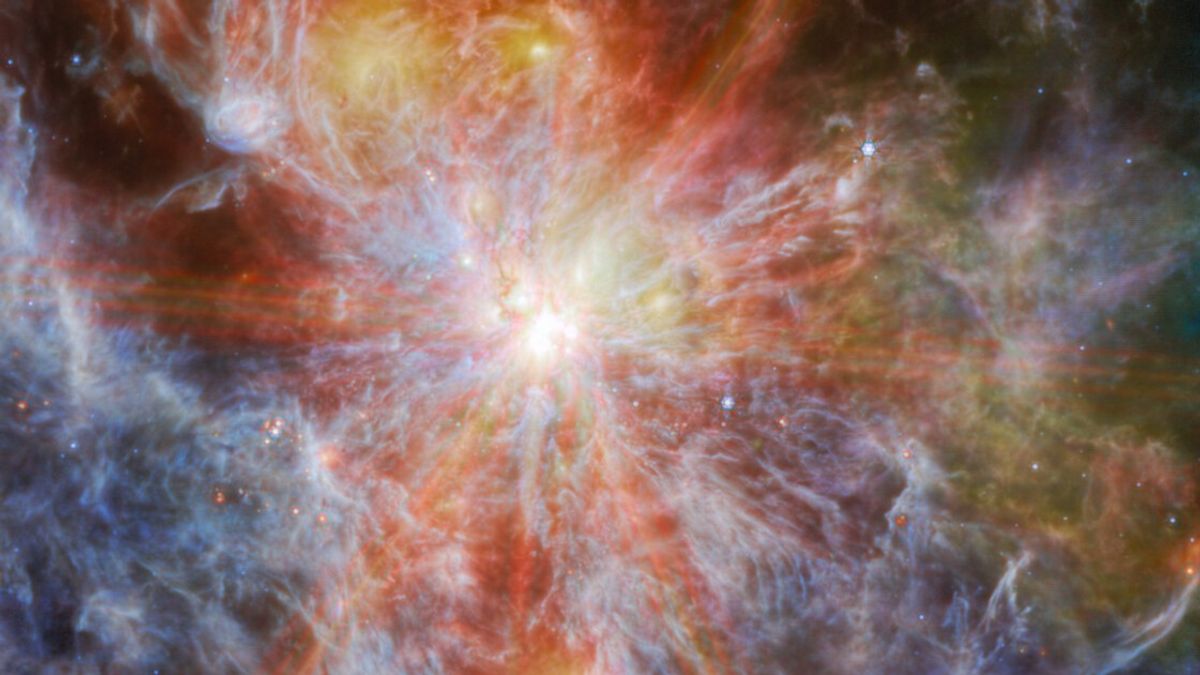
The birthplaces of stars have never looked this good. Thanks to the keen infrared eye of JWST‚ which can see through some of the gas and dust that make up star-forming clouds‚ humans have gotten new insights into some incredible nebulae – and with beautiful pictures‚ too.The latest one is an image of N79 using the space telescope's Mid-InfraRed Instrument (MIRI). N79 is located in the Large Magellanic Cloud (LMC)‚ one of the largest and closest satellite galaxies to our own‚ the Milky Way. N79 is about 1‚630 light-years across‚ but this image focuses just on a small portion called N79 south.The full view of N79 South.Image Credit: ESA/Webb‚ NASA &; CSA‚ M. MeixnerThe mid-infrared view provided by MIRI allows one to peer deep inside the nebula‚ highlighting the glowing moving gas which is located deeper inside the cloud. It would be invisible with a telescope that only sees the light that the human eye can see. And it’s not just shrouded gas and dust – there are also stars and proto-stars within the nebula‚ including an object bright enough to create the typical diffraction spike pattern.This pattern appears due to how the secondary mirror is being held in the telescope. The mirror is held by three struts‚ and as light moves around them‚ the light gets diffracted. Each strut produces two spikes 90 degrees from each other. That makes six spikes‚ but if you look at the picture you’ll notice that there are two extra spikes almost at the vertical. There is another feature that creates spikes‚ and that’s the hexagonal mirrors of the system. This also creates six spikes‚ but everything is aligned so four spikes overlap in the images‚ so there are only eight visible.N79 is similar to another nebula imaged by JWST called the Tarantula Nebula‚ or 30 Doradus‚ which is also located in the LMC. Both of these nebulae are producing stars at a rate not seen in our galaxy for billions and billions of years‚ and N79 is doing so twice as efficiently as 30 Doradus.Understanding star formation in the LMC gives us insight into the same phenomenon in the distant universe. The LMC is more primitive in composition and more active than the Milky Way‚ so it’s a good analogous of galaxies from the distant past. 
Like
Comment
Share
Science Explorer
Science Explorer
2 yrs

Space Firm Tests Space Station Module By Blowing It Up
Favicon 
www.iflscience.com

Space Firm Tests Space Station Module By Blowing It Up

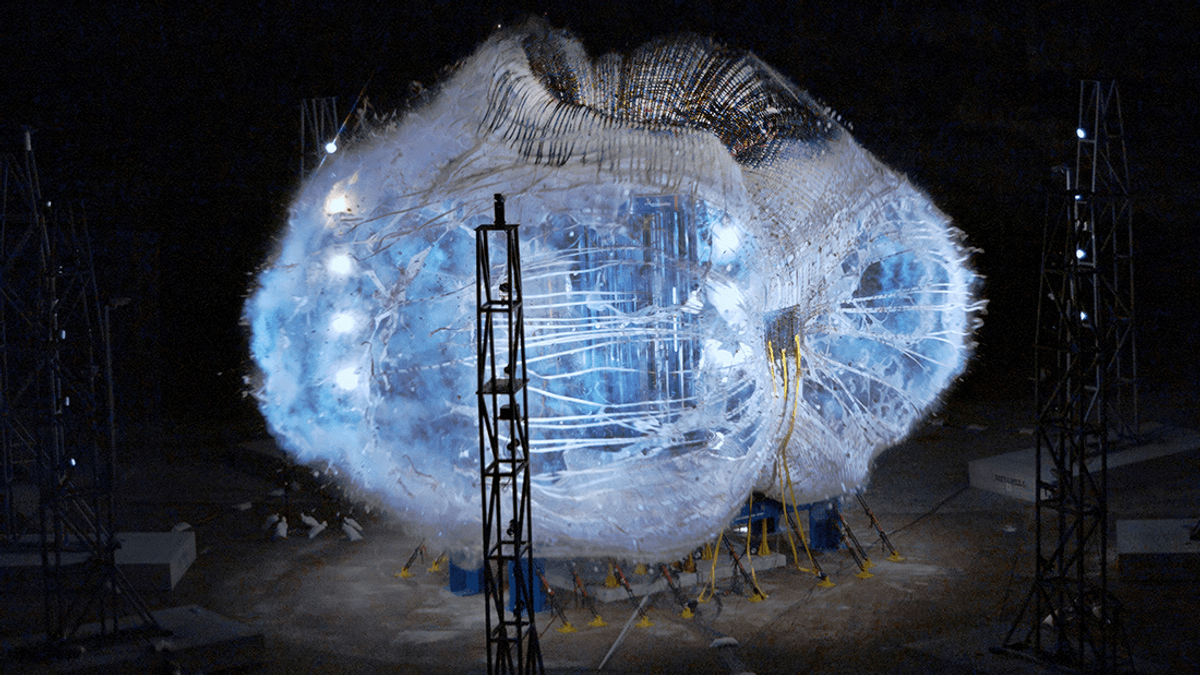
A firm hoping to place the first private space station into low-Earth orbit has taken its latest steps towards that goal‚ inflating and then blowing up a test module.Sierra Space‚ based in Colorado‚ designed an expandable module which is only inflated to its full capacity once it is in orbit. The Large Integrated Flexible Environment (LIFE) modules are over 6 meters (20 feet) tall‚ and comparable in size to an average family home‚ according to the company. The main advantage of expandable space stations‚ should everything go to plan‚ is how much living/working space they will provide per each (expensive) launch."Life will achieve 1/3 of the volume of the ISS in one launch‚" Leanne Thompson‚ Systems Engineer at Sierra Space‚ said in a video‚ "where that previously took 10 to 15 launches to achieve that same volume."               The module‚ made from woven materials that become rigid under pressure‚ was put to an Ultimate Burst Pressure (UBP) test at NASA’s Marshall Space Flight Center. Essentially‚ as the name implies‚ you just keep on inflating the module until it can't take the pressure anymore and fails.It exploded pretty spectacularly‚ but that was to be expected. The International Space Station runs at the operational level of 101.3 kilopascal (14.7 psi)‚ which is about the atmospheric pressure at sea level. NASA recommends that modules should be able to withstand four times a maximum operating pressure of 104.8 kilopascal (15.2 psi). LIFE exceeded this by 27 percent‚ withstanding an impressive 531 kilopascals (77psi) before failing‚ nearly the pressure within a champagne bottle.“Over the past two years‚ our team has worked tirelessly to reach this point. Working with our key suppliers and strategic partners‚ Sierra Space has guided our collaborative effort and reached new heights with this latest UBP test‚” Shawn Buckley‚ Senior Director of Engineering and Chief Technologist of EarthSpace Systems‚ added in a press release. “We have assembled the expertise and knowledge that is required to propel this amazing technology to the next steps – Low Earth Orbit and beyond.”As exciting as that is‚ there is a lot of testing to be done before anybody floats around inside. The team will continue with UBP tests as well as developing the atmospheric barrier for the module‚ and layers to help protect it from orbital debris.
Like
Comment
Share
Science Explorer
Science Explorer
2 yrs

This Is The Most Accurate Flat Map Of Earth
Favicon 
www.iflscience.com

This Is The Most Accurate Flat Map Of Earth

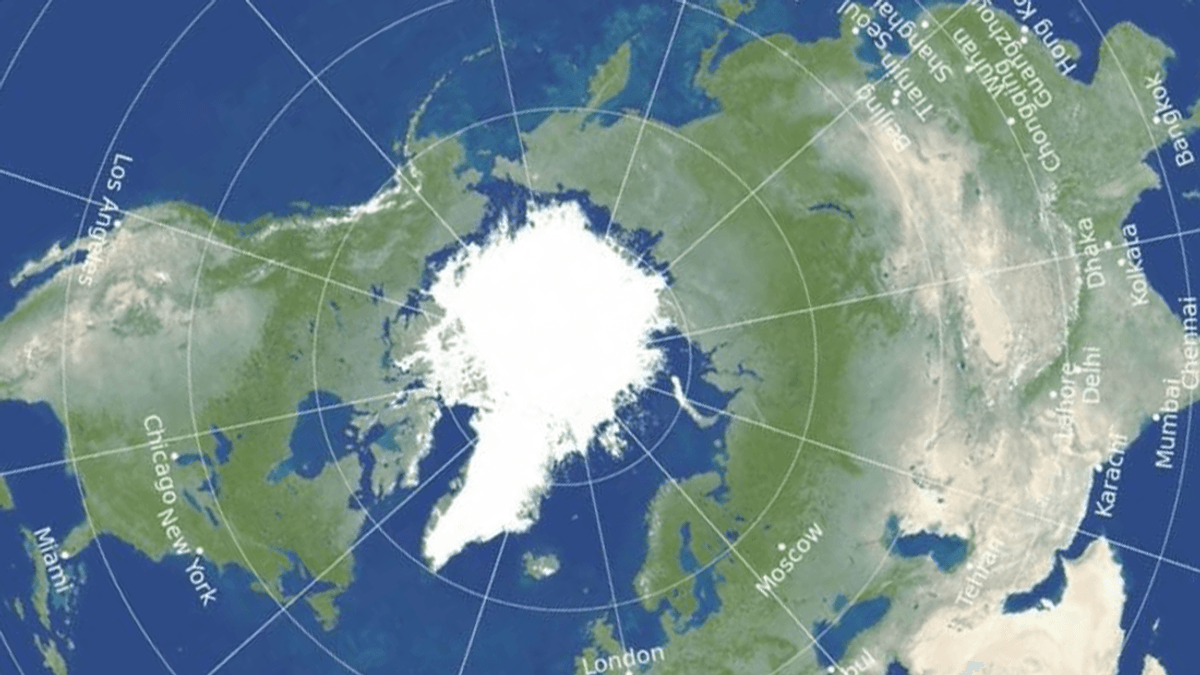
Representing a 3D world on a 2D map is always going to end up with some issues and some compromises. No matter how accurate you try to make it‚ you will end up with stretched areas‚ squashed countries‚ or else parts of the map cut out altogether.The map you are likely familiar with is one based on the Mercator projection‚ published by cartographer Gerardus Mercator in 1569. It's a cylindrical map projection‚ in which you place the globe into a cylinder and then project each point of the map onto a corresponding point on the cylinder. Meridians (imaginary vertical lines going through the Earth from the North to the South Pole) are mapped onto vertical lines equally spaced apart on the map‚ and circles of latitude (imaginary horizontal lines from east to west) are mapped onto equally spaced horizontal lines.The Mercator projection is good for navigation because it represents courses of constant bearing as straight segments‚ meaning ships have to course correct for the curvature of the Earth less frequently. However‚ it also results in distortions of size and shape.In cylindrical maps – as is the case with the Mercator projection – areas around the equator remain roughly accurate‚ but the further you move from the equator‚ the more distorted and inflated landmasses become. Essentially‚ this is why Greenland appears gigantic and is represented as the same size as Africa‚ when in fact it's 1/14 as big.                  IFLScience is not responsible for content shared from external sites.There are maps which show you the true size of countries‚ but you wouldn't want to navigate using them.“One can’t make everything perfect‚” Richard Gott‚ emeritus professor of astrophysics at Princeton explained in press release.  “A map that is good at one thing may not be good at depicting other things.” The Mercator projection‚ for example‚ depicts local shapes well but distorts the surface areas near the North and South Poles to the point that the polar regions are often chopped off.In 2007‚ Gott and his colleague David Goldberg developed a system for scoring maps based on measurement of distortions within it‚ finding that the Winkel-Tripel projection scored the best for having the fewest distortions.             However‚ it wasn't perfect‚ including a "boundary cut" in the Pacific Ocean‚ making the distance between Hawaii and Asia appear bigger than it actually is.Years later‚ the team decided to make their own flat map‚ drawing inspiration from a map made by Buckminster Fuller‚ which preserved the size of countries and areas by turning the world into this monstrosity‚ introducing big gaps between close countries and hacking several in two.The map is good at displaying size‚ but not a lot else.Image credit: Thomasee73 via Wikimedia Commons (CC BY-SA 4.0)The team had the idea of creating a two-sided map‚ showing either the Eastern and Western Hemispheres or the Northern and Southern Hemispheres. On the Northern-Southern Hemisphere map‚ the edge of the map is quite neatly the equator‚ and both versions include no boundary cuts.The two-sided map.Image credit: J. Richard Gott‚ Robert Vanderbei and David Goldberg‚ arXiv 2021 (CC BY)“If you’re an ant‚ you can crawl from one side of this ‘phonograph record’ to the other‚” Gott said. “We have continuity over the equator. Africa and South America are draped over the edge‚ like a sheet over a clothesline‚ but they’re continuous.”Using the map‚ you can measure distances between two points more accurately than on any other map‚ as it includes fewer distance errors. According to their score system‚ it is the most flat map of Earth.“Our map is actually more like the globe than other flat maps‚” Gott added. “To see all of the globe‚ you have to rotate it; to see all of our new map‚ you simply have to flip it over.”A paper discussing the map is posted to preprint server arXiv.
Like
Comment
Share
Pet Life
Pet Life
2 yrs

Great Dane melts hearts with ‘sweet way’ she comforts anxious foster brother
Favicon 
animalchannel.co

Great Dane melts hearts with ‘sweet way’ she comforts anxious foster brother

Adopting a rescue dog often brings a mix of boundless love and unique quirks. These quirks aren’t flaws but rather special traits that make loving your new furry friend all the more rewarding. Imagine a heart that’s been through the wringer‚ yet still has so much affection to give – that’s the beauty of rescue... The post Great Dane melts hearts with ‘sweet way’ she comforts anxious foster brother appeared first on Animal Channel.
Like
Comment
Share
NewsBusters Feed
NewsBusters Feed
2 yrs

The Daily Show Brings Back Jon Stewart In Attempt To Its Save Sinking Ship
Favicon 
www.newsbusters.org

The Daily Show Brings Back Jon Stewart In Attempt To Its Save Sinking Ship

As Comedy Central continues its search for a full-time host of The Daily Show‚ the network announced on Wednesday that former host Jon Stewart will return to host the program on Mondays through the end of the year and executive produce the show through 2025. Stewart was the host of the show from 1999-2015 and presided over massive ratings for the network that have been on the steady decline. However‚ those ratings came with a cost‚ as Stewart’s clown nose on‚ clown nose off routine has done great damage to comedy and political discourse. On one hand‚ Stewart and his political comedy talk show host descendants want to use their “platforms” to discuss issues that matter to them and use humor to get their point across in a way that a dull white paper or cantankerous cable news segment does not. However‚ whenever someone calls him out on the thesis behind the joke‚ he plays dumb because he’s “just a comedian.” It’s a bad habit that is seen in Stephen Colbert‚ Seth Meyers‚ and Jimmy Kimmel as well and it taught liberals that snark in and of itself can be a substitute for well rounded arguments. The Daily Show has been hemorrhaging viewers since Stewart’s departure and the move to bring him back once a week may lead to an initial ratings sugar high. However‚ the fundamentals for Paramount remain the same. After successor Trevor Noah’s 2022 departure‚ the show spent 2023 with a carrousel of temp hosts that consisted of various comedians‚ internal correspondents‚ and Democratic officials. It was also recently announced that their correspondents would be back for a second year of such temp hosting in a move that was widely seen as a way to save money. It was rumored that Hasan Minhaj was once seen as the frontrunner for the job‚ but a fake news scandal involving alleged Islamophobia in America doomed his chances. It is true that the decline of late night talk shows owes a lot to the advent of streaming and the internet‚ but it would be naïve to claim excessive liberalism has also had nothing to do with it. Stewart started the trend of the more activist comedy host and now he has been recalled to try to save what he started to destroy.
Like
Comment
Share
Showing 101723 out of 114597
  • 101719
  • 101720
  • 101721
  • 101722
  • 101723
  • 101724
  • 101725
  • 101726
  • 101727
  • 101728
  • 101729
  • 101730
  • 101731
  • 101732
  • 101733
  • 101734
  • 101735
  • 101736
  • 101737
  • 101738
Advertisement
Stop Seeing These Ads

Edit Offer

Add tier


Select an image
Delete your tier
Are you sure you want to delete this tier?

Reviews

In order to sell your content and posts, start by creating a few packages. Monetization

Pay By Wallet

Payment Alert

You are about to purchase the items, do you want to proceed?

Request a Refund