YubNub Social YubNub Social
    #music #tew #tuba #euphonium #militarymusic #tew2026 #armymusic #armyband #uk #jazz #quartet #history #warmup #bigband #armyblues
    Advanced Search
  • Login
  • Register

  • Night mode
  • © 2026 YubNub Social
    About • Directory • Contact Us • Developers • Privacy Policy • Terms of Use • shareasale • FB Webview Detected • Android • Apple iOS • Get Our App

    Select Language

  • English
Night mode toggle
Featured Content
Community
New Posts (Home) ChatBox Popular Posts Reels Game Zone Top PodCasts
Explore
Explore
© 2026 YubNub Social
  • English
About • Directory • Contact Us • Developers • Privacy Policy • Terms of Use • shareasale • FB Webview Detected • Android • Apple iOS • Get Our App
Advertisement
Stop Seeing These Ads

Discover posts

Posts

Users

Pages

Blog

Market

Events

Games

Forum

Living In Faith
Living In Faith
2 yrs

4 Things You Should Know about The Shift‚ Angel Studios’ New Sci-Fi Film
Favicon 
www.crosswalk.com

4 Things You Should Know about The Shift‚ Angel Studios’ New Sci-Fi Film

4 Things You Should Know about The Shift‚ Angel Studios’ New Sci-Fi Film
Like
Comment
Share
The Lighter Side
The Lighter Side
2 yrs

Elderly Man Embraces Emotional Support Duck (Who Is Wearing An Adorable Diaper.)
Favicon 
www.inspiremore.com

Elderly Man Embraces Emotional Support Duck (Who Is Wearing An Adorable Diaper.)

At 83‚ an elderly man finds unmatched solace in Gertrude‚ his emotional support duck. Their bond transcends the usual pet-owner relationship‚ illustrating the profound impact animals have on mental health. Facebook The scene is touching — an elderly man‚ gently cradling Gertrude‚ as she rests her head over his shoulder. “What a sweet duck. How bout that‚ Gertrude?” he muses‚ a statement that echoes the profound impact of animal companionship. Animal companions like Gertrude can mend hearts and uplift spirits. Their presence can lower blood pressure‚ reduce stress‚ and conquer loneliness. It’s a bond that transcends species‚ proving that sometimes the best medicine comes with feathers and a quack. Let this story of an elderly man and his duck inspire you. Share to spread the joy of unconventional companionships. You can find the source of this story’s featured image here. The post Elderly Man Embraces Emotional Support Duck (Who Is Wearing An Adorable Diaper.) appeared first on InspireMore.
Like
Comment
Share
Survival Prepper
Survival Prepper  
2 yrs

Prepper Gifts Under $25 Just in Time for Christmas
Favicon 
www.theorganicprepper.com

Prepper Gifts Under $25 Just in Time for Christmas

Author of How to Prep When You’re Broke and Bloom Where You’re Planted online course It’s the most wonderful tiiimmme…of the year! If‚ by wonderful‚ you mean expensive. But it doesn’t have to be that way. Here are some awesome gifts for the preppers in your life that won’t break the bank. Every single one is a good quality item that costs less than $25. Read on! Prepper gifts under $25 All prices listed are the price at the time of posting. Small binoculars: I got this pair of binoculars a few years back as a gift‚ and I absolutely love them. They’re the perfect size for a bugout bag or glove box. I took them with me the last time I went to Europe and I think they’re awesome for travel. They work well‚ and the folding/unfolding mechanism is easy to use. Get them for around $15. Keychain kubaton: These kubatons have cute designs and according to the listing are legal all over. I love them and have a couple for my daughters at just $15. Pointy thing for keychains: Remember the kitty cats with the pointy ears and the bulldogs that people used to get for keychains so they had something way sharper to hit with than the actual keys? The new iteration of this is really cute – it’s strawberries! I think until these become super popular like the cats did‚ it’s a more discreet way to weaponize your keychain. Grab it for around $10. Door wedge alarms: I have one of these alarmed wedges and have carried it around the world. They make it a lot harder to get into a door‚ and the alarm is absolutely earsplitting if someone tries. I keep one in my purse‚ too – if I’m ever in an active shooter situation‚ it gives me another option for bracing the door. This two-pack is just $10 – two gifts at $5 each! Pepper spray: I’m a huge fan of equipping people who can’t or won’t carry a gun with pepper spray. Heck‚ why not carry both? Here’s a two-pack of my favorite‚ Sabre brand‚ for about $15. If you have a lot of people you want to arm with pepper spray‚ this pretty set is more than $25 but the canisters are cute and work out to just over $4 apiece. Coloring book: I just made a third coloring book to add to my roster of calming designs with quotes that suit people like us. The Freedom Isn’t Free coloring book is just the ticket for the liberty-loving preppers on your list with pages like the ones below. We also have The Prepper’s Coloring Book and The Prepper’s Garden Coloring Book so you can get your zen on with a prepper theme. Prepper food: There are all sorts of #10 cans of dehydrated goodies to be found just under the $25 mark on this page. Consider tucking a few under the tree. Flashlight gloves: These interesting flashlight gloves are highly rated to keep your eyes on the task at hand‚ even when there’s no electricity. If you need to repair something or deal with a medical issue‚ these gloves can help you to light up the area where you’re working without you having to clench a flashlight in your teeth. Better yet‚ they’re right around the $10 mark. Food sealer: This food sealer comes in right at $25 and is a great way to get started packaging your food up right. Seeds: If your prepper loved one is a gardener‚ forget the who-knows-how-old “seed vaults. Check out the high quality offerings over on Seeds for Generations. Books for under $25 I don’t know about you‚ but whenever I find a book under the tree I’m completely delighted. Whether it’s fiction or non-fiction‚ I’m a bookworm‚ and so is every member of my family. here are some recommendations for your favorite bookworms. Our entire roster of paperback books is available on Amazon for less than $25 apiece. Here are our options: First‚ we have Selco’s three books‚ which are absolutely incredible assets to your preparedness library: The Dark Secrets of SHTF Survival: The Brutal Truth About Violence‚ Death‚ &; Mayhem You Must Know to Survive SHTF Survival Boot Camp: A Course for Urban and Wilderness Survival during Violent‚ Off-Grid‚ &; Worst Case Scenarios SHTF Survival Stories: Memories from the Balkan War Next we have The Organic Prepper Anthologies. We’re working our way through the most useful and popular OP content and publishing it in paperback form. Here are the two that are out so far: How to Feed Your Family No Matter What: An Anthology of Self-Reliant Food Production‚ Acquisition‚ Preservation‚ and Preparation How to Survive During Dangerous Times: A Prepper’s Anthology of Home Security‚ Personal Safety‚ OPSEC‚ and Defensive Mindset And here are my books: The Prepper’s Water Survival Guide: Harvest‚ Treat‚ and Store Your Most Vital Resource The Prepper’s Canning Guide: Affordably Stockpile a Lifesaving Supply of Nutritious‚ Delicious‚ Shelf-Stable Foods Prepper’s Pantry: Build a Nutritious Stockpile to Survive Blizzards‚ Blackouts‚ Hurricanes‚ Pandemics‚ Economic Collapse‚ or Any Other Disasters Be Ready for Anything: How to Survive Tornadoes‚ Earthquakes‚ Pandemics‚ Mass Shootings‚ Nuclear Disasters‚ and Other Life-Threatening Events The Blackout Book: A Quick Start Guide to Handling a Power Outage Like a Boss How to Prep When You’re Broke: A Prepper’s Guide to Survival on a Budget Plus if you have family members you want to break in gently to preparedness‚ I have two books in the frugality niche. The Ultimate Guide to Frugal Living: Save Money‚ Plan Ahead‚ Pay Off Debt &; Live Well  What to Eat When You’re Broke: A Frugal Food Philosophy for Eating WELL on a Tiny Budget Other preparedness and survival titles for book lovers Here are articles with my other book recommendations for the entire family: The 10 Food Preservation Books Every Prepper Needs The Essential Prepper’s Library: 30 Books Every Prepared Family Should Own Our Top 20 Works of Fabulous Fiction to Inspire Self-Reliant‚ Liberty-Loving Children and Teens The Herbalist’s Bookshelf The Reader’s Choice Survival and Preparedness Library The Reader’s Choice Library: Prepper Fiction You’ve Gotta Read What about you? Do you have other suggestions for preppers for less than $25? Will you share them in the comments section? What is the best prepper gift you ever received? Let’s talk holiday giving in the comments section. About Daisy Daisy Luther is a coffee-swigging‚ adventure-seeking‚ globe-trotting blogger. She is the founder and publisher of three websites.  1) The Organic Prepper‚ which is about current events‚ preparedness‚ self-reliance‚ and the pursuit of liberty; 2)  The Frugalite‚ a website with thrifty tips and solutions to help people get a handle on their personal finances without feeling deprived; and 3) PreppersDailyNews.com‚ an aggregate site where you can find links to all the most important news for those who wish to be prepared. Her work is widely republished across alternative media and she has appeared in many interviews. Daisy is the best-selling author of 5 traditionally published books‚ 12 self-published books‚ and runs a small digital publishing company with PDF guides‚ printables‚ and courses at SelfRelianceand Survival.com You can find her on Facebook‚ Pinterest‚ Gab‚ MeWe‚ Parler‚ Instagram‚ and Twitter. The post Prepper Gifts Under $25 Just in Time for Christmas appeared first on The Organic Prepper.
Like
Comment
Share
Hot Air Feed
Hot Air Feed
2 yrs

Best Troll Ever
Favicon 
hotair.com

Best Troll Ever

Best Troll Ever
Like
Comment
Share
Science Explorer
Science Explorer
2 yrs

Dyslexia Differs Across Languages‚ Especially When It Comes To English
Favicon 
www.iflscience.com

Dyslexia Differs Across Languages‚ Especially When It Comes To English

When you dig into the statistics behind dyslexia‚ several strange insights emerge. Not only do rates of dyslexia seem to vary massively between different languages‚ but it’s also evident that some bilingual people can be dyslexic in English but not their mother tongue. How does that make sense?Dyslexia is a condition that causes difficulties with spelling‚ reading‚ and writing. People with the condition will often have problems identifying speech sounds and learning how they relate to letters and words‚ making it difficult to communicate through written language. It’s thought to be a condition people are born with and often appears to run in families. However‚ the language you speak also appears to have an unusual influence on the condition. Among English speakers‚ 10 percent of the population is believed to be dyslexic‚ according to the British Dyslexia Association. Amidst speakers of other languages‚ dyslexia is significantly less common. When Japanese speakers were tested on the syllabic Kana writing system‚ the estimated prevalence was 2 to 3 percent. Meanwhile‚ when tested on the logographic system‚ Kanji‚ it was 5 to 6 percent. Similar rates of dyslexia are also seen in Chinese speakers‚ where the prevalence is around 3.9 percent. Relative to English‚ lower rates of the condition can also be found in other European languages that are in the same family as English‚ known as the Indo-European Language family. Studies have suggested that Italian speakers are only half as likely to show signs of dyslexia compared to English speakers (and French speakers).The explanation may partially lie in the way we test for dyslexia and how other cultures perceive certain learning difficulties. It might even reflect some educational differences between countries.Alternatively‚ it may have something to do with the innate qualities of the language. English and French are both languages that have an “irregular orthography”. In other words‚ it can be very unpredictable and inconsistent. The sounds of the language don't match clearly to letter combinations‚ plus there are more irregularities in pronunciation and spelling.As a wise meme once said: If you ever think English isn't a weird language‚ "just remember that read and lead rhyme and read and lead rhyme‚ but read and lead don't rhyme and neither do read and lead.”In English‚ there are 1‚120 ways of representing 40 sounds (phonemes) using different letter combinations (graphemes). Meanwhile‚ Italian has 33 graphemes that are sufficient to represent the 25 phonemes‚ making it simpler to process.This is potentially why native Italian speakers can have no problem with their mother tongue‚ but experience dyslexia when they learn English as a second language.“The English writing system is so irregular – print to sound or sound to print translation is not always one to one‚” Professor Taeko Wydell‚ Brunel University London’s Professor of Cognitive Neuroscience‚ told BBC radio documentary Dyslexia: Language and Childhood in 2020.“This irregularity or inconsistency makes it especially difficult for dyslexic individuals to master reading and writing in English.”“This kind of irregularity doesn’t happen in other languages such as Italian‚ Spanish‚ or Finnish‚” said Prof Wydell.There are a bunch of other strands of evidence that back up this theory.  A study in 2013 compared the reading skills of children learning English‚ Spanish‚ and Czech‚ concluding that kids took significantly longer to get a solid grasp of English compared to the other two languages. This difficulty follows English speakers into adulthood. Research in 2015 used eye-tracking technology to show that English adults' eyes linger more on each word when reading‚ compared to a German speaker. This implied that more cognitive power was needed for the readers to process English. So‚ if you’re part of the 10 percent of people who experience dyslexia‚ do not be scared to try learning another language - you might find it easier than you think. 
Like
Comment
Share
Science Explorer
Science Explorer
2 yrs

Hunter-Gatherer Children Get Way More Exercise Than UK And US Kids
Favicon 
www.iflscience.com

Hunter-Gatherer Children Get Way More Exercise Than UK And US Kids

Children in hunter-gatherer societies have a completely different experience with physical activity than we do – and we should be taking notes‚ according to a new study‚ not yet peer-reviewed‚ from researchers in the UK.There are many advantages to living in a developed region. TV‚ for example‚ is one; so is the internet; the high-tech smartphone you’re reading this on‚ and the indoor plumbing you’re likely utilizing as you do so.But with affluence comes disease. It’s always been the case: in the 18th century‚ illnesses like gout were considered “rich man’s diseases”; today‚ the so-called “diseases of affluence” include diabetes‚ hypertension‚ heart disease – basically‚ any non-communicable disease caused by an overabundance of nutrition and an underabundance of exercise.The trouble is‚ those conditions are virtually unavoidable for many of us. Four out of five jobs in the US involve sitting down for most of the day‚ and the average American has to drive for an hour a day to even get to work and back. Meanwhile‚ family time is often organized around sitting and eating; everybody’s tired; there’s a new season of Supernatural being teased – all in all‚ it’s no wonder that less than one in four of us are managing to also get the amount of aerobic and strength exercise recommended by health experts.Unfortunately‚ living an almost entirely sedentary life is what medical professionals refer to as “a bad idea.” It’s estimated that up to one in eight early deaths can be attributed to physical inactivity; regular exercise‚ on the other hand‚ can increase your life expectancy by close to seven years. That leaves researchers with a dilemma: there’s currently “significant interest in examining the cultural factors driving increased activity‚” the preprint explains‚ but the only people available to study are unsuited for the job.“Research that has attempted to [study] this has largely done so using culturally similar‚ highly sedentary‚ high-income populations‚” write the authors. “These populations represent a narrow fraction of human cultures‚ for whom daily calorie acquisition is decreasingly dependent on physical activity‚ with labor increasingly sedentary and foraging replaced with market-bought goods.”To combat this lack of information‚ researchers have turned to modern hunter-gatherer societies‚ among others‚ to compare our post-industrial lifestyles. The Hadza people of Tanzania‚ for example‚ get close to 15 times the amount of moderate to vigorous physical activity as the average American; other hunter-gatherer communities are similar‚ and all “appear to have exceptionally low rates of non-communicable ‘diseases of modern life’‚ including low rates of obesity‚ type II diabetes‚ hypertension‚ and auto-immune disorders‚” the team points out.But previous studies have neglected something very important‚ they argue: children. “Hunter-gatherer childhoods are marked by learning of skills such as gathering wild plants‚ hunting animals‚ collecting honey and caterpillars‚ fishing‚ childcare and domestic activities‚” the researchers explain‚ while in high-income populations‚ “up to 80 percent of children globally fail to meet recommended physical activity guidelines.” And‚ since the amount of exercise you get as a kid is a pretty good predictor of how active you are as an adult‚ it’s probably wise to take a look at what’s going on‚ and why.There were three cohorts of children involved in the study: a US group‚ whose data came from the American National Health And Nutrition Examination Survey (NHANES); a UK group‚ which used information from the British Millennium Cohort Study (MCS); and a group from the BaYaka people in the Republic of Congo‚ who were monitored using wrist-worn accelerometers.The results couldn’t have been more different. Not only were BaYaka children far more active than their UK and US peers – “the average day included over three hours of MVPA [moderate and vigorous physical activity]‚” the authors note‚ which is “a volume triple the WHO recommendations for children” – but they also showed the exact opposite trend in activity levels with age. “Amongst the BaYaka‚ older children were more active than younger children‚” the researchers discovered. “This is in stark contrast to children in the US sample presented here and other high-income populations where volumes of physical activity commonly peak in early childhood (ages 5 to 6) and decline from then‚ until reaching a low plateau in adulthood.”The lesson? Well‚ apart from the obvious – that those of us in high-income nations have moved a long way away from our evolved niches‚ and our health is both benefiting from that change and suffering from it‚ too – it may be that Bart Simpson had it right all along. Perhaps school is making us sick.“The observations in the BaYaka and the sampled high-income populations suggest that formal schooling may promote inactivity in children‚ limiting their autonomy by mandating long periods of sedentary activity‚” suggest the researchers. “This schooling structure might contribute to increasing mental health problems and decreased child happiness observed in high-income populations.”But what’s the alternative? Well‚ to be honest‚ it sounds rather nice.“Without formal classrooms‚ BaYaka children choose their activities‚ with no imposed sedentary behavior‚” the team point out. “Their daily activities‚ unlike American children’s regimented school schedules‚ are more variable and reflect an ecology of autonomous play‚ foraging‚ and rest […] Implementing BaYaka perspectives‚ like breaking up prolonged bouts of sedentary behavior as employed in forest-school and Udeskole (outdoor-school) programs has been observed to increase overall activity.”The preprint can be found on BioArXiv.
Like
Comment
Share
Science Explorer
Science Explorer
2 yrs

Giant Sea Snails Experience Intergenerational Trauma Too‚ Getting Stressed By Ocean Acidification
Favicon 
www.iflscience.com

Giant Sea Snails Experience Intergenerational Trauma Too‚ Getting Stressed By Ocean Acidification

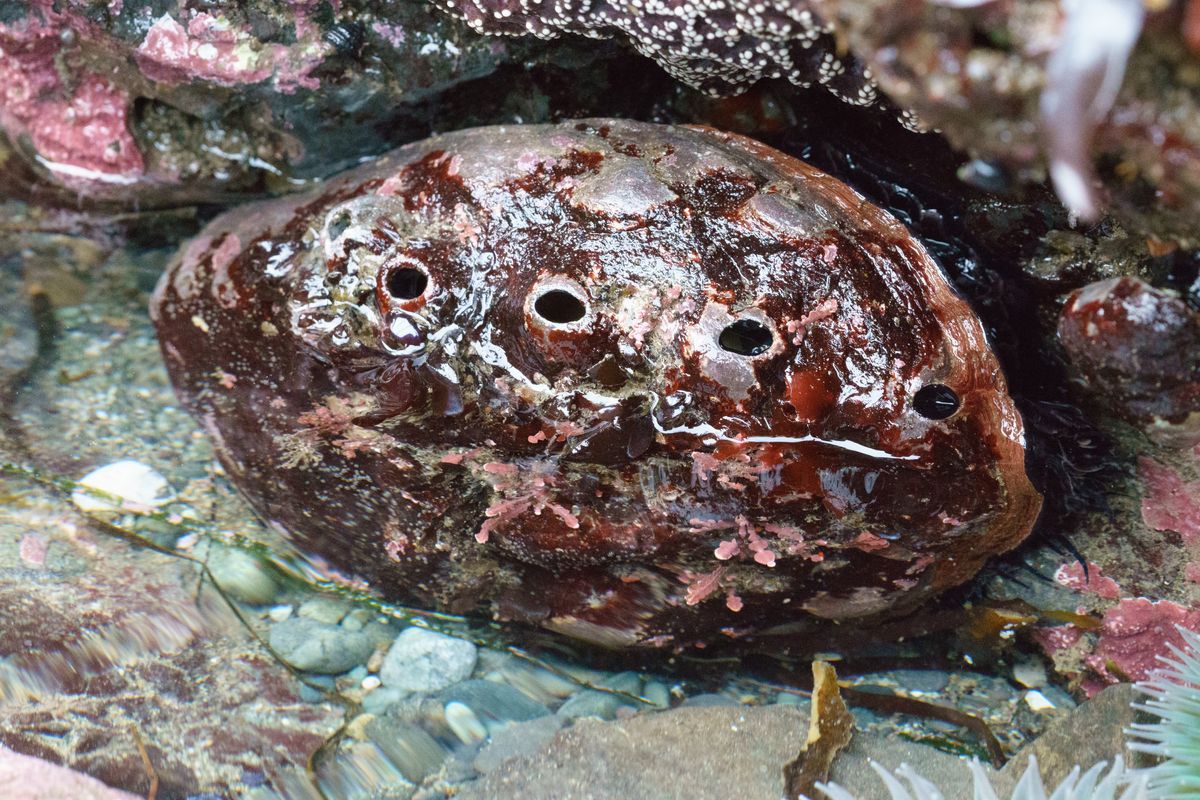
Going through stressful events at a young age can sometimes have a lasting impact on our own lives and the generations that come after us. But that’s not a uniquely human phenomenon – researchers have discovered a similar pattern in red abalone‚ with a legacy of stress created after exposure to ocean acidification."For red abalone‚ if your parents were exposed to ocean acidification‚ it does impact your ability to handle stress‚" said lead author Isabelle Neylan in a statement. "It's carrying over within that generation and on to the next generation."They reached this conclusion after an experiment lasting over five years‚ the first step of which was spawning adult red abalone and then‚ for three months‚ exposing half their offspring to current ocean conditions and the other half to highly acidic conditions. The latter represents the potential near-future conditions of the oceans‚ as carbon dioxide emissions contribute to ocean acidification.The giant sea snails that survived were raised for four years before again being exposed to either high or low-acidity conditions for a further 11 months‚ with monitoring of their reproductive potential and growth. Repeating history‚ they were then spawned and their offspring were exposed to high or low-acidity conditions – this was to track whether any impacts of ocean acidification had passed on to the next generation.The researchers carried out ultrasounds on the red abalone to assess their reproductive capabilities.Image credit: Jackson Gross‚ UC DavisThe results showed that early-life exposure to highly acidic conditions created a legacy of stress. Not only did it negatively affect the growth rate and reproductive abilities of the parent generation‚ but their offspring also had reduced survival and growth."We were looking to see if your parent was exposed‚ does it buffer you from the impacts? That wasn't the case‚" Neylan said. "The more you get hit‚ the worse it is‚ but there are glimmers of hope."That hope might depend on when exposure happens. As well as finding that some red abalone families coped better than others‚ the team also found that adults tended to be more resilient to ocean acidification. The issue is that‚ in the wild‚ the strong coastal upwelling events that bring with them acidic water often happen during spawning season – and these events are predicted to become more common.With this possibility in mind‚ it’s hoped this research can help highlight the threats to red abalone and focus efforts to conserve the species‚ which is listed as critically endangered on the IUCN Red List. The giant sea snails are endemic to California‚ where they are an important kelp forest species‚ but have also been a key part of the local cultural history.Purple sea urchins are one of many threats to red abalone.Image credit: Katie Sowul/California Department of Fish and Wildlife"Red abalone is a California icon‚" said co-author Daniel Swezey. "Aside from being beautiful‚ big and long-lived‚ they have tremendous cultural cache and a deep history. They mean a lot to a lot of people."But with multiple threats to their future‚ there’s plenty of work to be done to keep this sizeable icon alive. "The question now is‚ what dents can we make in that to give abalone a chance to recover?” said Swezey. “It's a tall order‚ but we're on the case."The study is published in the journal Global Change Biology.
Like
Comment
Share
Science Explorer
Science Explorer
2 yrs

Why Dimming The Sun Would Be An Effective Tool In The Fight Against Climate Change
Favicon 
www.iflscience.com

Why Dimming The Sun Would Be An Effective Tool In The Fight Against Climate Change

It’s becoming increasingly clear that we will fail to meet our climate goals. We were already at 1.26°C of warming in 2022 and are on track to blow through 1.5°C in the mid-2030s. Research even suggests that current climate policy will lead to more than 2.5°C of warming by the end of this century.Warming of this magnitude would devastate vulnerable communities and ecosystems around the world. It’s time we consider something radically new that could stop climate change in its tracks.After powerful volcanic eruptions‚ like Tambora (Indonesia) in 1815 and Pinatubo (Philippines) in 1991‚ global temperatures dip for a few years. Major eruptions create a hazy layer of microscopic particles in the upper atmosphere that last for several years‚ dimming the Sun temporarily. We could copy this effect to fight climate change.The Earth is warmed by the Sun‚ but it is kept warm by greenhouse gases that trap the heat our planet gives off. The warming effect of our CO emissions could be countered by creating a persistent‚ artificial haze like those seen following major volcanic eruptions. Research has found that we would only need to dim the Sun by around 1% to cool the planet by 1°C.This may sound unlikely. But every engineering assessment to date has concluded that it would be feasible and relatively cheap to do using a fleet of high-flying jets to release reflective particles into the upper atmosphere.So we could dim the Sun – but should we?Ash cloud of Pinatubo during the 1991 eruption. Dave Harlow / US Geological Survey‚ CC BY-NC-SACooling the planet would workDimming the Sun wouldn’t perfectly reverse climate change. The Sun’s warming effect is strongest during the day‚ in the summer and at the Tropics‚ whereas greenhouse gases warm everywhere and at all times.However‚ we could create an even cooling effect across the world by adjusting where we release the particles. Research suggests that such an approach would greatly reduce climate risks.Rising temperatures really matter. Species around the world are on the move‚ tracking familiar temperatures polewards as the planet warms up. But many won’t be able to keep pace with the changing climate and others have nowhere to go‚ so extinctions are projected to increase.We are also seeing extreme heat that is edging closer to the absolute limits of the human body‚ putting lives at risk and limiting outdoor work.As the planet heats up‚ warmer air is drawing more moisture from the soil in dry times‚ and dumping more out at once when it rains. This is making dry regions drier‚ wet regions wetter‚ and is intensifying both droughts and floods across the world.Dimming the Sun would offset this effect. But it would still alter global wind and rainfall patterns.Research indicates that this would mean smaller rainfall changes overall. However‚ a small minority of places could see more pronounced changes in rainfall compared to what they would face under climate change. Climate models disagree on the details of regional rainfall changes‚ so it’s unclear at this stage which regions would see the greatest change.Blocking some sunlight would also be an effective way of keeping icy parts of the world frozen. Rising temperatures are causing the Antarctic and Greenland ice sheets to melt at an accelerating rate‚ driving up the global sea level. Climate change is also thawing permafrost (frozen soil that stores vast amounts of carbon) leading to the emission of more of methane and CO.Melting ice can accelerate the pace of global warming. US Geological Survey‚ CC BY-NC-SASide effectsAlthough dimming the Sun could keep the Earth cool‚ it would not deal with the root of the climate problem: the buildup of CO and other greenhouse gases in the atmosphere. CO not only warms the planet‚ it also acidifies the ocean‚ making it harder for corals and other creatures to form their shells. Dimming the Sun wouldn’t change this.It would bring about some side effects as well. This hazy layer of particles would make the sky a little whiter. And if we copy volcanic eruptions by releasing sulphate particles to the upper atmosphere‚ then we’d also be adding to the acid rain problem.These particles could impact the ozone layer too‚ which protects us from harmful UV rays. Research suggests that adding more sulphate particles to the upper atmosphere would delay the slow recovery of the ozone hole.These side effects are a concern. But they pale in comparison to the impacts of climate change. A recent study found that the benefit of reduced extreme heat for human health could outweigh the health impacts of these side-effects by more than 50 to 1.Paul Crutzen‚ who won a Nobel prize in 1995 for solving the chemistry of the ozone hole‚ was well aware of these side effects but nevertheless argued that we should start taking the idea of dimming the Sun seriously. In an article from 2006‚ he stressed that it would be best to cut CO emissions rapidly so that we wouldn’t need to consider dimming the Sun at all. However‚ he lamented that “currently‚ this looks like a pious wish”.Symptoms matterIt’s becoming increasingly clear that this “pious wish” isn’t coming true. Since Crutzen’s 2006 article‚ CO emissions have surged by more than 15%. We just aren’t cutting emissions fast enough to prevent climate change from wreaking terrible damage.Dimming the Sun would not address the root cause of the climate disease‚ and we must keep pushing to cut emissions‚ but a growing body of evidence suggests that it would work surprisingly well at treating the symptoms.However‚ this is not so surprising. Ice melts when it is warm‚ hotter air carries more moisture and heat has a direct impact on life. We are far from knowing enough to recommend dimming the Sun today‚ but if countries don’t start taking this idea seriously we may miss a valuable opportunity to reduce the risks of climate change.Don’t have time to read about climate change as much as you’d like?Get a weekly roundup in your inbox instead. Every Wednesday‚ The Conversation’s environment editor writes Imagine‚ a short email that goes a little deeper into just one climate issue. Join the 20‚000+ readers who’ve subscribed so far.Peter Irvine‚ Lecturer in Earth Sciences‚ UCLThis article is republished from The Conversation under a Creative Commons license. Read the original article.
Like
Comment
Share
National Review
National Review
2 yrs

Deck the Halls with Fiscal Folly
Favicon 
www.nationalreview.com

Deck the Halls with Fiscal Folly

From education and health care to defense‚ few‚ if any‚ sectors will be spared from the tightening grip of rising debt.
Like
Comment
Share
National Review
National Review
2 yrs

Santos and Trump Are Guilty Enough
Favicon 
www.nationalreview.com

Santos and Trump Are Guilty Enough

We don’t need criminal courts to tell us they’re dishonest‚ boorish‚ and unfit to serve in elected office.
Like
Comment
Share
Showing 106567 out of 114130
  • 106563
  • 106564
  • 106565
  • 106566
  • 106567
  • 106568
  • 106569
  • 106570
  • 106571
  • 106572
  • 106573
  • 106574
  • 106575
  • 106576
  • 106577
  • 106578
  • 106579
  • 106580
  • 106581
  • 106582
Advertisement
Stop Seeing These Ads

Edit Offer

Add tier


Select an image
Delete your tier
Are you sure you want to delete this tier?

Reviews

In order to sell your content and posts, start by creating a few packages. Monetization

Pay By Wallet

Payment Alert

You are about to purchase the items, do you want to proceed?

Request a Refund