YubNub Social YubNub Social
    #music #tew #tuba #euphonium #tew2026 #militarymusic #armymusic #armyband #band #concertband #uk #tusab #jazz #armyorchestra #orchestra
    Advanced Search
  • Login
  • Register

  • Night mode
  • © 2026 YubNub Social
    About • Directory • Contact Us • Developers • Privacy Policy • Terms of Use • shareasale • FB Webview Detected • Android • Apple iOS • Get Our App

    Select Language

  • English
Night mode toggle
Featured Content
Community
New Posts (Home) ChatBox Popular Posts Reels Game Zone Top PodCasts
Explore
Explore
© 2026 YubNub Social
  • English
About • Directory • Contact Us • Developers • Privacy Policy • Terms of Use • shareasale • FB Webview Detected • Android • Apple iOS • Get Our App
Advertisement
Stop Seeing These Ads

Discover posts

Posts

Users

Pages

Blog

Market

Events

Games

Forum

Daily Caller Feed
Daily Caller Feed
2 yrs

Oregon Man Sentenced Over 12 Years For Setting Up ‘Indiana Jones’-Style Booby Traps Designed To Injure Law Enforcement
Favicon 
dailycaller.com

Oregon Man Sentenced Over 12 Years For Setting Up ‘Indiana Jones’-Style Booby Traps Designed To Injure Law Enforcement

Among the traps was a hot tub designed to roll down a hill in a deadly imitation of the iconic boulder scene from "Raiders of the Lost Ark"
Like
Comment
Share
Classic Rock Lovers
Classic Rock Lovers  
2 yrs

Complete List Of Genesis Band Members
Favicon 
www.classicrockhistory.com

Complete List Of Genesis Band Members

Everyone likes the band Genesis. There are those who won’t listen to anything in the post-Peter Gabriel era and those who prefer the Phil Collins-led Genesis.  The band Genesis was‚ formed in 1967 at Charterhouse School in Godalming‚ Surrey. They are a British rock band known for its progressive‚ art rock style in the early years‚ transitioning into more pop-oriented music in the 1980s when Phil Collins took center stage. Over the decades‚ the band underwent several lineup changes and stylistic shifts. They released numerous albums‚ achieving both critical acclaim and commercial success‚ particularly in the 1970s and 1980s. The The post Complete List Of Genesis Band Members appeared first on ClassicRockHistory.com.

Like
Comment
Share
The Lighter Side
The Lighter Side
2 yrs

Your Weekly Horoscope: A ‘Free Will Astrology’ From Rob Brezsny
Favicon 
www.goodnewsnetwork.org

Your Weekly Horoscope: A ‘Free Will Astrology’ From Rob Brezsny

Our partner Rob Brezsny‚ who has a new book out‚ Astrology Is Real: Revelations from My Life as an Oracle‚ provides his weekly wisdom to enlighten our thinking and motivate our mood. Rob’s Free Will Astrology‚ is a syndicated weekly column appearing in over a hundred publications. He is also the author of Pronoia Is the Antidote […] The post Your Weekly Horoscope: A ‘Free Will Astrology’ From Rob Brezsny appeared first on Good News Network.
Like
Comment
Share
Science Explorer
Science Explorer
2 yrs

How Are Large Parts Of The Great Wall Of China Held Together? By
Favicon 
www.iflscience.com

How Are Large Parts Of The Great Wall Of China Held Together? By "Biocrusts"

The Great Wall of China might’ve been able to hold off ancient enemies‚ but time and weather eventually come for even the sturdiest of constructions. With up to 30 percent of the Ming-era wall disappearing over the last 500 years‚ some have put this down to the cyanobacteria‚ lichen‚ and moss residing within the wall. New research‚ however‚ has suggested that these “biocrusts” are actually helping to keep the Great Wall together.When the Ming region of the wall was constructed between 1368 and 1644‚ with its characteristic tall brick walls and fortifications‚ workers often used rammed earth – soil‚ gravel‚ and other natural materials – as a building material. In some places‚ this has fostered a “living” part of the wall‚ allowing for the growth of cyanobacteria‚ mosses‚ and lichens that researchers believe lend stability to the wall as a biocrust.To reach this conclusion‚ researchers began by taking samples from eight sections of the Ming-era portion of the wall and found that 67 percent contained biocrusts. They then compared the mechanical strength and soil stability of the biocrust samples versus those that were only plain rammed earth.Researcher Yousong Cao taking a sample at the Great Wall.Image credit: Bo XiaoThe results revealed that the biocrusts lent an impressive stability to the wall. As the team wrote in their paper: “Compared with bare rammed earth‚ the biocrust-covered sections exhibited reduced porosity‚ water-holding capacity‚ erodibility‚ and salinity by 2 to 48%‚ while increasing compressive strength‚ penetration resistance‚ shear strength‚ and aggregate stability by 37 to 321%.”This did‚ however‚ depend on the composition of the biocrust and the climate in the region where the samples were taken. In arid regions‚ for example‚ cyanobacteria were the dominant party in biocrusts‚ whereas mosses tended to thrive the most in wetter‚ semi-arid environments. The researchers found it was the moss-dominated crusts that most significantly enhanced the wall’s strength and stability‚ reducing its erodibility.A close-up view of biocrusts on the Great Wall.Image credit: Bo XiaoIt's thought that biocrusts do this by secreting substances that bind with the rammed earth‚ forming a structure akin to cement. The hardened product of this process helps to buffer the effects of the climate‚ such as wind‚ rain‚ and temperature changes.“Biocrusts serve as stabilizers‚ consolidators‚ sacrificial layers‚ and drainage roofs‚ combining the protective functions of several conventional measures into one eco-friendly approach‚” the authors conclude.While biocrusts might protect the Great Wall from the weather‚ there’s little they can do when it comes to stopping humans. Back in September‚ construction workers looking for a shortcut damaged a portion of the wall in Shanxi province beyond repair.The study is published in Science Advances.
Like
Comment
Share
Science Explorer
Science Explorer
2 yrs

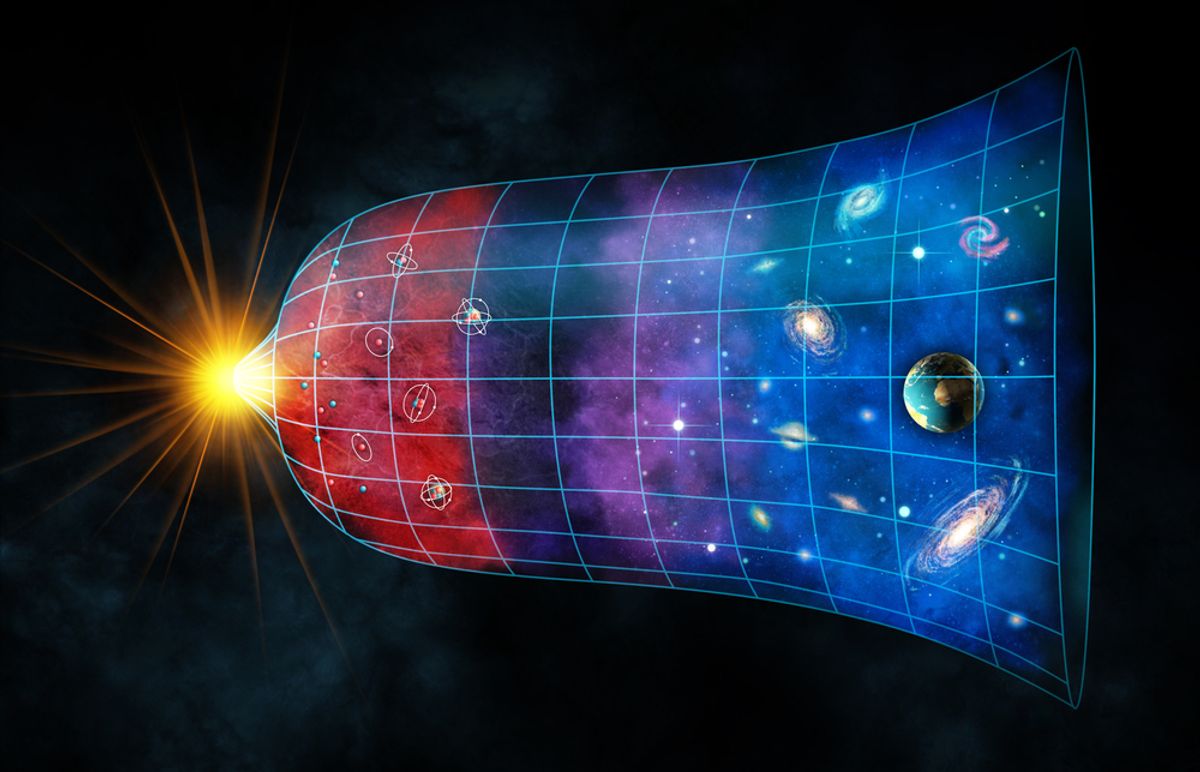
How Could The Big Bang Arise From Nothing?
Favicon 
www.iflscience.com

How Could The Big Bang Arise From Nothing?

READER QUESTION: My understanding is that nothing comes from nothing. For something to exist‚ there must be material or a component available‚ and for them to be available‚ there must be something else available. Now my question: Where did the material come from that created the Big Bang‚ and what happened in the first instance to create that material? Peter‚ 80‚ Australia.“The last star will slowly cool and fade away. With its passing‚ the universe will become once more a void‚ without light or life or meaning.” So warned the physicist Brian Cox in the recent BBC series Universe. The fading of that last star will only be the beginning of an infinitely long‚ dark epoch. All matter will eventually be consumed by monstrous black holes‚ which in their turn will evaporate away into the dimmest glimmers of light. Space will expand ever outwards until even that dim light becomes too spread out to interact. Activity will cease.Or will it? Strangely enough‚ some cosmologists believe a previous‚ cold dark empty universe like the one which lies in our far future could have been the source of our very own Big Bang.This article is part of Life’s Big QuestionsThe Conversation’s new series‚ co-published with BBC Future‚ seeks to answer our readers’ nagging questions about life‚ love‚ death and the universe. We work with professional researchers who have dedicated their lives to uncovering new perspectives on the questions that shape our lives.The first matterBut before we get to that‚ let’s take a look at how “material” – physical matter – first came about. If we are aiming to explain the origins of stable matter made of atoms or molecules‚ there was certainly none of that around at the Big Bang – nor for hundreds of thousands of years afterwards. We do in fact have a pretty detailed understanding of how the first atoms formed out of simpler particles once conditions cooled down enough for complex matter to be stable‚ and how these atoms were later fused into heavier elements inside stars. But that understanding doesn’t address the question of whether something came from nothing.      You can listen to more articles from The Conversation‚ narrated by Noa‚ here.So let’s think further back. The first long-lived matter particles of any kind were protons and neutrons‚ which together make up the atomic nucleus. These came into existence around one ten-thousandth of a second after the Big Bang. Before that point‚ there was really no material in any familiar sense of the word. But physics lets us keep on tracing the timeline backwards – to physical processes which predate any stable matter.This takes us to the so-called “grand unified epoch”. By now‚ we are well into the realm of speculative physics‚ as we can’t produce enough energy in our experiments to probe the sort of processes that were going on at the time. But a plausible hypothesis is that the physical world was made up of a soup of short-lived elementary particles – including quarks‚ the building blocks of protons and neutrons. There was both matter and “antimatter” in roughly equal quantities: each type of matter particle‚ such as the quark‚ has an antimatter “mirror image” companion‚ which is near identical to itself‚ differing only in one aspect. However‚ matter and antimatter annihilate in a flash of energy when they meet‚ meaning these particles were constantly created and destroyed.But how did these particles come to exist in the first place? Quantum field theory tells us that even a vacuum‚ supposedly corresponding to empty spacetime‚ is full of physical activity in the form of energy fluctuations. These fluctuations can give rise to particles popping out‚ only to be disappear shortly after. This may sound like a mathematical quirk rather than real physics‚ but such particles have been spotted in countless experiments.The spacetime vacuum state is seething with particles constantly being created and destroyed‚ apparently “out of nothing”. But perhaps all this really tells us is that the quantum vacuum is (despite its name) a something rather than a nothing. The philosopher David Albert has memorably criticised accounts of the Big Bang which promise to get something from nothing in this way.Simulation of quantum vacuum fluctuations in quantum chromodynamics. Wikimedia/Ahmed NeutronSuppose we ask: where did spacetime itself arise from? Then we can go on turning the clock yet further back‚ into the truly ancient “Planck epoch” – a period so early in the universe’s history that our best theories of physics break down. This era occurred only one ten-millionth of a trillionth of a trillionth of a trillionth of a second after the Big Bang. At this point‚ space and time themselves became subject to quantum fluctuations. Physicists ordinarily work separately with quantum mechanics‚ which rules the microworld of particles‚ and with general relativity‚ which applies on large‚ cosmic scales. But to truly understand the Planck epoch‚ we need a complete theory of quantum gravity‚ merging the two.We still don’t have a perfect theory of quantum gravity‚ but there are attempts – like string theory and loop quantum gravity. In these attempts‚ ordinary space and time are typically seen as emergent‚ like the waves on the surface of a deep ocean. What we experience as space and time are the product of quantum processes operating at a deeper‚ microscopic level – processes that don’t make much sense to us as creatures rooted in the macroscopic world.In the Planck epoch‚ our ordinary understanding of space and time breaks down‚ so we can’t any longer rely on our ordinary understanding of cause and effect either. Despite this‚ all candidate theories of quantum gravity describe something physical that was going on in the Planck epoch – some quantum precursor of ordinary space and time. But where did that come from?Even if causality no longer applies in any ordinary fashion‚ it might still be possible to explain one component of the Planck-epoch universe in terms of another. Unfortunately‚ by now even our best physics fails completely to provide answers. Until we make further progress towards a “theory of everything”‚ we won’t be able to give any definitive answer. The most we can say with confidence at this stage is that physics has so far found no confirmed instances of something arising from nothing.Cycles from almost nothingTo truly answer the question of how something could arise from nothing‚ we would need to explain the quantum state of the entire universe at the beginning of the Planck epoch. All attempts to do this remain highly speculative. Some of them appeal to supernatural forces like a designer. But other candidate explanations remain within the realm of physics – such as a multiverse‚ which contains an infinite number of parallel universes‚ or cyclical models of the universe‚ being born and reborn again.The 2020 Nobel Prize-winning physicist Roger Penrose has proposed one intriguing but controversial model for a cyclical universe dubbed “conformal cyclic cosmology”. Penrose was inspired by an interesting mathematical connection between a very hot‚ dense‚ small state of the universe – as it was at the Big Bang – and an extremely cold‚ empty‚ expanded state of the universe – as it will be in the far future. His radical theory to explain this correspondence is that those states become mathematically identical when taken to their limits. Paradoxical though it might seem‚ a total absence of matter might have managed to give rise to all the matter we see around us in our universe.      In this view‚ the Big Bang arises from an almost nothing. That’s what’s left over when all the matter in a universe has been consumed into black holes‚ which have in turn boiled away into photons – lost in a void. The whole universe thus arises from something that – viewed from another physical perspective – is as close as one can get to nothing at all. But that nothing is still a kind of something. It is still a physical universe‚ however empty.How can the very same state be a cold‚ empty universe from one perspective and a hot dense universe from another? The answer lies in a complex mathematical procedure called “conformal rescaling”‚ a geometrical transformation which in effect alters the size of an object but leaves its shape unchanged.Penrose showed how the cold empty state and the hot dense state could be related by such rescaling so that they match with respect to the shapes of their spacetimes – although not to their sizes. It is‚ admittedly‚ difficult to grasp how two objects can be identical in this way when they have different sizes – but Penrose argues size as a concept ceases to make sense in such extreme physical environments.In conformal cyclic cosmology‚ the direction of explanation goes from old and cold to young and hot: the hot dense state exists because of the cold empty state. But this “because” is not the familiar one – of a cause followed in time by its effect. It is not only size that ceases to be relevant in these extreme states: time does too. The cold empty state and the hot dense state are in effect located on different timelines. The cold empty state would continue on forever from the perspective of an observer in its own temporal geometry‚ but the hot dense state it gives rise to effectively inhabits a new timeline all its own.It may help to understand the hot dense state as produced from the cold empty state in some non-causal way. Perhaps we should say that the hot dense state emerges from‚ or is grounded in‚ or realised by the cold‚ empty state. These are distinctively metaphysical ideas which have been explored by philosophers of science extensively‚ especially in the context of quantum gravity  where ordinary cause and effect seem to break down. At the limits of our knowledge‚ physics and philosophy become hard to disentangle.Experimental evidence?Conformal cyclic cosmology offers some detailed‚ albeit speculative‚ answers to the question of where our Big Bang came from. But even if Penrose’s vision is vindicated by the future progress of cosmology‚ we might think that we still wouldn’t have answered a deeper philosophical question – a question about where physical reality itself came from. How did the whole system of cycles come about? Then we finally end up with the pure question of why there is something rather than nothing – one of the biggest questions of metaphysics.But our focus here is on explanations which remain within the realm of physics. There are three broad options to the deeper question of how the cycles began. It could have no physical explanation at all. Or there could be endlessly repeating cycles‚ each a universe in its own right‚ with the initial quantum state of each universe explained by some feature of the universe before. Or there could be one single cycle‚ and one single repeating universe‚ with the beginning of that cycle explained by some feature of its own end. The latter two approaches avoid the need for any uncaused events – and this gives them a distinctive appeal. Nothing would be left unexplained by physics.Penrose envisages a sequence of endless new cycles for reasons partly linked to his own preferred interpretation of quantum theory. In quantum mechanics‚ a physical system exists in a superposition of many different states at the same time‚ and only “picks one” randomly‚ when we measure it. For Penrose‚ each cycle involves random quantum events turning out a different way – meaning each cycle will differ from those before and after it. This is actually good news for experimental physicists‚ because it might allow us to glimpse the old universe that gave rise to ours through faint traces‚ or anomalies‚ in the leftover radiation from the Big Bang seen by the Planck satellite.Penrose and his collaborators believe they may have spotted these traces already‚ attributing patterns in the Planck data to radiation from supermassive black holes in the previous universe. However‚ their claimed observations have been challenged by other physicists and the jury remains out.Endless new cycles are key to Penrose’s own vision. But there is a natural way to convert conformal cyclic cosmology from a multi-cycle to a one-cycle form. Then physical reality consists in a single cycling around through the Big Bang to a maximally empty state in the far future – and then around again to the very same Big Bang‚ giving rise to the very same universe all over again.This latter possibility is consistent with another interpretation of quantum mechanics‚ dubbed the many-worlds interpretation. The many-worlds interpretation tells us that each time we measure a system that is in superposition‚ this measurement doesn’t randomly select a state. Instead‚ the measurement result we see is just one possibility – the one that plays out in our own universe. The other measurement results all play out in other universes in a multiverse‚ effectively cut off from our own. So no matter how small the chance of something occurring‚ if it has a non-zero chance then it occurs in some quantum parallel world. There are people just like you out there in other worlds who have won the lottery‚ or have been swept up into the clouds by a freak typhoon‚ or have spontaneously ignited‚ or have done all three simultaneously.Some people believe such parallel universes may also be observable in cosmological data‚ as imprints caused by another universe colliding with ours.Many-worlds quantum theory gives a new twist on conformal cyclic cosmology‚ though not one that Penrose agrees with. Our Big Bang might be the rebirth of one single quantum multiverse‚ containing infinitely many different universes all occurring together. Everything possible happens – then it happens again and again and again.An ancient mythFor a philosopher of science‚ Penrose’s vision is fascinating. It opens up new possibilities for explaining the Big Bang‚ taking our explanations beyond ordinary cause and effect. It is therefore a great test case for exploring the different ways physics can explain our world. It deserves more attention from philosophers.For a lover of myth‚ Penrose’s vision is beautiful. In Penrose’s preferred multi-cycle form‚ it promises endless new worlds born from the ashes of their ancestors. In its one-cycle form‚ it is a striking modern re-invocation of the ancient idea of the ouroboros‚ or world-serpent. In Norse mythology‚ the serpent Jörmungandr is a child of Loki‚ a clever trickster‚ and the giant Angrboda. Jörmungandr consumes its own tail‚ and the circle created sustains the balance of the world. But the ouroboros myth has been documented all over the world – including as far back as ancient Egypt.The ouroboros of the one cyclic universe is majestic indeed. It contains within its belly our own universe‚ as well as every one of the weird and wonderful alternative possible universes allowed by quantum physics – and at the point where its head meets its tail‚ it is completely empty yet also coursing with energy at temperatures of a hundred thousand million billion trillion degrees Celsius. Even Loki‚ the shapeshifter‚ would be impressed.To get all of life’s big answers‚ join the hundreds of thousands of people who value evidence-based news by subscribing to our newsletter. You can send us your big questions by email at bigquestions@theconversation.com and we’ll try to get a researcher or expert on the case.More Life’s Big Questions:Happiness: is contentment more important than purpose and goals?Could we live in a world without rules?Death: can our final moment be euphoric?Nature: have humans now evolved beyond the natural world‚ and do we still need it?Love: is it just a fleeting high fuelled by brain chemicals?Alastair Wilson‚ Professor of Philosophy‚ University of BirminghamThis article is republished from The Conversation under a Creative Commons license. Read the original article.
Like
Comment
Share
Science Explorer
Science Explorer
2 yrs

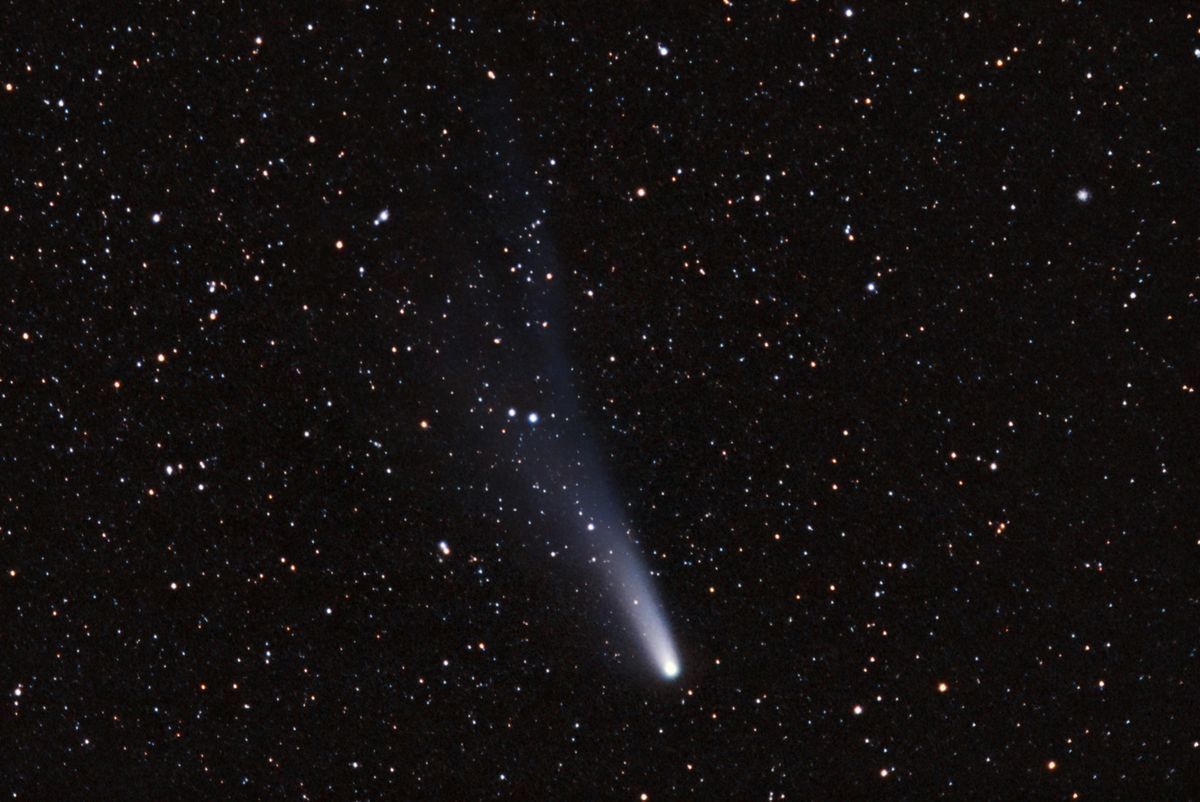
Halley’s Comet Is About To Begin Its 38-Year-Long Journey Back To Earth
Favicon 
www.iflscience.com

Halley’s Comet Is About To Begin Its 38-Year-Long Journey Back To Earth

Quite possibly the most famous comet of them all‚ Halley’s Comet is about to begin its nearly 40-year-long journey back towards the Sun‚ passing by our planet on its way.The comet reaches its aphelion today (December 9)‚ the point at which it’s furthest away from the Sun‚ taking it beyond the orbit of Neptune. This represents the midpoint in Halley’s orbit around our star‚ which is unusual in that it occurs in the opposite direction to the planets of our solar system‚ known as a retrograde orbit.After today‚ Halley will start moving back towards the Sun‚ reaching perihelion – its closest distance to the Sun – in mid-2061. It’s during this time that the comet will once again become visible in our skies‚ having disappeared from view in 2003.The comet has been spotted many times throughout history‚ although it was English astronomer Edmond Halley who established that it would return. The last time it passed by Earth was back in 1986 – if it were not for the fact that scientists had established its 76-year-long orbit by then‚ presumably it caught a glimpse of 80s fashion and decided the best option was to leg it millions of miles away.Halley's Comet leaves two meteor showers in its wake‚ on of which is the Orionids‚ captured here in 2016.Image credit: Brian Spencer/Shutterstock.comIt might seem like a long time since those dark days‚ but Halley’s orbit is pretty short in comparison to a lot of comets. In its formal name‚ 1P/Halley‚ the “P” stands for “periodic”; this refers to comets with an orbital period of less than 200 years‚ which astronomers consider to be short.And while 76 years is often a lifetime for us humans‚ Halley’s Comet appears to be keeping its youth intact. According to NASA‚ although it's estimated to have been orbiting for at least 16‚000 years‚ observations show no obvious signs of aging in the comet.Although we won’t be seeing Halley again until 2061‚ its trail leaves us two meteor showers to enjoy in the meantime. Both the Eta Aquariids and the Orionids occur annually‚ the former every May and the latter every October. They are formed from the rocky debris left in the wake of Halley’s path and waste not‚ want not‚ they give us a dazzling show.See you in 2061‚ old friend.
Like
Comment
Share
Strange & Paranormal Files
2 yrs

Ocean planets give hope of meeting aliens
Favicon 
anomalien.com

Ocean planets give hope of meeting aliens

US scientists under the leadership of Professor Alexander Spears have changed the understanding of the possibility of life on planets almost completely covered with water. It was previously thought that such worlds were unable to support life due to extreme conditions. However‚ recent research opens up new perspectives. According to an article on ScienceAlert‚ a mathematical model developed by scientists shows that about one in ten water planets may be in an ideal location relative to their star. These worlds have the necessary conditions to support life over long periods – hundreds of millions of years. It turned out that the key factors were the presence of deep oceans with levels of carbonic acid and an atmosphere consisting of nitrogen. These components create a stable climate and sufficient greenhouse effect to support life. Scientists speculate that some of these ocean planets could be home to the development of complex life‚ not just its emergence. Given the large number of similar objects in space‚ this discovery opens the door to the possible discovery of intelligent life in the universe. This discovery plays an important role in understanding the potential habitability of other worlds and revises our understanding of life in the Universe. The scientists’ findings highlight the need for further research in exoplanetology and astrobiology‚ which opens the door to the search for life beyond our own planet and rethinking our place in the cosmos. The post Ocean planets give hope of meeting aliens appeared first on Anomalien.com.
Like
Comment
Share
National Review
National Review
2 yrs

Hunter Biden’s Bluff and Gambit
Favicon 
www.nationalreview.com

Hunter Biden’s Bluff and Gambit

House Republicans must stick to the careful pace of their investigation if they wish to build a serious case for impeaching the president.
Like
Comment
Share
National Review
National Review
2 yrs

The Wages of Prosecuting Presidents over Their Official Acts
Favicon 
www.nationalreview.com

The Wages of Prosecuting Presidents over Their Official Acts

You don’t have to support Trump to worry that the criminal charges against him will set a dangerous‚ norm-breaking precedent.
Like
Comment
Share
National Review
National Review
2 yrs

Educational Freedom Is the American Way
Favicon 
www.nationalreview.com

Educational Freedom Is the American Way

The opportunity and hope for students that Illinois just crushed is being embraced nationwide as a key to thriving.
Like
Comment
Share
Showing 106750 out of 114570
  • 106746
  • 106747
  • 106748
  • 106749
  • 106750
  • 106751
  • 106752
  • 106753
  • 106754
  • 106755
  • 106756
  • 106757
  • 106758
  • 106759
  • 106760
  • 106761
  • 106762
  • 106763
  • 106764
  • 106765
Advertisement
Stop Seeing These Ads

Edit Offer

Add tier


Select an image
Delete your tier
Are you sure you want to delete this tier?

Reviews

In order to sell your content and posts, start by creating a few packages. Monetization

Pay By Wallet

Payment Alert

You are about to purchase the items, do you want to proceed?

Request a Refund