YubNub Social YubNub Social
    #music #tew #tuba #euphonium #militarymusic #tew2026 #armymusic #armyband #uk #jazz #quartet #history #warmup #armyblues #bigband
    Advanced Search
  • Login
  • Register

  • Night mode
  • © 2026 YubNub Social
    About • Directory • Contact Us • Developers • Privacy Policy • Terms of Use • shareasale • FB Webview Detected • Android • Apple iOS • Get Our App

    Select Language

  • English
Night mode toggle
Featured Content
Community
New Posts (Home) ChatBox Popular Posts Reels Game Zone Top PodCasts
Explore
Explore
© 2026 YubNub Social
  • English
About • Directory • Contact Us • Developers • Privacy Policy • Terms of Use • shareasale • FB Webview Detected • Android • Apple iOS • Get Our App
Advertisement
Stop Seeing These Ads

Discover posts

Posts

Users

Pages

Blog

Market

Events

Games

Forum

Hot Air Feed
Hot Air Feed
2 yrs

A Study from California Finds Teaching Phonics Works‚ Even in Low-Performing Schools
Favicon 
hotair.com

A Study from California Finds Teaching Phonics Works‚ Even in Low-Performing Schools

A Study from California Finds Teaching Phonics Works‚ Even in Low-Performing Schools
Like
Comment
Share
Science Explorer
Science Explorer
2 yrs

Lost 18-Kilometer Maya Road Revealed By Jungle-Piercing Lasers
Favicon 
www.iflscience.com

Lost 18-Kilometer Maya Road Revealed By Jungle-Piercing Lasers

Jungle-piercing lasers have revealed the lost traces of an 18-kilometer (11-mile) long highway that connected Maya cities over 1‚200 years ago. The giant sacbé (white road‚ in the Mayan language) was recently discovered by Mexico’s National Institute of Anthropology and History (INAH)‚ which used LiDAR-armed drones to cruise over the Puuc region in the state of Yucatán. By scanning some 190 hectares (470 acres) of the region‚ archaeologists picked up on impressions that appear to be a lengthy road between the Maya cities of Uxmal and Kabah. The newly discovered road likely linked the two settlements for over 250 years between 700 and 950 CE when the cities were enjoying their heyday.Large archaeological ruins of these grand cities still remain today‚ including the Pyramid of the Magician at Uxmal and Kabah’s vast Codz Poop palace (yes‚ that is its real name). As many as  25‚000 people once lived in Uxmal and wandered around its highly decorated streets featuring many symbolic motifs and sculptures of Chaac‚ the god of rain.While a fair deal is known about Uxmal and Kabah‚ archaeologists had little idea about the mega-highway connecting the two until now. The traces of the road‚ seen in the red parallel lines in this image.Image credit: INAH/Uxmal Archaeological Zone.The road is just one arm of a larger network that connected the Maya world centuries ago. It’s known there is another road that crosses the sites of Nohpat and Chetulix‚ two other Maya cities in the Puuc region. Furthermore‚ in 2020‚ another road was discovered between Cobá and Yaxuná‚ connecting the two cities and thousands of people who lived in the intermediary Puuc region.These discoveries were made possible by LiDAR‚ which stands for Light Detection and Ranging‚ a remote sensing technology that’s helping to revolutionize archaeology and the rediscovery of long-lost structures. The tech uses laser light to measure distances and generate precise‚ three-dimensional information about the shape and characteristics of objects‚ which might otherwise be hidden by vegetation.  LiDAR is revealing that the cities of Uxmal and Kabah were closely linked by roads.Image credit: IMAH/Uxmal Archaeological Zone.Along with roads‚ LiDAR imaging has helped to reveal sophisticated‚ sprawling empires. In the rainforests of present-day Guatemala‚ archaeologists used imaging technology to confirm the presence of more than 61‚000 Maya structures‚ including houses‚ large palaces‚ ceremonial centers‚ and pyramids.Just like those settlements in the Puuc region of modern-day Mexico‚ these settlements were deeply intertwined with one another. LiDAR imaging has revealed evidence of a previously unknown Maya civilization made up of 964 interconnected settlements linked together with 177 kilometers (110 miles) of ancient roads. All of these findings are strong reminders the pre-Columbian world was a rich and deeply complex place in the centuries before it met its untimely end in the 17th century with the arrival of the Europeans.

Like
Comment
Share
Science Explorer
Science Explorer
2 yrs

Disappearing Galaxy Reappears And Changes Our Understanding Of Galaxy Evolution
Favicon 
www.iflscience.com

Disappearing Galaxy Reappears And Changes Our Understanding Of Galaxy Evolution

A distant dusty galaxy has been rediscovered by astronomers and its existence – and that of a dozen similar galaxies – is rewriting what we know about these objects in the early universe. Galaxy AzTECC71 is massive‚ forming a lot of stars‚ and its light comes to us from just 900 million years after the Big Bang. Galaxies like this should have been extremely rare back then‚ but now astronomers think they might be three to 10 times more common than expected.The discovery is exciting and the team is continuing to follow up to confirm that their best understanding of this object is indeed correct. If it is‚ there was a lot more dust in the early universe than astronomers thought possible.“This thing is a real monster‚” lead author Jed McKinney‚ a postdoctoral researcher at The University of Texas at Austin‚ said in a statement. “Even though it looks like a little blob‚ it’s actually forming hundreds of new stars every year. And the fact that even something that extreme is barely visible in the most sensitive imaging from our newest telescope is so exciting to me. It’s potentially telling us there’s a whole population of galaxies that have been hiding from us.”Dust shrouds galaxies‚ blocking their visible light and only emitting in infrared‚ even in prolific star-forming objects like this one (it forms the equivalent of 800 new stars like the Sun every year). The dustiness is only half of the story of the galaxy's discovery and disappearance; the galaxy is also really far away and due to the expansion of the universe‚ the light of this galaxy is redshifted‚ pushed even further into the infrared realm.Several observatories on Earth saw this galaxy‚ spotting a fuzzy‚ possibly distant object. But follow-up observations with Hubble – up until 2022‚ our crucial distant galaxy hunter – came back with nothing. No galaxy was to be found.“Until now‚ the only way we’ve been able to see galaxies in the early universe is from an optical perspective with Hubble‚” added McKinney. “That means our understanding of the history of galaxy evolution is biased because we’re only seeing the unobscured‚ less dusty galaxies.”JWST‚ however‚ sees far more into the infrared range than Hubble ever could and its enormous mirror allowed this galaxy to be rediscovered and its properties estimated.“With JWST‚ we can study for the first time the optical and infrared properties of this heavily dust-obscured‚ hidden population of galaxies‚” McKinney said‚ “because it’s so sensitive that not only can it stare back into the farthest reaches of the universe‚ but it can also pierce the thickest of dusty veils.”The discovery is part of the COSMOS-Web collaboration and the re-discovery is published in The Astrophysical Journal.
Like
Comment
Share
Science Explorer
Science Explorer
2 yrs

Astronaut Catches
Favicon 
www.iflscience.com

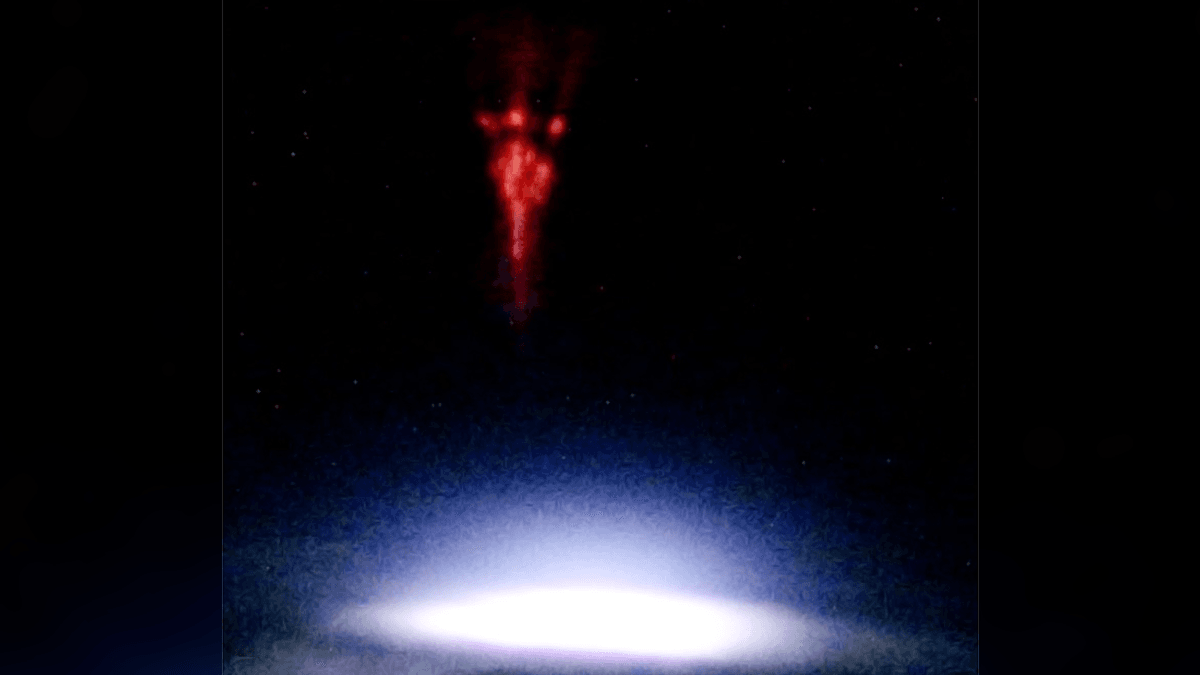
Astronaut Catches "Transient Luminous Event" High Above The Earth

European Space Agency (ESA) astronaut Andreas Mogensen has captured a new image of a red sprite‚ a rare type of electrical discharge rarely seen from Earth.As part of the Thor-Davis experiment‚ Danish astronaut Mogensen heads to the International Space Station's (ISS) Cupola observatory module every Saturday to attempt to photograph storms from above. In the first image released by the experiment‚ which aims to study intense thunderstorms from a better vantage point as well as weather phenomena in high altitude‚ a Transient Luminous Event (TLE) is seen between 40 and 80 kilometers (25-50 miles) above the Earth.TLEs‚ sometimes called "sprites"‚ "red sprites"‚ or "red jellyfish sprites"‚ have been reported by pilots for decades‚ but were only recorded for the first time in July 1989. They are rarely seen from the surface‚ which is probably for the best‚ given the illusion they create of an invading alien space force.    Like regular lightning strikes‚ the sprites occur following a build-up of electrical charge within clouds. With red sprites‚ however‚ the discharge occurs into the Earth's mesosphere up to 80 kilometers (50 miles) above the Earth. The eerie red color occurs as the charge meets nitrogen in the Earth's atmosphere.Mogensen captured the sprite with an "event camera"‚ which according to ESA works more like a human eye than a regular camera‚ sensing changes in contrast rather than capturing an image. An advantage of these cameras is they can produce around 100‚000 images a second‚ while drawing very little power to do so. Among other aims‚ the study strives to better understand how lightning in the upper atmosphere affects the concentration of greenhouse gases.“These images taken by Andreas are fantastic‚" Olivier Chanrion‚ lead scientist for this experiment‚ told ESA of this first image from it. "The Davis camera works well and gives us the high temporal resolution necessary to capture the quick processes in the lightning."
Like
Comment
Share
Science Explorer
Science Explorer
2 yrs

Psychedelic Colors Reveal Hidden Beauty Of Alaska's Giant Glacier
Favicon 
www.iflscience.com

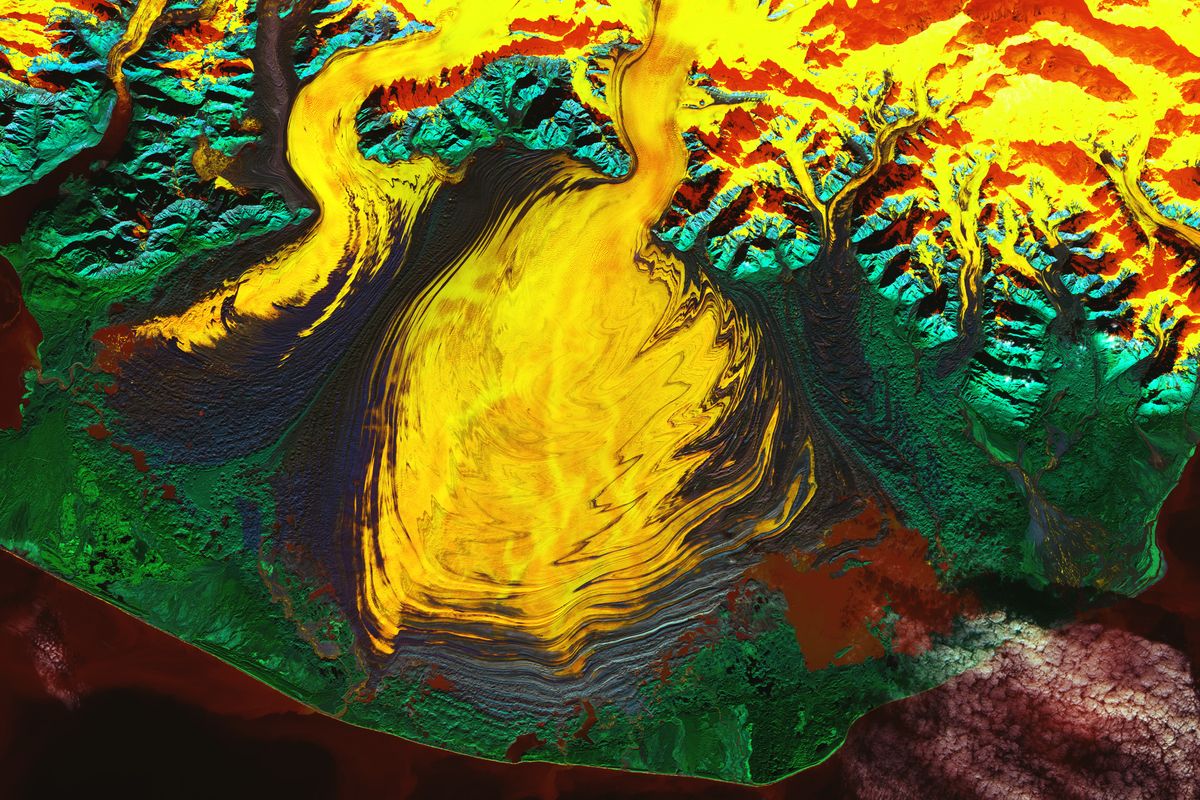
Psychedelic Colors Reveal Hidden Beauty Of Alaska's Giant Glacier

Psychedelic satellite imagery shows the world’s largest piedmont glacier‚ located on the southeast edge of Alaska‚ in all its colossal glory. This vast natural monument may look still and steady‚ but the images highlight how the ice giant is in a state of flux. As explained by NASA's Earth Observatory‚ the image shows Alaska’s Malaspina Glacier primarily located in Wrangell-St. Elias National Park on the southeast coast of Alaska. It’s known as Sít' Tlein in the Tlingit language spoken by the Indigenous people in the area‚ which means "big glacier" – and it is‚ indeed‚ very big. The glacier takes up an area of 4‚350 square kilometers (1‚680 square miles)‚ making it the largest piedmont glacier on the planet.A piedmont glacier simply describes a glacier where the ice has spread out into a flat‚ lowland area‚ as opposed to a valley glacier that flows down the mountainside. The false-color image (yep‚ unfortunately‚ it’s not that color to the naked eye) was taken by the OLI-2 (Operational Land Imager-2) onboard the Landsat 9 satellite on October 27‚ 2023.A labeled version of the image above.Image credit: Wanmei Liang/Landsat 9/NASA Earth ObservatoryTo our human eyes‚ the Malaspina Glacier of Alaska would appear icy blue and white‚ with intermittent specks of grey rock. However‚ we’re able to gain a deeper perspective thanks to the OLI-2‚ which captures the scene using infrared radiation. This shows the ice as yellow‚ red‚ and orange colors‚ the water as red‚ the rock as blue‚ and the vegetation as green. The dark blueish-purple lines on the ice are moraines‚ areas where rocky soil has been scooped up by the glacier and dumped on its edges. The ripples that you can see in the main body of the Malaspina Glacier show how ice is periodically edging forward in a multi-year process‚ creating moraines that fold and compress with the surge.You’ll also notice a thin strip of land between the large glacier and the Gulf of Alaska‚ which eventually leads to the Pacific Ocean. NASA explains that a watery lagoon system has been forming along this “barrier” in recent decades‚ which you can see in the rusty red-colored pools.Some of this water is very salty‚ indicating that the relatively warm ocean water is making contact with the ice. If this continues‚ it could be enough to calve a significant chunk of ice from the main body‚ accelerating the glacier's retreat.
Like
Comment
Share
Science Explorer
Science Explorer
2 yrs

Is Kiwi Skin Safe To Eat?
Favicon 
www.iflscience.com

Is Kiwi Skin Safe To Eat?

The unique skin of kiwi fruit might not be to everyone’s taste‚ but these coarse hairs‚ called trichomes‚ can be very beneficial both to the plant and to your health.The kiwi’s luscious locks work as a defense mechanism to prevent insects from being able to land on the fruit’s uneven surface. It also helps retain moisture and protect the fruit from sunlight in the plant’s tropical native climate of China and Taiwan.But while it’s clear these hairs serve an evolutionary advantage for the health of the plant‚ are we really gaining anything from scarfing down all that hair?The short answer is yes‚ eat that skin! Kiwi skin is arguably more nutrient-rich than the fruit itself. Eating the skin along with the fruit increases its fiber content by 50 percent‚ folates by 32 percent‚ and vitamin E by 34 percent. There are‚ in fact‚ more antioxidants‚ namely vitamins C and E‚ in the skin than there are in the flesh.Consuming any fruit or vegetable skin‚ however‚ does come with the risk of pesticide contamination. The Environmental Working Group’s (EWG) Shoppers Guide to Pesticides in Produce is a list formulated yearly that ranks the pesticide contamination of 46 popular fruits and veg.The produce samples are tested by the Food and Drug Administration (FDA) and United States Department of Agriculture (USDA) after being cleaned and prepared for consumption. The list’s 2023 edition ranks kiwis in the category “clean 15”‚ meaning they’re a part of the group with the lowest levels of pesticide contamination. But to lower the risk of pesticides on your produce even more‚ be sure to thoroughly wash your fruit and veg‚ and where possible opt for organic produce.Despite the clear benefits of eating kiwi skin‚ it still might not trump that gnarly texture. Due to the hair’s calcium oxalate crystals causing microscopic scratches inside the mouth‚ kiwi skin can act as an irritant when the fruit’s acid comes into contact with these cuts.The presence of higher levels of oxalates in the fruit’s skin can also make it a risk for people with a history of kidney stones as oxalates bind with calcium in the body‚ potentially exacerbating the condition.Kiwi allergies are also quite common and of the 13 different allergens identified in kiwi‚ five are defined as major. Oral allergies can occur in those with birch pollen or latex allergies as the proteins in kiwi are similar in shape. This can cause mild to severe irritation in the mouth and in some cases anaphylaxis.However‚ if you don’t have a history of kidney stones or kiwi allergies‚ and if you’re a bit of a glutton for punishment‚ then maybe don’t go peeling your kiwis.The content of this article is not intended to be a substitute for professional medical advice‚ diagnosis‚ or treatment. Always seek the advice of qualified health providers with questions you may have regarding medical conditions. All “explainer” articles are confirmed by fact checkers to be correct at time of publishing. Text‚ images‚ and links may be edited‚ removed‚ or added to at a later date to keep information current. 
Like
Comment
Share
Science Explorer
Science Explorer
2 yrs

Male Tardigrades Can Find A Mate By Sniffing Them Out
Favicon 
www.iflscience.com

Male Tardigrades Can Find A Mate By Sniffing Them Out

Forget flowers and chocolates‚ a hand-written poem‚ or an elaborate home-cooked meal – when it comes to tardigrades‚ it appears that romance is as simple as a scent. Researchers have uncovered the first evidence that everyone’s favorite chubby microscopic critters use waterborne chemical cues to attract and find mates.Although tardigrades get up to some pretty wild sexual shenanigans‚ relatively little is known about how they go about attracting the opposite sex. There’s little to distinguish between males and females‚ making it unlikely that visual cues are involved. Instead‚ researchers turned to the theory that tardigrades might attract each other with alluring odors.To find the answer to their question‚ the team constructed a water-submerged “arena” with two adjacent chambers‚ one containing a male tardigrade and the other containing a female. A third tardigrade was then placed between the two‚ and the researchers waited to see how the minibeast in the middle reacted. Move over Love Island‚ there’s a new reality dating show in town.After hours of observations‚ the researchers concluded that the female was secreting a scent that attracted the male. Male tardigrades placed between the chambers were keen to reach the female and ignored the other male; females could pick up on the scent of both sexes‚ but went back and forth between the two. This suggested that‚ in pre-mating behavior‚ only males actively sought out the opposite sex.To determine if the tardigrades could follow scent trails in a substance other than water‚ the research team this time carried out more of a “hide and seek” style experiment in an arena coated in agar‚ a jelly-like substance. They first placed a single tardigrade in the arena and gave them a five-minute head start‚ before releasing a member of the opposite sex to find them. “They moved slowly‚ but much more than expected‚” said study author Justine Chartrain from the University of Jyväskylä‚ Finland‚ in a statement‚ adding that many of the creatures had explored the whole arena. This time‚ however‚ neither male nor female tardigrades were successful at finding the opposite sex‚ suggesting they only pick up on chemical cues in water environments.When tardigrades do find each other‚ their sex lives can be far richer and more varied than might be expected. Whilst this study only examined male-female mating behaviors‚ some marine species of these near-indestructible critters are bisexual‚ whilst others have been observed engaging in foreplay and what is best described as marathon sessions.If that hasn’t successfully erased the cute and cuddly vision of tardigrades conjured up by their “water bear” nickname‚ I don’t know what will.The study is published in the Journal of Experimental Biology.[H/T: LiveScience]
Like
Comment
Share
Pet Life
Pet Life
2 yrs

Wild stallions gather around newborn and mama jumps into action
Favicon 
animalchannel.co

Wild stallions gather around newborn and mama jumps into action

Montana‚ with its breathtaking mix of the Rocky Mountains and the Great Plains‚ is a land of untamed beauty and diverse wildlife. It’s a place that evokes images of the wild west‚ where heroes on horseback chased bandits and rebels. If only the trees could share their stories‚ what tales they would tell! This is... The post Wild stallions gather around newborn and mama jumps into action appeared first on Animal Channel.
Like
Comment
Share
Pet Life
Pet Life
2 yrs

Male whale tries to attack mama whale and baby‚ but a protective pod of dolphins foils its plan
Favicon 
animalchannel.co

Male whale tries to attack mama whale and baby‚ but a protective pod of dolphins foils its plan

Dolphins‚ known for their intelligence and sociability‚ have long captured the hearts of people worldwide. Their ability to connect with human emotions and their playful nature makes them a favorite among marine animals. But there’s more to these creatures than just playfulness; they also possess a fierce protective instinct‚ as a recent incident off the... The post Male whale tries to attack mama whale and baby‚ but a protective pod of dolphins foils its plan appeared first on Animal Channel.
Like
Comment
Share
NewsBusters Feed
NewsBusters Feed
2 yrs

Editor’s Picks: Daily Signal‚ Daily Wire HAMMER Corrupt Leftists at Disney
Favicon 
www.newsbusters.org

Editor’s Picks: Daily Signal‚ Daily Wire HAMMER Corrupt Leftists at Disney

On Monday morning‚ our friends at the Daily Wire and the Heritage Foundation’s Daily Signal absolutely shredded Disney and Reedy Creek Improvement District (RCID)‚ the special taxing and self-governing district created in the mid-1960s‚ as an independent audit found Disney exhorted total control over the group meant to hold it to account as it continued to attract business and tourism to its central Florida theme parks. The Daily Wire’s investigations editor Brent Scher had the exclusive on the report and said the audit found Disney “perform[ed] a ‘bait and switch’ on the state‚ and used its ‘complete and unaccountable governmental power’ to ‘maximize its profits’ at ‘the expense of the public good.’”  Scher said the report revealed Disney’s influence oper ations over the RCID‚ which Governor Ron DeSantis dissolved this year‚ marked “the most egregious exhibition of corporate cronyism in modern American history.” Scher had more on what the audit entailed (click “expand”): The audit consisted of a forensic audit of the district’s finances‚ as well as an analysis of governing structures and urban planning. It found that Disney used shady tactics to maintain its control of power‚ hand-picking government officials‚ and making payments to district employees that were “akin to bribes.” It also used the district to avoid taxation‚ and thrust costs on taxpayers in surrounding communities. (....) Disney told Florida it would build a city around a single theme park‚ complete with “affordable housing‚ transportation‚ and other community services‚” the report noted. [George Mason University Law Professor Donald] Kochan explains that Disney “quickly abandoned its city-building pretense.” It instead built the modern Disney World‚ consisting of several theme parks‚ four golf courses‚ and dozens of hotels — with no housing and services only offered to tourists. (....) “The historical record demonstrates that Disney disdained voters from the outset and did not want its special district or its corporate choices to be subject to public accountability through popular elections‚” Kochan states. “Documentary evidence from Walt Disney himself makes clear that he did not want permanent residents in his model community.” (....) The report lays out how even the democratic aspects of the RCID were meticulously controlled by Disney. Board members‚ for example‚ were only eligible if they owned land in the district‚ so Disney would temporarily deed plots of inaccessible land that board members could hold during the duration of their service‚ and forfeit it back to Disney at the end. The company would even continue to pay the property tax for the board members. The system ensured that the board “would be responsive to Disney’s preferences and would serve Disney’s interests‚” the report states. Scher’s piece went onto highlight special treatment for Reedy Creek employees‚ including Disney passes and discounts not available to the general public. In other words‚ hefty bribes to allow Disney to operate as they wished. Over at the Daily Signal‚ managing editor Tyler O’Neil stated plainly that Disney “controlled the local government around the site of Walt Disney World in Orlando‚ Florida‚ for decades” and the audit found Reedy Creek employees were even labeled Disney employees (called “cast members”). O’Neil’s deep dive focused on these improper benefits‚ including “special-access tickets to Disney parks” (except Disney’s parks in Tokyo) for “employees‚ retirees‚ members of its Board of Supervisors‚ and certain VIPs” and were doled out with what he said was the “[understanding] that their passes were not available to the general public.” “The Reedy Creek district also used the complimentary tickets as an incentive to recruit employees. Even after RCID leadership decided to remove the mention of complimentary tickets from recruitment documents‚ these leaders still used the passes as an incentive. RCID spent millions of taxpayer dollars on the passes‚ and still received steep discounts from Disney‚” he added. Later on‚ O’Neil detailed additional‚ undisclosed benefits that included half off the sticker price of Disney cruises and steep cuts when buying Disney merchandise (click “expand”): Disney managed the complimentary tickets and other benefits for employees of the Reedy Creek Improvement District by issuing RCID employees a personnel number known as a “perner‚ using the exact same system for Disney “cast members.” Disney used these perners to track RCID employees’ park attendance‚ spending‚ and other uses of the Disney benefits. The Reedy Creek district provided employees with a 50% discount on Disney cruises for booking up to three rooms—the same discount available to Disney employees. District employees needed to inquire about the discount‚ however‚ because the RCID did not appear on the cruise line’s list of Disney employees. A cruise director told one employee of the district that RCID didn’t appear on the list “due to the sunshine state laws” of Florida. (....) Although RCID paid Disney the cost of these cruise discounts at the end of the year‚ most employees of the district who used the benefit didn’t know this. At least one employee who used the discount asked someone to “please extend by appreciation to the [Disney] World Corporation for this benefit.” (....) Employees of the Reedy Creek Improvement District received a discount on Disney theme park merchandise and could shop at stores exclusively reserved for Disney employees. These locations offer discounted Disney merchandise and Disney items not made available to the general public‚ such as old decorations from Disney resorts and hotels. To read more on Disney’s cartoonish levels of corporate corruption‚ check out Scher’s findings here and O’Neil’s report here.
Like
Comment
Share
Showing 106755 out of 113970
  • 106751
  • 106752
  • 106753
  • 106754
  • 106755
  • 106756
  • 106757
  • 106758
  • 106759
  • 106760
  • 106761
  • 106762
  • 106763
  • 106764
  • 106765
  • 106766
  • 106767
  • 106768
  • 106769
  • 106770
Advertisement
Stop Seeing These Ads

Edit Offer

Add tier


Select an image
Delete your tier
Are you sure you want to delete this tier?

Reviews

In order to sell your content and posts, start by creating a few packages. Monetization

Pay By Wallet

Payment Alert

You are about to purchase the items, do you want to proceed?

Request a Refund