YubNub Social YubNub Social
    #music #tew #tuba #euphonium #militarymusic #tew2026 #armymusic #armyband #uk #jazz #quartet #history #warmup #armyblues #bigband
    Advanced Search
  • Login
  • Register

  • Night mode
  • © 2026 YubNub Social
    About • Directory • Contact Us • Developers • Privacy Policy • Terms of Use • shareasale • FB Webview Detected • Android • Apple iOS • Get Our App

    Select Language

  • English
Night mode toggle
Featured Content
Community
New Posts (Home) ChatBox Popular Posts Reels Game Zone Top PodCasts
Explore
Explore
© 2026 YubNub Social
  • English
About • Directory • Contact Us • Developers • Privacy Policy • Terms of Use • shareasale • FB Webview Detected • Android • Apple iOS • Get Our App
Advertisement
Stop Seeing These Ads

Discover posts

Posts

Users

Pages

Blog

Market

Events

Games

Forum

Daily Caller Feed
Daily Caller Feed
2 yrs

Ohio State Quarterback Kyle McCord Enters The Freshly-Opened Transfer Portal To Start Things Off With A Bang
Favicon 
dailycaller.com

Ohio State Quarterback Kyle McCord Enters The Freshly-Opened Transfer Portal To Start Things Off With A Bang

Here we go
Like
Comment
Share
Daily Caller Feed
Daily Caller Feed
2 yrs

Trump Files Intent To Appeal Reinstated Gag Order
Favicon 
dailycaller.com

Trump Files Intent To Appeal Reinstated Gag Order

'unfettered license'
Like
Comment
Share
Daily Caller Feed
Daily Caller Feed
2 yrs

Billie Eilish Slams Variety For Outing Her
Favicon 
dailycaller.com

Billie Eilish Slams Variety For Outing Her

'I just don’t really believe in it'
Like
Comment
Share
Daily Caller Feed
Daily Caller Feed
2 yrs

Bass Gets Beaten Up‚ But Really Battles Himself In Part VI Of ‘Lawmen: Bass Reeves’
Favicon 
dailycaller.com

Bass Gets Beaten Up‚ But Really Battles Himself In Part VI Of ‘Lawmen: Bass Reeves’

Is this not the best show of the year?
Like
Comment
Share
Classic Rock Lovers
Classic Rock Lovers  
2 yrs

10 Classic Rock Bands Whose First Album Remains Their Best
Favicon 
www.classicrockhistory.com

10 Classic Rock Bands Whose First Album Remains Their Best

Our 10 classic rock bands whose first album remains their best article is both a celebration of some of the greatest rock albums ever released. Many of these picks belong to bands that went on to have amazing legendary careers and continued to release spectacular albums‚ some of which people would argue were better than their first. Of course‚ this is always subjective. However‚ some bands on this list released mind-blowing debut albums only to never come close to repeating the commercial and‚ even more importantly‚ the artistic success of their debut. It’s pretty apparent the one on here that The post 10 Classic Rock Bands Whose First Album Remains Their Best appeared first on ClassicRockHistory.com.

Like
Comment
Share
Classic Rock Lovers
Classic Rock Lovers  
2 yrs

Complete List Of John Prine Studio Albums And Discography
Favicon 
www.classicrockhistory.com

Complete List Of John Prine Studio Albums And Discography

John Prine‚ born on October 10‚ 1946‚ in Maywood‚ Illinois‚ and passing away on April 7‚ 2020‚ was a significant American folk and country singer-songwriter. Gaining prominence in the early 1970s with his self-titled debut album‚ Prine was known for his poignant‚ narrative-driven lyrics that often reflected on social and personal themes. His songs such as “Sam Stone” and “Angel from Montgomery‚” showcased his ability to blend melancholy with wit. Prine’s influence spanned across genres and generations‚ leading to collaborations with artists like Bonnie Raitt and Johnny Cash. Continuing to produce music well into the 21st century‚ Prine left behind The post Complete List Of John Prine Studio Albums And Discography appeared first on ClassicRockHistory.com.

Like
Comment
Share
The Lighter Side
The Lighter Side
2 yrs

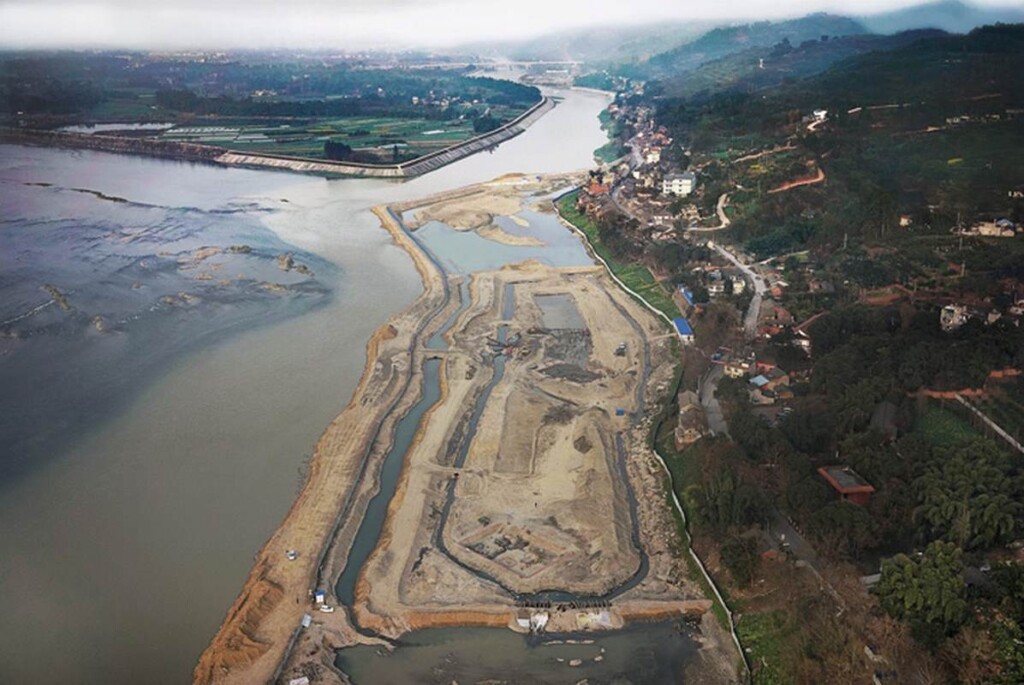
76‚000 Gold and Silver Artifacts Recovered from Chinese River Chart Infamous 17th Century Warlord’s Conquests
Favicon 
www.goodnewsnetwork.org

76‚000 Gold and Silver Artifacts Recovered from Chinese River Chart Infamous 17th Century Warlord’s Conquests

There is a textbook for English readers in Hong Kong universities on 6‚000 years of Chinese history. After reading the first part‚ which documents the political history of the country‚ a trend is immediately identifiable—that ruling dynasties rose from peasant rebellions and fell to peasant rebellions. Now‚ in southern China’s Sichuan Province‚ a series of […] The post 76‚000 Gold and Silver Artifacts Recovered from Chinese River Chart Infamous 17th Century Warlord’s Conquests appeared first on Good News Network.
Like
Comment
Share
SciFi and Fantasy
SciFi and Fantasy  
2 yrs

Spheres of Influence: A Season of Monstrous Conceptions by Lina Rather
Favicon 
www.tor.com

Spheres of Influence: A Season of Monstrous Conceptions by Lina Rather

Why not quote Ecclesiastes: For everything there is a season‚ and a time for every matter under heaven. January 1675 in London marks a season of newborns‚ but these pregnancies are more unpredictable and deadly than the norm for the time: More and more babies are coming out of the womb with horns‚ or gills‚ or enough eyes to pass for a Biblically-accurate angel. Are the rumors true‚ of expecting women crossing paths with a devilish figure that imprints on their wombs? Or could it have something to do with the new apprentice midwife‚ unassuming widow Mrs. Sarah Davis‚ who has her own unusual origins? Lina Rather’s A Season of Monstrous Conceptions is a dark‚ thoughtful novella about what it means to pass from the relative safety of one world into another that offers more opportunity but also more danger. This particular time in history and society is the perfect setup for this speculative plot‚ because of the unfortunate norm that pregnancies did not always ensure a living child and/or mother: Between breech babies and postpartum complications‚ birth was a bloody and often fatal affair. That’s even before you add in this particular crop of newborns not surviving the night‚ whether due to aforementioned inhuman features like gills if not born in water‚ or superstitious and God-fearing folks drowning the infants themselves. Sarah has a personal incentive for delivering these particular babies‚ which is that twenty-odd years ago she was one of them‚ albeit born in the quiet but gossipy village of Cookham. A sixth child already rendered extraneous by birth order‚ she also came out with a nubby little tail that her grandmother matter-of-factly snipped before anyone could be the wiser. Yet Sarah’s otherworldliness goes deeper than a missing appendage‚ and she grows up with the uncanny sense that there is another world existing right beyond the borders of our own… and must eventually leave Cookham‚ and her unhappy marriage‚ when she discovers the ability to tap into that realm’s power. But while the London births that Sarah and her mentor Mrs. June attend are becoming ever grimmer‚ that doesn’t stop them from taking on new clients—especially when Sarah hooks a big fish in Lady Faith Wren‚ genteel and gravid. Her husband‚ Sir Christopher Wren‚ is a renowned architect building a monument to the Great Fire that devastated London nine years before. Despite immediately recognizing the fetus in Faith’s womb as one of her kind‚ but far less able to pass in the human world than she‚ Sarah takes on the pregnancy as if it is a normal gestation. During those final weeks‚ Sir Wren recognizes something in Sarah‚ too: her uncanniness‚ yes‚ but also her intellect and curiosity. Buy it Now Sarah’s intelligence is not appreciated by her harsh mentor figure Mrs. June‚ nor by the rest of the midwives’ guild—unofficial‚ of course‚ as the king will not recognize a group of women on the same level as the (male) surgeons. Their meetings are in pubs rather than universities or hospitals‚ but their studies are just as intensive‚ except they already know the workings of the female body and are instead concerned with the encroachment of what they call the Other Place. Despite the midwives having devoted years to trying to contact this world and its inhabitants‚ Sarah is instead drawn to midnight rendezvous (purely platonic) with Sir Wren in his underground laboratory‚ as he lets her in on his true blueprints for crossing over to this other sphere of existence. Because no matter how canny (like Wren) or driven (like Mrs. June)‚ intellectuals and magic-users cannot access the Other Place in the way that these otherworldly children can. And with most of the crop still learning how to self-regulate and sleep‚ Sarah is the rare specimen with enough life experience moving through our world to attempt any sort of crossover. But passing doesn’t mean that Sarah has ever felt safe or like she has a home. Her eagerness to become a teacher’s pet to Sir Wren is so poignant‚ not least because we’ve already witnessed her plaintive insistence on casting herself as a surrogate daughter to Mrs. June. Yet when offered a place in more liminal spaces‚ Sarah recoils. For such a slim story‚ Rather endeavors to explore as many different spheres of London as she can. Most notable is anywhere where Margaret is: A serving girl at a brothel whose births Sarah and Mrs. June frequently attend‚ she represents the life that Sarah would have had if she had been born with horns instead of a tail. The attraction between the two women sparks on multiple levels‚ drawn to one another by desire but also repelled by fear. Their interludes are the novella’s most powerful‚ as Margaret endeavors to show Sarah that it doesn’t have to be parallel spheres‚ but that magic can bleed into the mundane and vice versa. Rather’s novella is most effective when it demonstrates how the uncanny manifests in our familiar world. Sarah’s recollections of using her power‚ at first unintentionally and then with more conviction‚ are chilling in how she subtly bends others’ will to her frustration and rage—interrupting the natural course of things by compelling someone into a body of water or a wall of fire. Her night out on the town with Margaret‚ in which queerness is a symphony of meanings‚ brings tantalizing zaps of pleasure to a mostly grim tale. And on the other end of the spectrum‚ a climactic scene involving common people misunderstanding the thin line between child and demon is the most disturbing yet necessary part of the tale. But as the veil between our world and the Other Place grows thinner than an effaced cervix‚ the subsequent passages do not inspire the same sense of distraught wonder. Our glimpses of this alternate world are so rare that the brief moments in which we are dropped within‚ it’s difficult to know whether to regard the human subject as feared oddity or harmless interloper. We have the sense that these unwanted children could survive better there‚ but we don’t really know how much they’d fit in‚ either. However‚ Sarah’s constant sense of belonging to neither world‚ of straddling them at best‚ aches like a phantom limb. Rather doesn’t entirely resolve that dilemma—in fact‚ the climax creates as many new questions as it answers existing ones—but she comes out the other side much like a mother giving birth‚ a bit worse for the wear but also with the closure that she has experienced a transformative journey of her body and mind. When it comes to A Season of Monstrous Conceptions‚ it’s rather like the quandary of family size: On the one hand‚ I would love to see “sibling” novellas further exploring Sarah’s midwifery after the events of this story. On the other hand‚ this is a lovely dark standalone that begins and ends within a particular season. Who knows‚ maybe there will be a surprise addition down the line. A Season of Monstrous Conceptions is available from Tordotcom Publishing. Now Natalie Zutter is on the hunt for more SFF about pregnancy‚ childbirth‚ and all the horrors and joys contained therein. Feel free to recommend some to her on Twitter or Bluesky!
Like
Comment
Share
SciFi and Fantasy
SciFi and Fantasy  
2 yrs

Step Out of the Vault With the First Trailer for Fallout
Favicon 
www.tor.com

Step Out of the Vault With the First Trailer for Fallout

“You need to go home. Vault-dwellers are an endangered species.” It’s not exactly the warmest of welcomes‚ is it? Especially when coming from Michael Emerson‚ whose iconic role on Lost rendered him perpetually a bit creepy. But then‚ a weird warning only makes sense in this world. Right on the heels of some intriguing images‚ Prime Video has delivered the first trailer for its Fallout adaptation‚ and it looks very‚ very good. The thing that makes this trailer so appealing is the way it slowly gets increasingly weird. Wasteland‚ skulls‚ yeah‚ yeah‚ we’ve all seen these things in a post-apocalyptic landscape before—though it is all new to Lucy (Ella Purnell). For us? Old news. The giant cockroach is unnerving‚ but still‚ sure‚ okay. I guess you need a really big magazine with which to smash it. But then. Then‚ there’s a gentleman (Maximus‚ played by Aaron Moten) who seems to be in love with his power armor‚ maybe. (At least that’s what the musical cue is saying.) A nice doggie has a nice severed hand in its mouth. Walton Goggins has no nose. Another guy has no pants. I don’t even want to talk about the bear‚ or the moldy coffee. All of this plays out under the sweet strains of Nat King Cole’s “I Don’t Want to See Tomorrow‚” which is very much A Choice‚ and gives it all a very pleasantly doomy vibe. Here’s the synopsis: Based on one of the greatest video game series of all time‚ Fallout is the story of haves and have-nots in a world in which there’s almost nothing left to have. 200 years after the apocalypse‚ the gentle denizens of luxury fallout shelters are forced to return to the irradiated hellscape their ancestors left behind — and are shocked to discover an incredibly complex‚ gleefully weird and highly violent universe waiting for them. Fallout was developed by Jonathan Nolan and Lisa Joy (Westworld); Geneva Robertson-Dworet (Captain Marvel) and Graham Wagner (Portlandia) are co-showrunners and writers. The cast includes Kyle MacLachlan (Twin Peaks)‚ Sarita Choudhury (Jessica Jones)‚ Leslie Uggams (Deadpool)‚ Zach Cherry (Severance)‚ and Xelia Mendes-Jones (The Wheel of Time). The series premieres on Prime Video on April 12‚ 2024.
Like
Comment
Share
SciFi and Fantasy
SciFi and Fantasy  
2 yrs

Wilson’s Iliad and Le Guin’s Battle Between Good and Evil‚ or: How I Learned to Stop Worrying and Love the Sword
Favicon 
www.tor.com

Wilson’s Iliad and Le Guin’s Battle Between Good and Evil‚ or: How I Learned to Stop Worrying and Love the Sword

There’s a fight a-brewin’: On September 26th‚ Emily Wilson’s translation of the ancient Greek epic poem the Iliad was released (published by W.W. Norton)‚ the natural follow-up to her 2018 translation of the Odyssey. That initial project garnered a great deal of attention as being the first published translation of the Odyssey done by a woman—into English. Wilson‚ for her part‚ prefers to emphasize her work’s more immediate qualities than her own metahistorical first-ness. The marketing campaign for Wilson’s Odyssey was very successful‚ however‚ due in whatever proportion to usage of the reliable “first woman to ____” narrative‚ and the book received popular acclaim as well as positive scholarly reviews. To some people‚ it was their first introduction to the Homeric epic. For others‚ it was the first time that they really connected to the story‚ freshly delivered to them in more idiomatically accessible language. In either case‚ I have anecdotally heard several people say that they first developed a deep personal connection to Homeric poetry and to Odysseus’ story through Wilson’s translation. Other people‚ however‚ received the first translation of the Odyssey (into English) by a woman with hostility and suspicion. This too is probably ascribable to the emphasis on Wilson’s gender during the translation’s marketing. Why‚ reactionaries appear to have reasoned‚ would you put so much emphasis on the “first woman” business unless this new work was a part of some feminist agenda? Why can’t the feminists leave these traditional tales about super men alone? Now once more‚ with the release of Wilson’s Iliad‚ the controversy has been revived. At least this time around‚ the conversation’s nominal centering on the Iliad‚ the tale of Achilles’ wrath‚ permits us to make a cute little parallel: both Achilles‚ the Iliad’s central wrathful hero‚ and Wilson’s more strident detractors compel us to wonder‚ “why are you so angry?” I don’t really wish to litigate here every specific argument that has been raised‚ or even just the best or worst ones‚ about what the Homeric epics should really be and how Wilson distorts/misses their essence. But I do wish to reflect on how these arguments play on commonly held notions about the past‚ for I think they will be pertinent to a fantasy-reading audience. It is worth mentioning that I will be making some arguments here about what I infer to be broadly held beliefs. Estimating what others believe is at the best of times a tenuous proposition‚ and I may simply prove to be not a very good barometer. Have I done enough hedging yet? OK‚ here we go: There is a lot of fat to cut through in the discourse around Wilson’s work‚ most of it pertaining to disagreements on translation methodologies. Is it superior to keep the translation as literal as possible‚ cat for chat‚ or is there some “spirit” of the original text that it is more important to communicate‚ one better achieved through the taking of certain liberties? What register of English speech is truest to the style of Homeric Greek? And so on. These are interesting but thorny topics—in whose brambles one can hide an awful lot of ideology. A couple of weeks before her Iliad’s release‚ a thread criticizing Wilson’s Odyssey in anticipation of her new work made some waves on Classics Twitter‚ interrupting everyone’s busy schedule of making niche mythology puns and references—and even broke containment into the broader discourse by dint of being so silly that it unwittingly copied the format of a common meme. (Paging Rebecca Solnit…) One particular claim‚ though‚ stood out to me and a number of other rubberneckers: that Wilson’s rendering of the Greek adjective πολύτροπον (polytropon) as “complicated” in the Odyssey’s first line amounts to an “insult” toward Odysseus. “Tell me about a complicated man.” (The Odyssey‚ Book 1‚ line 1) It’s a perplexing point‚ but a telling one‚ I think‚ once you untangle its logic. A more primary objection would be that the translation is off‚ and this objection has also been raised. But Wilson has discussed her methods and reasons for translating just this one specific word this way many‚ many times. It is metrically felicitous‚ it employs a similar kind of metaphor to the one at work in the Greek. You will either be persuaded by her explanations or you won’t. But to call the choice an “insult” is a stretch which signals that a larger point is being made—one that’s about values rather than accuracy. I think it is fair to extrapolate that the real issue here is that “complicated” and many of Wilson’s other choices of diction are not grand enough for certain tastes. Most reactions to Wilson’s style‚ both the positive and negative accounts‚ emphasize the accessibility of her language‚ leading some to titter that the masses can now read the story “without excessive mental interruption.” This is a deeply unworthy criticism that at best confuses verbal floridity for complexity‚ and at worst snidely hides elitism behind thin intellectualism. This lack of highfalutin’ talk—though to my ear‚ it is still plenty falutin’—does not overdetermine for the audience how exalted or virtuous we should think the feats of masculine achievement related in these stories are to the same degree that using language in higher register might have. To some readers‚ this robs the texts of what (to them) made the poems meaningful. If we are not here to bask in the glory of Achilles and Odysseus and Diomedes and Ajax and their strength and daring‚ then why did we even show up for the party? Fortunately‚ Daniel Walden for The Bulwark has already done an excellent job at cutting through the noise‚ calling out in his review reactions that confuse “criticism of taste and criticism of merit”: Wilson has made choices‚ the same as any other translator has: These choices place emphasis on one thing and not on another. To complain “but there’s more to it than that!” is nearly redundant: of course there is‚ because we are reading English and not Greek. Walden does not hesitate either to identify the culprits of that unsophisticated criticism as “culture-war pundits.” The usual suspects‚ then. But we can say a little more here about what it is that these pundits seem to believe. For whether or not we are politically aligned with the people making these sorts of arguments (whom I infer tend to be more conservative)‚ we might share more ideas about the past with them than we realize‚ ideas centered around that past’s relative…well‚ complexity. That is the supposed distortion taking place at Wilson’s hands‚ is it not? That she has taken an ancient text about virtue and either injected it with some sort of postmodern moral skepticism‚ or at least she has introduced it to too wide of an audience who will‚ by fault of being moderns with modern styles of interpretation‚ misinterpret it. That is a strange way to talk about art‚ to insist that it should leave as little room as possible for people to misunderstand‚ i.e.‚ have a different perspective from yours. It is‚ however‚ a legibly less strange way to talk about an artifact. Unlike art‚ where we might be more forgiving of differences in perspective borne out by critical engagement‚ we expect artifacts to represent a particular moment in time. The artifact tends to get held out as a more purely educational object‚ and as such it ought to impart clear‚ standard information. This will be on the test. Thus‚ our understanding of the artifact needs to be relatively simple. If it is very old‚ we might even be given to think that the culture the artifact represents really was relatively simple‚ in the senses of being less large‚ less diverse‚ and perhaps less self-reflective. So here’s the crux: I suspect that we are collectively inclined to treat the Homeric epics as artifacts. They are supposed to represent an idea of ancient Greece to us‚ and arch narratives of historical progress prime us to accept that past societies were scientifically‚ politically‚ and ethically less complicated. Thus‚ we as readers may expect the Homeric epics to reflect a relatively simplistic worldview‚ one that is‚ say‚ uncritical of patriarchal hegemony—and we can believe that without‚ as some people do‚ trying to use it as an argument in favor of patriarchal values. It is worth pointing out‚ then‚ that the Homeric epics invite a lot of ambivalence about the heroic world they portray. The closest they ever come to a tidy moral lesson that I can think of is Menelaus’ statement on ideal hospitality in Odyssey book 15‚ imparted upon hearing that Telemachus would like to go home now‚ please: I disapprove of too much friendliness And of too much standoffishness. A balance Is best. To force a visitor to stay Is just as bad as pushing him to go. Be kind to guests when they are visiting‚ Then help them on their way. […] (Trans. Emily Wilson) And this is a rare universal truth‚ Homer. Well done. Anyone who has ever desperately tried to excuse themself from an interminable party will understand. But neat universal truths delivered didactically are few and far between here‚ even more so in the Iliad than the Odyssey. Some may try to describe the former‚ the tale of Achilles‚ as one about the importance of glory over even life itself‚ a study in macho-ness—delivered direct from the time when men were men! I won’t outright say that this reading is wrong. It is certainly not completely out of touch with the text‚ which is indeed deeply concerned with honor‚ both that which must be paid to the gods and goddesses (Hera and Athena’s sense of slighted honor is deliciously palpable whenever they appear) and that which mortals can scrape together for themselves while they live. But I think it is more correct to say that the poem is depicting the difficulty‚ nigh impossibility even‚ for mortals of weighing those two goods against each other‚ life versus glory‚ happiness versus honor. What is impressive about Achilles is that he bothers to stop and really try to hash out the answer. What is tragic about him is that in his selfish deliberation‚ he loses more than he bargained on—the life of his dearest friend. Now Achilles’ chance for a long life is gone‚ and the glory he purchased with it is not as sweet as he hoped. There is emotional catharsis‚ but no clean resolution to take home like a trophy once the dust has settled‚ and we and Achilles are left to make peace with that. There is‚ of course‚ “more to it than that.” Different Greek heroes strut their hour upon the stage in Achilles’ absence (Diomedes clocks in a few more hours than others)‚ Trojan champion Hector—contrary to the sweet‚ Eric Bana-fied version of him that occupies the popular consciousness—sinks slowly deeper into his own war-madness the longer he fights‚ and human and Olympian politics play out to alternatingly dramatic and comedic effect. There are a hundred little moments of big emotion. The venerable Ursula K. Le Guin wrote about Homer on her blog (she had a blog!) back in 2011: People keep going to him and discovering new things‚ or old things‚ or things for the first time‚ or things all over again‚ and saying them. This has been going on for two or three millennia. That is an amazingly long time for anything to mean anything to anybody. Le Guin understands the magic. It’s in how these stories‚ with their many sparkling facets‚ make you think and feel‚ not in what they instruct you to believe. This is also where the fantasy genre comes into our discussion‚ for Le Guin’s new-old observation this time is that the Iliad and the Odyssey serve as ur examples of the two basic types of fantasy‚ the War and the Journey. (“I’m sure‚” she notes‚ “this has occurred to others.”) But the big sticking point‚ what impresses Le Guin about Homer‚ is that he does not do the War like the many fantasies that followed in his wake. He does it better. Le Guin takes issue with how most contemporary fantasy wars reduce the conflict to Good vs. Evil (the BBGE‚ she dubs it: Battle Between Good and Evil). Homer’s war‚ by contrast‚ is only people vs. people‚ and in those non-absolute terms it makes space for human tragedy in a way that the other kind of story can’t contain: In the War of Good vs. Evil there can be divine or supernal justice but not human tragedy. It is by definition‚ technically‚ comic (as in The Divine Comedy): the good guys win. It has a happy ending. If the bad guys beat the good guys‚ unhappy ending‚ that’s mere reversal‚ flip side of the same coin. The author is not impartial. Dystopia is not tragedy. There’s a not-so-subtle genre rebuke here over how fantasy tropes of Good battling Evil elide complexity in order to make a power fantasy. That point is itself a bit reductive‚ we might object‚ in the way that all generalizations are. We could communally probably produce a whole catalog of examples of tortured heroes (and villains) whose psychological woes keep readers from thinking that the life of a sword-swinging champion is too much fun. Frodo Baggins immediately jumps to mind‚ who is not even a mighty warrior but only a humble hobbit carrying the One Ring‚ the essence of Evil‚ to where it can be destroyed. No one envies Frodo’s lot. It breaks him in ways that will never fully mend. Rand al’Thor from The Wheel of Time series‚ which often feels like The Lord of the Rings in photo negative‚ wields a tainted magic that will someday snuff out his sanity and cause him to turn on his loved ones (Greek myth scholars call that one “the Herakles.” For the inverse of this dynamic see “the Ajax”). In creating Elric of Melniboné’s vampiric runesword‚ Stormbringer‚ one gets the sense that Michael Moorcock is suggesting that all swords are really vampires that seduce and corrupt their otherwise virtuous wielders—or even if he didn’t intend it‚ we can still think that. Even Le Guin herself goes in for this sort of heroic struggle in her Earthsea series. In the fourth and fifth books‚ the wizard Ged makes a great personal sacrifice to right the natural order of the world and subsequently must muddle his way through a kind of metaphysical bereavement. But there is a difference between a hero who suffers in the name of his quest‚ which audiences are given to find ennobling and worthy in its own way‚ and protagonists who act in an indifferent moral landscape where the goalposts for “right” and “wrong” are not clearly established. The former are usually making a sacrifice‚ which is a hard decision‚ but one made with a certain idea of what they or the community are getting in return. The latter can experience loss without any framework to make it meaningful. That’s what Le Guin means when she talks about the “tragic‚” I think. Loss existing without the comfort of some crude utilitarian gain. The former sort of story isn’t wrong to tell or to enjoy‚ obviously‚ and it is even a useful tool for us to theorize about the nature of capital-E Evil (or conversely of Good). But the division of Good and Evil into clear‚ opposing camps will tend to simplify the moral calculus. Who is doing the Bad Thing? Just those guys over there. That’s part of the appeal of a solid Good vs. Evil story. They offer the comforting certainty of simplicity. Their heroes may sometimes be at a loss for what to do in the moment‚ but they are sure of their quest‚ their larger goal. We might sometimes call that “escapism”—which is yet another idea Le Guin wrote about on her blog. She’s pro-escapism‚ as she is pro-Homer‚ for its imaginative potential to confound simple‚ orthodox ways of thinking. But when it comes to the fantasy war‚ the BBGE‚ we probably ought to consider whether what we are escaping toward is a scenario where violence is inevitable and justified‚ which does not sound like much of an escape from our reality at all. Well‚ at least in fantasy‚ then it’s time to break out those super cool magical swords‚ baby! They all have names; I named mine Jessica. Now‚ fictional violence is fun and kinetic and tense‚ all great things for fiction to be. I couldn’t get rid of it if I wanted to‚ and I don’t want to. It’s harder to make a narrative of normalizing diplomatic relations as exciting. We are just acknowledging here that the war of Good vs Evil‚ the setting for uncomplicated‚ fun violence‚ finds itself a ready home in the fantasy genre‚ which mostly consists of pseudo-historical settings‚ medievalesque societies and even more distant pasts in the case of sword-and-sandal stories. These fictional approximations of the past are presented as less complicated times. And if they didn’t exist‚ I would have nowhere to take Jessica. Buy it Now What is interesting about the Iliad—and what reactions to Wilson’s translation‚ along with Le Guin’s old blog post‚ have got me thinking about—is how it gives the lie to this notion that the ancient past—or at least its art—was restricted to the fabular and allegorical‚ morally prescriptive and didactic. That’s the way that I used to approach Greek myth‚ anyway. It’s not a reading framework I find that the Iliad or the Odyssey naturally fit into‚ which ought to be part of their appeal. I worry a little that the reviews which paint them in some totalizing manner (generally in an effort to get a dig at Wilson for missing the “one thing” about them) will turn off potential readers by making them seem more banal than they are. I do want to tread a delicate line here and not imply that the epics were‚ in total contradiction of reactionary appropriations of them‚ secretly progressive all along. They’re not. The Odyssey is a deeply misogynist story‚ not just incidentally‚ through matter-of-fact descriptions of the patriarchal culture in which it is set‚ but concertedly and thematically. The figures of Helen and Clytemnestra loom large in the text as paradigmatic “bad wives‚” unfaithful and homicidal‚ in whose footsteps Odysseus must ensure his own wife‚ Penelope‚ has not followed. Agamemnon’s ghost stresses this to Odysseus‚ and that point‚ more than the not-so-helpful prophecy of Tiresias‚ feels like the true important lesson of his visit to the underworld. And the Iliad is a story impressed by the heroic capacity to commit incredible violence. It is important and impressive that Achilles is the best at violence and has got the biggest spear. That’s not me making a funny‚ by the way. That’s a fact emphasized in the narrative. Book Sixteen‚ line 140‚ get a copy and see for yourself! Oh‚ Achilles‚ how will your boyfriend manage your big‚ enormous spear? He can’t. Patroclus has to leave it behind when he borrows the rest of Achilles’ gear. It’s just too big for him. It is an unsubtle signifier‚ but—look‚ subtlety and nuance are different things. But these aspects of the epics are not created‚ as they may be in the hands of a lesser storyteller‚ through incurious and uncritical depictions of either women’s motivations or men’s pride. Homeric women have as much emotional and intellectual depth as the men—I’ll even disagree with Le Guin around this particular point; I think she reads Homer’s Helen as more shallow than the poet portrays her as—and Achilles’ and Odysseus’ unbending need to be lavishly credited for their greatness is a constant and unambiguous source of their folly. Is there a word for that idea? A Greek word‚ perhaps? I’m not sure; I’ve never heard of one… There is a lot more we could say about the Iliad and the Odyssey here—and have said‚ and will say—because there’s no one thing to say about them that feels sufficient. Thus‚ coming to any conclusion on the subject always also feels a bit artificial‚ and the only one I can deliver here that feels honest‚ complete‚ and adequate is to say that I really love these poems. Considering the misogyny—this is not an imaginary past to which I yearn to return—maybe sometimes my love is as Mr. Darcy loves Elizabeth‚ “against my better judgement.” But my feelings will not be repressed. I love the heroes’ big man emotions‚ the manipulative goddesses‚ the whole forest of metaphors about falling trees‚ and—one of my all-time favorite fantasy motifs—adoring descriptions of Really Cool Stuff. I also love their sometimes surprising and never mawkish depictions of tenderness between people‚ even people who are deeply out of harmony with one another‚ as Hector is with Andromache‚ or Achilles with Patroclus. I guess what I’m trying to say is‚ marry me‚ Homer. I have 10‚000 a year. Your weirdo family doesn’t have to be in the picture. I don’t think the epics are stories that will liberate me‚ teach me virtue‚ or even necessarily exalt my soul. For reasons of the dilated nature of their composition‚ they may not be the best document for learning about any one period in Greek history‚ either. But at least I love them for what they really are. Ursula K. Le Guin and Emily Wilson seem to feel the same. Indeed‚ this‚ Wilson has repeatedly testified‚ is the true premise of her translation project: to render the poems in an as unmediated a way as a translator feasibly can‚ so that even more people can love them just as they are. Kristen holds a master’s degree in Greek‚ Latin‚ and Classical Studies‚ but she also holds strong opinions on subjects in which she is not formally accredited. She reads. She is always trying to read more‚ MORE!
Like
Comment
Share
Showing 106753 out of 113970
  • 106749
  • 106750
  • 106751
  • 106752
  • 106753
  • 106754
  • 106755
  • 106756
  • 106757
  • 106758
  • 106759
  • 106760
  • 106761
  • 106762
  • 106763
  • 106764
  • 106765
  • 106766
  • 106767
  • 106768
Advertisement
Stop Seeing These Ads

Edit Offer

Add tier


Select an image
Delete your tier
Are you sure you want to delete this tier?

Reviews

In order to sell your content and posts, start by creating a few packages. Monetization

Pay By Wallet

Payment Alert

You are about to purchase the items, do you want to proceed?

Request a Refund