YubNub Social YubNub Social
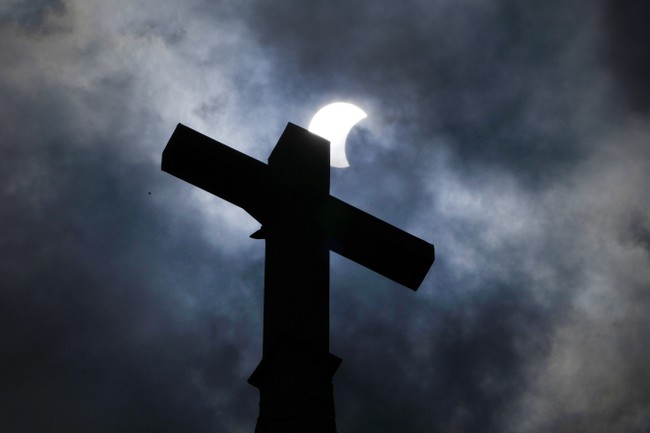
    #jesuschrist #christmas #christ #merrychristmas #princeofpeace #achildisborn #noël #christmas2025
    Advanced Search
  • Login
  • Register

  • Night mode
  • © 2025 YubNub Social
    About • Directory • Contact Us • Developers • Privacy Policy • Terms of Use • shareasale • FB Webview Detected • Android • Apple iOS • Get Our App

    Select Language

  • English
Install our *FREE* WEB APP! (PWA)
Night mode toggle
Community
New Posts (Home) ChatBox Popular Posts Reels Game Zone Top PodCasts
Explore
Explore
© 2025 YubNub Social
  • English
About • Directory • Contact Us • Developers • Privacy Policy • Terms of Use • shareasale • FB Webview Detected • Android • Apple iOS • Get Our App
Advertisement
Stop Seeing These Ads

Discover posts

Posts

Users

Pages

Blog

Market

Events

Games

Forum

RedState Feed
RedState Feed
1 w

Morning Minute: Run to the Light!
Favicon 
redstate.com

Morning Minute: Run to the Light!

Morning Minute: Run to the Light!
Like
Comment
Share
Trending Tech
Trending Tech
1 w

4 Cheap Smart TVs To Avoid, According To Users
Favicon 
www.bgr.com

4 Cheap Smart TVs To Avoid, According To Users

Not all cheap smart TVs are of the same build quality. Based on user reviews, we've found four models in particular that you may want to avoid.
Like
Comment
Share
History Traveler
History Traveler
1 w

David Livingstone - An Inspiring Victorian
Favicon 
www.historyisnowmagazine.com

David Livingstone - An Inspiring Victorian

David Livingstone stands as one of the most celebrated figures of the Victorian age, a missionary, explorer, and abolitionist whose name became synonymous with Africa's vast, unmapped interior. Born on the 19th of March, 1813, in Blantyre, Scotland, Livingstone's early life was one of humble beginnings. The second of seven children, he grew up in a small tenement room above a cotton mill where his father worked as a tea salesman and Sunday school teacher. From the age of ten, Livingstone himself worked twelve-hour shifts at the mill, his small wages helping to support the family. Yet even amid such hardship, he displayed an unrelenting thirst for learning, studying Latin and theology late into the night with the aid of a single flickering candle. His self-discipline and curiosity earned him a place at Anderson's University in Glasgow, where he trained in both medicine and theology. It was during this time that he became inspired by the writings and appeals of the London Missionary Society (LMS), whose vision of combining medical work with Christian mission would become the cornerstone of his life's endeavor.Terry Bailey explains. David Livingstone in 1864. In 1840, Livingstone was ordained as a missionary doctor under the LMS and sailed for Africa, a continent largely unknown to Europeans beyond the coastal regions. His first posting was in the Bechuana country (modern-day Botswana), where he worked alongside the veteran missionary Robert Moffat. There, Livingstone quickly distinguished himself not only for his medical skills and fluency in local languages but also for his belief in establishing missions far inland, away from European colonial influences. His early travels introduced him to the harsh realities of African geography and the challenges of crossing vast deserts such as the Kalahari. Livingstone's marriage to Moffat's daughter, Mary, in 1845 marked the beginning of a partnership often tested by the dangers of exploration and illness.Livingstone's first great achievement came in 1849 when he crossed the Kalahari Desert to reach Lake Ngami, a body of water previously unknown to Europeans. His reports of this journey captured the imagination of the British public, eager for tales of adventure and discovery. Determined to find new routes for legitimate trade as an alternative to the brutal slave routes that scarred the continent, Livingstone pushed further north. Between 1851 and 1856, he traversed thousands of miles, becoming the first European to cross the African continent from west to east. His expedition from Luanda on the Atlantic coast to Quelimane on the Indian Ocean was a feat of endurance that won him worldwide fame.It was during these years that Livingstone made one of his most famous discoveries: the great waterfall on the Zambezi River, which he named Victoria Falls in honor of Queen Victoria. The native name, Mosi-oa-Tunya—"The Smoke That Thunders"—he preserved in his writings, noting its grandeur and spiritual significance to local peoples. His detailed journals and maps from this period were meticulously kept, later forming the basis for his book Missionary Travels and Researches in South Africa (1857), a major publication that enthralled readers and established his reputation as both a scientist and a man of faith. The Royal Geographical Society awarded him its gold medal, and his observations contributed significantly to the European understanding of African geography, geology, and ethnography.Livingstone's later expeditions, particularly the Zambezi Expedition (1858–1864), were less successful but no less ambitious. Appointed by the British government to explore the navigability of the Zambezi River and its tributaries, he hoped to open up routes for trade and Christian missions that would undermine the slave trade. However, the journey was plagued by disease, logistical failure, and tragedy, including the death of his wife Mary from malaria in 1862. Despite these setbacks, his scientific work remained meticulous. He recorded flora, fauna, and mineral deposits, and his notebooks, many of which survive in archives such as the National Library of Scotland bear witness to a disciplined observer driven by both humanitarian and scientific motives.In the later years of his life, Livingstone became increasingly preoccupied with finding the source of the Nile, a mystery that had fascinated explorers for centuries. His travels took him deep into Central Africa, where he lost contact with the outside world for several years. Rumors of his death circulated widely in Europe until, in 1871, the Welsh-born American journalist and explorer Henry Morton Stanley was dispatched by the New York Herald to find him. Stanley's long and arduous search ended in the town of Ujiji on the shores of Lake Tanganyika, where he greeted the weary, bearded missionary with the now-legendary words, "Dr. Livingstone, I presume?"The meeting between Livingstone and Stanley became one of the most famous encounters in exploration history. Livingstone, though weakened by illness and years of hardship, was still resolute in his mission. Stanley, impressed by the older man's determination and moral conviction, provided supplies and encouragement. The two men explored parts of Lake Tanganyika together before Stanley returned to the coast with news that Livingstone was alive. Stanley's own life, though often overshadowed by this single encounter, was remarkable. Born John Rowlands in Denbigh, Wales, in 1841, he endured a harsh childhood before emigrating to the United States, where he served as a soldier, sailor, and journalist. His transformation into Henry Morton Stanley came after being adopted by a wealthy merchant of that name. His later explorations, including the charting of the Congo River, would establish him as one of the most controversial and driven explorers of the 19th century.David Livingstone, however, never returned home. His final years were spent in relentless pursuit of the Nile's source, often under conditions of extreme suffering. His final journals, preserved on fragile paper and sometimes written in berry juice when ink ran out, reveal both his physical decline and his enduring spiritual faith. On the 1st of May, 1873, he died in the village of Chitambo (in present-day Zambia), likely from malaria and dysentery. His African attendants, loyal to the end, buried his heart beneath a tree at the site and carried his embalmed body over a thousand miles to the coast. From there, his remains were returned to Britain and interred in Westminster Abbey, where he was honored as both a national hero and a symbol of humanitarian courage.The documents, letters, and diaries Livingstone left behind remain invaluable to historians. They not only chronicle a vast and challenging period of exploration but also offer rare insight into the cultural, geographical, and ethical dimensions of 19th-century Africa. Modern projects such as the "Livingstone Online" digital archive have preserved and analyzed these records, revealing details of his linguistic studies, medical observations, and even his evolving views on imperialism and slavery.David Livingstone's legacy endures not simply as that of a man who charted rivers and crossed continents, but as one who sought to bring moral reform to a world divided by greed and ignorance. His life's work combined faith, science, and compassion, leaving a mark that transcended geography. The image of Livingstone emaciated, resolute, and holding fast to his ideals in the heart of Africa became a powerful emblem of the Victorian spirit of exploration and remains an enduring chapter in the intertwined histories of Britain and Africa.David Livingstone's life formed a remarkable reflection of the transformative power of perseverance, conviction, and moral purpose. Emerging from poverty in industrial Scotland, he fashioned himself through relentless study and unyielding discipline into one of the most influential figures of the 19th century. His journeys across Africa created some of the most significant geographical and scientific records of his age, expanding European understanding of a continent too often approached with ignorance or prejudice. Yet Livingstone's work was never solely about mapping rivers or tracing mountain chains. It was underpinned by a profound humanitarian mission: to challenge the slave trade, to encourage what he called "legitimate commerce," and to foster cross-cultural understanding at a time when imperial attitudes frequently bred exploitation rather than empathy.Though his later expeditions were marked by hardship, loss, and controversy, Livingstone's commitment to his principles never wavered. His meticulous notes, journals, and correspondence reveal a man constantly searching for knowledge, for justice, for the elusive headwaters of the Nile, and for ways to improve the lives of the people he encountered. These documents, preserved today in archives and digital collections, allow modern readers to glimpse the complexity of his character: a scientist shaped by faith, a missionary shaped by science, and an explorer shaped by an abiding respect for the African landscapes and communities that defined his career.His celebrated meeting with Henry Morton Stanley, and the deeply human story behind it, further cemented his image in the Victorian imagination but it was Livingstone's death, and the extraordinary devotion of his African companions who carried his body across vast distances that most clearly demonstrated the depth of the relationships he forged. In life and in death, he crossed boundaries of culture and geography that few Europeans of his era attempted to bridge.Ultimately, David Livingstone stands not only as a pioneer of exploration but as a symbol of a broader moral struggle. His efforts against the slave trade, his insistence on recording African voices and customs with respect, and his belief that knowledge could serve humanitarian ends distinguish him from many of his contemporaries. While modern interpretations rightly place his achievements within the wider context of imperial history, his intentions and contributions remain significant and enduring. His story continues to resonate because it speaks to universal themes: resilience in the face of adversity, integrity in purpose, and the pursuit of understanding across cultural divides. In this way, Livingstone's legacy extends far beyond the maps he drew or the rivers he traced, it endures as a reminder of the profound impact one determined individual can have on the course of history. The site has been offering a wide variety of high-quality, free history content since 2012. If you’d like to say ‘thank you’ and help us with site running costs, please consider donating here.

Like
Comment
Share
NEWSMAX Feed
NEWSMAX Feed
1 w

NYC Subway Antisemitic Attack Under Investigation
Favicon 
www.newsmax.com

NYC Subway Antisemitic Attack Under Investigation

New York City police are investigating an alleged antisemitic attack that occurred on a subway train Monday night, the second night of Hanukkah.
Like
Comment
Share
NEWSMAX Feed
NEWSMAX Feed
1 w

Trump: US 'Looking Into' Whether Israel Broke Ceasefire
Favicon 
www.newsmax.com

Trump: US 'Looking Into' Whether Israel Broke Ceasefire

President Donald Trump said on Monday that his administration is "looking into" whether the Israeli strike that killed senior Hamas commander Ra'ad Sa'ad was a ceasefire violation.
Like
Comment
Share
NEWSMAX Feed
NEWSMAX Feed
1 w

House Judiciary GOP Probes 8 Insurers for Obamacare Fraud
Favicon 
www.newsmax.com

House Judiciary GOP Probes 8 Insurers for Obamacare Fraud

House Judiciary Committee Republicans have launched an investigation into eight major health insurance companies over alleged waste, fraud, and abuse tied to Obamacare subsidies.
Like
Comment
Share
NEWSMAX Feed
NEWSMAX Feed
1 w

Search for Brown University Shooter Widens
Favicon 
www.newsmax.com

Search for Brown University Shooter Widens

Authorities knocked on doors in search of video and sifted through snow and dumpsters for other evidence that might lead them to the Brown University gunman, whose face was covered or not visible in footage captured before and after the weekend attack that killed two...
Like
Comment
Share
NEWSMAX Feed
NEWSMAX Feed
1 w

Newsmax Renews YouTube TV Carriage Agreement in Multi-Year Deal
Favicon 
www.newsmax.com

Newsmax Renews YouTube TV Carriage Agreement in Multi-Year Deal

BOCA RATON, FL- Newsmax Inc. (NYSE: NMAX) today announced that the Company has renewed its carriage agreement with YouTube TV, one of the nation's leading live streaming television platforms.
Like
Comment
Share
NEWSMAX Feed
NEWSMAX Feed
1 w

Campaign Seeks to Rid US of Chinese Made Medical Devices
Favicon 
www.newsmax.com

Campaign Seeks to Rid US of Chinese Made Medical Devices

The Protecting America Initiative (PAI), a conservative nonprofit focused on countering China's influence in the U.S., announced Tuesday that it is launching a new six-figure digital ad campaign urging hospitals to stop using Chinese-made medical devices, citing concerns...
Like
Comment
Share
Let's Get Cooking
Let's Get Cooking
1 w

No Bake Oatmeal Creme Pie Cheesecake
Favicon 
www.thecountrycook.net

No Bake Oatmeal Creme Pie Cheesecake

No Bake Oatmeal Creme Pie Cheesecake is an easy, indulgent dessert made with a no bake cream cheese filling and Little Debbie oatmeal creme pies. No baking needed! A LITTLE DEBBIE DESSERT If you love rich, sweet, no-bake desserts, this No Bake Oatmeal Creme Pie Cheesecake is about to become your newest obsession, because I know it’s mine! This is not the dessert to make if you’re dieting – ha! It’s fun to make, incredibly simple and perfect for anyone who craves something nostalgic without all the fuss of a traditional baked cheesecake. If Little Debbie Oatmeal Cream Pies are your thing (my friends and I call them Big Deborahs – ha!) then this one is for you! FREQUENTLY ASKED QUESTIONS:  Is this No Bake Cheesecake sweet? Yes, definitely. This is a very sweet dessert and it definitely is indulgent. This is not for those that don’t have a huge sweet tooth. If you really love sweets or oatmeal creme pies, you’ll love this! How can I simplify this some? If you don’t care about the extra steps to make it more like a real cheesecake and want an uber simple dessert, do the following: 1) line the bottom of a square casserole dish with whole oatmeal crème pies and break a few to fill in the gaps. 2) Stir together the cheesecake filling and the Cool Whip. 3) Pour this mixture over the Oatmeal Crème Pies. 4) Add a few chunks of oatmeal crème pies to the top. 5) Cover and refrigerate for 2 hours. Can I use a different baking dish? You can also make this with a regular 9×9-inch or 8×8-inch square casserole dish.  Can I use regular cheesecake filling instead? This is not a baked cheesecake recipe so your usual baked homemade cheesecake fillings won’t work with this. You could use my no bake cheesecake recipe if you wanted. It doesn’t have eggs so it’s perfect for something like this. That recipe could be made with oatmeal cookies instead of graham crackers if they want to get a similar flavor profile to this one without using the oatmeal creme pies. How do I store leftover No Bake Oatmeal Creme Pie Cheesecake? Store any leftover Oatmeal Creme Pie Cheesecake in an airtight container in the refrigerator for up to 4-5 days. Keep it tightly covered to prevent the filling from drying out. Can I freeze this No Bake Cheesecake? Do not freeze the cheesecake as it will change the texture and make it not as palatable. INGREDIENTS NEEDED: (SEE RECIPE CARD BELOW FOR THE FULL RECIPE) Philadelphia No-Bake Cheesecake Filling – this makes for a fantastic time saver. See my Frequently Asked Questions above for a homemade recipe. Cool Whip whipped topping – I know someone will ask about making homemade whipped cream and I am just going to say this recipe is not for you because it uses a bunch of store bought, ready made ingredients anyways. Unless you want to go through the trouble of making the cheesecake filling and oatmeal creme pies from scratch, maybe just search for a fully homemade recipe. cream cheese– Don’t forget these Tips to Soften Cream Cheese Fast if you need them. The extra cream cheese is not required, but, I found it helped hold the filling together a bit more and cut the overall sweetness down just a tad. It’s still a sweet treat. vanilla extract powdered sugar Little Debbie Oatmeal Creme Pies– the star of the show! If you wanted to change things up, I think you could use the Little Debbie Fudge Rounds for this too because why not??!  HOW TO MAKE NO BAKE OATMEAL CREAM PIE CHEESECAKE: Add the cream cheese to a large mixing bowl and whisk on low/medium speed until smooth and creamy. Add the cheesecake filling, Cool Whip, vanilla and powdered sugar. Whisk on medium until smooth and well combined. Add 11 unwrapped oatmeal crème pies to a large Ziploc bag. Seal the bag and use your hands to crumble the pies until they are in medium/small crumbles. Line an 8-inch springform pan with parchment paper. You may need to cut it to get it to fit inside properly. This can be done without parchment paper, it just makes it a little easier when removing. Pour the oatmeal pie crumbs into the bottom of the pan and press evenly on the bottom and as far up the sides as possible. Pour the cheesecake filling into the pan. Crumble one oatmeal cream pie, in its package, and sprinkle over the top.  Refrigerate for at least two hours to overnight, then remove the outside shell of the pan, slice and serve. CRAVING MORE RECIPES?  Funfetti No Bake Cheesecake No Bake Gingerbread Cheesecake No Bake Caramel Apple Cheesecake No Bake Pumpkin Cheesecake No Bake Cheesecake Print No Bake Oatmeal Creme Pie Cheesecake A creamy, rich and sweet no bake cheesecake with an Oatmeal Creem Pie crust. Course DessertCuisine American Prep Time 10 minutes minutesChill Time 2 hours hoursTotal Time 2 hours hours 10 minutes minutes Servings 8 Calories 486kcal Author Brandie Skibinski Ingredients8 ounce block cream cheese, softened to room temperature24.3 ounce Philadelphia No-Bake Cheesecake Filling8 ounce Cool Whip whipped topping, thawed2 teaspoons vanilla extract2 Tablespoons powdered sugar12 Little Debbie Oatmeal Creme Pies (unwrapped) InstructionsAdd 8 ounce block cream cheese, softened to room temperature to a large mixing bowl and whisk (stir) with an electric hand mixer or stand mixer on low/medium speed until smooth and creamy.Add 24.3 ounce Philadelphia No-Bake Cheesecake Filling, 8 ounce Cool Whip whipped topping, thawed, 2 teaspoons vanilla extract and 2 Tablespoons powdered sugar. Whisk on medium until smooth and well combined. Add 11 unwrapped oatmeal crème pies to a large Ziploc bag. Seal the bag and use your hands to crumble the pies until they are medium/small crumbles. It doesn't need to be perfect.Line an 8-inch springform pan with parchment paper. You may need to cut it to get it to fit inside properly. This can be done without parchment paper, it just makes it a little easier when removing.Pour the oatmeal pie crumbs into the bottom of the pan and press evenly on the bottom and as far up the sides as possible. Pour the cheesecake filling into the pan.Crumble remaining oatmeal creme pie (this is easiest to do while it is still in it's packaging but you can just do it with your clean hands) and sprinkle over the top. Refrigerate for at least two hours to overnight, then remove the outside shell of the pan, remove any parchment paper then slice and serve. Notes Please refer to my FAQ’s (Frequently Asked Questions) and ingredient list above for other substitutions or for the answers to the most common questions. This is easiest with a springform pan to help it hold its shape and will make it so much easier to remove. You can do this in a regular round pan but it would need to be a DEEP pan. I haven’t tested this in any other pan so you’d have to experiment if you want to try something else.  NutritionCalories: 486kcal | Carbohydrates: 50g | Protein: 8g | Fat: 28g | Sodium: 490mg | Fiber: 2g | Sugar: 13g
Like
Comment
Share
Showing 1148 out of 103946
  • 1144
  • 1145
  • 1146
  • 1147
  • 1148
  • 1149
  • 1150
  • 1151
  • 1152
  • 1153
  • 1154
  • 1155
  • 1156
  • 1157
  • 1158
  • 1159
  • 1160
  • 1161
  • 1162
  • 1163
Advertisement
Stop Seeing These Ads

Edit Offer

Add tier


Select an image
Delete your tier
Are you sure you want to delete this tier?

Reviews

In order to sell your content and posts, start by creating a few packages. Monetization

Pay By Wallet

Payment Alert

You are about to purchase the items, do you want to proceed?

Request a Refund