YubNub Social YubNub Social
    Advanced Search
  • Login
  • Register

  • Night mode
  • © 2025 YubNub Social
    About • Directory • Contact Us • Developers • Privacy Policy • Terms of Use • shareasale • FB Webview Detected • Android • Apple iOS • Get Our App

    Select Language

  • English
Install our *FREE* WEB APP! (PWA)
Night mode toggle
Community
New Posts (Home) ChatBox Popular Posts Reels Game Zone Top PodCasts
Explore
Explore
© 2025 YubNub Social
  • English
About • Directory • Contact Us • Developers • Privacy Policy • Terms of Use • shareasale • FB Webview Detected • Android • Apple iOS • Get Our App
Advertisement
Stop Seeing These Ads

Discover posts

Posts

Users

Pages

Blog

Market

Events

Games

Forum

Daily Caller Feed
Daily Caller Feed
1 w

Worst Supreme Court Justice Inadvertently Calls To Change Constitution
Favicon 
dailycaller.com

Worst Supreme Court Justice Inadvertently Calls To Change Constitution

Add a fourth branch of government
Like
Comment
Share
Daily Caller Feed
Daily Caller Feed
1 w

Maverick’s Frontman Raul Malo Dead At 60
Favicon 
dailycaller.com

Maverick’s Frontman Raul Malo Dead At 60

'Though his earthly body may have passed, Raul’s spirit will live on forever'
Like
Comment
Share
Daily Caller Feed
Daily Caller Feed
1 w

‘Delete S*** Often’: Antifa-Linked Legal Group Has Tips For Anti-ICE Activists Afraid Of Feds
Favicon 
dailycaller.com

‘Delete S*** Often’: Antifa-Linked Legal Group Has Tips For Anti-ICE Activists Afraid Of Feds

Legal group tied to the Antifa movement
Like
Comment
Share
SciFi and Fantasy
SciFi and Fantasy  
1 w

Krull Deserves a Bigger Cult Following — Who’s With Me?
Favicon 
reactormag.com

Krull Deserves a Bigger Cult Following — Who’s With Me?

Column 80s Fantasy Film Club Krull Deserves a Bigger Cult Following — Who’s With Me? Is this a good movie? Debatable. Is it an *awesome* movie? Hell yeah it is. By Tyler Dean | Published on December 9, 2025 Credit: Columbia Pictures Comment 0 Share New Share Credit: Columbia Pictures In this column, we’re looking back at the 1980s as their own particular age of fantasy movies—a legacy that largely disappeared in the ’90s only to resurface in the 2000s, though in many ways, the fantasy films of the ’80s are far weirder and less polished than what we got in the aughts. In each of these articles, we’ll explore a canonical fantasy movie released between 1980 and 1989 and discuss whatever enduring legacy the film has maintained in the decades since. For a more in-depth introduction to the series, you can find the first installment here, focusing on 1981’s Dragonslayer. Last time, we looked at a singularly dark interpretation of L. Frank Baum’s Oz books with 1985’s Return to Oz. This time we are delving into the sui generis fantasia that is 1983’s Krull. I didn’t see Krull until about seven or eight years ago, but it instantly became one of my favorite films. The film and I are almost exactly the same age (it’s about two months younger than I) which helps me justify the fact that, in 2021, I celebrated my 38th birthday with a socially distanced outdoor screening of this movie. So let’s dive in! Krull is a strange one. Standing boldly astride the Fantasy/Sci Fi divide, the story is set on the titular planet, a world of magic that has been subjugated by an alien warlord called the Beast. Prince Colwyn (Ken Marshall, of Deep Space 9 fame) and his fiancée, Princess Lyssa (Lysette Anthony—redubbed by Lindsay Crouse) are attacked on their wedding day. Lyssa is stolen away by the Beast and his Slayers, prompting Colwyn to embark on a quest to win her back and topple the Beast’s rule. He is joined by the sage Ynyr (The Elephant Man’s Freddie Jones), the shapeshifting wizard Ergo, a blind seer, along with his young apprentice, Titch, as well as an oracular cyclops and a band of thieves led by the lovable rogue, Torquil (played by Alun Armstrong—RSC member, Penny Dreadful luminary, and star of more than a few BBC adaptations of Dickens novels). Fun fact: Torquil’s merry men include Liam Neeson and Robbie Coltrane, both relatively early in their respective film careers. Colwyn and company conquer crystalline spiders, changeling assassins, and the Beast’s laser-toting, armored Slayers on their way to the forbidding Black Fortress, where Lyssa has been imprisoned. Along the way, Colwyn fulfills a prophecy by retrieving the mythical “Glaive,” a weapon that resembles a vaguely sentient, bladed starfish. He finally comes into his full powers after marrying Lyssa, thereby fulfilling another prophecy, and destroys the Beast, liberating Krull and giving the survivors a happy ending.  So, how does Krull hold up? I already tipped my hand in the intro, but Krull is fucking great! It strikes the perfect balance of engaging and stupid. It takes itself just seriously enough as it’s pushing its absolutely gonzo vision of its fantasy world to be thoroughly enjoyable, even if the viewer doesn’t take it quite as seriously… If I had to point to a single quality that makes Krull so delightful, it would be a fearlessness with regards to its worldbuilding. Released the same year as Return of the Jedi, Krull clearly takes the Star Wars approach of confidently launching its original story in the kind of lived-in world whose history feels much deeper than what is actually explained on screen. Unlike Star Wars, however, it basically eschews all exposition, to both its credit and its detriment.  Take, for example, a third act plot point where Ynyr must visit a character who has rated only the briefest mention up to this point in the film: The Widow of the Web, an ancient sorceress (Francesca Annis) who lives in a crystal at the center of a huge web guarded by the aforementioned crystalline spider. We learn, in very short order, that the Widow has some sort of control over the flow of time, that Ynyr and the Widow once had a son which the Widow killed shortly after his birth, that the Widow is also named Lyssa, and that she is willing to sacrifice herself to save the other Lyssa by providing Ynar with just enough time to deliver vital information to Colwyn. That’s a lot of plot, and there is almost no other context for any of it. In most movies, that sort of dense plotting would require an entire act of a film to set up and explore and Krull burns through it in a scene that lasts, at most, five minutes. Imagine if Obi-Wan just shouted out a laundry list of all his past entanglements with Darth Vader in the two minutes before their duel and none of it was ever mentioned anywhere else in the film.  That’s definitely not to Krull’s credit (and there is a reason taking the same approach as Star Wars doesn’t necessarily lead to Star Wars-esque success) but at the same time, there is something so matter-of-fact and unforced about the whole of Ynar and the Widow’s backstory that one finds oneself intrigued rather than impatient. Krull, despite being an original property (producer Ron Silverman claims the original prompt for the film was inspired by Dungeons & Dragons), feels like it is using remarkable economy of storytelling to cram in details from much more complex and capacious source material. It’s a movie that feels designed to make viewers question if there wasn’t a trilogy of forgotten fantasy novels on which it was based. Everything about the story—from its magical wedding rites and its ancient rivalries between noble houses to the Glaive itself—somehow manages to feel deeper and more engaging than it is. To this end, Krull boasts a production design that leans, tantalizingly, into its blending of sci-fi and fantasy. Knights wear tunics straight out of a 1960s BBC Shakespeare adaptation alongside smooth, ceramic-looking armor that suggests either that the peoples of Krull have adopted fabrication techniques from the Beast or else were a more technologically advanced society before he came to the planet (Torquil’s spiked collar and chainmail mantle are particular highlights). Likewise, there is a charming faux-Medieval brutalist quality to some of the castle sets that feels inspired by Cedric Gibbons’ in-world sets for Kiss Me Kate (1953) or Mary Blair’s design for the exterior of “It’s a Small World.”  Some of that geometric, minimalist brutalism also gets repurposed to far more intimidating effect for Lyssa’s scenes in the Beast’s Black Fortress which, from the outside, looks like a glacier-carved rock formation along the lines of Devils Postpile or the Giant’s Causeway. From the inside, the fortress is vaguely implied to be the body of the Beast itself, with apertures shaped like eyes, huge curling bridges studded with teeth, and claw-like spirals through which Lyssa meanders. The film never explains whether the twenty-foot-tall reptilian baboon that manifests as the Beast late in the film is the true body of the creature or if Lyssa has been wandering around its bones and organs the entire time. Similarly, there is no explanation given for the humanoid, glass-helmeted spacesuits of the Beast’s Slayers which release grotesque slug-like creatures, reminiscent of John Carpenter’s The Thing, that burrow into the earth when their shell is damaged. It is implied the slugs are the Slayers themselves and the humanoid suits are mecha they pilot, but any real explanation feels tantalizingly beyond the grasp of the film, not out of laziness, but because the humans and Cyclopes of Krull would have no way to unravel those extraterrestrial mysteries.  This is not to say the Krull doesn’t have its low points. Neither Colwyn nor Lyssa is particularly engaging as a lead (and, in the latter case, Lyssa is done no favors by the mismatch between her body acting and her dubbed lines), and for every fascinating choice or odd plot point, there is a plodding scene of our adventurers trudging through the grim ocher swamps of Pinewood Studios. Even some of the costume design falls flat: Robbie Coltrane appears to just be wearing a sturdy pair of builder’s coveralls. The presence of two different wise old mentor figures also feels quite unnecessary. Still, there are cast highlights as well. David Battley, who seems to be channeling Eric Idle (with whom he’d worked a few years earlier), manages to mine some charming comic relief from his role as the initially selfish and self-important wizard, Ergo the Magnificent, and gives one of the best line deliveries in B-movie history when, after pestering the seer’s young apprentice for sweets, he introduces himself and lists his many (self-bestowed) titles. The boy responds that it’s all very impressive and introduces himself as simply Titch…a name to which Ergo responds cheerfully, “That’s not impressive, but it is adequate! Adequate.” All in all, Krull is wildly stylish with only the barest hint of real substance that never actually manifests, but I would argue that still puts it ahead of many other fantasy films of the day.  Krull was a box office flop and, even if it’s been more fondly remembered in the 42 years since it was released, it has never achieved as extensive a cult status as, say Fire and Ice, or even the far less interesting Beastmaster. So let’s talk about what impact it has had in the decades since. Most of its pop cultural afterlife has been centered around its magical weapon: the Glaive. I want to start out with the obvious. A glaive (sometimes called a glaive-guisarmes) is a real weapon—a polearm culminating in a sword-like blade, similar to a naginata. You will note that the Glaive in Krull is nothing like that. It’s a psychically controlled shuriken that mostly works like a bandsaw. In addition to causing an endless amount of confusion among nerds about what a glaive actually is, the boomeranging throwing star/chakram has been a popular archetype in fantasy games ever since: Blizzard Entertainment’s Warcraft games prominently feature a “glaive thrower,” a sort of Krull-style glaive-launching ballista; Far Cry 3: Blood Dragon has a “killstar” that functions the same way; a personal favorite—2001’s Arcanum: Of Steamworks and Magicka Obscura—calls its glaive-type weapon “Azram’s Star;” and so many of the chakram and bladed boomerang-type weapons seen in Xena: Warrior Princess to Secret of Mana to the Smart Discs of the Predator franchise may be directly inspired by, or at least owe some of their raison d’etre to, fond memories of Krull.  While far from the first piece of media to blend science fiction and fantasy (Anne McCaffrey and Frank Herbert were doing it back in the ’60s and, obviously, Star Wars was the ascendant speculative fiction of the day when Krull was released) there is a particular subgenre of medieval-ish fantasy worlds invaded by sci-fi forces that feel like they owe much to Krull. The Dungeons & Dragons space fantasy setting Spelljammer certainly seems to have taken aesthetic notes from Krull, as do the foundational Japanese RPG series Super Hydlide and Phantasy Star. While Krull was released a couple years after C.J. Cherryh’s Pride of Chanur, you can see the influence of both in early ’90s fantasy like C.S. Friedman’s Coldfire Trilogy, or in the way that Games Workshop kept elements of period-specific fantasy when it launched Warhammer 40000, its space opera counterpart to its established Lovecraftian-Horror-in-the-Holy-Roman-Empire-but-make-it-anti-Thatcherite setting. As a final note, Krull is also likely to have had a lasting impact on the twelve couples who were married on a version of the Krull set as part of one of the weirdest promotions in the history of cinema. I’m not saying that I would want to have a Krull-themed wedding—who am I kidding, I would adore that—but I am saying that getting married as a promotion for a film (particularly one that wouldn’t be released for another month or so and wasn’t based on any sort of known franchise) is the kind of thing that we should do more often. Think of the Rebel Moon weddings we missed out on!  But what do you think? Is Krull an accidentally brilliant piece of ’80s fantasy or is it yet another, plodding dud saddled with an underbaked plot? Do we stan Rell the Cyclops, and his unbelievably drawn-out death sequence? Is baby Liam Neeson’s facial hair worse in Krull or Excalibur? What do you think a glaive is? Please share your thoughts in the comments, and be sure to join us next time when we go from a film that somehow gives the impression that it’s drawing from a deep (if nonexistent) well of lore and source material to one whose source material is a plotless treatise on dragon physiology with Rankin/Bass’ 1982 animated classic The Flight of Dragons![end-mark] The post <i>Krull</i> Deserves a Bigger Cult Following — Who’s With Me? appeared first on Reactor.
Like
Comment
Share
Daily Signal Feed
Daily Signal Feed
1 w

A Golden Age in US-Hungarian Relations Has Begun
Favicon 
www.dailysignal.com

A Golden Age in US-Hungarian Relations Has Begun

November’s White House meeting between Prime Minister Viktor Orban and President Donald Trump was more than just a diplomatic photo op. It was a geopolitical turning point that established a new foundation for U.S.-Hungarian relations and launched what many across Europe are already calling a golden age of partnership. For years, Brussels insisted that small nations must bend, obey, and absorb the ideological fashions of the moment. That era is ending. Two nations committed to strength, stability, and peace have chosen a different path. The achievements of the Trump-Orban summit speak for themselves. First, Hungarian families won. The lifting of U.S. sanctions on Russian energy companies for Hungary eliminates a politically engineered chokepoint that threatened our hard-won utility price reductions. Energy security is not an abstraction. It is what keeps household bills low for millions of families. Removing Washington’s sanctions barrier ensures that Hungary can maintain affordable, reliable energy without being punished for rejecting to adopt the European Union’s green ideology. Second, the summit cemented historic nuclear cooperation. Hungary’s nuclear plant expansion continues uninterrupted, and we are preparing to purchase advanced American small modular reactors. These reactors provide clean baseload power grounded in real engineering rather than the green wishcasting that keeps Europe dependent on unstable energy markets. It is also a significant investment in U.S. technology that will establish Hungary as Central Europe’s nuclear hub. Third, Trump agreed to provide a financial protective shield to guard Hungary against speculative attacks from Brussels and its political allies. This will stabilize our currency, steady the markets, and deprive globalists of one of their most frequently used weapons: politically motivated financial disruption. Fourth, the partnership is no longer just ceremonial. It is deep, operational economic cooperation rooted in shared interests. American capital and technology are paired with Hungary’s stability, skilled workforce, and predictable regulatory climate. Hungarian families will feel the benefits in the short term, and American investors will feel them in the long term, as they recognize that Hungary is the most reliable and sovereign-minded partner in Central Europe. Fifth, the summit reaffirmed Hungary’s role as a peacemaker. Trump made it clear that the idea of a Budapest Peace Summit is still on the table. Unlike Western Europe, Hungary never succumbed to the war fever that swept the continent. From the beginning, we have insisted that peace, not escalation for the sake of appearances, is the only responsible path out of the Ukraine-Russian war. A successful outcome would entail a structured package including an immediate ceasefire, humanitarian relief, protection of civilians and minorities, and a realistic framework for security guarantees. Budapest is the only European capital in Europe capable of hosting such a conversation credibly, calmly, and seriously. It is no surprise that EU officials, the NGO media complex, Hungarian opposition leader Péter Magyar and the Hungarian Left, and even President Volodymyr Zelenskyy responded with nearly identical talking points aimed at undermining the agreement. They are nervous because the world they built on lecturing sovereign nations is collapsing. Hungary and the United States have modeled what a partnership based on mutual respect looks like, and others are taking notice. As Hungary approaches its elections, the strengthened trans-Atlantic alliance provides economic stability, policy freedom, and strategic depth. The financial shield protects the Hungarian Forint from political manipulation. Washington now treats Budapest as an equal partner. This enables us to maintain effective policies, such as a workfare economy, robust family support, a zero-tolerance border policy, and nuclear energy that reliably provides electricity. Sovereignty is not just a slogan. It is relationships that deliver results. Many Americans still underestimate the extent of our existing business ties. Thousands of American companies operate profitably in Hungary, employing tens of thousands of people and taking advantage of our strategic location, world-class infrastructure, and reliable workforce. They stay because conservative governance produces predictability. They invest because Hungary’s energy strategy—from U.S. liquid natural gas to future small modular reactors—offers long term reliability, which Western Europe cannot provide. For the United States, Hungary offers a stable foothold in the heart of Europe. For Hungary, it is a valuable investment that strengthens the economy and our sovereignty. Regarding migration and border control, Hungary has become a model not because of ideology, but because of its clarity. Borders matter. A nation that cannot control who enters cannot defend its future. Hungary insists that demographic decline must be solved with strong families, not mass migration, and America’s conservative movement increasingly agrees. We have built a workfare society rooted in order, security, and responsibility. This stability is why investors come, why families thrive, and why our culture remains strong. Lastly, the Trump-Orban summit was not only the pinnacle of Hungarian diplomacy; it also sent a clear signal to the world. Trump demonstrated that he views Hungary as a sovereign and reliable power capable of making meaningful contributions to the alliance. This strengthens the Hungarian people and warns Brussels that its era of coercion is coming to an end. A golden age has begun. It rests on a simple truth: When sovereign nations defend their energy security, economic stability, cultural identity, and peace, everyone wins. The world is watching what Hungary and the United States are building together. And others will follow. We publish a variety of perspectives. Nothing written here is to be construed as representing the views of The Daily Signal. The post A Golden Age in US-Hungarian Relations Has Begun appeared first on The Daily Signal.
Like
Comment
Share
Daily Signal Feed
Daily Signal Feed
1 w

Illinois Reps Outraged Over ICE-Arrested Cop Back on Duty
Favicon 
www.dailysignal.com

Illinois Reps Outraged Over ICE-Arrested Cop Back on Duty

In solidly blue Illinois, members of the state’s conservative Freedom Caucus are harshly criticizing the reinstatement of a non-citizen as a police officer who was recently arrested by Immigration Customs Enforcement. On Oct. 15, ICE arrested Radule Bojovic, an alleged “illegal alien from Montenegro who was recently sworn in as a police officer in the Chicago suburb of Hanover Park.”  The Department of Homeland Security alleged that “Bojovic overstayed a B2 tourist visa that required him to depart the U.S. on March 31, 2015. Over a decade later, he was still illegally in the U.S.” After being released on bond Oct. 31, Bojovic went back to work for the Hanover Park police department, per Fox 32 Chicago. Now, conservative legislators in the state’s Freedom Caucus are calling for action. “You have a situation where a non-citizen is here with arrest powers over the citizenry of the folks here in the state of Illinois, and this is something that we cannot stand for,” Rep. Adam Niemerg told The Daily Signal. “We’re having a full investigation with the DOJ, with ICE enforcement, with my Freedom Caucus colleagues and myself, and we’re going to get to the bottom of what’s going on.” .@GovPritzker doesn’t just allow illegal aliens to terrorize Illinois’s communities, he allows them to work as sworn police officers.Radule Bojovic overstayed a B2 tourist visa that required him to depart the U.S. on March 31, 2015. Over a decade later, he was still illegally… pic.twitter.com/7rQFULQh20— Homeland Security (@DHSgov) October 16, 2025 “This popped up, and we’ve been kind of trying to chase down the details and so we FOIA’d [filed Freedom of Information Act requests] to try to find out—we haven’t got this back yet—but we’ve tried to uncover the employment documents. Did he lie about his status? There’s more questions than we have answers right now,” state Rep. Chris Miller told The Daily Signal. But these legislators are not completely optimistic about being able to build a coalition in the Illinois General Assembly to prevent this from happening in the future. Why? Because Republicans in the state assembly voted for a bill allowing noncitizens whose deportation has been deferred by the “Deferred Action for Childhood Arrivals (DACA) process” to apply to be law enforcement officers.  It passed with 100 yeas and only 7 nays through the House on May 19, 2023 before being sent to the governor. Republicans outside the Freedom Caucus “aren’t going to talk about it because they voted for it,” Miller told The Daily Signal. “I mean, this is embarrassing for the Republican Party here in the state of Illinois, and it’s just another example of the lack of leadership we have at the core of the Illinois Republican Party, and particularly in the House of Representatives.” Miller continued, “It’s a disaster, and these guys can’t talk about it because they’re too proud to admit that they made a bad vote and made a mistake, and so they just want this to go away, and I doubt that they’re all that happy that it’s getting the exposure that it is.” Niemerg is more hopeful about his party, telling The Daily Signal, “I know that the Republican caucus can unite around this. We’ve had some issues within the Republican caucus trying to get Republicans to unite around the illegal immigration issues. It’s been a little bit of a battle that I’ve been a little bit frustrated with.” He suggested some Democrat legislators might come on board with opposing the policies. “As far as the Democrats go, yes, the moderate Democrats in some swing districts that are not liking some of this policy coming out of Gov. JB Pritzker,” he said. “You have an election cycle coming up for the Democrats in 2026.” Illegal immigrants arresting United States Citizens. This is treasonous. We are working to fully support and assist @DHSgov with help from @Theswampmonitor to get the answers our people deserve. pic.twitter.com/g0XnJRYS9e— Illinois Freedom Caucus ?? (@ILFreedomCaucus) December 4, 2025 When contacted, the Hanover Park Police Department directed The Daily Signal to reach Deputy Chief Victor DiVito, who did not respond to voicemail messages. However, the department previously told reporters, “Given that [Bojovic’s] bond was not contested and he remains authorized to work by the federal government, the Hanover Park Police Department determined that he may return to work.” “The bottom line is that all information we received from the federal government indicated that Officer Bojovic is legally authorized to work in the United States as a police officer. Clearly, without that authorization, the Village would not have hired him,” the department said. “Additionally, the Village has not received any notice from any federal or state agency that his work authorization status has ever been revoked.” The Daily Signal contacted the office of Illinois Republican Minority Leader of the House of Representatives Tony McCombie for response to the Freedom Caucus members’ remarks on the party at large but did not receive a response. The post Illinois Reps Outraged Over ICE-Arrested Cop Back on Duty appeared first on The Daily Signal.
Like
Comment
Share
Reclaim The Net Feed
1 w

Berlin Approves New Expansion of Police Surveillance Powers
Favicon 
reclaimthenet.org

Berlin Approves New Expansion of Police Surveillance Powers

If you're tired of censorship and dystopian threats against civil liberties, subscribe to Reclaim The Net. Berlin’s regional parliament has passed a far-reaching overhaul of its “security” law, giving police new authority to conduct both digital and physical surveillance. The CDU-SPD coalition, supported by AfD votes, approved the reform of the General Security and Public Order Act (ASOG), changing the limits that once protected Berliners from intrusive policing. Interior Senator Iris Spranger (SPD) argued that the legislation modernizes police work for an era of encrypted communication, terrorism, and cybercrime. But it undermines core civil liberties and reshapes the relationship between citizens and the state. One of the most controversial elements is the expansion of police powers under paragraphs 26a and 26b. These allow investigators to hack into computers and smartphones under the banner of “source telecommunications surveillance” and “online searches.” Police may now install state-developed spyware, known as trojans, on personal devices to intercept messages before or after encryption. If the software cannot be deployed remotely, the law authorizes officers to secretly enter a person’s home to gain access. This enables police to install surveillance programs directly on hardware without the occupant’s knowledge. Berlin had previously resisted such practices, but now joins other federal states that permit physical entry to install digital monitoring tools. More: Germany Turns Its Back on Decades‑Old Privacy Protections with Sweeping Surveillance Bill IT security experts caution that maintaining hidden system vulnerabilities for state use exposes everyone to greater cyber risk. They also question the constitutional legitimacy of combining digital espionage with physical intrusion into private homes. The revised law also changes how police use body cameras. Paragraph 24c permits activation of bodycams inside private homes when officers believe there is a risk to life or limb. The government presents this as a measure for officer safety, but many view it as an open door to video surveillance within citizens’ most private settings. Paragraph 26e expands “cell tower queries,” allowing police to obtain data on every mobile phone connected to a specific tower during a chosen timeframe. This form of data collection can identify the movements of thousands of uninvolved individuals, including people who might simply have attended a protest. Under paragraph 24d, automatic license plate recognition systems will be used to record and cross-check vehicle plates with databases. Paragraph 24h also grants police the ability to neutralize or even take control of drones in certain situations. Paragraph 28a introduces biometric face and voice matching, using publicly available information from the internet. This gives Berlin’s police the ability to compare surveillance footage with images posted on social media platforms. This as a major step toward automated identification of individuals in public life. A further innovation, paragraph 42d, authorizes the use of real investigative data, such as photos, videos, and text messages, for “training and testing” artificial intelligence systems. This breaks the principle that data collected for one purpose cannot later be reused. Because AI models can reveal patterns from the original material, this clause risks turning police archives into training sets for machine learning systems. The law also lengthens preventive detention periods. Under paragraph 33, individuals may now be held for up to five days, or up to seven in terrorism-related cases. Lawmakers discussed this provision in connection with protests by the environmental group “Last Generation,” whose civil resistance actions have triggered repeated detentions. The group NoASOG denounced the law as an attack on civil society, while the Society for Civil Rights (GFF) announced plans to prepare a constitutional complaint. Berlin’s data protection commissioner, Meike Kamp, had already warned that approving the state trojan amounts to “a frontal attack on the IT security of all citizens.” She said the overall framework creates “a constitutionally highly questionable density of surveillance.” Berlin now joins the list of German states that have widened police authority in recent years, but the scope of this legislation stands out. It links physical home entry, digital interception, and artificial intelligence analysis under one legal structure, reducing the barriers between policing and private life. The range of new powers granted to police shifts the balance decisively toward state control of personal information. Berlin is a city once known for strong privacy traditions and the ASOG reform marks a decisive moment. Whether it withstands constitutional review will determine how far Germany’s commitment to individual privacy can bend in the name of security. If you're tired of censorship and dystopian threats against civil liberties, subscribe to Reclaim The Net. The post Berlin Approves New Expansion of Police Surveillance Powers appeared first on Reclaim The Net.
Like
Comment
Share
Reclaim The Net Feed
1 w

UK: MPs Clash Over the Digital ID That No One Asked For
Favicon 
reclaimthenet.org

UK: MPs Clash Over the Digital ID That No One Asked For

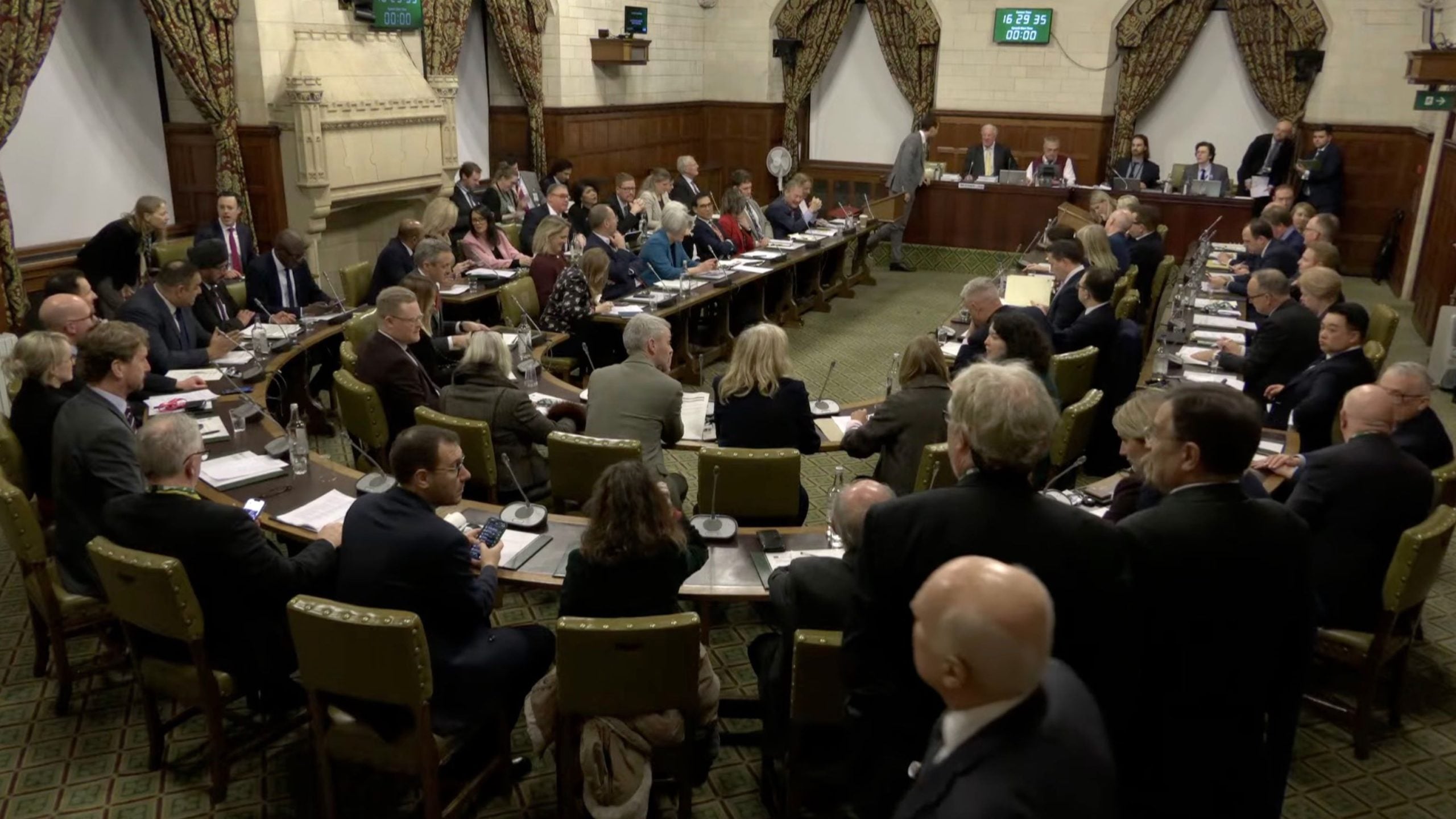
If you're tired of censorship and dystopian threats against civil liberties, subscribe to Reclaim The Net. A petition opposing the UK government’s proposed digital ID system, signed by nearly three million people, prompted a packed parliamentary debate in Westminster. MPs from across the British political spectrum voiced deep concerns that a national digital ID would endanger privacy, centralize state power, and shift Britain toward a surveillance-driven society. Keir Starmer entered Downing Street on a promise of stability and professionalism. Yet the direction of travel since then points to a government that treats civil liberties as expendable. Police have leaned on sweeping public order powers to detain people over “offensive” tweets, even as no one can define with confidence what “offensive” is from one political moment to the next. This has unfolded alongside the installation of mass facial recognition cameras in public spaces. The pattern is straightforward: widen surveillance, narrow dissent, and reassure the public that it is all necessary. Within that climate, digital ID was not an accidental addition to the political agenda. It has become Starmer’s organizing project, the missing component that ties together the broader expansion of state monitoring. A mandatory identity wallet, tied to work, renting, banking, and access to services, functions as the connective tissue in a system that already leans heavily on data collection and algorithmic judgment. Once that infrastructure exists, every adult becomes legible to the state in a way that no previous government has attempted. Yet, as was evidenced by this week’s hearing, the public and some lawmakers are pushing back against it. Robbie Moore (Conservative, Keighley and Ilkley) delivered one of the strongest rebukes to the policy, asking, “Who is actually in favor of these [digital ID] proposals, other than the Prime Minister?” He said the government was using “any excuse, however unjustified and unevidenced” to push its digital ID plans. Moore questioned the logic behind the scheme: “If the real target is people who are here illegally, why on earth do 67 million British citizens who already have national insurance numbers, passports, driving licences and birth certificates need to be dragged into a brand new compulsory database as well? What exactly is it about stopping the crisis of inflatable dinghies in the channel that requires your son, your daughter, your dad, or your 90-year-old grandma to hand over their data and facial geometry to the Home Office server?” Moore warned that digital ID hands the government “the key to our life” and that “once that digital infrastructure is set up, we cannot go back.” He said it “gives the state permanent control.” Drawing a comparison to China, he said, “Just look at the social credit system in China. Facial recognition linked to ID penalizes people. Blacklisted citizens cannot buy train or plane tickets, book hotels or apply for certain jobs. This Government have already indicated that migration work and renting will be tied to ID, but how long will it be before future Governments push further and accessing state services is brought under the control and monitoring of digital ID? We are already seeing signs of such a framework in the Children’s Wellbeing and Schools Bill, the Online Safety Act 2023 and the One Login system. Combined with a formal digital ID, those frameworks would create a world of control for Whitehall and a soulless dystopia for the rest of us. Together, they replace the honesty and decency of human-to-human interaction with an opaque, mechanical ‘computer says no’ future. The scary truth is that control and ID cards hold an appeal for anyone who has access to power. It takes a conscious effort by every one of us to resist the temptation. Power does corrupt, and absolute power corrupts absolutely.” He called the proposal “terrifying” and “a true honeypot for hackers all over the world,” pointing to Estonia’s 2021 breach in which “Estonia’s Government lost 280,000 digital ID photos.” He also referred to a One Login security incident where “cybersecurity specialists were able to infiltrate and potentially alter the underlying code without being noticed by the team working on the project.” Moore concluded, “Digital ID is an ever more intrusive evolution of traditional ID cards, one that promises to be more oppressive. Coupled with the powers of digital databases, increasing widespread facial recognition, digitalized public services and the looming prospect of a central bank’s digital currencies, digital ID threatens to create an all-encompassing digital surveillance state that even George Orwell’s ‘Nineteen Eighty Four’ could not predict. In every aspect of public life, we give over our data with consent. Yet digital ID turns that notion on its head, insisting that we hand over data to simply function in society, and potentially for reasons to which we cannot consent in advance.” He branded the digital ID scheme “a disaster waiting to happen.” Dame Chi Onwurah (Labour, Newcastle upon Tyne Central and West) said “the level of digital hygiene across Government is not such that it could support a mandatory digital ID scheme, in my view.” Dr. Neil Hudson (Conservative, Epping Forest) said the digital ID system “risks wasting billions on a complex, intrusive and potentially very insecure system that will not help anyone” and called for it to be scrapped. Greg Smith (Conservative, Mid Buckinghamshire) asked, “We have a Government who could not even keep their own Budget under wraps. What hope do they have with our personal data?” Cameron Thomas (Liberal Democrat, Tewkesbury) warned that the scheme “could put constituents’ most sensitive data into the hands of private, perhaps overseas, individuals who might have neither our constituents’ nor our country’s interests at heart.” Louie French (Conservative, Old Bexley and Sidcup) said the Labour Government was “trying to push through something that was not in their manifesto” and urged that “this House must therefore do all it can to stop it becoming a reality.” Jamie Stone (Liberal Democrat, Caithness, Sutherland and Easter Ross) remarked that the turnout for the debate was so high that there was “not enough space in this Chamber for everyone who has turned up.” Sarah Pochin (Reform UK, Runcorn and Helsby) said over 5,400 of her constituents had signed the petition against digital ID and that she had received many emails opposing it. She said her constituents understood that digital ID “will not solve the problem of illegal working in this country.” Rachael Maskell (Labour and Co operative, York Central) said digital ID “is about data, big, augmented data from different places and different sources, intersecting someone’s health records with their records in the Department for Work and Pensions, or Home Office records with HMRC or local government, about where we live, where we work and where we are.” She warned that it would allow a future government to “mix data together with facial recognition technology” and “run the algorithms” against it. She added that the current Labour government “would not dream of doing such a thing, but a future one might, indeed, a future one would.” Maskell cautioned that “of course there is interest in digital ID. We see the revolving door of those from the Tony Blair Institute for Global Change and people from his former office; there is Larry Ellison of Oracle; after all, he already has 185 contracts with the Government. He recognizes the power, the money and the opportunity, which is why we cannot afford to go there.” She pleaded with ministers to drop the plan, saying “this was not in the manifesto is enough to tell us all that it does not have public consent and therefore should not proceed.” Jeremy Corbyn (Independent, Islington North) argued that the debate should have been held in the main chamber given the level of public concern. He read from a constituent’s message: “digital ID is a deeply illiberal idea that threatens privacy, autonomy, and the open society” and “risks creating a two-tier Britain, where access to basic services, healthcare, housing, employment, even voting, depends on whether someone has the right app, paperwork, or digital trail.” Corbyn said, “ID cards are one thing; restricting jury trials is another. Facial recognition at tube stations and now even in supermarkets is something that people find deeply disturbing. Across the country there is a whole vein of thought where people are feeling a quite reasonable sense of paranoia about the levels of surveillance that they are under at the present time. Members of Parliament would do well to try to understand that. This attack on civil liberties, that is what it is, means that utterly vast amounts of information on all of us will be stored, as they are already in the health service. Unfortunately, the Government are now making that available to private healthcare interests at the same time. There is a huge issue here about our data, our information and our privacy, which we would do well to remember.” He added that digital ID is being pushed by those “who will make a great deal of money out of providing the necessary technical equipment to set up this surveillance system.” Sir Iain Duncan Smith (Conservative, Chingford and Woodford Green) cited a constituent who said digital ID reverses the presumption of innocence so that “almost everybody on an ID card is assumed to have guilt until they have discharged themselves as innocent.” Lee Anderson (Reform UK, Ashfield) warned that the government is trying to create a “Big Brother Britain” by “ramping up facial recognition, arresting people for social media posts, getting rid of jury trials in most cases, and trying to force digital ID on to us all.” Rebecca Long Bailey (Labour, Salford) rejected the claim that digital ID would curb illegal immigration, noting that “across Europe, nations with long standing ID card systems, Germany, Spain, Portugal, Belgium, Greece, have not seen reductions in irregular migration as a result of ID cards” and that “Estonia, the poster child for digital ID, actually has a bigger underground economy than Britain.” She said the government’s push “does not arrive in a vacuum” and “sits alongside a worrying pattern, the accelerated roll out of facial recognition, attempts to weaken end-to-end encryption, and data laws that strip away privacy protections.” Long Bailey warned that “Britain has no constitutional right to privacy,” meaning future governments could abuse the system and “we would have very little power to stop them.” She also noted that “UK Governments, of all stripes, do not have a good track record of keeping our data safe. The number of serious cyber incidents is rising year on year. Critical institutions from the British Library to the Legal Aid Agency to the One Login platform have already been criticized for major security flaws.” Rupert Lowe (Independent, Great Yarmouth) said, “Digital ID is the biggest step towards a surveillance state that this country has faced in my lifetime. If any Government want access to every detail of our lives, they are the ones who should be feared. We live in a country where the state cannot even run a basic IT system without losing data or leaking personal details. Digital ID will not last a week before a mountain of sensitive personal data is left at a bus stop in Kent again.” He added, “I do not trust any Government. I certainly do not trust this Government. Let us remember, once the Government get a new power, they never give it back. It expands and evolves. Digital ID will not stop at proving who we are. It will creep into travel, banking, housing, benefits and even voting. Today, it is voluntary; tomorrow, it will be required for security reasons. The day after that, we will not be able to access basic services without it, all for our own good, remember.” Lowe said that Britain “is supposed to be a country in which the Government serve the people, not the other way around. It is a country built on privacy, liberty, and trust. British people just want the Government to leave them alone and get out of their lives, to build a business, raise a family and live in peace. Digital ID treats every citizen as a suspect. It assumes that the state has the right to look over our shoulders. We defend against it by severely limiting the power of the state, not radically expanding it. Abolishing jury trials, cancelling elections, implementing facial recognition, and now this. This incoming dystopian future must be resisted.” He declared, “I will simply not comply. I will not be downloading a digital ID and I urge other MPs to commit to doing the same. The solution is obvious, I will just have to reinvest in a Nokia, I preferred the simplicity of that anyway. The sound people of Great Yarmouth do not want digital ID.” Brian Leishman (Labour, Alloa and Grangemouth) warned that digital ID creates the possibility of “some sort of dystopian future Government in power, one that looks to use technology for its own end.” A smaller group supported the proposal. Samantha Niblett (Labour, South Derbyshire) praised Estonia, Denmark, Belgium, Germany, and the Netherlands’ systems, saying, “If done well and offered for free, digital ID could make employment checks and even voting more accessible.” She acknowledged, however, that “roughly two thirds of responses from my constituents expressed serious concerns” but said this had been “intensified by fearmongering, some of which we have heard today from certain parliamentary colleagues.” Peter Prinsley (Labour, Bury St Edmunds and Stowmarket) said that opposition was “about the practicalities of how we implement digital ID, as opposed to the principle of whether we should have digital ID in the first place.” He said, “It is entirely possible for a great country like ours to modernize the way in which its citizens interact with the state while preserving civil liberties and privacy, and that is entirely the Government’s intention.” He added, “Nevertheless, I know some Members will think this is a slippery slope, but that, again, is a practical argument. It is up to us, as legislators and as a Government, to ensure that digital ID is implemented with safeguards against bureaucratic creep. But we should not forgo the incredible benefits of digital ID because of the hypothetical chance that something we are against, and that we can prevent, might happen.” Prinsley said the benefits “would be incredible.” Across the chamber, the sentiment remained overwhelmingly wary. MPs questioned whether a state that routinely mishandles data, outsources security, and expands surveillance powers can be trusted with a single system linking the personal records of every citizen. The mood in Westminster was clear, a free society cannot outsource liberty to a login. If you're tired of censorship and dystopian threats against civil liberties, subscribe to Reclaim The Net. The post UK: MPs Clash Over the Digital ID That No One Asked For appeared first on Reclaim The Net.

Like
Comment
Share
Hot Air Feed
Hot Air Feed
1 w

It Sure Looks Like Obamacare is Rife with Fraud
Favicon 
hotair.com

It Sure Looks Like Obamacare is Rife with Fraud

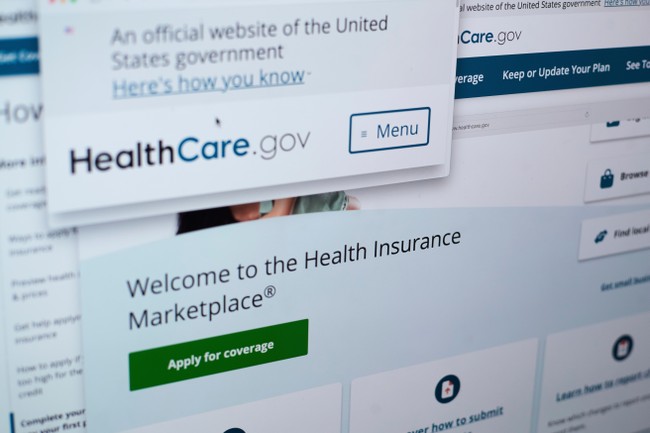
It Sure Looks Like Obamacare is Rife with Fraud
Like
Comment
Share
NewsBusters Feed
NewsBusters Feed
1 w

Reporter Reluctant To Admit Northerners Choose Southern Colleges To Escape Leftist Politics
Favicon 
www.newsbusters.org

Reporter Reluctant To Admit Northerners Choose Southern Colleges To Escape Leftist Politics

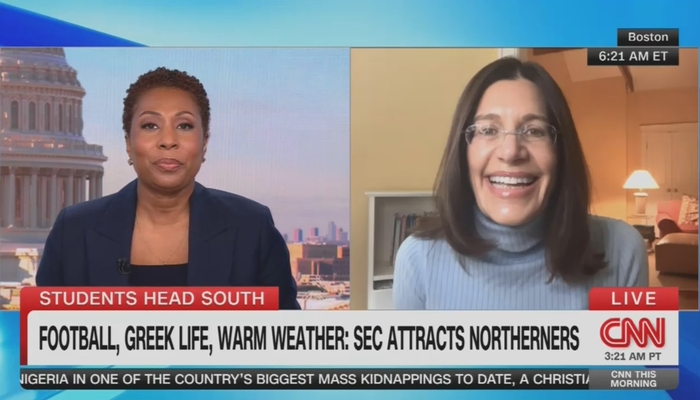
In a CNN This Morning segment today on the trend of northern students choosing Southern colleges, Boston Globe reporter Beth Teitell was reluctant to admit that one reason they do so is to escape the leftist politics of Northern schools. To her credit, host Audie Cornish did raise the issue. On her first try, Audie asked: "Can I talk about the liberal arts part of it? Because I understand politics is coming into play. What are these students saying about why they're making this decision?" Teitell ducked it, claiming that students chose the South because during COVID, students there were able to live relatively normal lives, compared to the stricter shutdowns in the North. But that hasn't made sense for multiple application cycles, since the COVID shutdowns ended more than 2.5 years ago. Audie tried again: "Is it also just trying to get away from the culture of liberal arts colleges?" Teitell finally admitted that "it definitely can be," but proceeded to condescend to such students, saying that many want to get away from the protests up North and "they're just worrying about what kind of cute cowboy boots they're going to wear." Teitell didn't acknowledge that--cute boots aside--principled conservative students want to escape the woke indoctrination mills up North. Can you call it "liberal arts" if schools in the North don't do a "well-rounded education" nurturing "critical thinking"? Unless you're thinking critically of conservatives. Teitell then quickly shifted to claim that it's a "double-edged sword," and that she had spoken to "One young woman [who] had gone to University of Georgia and her problem was that the school had too many people from Georgia there." Sounds kinda bigoted, no?  Inevitably, race entered the conversation. Cornish suggested: "When we look at these videos, especially Rush Talk, the algorithm is serving up a lot of white students. And I wanted to know if we're seeing similar trends to, say, historically black colleges." Teitell agreed, that some black students are headed south, perhaps due to family connections to black colleges, but then: "There was some headline that said, in Alabama, the White Tide [a play on Alabama's "Crimson Tide"] rushes on, because it is a very white presentation when you look on Rush Talk, for sure." Teitell tried terribly hard to be ingratiating. Her big grin (as seen in the screencap) remained there pretty much throughout the segment. Teitell's first words were: "Thank you, Audie. I'm so glad we're having this conversation." That was followed by: "That's such a good question," and "That's such an interesting question," and "You know, that's an interesting question." Enough already: just answer the darn question! On a personal note, I went to Cornell, in upstate New York, where I made several wonderful friends for a lifetime. But in high school, I was recruited by Davidson, in North Carolina, and sometimes wonder what my life would have been like had I gone there. Here's the transcript. CNN This Morning 12/9/25 6:20 am ET AUDIE CORNISH [after scenes of sexy rush dances air] Yep, moments like these, causing Northern students to head South for college. Academics alone clearly are not selling schools anymore. It's the football, the warm weather, the Greek life, Rush Talk.  SOUTHERN COLLEGE STUDENT 1: Rush consists of four highly competitive rounds.  SOUTHERN COLLEGE STUDENT 2: Let's be honest, I probably would not be going to Alabama if it did not blow up on TikTok.  CORNISH: Documentaries like Bama Rush have sold college-bound students from the Northeast, home to many of the Ivy League institutions in this country, to head south for a good time. The increase is staggering. For some schools, like LSU, that has seen a nearly 500%—I'm going to say that again—500% jump in students from the Northeast over the last decade.  So, joining me now is Beth Teitell. She recently wrote about this growing trend for the Boston Globe. Welcome to CNN This Morning.  Thank you, Audie. I'm so glad we're having this conversation. because the trend is so notable. You'll be stuck in Boston's famed traffic and the car in front of you or the one honking behind you actually has a bumper sticker on it that will say something like Clemson or LSU. It's a big change.  CORNISH: It is. And being from Boston, I know there are smaller schools people used to go to in the Northeast. They cost a lot of money. Can I just get the money question out first? Are people going because it's cheaper?  TEITELL: That's such a good question. It definitely can be cheaper.  . . .  CORNISH: Can I talk about the liberal arts part of it? Because I understand politics is coming into play. What are these students saying about why they're making this decision?  TEITELL: You know, that's such an interesting question. A lot of the college advisors I spoke with told me that when this generation was applying to colleges, they were actually in high school. The pandemic was on. They were sitting in their homes watching, and knowing that their own siblings who were older were in their dorm, in their own bedrooms, going to college online. And they're watching on TikTok and seeing the kids, where a lot of the Southern schools were still partying. And, you know, there's a football games or there's Rush Talk and that kind of stuff. So I think it's actually making a big difference.  CORNISH: Is it also just trying to get away from the cultural, culture of liberal arts colleges?  TEITELL: You know, that's an interesting question. It definitely can be. I mean, some just saw the intense politicization that was, of course, covered in all media with a lot of protests and everything. So some kids are very interested in that. But for others, they wanted to get away from it, to go someplace where they're not protesting something. In fact, they're just worrying about what kind of cute cowboy boots they're going to wear.  When I said double-edged sword, though, what I meant was I have spoken to kids and parents of kids who actually went down South to get away from all this. They wanted the party vibe and the Greek life. And then they got down there and they thought, oh, there's too much party life, too much Greek life. One young woman had gone to University of Georgia and her problem was that the school had too many people from Georgia there.  So it can look like a lot of fun at a distance, but it's not really for everybody.  CORNISH: When we look at these videos, especially Rush Talk, the algorithm is serving up a lot of white students. And I wanted to know if we're seeing similar trends to, say, historically black colleges.  TEITELL: You know, the New York Times reported that the historically black colleges and universities are seeing an increase in interest from some of the nation's top talent. People are going for family reasons. They might have roots there or just because the education is excellent. So you are seeing black students also going down South.  But with the Rush Talk, there is the thought that, there was some headline that said, in Alabama, the White Tide rushes on, because it is a very white presentation when you look on Rush Talk, for sure. 
Like
Comment
Share
Showing 1679 out of 103611
  • 1675
  • 1676
  • 1677
  • 1678
  • 1679
  • 1680
  • 1681
  • 1682
  • 1683
  • 1684
  • 1685
  • 1686
  • 1687
  • 1688
  • 1689
  • 1690
  • 1691
  • 1692
  • 1693
  • 1694
Advertisement
Stop Seeing These Ads

Edit Offer

Add tier


Select an image
Delete your tier
Are you sure you want to delete this tier?

Reviews

In order to sell your content and posts, start by creating a few packages. Monetization

Pay By Wallet

Payment Alert

You are about to purchase the items, do you want to proceed?

Request a Refund