www.theamericanconservative.com
What Does an America First China Strategy Look Like?
Foreign Affairs
What Does an America First China Strategy Look Like?
Neither Cold War pieties nor “everything all at once” is a viable approach to multipolarity.
In the coming weeks, the Trump administration will release new National Security and Defense Strategies. These documents are the best opportunity for the White House to articulate a coherent China strategy.
The first Trump administration marked a turning point in American strategy toward China: It closed the era of engagement and opened one of unbridled great power competition. But 10 months in, the second administration’s approach to China is in flux. Some actions are Jacksonian, short, and sharp: strongarming Panama to push China out of the canal and imposing shock-and-awe Liberation Day tariffs. Some are focused on the long game of great power competition: announcing a new “Golden Dome” strategic missile defense system, keeping the commitment to sell nuclear submarines to Australia, and coordinating with allies to reduce technological dependencies on China. Meanwhile, President Donald Trump’s own impulses are transactional: trading tariffs for trade deals, selling China advanced chips in exchange for rare earths, and limiting engagement with Taiwan to cultivate goodwill with China’s leadership.
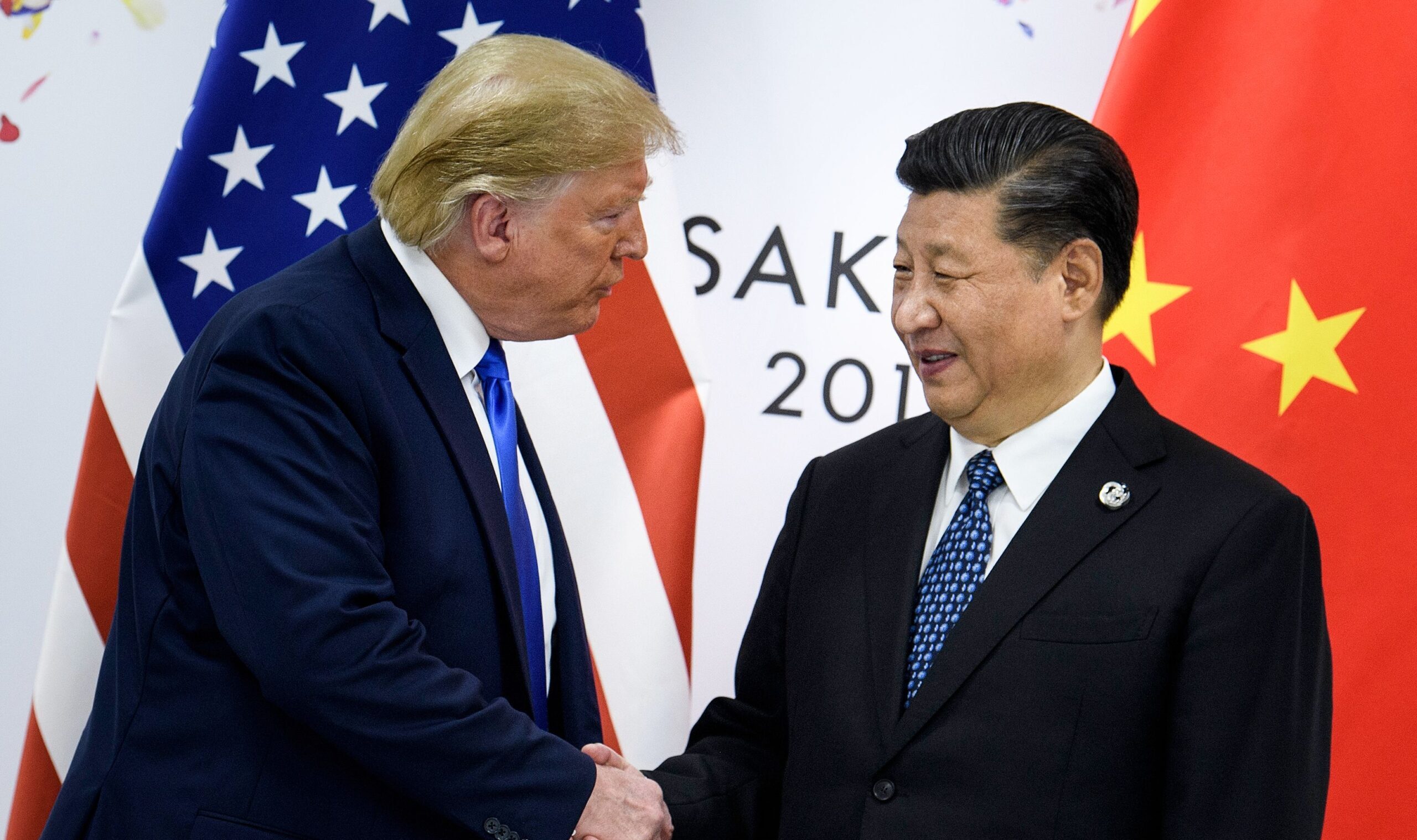
Is the U.S. trying to contain Chinese power or dig in for a long competition? Is it decoupling from China or renegotiating the terms of engagement? Will it confront or accommodate? So far, the answer seems to be everything all at once. The October trade agreement between Trump and China’s President Xi Jinping is a welcome step towards stabilizing the commercial side of the relationship. But it is subject to annual renewal—a fraught endeavor so long as it is unmoored from a broader concept of U.S. interests and objectives. If America First is about putting the interests of the American people above legacy commitments to a fading international order, what does that require from its China strategy?
In short, three things: balancing against China, not aiming for its defeat; elevating flexible, pragmatic policymaking toward both China and its neighbors; and investing to maintain America’s technological edge and industrial independence.
Some GOP strategists look at China and envision maximalist endgames such as restoring U.S. primacy or playing to win a new cold war. Others steel themselves for intense, open-ended great power competition in defense of a set of commitments inherited from the 20th century. These views are foolish. China is no longer a rising power—it is fully risen, with greater economic, technological, and military might than the Soviet Union ever had. It is not going to collapse or submit to U.S. leadership. This is not a calamity. The United States was created to “secure the blessings of liberty” for its own people, not to burden them with the costs of interminable great power competition.
Doing that requires new (or perhaps old) concepts of defense policy and foreign relations. The temple of GOP foreign policy, divided though it may be, still coheres in favor of resolve and peace through strength. For 35 years those impulses have been directed towards dominance and pursuit of military overmatch right up to the frontiers of our adversaries. Today, the fiscal costs and military risks of that approach far exceed the benefits to the American people. The United States does not have and cannot regain dominance in China’s neighborhood. Attempting to do so would only fuel tensions that endanger our homeland. Instead, “peace through strength” should be channeled to sustain a balance of power centered further from mainland China, where American power projection is still potent and survivable. They will deter us as much as we deter them. That won’t be satisfying to policymakers clinging to early 21st-century concepts of American power, but it will prevent China from dominating its region. And that is enough.
As Secretary of State Marco Rubio told an interviewer in January, the world is multipolar. By virtue of its messiness, multipolarity generates greater opportunities to maneuver. So America First should be a creative, dynamic enterprise. In Asia, as in Europe, injecting flexibility into U.S. foreign policy requires a clear-eyed reassessment of our rigid alliance system. Simply put, the U.S. should reduce its dominance over its own coalitions. Since every U.S. ally needs us more than we need them, pulling back will cause them to self-help through higher defense spending and greater intraregional cooperation. U.S. policymakers should not default to paranoia if its allies seek bilateral détentes with China. The current Sino–Japanese dispute is a reminder that poor allied relations with China can harm U.S. interests as well.
Maintaining geopolitical flexibility necessarily puts ideology in the back seat. The U.S. cannot afford to build “coalitions of democracies” to compete with China when those coalitions have a negligible impact on the balance of power and alienate potential partners that fall short of some arbitrary ideological standard. Instead, it should cooperate narrowly with non-democracies and ambiguously aligned countries, such as India and much of ASEAN. The greatest prize in this category is Russia, our only rival that spans the European and Asian theaters. Nearly four years of war in Ukraine have revealed the limits of the Sino-Russian “no limits” partnership both in terms of China’s material and diplomatic support. No American grand gesture can pry Russia away in a “reverse-Nixon,” but just as U.S. policy drove the two states together, a less assertive U.S. posture in Europe could, over time, induce the Kremlin to distance itself from China. Achieving that is worth the effort.
Faced with a global balance in which it is not dominant, the United States must increasingly reconcile its national interests with those of rivals, not just deter and moralize. U.S.–China tensions over trade and technology are intertwined with and fueled by political differences: over ideology, the structure of the Asian security order, U.S. alliances, regional arms buildups, and the fate of Taiwan. Putting America First requires searching for ways to ease these differences, such as bilateral nuclear arms control and downplaying “democracy vs. autocracy” rhetoric.
Regarding Taiwan, the starting point should be unsentimental: It is not vital to the regional balance of power. Acknowledging that does not mean the U.S. should abandon Taiwan or end its efforts to deter a Chinese invasion. It does mean the U.S. should do everything it can to lower the risk of war in the Strait and accept that Taiwan is not worth jeopardizing America’s Pacific forces or homeland in a war. An America First China strategy places as much emphasis on assuring China that it does not need to invade (for fear of imminent Taiwan independence or otherwise) as it does the kind of military deterrence Washington obsesses over.
That said, political engagement is not the same as groveling for deals. U.S. policy toward China should obey Nixon’s version of the Golden Rule: do unto others as they do unto you. When China plays hardball, the U.S. should reciprocate—and then some.
Finally, on the issue that has grabbed all the headlines during Trump’s fifth year in office: America First should regard tariffs as a tool, not an end. The end is an independent U.S. economy open to the world but never wholly reliant on any one nation—least of all China—for critical inputs. If the U.S. chooses an economic war of attrition, China has a proven track record of forcing its population to endure levels of hardship that an American president could never replicate while staying in office. Therefore, an America First China strategy must view economic competition as a marathon that will be won through domestic innovation and industrial policy, not punitive tariffs. Success means maintaining technological leads over China in a range of key sectors and systematically eliminating supply chain chokepoints that give rivals leverage over America’s most critical industries. Trade deals, nearshoring, and last-minute negotiations to keep components flowing are not substitutes for reliable production at home. Export controls will play a supporting role, but the true source of American economic greatness remains domestic innovation. If the U.S. cannot innovate at home—through private sector dynamism, access to export markets, targeted industrial policy, R&D at top universities, and, yes, top talent from around the world, we will lose the tech competition.
An America First China strategy accepts the durability of Chinese power. Instead of burdening the American people with decades of brinksmanship and containment, it strives for a balance of power underpinned by interest-based coalitions, prudent U.S. power projection, and strategic compromise. America First prizes flexibility over nostalgia for a dying “liberal order.” It ruthlessly re-evaluates which U.S. commitments advance its interests, ends those that do not, and, when necessary, redefines U.S. interests themselves.
The post What Does an America First China Strategy Look Like? appeared first on The American Conservative.


 Bitchute







 New Posts (Home)
 ChatBox
 Popular Posts
  Game Zone
 Top PodCasts