YubNub Social YubNub Social
    #bible #freespeech #censorship #facebook #jesus #americafirst #patriotism #culture #fuckdiversity
    Advanced Search
  • Login
  • Register

  • Night mode
  • © 2026 YubNub Social
    About • Directory • Contact Us • Developers • Privacy Policy • Terms of Use • shareasale • FB Webview Detected • Android • Apple iOS • Get Our App

    Select Language

  • English
Night mode toggle
Featured Content
Community
New Posts (Home) ChatBox Popular Posts Reels Game Zone Top PodCasts
Explore
Explore
© 2026 YubNub Social
  • English
About • Directory • Contact Us • Developers • Privacy Policy • Terms of Use • shareasale • FB Webview Detected • Android • Apple iOS • Get Our App
Advertisement
Stop Seeing These Ads

Discover posts

Posts

Users

Pages

Blog

Market

Events

Games

Forum

Daily Signal Feed
Daily Signal Feed
4 w

What’s the Rumored ‘Sonic Weapon’ Used in Venezuela Raid?  
Favicon 
www.dailysignal.com

What’s the Rumored ‘Sonic Weapon’ Used in Venezuela Raid?  

Use of a “sonic weapon” in the overnight capture of a country’s leader might sound like something out of a science fiction novel, but experts confirm that sort of technology exists. U.S. military use of sound as a non-lethal weapon “is credible” and “has been demonstrated,” according to Brent Sadler, a senior research fellow at The Heritage Foundation who focuses on naval warfare and advanced technology. Following the U.S. military operation in Venezuela to capture socialist leader Nicolás Maduro, White House press secretary Karoline Leavitt shared a post on X describing what an alleged Venezuelan security guard said was “a very intense sound wave” deployed by the U.S. military during the operation. “Suddenly, I felt like my head was exploding from the inside. We all started bleeding from the nose. Some were vomiting blood. We fell to the ground, unable to move,” according to the account initially posted by political activist Mike Netter and reposted by Leavitt. “We had no way to compete with their technology, with their weapons,” the security guard continued. “I swear, I’ve never seen anything like it. We couldn’t even stand up after that sonic weapon or whatever it was.” Stop what you are doing and read this… ?????????? https://t.co/v9OsbdLn1q— Karoline Leavitt (@PressSec) January 10, 2026 About three decades ago, the U.S. established the Joint Non-Lethal Weapons Directorate at the then-Department of Defense, which President Donald Trump renamed the Department of War in 2025. The initiative was re-designated in 2020 as the Joint Intermediate Force Capabilities Office. The development and use of non-lethal weapons “enables U.S. and allied forces to deliver accurate, tailorable, and compelling effects in complex and ambiguous scenarios while preventing unintended escalation of hostilities, unnecessary loss of life, or destruction of critical infrastructure,” according to the Joint Intermediate Force Capabilities Office. The original intent of the initiative was the development of non-lethal weapons for “operations such as peacekeeping and humanitarian assistance,” the government office says, adding that now there is a need for such weapons “in irregular warfare operations such as counterinsurgency, counterterrorism, stability operations, and counter-piracy.” Retired Marine Corps Col. Mark F. Cancian says he has not heard of a weapon that matches the description of the one portrayed in the account Leavitt shared. However, the U.S. military does use a device called a Long Range Acoustic Device, or LRAD. The device is a bit like a megaphone that “focuses all of its audio in a very tight cone,” Cancian, who now serves as a senior advisor at the Center for Strategic and International Studies, says. “It sounds like the voice of God. It is very loud,” Cancian said. “And I can imagine that if you cranked up the volume, you could have effects on people … perhaps some disruption in their functions.” The U.S. military has also used “flashbangs” for years, Cancian explained. A “flashbang grenade” is a non-lethal device that shines a very bright light and makes a loud noise. In the roughly 15 years since Cancian worked at the Pentagon, he says it is possible new technologies similar to an LRAD or “flashbang grenade” have been developed. The Pentagon declined to comment on reports of the use of a non-lethal sound weapon in Venezuela. The use of lights and sounds as “non-lethal options” has “matured a lot over the years, but they haven’t really been deployed at scale,” Sadler said. “So, the fact that the special forces might have used these is interesting,” he noted of the Jan. 3 operation in Venezuela. The use of something like a high sound frequency provides a distraction and “buys your special operators seconds to make critical decisions,” Sadler said. Of the U.S. non-lethal sound weapons he knows, Sadler said they are intended to be “reversible” in their effect, and once the sound is turned off or a person gets away from it, “there’s no lasting impact.” The post What’s the Rumored ‘Sonic Weapon’ Used in Venezuela Raid?   appeared first on The Daily Signal.
Like
Comment
Share
Daily Signal Feed
Daily Signal Feed
4 w

These Democrats Voted to Hold Clintons in Contempt for Obstructing Epstein Probe
Favicon 
www.dailysignal.com

These Democrats Voted to Hold Clintons in Contempt for Obstructing Epstein Probe

The House Oversight and Government Reform Committee voted overwhelmingly on Wednesday to send a contempt of Congress citation against former President Bill Clinton to the House floor, for not cooperating with the probe into convicted sex offender Jeffrey Epstein.  The vote to hold former Secretary of State Hillary Clinton in contempt for her failure to cooperate was closer, but still bipartisan, as three Democrats broke to vote with Republicans.  Nine Democrats on the Oversight Committee joined 25 Republicans to hold Bill Clinton in contempt of Congress, for a 34-8 vote. The vote to hold Hillary Clinton in contempt passed 28-15.  The two contempt citations now head to the House floor for potential consideration by the full chamber. Contempt of Congress is a charge that can carry up to 12 months in prison or $100,000. Here are the Democrats who voted to hold Bill Clinton in contempt of Congress: Rep. Maxwell Frost, D-Fla. Rep. Raja Krishnamoorthi, D-Ill. Rep. Summer Lee, D-Pa. Rep. Stephen Lynch, D-Mass. Rep. Ayanna Pressley, D-Mass. Rep. Emily Randall, D-Wash. Rep. Lateefah Simon, D-Calif. Rep. Melanie Stansbury, D-N.M. Rep. Rashida Tlaib, D-Mich. Here are the three Democrats who voted to hold Hillary Clinton in contempt:  Rep. Summer Lee, D-Pa. Rep. Melanie Stansbury, D-N.M. Rep. Rashida Tlaib, D-Mich. The post These Democrats Voted to Hold Clintons in Contempt for Obstructing Epstein Probe appeared first on The Daily Signal.
Like
Comment
Share
Daily Signal Feed
Daily Signal Feed
4 w

With ICE Agents Arriving in Maine, Where Will They Deploy Next? 
Favicon 
www.dailysignal.com

With ICE Agents Arriving in Maine, Where Will They Deploy Next? 

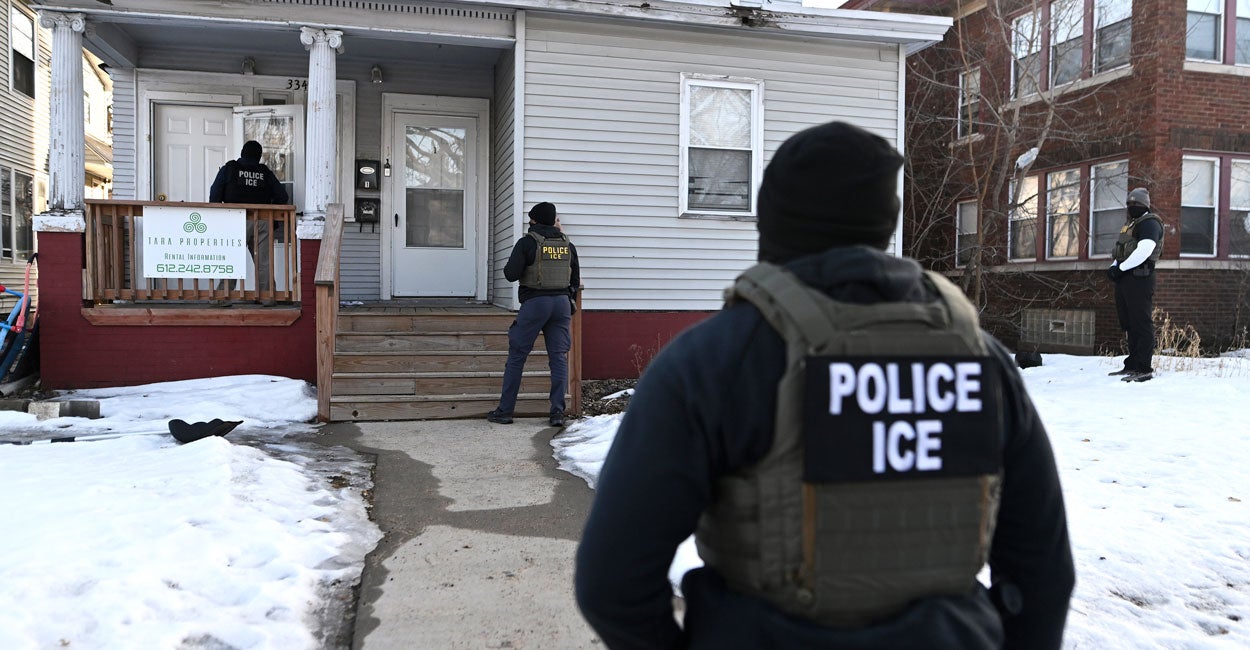
The Department of Homeland Security announced “Operation Catch of the Day” on Wednesday, with federal immigration agents arriving in Maine to find and arrest criminal illegal aliens. The agency noted that Immigration and Customs Enforcement has already arrested criminal illegal aliens convicted of endangering the welfare of a child and aggravated assault.   “We have launched Operation Catch of the Day to target the worst of the worst criminal illegal aliens in the state,” said DHS Assistant Secretary Tricia McLaughlin.   DHS has launched similar “named” operations in cities and states across the U.S., including Operation Patriot in Massachusetts, Operation Catahoula Crunch in New Orleans, Operation Buckeye in Ohio, Operation Charlotte’s Web in Charlotte, North Carolina, Operation Midway Blitz in Chicago, and Operation Metro Surge in the Twin Cities.  OPERATION CATCH OF THE DAY.On the first day of operations in Maine, we arrested illegal aliens convicted of aggravated assault, false imprisonment, and child abuse.@GovJanetMills and her fellow sanctuary politicians have made it abundantly clear that they would rather stand…— Homeland Security (@DHSgov) January 21, 2026 “The reality is that ICE is active nationwide, but it typically draws media attention only during large-scale operations,” Marguerite Telford, director of communications at the Center for Immigration Studies, says.   The Department of Homeland Security does not publicize future locations of where it plans to launch a large-scale operation, but there are a number of communities across the U.S. with high populations of illegal aliens that have yet to large immigration enforcement operations.   Boston  Telford gave a “reasonable guess that DHS may launch a large operation in Boston, “where both the governor and mayor have publicly opposed ICE enforcement efforts.”   Massachusetts Gov. Maura Healey, a Democrat, has accused ICE of “cruel and callous behavior.”   Boston Mayor Michelle Wu, also a Democrat, said ICE operations “are destabilizing communities, creating intimidation, fear.”  Boston is a sanctuary city, and the state has policies that limit local and state law enforcement from cooperating with federal immigration officials.   “If local officials want to avoid enforcement surges in their cities, they should allow ICE access to local jails so officers can safely take custody of criminal aliens without risking public safety,” Telford says.   New York State While immigration agents have conducted operations in New York City, Simon Hankinson, a senior research fellow for the Border Security and Immigration Center at The Heritage Foundation, says large operations outside the city might carry strategic value.   In communities in upstate New York “without large leftie concentrations,” local law enforcement have a higher likelihood of working with federal immigration officials to find and detain illegal aliens, Hankinson explains.   Hartford, Connecticut   There are 64,000 “noncitizens” living in Hartford and 265,400 across Connecticut, according to the research and advocacy group Vera Institute of Justice.   In August, ICE conducted a four-day operation in Connecticut, resulting in the apprehension of 65 illegal aliens, according to DHS.   Connecticut is a “sanctuary” state, according to the Department of Justice.   New Jersey  In early 2024, bus loads of illegal aliens were dropped off in New Jersey, which maintains a large migrant population, according to the Immigration Policy Institute.   New Jersey’s “unauthorized population” is estimated around 476,000, the policy group reports.   While New Jersey is not a sanctuary state, Newark and Jersey City, the state’s two largest cities, are sanctuary cities, according to the DOJ.   Seattle   As of 2023, about 375,000 illegal aliens lived in Washington state, making up about 5% of the state’s population, according to Axios.   Seattle is the largest city in Washington, and an ICE field office already exists in the city, but DHS has not reported significant enforcement operations in the West Coast community.   Seattle is a “sanctuary city,” according to the DOJ.   The post With ICE Agents Arriving in Maine, Where Will They Deploy Next?  appeared first on The Daily Signal.
Like
Comment
Share
Hot Air Feed
Hot Air Feed
4 w

Iran Makes Threats As Trump Considers His Options
Favicon 
hotair.com

Iran Makes Threats As Trump Considers His Options

Iran Makes Threats As Trump Considers His Options
Like
Comment
Share
Hot Air Feed
Hot Air Feed
4 w

Cops Are Being Treated Awfully Everywhere - Even in Kennels
Favicon 
hotair.com

Cops Are Being Treated Awfully Everywhere - Even in Kennels

Cops Are Being Treated Awfully Everywhere - Even in Kennels
Like
Comment
Share
The Blaze Media Feed
4 w

Health emergency on space station led to first-ever medical evacuation from space, says NASA chief to Glenn Beck
Favicon 
www.theblaze.com

Health emergency on space station led to first-ever medical evacuation from space, says NASA chief to Glenn Beck

An official of the National Aeronautics and Space Administration explained how they successfully performed a medical evacuation from space for the first time in space operations history. NASA Administrator Jared Isaacman gave as many details as he could about the incident while being interviewed by Blaze Media co-founder Glenn Beck on Wednesday. 'It was a very serious situation, something we had not seen before in space.'Four astronauts returned to Earth on Thursday, including the ailing member of the crew. They splashed down in the Pacific Ocean near San Diego. Isaacman touted the extraordinary training that U.S. astronauts undergo while offering some details about the historic incident. "One of the greatest accomplishments that we've done at the International Space Station is the continuous human presence in space over a quarter of a century," he told Beck. He went on to say that the environment in space is extremely harsh on the human body and requires many safety precautions. "This is why we do extensive training. Our astronauts are practically physicians; in fact, many of them are," he explained. "Everyone did an extraordinary job," Isaacman said of the "unexpected health-related" incident. "The Crew 11 astronauts, their other expedition mates on the International Space Station, the flight surgeons in mission control, they all responded accordingly. The incident was stabilized very quickly," he added. Isaacman was restricted by medical privacy rules from offering specific details on the incident. "Clearly, it was a very serious situation, something we had not seen before in space but had accounted for the possibility. And that is why we put in motion the option to bring our astronauts home early, which I think really speaks to American leadership in space," he continued. RELATED: Director of Glenn Beck's disaster response charity undermines Democrat attack on Trump admin's response to Texas flood.@NASAAdmin Jared Isaacman gives an inside look at the world's first ever medical evacuation from space: "This is why we do extensive training...clearly, it was a very serious situation, something we had not seen before in space, but had accounted for the possibility.That is… pic.twitter.com/wKLHKNF4zq— Glenn Beck (@glennbeck) January 21, 2026 "We can send our astronauts up more or less on command, which is what we're going to do with Crew 12, is pull their mission forward," Isaacman added. "And we can bring our astronauts home as required. And this is very important to President Trump and obviously his position on American supremacy in space." The four astronauts were transported to a medical facility in San Diego by NASA. Like Blaze News? Bypass the censors, sign up for our newsletters, and get stories like this direct to your inbox. Sign up here!
Like
Comment
Share
The Blaze Media Feed
4 w

Indian students score $200K 'food racism' payout from UC Boulder
Favicon 
www.theblaze.com

Indian students score $200K 'food racism' payout from UC Boulder

A 35-year-old Indian student says he was told that curry stinks, but sandwiches do not.Aditya Prakash and his fiancée, Urmi Bhattacheryya, won a settlement of $200,000 from the University of Colorado Boulder in a story dripping with progressivism.'My food is my pride, and notions about what smells good or bad to someone are culturally determined.'The BBC described the ordeal as a case of "food racism" while outlet Indian Express said Prakash was the "target of racism" over his microwaved food.Ate crimeThe couple reportedly claimed they faced a series of "microaggressions and retaliatory actions" after a staff member at the university — who was British, according to the BBC — complained about the "smell" of the food Prakash had in the microwave.The staffer allegedly said the food was giving off a "pungent" odor and informed Prakash there was a rule against heating foods that have strong odors. Prakash reportedly claimed there was no such rule publicly stated and said, "It's just food. I'm heating and leaving."The Indian also said he later inquired what foods were considered pungent. He was allegedly told that smelly foods included curry but not sandwiches.In a pickleThe couple claimed they soon lost their research funding and teaching roles, and a lawsuit followed. Prakash claimed it was not about money, though. "It was about making a point — that there are consequences to discriminating against Indians for their 'Indianness,'" he said.RELATED: Illegal alien truckers with California licenses accused of hauling $7M in cocaine across state lines Photo by John Greim/LightRocket via Getty Images Prakash also claimed he was a victim of "systemic racism" because his department "refused to grant" his Master's degree."That's when we decided to seek legal recourse," he said.The May 2025 lawsuit alleged discriminatory treatment and a "pattern of escalating retaliation" but was settled with the university that September. The terms reportedly include giving the students their degrees while denying all liabilities and banning them from studying or working at the school in the future.Paneer missThe dish at the center of the controversy is called palak paneer, which, according to cooking website Hooked on Heat, contains some strong ingredients.The main parts of the dish include spinach and paneer, a soft white cheese considered to be the Indian version of cottage cheese. Also added to the dish are onion, ginger, garlic, chili powder, garam masala (Indian spices), and more.Prakash reportedly argued that his food only stinks according to some people."My food is my pride, and notions about what smells good or bad to someone are culturally determined," he posited.Cruciferous contextA counterargument he allegedly faced was that even broccoli is not allowed to be heated because of its odor, but Prakash claimed that "context matters," before adding, "How many groups of people do you know who face racism because they eat broccoli?"His fiancée says that President Trump's re-election has caused a "narrowing of empathy" toward foreigners."Institutions talk a lot about inclusion, but there is less patience for discomfort, especially if that discomfort comes from immigrants or people of colour," she claimed.RELATED: Young white Americans want their own identity politics now — and conservatives shouldn’t be surprised Currying favorThe university told BBC that while it cannot comment on the specifics of the claims due to privacy laws, it is "committed to fostering an inclusive environment for all students, faculty and staff regardless of national origin, religion, culture and other classes protected under U.S. laws and by university policies.""When these allegations arose in 2023, we took them seriously and adhered to established, robust processes to address them, as we do with all claims of discrimination and harassment," the school continued. "We reached an agreement with the students in September [2025] and deny any liability in this case."The couple has reportedly not since returned to the United States, with Prakash saying he is willing to start over. "If this case can send out a message that this ('food racism') cannot be practiced with impunity, that we, as Indians, will fight back, that would be the real victory," he said, per Indian Express.Like Blaze News? Bypass the censors, sign up for our newsletters, and get stories like this direct to your inbox. Sign up here!
Like
Comment
Share
History Traveler
History Traveler
4 w

The Peculiar Story Of Anatoli Bugorski, The Scientist Who Stuck His Head In A Proton Accelerator And Lived To Tell The Tale
Favicon 
allthatsinteresting.com

The Peculiar Story Of Anatoli Bugorski, The Scientist Who Stuck His Head In A Proton Accelerator And Lived To Tell The Tale

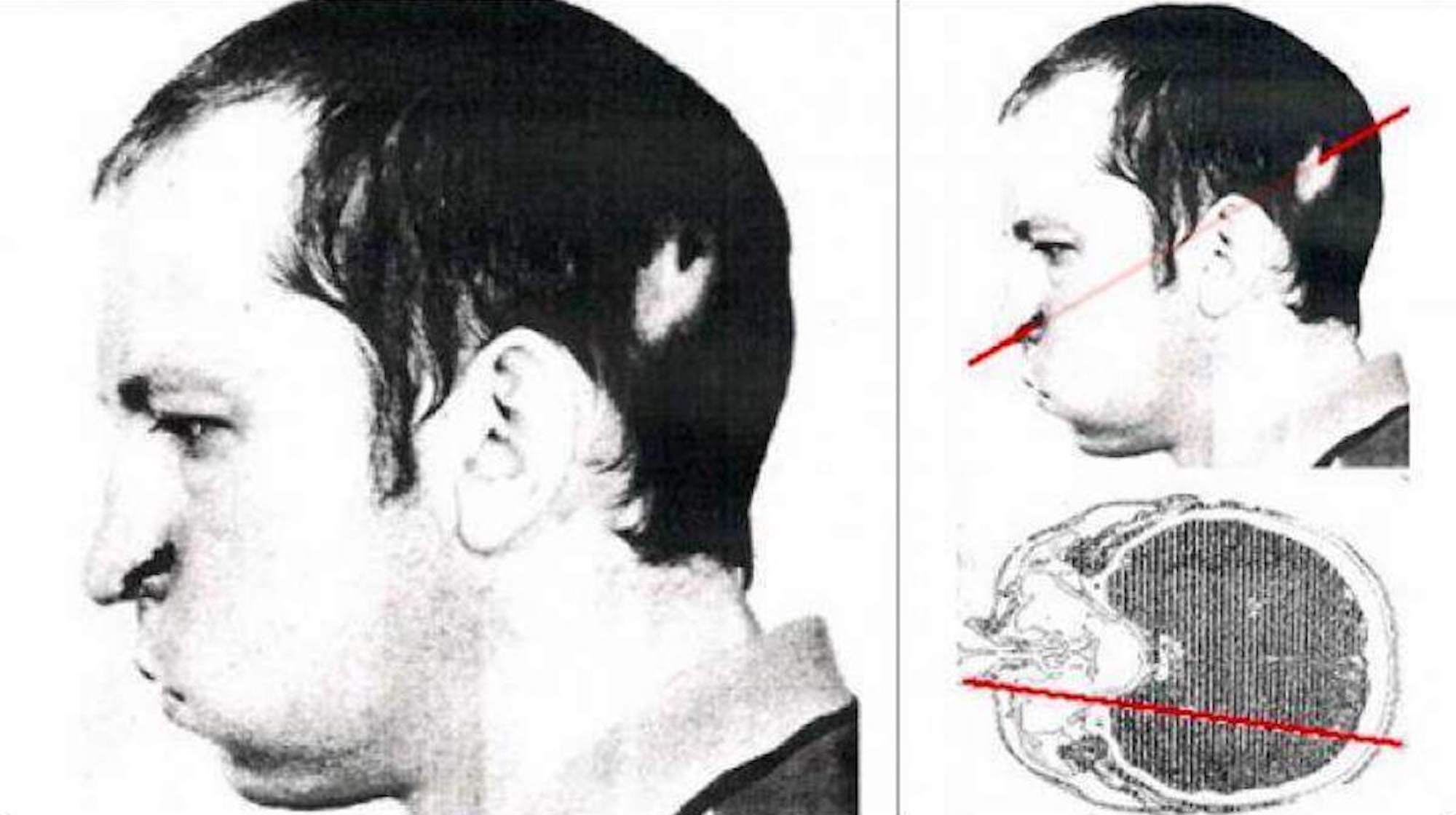
Public DomainOn July 13, 1978, a proton beam went straight through the head of Russian physicist Anatoli Bugorski, but he somehow survived. From the Chernobyl disaster to the nuclear bombings of Hiroshima and Nagasaki, the horrors of radiation exposure can send chills down anyone’s spine. Symptoms of radiation sickness can range from nausea, vomiting, and seizures to sepsis, cardiovascular collapse, and often death. Even beneficial uses of radiation, such as in cancer treatments, may cause severe side effects. Radiation can be fatal at just 5 grays (Gy). Cancer patients generally receive between 45 and 60 Gys broken down into smaller doses over a few weeks. But in 1978, one physicist was exposed to over 3,000 Gys at once — 600 times the fatal dose. And he survived. This is the incredible story of Anatoli Bugorski. The Proton Accelerator Accident Royalty-Free/CorbisAnatoli Bugorski is the only known person to have been directly exposed to a particle accelerator beam. Anatoli Petrovich Bugorski was born in the Soviet Union on June 25, 1942. In 1978, at the age of 36, he was working as a particle physicist at the Institute for High Energy Physics in Protvino, a small town about 60 miles south of Moscow. Protvino had been established as a Cold War-era science boomtown, created for the primary purpose of nuclear research. There, scientists could live with their families and conduct their top-secret work far away from prying eyes. Bugorski was working on the U-70 synchrotron, a nuclear particle accelerator that, at the time it was built in 1967, generated the highest-energy beam in the world. While that record has since been broken, it is still the highest-energy accelerator in Russia. On July 13, 1978, Bugorski leaned into the synchrotron to check a malfunction — without realizing the safety mechanism had been turned off. All of a sudden, Bugorski experienced a flash “brighter than a thousand suns,” according to Discover Magazine. He had unwittingly put his head in the direct path of the main proton beam, which entered through the back of his head and exited through his nose. Bugorski was blasted with 3,000 Gys of radiation. He was rushed to the hospital for treatment, though most of the doctors and scientists involved in his care were convinced he was a dead man walking. They were wrong. The Incredible Survival Story Of Anatoli Bugorski Wikimedia CommonsThe U-70 synchrotron control room. Despite having been hit with hundreds of fatal doses of radiation all at once, Anatoli Bugorski felt no pain. Of course, Bugorski didn’t walk away from his accident completely unscathed. The proton beam had gone straight through his head. The left side of his face swelled up, and over the next few days, the skin that had come in contact with the beam blistered and peeled off. Soon, doctors examining Bugorski could see the path the beam had taken through his face, bone, and brain tissue by the burn it left behind. Before Bugorski’s incident, nobody knew what would happen to a person exposed to radiation in such a concentrated form. Understandably, doctors assumed he’d be dead in a matter of days. But against all odds, he lived to tell the tale. “This is, in effect, an unintended test of proton warfare,” Bugorski said, according to Wired. “I am being tested. The human capacity for survival is being tested.” To this day, it is unknown why Bugorski didn’t experience more damage from the accident. Some scientists have theorized that Bugorski was able to survive because of the narrow concentration of nuclear energy. Most deaths from radiation poisoning come from general exposure, such as in Chernobyl or Hiroshima and Nagasaki, where radiation seeped across victims’ entire bodies. However, this theory is difficult to test, as Bugorski is still the only person known to have suffered this form of high-energy radiation exposure. Anatoli Bugorski’s Mostly Normal Life Post-Accident Andrey Solomonov/Global Look PressThe accident left half of Bugorski’s face paralyzed and stopped it from aging. Anatoli Bugorski’s skin gradually healed from his accident. However, the burns left half of his face permanently paralyzed. In fact, as the right side of his face aged, the left side has remained frozen in time since 1978. Still, Bugorski walked away from the accident mostly unscathed. The beam of highly concentrated radiation had torn through his occipital lobe, responsible for visual processing, and his temporal lobe, responsible for sensory input and retention, such as language comprehension and memory. But Bugorski suffered virtually no intellectual damage, going on to complete his Ph.D. and continue his research at the Institute for High Energy Physics. Over the years, he has suffered from occasional seizures and mental fatigue. He also lost hearing in his left ear. Otherwise, Bugorski, who is now in his eighties, has remained in surprisingly good health. Despite being the only known person to have been exposed to the effects of a super-powered nuclear accelerator, Anatoli Bugorski has rarely discussed his accident publicly, even nearly 50 years after the fact. The confidential nature of Russia’s nuclear research during the Cold War meant that he was unable to talk about his accident for about a decade. When the news finally broke, he was lauded as “a poster boy for Soviet and Russian radiation medicine,” according to Wired. Bugorski has also expressed his willingness to participate in studies or research by Western universities and institutions. Unfortunately, he has never had the money to leave Protvino, where he reportedly still lives to this day with his wife and adult son. After reading about the physicist who survived a blast of nuclear radiation, read about the man who was kept alive for 83 days against his will after a radiation accident in Japan. Or, read about the 14-pound plutonium orb known as the ‘Demon Core’ that killed two scientists in New Mexico. The post The Peculiar Story Of Anatoli Bugorski, The Scientist Who Stuck His Head In A Proton Accelerator And Lived To Tell The Tale appeared first on All That's Interesting.
Like
Comment
Share
History Traveler
History Traveler
4 w

The Disturbing Story Of Danny Rolling, The ‘Gainesville Ripper’ Whose Murders Inspired The Movie Scream
Favicon 
allthatsinteresting.com

The Disturbing Story Of Danny Rolling, The ‘Gainesville Ripper’ Whose Murders Inspired The Movie Scream

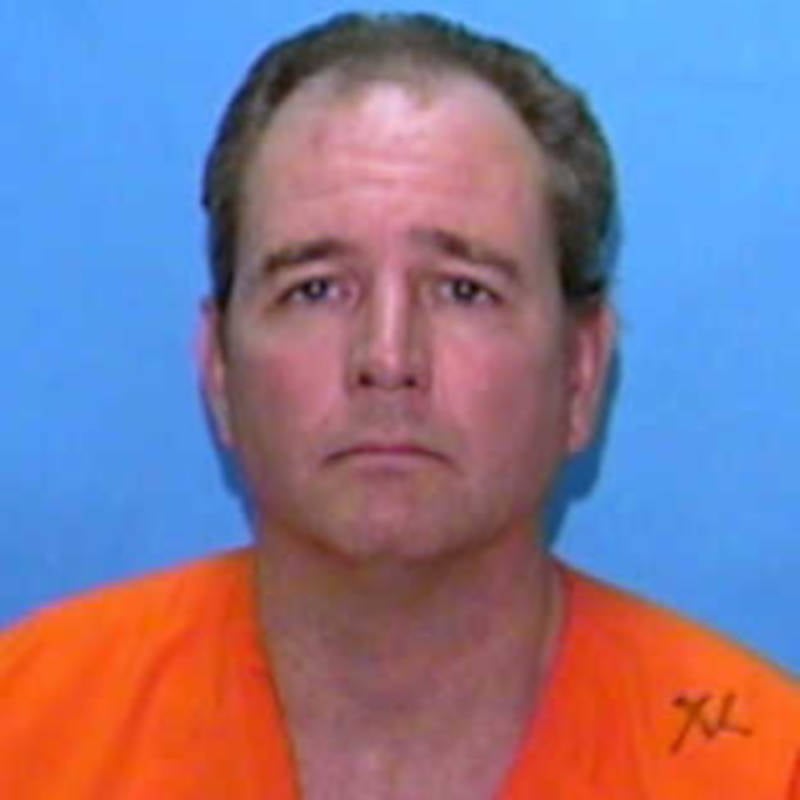
In August 1990, five college students in Gainesville, Florida, were horrifically murdered in their apartments. Despite an extensive investigation, the police couldn’t figure out who was behind the vicious crimes. Then, that November, a woman called Crime Stoppers to put forth the name of a suspect: Danny Rolling. Public DomainDanny Rolling killed eight people between 1989 and 1990. It turned out that Rolling had been arrested for a robbery not far from Gainesville less than two weeks after the murders and was still behind bars. And when the police tracked him down, they discovered that his DNA matched samples found at the crime scenes. They’d found the Gainesville Ripper — but the grisly spree wasn’t the first time Rolling had killed. Investigators soon discovered that Rolling had fatally stabbed a Louisiana man along with his daughter and eight-year-old grandson back in November 1989. He’d also shot his own father, though the elder Rolling had survived. Danny Rolling reportedly claimed that he wanted to be a “superstar” like Ted Bundy. Danny Rolling was executed in 2006, but his chilling legacy endures to this day. Even those who don’t recognize his name will certainly know of the horror movie his crimes inspired: the cult classic 1996 film Scream. This is the disturbing tale of ‘Gainesville Ripper’ and the true story behind Scream. Danny Rolling’s Troubled Early Life Danny Harold Rolling was born on May 26, 1954 in Shreveport, Louisiana, and he faced abuse from his earliest days. His father, a World War 2 veteran and a police officer, frequently beat him and told him that he wished he’d never been born. Rolling’s mother, Claudia, tried to escape the toxic marriage, but time and again she returned. By the time Danny was in third grade, his counselors had diagnosed him with aggressive tendencies and poor impulse control. As a teenager, Rolling started peeping into girls’ windows to see them naked, which eventually “became a compulsion,” psychologist Dr. Harry Krop testified at a 1994 hearing, as reported by the Tampa Bay Times at the time. He also began drinking, and he was arrested at least twice because of it. Ultimately, Danny Rolling dropped out of high school and enlisted in the U.S. Air Force. A young Danny Rolling, who would later go on to become known as the Gainesville Ripper. His stint in the military lasted just a year, as he faced trouble for drug possession and disobeying orders. He was honorably discharged, returned to Shreveport, and married a woman he met at church. His first child was born a few months later, soon after he turned 21, and he dealt with the pressures of marriage and fatherhood by drinking, smoking marijuana, and peeping into windows again. Then, his crimes began to escalate. Over the next few years, Danny Rolling robbed two Winn-Dixie supermarkets and several other stores. He spent most of his 20s in prison for armed robbery. He was released in 1984, but he was stealing again within a year — and this time, his misdeeds didn’t stop there. The Rise Of The Gainesville Ripper In November 1989, three bodies were found in a Shreveport home: Tom Grissom, his daughter Julie, and his eight-year-old grandson Sean. Julie’s corpse was arranged in a provocative pose. The murder went unsolved, and for a while, it seemed as if the perpetrator would get away with the disturbing crime. Then, a spree of eerily similar killings broke out in Florida. The Gainesville Ripper first struck in the early morning hours of August 24, 1990. He broke into the apartment of two incoming freshmen at the University of Florida, Sonja Larson and Christina Powell. Danny Rolling bound and gagged the girls before raping them, stabbing them to death, and posing their bodies. The following night, August 25, Rolling entered the apartment of 18-year-old Christa Hoyt, a student at Santa Fe College in Gainesville. She wasn’t home, so he hid out until he heard her return and then sneaked up behind her, put her in a choke hold, taped her mouth, and tied her up. Rolling then raped her and stabbed her, but this time, he sliced her abdomen open when he was done. After leaving Hoyt’s apartment, Rolling realized he couldn’t find his wallet. Fearing he’d left it inside, he went back — and while he was there, he cut off Hoyt’s head and placed it on a shelf staring at her body, which was posed on her bed just like the corpses of his previous victims. WillMcC/Wikimedia CommonsA memorial to the victims of the Gainesville Ripper near the University of Florida campus. By this point, news of the murders had spread across Gainesville. Authorities put out as much information as they could to try to catch the suspect, and students at the city’s universities slept in groups and took every precaution they could think of to secure their dorms and apartments. Despite this, the Gainesville Ripper struck again on August 27. That night, Rolling murdered Tracey Paules and Manuel Taboada, both 23-year-old University of Florida students. He attacked Taboada while he slept, and when Paules heard the struggle and came to investigate, Rolling chased her to her bedroom. Paules tried to barricade herself inside, but the serial killer managed to break down her door, rape her, stab her to death, and pose her corpse. At the time, nobody knew that the murders of Paules and Taboada would be the Gainesville Ripper’s last. The University of Florida canceled classes, people carried baseball bats around with them, and nobody went out alone during the day or night. Students even started sleeping in shifts so that someone was awake at all times. By the end of August, many students had left campus, and some of them never returned because they feared for their lives. Despite having four separate crime scenes to gather evidence from, the police couldn’t name a suspect. Danny Rolling had covered his tracks carefully, disposing of anything on which he could have left fingerprints. And while he did leave semen behind, investigators had nothing to test it against. At least, not until a woman from Shreveport called Crime Stoppers three months later. How A Single Tip Led The Police To Danny Rolling Cindy Juracich had heard about the Gainesville murders on the radio while driving through Florida that August. The crimes brought to mind a man Juracich had previously attended church with in Shreveport: Danny Rolling. Rolling had frequently visited the home of Juracich and her husband, Steven Dobbin, outside of church. “He’d come over every night for a while,” Juracich told ABC News in 2022, “and then one night, Steven came in and goes, ‘He’s got to go.'” Her husband then told her that Rolling had admitted that he “likes to stick knives into people.” Juracich hadn’t seen Rolling since he’d left Shreveport, but she had a horrible gut feeling that he had something to do with the murders in Gainesville. In November 1990, she decided to call Crime Stoppers just to put his name forward. By this time, investigators had started to make connections between the Gainesville killings and the triple homicide in Shreveport a year prior. Mike Pease/Tampa Bay Times via ZUMA Wire / Alamy Stock PhotoDanny Rolling after his competency hearing in July 1991. Detectives looked into Rolling and discovered that he’d been arrested on Sept. 7, 1990, for robbing a supermarket in Ocala, Florida, about 40 miles south of Gainesville. Thankfully, he was still in jail, and a quick blood test revealed that he had the same blood type as the suspect in both Shreveport and Gainesville. Danny Rolling was charged with five counts of murder, and just as his trial began in 1994, he pleaded guilty. He was sentenced to death and died by lethal injection on Oct. 25, 2006. His chilling legacy didn’t end there, though. The Inspiration Behind Scream When the news of the Gainesville Ripper broke in late 1990, Kevin Williamson was preparing to move to Los Angeles to take screenwriting classes at UCLA. The case inspired Williamson, and he started looking deeper into it as Rolling’s trial approached. “Back when I was researching Danny Rolling,” Williamson told Entertainment Tonight in 2013, “I wanted to write about a serial killer on a college campus.” Dimension FilmsDanny Rolling and his vicious murders as the Gainesville Ripper served as the true story behind Scream. He took elements of Rolling’s story and put them into one of his screenplays: a movie called Scream. The film released in 1996 and soon became a blockbuster. Williamson’s career skyrocketed, and he went on to write for the hit series Dawson’s Creek, the horror movie I Know What You Did Last Summer, and a couple of the sequels to Scream — one of which indeed takes place on a college campus. As such, Danny Rolling’s vicious crimes live on, not just through the grief of his victims’ loved ones but as the true story behind Scream, one of modern history’s most successful film franchises. After reading about Danny Rolling and the true story behind Scream, go inside 12 other true stories that inspired horror films. Then, discover the stories behind some of Hollywood’s most famous serial killer movies. The post The Disturbing Story Of Danny Rolling, The ‘Gainesville Ripper’ Whose Murders Inspired The Movie <em>Scream</em> appeared first on All That's Interesting.
Like
Comment
Share
History Traveler
History Traveler
4 w

The Story Of The Chernobyl Disaster And The Radioactive Ghost Town Of Pripyat It Left Behind
Favicon 
allthatsinteresting.com

The Story Of The Chernobyl Disaster And The Radioactive Ghost Town Of Pripyat It Left Behind

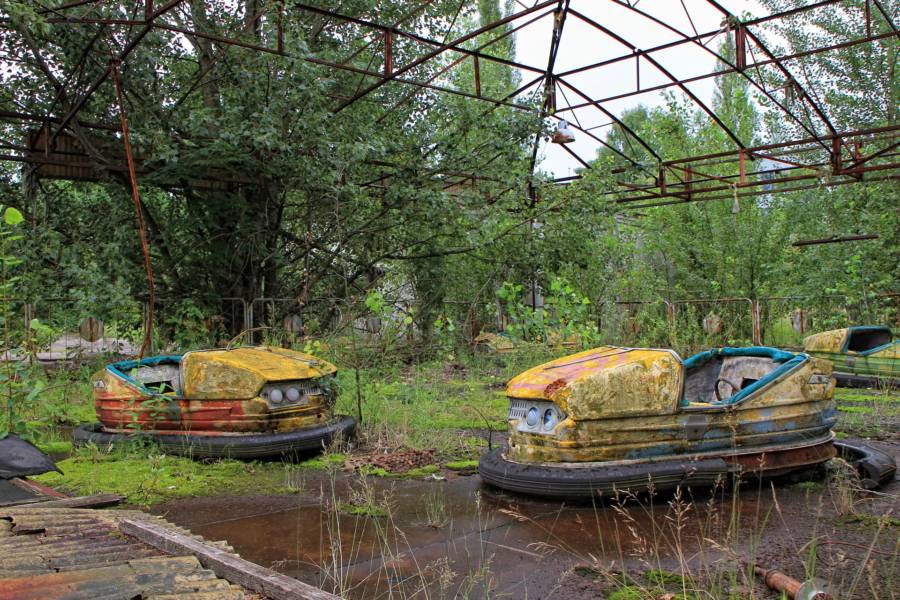
The Chernobyl disaster of April 25 and 26, 1986, was the most catastrophic nuclear accident of the 20th century. It has shaped and inspired nuclear policy, influenced environmentalist and activist groups, and left a direct, physiological impact on Pripyat, Ukraine along with the Eastern European regions it contaminated. The event happened due just as much to negligence as inevitability — with no fail-safes to prevent radiation from escaping in case of an accident, improperly trained personnel, and no enacted safety measures to ensure that those mistakes wouldn’t occur in the first place, the disaster was arguably lying in wait. When a late-night safety test went awry and subsequent human error interfered with preventative measures, Chernobyl’s Reactor 4 became unmanageable. Water and steam merged together which lead to an explosion and a resulting open-air graphite fire. Two plant workers died that night and arguably suffered the least out of all those who eventually died from radiation or grew up with birth defects. PixabayThe Pripyat Amusement Park was set to open on May 1, 1986 — a week after the Chernobyl disaster. Over the next few days, 134 servicemen involved with the clean-up in and around Pripyat were hospitalized, 28 died of acute radiation syndrome (ARS) in the following weeks, and 14 died of radiation-induced cancer within the next ten years. Indeed, the complete effects the disaster had on the health of the public in Pripyat and the surrounding area is still not totally known. A simple miscalculation in safety measures during a late-night test quickly became the biggest nuclear disaster of the modern era. Brave souls on the ground sacrificed everything to stop it as the rest of the world watched in horror. 33 years later, the radioactivity of the Chernobyl disaster still lingers. MIT Technology ReviewEmergency workers cleaning up radiated materials with shovels in Pripyat, 1986. A Timeline Of Events That Led To The Chernobyl Disaster The accident occurred a full year before President Reagan famously ordered USSR General Secretary Gorbachev to “tear down this wall.” The Pripyat Amusement Park was set to open on May 1st as part of the May Day celebrations, but that opportunity never came. It was 1:23 A.M. local time on April 25, 1986 when Reactor 4 suffered a fateful power increase too high to handle. This was before nuclear reactors were encased in a now standardized, protective containment vessel. Vitaliy Ankov/RIA NovostiWorkers hosing the plant down with a decontaminant, 1986. Chernobyl’s meltdown billowed out vast amounts of radioactive isotopes into the atmosphere, covering parts of the Soviet Union, Eastern Europe, Scandinavia, the United Kingdom, and the American east coast in varying amounts of fallout. Areas closest to the site, like Pripyat, were affected most drastically, with Ukraine’s capital Kiev receiving around 60 percent of the fallout while a significant amount of Russian territory sustained considerable contamination as well. UNICEF estimated that over 350,000 people evacuated their homes in Pripyat and far beyond between 1986 and 2000 specifically due to Chernobyl’s after effects. The Design Flaws And Misuse Of Reactor 4 The Soviet Union’s Chernobyl nuclear plant is about 65 miles north of Kiev on the banks of the Pripyat River. The town of Pripyat or Prypyat was founded in 1970 to serve the nuclear plant specifically as a closed, nuclear city. It only became an official city nine years later. But today, save for the startling emergence of wildlife, Pripyat remains a ghost town. Chernobyl had four reactors and each was capable of generating 1,000 megawatts of electric power. For context, the California Independent System Operator which oversees the bulk of the state’s electric power system, says one megawatt is capable of producing enough electricity for the instantaneous demand of 1,000 homes at once. Sovfoto/UIG via Getty ImagesRecording radiation levels during construction of a new sarcophagus for Reactor 4, August 1986. Chernobyl’s four reactors were different than most others worldwide. The Soviet-designed RBMK reactor, or Reactor Bolsho-Moshchnosty Kanalny meaning “high-power channel reactor,” was water-pressurized and intended to produce both plutonium and electric power and as such, used a rare combination of water coolant and graphite moderators that made them fairly unstable at low power. If the reactors lost cooling water, they’d dramatically decrease power output which would rapidly facilitate nuclear chain reactions. What’s more, the RBMK design didn’t have a containment structure: a concrete and steel dome over the reactor itself meant to keep radiation inside the plant even if the reactor fails, leaks, or explodes. These design flaws compounded with the staff of untrained operators made for the perfect storm. The rather inadequately trained personnel working on the Number 4 reactor late that night on April 25 decided to complicate a routine safety test and conduct an electrical-engineering experiment of their own. Their curiosity of whether or not the reactor’s turbine could operate emergency water pumps on inertial power, unfortunately, got a hold of their judgment. First, the team disconnected the reactor’s emergency safety systems as well as its essential power-regulating system. Things quickly worsened when they set the reactor at a power level so low that it became unstable and removed too many of its control rods in an effort to regain some control. At this point, the reactor’s output reached over 200 megawatts. At that fateful hour of 1:23 A.M., the engineers shut the turbine engine off completely to confirm whether or not its inertial spinning would force the reactor’s water pumps to kick in. Tragically, it did not. Without the requisite water-coolant to maintain temperatures, the reactor’s power level spiked to unmanageable levels. The Chernobyl Disaster In an effort to prevent the situation from rapidly getting worse, the engineers reinserted all the control rods — about 200 — taken out earlier in the hopes of recalibrating the reactor and bringing it back to reasonable levels. Unfortunately, they reinserted those rods all at once, and because the rods’ tips were made of graphite, this set off a chemical reaction which resulted in an explosion that was then ignited by steam and gas. The explosion ripped through the 1,000-metric-ton concrete and steel lid and reportedly ruptured all 1,660 pressure tubes as well — thereby causing another explosion that ultimately exposed the reactor core to the world outside. The resultant fire allowed more than 50 tons of radioactive material to waft into the sky where it was inevitably carried away and spread across the continent by wind currents. The graphite moderator, leaking radioactive material, burned for 10 days straight. It didn’t take long for the Soviets to order an evacuation of Pripyat’s 30,000. Authorities scrambled to problem-solve their way out of the fiasco on their hands and began with an attempted cover-up that failed a mere day later. Sweden’s radiation monitoring stations over 800 miles northwest of Chernobyl detected radiation levels 40 percent higher than standard levels just a day after the explosion. The Soviet news agencies had no choice but to admit to the world what had happened. The amount of radiation relinquished into the skies from the Chernobyl disaster was several times that of U.S. atomic bombings on Hiroshima and Nagasaki. With the help of global air currents, the nuclear disaster affected Eastern and Northern Europe and contaminated millions of acres of pristine farmland in the region. PixabayA crumbling school building in Pripyat, 2018. The “Suicide Squad” Makes A Sacrifice For The Greater Good Unbelievably, the events of the Chernobyl disaster could have been even worse if not for real-life hero Aleksandr Akimov and his brave team. Akimov was the first to declare an emergency in the plant as soon as the reactor was shut down, though by then the damage had already been done. He realized too late the extent of the damage; already the reactor had exploded and began to leak extremely high levels of radiation. Rather than evacuate the plant as the explosion ensued, Akimov stayed behind. He and his crew of Valeri Bezpalov, Alexi Ananeko, and Boris Baranov entered the reactor’s chamber in waist-high radioactive waters beside the exploded reactor to release water. Bezpalov, Ananeko, and Baranov comprised a ‘Suicide Squad’ that descended into the water even deeper to turn on the emergency feedwater pumps to flood the reactor and stave off the release of more radioactive materials. They manually pumped emergency feedwater into the reactor without any protective gear. The work of the engineers ended up costing them their lives from radiation poisoning, but they dramatically changed the impact of the disaster. Their sacrifice saved countless others from a resulting fallout that would have covered most of Europe. The Toll Of Cleanup Operations In Pripyat While the physical illnesses and disease were reportedly difficult to specifically tie to the disaster itself, the short- and long-term efforts to minimize any harrowing consequences were substantial. The initial explosion resulted in the death of two workers and 28 firemen and emergency clean-up workers, including 19 others, died within three months of the explosion from Acute Radiation Sickness (ARS). Around 1,000 on-site reactor staff and emergency workers were heavily exposed to high-level radiation as well as more than 200,000 emergency and recovery operation workers. Managing Reactor 4 proved more difficult and complex compared with the relatively basic task of moving people from one place to another. Soviet estimates have calculated that 211,000 workers took part in the cleanup activities during the first year with anywhere between 300,000 and 600,000 people participating within the first two. Evacuations began 36 hours after the incident with Soviet authorities having successfully relocated everyone in the 30-kilometer exclusion zone within a month. About 116,000 people had to pick up their things and find new homes — or potentially die from radiation-induced illnesses. But a 2005 United Nations Report maintains that “the largest public health problem created by the accident” was its effect on the mental health of the 600,000 people living in areas impacted by the event. The Nuclear Energy Institute claimed Chernobyl’s failings resulted in about 4,000 cases of thyroid cancer, with some deaths occurring as late as 2004 — while the UN study argued that less than 50 deaths could be guaranteed to have resulted from the event’s radiation exposure. IGOR KOSTIN, SYGMA/CORBIS“Liquidators” preparing for cleanup, 1986. Children in contaminated areas were given high doses of thyroid medication in order to combat the increase in radioiodine — a contaminant isotope that had seeped into the regional milk. This isotope had a half-life of eight days. Meanwhile, the soil was found to be contained by cesium-137 — which has a half-life of 30 years. The efforts appeared to be to little avail. Numerous studies found that the number of thyroid cancer in children under 15 years of age in Belarus as well as Russia and Ukraine in general, showed a steep, concerning spike. Many of these children had developed a particular form of cancer from drinking milk — as cows grazed on contaminated soil, and produced contaminated milk. PixabayA mural in Pripyat depicting children before the meltdown, 2018. It hadn’t yet become clear, in the frenzy of day to day cleanup operations in those first months following the Chernobyl disaster, but an entire generation of children would grow up permanently changed by the event. Birth Defects From The Chernobyl Disaster A 2010 study published in the American Academy of Pediatrics journal urged scientists to take another look at the seemingly cut-and-dry subject of Chernobyl’s long-term effects on children’s health in affected regions. Dr. Wladimir Wertelecki of the University of Southern Alabama in Mobile found that the Ukraine province of Rivne — 155 miles from Chernobyl — had been “significantly impacted” by the radioactive cesium-137, with serious, subsequent anomalies in the children born there ever since, Reuters reported. “There has been a tendency to imply that the question is closed as far as the prenatal effects (of Chernobyl),” he said. The study, however — which analyzed every one of the 96,438 babies born in Rivne between 2000 and 2006 — found that the rate of birth defects in the brain and spine were much higher than the average in Europe. 22 of every 10,000 babies born in Rivne during that timeframe were born with birth defects — compared to Europe’s average of 9 of every 10,000. Rates of conjoined twins, congenital tumors on the tailbone, and microcephaly were also significantly elevated. Sean Gallup/Getty ImagesChildren with microcephaly at the Vesnova Home for Invalid Children in Vesnova village near Glusk, Belarus, 2016. While Dr. Wertelecki conceded that other factors such as malnutrition or prenatal alcohol abuse could have impacted these numbers — the results are alarming. The study presents a disconcerting correlation between strontium-90 — a radioactive element created by nuclear fission — and a rise in disabilities caused by birth defects which UNICEF suggested impacted 20 percent of older children in Belarus. Over five percent of Strontium-90 — the single most dangerous element of nuclear fallout — was released during the Chernobyl disaster. The physical impact of long-term effects in the region, though contested by some, has certainly been significant enough for the Vesnova Home for Invalid Children to open and care for over 170 children born with birth defects. Nonprofit organization Chernobyl Children International, too, has established itself as a childcare facility for affected families in Belarus. Yet another facility, Children’s House Number 1 in Minsk, tends to those born with birth defects — from serious neurological issues to abnormal heart conditions. Sean Gallup/Getty ImagesDisabled children in the cafeteria at the Vesnova Home for Invalid Children, 2016. Children as young as four have to undergo open-heart surgeries to correct holes, faulty heart valves, and more. The congenital heart defects are so prevalent that a U.S.-based group, the Cardiac Alliance, has sent surgical teams that focus specifically on congenital heart defects in children to Belarus. The prevalence of severe birth defects such as microcephaly, hydrocephaly, and others in this region than elsewhere, point to a considerable correlation with the Chernobyl disaster. With Belarus being on the receiving end of 60 percent of Chernobyl’s fallout, it would be illogical to dismiss this seemingly evident causality. The Children of Chernobyl SHONE/GAMMA/Gamma-Rapho via Getty ImagesView of the Chernobyl nuclear power plant after the explosion. April 26, 1986. Yuryi Litvinov was four years old when the Chernobyl disaster occurred. Even though he survived the initial disaster, he couldn’t fully escape the consequences of living so close to the disaster in a town near Kiev. “The realization of what happened comes only later, after you realize what you got afterwards,” he told NPR. “You know, I experienced cancer when I was 21 and now I’m kind of good and everything works out fine. So I just want to put out awareness about this, what happened and be a little bit more cautious.” Litvinov’s memories are largely those of a little boy who couldn’t fully comprehend what was happening, or why he was sent away to live with his grandmother for five months — but the palpable difference he felt in people’s attitudes was fundamentally unforgettable. “I realized this (the gravity of the disaster) when I was around seven,” he said. “And after, you know, seeing the rain — when the rain would fall we would have white leaves. And it was in the energy in the people around me that, you know, you realize there’s a big fear and people are scared of something that cannot be described in a way.” Jerzy KOSNIK/Gamma-Rapho via Getty ImagesThe line at a pharmacy in Warsaw following the slow unfolding of information about the Chernobyl disaster, June 1986. When Litvinov was 21 years old, he was diagnosed with cancer. A lot of his friends and relatives died of the disease in their 40s and 50s. Unlike his loved ones, however, Litvinov had kidney cancer. He had one of them removed, but the cancer came back. “Another treatment of radiation” was needed, he joked. There are thousands of cases like Litvinov’s — a child, like any other, whose entire life was shaped and impacted by an event he had no control nor understanding of. He’s rightfully more than a little affected by Chernobyl and has developed an arguably healthy distrust of anyone claiming to have all the answers. “It definitely changed the way we see our lives now, the way we trust to our government and the way we hear what they say,” he said. He’s since become an artist with his first painting revolving squarely around Chernobyl. The work is comprised of geometric patterns, which if inspected from up close, reveal the date of the disaster as part of the painting’s building blocks. For Litvinov, the message is clear: history repeats itself — let’s try to prevent it from doing so. “And if we don’t teach our generation that things like this happen, we’re going to lose our planet,” he said. The Sarcophagus Keeping Reactor 4 At Bay The best preventative measure Chernobyl could’ve included in its design was a containment structure to prevent radiation from escaping in case of structural failure. Following the accident in 1986, the Soviets built a temporary “sarcophagus” to enclose the dangerous reactor, but the concrete structure was built as an emergency response with severe time constraints. As such, the sarcophagus was designed with much of the reactor’s structurally unsound and damaged remains. It was never intended as a final, permanent solution to radiation containment, however. Nonetheless, the shelter managed to confine further radioactive contamination and allowed officials to closely monitor the reactor’s activities post-explosion. Ultimately, construction of the New Safe Confinement (NSC) was finally completed in November 2016. Wikimedia CommonsThe New Confinement Structure during construction, 2013. The NSC was finally deployed into position over the disintegrating sarcophagus in the hopes it will contain the reactor’s remaining radiation for the next 100 years, Radio Free Europe reported. Positioning the 109-meter-high and 257-meter-long metal structure into place took two weeks. Funded by the European Bank for Reconstruction and Development, the project cost $1.6 billion and currently involves around 3,000 workers on-site. The new equipment and safety systems being put into place are still being troubleshooted, installed, and tested — with the main control room, or “Confinement Management Center,” receiving livestreams from dozens of cameras throughout the NSC. The project made sure to incorporate automated fire-suppression systems as well. As it stands, around 200 tons of radioactive material still remain beneath the old sarcophagus with NSC workers routinely monitoring exposure on their persons with on-site equipment. Officials are adamant, however, that the radioactivity is fairly low these days in and around Pripyat and poses little to no risk. With a network of passageways, camera systems, and preventative fire suppression tools in place, the NSC project will eventually garner several elevators and receive its finishing touches. 33 years later, the Chernobyl disaster site is still being nurtured to become a more sustainable and secure part of the world. Though the surrounding town of Pripyat remains abandoned — by humans. The Startling Resurgence Of Wildlife In Chernobyl Exclusion Zone And Pripyat Wikimedia CommonsHorses in the Chernobyl Exclusion Zone, 2006. Researchers from the University of Georgia recently studied the resurgence of animals in the Chernobyl Exclusion Zone (CEZ) by setting up a myriad of camera traps to observe any and all species therein. Published in the March 2019 edition of Food Webs journal, the experiment has found the CEZ to be fertile ground for wild animals to not only survive, but flourish. An analysis of the team’s footage showed 10 mammals and five birds, ranging from mice, raccoon dogs and wolves, to American mink and Eurasian otters within the CEZ in and around Pripyat. Tawny owls, magpies, and white-tailed eagles have made the CEZ their home, as well, with researchers admitting that some of these species had never before been seen in the region at all. “We’ve seen evidence of a diversity of wildlife in the CEZ through our previous research, but this is the first time that we’ve seen white-tailed eagles, American mink and river otter on our cameras,” said the study’s co-author, James Beasley, in a statement. Wikimedia CommonsA fox in the Chernobyl Exclusion Zone, 2016. During similar research in 2015, Beasley’s team found thriving populations of elk, red deer, wild boar, and wolves in the abandoned 1,000-square-mile CEZ — including the abandoned town of Pripyat. For their new venture, the team decided to focus exclusively on scavengers. What they found — 98 percent of fish they left outdoors was eventually eaten by wildlife — pointed toward a surprisingly healthy community of scavengers, and hence, an ecosystem on the rise. “This is a high rate of scavenging, and given that all our carcasses were consumed by terrestrial or semi-aquatic species, it verifies that the movement of nutritional resources between aquatic and terrestrial ecosystems occurs more frequently than often recognized,” said Beasley. “We tend to think of fish and other aquatic animals as staying the aquatic ecosystem,” he explained. “This research shows us that if a reasonable proportion of dead fish make it to shore, there is an entire group of terrestrial and semi-aquatic species that transfer those aquatic nutrients to the terrestrial landscape.” Marina Shkvyria, a wolf expert at Ukraine’s National Academy of Sciences, encountered similarly promising results during her research in 2015. She found the CEZ to be a refuge for moose, deer, beavers, owls, bears, lynx, and most importantly to her — wolves. Wikimedia CommonsAn abandoned village by Chernobyl reclaimed by nature, 2013. “We came down here late last spring and howled, and the young wolf pups howled back from the top of that hill,” she said, referring to a pack she discovered near an abandoned CEZ village. Coincidentally, Beasley had begun his own research around the same time and was convinced at the ecological rebound after his five-week survey had concluded. From 21 boars, nine badgers, bison, 26 gray wolves, 60 raccoon dogs, and 10 foxes, the evidence of a thriving, natural habitat was finally presenting itself after decades of seemingly futile hope. “It’s just incredible,” he said. “You can’t go anywhere without seeing wolves.” Perhaps most pointedly, Shkvyria used a nearby tree as a prime example of how fast things in Chernobyl were changing for regional wildlife. “Literally three weeks ago that tree was still standing,” she said, pointing to a half-eaten trunk. “The beaver population is growing. Beavers can return it to being a little bit more wild. It will become like it was a hundred years ago.” Comparable Nuclear Meltdowns Three Mile Island Leif Skoogfors/CORBIS/Corbis via Getty ImagesA Pennsylvania State Police officer checking for radioactivity in a town near the Three Mile Island nuclear power plant, 1979. A few thousand miles and halfway around the world, the United States saw its own nuclear disaster. It was March 28, 1979, when a pressure valve in the Unit-2 reactor at Three Mile Island plant in Pennsylvania failed to close. As a result, radioactive cooling water leaked out and flooded the plant. Built only five years earlier on the Susquehanna River and becoming operational one year before failure, Three Mile Island was initially praised for its efficient energy production — as the Carter Administration was battling a historical energy crisis at the time. Once again, human error came into play and caused a fair amount of additional damage. The broken pressure valve kickstarted automatic emergency cooling pumps but confused operators shut the system down. This forced the reactor to a halt — while remaining heat from the fission process continued to escape. In the end, the core was 1,000 degrees away from reaching a total meltdown. This likely would’ve resulted in a Chernobyl disaster of exposure to radiation. Wikimedia CommonsCleanup at Three Mile Island, 1979. Eventually, however, operators assessed the situation and restarted the cooling pumps and reduced the core’s temperature and prevented a complete meltdown — which was less than half an hour away at that point. Though Pennsylvania Governor Dick Thornburgh came close to evacuating the state and advised “pregnant women and pre-school Agee children to leave until further notice,” and 100,000 people did leave their homes, the crisis came to an end on April 1 of that year. Cleanup, however, took two more decades and finally concluded in 1990. Fukushima When an earthquake and subsequent tsunami hit the Fukushima Daiichi Nuclear Power Plant in 2011, it suffered a multiple-reactor meltdown. According to the World Nuclear Association, all three disabled cores melted in the first three days. Fukushima was rated 7 on the International Nuclear Event Scale, which is about as serious as nuclear accidents can get. It took two weeks to get the three reactors stabilized with 100,000 people evacuating their homes and over 1,000 resulting deaths. The primary difference between Chernobyl and Fukushima — besides the obvious use of a containment structure here — was that the tsunami that triggered the Japanese meltdown submerged essential safety measure tools such as diesel generators, batteries, electrical switchgear, and cooling systems. These were located in the basements of the turbine buildings. The tsunami also destroyed necessary infrastructure such as invaluable roads that would’ve allowed for faster access. Of course, a station-wide blackout didn’t help matters. Nikkei Asian ReviewCrumbling remains of Fukushima’s nuclear plant, 2018. As in the Chernobyl disaster, iodine-131 and caesium-137 were dispersed into the air but because 23 of the 24 radiation monitoring stations were disabled by the tsunami, tracking the releases proved difficult — to say the least. While there are still questions as to how substantial the contamination of nuclear materials was, Japan’s Nuclear Regulation Authority found that the most contaminated areas in the plant’s evacuation zone had reduced by three quarters between 2011 and 2013. In May of 2013, the United Nations Committee on the Effects of Atomic Radiation (UNSCEAR) issued its report, for which 80 international experts contributed their findings and conclusions. “Radiation exposure following the nuclear accident at Fukushima Daiichi did not cause any immediate health effects,” it said. “It is unlikely to be able to attribute any health effects in the future among the general public and the vast majority of workers.” This does not include the 146 emergency workers that were harshly affected by radiation in the disaster’s early days. Tomohiro Ohsumi/Bloomberg/Noboru Hashimoto/Corbis via Getty ImagesMembers of the media and Tokyo Electric Power Co. (Tepco) take a tour of the No. 4 reactor at the Fukushima, Nov. 7, 2013. UNSCEAR’s 2015 follow-up report largely confirmed the panel’s initial findings and stated that none of the new data collected after 2013 “materially affected the main findings in, or challenged the major assumptions of, the 2013 Fukushima report.” When it comes to Fukushima’s effects on local wildlife, scientists are still studying how substantially regional animal populations have been affected by the reactor’s leaked radiation. Disassembling the crumbling plant’s sarcophagus will take decades and long-term health effects are yet unclear. There are, however, populations of wild boars roaming around the Fukushima evacuation zone that have been found to contain levels of radioactive elements up to 300 times higher than normal safety standard levels. The Chernobyl Disaster Lingers In Pripyat And Beyond In the end, there has never been a nuclear disaster that can compare with Chernobyl’s colossal legacy of fear, paranoia, and generational birth defects. The accident has permeated global culture, influenced post-apocalyptic aesthetic in film and literature, and irradiated entire regions of the planet. There’s a reason that the name alone triggers immediate awareness and it’s not because the subject is forcibly taught in our schools — it’s because the fallout of the Chernobyl disaster was just as figurative as it was literal and it will likely never be forgotten. After learning about the Chernobyl disaster and the abandoned ghost town of Pripyat it left in its wake, take a look at 25 photos of the abandoned city of Pripyat. Then, learn about the Soviet-era closed cities built to hide their nuclear program. The post The Story Of The Chernobyl Disaster And The Radioactive Ghost Town Of Pripyat It Left Behind appeared first on All That's Interesting.

Like
Comment
Share
Showing 3080 out of 110271
  • 3076
  • 3077
  • 3078
  • 3079
  • 3080
  • 3081
  • 3082
  • 3083
  • 3084
  • 3085
  • 3086
  • 3087
  • 3088
  • 3089
  • 3090
  • 3091
  • 3092
  • 3093
  • 3094
  • 3095
Advertisement
Stop Seeing These Ads

Edit Offer

Add tier


Select an image
Delete your tier
Are you sure you want to delete this tier?

Reviews

In order to sell your content and posts, start by creating a few packages. Monetization

Pay By Wallet

Payment Alert

You are about to purchase the items, do you want to proceed?

Request a Refund