YubNub Social YubNub Social
    #bible #america #god #jesuschrist #youtube #kjv #kingjamesbible #kjb #scriptures #scripture #psalms #acts #jews #bibles #2timothy
    Advanced Search
  • Login
  • Register

  • Night mode
  • © 2026 YubNub Social
    About • Directory • Contact Us • Developers • Privacy Policy • Terms of Use • shareasale • FB Webview Detected • Android • Apple iOS • Get Our App

    Select Language

  • English
Night mode toggle
Featured Content
Community
New Posts (Home) ChatBox Popular Posts Reels Game Zone Top PodCasts
Explore
Explore
© 2026 YubNub Social
  • English
About • Directory • Contact Us • Developers • Privacy Policy • Terms of Use • shareasale • FB Webview Detected • Android • Apple iOS • Get Our App
Advertisement
Stop Seeing These Ads

Discover posts

Posts

Users

Pages

Blog

Market

Events

Games

Forum

History Traveler
History Traveler
4 w

Why Thousands of Foreigners Risked Everything for the Spanish Republic
Favicon 
www.thecollector.com

Why Thousands of Foreigners Risked Everything for the Spanish Republic

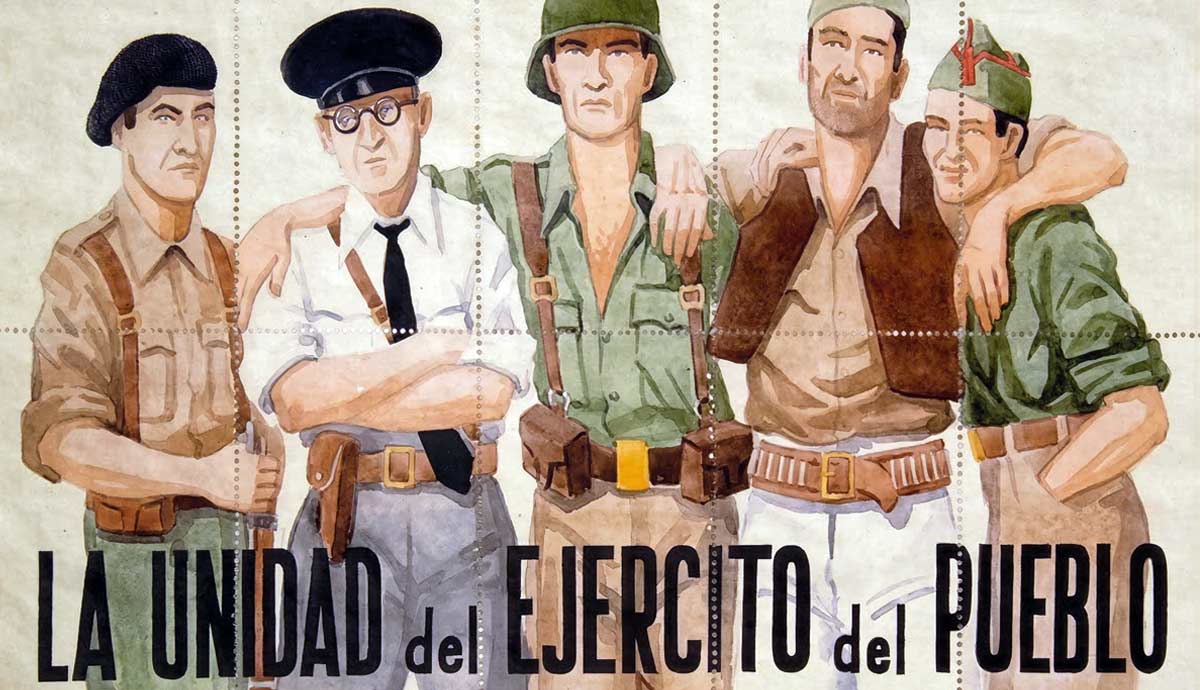
  By 1936, Europe’s descent into war had begun. Across Europe, fascism seemed ascendant, especially in Germany and Italy. The Spanish 1931 elections saw left-wing parties elected, effectively sidelining the Spanish king. Socialists and Republicans assumed control, declaring a new Republic. In opposition stood the Nationalists, mostly conservatives and the Catholic Church. Quickly escalating violent clashes and assassinations began, lasting until 1936. The slow burn towards civil war had begun.   In July 1936, General Francisco Franco’s troops, transported by Italian and German planes from Spanish Morocco, crossed into southern Spain and attempted a coup. As the war escalated, Republicans, fearful, appealed for Soviet aid in September 1936. Next, the call for volunteers went out, making Spain an ideological frontline.   Creation of the International Brigades Spanish Civil War, September 1936. Blue=Republican Pink=Nationalist   In September 1936, from Moscow, the Communist International (Comintern) began organizing international brigades. The Comintern actively recruited worldwide through local Communist parties. This controversial group paid the volunteers’ travel expenses plus forged identity papers. The future fighters traveled to France, often smuggled into the warzone.   Common Goal: Stop Fascism   Volunteers who came to Spain had one primary goal: to stop fascism. Spain became the first real opportunity to fight. Often, their motivation to fight resulted from past encounters with fascism. They came from different walks of life. Democratic freedoms such as free press, political dissent, and trade union membership were banned or broken up. Opposition meant imprisonment or worse.    Such was the case with thousands of Germans, Austrians, or Italians. With Spain’s sudden shift to open war, such men now took up the Republican cause.   Fueled by anger and a desire for change, volunteers hoped that fighting would stop fascism. The International Brigades became that chance. Spain became Europe’s last democratic barrier.    Cohesion, Unity, and the Comintern The Lincoln Battalion c. 1937. Source: Wikimedia For Western left-wing groups, the Spanish Civil War offered a global stage for their struggle. These groups came from Communist, socialist, and labor organizations. Spain represented an opportunity to determine whether democracy and socialism could survive fascism. The fight became imperative. Despite ideological differences, unity against fascism mattered more.   Yet for any cause, logistics are the backbone of war. Here, starting in mid-September 1936, the Comintern stepped in, becoming the International Brigade’s cohesive glue. As a true multinational, only the Comintern could coordinate all the volunteers. Paris became the headquarters, with recruits sent here before moving on to Spain. Besides travel, build the International Brigade’s structure profited from Soviet military advice. With their administrative experience, only the Comintern could funnel men, materials, and supplies through France to Spain.   For High Stakes, Self-Worth, and the Risk Recreation of the Naftali Botwin Company (Jewish Brigade). Source: Wikimedia   For some foreigners, especially Jews, the Spanish Civil War meant direct revenge. Fascism, especially Germany’s flavor, contained antisemitism as a central belief. As the 1930s progressed, fascism took a stronger hold across Europe. Events like Germany’s Nuremberg Laws, mobs, and even state-sanctioned violence became common. In Spain, Jewish fighters had the opportunity to fight fascism directly. Like other volunteers, Jews saw Spain as a high-stakes battle for survival and to stop fascism.   Others saw Spain as a redemption of self-worth. The Great Worldwide Economic Crash of the 1930s left millions jobless. With that went people’s sense of purpose, or self-worth. The International Brigades returned that value, offering structure and fighting for a greater purpose. Fascism embodied what had been lost-their jobs or livelihoods. These people knew what fascism brought.   For the better educated, fascism proved to be anathema to their beliefs. Like their blue-collar compadres, staying on the sidelines represented collusion. Spain’s Civil War became an idealistic opportunity to fight.   Whatever their origins, foreigners fighting in Spain knew the risk. For most, Spain could be the last opportunity to do their part. Should Spain fall, the rest of Europe would be next. Given the war’s intensity and their convictions, death was worth the risk.   Into the Grinder Nationalist War Bulletin Declaring End of the War, April 1939. Source: Wikimedia   The International Brigades deployed to the front in October 1936. Soon-to-be-famous, grouped by nationality, emerged in the fighting. Names like the Abraham Lincoln Battalion or the Commune de Paris Battalion. Used as shock troops, the Brigades fought in major battles like Madrid, the Ebro, and Jarama. At their height, they numbered around 18,000, with a total of 32,000-60,000 over the war. Casualties were horrendous, sometimes reaching 50%.    Franco’s Nationalists eventually prevailed. However, despite the eventual cost (30% KIA), foreigners from 50+ countries fought in Spain. Motivation probably differed. Yet they viewed themselves as an anti-fascist vanguard tasked with a cause.
Like
Comment
Share
History Traveler
History Traveler
4 w

6 Famous French Soldiers Buried at Les Invalides
Favicon 
www.thecollector.com

6 Famous French Soldiers Buried at Les Invalides

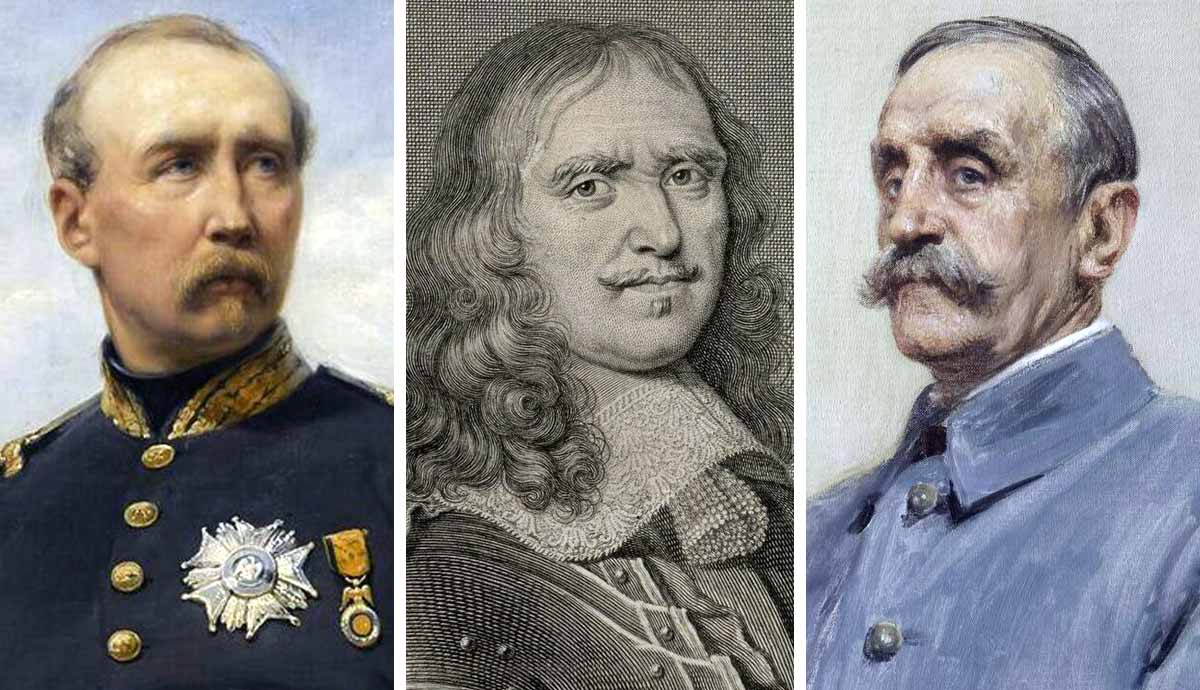
  The Hôtel des Invalides in Paris was founded by King Louis XIV as a soldiers’ retirement home. While it continues to serve this function to the present day, the complex is also home to the Museum of the French Army as well as two churches. The Dome Church of the Invalides, originally Louis XIV’s Royal Chapel, is best known as the location of Napoleon’s tomb. However, the Dome Church and the adjacent Cathedral of Saint-Louis-des-Invalides serve as the final resting place for dozens of famous French soldiers besides Napoleon himself.   1. Henri de La Tour d’Auvergne, Viscount of Turenne   Henri de la Tour d’Auvergne, Viscount of Turenne, engraving by Nicolas Larmessin, 18th century. © Château de Versailles. Source: Château de Versailles, Paris   Henri de la Tour d’Auvergne, Viscount of Turenne, was born in 1611 into a distinguished French noble family. His father, the Duke of Bouillon, was a Marshal of France, and his mother, Elizabeth, was the daughter of William the Silent, Prince of Orange, who launched the Dutch revolt against the Spanish Habsburgs in 1568.   As a Huguenot, Turenne began his military career in Dutch service and became a captain in 1626 at the age of 15. He transferred to the French Army as a colonel in 1630 and distinguished himself at the siege of La Mothe in the Duchy of Lorraine in 1634. Following the French intervention in the Thirty Years War, Turenne successfully relieved Turin in 1640 and conquered Roussillon, Spain, in 1642.   After being promoted to Marshal of France in 1643, Turenne led a key flank attack against the Bavarians at the Battle of Freiburg in August 1644, gaining the strategic initiative for the capture of Philippsburg from Imperial forces. His invasion of Bavaria in 1646, alongside Carl Gustaf Wrangel’s Swedish forces, forced Bavaria to make peace.   Turenne’s tomb at Les Invalides, photograph by Damien, 2016. Source: Wikimedia Commons   While the Peace of Westphalia ended the Thirty Years War in 1648, the policies of King Louis XIV’s regent, Cardinal Mazarin, provoked a civil war in France known as the Fronde. In 1649, Turenne joined the rebellion but reconciled with Mazarin in 1651 and commanded the Royal Army’s efforts to suppress the rebels, who were allied to Spain. He recaptured Paris in 1652, and in 1654, he defeated a large Spanish army besieging Arras. Turenne’s victory at the Battle of the Dunes on June 14, 1658, near Dunkirk paved the way for the end of the Franco-Spanish War (1635-1659).   After Louis XIV assumed control of the government following Mazarin’s death in 1661, Turenne was promoted to Marshal General of France. During the latter third of the 17th century, French policy was determined by Louis XIV’s efforts to gain control of the Spanish inheritance following the expected death of the sickly King Charles II of Spain. In 1667, Turenne’s army overran the Spanish Netherlands, though Louis was forced to give up most of his gains after the Dutch and English sided with Spain against France.   In 1672, France went to war with the Netherlands. Turenne reached Amsterdam before his progress was checked by the opening of the dikes and the flooding of the surrounding countryside. Following back-and-forth campaigns in 1673 and 1674 against Imperial forces around the Rhineland, Turenne was killed by a cannonball at the Battle of Salzbach on July 27, 1675, at the age of 64. He was initially buried at the Basilica of Saint-Denis, but in 1800, Napoleon transferred his remains to the Invalides.   2. Sébastien Le Prestre, Marquis of Vauban Sébastien Le Prestre, Marshal Vauban, engraving by Nicolas-Joseph Voyez, 18th century, © Château de Versailles, Dist. RMN / © EPV. Source: Château de Versailles, Paris   Sébastien Le Prestre, Marquis de Vauban, is widely regarded as one of the greatest military engineers in history. Born in 1633, Vauban began his military career fighting in the Fronde rebellion against Louis XIV but joined the Royalist Army after being captured in battle. He was recognized as a skilled engineer, and in 1655, he was appointed Royal Engineer.   As a result of the Franco-Spanish War of 1635-1659 and other conflicts in the Low Countries, France acquired a number of towns in Flanders, including Dunkirk and Lille. Vauban was responsible for fortifying these towns, and he did so by constructing trace italienne (Italian-style) star fortresses. These types of fortifications first appeared in 15th-century Italy as a response to developments in artillery technology. The low profiles were more resistant to cannon shots, and the angular bastions eliminated any blind spots for the garrison, exposing attackers to interlocking fields of fire.   Vauban was appointed Commissioner General of Fortifications in 1677, and during his career, he was responsible for the design and construction of over 300 sets of fortifications. Twelve groups of Vauban’s fortifications in France were collectively added to the UNESCO World Heritage List in 2008.   The fortifications of Mont-Dauphin in southeastern France, designed by Vauban in 1692. Source: Mont-Dauphin Commune   While Vauban is best known for the construction of fortifications, he was also an accomplished siege leader. In June 1673, he supervised the successful siege of Maastricht during the Franco-Dutch War (1672-1678), and in June 1684, he secured the capitulation of Luxembourg from the Spanish garrison. Vauban refortified Luxembourg and turned the city into a formidable fortress nicknamed the Gibraltar of the North.   During the War of the Spanish Succession, the English commander, the Duke of Marlborough, preferred to defeat French armies on the field rather than resort to costly sieges of Vauban’s fortresses. However, despite Marlborough’s great victories at Blenheim in 1704 and Ramillies in 1706, Vauban’s chain of border fortresses helped secure the French frontier and prevented an invasion of France. He was made Marshal of France in 1703 and died in 1707. He was buried near his estate at Bazoches. After his grave was destroyed during the French Revolutionary Wars, in 1808, Napoleon ordered his heart to be reburied in the Dome Church of Les Invalides.   3. Claude Joseph Rouget de Lisle Rouget de Lisle sings La Marsaillaise for the first time, painting by Isidore Pils, 1849. Source: Wikimedia Commons/Historical Museum of Strasbourg, France   Although he served in the French Army for a decade between 1784 and 1793, Claude Joseph Rouget de Lisle is not known for any exploits on the battlefield but rather as the composer and writer of La Marseillaise, the French national anthem.   Despite his fame as the composer of the famous revolutionary anthem, Rouget de Lisle was actually a royalist. Born at Lons-le-Saunier in eastern France, Rouget de Lisle was a captain stationed in Strasbourg in April 1792 when the War of the First Coalition broke out. At this point, King Louis XVI was still a constitutional monarch, though he was effectively under house arrest in the Palace of the Tuileries.   Rouget de Lisle was a musician of some ability. On April 25, 1792, he was asked by the Mayor of Strasbourg to compose a song to rally the men of the Army of the Rhine, who were defending France’s eastern frontier from invasion. He duly wrote the words and music to The Battle Song for the Army of the Rhine and dedicated it to its commander, Marshal Nicolas Luckner.   Marshal Nicolas Luckner, dedicatee of La Marseillaise, painting by Auguste Couder, 1834, © RMN-Grand Palais (Château de Versailles) / Daniel Arnaudet / Jean Schormans. Source: Château de Versailles, Paris   The stirring song soon spread around the country and became particularly popular among revolutionary soldiers from Marseille. A battalion of Marseille volunteers who participated in the storming of the Tuileries of August 10, 1792, to overthrow the constitutional monarchy popularized the song in Paris, inspiring the name La Marseillaise.   Rouget de Lisle refused to swear an oath of loyalty to the new republican government and was dismissed from service in 1793. Since La Marseillaise came to be associated with revolutionary bloodletting, Napoleon Bonaparte asked Rouget de Lisle to write a new anthem in 1800, but his Chant des combats was not popular. The anthem Vive le roi, composed for the restoration of Louis XVIII in 1815, also proved a flop. Rouget de Lisle died in 1836 at Choisy-le-Roi near Paris. In July 1915, his remains were transferred to the vault below the Church of Saint-Louis-des-Invalides, known as the Governors’ Crypt, since 28 governors of the Invalides were buried there.   4. Dominique-Jean Larrey Dominique-Jean Larrey, painting by Pierre-Narcisse Guérin, 19th century, © RMN-GP (Château de Versailles) / © Gérard Blot. Source: Château de Versailles, Paris   Aside from the Tomb of Napoleon Bonaparte, Les Invalides serves as a resting place for a host of Napoleonic marshals and officers. Among these is Dominique-Jean Larrey, the pioneering military surgeon. Born in 1766, Larrey served in the French Army during the War of the First Coalition, during which he pioneered the use of “flying ambulances,” light horse-drawn carriages that enabled medical staff to treat wounded soldiers on the spot and evacuate them quickly. He also pioneered the concept of triage by prioritizing the treatment of soldiers based on the extent of their injuries rather than military rank or nationality.   After meeting Napoleon for the first time in 1794, Larrey was appointed surgeon-in-chief of Napoleon’s Army of Italy in 1796 and accompanied him to Egypt in 1798. Although he was invited to return to France with Napoleon in 1799, he stayed behind with the army that had been left under the command of Jean-Baptiste Kléber. Following Kléber’s assassination in June 1800, he embalmed the general’s body and returned it to France for burial.   Marshal Lannes’ last moments at the battle of Essling, 22 May 1809, by Albert-Paul Bourgeois, after 1810. Source: Château de Versailles, Paris   After returning to France, Larrey accompanied the army throughout the Napoleonic Wars. He often exposed himself to enemy fire to retrieve wounded soldiers from the field, earning the respect of his own men and of enemy commanders. At the Battle of Aspern-Essling in 1809, he amputated the leg of his close friend Marshal Jean Lannes but was unable to save the marshal’s life.   During Napoleon’s Russian campaign in 1812, Larrey performed wonders during the bloody Battle of Borodino. During the Battle of the Berezina, he avoided being stranded on the eastern bank when soldiers carried him over their heads over a weakening bridge. Three years later, he was wounded at Waterloo and taken prisoner by Prussian troops. His life was saved by a German soldier who recognized him and brought him to Field Marshal Blücher. Larrey had saved the life of Blücher’s son at the Battle of Dresden in 1813, and the Prussian commander treated him as an honored guest and allowed him to return to France.   Larrey continued to serve in the French Army after Napoleon’s second abdication, and in 1830, he was appointed medical director at Les Invalides by King Louis Philippe I. He died in Lyon in 1842 and was initially buried at the Père-Lachaise Cemetery in Paris. One hundred fifty years later, his remains were transferred to Les Invalides in December 1992.   5. Patrice de MacMahon Patrice de MacMahon, painting by Horace Vernet, 1860. © RMN-GP (Château de Versailles) / © Franck Raux. Source: Château de Versailles   The descendant of an Irish noble family who had lost their land during the Cromwellian confiscations, Patrice de MacMahon’s military and political career spanned over five decades. After spending much of the 1830s and 1840s serving in Algeria, he was promoted to General of Division in 1852 and given command of the 1st Infantry Division during the Crimean War, where in September 1855, he captured the Malakoff Redoubt during the Siege of Sevastopol.   After briefly returning to Algeria, MacMahon accompanied Emperor Napoleon III’s army to Italy in 1859 to support the cause of Italian independence from the Austrian Empire. At the Battle of Magenta on June 4, MacMahon led the decisive attack that forced the Austrians to retreat. MacMahon was created Marshal and received the title of Duke of Magenta.   After six years as Governor-General of Algeria between 1864 and 1870, MacMahon resigned from the office and returned to France. During the Franco-Prussian War, he was given command of the 130,000-strong Army of Châlons formed to relieve the siege of Metz. After being joined by Napoleon III, MacMahon was defeated at Sedan on September 1 and fell into Prussian captivity alongside the emperor.   After returning to France in March 1871, President Adolphe Thiers appointed MacMahon to lead the Army of Versailles, which crushed the Paris Commune. In 1873, MacMahon was elected president by royalist and conservative deputies in the National Assembly seeking to restore the Bourbon monarchy. He governed effectively for a few years but struggled after the left-wing Republicans won the 1877 elections and resigned in 1879. He died in October 1895 and was buried at Les Invalides.   6. Ferdinand Foch Marshal Ferdinand Foch, painting by Jean Patricot, 1920, © RMN-GP (Château de Versailles) / © Gérard Blot. Source: Château de Versailles, Paris   One of the most famous French soldiers of the 20th century, Ferdinand Foch is best known for his leadership during the First World War as Supreme Allied Commander in 1918. Born in October 1851, Foch became a noted military theorist at the turn of the 20th century while serving as an instructor at the French War College.   Inspired by the campaigns of Napoleon and Prussian general Herman von Moltke and the theories of Carl von Clausewitz, Foch promoted the concept of the offensive in French military doctrine. In the years before World War I, Foch’s ideas inspired Plan XVII of the French Army, which envisaged an eastern offensive to retake Alsace and Lorraine in the event of a German invasion. Upon the outbreak of war in August 1914, Foch commanded XX Corps of the French Army in Lorraine but was forced to retreat.   Although his reputation suffered after the failure of the eastern offensives, he was transferred to the north and led a successful counterattack at Châlons on September 12 to stop the German advance during the First Battle of the Marne. He was then appointed assistant commander-in-chief to Joseph Joffre with responsibility for the Northern sector, which involved liaising with British forces during the Race to the Sea. After successfully holding off the Germans at Ypres, Foch led offensives at Artois in 1915 and the Somme in 1916. He was criticized for his aggressive tactics, which resulted in heavy losses without much gain and temporarily fell out of favor.   Tomb of Marshal Ferdinand Foch, photograph by Paul Hermans, 2017. Source: Wikimedia Commons   In May 1917, when General Philippe Pétain was appointed commander-in-chief, Foch was made Chief of the General Staff. As a result of heavy losses suffered by the French Army, Foch pursued a more defensive approach, counting on the arrival of General Pershing’s American Expeditionary Force to make the difference on the Western Front.   In late March 1918, the German Army launched its spring offensive in an attempt to win the war before American forces could effectively be mobilized on the Western Front. Foch was soon given the responsibility of coordinating between Allied armies and forming a common reserve to respond to a potential breakthrough of the Allied line. On account of these responsibilities, in April 1918, he was formally recognized as Supreme Allied Commander.   As the German offensive ran out of steam, Foch launched a successful counterattack at the Marne in July, for which he was promoted to Marshal of France in August. In conjunction with British commander Sir Douglas Haig, Foch planned the Hundred Days Offensive that led to Germany’s final defeat on November 11, 1918.   After the war, Foch favored imposing harsh peace terms on Germany and believed the Treaty of Versailles was too lenient. He retired from the French Army in 1923 and died in March 1929 at the age of 77. He was given a grand funeral and buried at Les Invalides. His remains were initially placed in the Governors’ Crypt but later transferred to a grand tomb sculpted by Paul Landowski in St. Ambrose’s Chapel in the dome church.
Like
Comment
Share
History Traveler
History Traveler
4 w

Queen Elizabeth I’s Epic Journey From Young Princess to Golden Age Ruler
Favicon 
www.thecollector.com

Queen Elizabeth I’s Epic Journey From Young Princess to Golden Age Ruler

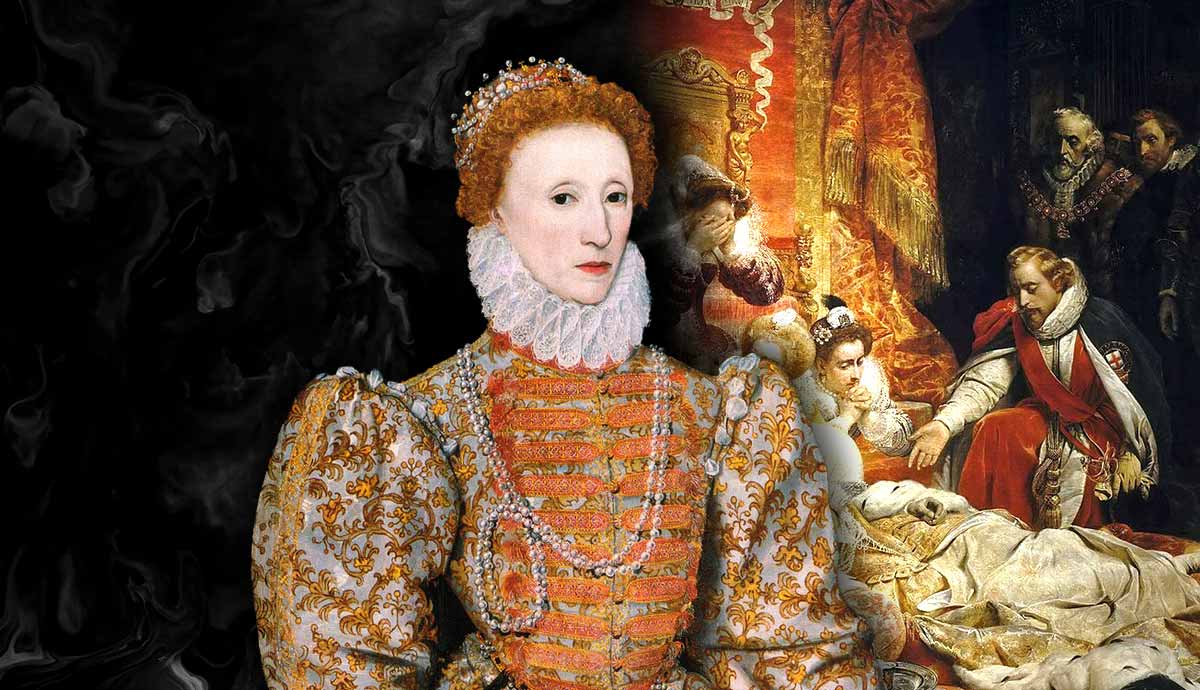
  Elizabeth I was Queen of England and Ireland from November 17, 1558, until March 24, 1603. She ascended the throne at the age of just 25, and her reign lasted 44 years, ending with her natural death at the age of 69. During the four centuries since her death, she has become known not only as the Virgin Queen but also as Good Queen Bess. Her rule is nicknamed the Golden Age, and she is remembered as one of the greatest and most successful monarchs Britain has ever known.   Coming Into the World Anne Boleyn, as portrayed by Natalie Dormer in The Tudors, holding Princess Elizabeth. Source: Tumblr   At three o’clock in the afternoon on September 7, 1533, the future Queen Elizabeth I was born at Greenwich Palace. She was the first child of her mother, Anne Boleyn, and the third child of King Henry VIII of England. Her living siblings were Princess Mary (the daughter of the former Queen Catherine of Aragon) and Henry Fitzroy (the illegitimate but acknowledged son of Elizabeth Blount).   At the moment of her birth, Elizabeth was heir presumptive to the throne. This meant that she was presumed to be next in line to inherit her father’s crown, but theoretically could be displaced in the event of the birth of a legitimate son. The child was said to have been immediately recognizable as belonging to her parents; she possessed the red hair of the Tudor family and the dark eyes of the Boleyns.   The whole thing was a success. There were no notable complications for mother or child, and as 15th-century childbirth goes, she is thought to have been delivered relatively easily.   The Darnley Portrait, 1575. Source: Wikimedia Commons   The only problem was Elizabeth’s sex. She was a disappointment to her father, who had been hoping desperately for a son over the last two decades. This disappointment is not just modern-day speculation, but has solid proof. A celebratory jousting tournament had been organized to celebrate the birth of the child, but when the sex was revealed, the joust was cancelled. The letter that had been written to announce the arrival of a male heir was hastily edited. The word “prince” had an “s” added to make it correct. Nevertheless, there were scaled-back celebrations. A London herald proclaimed the first of King Henry’s legitimate children, whilst the choristers of the chapel royal sang the Te Deum.   Despite the disappointment, Henry and Anne were both likely to have been optimistic that a son would follow shortly. Anne had conceived within a few weeks of her marriage to King Henry, and therefore, theoretically, there was no reason she should not do so again.   At the time of her birth, they would undoubtedly have been amazed to know that their little child would one day be remembered as one of the greatest monarchs ever to have lived.   Princess Elizabeth: Her Mother and Her Memories Anne Boleyn, c. 1550. Source: Wikimedia Commons   As she lost her mother at such a young age and grew up without the love and support she might otherwise have enjoyed, it is natural to assume that Elizabeth I would have been shaped by the great tragedy of her childhood.   However, it is unlikely that Elizabeth had any real memories of her mother at all. When Anne Boleyn was executed on May 19, 1536, Elizabeth was just two years and eight months old. It is difficult to determine how much of a loss this would have been to Elizabeth. Not only was she too young to fully comprehend what had happened, but she had been raised in her own household, far away from her parents. She would not have longed for her mother’s presence on a day-to-day basis, as she would not have had the chance to grow accustomed to it. She had endured a traditional upbringing, completely separate from the royal court.   Henry VIII, by Hans Holbein the Younger, 1540-47. Source: Liverpool Museums   The thing that Elizabeth would certainly have noticed was her change in position and lifestyle. Circumstances changed dramatically as a result of her mother’s disgrace; she was declared illegitimate, deprived of her place in the succession, and many of the privileges she enjoyed as heir presumptive were removed. Eleven days after Anne Boleyn’s execution, King Henry married Jane Seymour, and Elizabeth gained a stepmother.   And that was not all she would gain. On October 12, the following year, King Henry finally had his heart’s desire. Prince Edward was born, and there were now three children in the royal nursery. After Jane’s death, just twelve days later, King Henry was left single once again.   Elizabeth’s little brother, the future King Edward VI, was now the undisputed heir apparent. This meant that no other hypothetical children could displace him. Elizabeth was sent to live in his household, and over time, despite all odds, the two became close. Their mothers were dead, their father was often out of reach, and, in the way of family, they had only each other to rely on. The same went for Princess Mary, who, although a little older, was in an extremely similar position to her two siblings.   An Education Fit for a King An early portrait of Elizabeth as a teenager prior to her accession, attributed to William Scrots, c. 1546. Source: RKD Images   The future Queen Elizabeth was educated to an extraordinary level. It would hardly be an understatement to say that she received an education fit for a king, in most, if not all, of the relevant subjects.   Although she was considered illegitimate by the annulment of her father’s and mother’s marriage, she was still an integral member of the royal family. Furthermore, she was the beloved sister of the future King of England. To say that she received an education befitting her station would be an understatement. By all that she was supposed to have known, historians can only assume that the majority of her childhood and teenage years were devoted to her studies. Even at an early age, she was thought of as the most educated woman in the country.   The first governess of Princess Elizabeth was named Margaret Bryan. She said of Elizabeth, “as toward a child and as gentle in conditions as I ever knew in my life.”    In 1537, when Elizabeth was just four years old, she was introduced to her second governess, Catherine Champernowne, who would have a profound and long-lasting influence on her. Catherine Champernowne is better known as Kat Ashley. She remained Elizabeth’s dearest friend until her own death in 1565.   One of the subjects that Elizabeth excelled in was languages. She was taught to speak many languages, including French, Dutch, Italian, Spanish, and Latin. An academic scholar named William Grindal was brought in to assist her in her learning, and with his help, she progressed in more complicated subjects such as Greek, philosophy, and the sciences. Such a successful teacher was Grindal that he was soon appointed to the position of tutor to Prince Edward, the future King of England, whose education was of the utmost importance.   A lute, 1596. Source: The Met, New York   Unfortunately, Grindal died of the plague in 1548. A new tutor was soon found for Elizabeth, and his name was Roger Ascham. Of course, she had a separate teacher for music and the arts; the musician Philip van Wilder filled this post. Most notably, she excelled at the harpsichord and the lute.   As you may already have guessed, life was all work and no play for royal Tudor children. By the time she finished her formal education in 1550, she was just 17 years old and already proficient in Welsh, Cornish, Scottish, and Irish, in addition to her fluency in the languages listed above.   The Venetian Ambassador complimented her abilities and stated that she “ … possessed languages so thoroughly that each appeared to be her native tongue.”    The time and dedication taken to reach this standard in so many languages is a mark of her eagerness to learn and impress, even in her childhood and teenage years.   After her formal education came to an end and her tutors were dismissed, Elizabeth would continue to educate herself with speed and enthusiasm, in an astonishing range of topics, until her death in 1603.   A Turn for the Better: Accession to the Throne Elizabeth I in her Coronation Robes, by Alessandro Adami, 1600-1610. Source: Wikimedia Commons   During the reign of Queen Mary I, Elizabeth spent many years living in a state of unhappiness and uncertainty. She was even imprisoned in the Tower of London, at the insistence of her own sister.   It was in November 1558 that her troubles finally came to an end. It was on the 18th day of the month that her life changed forever. After a rule of just under five years, Mary I had died at Saint James Palace in Westminster. There was only one realistic heir, and that heir was immediately proclaimed queen.   Later that same day, the news was delivered to Elizabeth at her residence of Hatfield House, in Hertfordshire. On hearing that she was now queen, she fell to the grass beneath her feet and cried, “This is the Lord’s doing, it is marvellous in our eyes.” Six days later, on the 23rd of November, Elizabeth left for London, accompanied by a retinue of one thousand courtiers.   The coronation of Elizabeth I took place at Westminster Abbey on January 15, 1559. There are countless details of the preparations, processions, and services that took place; the events of her coronation are detailed enough to fill several articles of their own. According to Roy Strong, Elizabeth’s coronation has attracted more attention from scholars than that of any other monarch in British history.   The Virgin Queen and Her Candidates for Marriage King Eric XIV of Sweden, attributed to Domenicus Verwilt, 1633-77. Source: National Museum of Sweden   From the very beginning of Queen Elizabeth’s reign, it was assumed that she would marry quickly. Monarchs did not generally waste time with betrothals, marriages, and consummations. This way, they could start their quest for an heir to the throne without further delay. With any luck, or with God’s blessing, they would have a child in the nursery within a year of meeting their spouse. This, of course, was one of the most essential feats a monarch could achieve. Until a legitimate prince had arrived, the question of their succession would have weighed heavily on their mind, and the continuation of their family line would have hung precariously in the balance.   However, it is now well known that Elizabeth I never married. What is not known is the reason why. Although her epithet is the Virgin Queen, it is highly likely that she took lovers. This tells historians that it was marriage in particular that she had an aversion to, rather than men in general.   Nonetheless, Elizabeth defied the expectations of queenhood and of women in general by refusing to take a husband. It is likely that she desired to keep her power for herself, rather than forfeit it to a man who could potentially turn into an enemy. She was not afraid to make her intentions to remain single known to her advisors. Just a year after inheriting her crown, she confidently let Parliament know of her desires. “This shall be sufficient,” she began, “that a marble stone shall declare that a Queen, having reigned such a time, lived and died a virgin.”    Elizabeth’s message to her advisors could not have been clearer. However, this did not stop them from having a go. Many a politician suggested and made arrangements for a match, all of which were rejected one by one.   Frederik II, by Hans Knieper, 1581. Source: Frederiksborg Castle Museum   Just a few of the proposals that were turned down by Elizabeth I include: Phillip II of Spain (the widower of Mary I), King Eric XIV of Sweden (the idea of whom she entertained for several years), Prince Frederick of Denmark (later King Frederick II), Adolf Duke of Holstein-Gottorp, and Charles II (Duke of Austria). She also turned down two French brothers, Francis and Henry, both Dukes of Anjou.   Some years later, in 1563, Elizabeth updated her council by informing them that her opinion on marriage had not changed. “If I follow the inclination of my nature,” she dramatically stated, “it is this: beggar-woman and single, far rather than Queen and married.” Furthermore, during an argument with her supposed lover, Robert Dudley, in the heat of the moment, she declared that she would “have but one mistress here and no master.”    By the year of 1570, it had become accepted by the government that Elizabeth would neither marry, provide an heir, nor name her chosen successor.   Elizabeth I’s adamance over remaining unmarried was a fundamental feature of her reign.   A Helping Hand: The Aid of William Cecil Portrait of William Cecil, by Marcus Gheeraerts the Younger, 1585. Source: National Portrait Gallery   No matter how great or powerful the monarch, history tells us that they cannot shoulder the burden of kingship or queenship alone. By surveying hundreds of individual cases throughout the centuries, any historian may determine that every leader requires, or has required, a reliable companion in whom they can place their unwavering trust. Yes, monarchs may be ordained by God for the job they were born to do. However, they are still only human, and therefore cannot make every decision and attend to every matter by themselves.   King Henry VIII had Cardinal Wolsey, then later Thomas Cromwell, to act as his right-hand man. King Edward VI had his uncles, Thomas and Edward Seymour, to advise him during the early part of his reign. For Elizabeth, the choice was much more enduring. The selected man was named William Cecil. He devoted his life to Elizabeth I, served her devotedly from the beginning to the end of her reign, and very nearly failed to put a foot wrong for the entirety of that time. With proficiency in all essential areas of politics, he successfully installed himself as her most respected advisor and trusted friend.   William Cecil is well remembered by scholars for a variety of reasons. Some of the most notable features of his work and lifestyle included his seemingly endless influence over the court, his tight control over royal finances, his extremely capable leadership of the council, and, most importantly, his extremely efficient intelligence system. It was this service that led to his being referred to as “the Spymaster.”   Under Elizabeth I, William Cecil served in a variety of important roles, such as secretary of state (1550-1572), lord privy seal (1571-1598), lord high treasurer (1572-1598), lord lieutenant of Lincolnshire (1587-1598), and chancellor of Trinity College Dublin (1592-1598).   Robert Cecil, by John de Critz, 1602. Source: Wikimedia Commons   It is now said of William Cecil that he had two aims in his life: firstly, to keep Elizabeth alive, and secondly, to keep her on the throne. These two things he did successfully, until his work was cut short by his own death in 1598. Elizabeth I was devastated by the loss of her most senior advisor, but thankfully, a natural replacement had been left behind. William Cecil had a son, Robert Cecil, who was more than willing to step into a vacant and sought-after place as court favorite. Robert Cecil had been well trained by his father, and he immediately took over as one of Elizabeth’s chief advisors. He succeeded his father in almost all offices, including as lord privy seal.   Throughout his life, William Cecil worked unceasingly to ensure the physical safety, mental well-being, and public reputation of his queen. His impact and influence on the reign of Queen Elizabeth I should not be underestimated. Without his efforts and expertise, many events may have unfolded in very different ways.   Of William Cecil, British historian A.F. Pollard wrote that “From 1558 for forty years the biography of Cecil is almost indistinguishable from that of Elizabeth and from the history of England.”   10 Key Points in a Historic Reign Portrait of Robert Dudley, attributed to Steven van der Meulen, c. 1564. Source: Waddesdon Manor   So long and prosperous was the reign of Queen Elizabeth I that it cannot possibly be covered comprehensively in one short read. Her 44 years on the throne are littered not only with victories and triumphs, but also with extensive scientific, social, and economic advancement.   However, there are certain points and events which could be considered significant markers, either of Elizabeth’s successes and popularity, or of the occasional troubles she faced. These are typically the most famous features of her rule; the usual points that some of us learn about in our history lessons at school.   The early markers of her reign include the Religious Settlement (the implementation of Anglicanism in England and the shaping of the Church of England’s doctrine), the Northern Rebellion (a dangerous but ultimately unsuccessful uprising led by the Earls of Northumberland and Westmoreland), the death of Amy Dudley (the wife of Elizabeth’s alleged lover which was never fully explained), the Kenilworth Entertainment (a night of spectacular festivity at Kenilworth Castle hosted by Robert Dudley), and Elizabeth’s excommunication from the Catholic Church (the papal bull for which was issued by Pope Pius V).   The latter part of her reign was marked by the Bond of Association (a document designed to protect Elizabeth from assassination plots and usurpers), the Babington Plot (a plan by Anthony Babbington to murder Elizabeth and put Mary Queen of Scots in her place), the execution of Mary Queen of Scots (given approval by her own cousin Elizabeth), the defeat of the Spanish Armada (in which Elizabeth delivered her most famous speech at Tilbury), and the Essex Rebellion (an attempt by former favorite Robert Devereux to seize power).   “One More Moment of Life” The Death of Elizabeth I, by Paul Delaroche, 1828. Source: Wikimedia Commons   Even during her own era, Queen Elizabeth I was renowned as a great Protestant leader. She had a strong Christian faith and had devoted much of her life and work to establishing her Church and serving her God. However, none of this meant that she did not fear death as much as any other person. In fact, she was notably afraid to die, much more so than any other monarch whose final moments we have on record.   In March 1603, after a reign of 44 years, she was finally brought face-to-face with what lay ahead. She was unwell, even more unwell than she had been during the previous few months, and it had become clear to her that this time she would not recover. During her last few days of life, she was increasingly anxious and quietly inconsolable. She sat on the floor at the end of the bed, silent and still, with only a cushion to support her. There she stayed, “in a settled and unremovable melancholy,” soaking up the little life she had left.   Effigy of Queen Elizabeth I, Westminster Abbey. Source: Wikimedia Commons   The reason for Elizabeth’s refusal to go to bed was simple. She knew that if she went to bed, it would be for the last time, and she would not get up again. It was Robert Cecil who eventually persuaded her to face the inevitable. She died at Richmond Palace on March 24, at the age of 69. Her last words reflected her desperate desire to survive: “Lord, all my possessions for one more moment of life.”    A few hours later, since she had supposedly named him as heir during her last moments, King James VI of Scotland was proclaimed King James I of England.   Her funeral took place over a month after her death, on April 28, 1603, at Westminster Abbey. She lies for eternity beside her half-sister, Mary I.

Like
Comment
Share
History Traveler
History Traveler
4 w

The Role, Capture, and Historic Trial of Adolf Eichmann
Favicon 
www.thecollector.com

The Role, Capture, and Historic Trial of Adolf Eichmann

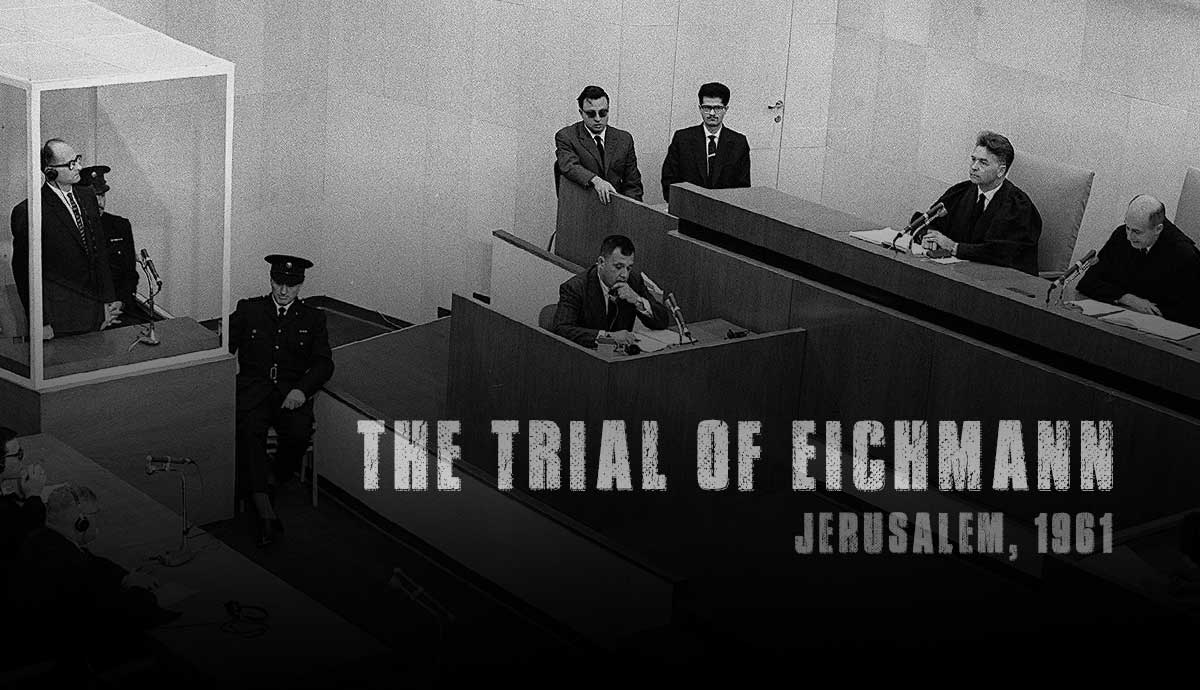
  On May 23, 1960, Israel’s Prime Minister Ben Gurion announced that a team of Mossad agents had arrested Adolf Eichmann in Argentina. During World War II, as head of the office dedicated to “Jewish Affairs and Clearing Activities” of the Nazi regime, SS officer Adolf Eichmann played a key role in coordinating the systematic deportation of European Jews during the Holocaust. After a trial held in Jerusalem and closely followed by international observers, he was hanged in 1962. What led his story to this point?   Adolf Eichmann’s Life Before WWII The Austrian town of Linz, where Adolf Eichmann spent his youth. Photograph by Radler59, 2017. Source: Wikimedia Commons   Adolf Eichmann was born on March 19, 1906, in Solingen, in Rheinland, an area in western Germany crossed by the middle tract of the Rhine River. His father, Karl Adolf, worked as an accountant for an electric company. His mother, Maria, a housewife, died in 1916 when Adolf Eichmann was 10 years old. At the time, Karl Adolf had already moved with his family to the Austrian town of Linz, Adolf Hitler’s hometown.   In 1921, Adolf Eichmann enrolled in the Bundeslehranstalt für Elektrotechnik, Maschinenbau und Hochbau, a technical high school. However, he left school two years later without obtaining a diploma. In the following years, he initially started working in the same mining company where his father was also employed. After taking up a job as a salesman at an electric firm, he eventually went on to work as a traveling salesman for the Vacuum Oil Company, a subsidiary of American Standard Oil.   In his Eichmann. His Life, Crimes and Legacy (2004), David Cesarani cautioned against the depiction of Eichmann as “a loser who drifted into the ranks of the SS,” a portrayal that his struggles in schools and later economic hardship may suggest. On the contrary, in his leading biography on the Nazi official, Cesarani described Eichmann as an individual possessing considerable intellectual abilities and presented his role as coordinator of the Holocaust as the result of a political development that began in his youth.   Indeed, in 1927, the young Eichmann became involved in politics and joined the Deutsch-Österreichische Frontkämpfer-Vereinung (German-Austrian Veteran Association), a paramilitary far-right group whose members (mainly World War I veterans) sought to fight the enemies of the supposed Aryan race and dreamed of unifying the “entire German volk.” Then, in 1932, Eichmann became a member of the Austrian National Socialist Party (NSDAP), or Nazi Party. Seven months later, he joined the Schutzstaffel, or SS, the “political soldiers” of the Nazi movement led by Heinrich Himmler.   Photo of Adolf Eichmann, 1942. Source: Lebendiges Museum Online/Deutsches Historisches Museum, Berlin   The following year, when the Austrian government banned the Nazi Party, like many other Austrian Nazis, Eichmann moved to Bavaria. There, he received a 14-months-long military and ideological training through the SS, first in Klosterlechfeld (a Bavarian town located in the district of Augsburg) and then in Dachau, a town north of Munich where the Nazi regime had built the first concentration camp in March 1933, a few months after Hitler’s rise to power.   In 1935, Adolf Eichmann, by then an SS-Scharführer (Sergeant), was appointed to Referat II 112 (“Juden,” Jews) of the Main Office of the Sicherheitsdienst (SD), or Security Service, in Berlin. The office’s main task was to research and devise the best way to carry out a forced emigration of Jews from the territories of the Third Reich. To this end, Eichmann got in touch with Zionist leaders and organizations. In 1937, he traveled to Palestine to study the feasibility of the plan involving the emigration of the German Jewish communities to this area. During his time at Referat II 112, Eichmann also briefly studied Hebrew and Yiddish.   A crowd gathered on Heldenplatz listens to Adolf Hitler’s declaration of the Anschluss, photograph by Heinrich Hoffmann, March 1938. Source: Wikimedia Commons/US National Archive, Washington DC   In 1938, when Nazi Germany annexed Austria, Eichmann moved to Vienna, where he organized the Zentralstelle für jüdische Auswanderung (Central Office for Jewish Emigration). It was the beginning of his career as chief organizer of the systematic deportation and extermination of European Jews. Eichmann’s activities in Vienna were a success, and between August 1938 and June 1939, about 128,000 Jews were forced to leave Austria. In 1939, he directed a similar operation in Prague.   About a month after the outbreak of WWII, Eichmann was made director of the newly established Reichszentrale für jüdische Auswanderung (Reich Central Office for Jewish Emigration) in Berlin. Then, in December, he became the head of Referat IV D 4 of the Reichssicherheitshauptamt (Reich Security Central Office), or RSHA, in Berlin, an office tasked with dealing with “Jewish activities.” Renamed Referat IV B 4 (Jüdische Angelegenheiten, Räumungsangelenheiten, or Jewish Activities and Clearing Activities) in 1941, the department coordinated the deportation of millions of Jews from German-controlled territories to ghettos and concentration and death camps.   What Was Adolf Eichmann’s Role in the Holocaust? The villa near Berlin where the Wannsee Conference was held. Photograph by A. Savin, 2014. Source: Wikimedia Commons   It was in his role as director of “Jewish Activities” at the RSHA that Adolf Eichmann played a crucial role in coordinating the logistics of the Holocaust. During the rest of the war years, Eichmann painstakingly devoted himself to the task of collecting exact data on the European Jewish population and devising the most efficient ways to transport Jews to the death camps, mainly in Nazi-occupied Poland. “Time just flew by,” he later commented regarding his time at the RSHA.   In 1941, Adolf Eichmann made his first trip to the Auschwitz-Birkenau death camp, where he met with Commander Rudolf Höss to discuss the operational details of the camp’s first gas chambers. In the following months, Eichmann worked fastidiously to ensure that the quotas for the Nazi network of concentration camps were fulfilled, complaining when loopholes and logistics issues, especially in the last years of the war, hindered his efforts.   In January 1942, Adolf Eichmann was among the 15 ministers and high-ranking Nazi officials invited by Reinhard Heydrich to a Besprechung mit anschließendem Frühstück (conference followed by breakfast) in a villa in the Berlin suburb of Wannsee. Heydrich organized the meeting, later known as the Wannsee Conference, to plan the Endlösung der Judenfrage, or the “Final solution to the Jewish question,” the euphemistic Nazi terminology to refer to the systematic extermination of all European Jews.   A Hungarian Jewish woman and her children entering Auschwitz-Birkenau, 1944. Source: Wikimedia Commons/German Federal Archives, Koblenz   As Eichmann reported in the protocols of the conference, Heydrich himself announced the meeting’s agenda: “At the beginning of the discussion Chief of the Security Police and of the SD, SS-Obergruppenführer Heydrich, reported that the Reich Marshal [Hermann Goering] had appointed him delegate for the preparations for the final solution of the Jewish question in Europe.” In the two following years, Adolf Eichmann coordinated the efforts of all offices concerned with the “Jewish question” to ensure that the “evacuation to the east” (i.e., deportation to the concentration camps) ran smoothly.   Until 1944, millions of Jews from Slovakia, the Netherlands, France, Belgium, Greece, northern Italy, and Hungary were transported to the death camps. While Eichmann preferred overseeing the details of the mass deportation from his desk, he was forced to work directly in the field in Hungary. From his headquarters in the Majestic Hotel in Budapest, where he enjoyed playing the violin with his colleagues, Eichmann coordinated the round-up of about 440,000 Hungarian Jews. After their arrest, most were then sent on cargo trains to Auschwitz, where former commander Höss supervised the opening of more spur tracks, incineration pits, and cremation ovens.   Adolf Eichmann’s Escape and Arrest Adolf Eichmann’s Argentinian passport under the name of Ricardo Klemes. Source: Yad Vashem/Buenos Aires Holocaust Museum   In December 1944, as the Soviets advanced on the Hungarian capital, Adolf Eichmann, still in the midst of his deportation activities, fled to Germany, where he was arrested by the Americans and brought to a POW camp. In 1946, however, he managed to escape. After hiding in the countryside for some months, he reached Berlin, where he lived until 1950 under the false name of Otto Henniger.   In the same year, with the assistance of the Vatican Refugee Commission, he secured a 10.100, the sought-after travel papers issued by the Red Cross. Like thousands of other Nazis, he then traveled to South America, under the name of Ricardo Klement, a supposed technician from Bolzano (Italy).   Upon arriving in Argentina, with the help of the local Nazi network, he secured a job in a metal factory in San Fernando, near Buenos Aires, where he lived for the next three years. He then moved to the remote province of Tucumàn, where he found employment at the CAPRI (Compaňía Argentina para Proyectos y Realizaciones Industriales) firm, a company founded by former SS officer Carlos Fuldner working as a subcontractor on the presidential palace. Finally, Eichmann moved to Buenos Aires, where he was hired by Mercedes Benz.   Surveillance photo of Eichmann’s house in Buenos Aires, by Zvi Aharoni. Source: YadVashem   By then, news that Eichmann was hiding in Argentina had reached most intelligence agencies. In 1957, Frankfurt Attorney General Fritz Bauer received a letter from Lothar Herman, a German-born Jew whose daughter had briefly dated Eichmann’s son Klaus, informing him of Eichmann’s whereabouts in Argentina. Bauer passed on the information to the Israeli Foreign Minister, who contacted Isser Harel, the head of Mossad. However, when a team of Mossad agents reached Eichmann’s last-known address, he had already moved.   While Herman’s letter confirmed that Eichmann was indeed living in Argentina, the real breakthrough in the investigation arrived in 1959. Gerhard Klammer, a German-born geologist who had worked at the CAPRI firm alongside “Ricardo Klement,” confided to his friends Rosemarie and Giselher Pohl: “They still haven’t found Eichmann, I know where Eichmann lives.” Upon seeing him at a bus stop in Buenos Aires, Klammer had followed him to 4261 Calle Chacabuco Olivos. Wishing to remain anonymous, he asked his friend to convey the information to his boss, military Bishop Hermann Kunst, who then contacted Bauer.   A German Jew, Bauer famously commented that he “enter[ed] enemy territory whenever he walk[ed] out of his office,” a remark on the presence of former Nazis in West Germany’s administration and postwar Germany’s reluctance to address its Nazi past. Bauer passed Klammer’s intel along to the head of Mossad, who sent a team to Argentina. This time, the intelligence operatives’ efforts were successful, finally tracing Eichmann to Garibaldi Street in Buenos Aires and arresting him on May 11, 1960. As there was no extradition agreement between Israel and Argentina, the Mossad team smuggled Eichmann (codenamed “Attila”) out of South America on an El Al plane.   Eichmann’s Trial in Jerusalem Eichmann (in the glass box on the left) is sentenced to death at the end of his trial in Jerusalem. Image by an Israeli GPO photographer, December 15, 1961. Source: Wikimedia Commons/National Photo Collection of Israel, Photography dept. Government Press Office   On May 23, 1960, Israeli Prime Minister David Ben-Gurion announced Eichmann’s arrest to the Knesset (parliament): “A short time ago one of the most notorious Nazi war criminals, Adolf Eichmann, was discovered by the Israeli security services. Adolf Eichmann is already under arrest in Israel and will shortly be placed on trial.”   The news shocked Israel and the world. The decision to try Eichmann in Israel—a country that did not yet exist during the Holocaust—led to an immediate international controversy, with many questioning the legality of the former Nazi arrest in Argentina. “It is a cardinal principle of international law that a state must not perform acts of sovereignty in the territory of a foreign state,” remarked a June 10, 1960 article published in The Guardian. In the end, however, Israel’s insistence on conducting the proceedings against Eichmann prevailed.   The first session of criminal case 40/61 began on April 11, 1961, before a special panel of three judges. The prosecution team, led by Attorney General Gideon Hausner, charged Eichmann on 15 counts, including “crimes against Jewish people, “crimes against humanity,” “war crimes,” and being a “member in a hostile organization” (the SS, SD, and Gestapo had all been labeled as “criminal organizations” during the Nuremberg Trial). The legal framework for all charges was the Nazis and Nazi Collaborators (Punishment) Law 5710-1950.   Photo of Eichmann in the courtyard of Ayalon Prison in Ramla, Israel, by Milli John, April 1, 1961. Source: Wikimedia Commons/National Photo Collection of Israel, Photography dept. Government Press Office   On April 11, Eichmann pleaded “not guilty” on all counts. His defense team, led by Dr. Robert Servatius, did not aim to deny the charges, instead opting to minimize the defendant’s role in the Holocaust, portraying him as “a small cog in the state apparatus.” Like several Nazis tried by the International Military Tribunal in Nuremberg, Eichmann denied his responsibility for his actions, stating that he was merely following orders. He put forward a similar argument in his 1962 plea for clemency addressed to President Yitzhak Ben Zvi, “There is a need to draw a line between the leaders responsible and the people like me forced to serve as mere instruments in the hands of the leader. I was not a responsible leader, and as such do not feel myself guilty.”   On December 13, 1961, the three judges found Eichmann guilty and sentenced him to death. After the May 1962 appeal to the Israeli Supreme Court was rejected, Eichmann was hanged on the night between May 31 and June 1, 1932, at the Ayalon Prison, Ramla. His ashes were then scattered at sea.   Legacy & Cultural Depiction Hannah Arendt in 1944, photo by Fred Stein/Corbis. Source: Princeton   The trial against Eichmann attracted worldwide attention, with hundreds of journalists traveling to Jerusalem to cover the historic event. In Israel, hundreds of thousands of people listened to the live broadcast of the Kol Yisrael Radio. For the younger generations, the trial was an opportunity to learn about the Holocaust and the experiences of those who survived it.   Unlike the postwar proceedings against the Nazis in Nuremberg, in Jerusalem, the testimonies of the survivors took center stage. During the nine-month preparatory period, a special unit selected 108 witnesses to allow the prosecution team to trace the wider story of the Holocaust as the backdrop to Eichmann’s crimes. Indeed, in his opening speech, Attorney General Hausner declared:   “When I stand before you here … I am not standing alone. With me are six million accusers. … Their ashes are piled up on the hills of Auschwitz and the fields of Treblinka, and are strewn in the forests of Poland. … Their blood cries out, but their voice is not heard. Therefore I will be their spokesman and in their name I will unfold the terrible indictment.”   Poster of the 2024 theater play The Trial of Eichmann. Source: New York Theater Guide   Besides increasing awareness of the Holocaust, the trial inspired researchers and scholars to pen essays and work on a wide array of topics that spanned from the legal to the psychological levels. Among them, the most famous and controversial was undoubtedly Eichmann in Jerusalem: A Report on the Banality of Evil (1963), the account of the trial written by Hannah Arendt, who was sent to Jerusalem by The New Yorker.   However, Arendt was not the only observer struck by the “ordinary” (or banal) appearance of Eichmann, who resembled a bureaucrat rather than a “monster.” During the trial, his tendency to ramble about the minute details of his work even led one of the judges to declare: “It is clear to us that, in German, the predicate comes at the end of the sentence, but it takes too long to reach the predicate.”   Over the years, Adolf Eichmann’s life and trial have also been told in several films, documentaries, and TV series. More recently, the trial of Eichmann was performed as a theater play (written by David Serero) that premiered at the Center for Jewish History in New York City in July 2024.
Like
Comment
Share
100 Percent Fed Up Feed
4 w

President Trump Says United States, Iran Had “Very Good And Productive Conversations”
Favicon 
100percentfedup.com

President Trump Says United States, Iran Had “Very Good And Productive Conversations”

President Trump on Monday said that the United States and Iran had “very good and productive conversations” to reach a complete resolution to the conflict in the Middle East. “I AM PLEASED TO REPORT THAT THE UNITED STATES OF AMERICA, AND THE COUNTRY OF IRAN, HAVE HAD, OVER THE LAST TWO DAYS, VERY GOOD AND PRODUCTIVE CONVERSATIONS REGARDING A COMPLETE AND TOTAL RESOLUTION OF OUR HOSTILITIES IN THE MIDDLE EAST,” Trump said. “BASED ON THE TENOR AND TONE OF THESE IN DEPTH, DETAILED, AND CONSTRUCTIVE CONVERSATIONS, WHICH WILL CONTINUE THROUGHOUT THE WEEK, I HAVE INSTRUCTED THE DEPARTMENT OF WAR TO POSTPONE ANY AND ALL MILITARY STRIKES AGAINST IRANIAN POWER PLANTS AND ENERGY INFRASTRUCTURE FOR A FIVE DAY PERIOD, SUBJECT TO THE SUCCESS OF THE ONGOING MEETINGS AND DISCUSSIONS,” he added. President Donald J. Trump calls for a pause on all military strikes against Iranian power plants and energy infrastructure for a five-day period, subject to the success of the ongoing meetings and discussions. pic.twitter.com/N15CTRvikT — The White House (@WhiteHouse) March 23, 2026 NBC News explained further: Now in its fourth week, the conflict has consumed the Middle East, pushed up the prices of energy and food, and threatened the global economy with a far-reaching crisis. Trump’s reversal delays what many feared would mark a significant new escalation for civilians across the region. Iran’s Foreign Ministry appeared to counter Trump’s version of events, though, saying in a statement published by semi-official news agency Mehr News that there was “no dialogue between Tehran and Washington.” It said Trump’s delay was “part of efforts to reduce energy prices and buy time to implement his military plans,” while acknowledging “there are initiatives from regional countries to reduce tensions.” Iranian state media said the president had “backed down” following Iran’s vow of swift retaliation for any attacks on its energy infrastructure. Though markets responded positively to Trump’s turnaround, it was swiftly followed by a new round of Israeli strikes in the heart of Tehran. “Turkey, Egypt, and Pakistan have been passing messages between the U.S. and Iran over the past two days in an effort to de-escalate, U.S. source says,” Axios correspondent Barak Ravid said. “Senior officials from the three countries held separate talks with White House envoy Steve Witkoff and Iranian Foreign Minister Abbas Araghchi, the U.S. source says,” he added. Turkey, Egypt, and Pakistan have been passing messages between the U.S. and Iran over the past two days in an effort to de-escalate, U.S. source saysSenior officials from the three countries held separate talks with White House envoy Steve Witkoff and Iranian Foreign… https://t.co/4ZEFMt1ruq — Barak Ravid (@BarakRavid) March 23, 2026 Axios has more: But an Israeli official told Axios that U.S. envoys Steve Witkoff and Jared Kushner had been in touch with the speaker of the Iranian parliament, Mohammad Bagher Ghalibaf. Trump did not name the Iranian interlocutor, saying he did not want to get him killed, but claimed the U.S. and Iran were aligned on many of the key issues. “We are dealing with a man that I believe is the most respected, not the supreme leader, we have not heard from him,” Trump said. Trump said the talks would continue over the phone on Monday, with a possible in-person meeting later on. The Israeli official said the mediating countries were trying to convene a meeting in Islamabad — with Ghalibaf and other officials representing Tehran, and Witkoff, Kushner and possibly Vice President Vance representing the U.S. — possibly later this week. The official also said Israel had been aware of indirect communications between the U.S. and Tehran but was surprised by Trump’s comments on Monday. “We did not know things were moving that fast.”
Like
Comment
Share
100 Percent Fed Up Feed
4 w

The Peptide Secret Big Pharma Has Been Sitting On – And Why You Finally Don’t Need a Needle to Get It
Favicon 
100percentfedup.com

The Peptide Secret Big Pharma Has Been Sitting On – And Why You Finally Don’t Need a Needle to Get It

Right now, somewhere in a gleaming office park, a pharmaceutical executive is enjoying a very expensive lunch – paid for, in part, by the money you spent on anti-inflammatories that don’t actually fix a single thing. They mask. They numb. They keep you coming back for refills like clockwork, because that’s not medicine – that’s a broken system. Here’s what the establishment doesn’t want becoming common knowledge: your body already knows how to heal itself. The problem isn’t that your muscles, tendons, joints, and gut have forgotten how to repair – it’s that as you age, the molecular signals telling your cells to get to work go quiet. Scientists identified specific peptides – BPC-157, TB-500, KPV – that act like a bullhorn for your body’s own repair crews, and your biology already recognizes every one of them. Until very recently, the only way to get these peptides into your system at a therapeutic level was with a syringe. Which meant most sensible, needle-averse people never got access to this technology at all. That just changed. The Wellness Company – founded by principled, freedom-minded physicians who publicly stood against the medical establishment when it counted – has taken those three clinically researched peptides and put them into an oral liquid formula called REGENERATE, powered by their proprietary AQA™ delivery technology. No needles. No clinic visits. No prescription gatekeepers. Just 30 drops in a small glass of cold water, first thing in the morning, and you’ve delivered injectable-grade peptides to a system that’s been waiting for exactly this signal. This isn’t a workaround or a compromise. It’s a legitimate breakthrough available to you right now. Let’s talk specifics, because you deserve them. BPC-157 restores gut barrier integrity and dramatically accelerates the healing of muscles, tendons, and ligaments – working at the cellular level to repair actual tissue, not just quiet the pain signal. TB-500 promotes cellular regeneration, builds flexibility, and encourages your body to grow new healthy tissue where damaged tissue has been sitting stagnant. And KPV supports immune balance and helps your body mount a healthy inflammatory response instead of the chronic, low-grade inflammation that quietly destroys your quality of life year after year. Maybe you’ve seen “miracle” supplements come and go – good, because healthy skepticism is a virtue. But peptides work fundamentally differently than the turmeric capsules and fish oil softgels gathering dust in your cabinet. They communicate directly with your cells, activating repair pathways that generic supplements can’t even reach – and The Wellness Company’s AQA™ delivery system is specifically engineered to protect these peptides from being degraded in your gut before they can do their job. When did you last wake up without something hurting? When did you last finish a physical day without paying for it the next morning? If you’re like most people who’ve lived with any degree of grit, you’ve quietly accepted a version of your physical life that’s significantly diminished from what it once was. The folks using REGENERATE are reporting something that sounds almost too good to be true – but isn’t. Shirley, a verified buyer, said her shoulder showed dramatic healing after just one week when nothing else had touched it. Bianka, who trains five days a week in bootcamps and endurance work, woke up on day five without the kinks and soreness she’d accepted as normal. Don’t overlook the gut piece – especially if you’re 55 or older. BPC-157 specifically targets gut barrier integrity, and when your gut heals, a whole cascade of downstream problems starts resolving too: energy, mood, immune resilience, even joint inflammation. REGENERATE isn’t just a joint supplement wearing peptide clothing – it’s a whole-body recovery system that starts at the foundation. You haven’t heard about this before because peptide therapy was historically the domain of elite athletes and well-connected biohackers with access to compounding pharmacies – not regular Americans. The physicians who built The Wellness Company stood publicly against a medical consensus they knew was wrong when the stakes were highest, and they built this company on the premise that you deserve access to real medicine without bureaucratic interference. REGENERATE is that philosophy in a bottle. The formula is clean – allergen free, vegan friendly, with exactly 1mg of each peptide per serving. Go to The Wellness Company right now, take it every morning for 30 days, and find out what your body is actually capable of when you give it the right signals – because you’ve worked too hard and sacrificed too much to spend the second half of your life waiting for a system that’s already failed you to finally get it right. (Note: The information provided is intended for generalized informational purposes only and should not be considered personal medical advice or used as a substitute for professional healthcare guidance. It is your responsibility to comply with all applicable laws, regulations, and guidelines regarding the purchase, possession, and use of prescription medications. Thank you for supporting businesses like the one presenting a sponsored message in this article and ordering through the links provided, which benefits WLTReport. We appreciate your support and the opportunity to keep you SAFE and HEALTY!)
Like
Comment
Share
100 Percent Fed Up Feed
4 w

Charlie Kirk’s Mentor Dies After Bizarre Pickleball Accident
Favicon 
100percentfedup.com

Charlie Kirk’s Mentor Dies After Bizarre Pickleball Accident

This is extremely unfortunate. Jeff Webb, the co-founder of Human Events, a conservative-based media outlet, and who also served as a mentor to Charlie Kirk, has died. Webb died after suffering a bizarre accident while playing pickleball. The Daily Beast reported more on the death of Webb: The man considered to be the father of competitive, modern cheerleading died after falling while playing pickleball, according to a report. Jeff Webb’s death was confirmed in an Instagram post by Varsity Spirit, the largest cheer organization in the United States, which he founded. He was 76 years old. “Join us in honoring the life and legacy of Jeff Webb, founder of Varsity Spirit and modern cheerleading,” the tribute read. “His impact has built a community that will continue to inspire generations to come.” Bill Seely, the president of Varsity Spirit, confirmed in an email, obtained by Cheer Daily, that Webb had sustained a severe head injury after his fall. Webb was also a conservative political activist and was considered a “mentor” to Charlie Kirk. Following Kirk’s assassination, Webb spoke multiple times about the impact of Turning Point USA’s founder. “We may have lost a future president. Charlie Kirk had it all—charisma, faith, respect for everyone… Now, in his absence, tens of thousands of new chapters are rising. His legacy is just beginning,” Webb told Real America’s Voice shortly after the shooting. Webb was present at the White House when Kirk was posthumously awarded the Presidential Medal of Freedom. Here’s Webb responding to the assassination of Charlie Kirk: “WE MAY HAVE LOST A FUTURE PRESIDENT” @jeff_webb: “Charlie Kirk had it all—charisma, faith, respect for everyone… Now, in his absence, tens of thousands of new chapters are rising. His legacy is just beginning.”@stinchfield1776 pic.twitter.com/C4KSpGAycl — Real America's Voice (RAV) (@RealAmVoice) September 19, 2025 The Daily Mail reported more on Webb and Kirk’s relationship: Additionally, Webb was a proud conservative political activist and was considered a ‘mentor’ to Charlie Kirk, according to the Independent. After Kirk was assassinated on September 10, the cheerleading tycoon spoke on several platforms about the impact the Turning Point USA founder left behind. ‘We may have lost a future president. Charlie Kirk had it all – charisma, faith, respect for everyone,’ Mr Webb told Real America’s Voice shortly after the shooting. ‘Now, in his absence, tens of thousands of new chapters are rising. His legacy is just beginning.’ Webb was also in attendance at the White House when Kirk was posthumously awarded the Presidential Medal of Freedom. Turning Point released a nine-minute tribute video to X in memory of the cheer mogul. ‘A visionary who helped shape generations of young leaders and believed deeply in the power of community and country,’ read the video’s caption. ‘A dear friend to Turning Point USA and Charlie. He will be greatly missed.’ Here’s the video TPUSA released as a tribute to Webb: In memory of Jeff Webb. A visionary who helped shape generations of young leaders and believed deeply in the power of community and country. A dear friend to Turning Point USA and Charlie. He will be greatly missed. pic.twitter.com/GKvEuHrccZ — Turning Point USA (@TPUSA) March 20, 2026  
Like
Comment
Share
100 Percent Fed Up Feed
4 w

OnlyFans Founder Dead At 43
Favicon 
100percentfedup.com

OnlyFans Founder Dead At 43

The founder of the controversial platform OnlyFans has died. The owner of OnlyFans, Leonid Radvinsky, died at the age of 43, his company announced on Monday. OnlyFans is a subscription-based platform that primarily has content creators sharing pornographic content. In recent years, the company has been valued at over $8 billion. The New York Post reported more on Radvinsky’s death: OnlyFans owner Leonid Radvinsky has died at age 43 after a secret battle with cancer, the porn streaming platform has announced. “We are deeply saddened to announce the death of Leo Radvinsky. Leo passed away peacefully after a long battle with cancer,” the company said in a statement. “His family have requested privacy at this difficult time.” The Ukrainian-American entrepreneur acquired Fenix International, the company that owns and operates OnlyFans, in 2018, and remained a director and the majority shareholder at the company. His cancer battle was largely unknown to the public, and Radvinsky kept a famously low profile despite his status as a billionaire. Leonid Radvinsky, owner of OnlyFans, has died at the age of 43. pic.twitter.com/CKZhCqCXdd — Pop Base (@PopBase) March 23, 2026 BREAKING: OnlyFans owner and close ally of Ukraine + Israel, Leonid Radvinsky has "died" at 43 after quietly cashing out $1.8B in dividends pic.twitter.com/jnSLONbLPm — Financelot (@FinanceLancelot) March 23, 2026 People shared further background on Radvinsky: Radvinsky was born in the Ukraine, but grew up in Chicago, earning his bachelor’s degree in economics from Northwestern University. Radvinsky’s early career began in computer programming. In 2004, he first entered the adult content industry when he launched MyFreeCams, an adult webcam service. In 2018, Radvinsky acquired Fenix International Limited — the company that owns and operates OnlyFans —from father and son founders Tim and Guy Stokely, becoming the director and majority shareholder of the company. OnlyFans first launched in 2016. Though it wasn’t initially intended as a place to share adult content, due to the limited restrictions on what content can be posted, it quickly became a hub for adult content. Radvinsky also ran Leo, a venture capital fund that he founded in 2009, which largely focused on investments in tech companies, including the social networking and microblogging service, Pleroma, and the Elixir programming language. In January, Reuters reported that OnlyFans had been exploring the sale of a majority stake to investment firm Architect Capital, in a deal that valued the company at over five billion dollars.
Like
Comment
Share
100 Percent Fed Up Feed
4 w

Ground Stop Issued At Newark Airport, Air Traffic Control Tower Evacuated
Favicon 
100percentfedup.com

Ground Stop Issued At Newark Airport, Air Traffic Control Tower Evacuated

A ground stop was issued at Newark Liberty International Airport on Monday morning after the air traffic control tower was evacuated due to smoke. A burning smell had been detected from an elevator. Arrivals and departures were temporarily paused. “An FAA spokesperson confirmed there was no fire and the controllers evacuated the tower due to a burning smell from an elevator,” ABC7 New York wrote. “The ground stop at Newark was lifted just after 8:30 a.m. Newark’s ground stop came amid regional travel chaos; nearby LaGuardia Airport closed hours earlier following a plane-truck collision on a runway,” it continued. Newark Liberty International Airport experienced a ground stop Monday morning after a report of smoke in the air traffic control tower. An FAA spokesperson confirmed there was no fire and the controllers evacuated the tower due to a burning smell from an elevator. The ground… pic.twitter.com/QxxK8i3j8M — Eyewitness News (@ABC7NY) March 23, 2026 ABC7 New York shared further: The air traffic controllers were moved to the backup facility on site. Flights were forced to hold, but then air traffic controllers were seen moving back to the tower by 8:30 a.m. Flights were spotted landing at the airport and the ground stop was lifted. Nearby LaGuardia Airport remains closed after a plane collided with a truck on a runway. LaGuardia Airport will remain closed until at least 2 p.m. EST. What a horrific incident. My thoughts are with the victims and their families. Will be critical to learn what failures allowed this to happen. In meantime LaGuardia is closed until at least 2:00pm today. NYPD has advised that all streets and highway exits into the airport are… https://t.co/F8wSSBzSfh — Mark D. Levine (@MarkLevineNYC) March 23, 2026 More from the New York Post: Passengers at airports across the country have been subjected to hours-long security delays because of the ongoing Transportation Security Administration shutdown. Two pilots were killed late Sunday at LaGuardia Airport in Queens when an Air Canada-operated flight collided with a fire truck on the runway.
Like
Comment
Share
100 Percent Fed Up Feed
4 w

Commercial Jet, Vehicle Collide At Another U.S. Airport
Favicon 
100percentfedup.com

Commercial Jet, Vehicle Collide At Another U.S. Airport

An unoccupied vehicle tug collided with an unoccupied parked Frontier Airlines jet at Cleveland Hopkins International Airport. The incident happened just before 1 a.m. on Monday morning. Vehicle collides with plane at Cleveland Hopkins International Airport Read more:https://t.co/b50HjKcDzi — fox8news (@fox8news) March 23, 2026 WKYC has more: Authorities responded to what they called a “minor aircraft incident” at around 12:51 a.m. According to the OSHP, the aircraft was unoccupied during the collision and no injuries were reported. The Ohio State Highway Patrol stated the vehicle tug had not been placed in a locked position, allowing it to roll and strike the aircraft. The tug itself was also unoccupied. “We are aware of an incident involving a baggage tug and a Frontier Airlines aircraft parked at a gate. The situation was resolved without further incident,” a spokesperson for Cleveland Hopkins International Airport told 3News. Officials say the incident has been documented and remains under investigation by the Ohio State Highway Patrol. The collision is not expected to impact travelers at Cleveland Hopkins International Airport. All Frontier fights in Cleveland are still scheduled for the day. The incident occurred shortly after the deadly collision between an Air Canada regional jet and an emergency vehicle at LaGuardia Airport in New York, which killed the pilot and co-pilot. UPDATE: Pilot, Co-Pilot Confirmed Dead After Horrific Airplane Collision At LaGuardia Airport Cleveland.com noted: The accident happened roughly an hour after the plane arrived at gate A6 in Cleveland from Palm Beach International Airport. Since the accident, the plane has not flown, according to FlightAware, a website that tracks air traffic. Frontier spokeswoman Jennifer de la Cruz confirmed basic details of the accident and said the plane will require repairs.
Like
Comment
Share
Showing 3276 out of 118364
  • 3272
  • 3273
  • 3274
  • 3275
  • 3276
  • 3277
  • 3278
  • 3279
  • 3280
  • 3281
  • 3282
  • 3283
  • 3284
  • 3285
  • 3286
  • 3287
  • 3288
  • 3289
  • 3290
  • 3291
Advertisement
Stop Seeing These Ads

Edit Offer

Add tier


Select an image
Delete your tier
Are you sure you want to delete this tier?

Reviews

In order to sell your content and posts, start by creating a few packages. Monetization

Pay By Wallet

Payment Alert

You are about to purchase the items, do you want to proceed?

Request a Refund