YubNub Social YubNub Social
    #astronomy #nightsky #newyork #physics #moon #astrophysics #fullmoon #supermoon #planet #nasa #zenith #wolfmoon #moonafteryule #cosmology #coldmoon
    Advanced Search
  • Login
  • Register

  • Night mode
  • © 2026 YubNub Social
    About • Directory • Contact Us • Developers • Privacy Policy • Terms of Use • shareasale • FB Webview Detected • Android • Apple iOS • Get Our App

    Select Language

  • English
Install our *FREE* WEB APP! (PWA)
Night mode toggle
Community
New Posts (Home) ChatBox Popular Posts Reels Game Zone Top PodCasts
Explore
Explore
© 2026 YubNub Social
  • English
About • Directory • Contact Us • Developers • Privacy Policy • Terms of Use • shareasale • FB Webview Detected • Android • Apple iOS • Get Our App
Advertisement
Stop Seeing These Ads

Discover posts

Posts

Users

Pages

Blog

Market

Events

Games

Forum

Hot Air Feed
Hot Air Feed
4 w

The Latest ICE Outrage Didn't Involve ICE
Favicon 
hotair.com

The Latest ICE Outrage Didn't Involve ICE

The Latest ICE Outrage Didn't Involve ICE
Like
Comment
Share
Hot Air Feed
Hot Air Feed
4 w

Donald Trump Puts Teeth, and Drones, Behind Nancy Reagan's 'Just Say No' Policy
Favicon 
hotair.com

Donald Trump Puts Teeth, and Drones, Behind Nancy Reagan's 'Just Say No' Policy

Donald Trump Puts Teeth, and Drones, Behind Nancy Reagan's 'Just Say No' Policy
Like
Comment
Share
The Blaze Media Feed
4 w

Alleged pipe bomber finally caught — and with the resume of a left-wing activist
Favicon 
www.theblaze.com

Alleged pipe bomber finally caught — and with the resume of a left-wing activist

Almost five years after the pipe bombs were found on January 6, the alleged pipe bomber has been caught.“We’re learning a lot more, a lot more,” BlazeTV host Sara Gonzales comments. “And the more we learn, the more it stinks.”The suspect is 30-year-old Brian Cole Jr., who lived in Woodbridge, Virginia, with his mother — and is described as a loner who had anarchist leanings and worked for his father’s bail-bond company.“This isn’t just any bail-bonds company, OK? This is a company that has worked to free illegal immigrants from ICE facilities. So, this is a bail-bonds company with an agenda. And it happens to be a radical, liberal, leftist agenda because we also find out the family company also sued President Trump and DHS over illegal immigration and asked Biden — the Biden DOJ — to address racism,” Gonzales explains.“They hired Black Lives Matter and George Floyd’s lawyer, Benjamin Crump, to address racism. ... So, this family that this man worked for, family company, had a whole hell of a lot of social justice activism as it turns out,” she continues, joking, “I’m sure it’s nothing.”And according to FBI Director Kash Patel, none of the evidence now coming to light is new. Rather, it was hidden.“The prior administration sat on the evidence for four years. There wasn’t any production of new evidence from five years ago. Here’s what we did. We went out to the country, brought in our experts, and Deputy Director Bongino led the charge and said, ‘We are going to look at every single piece of evidence again,’” Patel said in a segment on Fox News.“We looked at 3 million lines of evidence. We went back and looked at the cellphone tower data dumps. We went back and looked at the providers and what information they provided pursuant to search warrants at the time and asked questions such as, ‘Why weren’t all the phone numbers scrubbed, and why weren’t they connected, and why wasn’t there any geolocational data done?’ Now, that is either sheer incompetence or complete intentional negligence, and neither of which is acceptable for this FBI,” Patel added.In a separate interview on Fox News, FBI Deputy Director Dan Bongino lamented that he did not know “what the hell this prior leadership team was doing outside of targeting political opponents, weaponizing the FBI, destroying its reputation, embarrassing agents that are doing really good work out there.”“It’s almost like they were intentionally trying to decimate faith in institutions. It’s horrifying,” he added.“I do think that there were a lot of people in the Biden regime that were completely incompetent. But you cannot tell me that a whole group of investigators had all of the same evidence and somehow couldn’t get from point A to point Z,” Gonzales comments. “I just, I have a hard time believing that.”Want more from Sara Gonzales?To enjoy more of Sara's no-holds-barred takes on news and culture, subscribe to BlazeTV — the largest multi-platform network of voices who love America, defend the Constitution, and live the American dream.
Like
Comment
Share
The Blaze Media Feed
4 w

Able-bodied 38-year-old man goes viral for response to Trump food stamp restrictions: 'That's some bulls**t!'
Favicon 
www.theblaze.com

Able-bodied 38-year-old man goes viral for response to Trump food stamp restrictions: 'That's some bulls**t!'

A Tennessee man who responded with anger to new restrictions on food stamp benefits went viral on social media as the Trump administration clamps down on fraud.The new restrictions will apply to able-bodied people between the ages of 18 and 65 years who aren't disabled and refuse to work at least 20 hours per week. They also do not apply to those who have children under the age of 14 years in their home.'I'm devastated, actually. ... It helped me a lot. It got me $292 a month.' While the new rules won't likely appear terribly onerous to the taxpayers who have to work to fund them, some of the beneficiaries are outraged."That's some bullsh**t," Nelson Scott said to WZTV-TV. "Man, I'm devastated, actually."Scott is 38 years old, doesn't have kids or a job, doesn't go to school, and is not disabled. But he's upset that his SNAP food benefits are imperiled."It helped me a lot. It got me $292 a month," Scott said.The new restrictions are being put into place by the U.S. Department of Agriculture under the direction of President Donald Trump.Scott argued that it was hard for him to find a job because he's a felon."I would get one if y'all give me one. Y'all be felony-friendly and hire us," he pleaded.The video report garnered almost 200K views on social media, and many of the commenters were angry at Scott for trying to stay on food stamps while being able-bodied. "AWWWWW! Poor baby has to go to work like the rest of us!!" one commenter said. "That man is a great example of able-bodied. He needs to get a JOB," another said. "Get your lazy ass out of bed and get a job like the rest of us. I'm sick and tired of supporting these people. I started working when I was 12 years old. I'd work the fields with my Mexican best friend and his family every weekend for about $20 a day back in the mid 70s," another user replied on the X platform. RELATED: Woman goes viral after admitting to being on SNAP benefits for 3 decades There are other exclusions from the SNAP regulations going into place. People who are in a drug or alcohol treatment program can continue to get the benefits, as well as those who are pregnant or receive unemployment benefits.The work requirement can also be fulfilled by participating in a work training program or doing volunteer work.Like Blaze News? Bypass the censors, sign up for our newsletters, and get stories like this direct to your inbox. Sign up here!
Like
Comment
Share
History Traveler
History Traveler
4 w

Sally Horner Was Kidnapped By A Child Molester At Age 11 — And Her Ordeal May Have Inspired ‘Lolita’
Favicon 
allthatsinteresting.com

Sally Horner Was Kidnapped By A Child Molester At Age 11 — And Her Ordeal May Have Inspired ‘Lolita’

Public DomainA photo of Sally Horner taken in the early days of her captivity, circa July 1948. Vladimir Nabokov’s 1955 novel Lolita is controversial, to say the least. Since its release, the pedophilia at the center of the book’s plot has been the focus of many a debate on obscenity and whether or not literature should cover such morally abhorrent topics. However, few people on either side of the argument know that Lolita may have been based on the true story of 11-year-old Sally Horner. In 1948, Sally was abducted by a convicted child molester named Frank La Salle and held captive for nearly two years. During that time, La Salle introduced Sally as his daughter — but he also repeatedly raped her. Sally ultimately escaped from her kidnapper and reunited with her family, but she tragically died in a car accident when she was just 15. Although Nabokov started writing Lolita before Sally’s story broke, he mentioned the case in the novel. And while he denied that Sally had any influence on the plot, many scholars believe that the eerie similarities between the stories of Sally Horner and the fictional Dolores Haze cannot be dismissed. Sally Horner’s Life Before Her Abduction Florence “Sally” Horner was born in Trenton, New Jersey, on April 18, 1937. Her father, a crane operator, was an abusive alcoholic who died by suicide when Sally was just five years old. Her mother, Ella, raised Sally and her older half-sister, Susan, alone. Wikimedia CommonsSally Horner at age nine, two years before she was abducted by Frank La Salle. The family moved to Camden, New Jersey, when Sally was young, and she spent most of her childhood there. Despite the turmoil at home, Sally was an excellent student and the president of the Junior Red Cross club at her elementary school. Still, she wasn’t immune to the pressure of trying to fit in with the other girls at school. So, when her friends dared her to steal a five-cent notebook from Woolworths in March 1948, she grabbed it and stuffed it into her bag. As New Jersey Monthly reported in 2018, as Sally tried to leave the store, a man stopped her and stated, “I am an FBI agent. And you are under arrest.” The man was Frank La Salle — and he wasn’t an FBI agent. He was a mechanic in his 50s who had previously spent time behind bars for raping at least five girls between the ages of 12 and 15. Sally Horner believed La Salle’s claims, however, and she eagerly agreed to report back to him about her behavior in the future if he didn’t take her to prison that day. So, when La Salle stopped Sally on her way home from school three months later, she cooperated with him once more. This turned out to be a terrible mistake. The Kidnapping That May Have Inspired ‘Lolita’ On June 15, 1948, La Salle approached Sally and ordered her to ask her mother if she could go on vacation to Atlantic City with two friends from school. Ella Horner agreed and even walked Sally to the bus depot near their house, where she saw Frank La Salle herself — and assumed he was the father of Sally’s friends. Of course, there were no friends at all. La Salle took the 11-year-old girl to Atlantic City alone and then forced her to write letters to her mother stating that the vacation was running longer than expected. And on July 31, Ella received a note from her daughter that read, “I don’t want to write anymore.” New Jersey State ArchivesA 1943 mugshot of Frank La Salle. At that point, Ella Horner called the police. Detectives went to the return address on the letters from Sally, but nobody was there. Instead, they found two suitcases and a photo of Sally sitting on a swing that had seemingly been taken in a local studio at some point during the “vacation.” Thus began nearly two years of horror. Sally Horner traveled across the country with Frank La Salle. He introduced her as his daughter and even enrolled her in school, but all the while, he was repeatedly sexually assaulting her. While the two of them were living in Dallas, Texas, Sally grew close to their new neighbor, Ruth Janisch. Janisch was suspicious of La Salle, and she kept a close eye on Sally after noticing that something was strange about the “father-daughter” relationship. In March 1950, Janisch and her husband moved to San Jose, California, to find work, and she convinced La Salle to do the same. Shortly after the move, Janisch invited Sally over for dinner one night while La Salle was out job searching, and the older woman finally convinced the girl to open up. At the time, Sally still believed that La Salle was an FBI agent. Wikimedia CommonsSally Horner finally reunites with her mother, Ella Horner, in April 1950. That very night, Janisch had Sally call her family, who notified the actual FBI. A week later, Sally was reunited with her mother and sister, 21 months after her ordeal began. The Law Finally Catches Up To Frank La Salle Frank La Salle was arrested on March 22, 1950, the day after Sally Horner had contacted her family. He was charged under the Mann Act of 1910, a law against human trafficking. During his trial, he continued to maintain that he was Sally’s father. Despite these claims, Frank La Salle was sentenced to at least 30 years in prison. He continued to file appeals, however. As reported by the Los Angeles Times in 2018, La Salle wrote in one court document that “a father cannot be convicted of [kidnapping] his own child.” None of his appeals were successful, and he remained behind bars until his death in 1966. Wikimedia CommonsSally Horner shortly before her death at age 15. Sally Horner returned to New Jersey and tried to resume life as a typical teenager — but that life would be cut short. She died in a car accident on August 18, 1952, at just 15 years old. La Salle sent flowers to her funeral from prison. So, did Sally’s short and tragic life really inspire Vladimir Nabokov as he wrote Lolita? It’s hard to say. The author denied the connection, despite the fact that he explicitly mentioned Sally Horner in the novel. In chapter 33, narrator Humbert Humbert wonders, “Had I done to Dolly, perhaps, what Frank La Salle, a 50-year-old mechanic, had done to 11-year-old Sally Horner in 1948?” In addition, it’s hard to deny the similarities between Sally and Dolores “Lolita” Haze. In the novel, Dolores is 12 years old and abducted by her stepfather, who continually molests her while introducing her to others as his child — just as Frank La Salle did to Sally Horner. Public DomainVladimir Nabokov, the author of Lolita who may have drawn inspiration from Sally Horner’s case. There’s other evidence that Nabokov knew of Sally’s story while writing Lolita, too. When Sally died in 1952, he transcribed a news article about her demise onto a note card, which was later found among his possessions. In the end, whether Sally Horner inspired Lolita or not, her tale is one of a stolen childhood — first by a monster named Frank La Salle and then by a cruel twist of fate. After reading about the kidnapping of Sally Horner that may have inspired Lolita, go inside the story of Carlie Brucia, the 11-year-old who was abducted in broad daylight. Then, learn about Jaycee Dugard and her 18 years in captivity. The post Sally Horner Was Kidnapped By A Child Molester At Age 11 — And Her Ordeal May Have Inspired ‘Lolita’ appeared first on All That's Interesting.

Like
Comment
Share
History Traveler
History Traveler
4 w

The True Story Of Raymond Robinson, The Man Who Inspired Pennsylvania’s ‘Green Man’ Myth
Favicon 
allthatsinteresting.com

The True Story Of Raymond Robinson, The Man Who Inspired Pennsylvania’s ‘Green Man’ Myth

Wikimedia CommonsRaymond Robinson, also known as the “Green Man” or “Charlie No-Face.” In the 1950s, a terrifying myth began spreading across western Pennsylvania about an eerie figure who could be seen roaming dark roads at night. In reality, however, this “Green Man” wasn’t a dangerous cryptid at all: He was a local resident named Raymond Robinson. As some versions of the urban legend went, the Green Man — also known as Charlie No-Face — was the spirit of a factory worker who fell into a vat of acid, disfiguring him and causing his spectral form to glow green. People claimed that he would chase away teenagers parked along the road and even stall cars that he touched due to an electrical “charge” he could produce. These rumors couldn’t have been further from the truth. Robinson had been electrocuted as a child, and though he escaped with his life, he lost much of his face. As an adult, he took to going for walks after dark to avoid being seen and ridiculed for his looks. He was by no means dangerous, but his solitary nature and shocking appearance spawned the myth of a boogeyman who stalked rural State Route 351. As such, the real story of Raymond Robinson isn’t a ghost tale. It’s the account of a quiet man who experienced a horrific childhood accident and spent his life on the fringes of society. The Green Man Of Western Pennsylvania Legend The urban legend of the Green Man began around the 1950s when residents driving along western Pennsylvania’s State Route 351 late at night spotted Raymond Robinson out for his evening stroll. They would tell their friends and family members about the figure without a face who appeared in their headlights and then vanished into the dark countryside — and imaginations ran wild from there. Word spread that if one were to drive down the isolated country roads near Koppel, Pennsylvania, on a moonless night, they might spot a figure shambling along the shoulder, staying just beyond the tree line. They called him the Green Man or Charlie No-Face. He was a ghost without a face, glowing pale green in the darkness. The stories varied, but many of them agreed on the basics: He was the spirit of a young man who had died in a terrible accident decades earlier. Some said he’d touched a downed power line during a storm. Others claimed he was struck by lightning while walking across a bridge. A few whispered that he was hit by a train, his face torn completely away. Whatever the cause, he was supposedly cursed to wander those roads forever, a faceless specter searching for something he’d never find — perhaps his own lost reflection, perhaps peace. RedditThe disfigured face of the “Green Man.” Some local teenagers made a game of it, driving slowly down State Route 351 after dark, headlights cutting through the humid summer air, searching for a glimpse of the Green Man. They said he glowed with an eerie phosphorescence and that where his face should be there was only smooth, featureless skin stretched tight over bone. No eyes. No nose. No mouth. Just a terrible, blank nothingness. Most who claimed to have seen him said he was harmless. He simply walked, never speaking and never approaching drivers. But on certain nights, when the fog rolled in thick from the river valley, some swore they heard a low, mournful sound coming from where no mouth existed. It was a sound of longing and sorrow that followed them long after they’d driven away. And every now and then, someone would find a beer bottle cap on the roadside or a cigarette butt that was still faintly warm and wonder: Was it really just a legend after all? As it turned out, the answer to that question was no. The True Story Of Raymond Robinson While the stories about this “Green Man” deliberately chasing or scaring people were pure fabrications, the rest of his tale was fairly accurate. According to a 1919 report in The Daily Times, Raymond Robinson was eight years old when he was shocked while reaching for a bird’s nest on a bridge. He accidentally touched a live power line, sending 11,000 volts of electricity through his body. “[O]nly holes are left where his eyes were,” the newspaper reported at the time. “One of his hands is gone and both arms are in bad shape. The upper part of his body shows marks of serious burns.” Prior to the incident, however, Raymond Robinson had been a normal child. He was born in Beaver County in 1910 and spent his time as any kid would have back then, hanging out with his friends and, of course, taking dares. On June 18, 1919, Robinson and several other boys were at a nearby swimming hole when they spotted a bird’s nest atop a nearby trolley bridge. RedditRaymond Robinson sometimes spent time with the teenagers who drove out to see him. The bridge was already known to be terribly unsafe. Just a year earlier, a 12-year-old boy named Robert Littell had been playing on the structure with some friends when he touched a live power line and subsequently died from electrical burns. Robinson and his friends knew about the incident, but they were determined to see what was inside the nest — and Robinson was the one chosen to go look. As he climbed the bridge, however, he touched something that delivered a high-voltage shock so great that it blew off much of his face. Doctors did not expect him to survive, yet he lived on — without his eyes, nose, and part of one arm. Reports at the time noted that he was in “good humor,” however, and that he could still hear and speak. After he was released from the hospital, Raymond Robinson sequestered himself in his family home near Koppel, Pennsylvania, making belts, wallets, and doormats and selling them to generate a small income. He would only leave the house on walks he took in the dead of the night to avoid ridicule for his appearance. Encounters With The Real ‘Charlie No-Face’ It was from these walks that the legend of the Green Man started to develop as high school kids spotted him from their cars on the side of State Route 351. It’s likely that the name “Green Man” came from how headlights would reflect off of Robinson’s clothing when cars passed him in the night. One Koppel resident from the time remembered seeing Robinson on her way back to town from a swimming hole down the road. As reported by the Pittsburgh Post-Gazette in 2018, she later recalled, “I was so scared it was unreal.” Paul Bauer/Personal PhotoRaymond Robinson in the late 1950s or early 1960s. Though some people were frightful or cruel to Robinson, others befriended him and would bring him drinks and cigarettes for his night walks. “We used to go out and give him beer,” another local, Pete Pavlovic, told the Post-Gazette. He noted that people would often meet at the diner he worked at before heading out to try to catch a glimpse of the Green Man. Pavlovic added that those who didn’t know about Raymond Robinson were often shocked and terrified at the sight of him: “They wanted to call the police. You’d have to explain. Then they’d usually go back up looking for him.” Others would sometimes offer Robinson a ride, only to drop him off at a location he didn’t know as a cruel joke on the mostly blind man. Despite this mistreatment, Robinson was a “helluva nice guy,” according to Koppel native Phil Ortega, who went to school with Robinson’s sister. Ortega remembered driving dates to see Robinson and bringing him Lucky Strikes cigarettes. Raymond Robinson passed away on June 11, 1985, at the age of 74 from natural causes. But though he may be gone, the legend of the Green Man and Charlie No-Face is as alive today as it was in the 1950s. After reading about the true story of Raymond Robinson, a.k.a. Charlie No-Face, learn about Bedlam, the real horror story asylum. Then, read about the scary truth behind the phantom social worker legend. The post The True Story Of Raymond Robinson, The Man Who Inspired Pennsylvania’s ‘Green Man’ Myth appeared first on All That's Interesting.

Like
Comment
Share
History Traveler
History Traveler
4 w

44 Vintage Images Of Asia’s Hippie Trail That Promised Enlightenment And LSD To Thousands Of Western Travelers
Favicon 
allthatsinteresting.com

44 Vintage Images Of Asia’s Hippie Trail That Promised Enlightenment And LSD To Thousands Of Western Travelers

Henry Parkman/FacebookHippies trekking through the Nepalese mountains. 1978. The sight of brightly-painted vans with psychedelic designs and peace symbols became an increasingly common occurrence throughout the United States in the 1960s and 1970s. More and more people were embracing the freewheeling, sometimes nomadic lifestyle associated with the counterculture and traveling wherever the winds (or drugs) took them. But when traveling within the U.S. in a van wasn’t exciting enough, some hippies set their gaze on more adventurous locales on the other side of the world. Thousands of backpackers and tourists traveled more or less the same route that stretched from Europe to Southeast Asia. They called it the Hippie Trail. Click here to view slideshow What Was The Hippie Trail? In the 1960s and 1970s, the Hippie Trail was an overland route that became popular among young Western travelers — mostly hippies and counterculture enthusiasts. It was an opportunity to travel without spending a lot of money, experiment with drugs, and experience new ways of thinking. But it didn't just appear overnight. Beat Generation writers like Jack Kerouac and Allen Ginsberg had already written romantically about Eastern spiritualities and alternative lifestyles. Then, the 1960s counterculture explosion transformed what had been a trickle of travelers into a flood. As Western youth grew increasingly disillusioned with materialism, the Vietnam War, and conventional society, they looked eastward for answers. "I didn't know what I was learning there," travel writer and Hippie Trail veteran Rick Steves told Condé Nast Traveler. "I was just soaking it up. I did realize that the most frightened people are those who have yet to travel. They haven't had their hippie trail... If you've done a philosophical hippie trail, you're more inclined to build bridges and less inclined to build walls." Hans Sandberg/FacebookA hippie-packed bus departing for the trail. The trail, which typically followed old "Silk Road" paths that connected the East and West, could begin in any number of major Western European cities and then head toward Istanbul, Turkey. From there, routes varied, with some travelers exploring Afghanistan and Pakistan, others spending time in India (especially Goa), and yet others going as far as Thailand. Lured by the vague promises of enlightenment and adventure in foreign lands, with cultures that were sometimes celebrated by iconic musicians like The Beatles (as well as the promise of cheap and readily available drugs), these young Western tourists flocked by the dozen to try and find some sort of higher understanding, or at least a good time, along the trail. In turn, locals in the countries along the trail often seized upon the opportunity to make some money off these "Intrepids," as Hippie Trail adventurers were often known. Residents quickly set up tour bus companies and even offered the services of "gurus" to help accommodate the young foreigners suddenly flocking to these areas. Soon enough, travel guidebooks about the trail began to pop up, including the 1973 book Head East! Besides offering standard information on expenses and visas, the guide also had sections labeled "dope" and "munchies." It also cautioned travelers against "white devil syndrome" (something similar to what a modern reader might call "white privilege"). Elsewhere, Head East! succinctly described the ideas that led to the loose creation of the Hippie Trail in the first place: "People of the East, for the most part, have a much better perspective on life, time, people, drugs, and living in general than do those of them who come from the West." The Golden Age Of The Hippie Trail Of course, Head East! was not the only book about the trail at the time. In fact, the origins of the well-known Lonely Planet guidebooks also lie with the Hippie Trail. The founders of Lonely Planet, Tony and Maureen Wheeler, explored the trail in the 1970s and wrote what would be the first book in the series (1973's Across Asia on the Cheap) about their experience. The book was a hit, other similar guides were published, and a new era of travel guidebooks was born. Some even suggest that the modern notion of cheap travel was, in part, born out of routes like the Hippie Trail. Today's Lonely Planet guides may be a bit less hippie-friendly than the original, which advised travelers on where to score pot and how to "recoup" some travel expenses by selling one's own blood. What's more, the original guide certainly dates itself when it notes things such as "you can get stoned just taking a deep breath in the streets" in Afghanistan. The country may have once been an essential part of the Hippie Trail, but it's now listed by the U.S. Department of State as a "Level 4- Do Not Travel" destination. Back then, though, Kabul was known for offering cheap accommodations, readily available hashish, and, shockingly (to modern readers), a relaxed atmosphere that seemed tailor-made for the counterculture set. Chicken Street was an especially legendary destination, lined with shops selling Afghan coats, jewelry, and textiles, among other things. M. Kashif Mufti/FacebookA monkey joining some hippie musicians in Goa in the 1960s. And marijuana seemed to be everywhere. "At that time, in Afghanistan, in India, in Nepal, marijuana was just part of the culture," Rick Steves explained. "Not a big deal. Much like people clink glasses of wine in our culture, I think." By the 1980s, however, traveling along the Hippie Trail was already largely a thing of the past. The flood of Western backpackers once again slowed to a trickle — and some even recommended against it. So, what changed? To put it simply, political turmoil in the region made many former tourist hotspots unsafe or undesirable to most Western tourists. The Iranian Revolution in the late 1970s was a particularly significant contributor to the end of the trail, as it transformed what had been a relatively liberal stopover into a theocratic state that was largely hostile to Westerners. Around the same time, the Soviet invasion of Afghanistan ended Kabul's role as the trail's beating heart. Drug enforcement also intensified in the region, meaning that outsiders could no longer indulge freely. All of this, combined with a declining enthusiasm for the counterculture in the West, effectively closed the Hippie Trail for good. On top of that, air travel became more accessible, making it easier for travelers to skip the overland journey. To many, the romance of roughing it through Asia had lost its appeal, but for those who made the journey years ago, it was a defining experience. Whether travelers on the Hippie Trail found what they were seeking is perhaps less important than the fact that they looked, they believed transformation was possible, and they were willing to travel the world to find it. After this look at the Hippie Trail, check out the best hippie photos that truly capture the movement. Then, step inside America's 1970s hippie communes. The post 44 Vintage Images Of Asia’s Hippie Trail That Promised Enlightenment And LSD To Thousands Of Western Travelers appeared first on All That's Interesting.

Like
Comment
Share
History Traveler
History Traveler
4 w

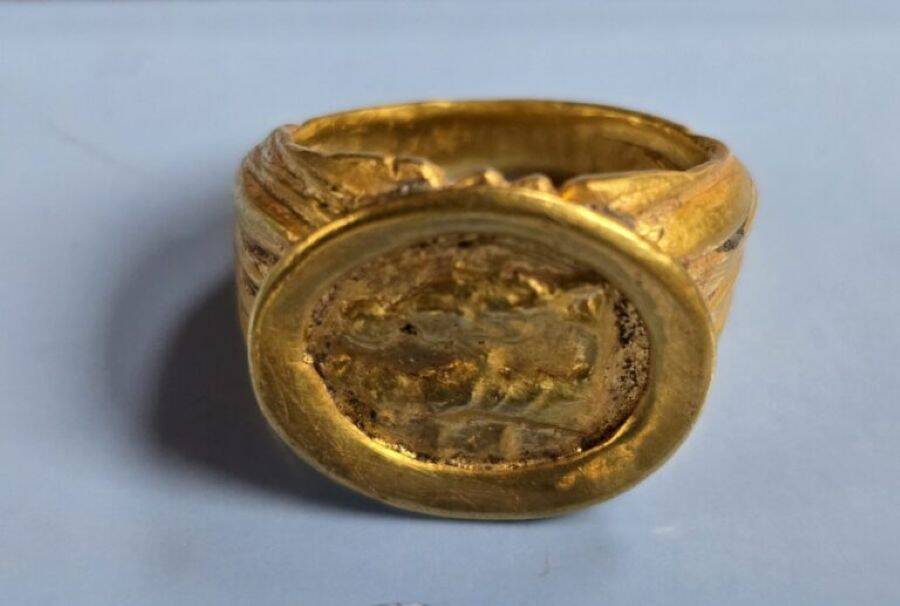
Archaeologists In Bulgaria Just Uncovered An 1,800-Year-Old Roman Wedding Ring Made Of Gold
Favicon 
allthatsinteresting.com

Archaeologists In Bulgaria Just Uncovered An 1,800-Year-Old Roman Wedding Ring Made Of Gold

Rosen Mladenov/BTA PhotoThe wedding ring was found 20 feet below the surface and dates to roughly the second or third century C.E. A Roman wedding ring was just discovered during an archaeological excavation at the ancient ruins of Bononia in northwestern Bulgaria. The ring was found 20 feet underground, in a layer that dates back to the late second or early third century C.E. Furthermore, this rare find may provide insights into the marriage rituals of the ancient Romans in this region. Founded as a military fort in the first century C.E., Bononia has just completed its 11th consecutive year of excavations. While further work has now paused for the winter, the archaeological team will return next year to continue uncovering the secrets of this ancient city. The Gold Roman Wedding Ring Found In Bulgaria BTA PhotoThe ring, which is made of gold and weighs more than 23 grams, likely to belonged to a wealthy individual. The ring was found on the final day of excavation for the season, according to the Bulgarian News Agency. Based on the archaeological layer in which it was found, the ring likely dates back to the latter half of the second century C.E., or perhaps the early third century. It is made of pure gold and weighs a remarkable 23.63 grams. Considering the hefty weight of the ring, it may have belonged to someone with considerable wealth. At its center, it’s adorned not with a gemstone, but with an engraving of a married couple. The band of the ring is decorated with parallel grooves, or flutes, on either side of its center oval, which has been soldered to the rest of the ring. Archaeologists believe it was made locally, perhaps in the nearby city of Ratiaria, now the village of Archar. Director of excavations Zdravko Dimitrov described the find as “a ring of marital fidelity” that would have been given from one member of a newly married couple to the other. Rings such as this one were regularly used throughout the Roman world to symbolize marital loyalty. The Heavily Fortified Roman City Of Bononia BTA PhotoThe Roman ruins of Bononia sit in the modern Bulgarian city of Vidin. Rich with artifacts dating back nearly two millennia, Bononia has now undergone excavations for 11 years straight. The ancient city was founded as a military fortification that was part of the Roman Empire’s First Cisipadensium Cohort. For centuries thereafter, Bononia served as an important location for not only defense of the empire’s borders, but for controlling trade in the region. While the settlement itself was founded sometime during the first century C.E., its stone fortress wasn’t built until the reign of Constantine in the third century. Extremely well fortified, this rectangular fort had walls that were more than 14 feet thick. The longest sides of the fort ran along the Danube River, which served as a natural boundary for the empire in this area. Large towers were built at a regular distance from one another alongside the length of the fort. The towers themselves were enormous, with internal diameters of 65 feet. Many of the archaeological discoveries that have been made over the years at Bononia have provided a glimpse of what daily life was like in a settlement at the edge of the Roman Empire. For one, the recently uncovered wedding ring shows that common social customs, like the exchanging of such rings, were still present even in locations far from the empire’s bustling central cities. The Bononia excavations have now been shut down for the winter, though they are expected to continue next year as archaeologists try to uncover as much of the ancient city as possible and eventually open it up to visitors. After reading about the gold Roman wedding ring found in Bulgaria, see the medieval “love motto” ring found by a metal detectorist in England. Then, learn about the 1,800-year-old Venus ring uncovered in Northern France. The post Archaeologists In Bulgaria Just Uncovered An 1,800-Year-Old Roman Wedding Ring Made Of Gold appeared first on All That's Interesting.

Like
Comment
Share
History Traveler
History Traveler
4 w

A Goat Herder In Turkey Just Discovered An Ornately Carved Roman-Era Funerary Stele
Favicon 
allthatsinteresting.com

A Goat Herder In Turkey Just Discovered An Ornately Carved Roman-Era Funerary Stele

AA PhotoArchaeologists suspect that the stele was erected to commemorate a respected person in Roman society. While tending to his flock near Kayacik, Turkey, a goat herder stumbled across something in the ground. By chance, the man had discovered a 600-pound, 2,000-year-old Roman funerary stele with ornate carvings and an inscription in Greek. The stele — which is both especially ornate and extremely heavy — was recovered by a team of archaeologists who responded to the scene. While such objects have been found in Anatolia before, this one stands out because of its detailed carvings and Greek epitaph. The Discovery Of The Roman Funerary Stele Found In Turkey According to Türkiye Today, the goat herder and his animals were making their way through the woods in the rugged highlands of the Seydikemer district in Muğla Province, Turkey, when something wedged in the soil caught the man’s eye. It was a 2,000-year-old stone funerary stele in the shape of an altar, which he swiftly reported to the Fethiye Museum Directorate. But when archaeologists arrived on the scene, they found that recovering the stele would be a challenge: The stone object weighed more than 600 pounds. For that reason, the experts first secured the site by burying the stele and installing motion-detecting cameras, then returned to recover it. AA PhotoThe Roman funerary stele weighed more than 600 pounds and was found in a remote location, making its recovery challenging. Even then, however, transporting the stele to the Fethiye Museum was a challenge. It was located in a remote area that could only be reached by a 45-minute hike. Ultimately, the recovery team had to slowly transport the stele by hand, a process that took seven hours and required them to traverse the rugged terrain while carrying the heavy object. At that point, experts could study the funerary stele more closely. They found that it dated back to between the first and third centuries C.E., the Roman period, and that it likely marked the grave of an important person. The Ornate Roman Funerary Stele That Once Belonged To A Respected Citizen Upon studying the object, archaeologists determined that it was roughly 2,000 years old and similar to other altar-shaped Roman funerary steles that have been found in the region. However, this one is especially ornate. Its carvings include a man and a woman, both of whom are dressed and styled in a Roman fashion, as well as a wreath. The people seem to be part of a family portrait, and the wreath suggests that the stele marked the grave of a respected person in Roman society. According to archaeologist Ahmet Meke, the inscription on the stele, written in Greek, also contains information about the deceased, but it is still being studied. The stele likely originated in the ancient Lycian city of Kadyanda, where, despite the Roman presence, a strong Greek-speaking Hellenistic culture endured. The Greek epitaph suggests that Greek remained the primary language for commemorating the dead. AA PhotoThe Roman funerary stele is similar to other steles found in Anatolia, but it includes more ornate carvings. Both the stele and the site where it was found are set for further study. In the meantime, the stele stands as just the latest Roman-era discovery from Turkey. In this year alone, archaeologists have also excavated a 1,500-year-old mosaic beneath an abandoned mill, a sprawling 1,700-year-old Roman bathhouse, and a 2,000-year-old Roman villa complete with a fish pond. Such a wealth of historical artifacts in Turkey is hardly a surprise, given that the Romans began their conquest of the region while still in the period of the Roman Republic. It’s all but guaranteed that more Roman sites and artifacts will come to the surface. And, as in the case of the Roman funerary stele, it won’t always require archaeologists to dig them up. Given the deep legacy of Roman rule in Turkey, even a goat herder taking his animals on a stroll through the woods has the potential to discover an incredible 2,000-year-old relic. After reading about the Roman funerary stele that was found by a goat herder in Turkey, discover the story of Derinkuyu, Turkey’s fascinating ancient underground city. Or, go inside the history of some of the world’s lost cities. The post A Goat Herder In Turkey Just Discovered An Ornately Carved Roman-Era Funerary Stele appeared first on All That's Interesting.

Like
Comment
Share
Twitchy Feed
Twitchy Feed
4 w

Science Guy Laments Mistrust of Science While Creating Mistrust of Science
Favicon 
twitchy.com

Science Guy Laments Mistrust of Science While Creating Mistrust of Science

Science Guy Laments Mistrust of Science While Creating Mistrust of Science
Like
Comment
Share
Showing 3356 out of 105184
  • 3352
  • 3353
  • 3354
  • 3355
  • 3356
  • 3357
  • 3358
  • 3359
  • 3360
  • 3361
  • 3362
  • 3363
  • 3364
  • 3365
  • 3366
  • 3367
  • 3368
  • 3369
  • 3370
  • 3371
Advertisement
Stop Seeing These Ads

Edit Offer

Add tier


Select an image
Delete your tier
Are you sure you want to delete this tier?

Reviews

In order to sell your content and posts, start by creating a few packages. Monetization

Pay By Wallet

Payment Alert

You are about to purchase the items, do you want to proceed?

Request a Refund