YubNub Social YubNub Social
    #racism #elections #conservatives #gerrymandering
    Advanced Search
  • Login
  • Register

  • Night mode
  • © 2026 YubNub Social
    About • Directory • Contact Us • Developers • Privacy Policy • Terms of Use • shareasale • FB Webview Detected • Android • Apple iOS • Get Our App

    Select Language

  • English
Night mode toggle
Featured Content
Community
New Posts (Home) ChatBox Popular Posts Reels Game Zone Top PodCasts
Explore
Explore
© 2026 YubNub Social
  • English
About • Directory • Contact Us • Developers • Privacy Policy • Terms of Use • shareasale • FB Webview Detected • Android • Apple iOS • Get Our App
Advertisement
Stop Seeing These Ads

Discover posts

Posts

Users

Pages

Blog

Market

Events

Games

Forum

Intel Uncensored
Intel Uncensored
4 w

FBI Budget Proposal Advances Pre-crime Domestic Counterterrorism Framework
Favicon 
www.sgtreport.com

FBI Budget Proposal Advances Pre-crime Domestic Counterterrorism Framework

by Veronika Kyrylenko, The New American: The FBI is moving further into a “pre-crime” posture. A 2027 budget request lays out a major expansion of domestic “counterterrorism” efforts. At the center is a new multi-agency unit designed to identify threats before they materialize. The initiative stems from President Donald Trump’s September directive, National Security Presidential Memorandum-7, […]
Like
Comment
Share
Intel Uncensored
Intel Uncensored
4 w

Britain Doesn’t Want or Need Digital ID
Favicon 
www.sgtreport.com

Britain Doesn’t Want or Need Digital ID

by Sam Lowry, Daily Sceptic: In September 2025, Prime Minister Sir Keir Starmer introduced a new digital identity scheme for the UK. The Government says it will prevent illegal working and make public services simpler to access. Officials mention convenience, security and inclusion, but they do not explain who will control the system, how it […]
Like
Comment
Share
Intel Uncensored
Intel Uncensored
4 w

Trump Warns Of Action If Iran Fails To Uphold ‘Real’ Ceasefire, But Optimism Persists As Bombing Largely Subsides
Favicon 
www.sgtreport.com

Trump Warns Of Action If Iran Fails To Uphold ‘Real’ Ceasefire, But Optimism Persists As Bombing Largely Subsides

from ZeroHedge: Summary: WH confirms Vice President Vance will lead Kushner-Witkoff delegation in Pakistan, seen as positive in Tehran and Islamabad. Trump warns of more military action if Iran doesn’t uphold ‘real’ ceasefire deal, after disagreement over Lebanon truce status as part of deal. Despite some last-minute shots in Lebanon by Israel, bombs go largely silent across […]
Like
Comment
Share
Intel Uncensored
Intel Uncensored
4 w

IT’S HAPPENING: US-Iran Ceasefire Sends Gold & Silver SOARING — Here’s Everything You Need to Know
Favicon 
www.sgtreport.com

IT’S HAPPENING: US-Iran Ceasefire Sends Gold & Silver SOARING — Here’s Everything You Need to Know

from The Asian Guy: TRUTH LIVES on at https://sgtreport.tv/
Like
Comment
Share
Fun Facts And Interesting Bits
4 w

Stake Casino: Top Pick for Aussie Punters in 2024
Favicon 
funfactsfordays.com

Stake Casino: Top Pick for Aussie Punters in 2024

Stake Casino has quickly become a favourite among Aussie players seeking a top-notch online gaming experience. With its sleek design and massive game library, it’s no wonder stake australia punters are flocking to this crypto-friendly platform. Game Selection and Stake Super Features Dive into thousands of pokies, table games, and live dealer action. Stake stands out with Stake Super, an exclusive feature offering boosted odds and special promos that amp up the excitement. Whether you’re into classics like blackjack or the latest slots, there’s something for every taste. VIP perks and daily challenges keep things fresh and rewarding. Stake App: Gaming on the Go The stake app is a game-changer for mobile punters. Download it for seamless access to your account, quick deposits via crypto or fiat, and lightning-fast gameplay. It’s optimised for iOS and Android, ensuring you never miss a spin, no matter where you are in Oz. Why Choose Stake? Lightning withdrawals, 24/7 support, and provably fair games make Stake a cut above. Newbies get a cracking welcome bonus, while regulars enjoy cashback and tournaments. Ready to jump in? Check out stake casino and claim your spot in the action. Crypto deposits for instant play Aussie-friendly payment options Secure and licensed platform Stake Casino delivers non-stop thrills tailored for down under players. Give it a burl today! The post Stake Casino: Top Pick for Aussie Punters in 2024 appeared first on Fun Facts For Days.
Like
Comment
Share
Fun Facts And Interesting Bits
4 w

Paddy Power: Premier Casino Thrills for UK Punters
Favicon 
funfactsfordays.com

Paddy Power: Premier Casino Thrills for UK Punters

Step into the electrifying world of Paddy Power casino, where Irish charm meets top-tier gaming excitement. Renowned for its lively atmosphere and generous promotions, this powerhouse platform delivers an unmatched experience for both seasoned players and newcomers alike. Explore Paddy Power Games Dive into a vast selection of Paddy Power games, from classic slots like Starburst to immersive table games such as blackjack and roulette. With cutting-edge graphics and innovative features from leading developers like NetEnt and Playtech, every spin or bet promises pulse-pounding action. Progressive jackpots tempt with life-changing wins, while daily drops ensure regular thrills. Seamless Mobile Experience with Paddy Power App The Paddy Power app stands out for its slick design and lightning-fast performance on iOS and Android devices. Whether you’re topping up your account or chasing a big win on the go, it offers full access to the casino lobby without compromising quality. Live dealer games bring the casino floor to your pocket, streamed in HD for real-time interaction. Bonuses and Player Perks New punters can snag a cracking welcome bonus, with ongoing offers like cashback and free spins keeping the fun rolling. Security is paramount, backed by robust encryption and responsible gaming tools. Ready to get started? Click paddy power login to join the action today. In summary, Paddy Power casino blends superb games, a stellar app, and player-focused rewards into a winning formula that’s hard to beat. The post Paddy Power: Premier Casino Thrills for UK Punters appeared first on Fun Facts For Days.
Like
Comment
Share
Pet Life
Pet Life
4 w ·Youtube Pets & Animals

YouTube
Wild Robin Who Wouldn't Leave Man Alone Changes His Life Forever | The Dodo
Like
Comment
Share
Let's Get Cooking
Let's Get Cooking
4 w

Martha Stewart’s New Kitchen Appliances Are Giving Major Spring Energy
Favicon 
www.thekitchn.com

Martha Stewart’s New Kitchen Appliances Are Giving Major Spring Energy

There’s an appliance for every meal of the day. READ MORE...
Like
Comment
Share
History Traveler
History Traveler
4 w

Spain’s Failed Quest to Rule the World Ends in Asia
Favicon 
www.thecollector.com

Spain’s Failed Quest to Rule the World Ends in Asia

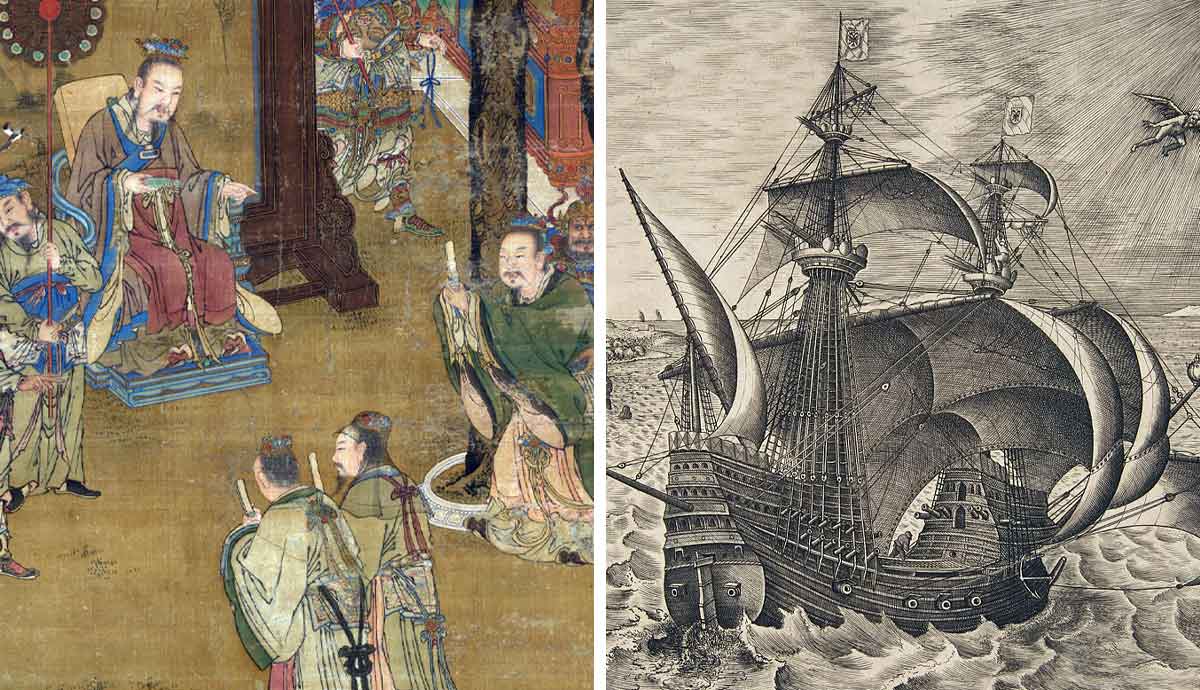
  By the late 16th Century, the Spanish Empire stretched from the Mediterranean to the Canaries, across the Atlantic to the Americas, past the Pacific all the way to the Philippines. Ever searching for new lands to conquer, the governor of Manila laid out plans to invade Ming China using Spanish Troops, Japanese Mercenaries, and Filipinos. King Philip II considered his designs.    Non Sufficit Orbis: The World is Not Enough Medal of Philip II with the inscription “Philip II of Spain and King of the New World – The World is Not Enough,” 1583. Source: Royal Collection Trust   When Christopher Columbus sailed to the Caribbean and began the brutal process of its colonization, he had gone west searching for Asia and new routes to the spice trade. Ferdinand Magellan’s expedition uncovered those routes just 30 years later, and infamous conquistador Hernan Cortes, high off his conquests in the Americas, suggested an invasion of China as early as 1526.   The Spanish established their first outpost in the Philippines in 1565 using Tlaxcalan soldiers from Mexico, and settled in Manila because of its proximity to trade routes in the South China Sea. The Portuguese had expanded their own colonial empire from Brazil to Africa and across the Indian Ocean to Indonesia, with trading posts in Macau and Nagasaki in the far east. At the turn of the 16th century, the Papacy had granted halves of the globe to Spain and Portugal to “christianize” in the Treaties of Tordesillas and Zaragoza, and by 1580 both kingdoms were united under King Philip II of Spain.   As Philip II consolidated his global empire, he adopted the motto: non sufficit orbis, Latin for “The world is not enough.” With a chain of colonies stretching across six continents, the newly christened Iberian Union turned its gaze to a scheme beyond their initial goal of free access to Asian markets. Plans for an invasion of China were laid out as conversion campaigns advanced in Japan and the colonization of the Philippines accelerated.   The Iberian mode of warfare was well established by this point, and their use of pike and shot was feared and copied throughout Europe as the tercios dominated on the battlefield. On campaign abroad, small bands of conquistadors exploited local rivalries and used their advanced military tactics and equipment alongside forces provided by “allies” on the ground. This had proven effective in projecting power abroad against larger peoples, and the plan for Asia was more of the same.   Nanban, the Southern Barbarians Arrival of the Europeans, Edo period. Source: Metropolitan Museum of Art, New York   Iberian power in East Asia was marginal at best in this period, but their ambitions were unlimited. Spanish Manila struggled to project power across the Philippines, facing resistance and subversion from various indigenous groups across the islands.   Portuguese expeditions had tried to take Chinese land for trading ports by force, but after a string of naval defeats by Ming China’s forces, were able to rent Macau in 1554 in exchange for silver. The Portuguese had been moderately successful in preparing an invasion of Japan by christianizing locals from their trading post in Nagasaki. Japan often referred to Europeans as nanban, or southern barbarians.   However, some local lords converted to Catholicism, giving Philip II ambitions to expand into Japan and China. He aimed to continue their program of pitting kingdoms against each other by assembling Japanese converts into a combined army of Spanish, Portuguese, and Filipino soldiers. Daimyo Konishi Yukunaga even promised to provide 6,000 men in support of an invasion of China.   Despite being at the very edges of the Iberian empires, hopes for the domination of East Asia moved beyond controlling the spice trade into the conquest of Japan and China and converting their entire world to Catholicism, putting pressure on the Ottomans and the Muslim world from both East and West.   Yet China, which calls itself zhongguo or ‘middle kingdom,’ had a massive population of roughly 145-160 million people at the time. With over a quarter of the world’s population, an advanced civilization with thousands of years of traditions, the power of Ming China was formidable, even to a Spanish Empire ravenous for new lands. Early plans for the conquest called for 4,000 troops, with later designs demanding 12,000 Spanish and Portuguese soldiers, with 6,000 Japanese mercenaries and 6,000 Filipinos.   The Weight of the Dragon Throne Remonstrating with the Emperor. Painting by court artist Liu Jun, late 15th century. Source: Metropolitan Museum of Art, New York   Matters came to a head in 1586, when every official in Manila approved an invasion proposal, which stated that China was “Superior to us in everything except salvation of the faith” (Kamen, p. 225), though in the previous decade an official believed it could be taken with as few as 60 men. China had advanced military technology, and while the Ming Dynasty was declining it still had three to five million soldiers on its books, including 800,000 combat-ready soldiers.   The Iberians would have also not had the same military advantages it exploited to win highly contested wars in the New World. Advanced metallurgy in China meant that Ming armies had steel armaments, cavalry, firearms, and most importantly, cannon. At the very limits of their supply lines, Philip II’s army had to rely on firearms imported from Japan. Even if an invasion made inroads, keeping an army fed, reinforced, and supplied would have been extremely difficult. All this would have been done in the face of a numerically superior peer, or at very best, near-peer enemy.   In its earlier clashes with the Portuguese, China had shown its ability to defeat European powers at sea. This happened even though Philip II’s strength was his naval power, and China had scuttled most of its fleets a century earlier as part of an inward-looking policy after Zheng He’s expeditions under the Yongle Emperor.   An invasion would have put conquistadors and their foreign levies up against China’s enormous army. Though the conquistadors had achieved asymmetrical victories in the New World, they were limited in their ability to challenge rival powers in Europe.   The Armada Crumbles in the West The Destruction of the Armada, Phillip James de Loutherbourg, c. 1800. Source: The British Museum   As the Spanish and Portuguese had raced to colonize the world, wars continued to rage back home in Europe. The continent was engulfed in the Eighty Years’ War and the Ottoman-Habsburg Wars, pitting Philip II’s forces against England, France, the Netherlands, and the Ottoman Empire, all while attempting to pacify regions under their domain across the Americas, Africa, and Asia.   In a push to oust the Protestant Queen Elizabeth I, the Great Armada was formed in 1588 to invade the British Isles and end English support for the Dutch in their efforts to seek independence from Spain. In the same year, Philip II commissioned an official council to plan for the invasion of China. The year 1588 represented the height of Iberian ambitions to conquer the world.   Although the Armada was a formidable force of 137 ships and 55,000 men, the fleet was outmaneuvered by more nimble English ships and thrown into chaos by fire ships at the Battle of Gravelines off the French coast. The remnants of the Armada suffered further losses from stormy weather off the coasts of Scotland and Ireland as they limped back home to Spain.   This defeat was a major setback in Philip’s plans for world conquest and sent shockwaves across his empire. It also coincided with several major crises in Asia. In 1587 Japan’s great unifier Toyotomi Hideyoshi banished all Catholic missions from the country and occupied Nagasaki. In the Philippines, Tagalog nobles launched a massive uprising, seeking aid from Japanese pirates and the Ottoman-backed Sultanate of Brunei to oust the Spanish. Dubbed the Tando Conspiracy, it was uncovered and thwarted, but Spanish control was not as absolute as they believed. With their presumed Japanese and Filipino support evaporating, and massive losses in Europe, the quest for China was abandoned.   Dust Settles in the East View of Earth from Space, Zelch Csaba. 2025. Source: Pexels   Later Spanish expeditions to Cambodia and against the Siamese Kingdom of Ayutthaya did not bring further conquests. Yet as Iberian ambitions to rule Asia dwindled, Toyotomi Hideyoshi advanced the plans of his predecessor Oda Nobunaga to expand Japanese rule across the region.   After the expulsion of Catholic missionaries, he sent threatening envoys to the Spanish in Manila and tried to assemble forces to sail south. At the same time, he envisioned “One Asia” under Japan and went to war with the Ming Dynasty by invading their vassal Joseon Dynasty in Korea. The resulting Imjin War led to Toyotomi’s defeat, and his plans for the Philippines never materialized, stifling Japanese expansionism for more than two centuries. Toyotomi was succeeded by the Tokugawa shogunate who, after the Christian-led Shimabura Rebellions, began its period of closure to the world, known as sakoku.   Despite its considerable weight, the Ming Dynasty was fortunate that the Iberians had not attempted to exploit local rivalries. Over the following decades, the Ming emperors faced encroachment from the Manchus in the northeast as well as internal rebellion, and by 1644 Beijing had fallen to peasant rebels. The Manchu bannermen of the Qing Dynasty soon breached the Great Wall and gained the mandate of heaven. The Qing emperors held off western incursions for 200 years until the Opium Wars and their infamous Century of Humiliation.   Armed Three-master with Daedalus and Icarus in the Sky from The Sailing Vessel, Frans Huys, c. 1561-1565. Source: Metropolitan Museum of Art, New York   Spanish and Portuguese influence in the region waned as Dutch and English traders entered the stage, with the Dutch being the only Europeans to meaningfully access Japanese markets until Commodore Matthew Perry forced open the ports in 1854. The Dutch invasions hit Macau but were repelled in 1622. They moved on Indonesia, Malaysia, and Taiwan, and severely reduced Spain and Portugal’s power in the region especially after Portugal rebelled against Spanish rule, dissolving the Iberian Union in 1640. The Thirty Years’ War and parallel Eighty Years’ War came to a close in 1648, having devastated central Europe and weakened Spain’s position as the dominant imperial power of the time.   By the 1700s, Spain and Portugal were struggling to retain their colonial empires and had largely become second-rate powers on the global stage. The Philippines remained one of Spain’s last colonial holdings until it was taken by the USA in 1898.   The threats to invade England and China place 1588 as the high watermark of Iberian colonization. Though Philip II and his successors remained in a position of influence, their vision of undisputed rule over the globe was broken. The world had proven too much for the man it was not enough for.   Further Reading Kamen, H. (2003). Empire: How Spain Became a World Power, 1492-1763. Great Britain: Penguin Books.
Like
Comment
Share
History Traveler
History Traveler
4 w

The Lasting Impact of the Trans-Saharan Trade Routes
Favicon 
www.thecollector.com

The Lasting Impact of the Trans-Saharan Trade Routes

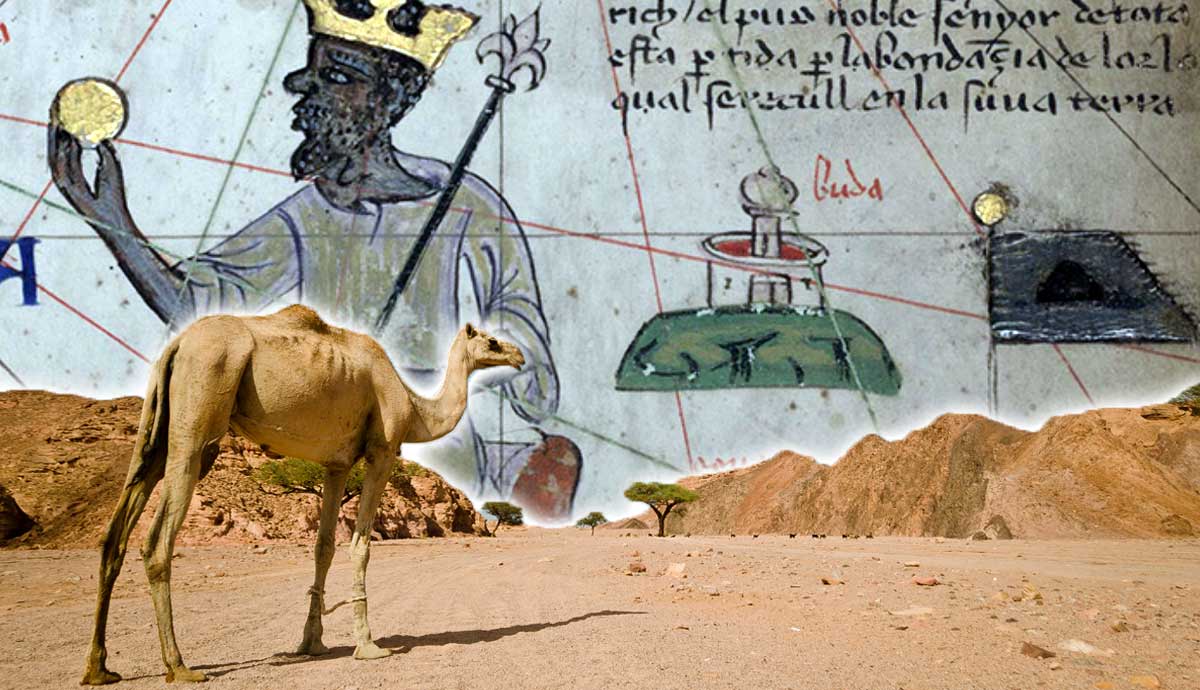
  The Trans-Saharan trade routes connected West Africa to the Mediterranean world, having an impact on not only the economy but also culture, religion, and politics across the African continent and beyond. What were these trade routes, who led them, what was carried on and among them, and what were their impacts?   Garden of Allah Saharan dunes at dusk. Source: Pexels   Sahara is an Arabic word meaning ‘desert’. It refers to the arid landscape stretching from the concave face of western Africa towards Egypt, ending at the emerald waters of the Red Sea. In addition to Egypt, this area includes the regions of Tunisia, Libya, Algeria, Morocco, Western Sahara, Sudan, Chad, Niger, Mali, and Mauritania. Composing an area nearly the size of Europe, the Sahara is the world’s largest desert. However, only 25% is actually composed of the undulating dunes usually associated with desert landscapes.   Satellite view of Saharan desert. Source: PICRYL   The majority of the Sahara is actually plains and plateaus, creating a mosaic of different shades of sienna, burnt orange, and tan. This vast desert was also once referred to as the ‘Garden of Allah’, believed to be created by Allah as a place for him to walk in peace (Prange, p. 13). A shortage of evidence and lack of reliable written resources means that ancient Saharan trade history is shrouded in both myth and mystery. However, routes and objects carried between regions within and around the Sahara during the ancient world created the foundation for the trans-Saharan trade networks that developed after Islam spread in the 7th century AD.   Darb El Arba-in, or the Forty Days Road El-Kharga Oasis. Source: Wikimedia Commons   Trade in the Sahara can be dated as far back as the Old Kingdom of Ancient Egypt (2675–2130 BC). The Darb El Arba-in, or the Forty Days Road, was a route connecting the Nile River Valley to present-day Sudan. It took advantage of El-Kharga in southern Egypt, a lush oasis that served as the main “gateway” between Egypt and the south Sahara (M.S. Solieman, p. 206).   The oasis environment meant that El-Kharga was fertile with grain, olives, dates, and grapes, which were staples of Egyptian and Nubian diets and cuisine. It is also possible that gold, ivory, and spices passed along this route. Although dating back to the Old Kingdom, this route reached its zenith under the Romans, whose road technology around the 2nd century BC vastly improved the efficiency of transport along this route (M.S. Solieman, p. 205). The Forty Days Road would play a significant role in Trans-Saharan trade as one of five main routes to transport enslaved people which persisted well into the 18th century.   The Saharan Trade in Herodotus Map of the world according to Herodotus. Source: Wikimedia Commons   One historical account of ancient Saharan trade comes from the Greek historian Herodotus, who authored The Histories around 430 BC based on his alleged travels to Africa. While Herodotus’ pioneering work of historical inquiry earned him the sobriquet “Father of Western History,” Herodotus’ tendency to relate wild and incredible accounts in The Histories means that he is also called the “Father of Lies” (Austen, p. 13).   However, The Histories mentions a supposed route connecting Egypt to Algeria, as well as the trading of salt. The route from Egypt to Algeria allegedly went through Fezzan, the arid region of southern Libya. Fezzan’s metropolis was Germa, once ruled by a powerful empire known as the Garamantes between 1000 BC to 700 AD.   Although historians are wary of Herodotus’s accounts, the route passing through Fezzan would mimic trade routes passing through this region centuries later. Once Islam spread across North Africa beginning in the 7th century, Germa was restored as a strategic stop of the Trans-Saharan trade network (Austen, p. 22).   Salt transport by a camel train on Lake Assale (Karum) in Ethiopia. Source: Wikimedia Commons   Although Herodotus was likely referring to a salt trade around Libya, salt was a crucial commodity in the western side of the Sahara. The best quality salt (and thus the most sought after) was rock salt. Although the desert landscape produced salt in abundance, areas surrounding the Niger River Valley lacked this vital mineral. What initially began as a trade between salt and grain during the Neolithic period transformed into the exchange of salt with other metals like copper and gold. The salt trade facilitated the development of urban settlements in West Africa that would later become kingdoms, such as Ghana and Timbuktu, strategic entrepots for Trans-Saharan trade.   The location of West Saharan salt quarries has shifted over the centuries, causing different mines to boom and fall into decay. However, salt from the Western Sahara continues to supply regions south of the desert. Today, salt from Taoudenni in Mali is transported to areas like Timbuktu by trucks and camel caravans.   Desert Dromedaries Camel in Egypt. Source: Wikimedia Commons   Although camels have become synonymous with the Sahara, they were actually introduced from Arabia. These dromedaries, or single-humped mammals, are native to the Arabian Peninsula and were possibly introduced into North Africa some time around the 3000-2500 BC (Austen, p. 17). Initially used in battle, it would take several centuries before they became the “ships of the desert.”   Camels were designed for desert environments. They can go 15 days without water, regulate their body temperatures to levels that would be near-fatal for other animals, and transform their hump, which is full of fat, into water and energy. The pads on their feet also prevent them from sinking into sand. The camel’s resilience in desert climates and capacity as pack animals (they can carry up to 600 pounds or 300 kilograms) transformed trade, providing people with a vehicle to cross long distances unachievable with horses, donkeys, or chariots. Camels were arguably the catalyst for long-distance trade in the Sahara.   Erg Chebbi Dunes in Morrocco. Source: Flickr   Camels would have a lasting impact, shaping trade, lifestyles, and also the cultural identities of people who relied on them, such as the Imazighen (known historically as Berbers) and Tuaregs. Caravans traversing the desert were composed of anywhere between 1,000 to 5,000 camels, helping hundreds of merchants, pilgrims, and enslaved people cross the Sahara.   Once camel caravans became used for transporting people and goods across the Saraha, transit across the desert hardly went through any changes. Ralph A. Austen, author of Trans-Saharan Africa In World History, goes so far as stating the only difference between the caravan route of Mansa Musa in the 14th century and those of the 19th century is the presence of firearms (Austen, p. 36). This is because the harsh desert environment made the region resistant to new technology. Despite attempts by France to construct a railroad in its colonial territories in West Africa, it was not realized until the 20th century.   In spite of this, camels are still a primary method of transport in parts of the Sahara, for both nomadic communities like Bedouins and Tuaregs and for larger scale commercial transport like salt in Taoudenni, as previously mentioned.   Spread of Islam Across the Sahara Map of Trans-Saharan trade routes. Source: Getarchive   One of the largest lasting impacts of Trans Saharan trade was the spread of Islamic belief, custom, and Arabic language throughout North Africa and the Sahara.   Islam initially spread across North Africa through a series of military campaigns by Arab leaders, leading to fierce resistance from local forces such as the Imazighen and Byzantines. However, the end of these conflicts paved the way for a unique convergence between Islamic belief, Arabian culture, and local customs that would persist into the 21st century. Over a century after Arab conquest, Islamic sects such as the Ibadis (from the Algerian and Tunisian hinterlands) and Sufris (in southern Morocco) emerged and began venturing into the desert in search of trading opportunities. This would be a pivotal moment for trade across the Sahara.   Ibadis and Sufris groups began spreading to pre-established oasis trading centers from the ancient world such as the aforementioned Germa and Kanem around Lake Chad, the southernmost point of the Sahara conquered by the Romans. However, they also established new trading settlements like Ouargla in South Algeria, which would become an instrumental center for the circulation of gold and enslaved people. From this point forward, the Sahara would transform into a “global highway,” carrying merchants, pilgrims, faith, enslaved people and objects along the routes created by camel caravans and their leaders (Austen, p. 22).   Islamic Golden Age and Contemporary Impacts Page from Al-Buni’s Treatise on the Magical Uses of the Ninety-nine Names of God, 15th century. Source: Wikimedia Commons   The spread of Islam helped unify diverse cultures across the Sahara through shared belief and custom that maintained connections with local traditions. Arabic also became a lingua franca across the Muslim world, enabling its constituents to communicate, write, and speak with other Muslims. This, combined with Islam’s encouragement of scholarship facilitated the Islamic Golden Age, a period of scientific, technological and philosophical achievement that would influence the European Renaissance.   Islam’s expansion throughout the Sahara had a profound impact on its people, cultures, and history which maintains a strong presence today. Arabic is still widely spoken in many countries, and there are similarities in cuisines, music, and religious practice from Morocco to Egypt.   Saharan Wealth Attracts Europeans Mansa Musa from the Catalan Atlas, 1375. Source: Wikimedia Commons   The development of trading centers across the Sahara facilitated a market that helped kingdoms like Ghana, Mali, and Kanem-Borno obtain unprecedented amounts of wealth. One famous example is Mansa Musa, the 14th century King of Mali whose opulence was the modern equivalent of $131 billion, making him one of the richest people to have ever lived. Musa’s alleged generosity with his wealth during his pilgrimage to Mecca crashed the price of gold in Egypt for nearly a decade after his visit.   The association between Musa and gold was memorialized on a map depicting him seated on a throne holding a golden orb. Referred to as the Catalan Atlas, this map was produced in 1375 by Spanish cartographers who never traveled to the Sahara, but likely received accounts from people who did. The map illustrates Medieval European knowledge and fascination with Saharan trade, which would shape the 15th century Age of Exploration. This period began Europe’s maritime exploration to Africa, Asia and the Americas, marking the beginning of European colonialism.   Trans-Saharan Trade and the World Chinese colored porcelain. Source: Rawpixel   The Trans-Saharan trade fed into larger global trading networks. Gold from the Western Sahara arrived in European markets, but was also carried as far as India and China (Austen, p. 30). In exchange, merchants would obtain spices, textiles, ceramics and other objects which would be carried back to Africa. Global commerce was possible due to maritime trade across the Indian Ocean. One object from this maritime network that deeply impacted Trans-Saharan trade were cowries, small shells extracted from Maldivian beaches.   The Trans-Saharan trade route carried these shells across the desert to West Africa, where they became staples of decoration, jewelry, religion, and art. However, they were also used as a form of currency, which had a deep impact on the Transatlantic Slave Trade. Seeing there was a market for cowries, Europeans brought them in great numbers to West African coasts to obtain enslaved people from African leaders for labor in their colonies. As a result, cowries became a fundamental unit of exchange for enslaved people. By the 18th century, one enslaved person was valued at 160-176,000 shells.   Kuba (Democratic Republic of the Congo) Headdress, 19th century. Source: Brooklyn Museum, New York     Additionally, practices of capturing people for enslavement during the Transatlantic Slave Trade were rooted in methods used for the Trans-Saharan trade networks. For centuries, enslaved people were typically taken from sub-saharan Africa. Unlike the Transatlantic Slave Trade, this was not for racial reasons, but was due to the dense populations of these areas. Once captured, people would be taken in camel caravans across the Sahara to North Africa or to the Gulf states.   Once Europeans arrived at West African coasts to get enslaved labor for their colonies, the pattern of venturing to inland West and Central Africa remained. Rather than capturing people themselves, Europeans paid West African slavetraders who then brought these people to the coasts.   Legacy of the Trans-Saharan Network Sahara desert sunset. Source: Wikimedia Commons   The Trans-Saharan Trade network had a profound impact on the circulation of objects, ideas, and people throughout Africa, the Mediterranean, and the globe. Built upon trade networks that existed in the ancient world, trade across the Sahara was facilitated by Islamic merchants through the help of camels, instrumental modes of transport still used throughout the Sahara. As a result, Saharan countries share the common language of Arabic, similar customs, and culture. Trans-Saharan trade also helped kingdoms and people, like Mansa Musa, accumulate vast amounts of wealth that would inspire European sailors to venture to these famed areas of wealth, marking the beginning of European colonization. The Trans-Saharan trade continues to resonate deeply in our modern world.   Bibliography Austen, Ralph A. Trans-Saharan Africa in World History. Oxford University Press, 2010. “Imazighen! Beauty and Artisanship in Berber Life: Peabody Museum of Archaeology & Ethnology.” Peabody Museum, peabody.harvard.edu/OE-imazighen#:~:text=The%20Berbers%E2%80%94or%20Imazighen%E2%80%94are,farthest%20reaches%20of%20the%20Sahara. McDougall, E. Ann. “Salts of the Western Sahara: Myths, Mysteries, and Historical Significance.” The International Journal of African Historical Studies, vol. 23, no. 2, 1990, pp. 231–57. M.S. Solieman, Nashwa, et al. “Reconstructing the ancient caravan route of Darb al-Arbain in Greco-Roman Egypt: Heritage Value and tourism potential.” Journal of Association of Arab Universities for Tourism and Hospitality, vol. 16, no. 2, 1 June 2019, pp. 202–224. Prange, S. (2005) ‘Trust in God – But Tie Your Camel First’: The Economic Organization Of The Trans-Saharan Slave Trade Between The Fourteenth and Nineteenth Centuries. Dissertation. Department of Economic History, London School of Economics. “Sailors on Sandy Seas: Camels in Saharan Rock Art.” British Museum, africanrockart.britishmuseum.org/thematic/camels-in-saharan-rock-art/.
Like
Comment
Share
Showing 3619 out of 120939
  • 3615
  • 3616
  • 3617
  • 3618
  • 3619
  • 3620
  • 3621
  • 3622
  • 3623
  • 3624
  • 3625
  • 3626
  • 3627
  • 3628
  • 3629
  • 3630
  • 3631
  • 3632
  • 3633
  • 3634
Advertisement
Stop Seeing These Ads

Edit Offer

Add tier


Select an image
Delete your tier
Are you sure you want to delete this tier?

Reviews

In order to sell your content and posts, start by creating a few packages. Monetization

Pay By Wallet

Payment Alert

You are about to purchase the items, do you want to proceed?

Request a Refund