YubNub Social YubNub Social
    #democrats #loonylibs #exodermin
    Advanced Search
  • Login
  • Register

  • Night mode
  • © 2026 YubNub Social
    About • Directory • Contact Us • Developers • Privacy Policy • Terms of Use • shareasale • FB Webview Detected • Android • Apple iOS • Get Our App

    Select Language

  • English
Night mode toggle
Featured Content
Community
New Posts (Home) ChatBox Popular Posts Reels Game Zone Top PodCasts
Explore
Explore
© 2026 YubNub Social
  • English
About • Directory • Contact Us • Developers • Privacy Policy • Terms of Use • shareasale • FB Webview Detected • Android • Apple iOS • Get Our App
Advertisement
Stop Seeing These Ads

Discover posts

Posts

Users

Pages

Blog

Market

Events

Games

Forum

Conservative Voices
Conservative Voices
6 w

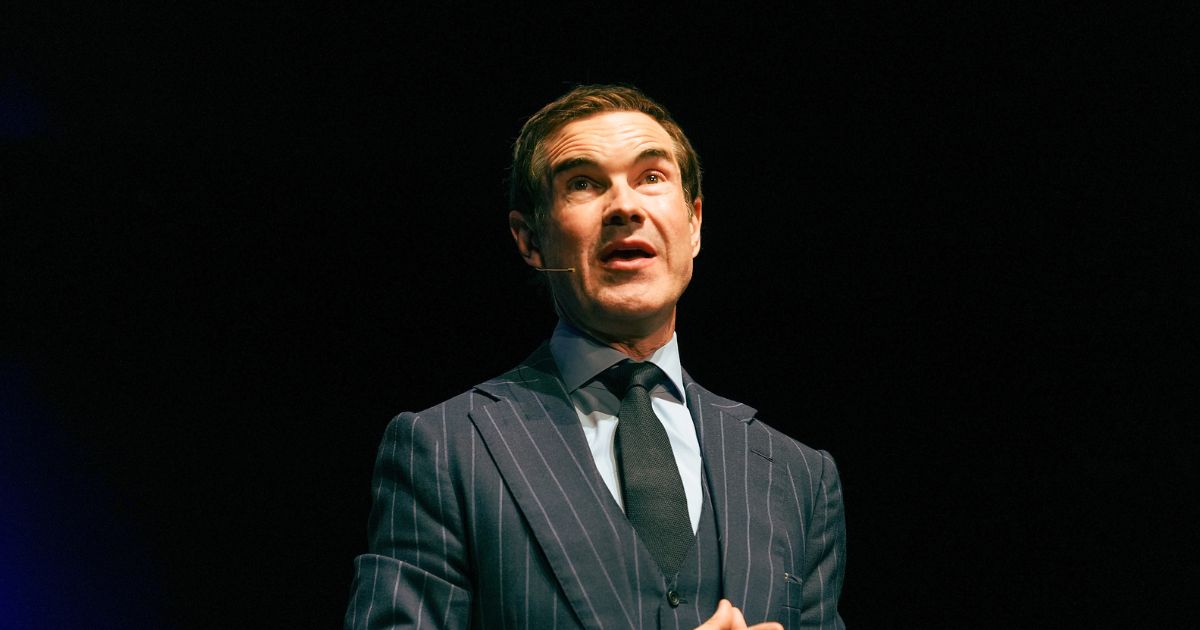
Watch: British Comedian Jimmy Carr Takes Down Woke Audience Member, Reminds Crowd of Woke's Satanic Origin
Favicon 
www.westernjournal.com

Watch: British Comedian Jimmy Carr Takes Down Woke Audience Member, Reminds Crowd of Woke's Satanic Origin

Jimmy Carr took down a loudmouth woke audience member during one of his stand-up routines, using the opportunity to dismantle communism for the evil it breeds. Carr started his reply to the heckler by stating, "Capitalism is a terrible system, apart from all f***ing others." "Communism's a great idea, wrong...
Like
Comment
Share
The Blaze Media Feed
6 w ·Youtube News & Oppinion

YouTube
STUNNING DETAILS: How Mexico is WEAPONIZING Immigration to Attack the USA
Like
Comment
Share
The Conservative Brief Feed
6 w

Storm Warning CENSORED — Reason Will Infuriate…
Favicon 
www.theconservativebrief.com

Storm Warning CENSORED — Reason Will Infuriate…

Federal officials ordered emergency responders to scrub a common weather term from disaster warnings because they feared it would trigger internet memes about immigration enforcement. When Memes Trump Safety Warnings Department of Homeland Security officials issued informal guidance Thursday directing FEMA personnel to eliminate the word “ice” from public communications about a major winter storm. The directive came as forecasters warned of potentially devastating ice accumulations stretching over 2,000 miles, with some southern areas expecting a quarter-inch or more. DHS officials worried that references to ice would spark online mockery and confusion with Immigration and Customs Enforcement, the controversial federal agency sharing the same three-letter acronym. The timing proved particularly awkward as hundreds of thousands of Americans faced power outages lasting days. JUST IN: President Trump and Kristi Noem's FEMA are SURGING for this winter storm, teeing up– 250,000 meals– 400,000 liters of water– 30 generators– Shuttle services stationed in Louisiana, Texas, Pennsylvania and Georgia pic.twitter.com/l97V2VGLfF — RightLine (@RightLineNews) January 23, 2026 The Evidence in Plain Sight FEMA’s Thursday night social media post warned of “Heavy snow, freezing rain & cold temps” without mentioning ice. Friday’s message on X followed the identical pattern, referencing “heavy snow, freezing rain and dangerous cold” while avoiding the forbidden term entirely. The substitution appeared throughout FEMA’s communications as the storm approached. FEMA responded to CNN’s reporting with a defensive statement dismissing the story as “clickbait” and insisting the agency would use “correct and accurate descriptors” to communicate clearly. The denial rang hollow given the observable pattern in FEMA’s own messaging. The Meme Culture Context The Trump administration has embraced meme culture in official communications with unprecedented enthusiasm. Earlier that same week, the White House account posted a fabricated image related to arrests in Minnesota following protests involving ICE operations at a church service. When questioned about posting fake content, a White House spokesperson delivered a remarkably candid response: “Enforcement of the law will continue. The memes will continue. Thank you for your attention to this matter.” This statement established the administration’s position that meme-based messaging represents legitimate government communication rather than an aberration requiring correction or apology. The Structural Tensions Both FEMA and ICE operate under the Department of Homeland Security umbrella, creating an organizational structure where DHS leadership oversees both disaster response and immigration enforcement. This arrangement explains why DHS officials felt authorized to direct FEMA’s communications strategy. However, the incident exposed internal tensions between political leadership prioritizing messaging optics and technical experts focused on public safety. One source with knowledge of the guidance warned that avoiding clear language could leave Americans vulnerable during emergencies. The source noted that a straightforward phrase like “Keep off the roads if you see ice” would be easy for the public to meme. The Public Safety Calculation The substitution of “freezing rain” for “ice” may qualify as technically accurate meteorological terminology, but it creates potential comprehension problems for average citizens unfamiliar with weather jargon. Emergency communications succeed when they convey immediate, intuitive understanding of danger. Everyone understands ice on roads means treacherous driving conditions. “Freezing rain” requires additional cognitive processing to translate into actionable awareness. During a crisis affecting nearly three dozen states simultaneously, that translation delay could prove costly. The precedent also raises questions about whether other straightforward emergency terms might face political review before reaching the public. Homeland Security officials have urged staff at FEMA to avoid using the word “ice” in public messaging about the massive winter storm barreling toward much of the US under concerns that the word could spark confusion or online mockery. https://t.co/SbM6wSig9A — WXOW 19 News (@WXOW) January 23, 2026 The Dangerous Precedent An anonymous source captured the core problem succinctly: “I think it’s a dangerous precedent to set. If we can’t use clear language to help prepare Americans, then people may be left vulnerable and could suffer.” This represents more than bureaucratic word games or political theater. Emergency management depends on public trust that warnings reflect genuine threats rather than politically filtered messages. When citizens suspect disaster communications prioritize avoiding embarrassment over maximizing safety, they may discount future warnings. The incident demonstrates how political sensitivities can infiltrate technical decision-making processes that should remain insulated from such considerations. Sources: Don’t say ‘Watch out for ice’: FEMA warned storm announcements could invite memes – KESQ Don’t say ‘Watch out for ice’: FEMA warned storm announcements could invite memes – AOL
Like
Comment
Share
Classic Rock Lovers
Classic Rock Lovers  
6 w

Favicon 
www.classicrockhistory.com

An Interview With Nico Bereciartua Of The Black Crowes

Given that The Black Crowes’ lead guitar spot has been held down by Jeff Cease, Marc Ford, Audley Freed, Luther Dickinson, and Isaiah Mitchell, you could say that when Argentinian-born gunslinger, Nico Bereciartua, joined the band in 2022, he had a lot to live up to. But Nico Bereciartua had a bit of a leg up, as he had already played with Crowes’ co-leader and co-founder, Rich Robinson’s solo band. Elsewhere, Nico Bereciartua also played with Robinson in The Magpie Salute, which, for those keeping score, featured Marc Ford. Still, the volatility of the gig, expanse of the stage, fan The post An Interview With Nico Bereciartua Of The Black Crowes appeared first on ClassicRockHistory.com.
Like
Comment
Share
The Lighter Side
The Lighter Side
6 w

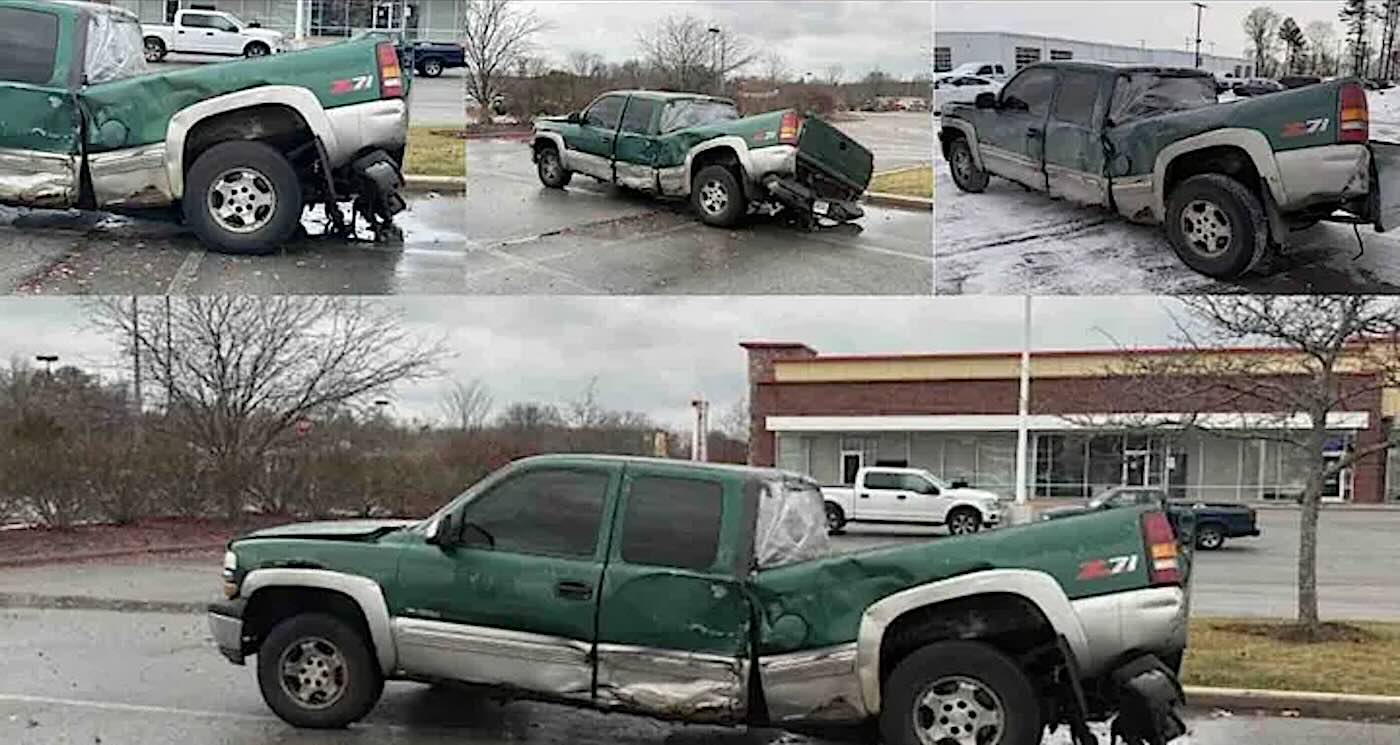
Elderly Man’s Busted Up Truck Was Joke Meme Until Stranger’s Heartwarming Idea to Crowdfund a New One
Favicon 
www.goodnewsnetwork.org

Elderly Man’s Busted Up Truck Was Joke Meme Until Stranger’s Heartwarming Idea to Crowdfund a New One

His truck was the vehicle equivalent of Frankenstein, a green mish-mash of dents and dings and disjointed panels. The 2000 Chevy Silverado became something of a famous eyesore in South Bend, Indiana, earning sideways glances and second looks wherever Mo Riles went. “I thought it was A.I. and didn’t know if it was real,” one […] The post Elderly Man’s Busted Up Truck Was Joke Meme Until Stranger’s Heartwarming Idea to Crowdfund a New One appeared first on Good News Network.
Like
Comment
Share
Daily Signal Feed
Daily Signal Feed
6 w

Why Children Under 13 Should Be Banned From Social Media
Favicon 
www.dailysignal.com

Why Children Under 13 Should Be Banned From Social Media

The debate over children and social media is often framed as a question of parental control or technological inevitability. It should not be. At its core, this is a moral question about what kind of society we are shaping, what we choose to protect, and what we are willing to sacrifice in the name of convenience, profit, and false notions of freedom. Children under the age of 13 should not be on social media. Not because technology is evil, but because childhood is fragile and social media is not built for moral development. At this stage of life, children are still forming their identity, learning boundaries, and developing the capacity for judgment and self-regulation. Neuroscience is clear: Impulse control, emotional regulation, and critical thinking mature well into adolescence. Social media, by contrast, is designed to exploit impulse, reward comparison, and intensify emotion. It does not educate young minds; it conditions them. What children encounter online is rarely neutral. Content is optimized not for truth, growth, or well-being but for engagement. Shock travels faster than nuance. Sexualized imagery appears long before children can contextualize it. Violence is stripped of consequence. Cruelty is reframed as humor. Validation becomes currency, and self-worth becomes a public negotiation. This is not harmless exposure. It is moral interference at scale. Much of the harm is subtle and therefore dismissed. Children are not typically pushed toward overtly illegal or extreme material. Instead, they are nudged slowly and persistently toward distorted norms about relationships, body image, success, and identity. Algorithms learn what unsettles, excites, or angers a child and deliver more of it. The child does not choose this environment; it is curated around them without their understanding or consent. The result is corruption without awareness. Anxiety, depression, aggression, and social withdrawal often appear later, long after the source has been normalized. There is also a deeper ecosystem at work, one most parents never see. While children may never intentionally access the darkest corners of the internet, the culture shaped there does not remain contained. Exploitation, predation, dehumanization, and nihilism bleed upward into mainstream platforms through trends, language, and aesthetics. By the time this content reaches children, it has been sanitized just enough to avoid scrutiny, but not enough to avoid harm. Children do not need to visit the dark web to absorb its values. Tech companies know this. Internal research, much of it reluctantly disclosed, has repeatedly shown harm to young users. Yet enforcement of age limits remains performative at best. Why? Because early engagement builds lifelong consumers. Attention is monetized. Addiction is profitable. And responsibility is quietly outsourced to parents, who cannot reasonably compete with billion-dollar behavioral engineering. This is not simply a failure of parenting. It is institutional negligence disguised as innovation. Some argue that banning children under 13 from social media infringes on freedom or limits digital literacy. That argument confuses preparation with exposure. We do not teach children to swim by throwing them into open water. We do not prepare them for adulthood by immersing them in adult environments prematurely. Childhood is not a training ground for markets; it is a protected space for moral formation. A ban is not censorship. It is a boundary. We already draw such lines in countless areas of life: labor laws, age restrictions, content ratings, and consent standards. These are not arbitrary. They exist because we recognize that some environments are incompatible with healthy development. The cost of ignoring this reality is visible everywhere: rising youth anxiety, fractured identity, diminished attention spans and a generation struggling to distinguish authenticity from performance. These are not isolated trends. They are symptoms of a culture that has confused access with progress, and profit with purpose. A society that allows children to be shaped by anonymous influence, algorithmic manipulation, and unaccountable power cannot later claim innocence when those children grow into distrustful, disconnected adults. Moral development cannot be crowdsourced. It must be protected. Banning children under 13 from social media is not a retreat from modern life. It is an assertion of responsibility. The question is no longer whether harm exists. The question is whether we are willing to act or whether we will continue to sacrifice childhood on the altar of convenience and greed, then pretend we did not see it coming. COPYRIGHT 2026 CREATORS.COM We publish a variety of perspectives. Nothing written here is to be construed as representing the views of The Daily Signal.   The post Why Children Under 13 Should Be Banned From Social Media appeared first on The Daily Signal.
Like
Comment
Share
The Blaze Media Feed
6 w

The reform every society needs: Stop mistaking shock for success
Favicon 
www.theblaze.com

The reform every society needs: Stop mistaking shock for success

Years ago, I worked in a large office building with a woman who walked with a terrible limp. Not a slight hitch, but a pronounced, jarring gait caused by a car accident that left her with significant bone loss in one leg. She was a delightful person, but no one could ignore the limp. It shaped how she moved through the world and, at times, how the world responded to her.She lived that way for more than 25 years.Liberation may begin with a D-Day assault or a precision, middle-of-the-night special-forces strike, but rehabilitation always moves slower.Then one morning, everything changed.She walked into the office upright and steady. No limp. No sway. Her posture looked different. Her face looked different. The transformation was so striking, people stopped what they were doing just to stare.An orthotist had fitted her with a lift for her shoe. For the first time in decades, her body was aligned.It felt dramatic. It felt hopeful.Three weeks later, she showed up at work limping again.When I asked what happened, she looked down and said quietly, “It was too painful.”For years, that story stayed with me. I assumed she should have pushed through the discomfort. If she really wanted to walk straight, I thought, she would have endured the pain. I put the burden on her.Decades later, while talking with the man who makes my wife’s prosthetic legs — who is also a certified orthotist — I mentioned the story. He didn’t hesitate.“That was the orthotist’s fault.”With that degree of limb difference, he explained, correction must happen in small increments over time. You do not force a body that has adapted to damage for decades into alignment overnight. The shock alone can undo the good you intend. Pain, in that case, isn’t weakness. It’s warning.The problem was never the goal of walking straight. It was the pace. The change looked impressive, but it couldn’t last.Had she been guided wisely, she might still be walking straight today.That realization reshaped how I think about far more than posture and gait.RELATED: Do not pass the plow: The danger of declaring a golden age without repentance Photo by Philippe LOPEZ / AFP via Getty ImagesWe talk a lot about sustainability, but the word often gets treated as corporate jargon. In real life, it means something simpler: Can you keep going without being damaged by the very solution meant to help you?The question isn’t whether disruption can be endured for a season. The question is what happens when it lasts long enough to reshape the body, the household, or even a culture itself.The longer misalignment persists, the more people adjust to it. Not because it’s right, but because it becomes familiar.I think of family caregivers who, like that woman, adapt to dysfunction. They normalize exhaustion. They compensate for imbalance. What once felt untenable becomes routine. The standard slowly drops, and despair and resentment find room to grow.This pattern doesn’t stop with individuals.It shows up in institutions and nations, especially those emerging from long seasons of corruption, fear, or misrule. The fraud being uncovered in Minnesota will not be corrected quickly. Venezuela didn’t unravel overnight, and it won’t be restored all at once. Iran won’t shed decades of tyranny through slogans or spectacle. Systems deformed over time don’t heal on announcement alone.Liberation may begin with a D-Day assault or a precision, middle-of-the-night special-forces strike, but rehabilitation always moves slower. Hard ground is taken a little at a time. Institutions get rebuilt inch by inch. The work costs money. It lacks glamour. No one escapes it.Trying to fix everything at once is like forcing a damaged body into alignment without preparation. The result may look decisive, but it often collapses under its own weight.This is where leadership gets tested.Not by how loudly change is declared, but by whether it can be endured.RELATED: When human worth becomes conditional, caregiving becomes impossible Photo by: Edwin Remsburg/VW Pics via Getty ImagesReal leadership doesn’t just name what’s wrong. It requires patience and competence. It understands limits. It moves deliberately. It produces progress people can live with — and live inside — over time.People can endure difficult change when it leads somewhere stable. What they can’t endure is repeated pain with no lasting gain.A deliberate pace doesn’t mean abandoning the goal. Real leadership — whether for a caregiver or a nation — recognizes the trauma that brought us here. It refuses to confuse speed with progress. It commits instead to patient steps that straighten what has been bent without breaking what remains.That kind of leadership doesn’t rush healing. It makes healing possible.For caregivers, for communities, and for nations, alignment imposed too quickly can injure the very people it claims to help. Alignment applied with patience, competence, and resolve can change a life permanently.That woman wanted to walk straight. She simply needed someone wise enough to guide her there.
Like
Comment
Share
The Blaze Media Feed
6 w

Why Canada’s Chinese EV bet is a big mistake
Favicon 
www.theblaze.com

Why Canada’s Chinese EV bet is a big mistake

Canada’s decision to slash tariffs on Chinese electric vehicles is being sold as a pragmatic trade adjustment. In reality, it looks more like a self-inflicted wound to the country’s auto industry, workforce, and long-term economic sovereignty. Lower prices today may come at the cost of lost manufacturing tomorrow — along with vehicles that struggle with quality and cold-weather reliability in a country where winter is not a minor inconvenience but a defining reality.A vehicle that looks competitive on paper may tell a very different story after several Canadian winters.Under an agreement announced earlier this month, Canada will allow up to 49,000 Chinese EVs into the country each year at a tariff of just 6.1%, down from the 100% rate imposed in 2024. Officials emphasize that this represents less than 3% of the domestic market. But auto markets are shaped at the margins. Even a relatively small influx of aggressively priced vehicles can disrupt pricing, undercut domestic producers, and discourage future investment.Under pressureCanada’s auto sector is deeply integrated with the United States, with parts, vehicles, and labor flowing across the border daily. That system has supported hundreds of thousands of well-paying jobs for decades. Introducing low-cost Chinese imports into that ecosystem does not simply add consumer choice; it destabilizes a supply chain already under pressure from regulatory mandates, rising costs, and declining market share.That pressure is already visible. The combined market share of General Motors, Ford, and Stellantis in Canada has fallen from nearly 50% to roughly 36%. These companies are not just brands on a dealership lot. They are employers, investors, and anchors for entire communities. When their market position erodes, the consequences ripple outward through plant closures, canceled expansion plans, and lost supplier contracts.Cold comfortSupporters argue that Chinese EVs will make electric vehicles more affordable, accelerating adoption and helping Canada meet emissions targets. But affordability without durability is a hollow promise. Many Chinese EVs entering global markets have yet to prove themselves in extreme climates. Cold weather is notoriously hard on batteries, reducing range, slowing charging times, and increasing mechanical stress — conditions Canadian winters deliver in abundance.Reports from colder regions already using Chinese EVs raise concerns about performance degradation, software issues, and inconsistent build quality. Battery thermal management systems that perform adequately in mild climates can struggle in deep cold. Door handles freeze, sensors fail, and range estimates become unreliable. These are not minor inconveniences when temperatures plunge and drivers depend on their vehicles for safety as much as transportation.Quality concerns extend beyond climate performance. Chinese automakers have made rapid progress, but speed has often come at the expense of long-term durability testing. Western manufacturers spend years validating vehicles under extreme conditions precisely because failure carries real consequences. A vehicle that looks competitive on paper may tell a very different story after several Canadian winters.Cheap creepThere is also the question of what happens to Canada’s manufacturing base as these imports gain a foothold. History offers a clear lesson. When markets are flooded with low-cost vehicles produced under different labor standards and supported by state-backed industrial policy, domestic production suffers. Plants close, jobs disappear, and skills erode — losses that are extraordinarily difficult to reverse.Europe offers a cautionary example. In the rush to meet climate targets, policymakers opened the door to inexpensive Chinese vehicles, only to see domestic automakers squeezed between regulatory costs and subsidized foreign competition. The result has been declining investment, layoffs, and growing concern about long-term competitiveness. Canada risks repeating that mistake but without Europe’s scale or leverage.RELATED: Exclusive: 'Anti-China moves' pay off BIGLY — Governor Sanders and Arkansas earn A+ for crushing CCP land-grabs Tom Williams/CQ-Roll Call, Inc via Getty ImageSpy gameThe geopolitical implications cannot be ignored. Modern EVs are data-collecting machines, equipped with cameras, sensors, GPS tracking, and constant connectivity. U.S. officials have repeatedly warned that Chinese-built vehicles pose national security risks. Whether or not those fears are fully realized, perception matters. The United States has already signaled that Chinese EVs will not be allowed across its border, even temporarily.That leaves Canadian consumers in a difficult position. A vehicle purchased legally in Canada could become a barrier to travel, commerce, or even family visits. The idea that a car could determine whether a driver can cross the world’s longest undefended border should give policymakers pause. Instead the Carney government appears willing to accept that risk as collateral damage.Realism over resentmentSome Canadians, frustrated by U.S. tariffs and rhetoric, may view this pivot toward China as an act of defiance. But trade policy driven by resentment rather than realism rarely ends well. Replacing dependence on the United States with dependence on China does not restore sovereignty; it simply shifts leverage from one superpower to another, often with fewer shared values and less transparency.President Donald Trump has made his position clear. He is open to Chinese companies building vehicles in North America if they invest in domestic factories and employ domestic workers. What he opposes are imports that bypass production, undermine jobs, and introduce security risks. Canada’s deal does nothing to address those concerns. Instead it places Canadian workers and consumers squarely in the crossfire.The promise of cheaper EVs may sound appealing in the short term, but the long-term costs are becoming harder to ignore. Lost manufacturing jobs, weakened supply chains, unresolved quality and cold-weather issues, and strained relations with Canada’s largest trading partner are not abstract risks. They are predictable outcomes.Canada built its auto industry through integration, investment, and a commitment to quality. Undermining that foundation for a limited influx of low-cost imports is not a strategy. It is a gamble — and one Canadian workers, manufacturers, and drivers are likely to lose.

Like
Comment
Share
NEWSMAX Feed
NEWSMAX Feed
6 w

Starmer Leadership Rival Burnham Blocked from Seeking UK Parliamentary Return
Favicon 
www.newsmax.com

Starmer Leadership Rival Burnham Blocked from Seeking UK Parliamentary Return

British ⁠Labour Party politician Andy Burnham, regarded as a potential leadership rival to Prime Minister Keir Starmer, was on Sunday blocked from trying to return to parliament by Labour's governing body, local media reported.Burnham, one of the party's most high-profile...
Like
Comment
Share
NEWSMAX Feed
NEWSMAX Feed
6 w

India to Slash Car Tariffs to 40% in EU Trade Deal
Favicon 
www.newsmax.com

India to Slash Car Tariffs to 40% in EU Trade Deal

India plans to slash tariffs on cars imported from the European Union to 40% from as high as 110%, sources said, in the biggest opening yet of the country's vast market as the two sides close in on a free trade pact that could come as early as Tuesday.Prime Minister...
Like
Comment
Share
Showing 5100 out of 112720
  • 5096
  • 5097
  • 5098
  • 5099
  • 5100
  • 5101
  • 5102
  • 5103
  • 5104
  • 5105
  • 5106
  • 5107
  • 5108
  • 5109
  • 5110
  • 5111
  • 5112
  • 5113
  • 5114
  • 5115
Advertisement
Stop Seeing These Ads

Edit Offer

Add tier


Select an image
Delete your tier
Are you sure you want to delete this tier?

Reviews

In order to sell your content and posts, start by creating a few packages. Monetization

Pay By Wallet

Payment Alert

You are about to purchase the items, do you want to proceed?

Request a Refund