YubNub Social YubNub Social
    #music #tew #tuba #euphonium #militarymusic #tew2026 #armymusic #armyband #uk #jazz #quartet #history #warmup #armyblues #bigband
    Advanced Search
  • Login
  • Register

  • Night mode
  • © 2026 YubNub Social
    About • Directory • Contact Us • Developers • Privacy Policy • Terms of Use • shareasale • FB Webview Detected • Android • Apple iOS • Get Our App

    Select Language

  • English
Night mode toggle
Featured Content
Community
New Posts (Home) ChatBox Popular Posts Reels Game Zone Top PodCasts
Explore
Explore
© 2026 YubNub Social
  • English
About • Directory • Contact Us • Developers • Privacy Policy • Terms of Use • shareasale • FB Webview Detected • Android • Apple iOS • Get Our App
Advertisement
Stop Seeing These Ads

Discover posts

Posts

Users

Pages

Blog

Market

Events

Games

Forum

Classic Rock Lovers
Classic Rock Lovers  
6 w

Chuck Negron, Lead Vocalist of Three Dog Night, Dies at 83
Favicon 
bestclassicbands.com

Chuck Negron, Lead Vocalist of Three Dog Night, Dies at 83

"Joy To the World" and "One" were two of the many hit singles in which he sang lead. The post Chuck Negron, Lead Vocalist of Three Dog Night, Dies at 83 appeared first on Best Classic Bands.
Like
Comment
Share
History Traveler
History Traveler
6 w

The Colorful Story Of Maud Wagner, America’s First Female Tattoo Artist
Favicon 
allthatsinteresting.com

The Colorful Story Of Maud Wagner, America’s First Female Tattoo Artist

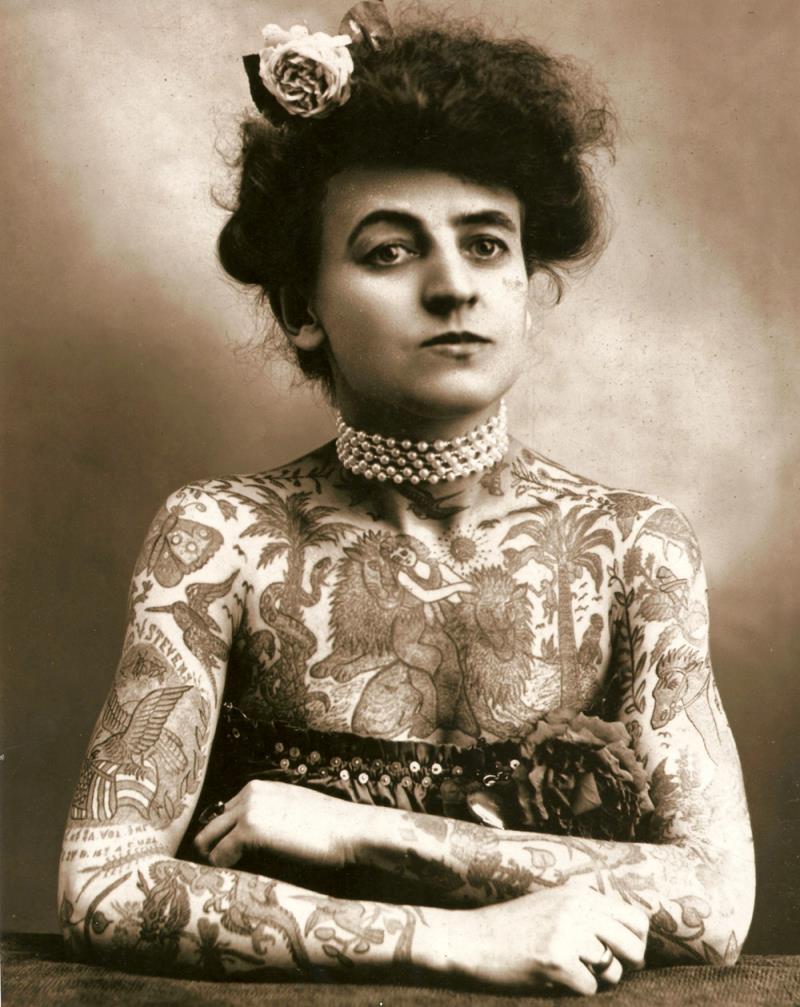
At the St. Louis World’s Fair in 1904, an aerialist named Maud Wagner struck a deal with a tattoo artist. She would go on a date with him — if he taught her how to tattoo. Thus began the two most important love affairs of Wagner’s life: the tattoo artist and tattoos themselves. Not only did Wagner marry the tattoo artist, but she also covered her body in ink — just like him. Her pale skin suddenly blossomed with colorful depictions of lions and butterflies and trees. Magnificent illustrations stretched across her chest, up to her collarbone, and all over her arms. But Wagner was more than just a canvas for other people’s art. She learned the arduous “hokey-pokey” tattooing method from her husband and began to create artistic designs of her own. Wikimedia CommonsMaud Wagner displays some of her many tattoos in the early 20th century. Her skill made her the first female tattoo artist in the United States — as well as an emblem of self-determination when women had few rights. This is her story. History Uncovered Podcast Episode 19: Maud Wagner, The Taboo-Defying Tattoo Pioneer The first-known female tattoo artist in U.S. history, Maud Wagner rewrote the rulebook for what women could do in turn-of-the-century America. Maud Wagner And The Needle Tattoo MuseumA 1902 article describes how Victorian women sought “little fanciful designs” to “adorn themselves.” Maud Wagner, neé Maud Stevens, was born on February 12, 1877, in Emporia, Kansas to David Van Buran Stevens and Sarah Jane McGee. Little is known about Wagner’s early life. But she drifted toward the world of traveling circuses, where she would become an aerialist and contortionist. Wagner would have encountered few openly displayed tattoos in her youth. But tattoos were a popular — if hidden — fad among the upper classes at the end of the 19th century. Even Winston Churchill’s mother had a tattoo (of a snake eating its tail). And in 1897, The New York World guessed that some 75 percent of American society women had tattoos. Victorian-era women who could afford it would have gotten small tattoos, easily hidden beneath the long sleeves and high collars of their day. But the trend was waning. Tattoos, snipped one socialite in 1920, were suitable “for an illiterate seaman but hardly for an aristocrat.” It was a different story in the circus. Missouri State Archives/FlickrCrowds gather at the 1904 World’s Fair in St. Louis, where Maud Wagner met her future husband. In 1904, at the Louisiana Purchase Exposition (also called the St. Louis World’s Fair), Wagner met her future husband, August “Gus” Wagner. Gus stood out even among other circus folks. Known as “The Tattooed Globetrotter,” Gus had nearly 300 tattoos. He claimed to be the “most artistically marked-up man in America.” Over the course of his life, Gus Wagner would collect some 800 tattoos across his entire body. “I’ve got a history of my life on my breast, a history of America on my back, a romance with the sea on each arm, the history of Japan on one leg, and the history of China on the other,” he was known to boast to onlookers. The Alan Govenar and Kaleta Doolin Tattoo Collection/Courtesy of The Seaport MuseumGus Wagner’s impressive collection of tattoos, as depicted in a self portrait. He regaled Maud with stories of his adventures on the high seas. Gus described how he had seen his first tattooed man at the age of 12 — “Captain Costentenus the Greek Albanian” at a traveling show — and how he had learned hand-tattooing techniques from tribes in Java and Borneo. Although a man named Samuel O’Reilly had invented and patented the first electric tattoo machine in 1891, Gus apparently chose to continue with the simpler and more arduous stick-and-poke method. Maud was intrigued. As the story goes, she agreed to go on a date with Gus if he would teach her how to give tattoos. Gus Wagner tattooing Maud Wagner. A deal was struck — and Maud fell in love with both the man and the needle. They married some months later on October 3, 1904, and they soon welcomed a daughter named Lotteva. Before long, Maud Wagner began to grow a collection of tattoos all her own. The First Female Tattoo Artist In The United States Gus and Maud Wagner were some of the last tattoo artists to give tattoos by hand. Maud Wagner’s tattoos were typical of the period. She had patriotic tattoos and designs of animals like monkeys, snakes, and horses. And she also had her own name inked on her left arm. But there was nothing typical about Wagner. She and her husband were covered in tattoos and became popular circus attractions because of it. They might have earned as much as $200 a week (about $2,000 today) just for displaying their inked skin to the public. However, the flare of tattoo popularity at the end of the 19th century had faded. Newspapers had begun to drum the warning that tattoos could spread venereal diseases. And tattoo artists could be hard to find — people couldn’t just waltz into a tattoo parlor like they do today. By 1936, LIFE Magazine estimated that only 6 percent of the American public had tattoos. But if you wanted a tattoo, Gus and Maud Wagner could help. The couple gave tattoos — to both their circus colleagues and curious audience members — inking as many as 1,900 people over just a few months. In an interview with the Dallas Morning News, their daughter Lotteva recalled that most of her parents’ customers wanted “tattoos of their pet dogs, cats, lovers’ hearts, butterflies, and birds. How they do love birds.” Gus and Maud WagnerThe Wagner family looked perfectly “normal” when they covered up their tattoos. Their tattoo work could be so lucrative, she added, that “my father probably earned as much as a bank president at the fair.” Over time, Gus and Maud Wagner would work in vaudeville houses, penny arcades, county fairs, and Wild West shows. They found work as tattooists, tattooed attractions, and circus performers. Working alongside her husband, Maud Wagner became the first female tattoo artist in the United States. But she and Gus could blend in when they wanted to — the conservative clothing popular in the early 20th century effectively masked their colorful skin. Even so, their neighbors in Kansas still told stories about the “circus freaks” next door to scare their children straight. Gus Wagner, who had lived an unconventional life, died in an unconventional way. He was struck by lightning in 1941. Maud Wagner died two decades later, in 1961. Their daughter carried on their tradition. Although she never got tattoos herself — apparently, Maud forbade Gus from tattooing their daughter — Lotteva started tattooing others when she was just nine years old. “Mama wouldn’t let Papa tattoo me,” Lotteva said. “I never understood why. She relented after he died and said I could get tattoos then, but I said that if Papa couldn’t do them like he had done hers, then nobody would.” Maud Wagner’s Legacy Today Wikimedia CommonsFor the most part, tattoos are no longer considered a social taboo in American society today. Maud Wagner would have stood out in her time. Today, she wouldn’t attract much attention walking down the streets of Los Angeles or Brooklyn. But Maud Wagner broke some important barriers in the early 20th century. Not only did she become the first female tattoo artist in the United States, but she also covered her own skin with tattoos — taking ownership of her body in a time when American women couldn’t even vote. In this way, Maud Wagner is also part of a larger trend involving women and tattoos. American women in modern times are actually more likely than men to have ink (23 percent versus 19 percent, according to a 2012 poll). And there may be a reason for that. In the book Bodies of Subversion: A Secret History of Women and Tattoos, Margot Mifflin argues that feminism and tattoos are linked. “Tattoos appeal to contemporary women both as emblems of empowerment [and] self-determination,” Mifflin wrote. Especially at a time “when controversies about abortion rights, date rape, and sexual harassment have made [women] think hard about who controls their bodies — and why.” Women today have also used tattoos as a way to regain control over their bodies after mastectomies. And in some cases, they can actually bill such tattoos to their insurance companies. Since Wagner was such a trailblazer in the world of tattoos, there’s no doubt that she helped pave the way for modern women to take these leaps. By taking ownership of her body, Maud Wagner was a woman before her time — a circus performer and an artist whose greatest creation was displayed on her own skin. After reading about Maud Wagner, take a look at these fascinating tattoo facts. Then, check out these photos of vintage tattoos. The post The Colorful Story Of Maud Wagner, America’s First Female Tattoo Artist appeared first on All That's Interesting.
Like
Comment
Share
History Traveler
History Traveler
6 w

The Tragic And Strange Story Of Hannah Upp, The Missing Woman Who Disappeared Three Times
Favicon 
allthatsinteresting.com

The Tragic And Strange Story Of Hannah Upp, The Missing Woman Who Disappeared Three Times

Find Hannah Upp/FacebookHannah Upp experienced multiple dissociative fugue states, during which she had no recollection of who she was. The disappearance of Hannah Upp in New York City in 2008 launched a frantic search. The 23-year-old was missing for almost three weeks before she was thankfully found safe. But then Upp vanished again in 2013. And again in 2017. And, sadly, she remains missing to this day. However, her disappearances had nothing to do with foul play. Upp had experienced multiple episodes of what is known as dissociative fugue, a rare psychological condition characterized by sudden amnesia and identity loss. People with this condition forget who they are, but retain their knowledge and skills, and often wander far from home. But though Upp was found safe in 2008 and 2013, she sadly has not been seen since she vanished in 2017. Then, Upp was living on St. Thomas, in the U.S. Virgin Islands. She seemingly decided to go for a swim before heading to work, but never showed up. A year later, an adult skeleton washed ashore on a nearby island, but the body was too decomposed to identify. Some believe that may have been the end of the story; others think — and hope — that she might still be out there. Hannah Upp’s First Disappearance In New York City Hannah Upp’s first disappearance occurred on Aug. 28, 2008. At the time, the 23-year-old was a Spanish teacher at Thurgood Marshall Academy in Harlem and a graduate student at Pace University. On that day, she left her Hamilton Heights apartment for a run, leaving her ID, phone, wallet, and passport at home. Find Hannah Upp/FacebookHannah Upp in an undated photo. Then Upp vanished — only to reappear on September 16. She was found floating face down in the Upper Bay near Staten Island, still wearing the red running shorts and black sports bra she’d had on when she vanished. The captain of the Staten Island Ferry happened to spot her in the water, and sent two of the ferry’s deckhands to rescue her. Incredibly, Upp was alive. But confused. From her perspective, time had suddenly jumped forward. “I went from going for a run to being in the ambulance,” she told The New York Times in a 2009 interview. “It was like 10 minutes had passed. But it was almost three weeks.” Though Upp had no memory of what happened in those three weeks, some of the holes in her memory would soon be filled by various surveillance cameras around the city. Upp was seen entering her gym to shower, checking her email at an Apple Store, and engaging in a conversation with a classmate, who had even asked her if she was the missing teacher everyone was looking for. Upp declared that she was not. But other questions remained. Where had Upp slept? What had she eaten? And most importantly, why didn’t she have any memory of the past three weeks? Find Hannah Upp/FacebookDoctors found that Hannah Upp had a very rare psychological condition that causes a temporary fugue state. Doctors soon provided an answer. They diagnosed Hannah Upp with dissociative fugue, a condition which can last days or even years, in which the sufferer forgets their identity but are otherwise able to function as normal. Most people know of the condition because of the character Jason Bourne — portrayed by Matt Damon — who amnesia was inspired by the most famous sufferer of dissociative fugue, a preacher named Ansel Bourne. The preacher vanished for two months in 1887, set up a shop in a different state, and lived under the name Albert Brown. Then, one day, he suddenly remembered who he was and asked, “Where am I?” Indeed, people with dissociative fugue often travel. “People [experiencing dissociative fugue] have been known to not only travel across cities or countries, but also across continents,” Dr. Philip Coons, a professor of psychiatry who wrote a book on the condition, said. “The explanation behind the fugue is that the person is running away from a bad situation, from a bad marriage or a bad financial situation.” But if she was running away from something, Hannah Upp claimed to have had no clue what it was. Ultimately, she took some comfort in the fact that such fugues are normally once-in-a-lifetime events. “If you work through it,” she said, “you can usually go on to live a normal life.” But five years later, it happened again. Hannah Upp’s Second Disappearance In 2013 Almost exactly five years later, Hannah Upp disappeared again. This time, she went missing on Sept. 3, 2018, and was last seen walking to her job as a teaching assistant in Kensington, Maryland. Upp’s purse was found near a local footpath, but she was nowhere to be found. This time, however, Upp reappeared just two days later. On September 5, she found herself in a creek in the Wheaton-Glenmont area with a shopping cart beside her. Upp borrowed a stranger’s cell phone and called her mother, Barbara, who came to retrieve her. Find Hannah Upp/FacebookHannah Upp vanished three times, but hasn’t been seen since 2017. Barbara later likened Hannah’s disappearances to the two distinct definitions of time in ancient Greece: kronos, chronological time as we know it, and kairos, which cannot be measured. “I imagined her as having entered more fully into kairos – the appointed time, the fullness of time,” she told The New Yorker in 2018. “There’s a suspension of certainty.” But while Hannah Upp’s second disappearance initially seemed random, it actually had some similarities to her 2008 disappearance. Both times, Upp had entered a fugue state at the beginning of the school year. Both times, she had seemingly been drawn to the water. And both times, she had just returned from traveling with her father, David. David and Barbara had divorced when their daughter was 15 years old, after which David moved abroad to be a missionary. Once a year, Hannah would travel with David, and this naturally got brought up after her second disappearance, with experts wondering if traveling had in some way been the catalyst for Hannah’s mental state. “Travel? That’s just ‘what we do,'” David told the The New Yorker. “Hannah and I have been to 25 nations together, so it is ‘normal’ not disruptive.” Regardless of the cause, Hannah Upp seemed to quickly recover from the second fugue state. She returned to work just a few days later, and there were no other incidents during the school year. There were discussions about getting her an ankle monitor, but this never happened, and, a year later, she was hired as a teaching assistant at a different Montessori school. Upp moved to the island of St. Thomas, a place she called “paradise.” But paradise proved to be a dangerous place. The Third And Final Disappearance In 2017 For three years, Hannah Upp lived peacefully on St. Thomas in the U.S. Virgin Islands. She loved her work, and was loved by her students. One parent even likened her to a “modern-day Mary Poppins.” Upp also seemed to adore St. Thomas. She referred to her apartment as her “island palace” and swam in the ocean nearly every day. Then, in 2017, her paradise was lost. Public DomainSattelite view of Hurricane Irma. That year, once again in September, two major hurricanes put St. Thomas in their paths. The first, Hurricane Irma, struck on September 6. Eighty-five mile per hour winds tore through the air as Upp and her roommates huddled in the laundry room of their apartment, and the next morning, St. Thomas was a devastated, apocalyptic image of itself. “I don’t recognize anything,” Upp wrote to one friend. Six days later, she drove to the marina to say goodbye to her ex-boyfriend, Joe Spallino, as he was waiting to board a “mercy ship” headed to Puerto Rico, fleeing the island before the next hurricane, Hurricane Maria, was projected to hit. Spallino asked Upp if she would be leaving too. She said that she had decided to stay. After that, Upp stopped using her phone. As she helped staff at the Montessori school prepare for the next hurricane, some noted that she was not acting like herself. But Upp still seemed to remember who she was — she hadn’t entered a fugue again, at least not yet – and seemed determined to remain on the island for the benefit school’s children. “I’m staying – that’s where my heart is,” she told one of her roommates. “School is going to be the first step toward normality for these kids.” On the morning of September 14, with Hurricane Maria still a few days away, Hannah Upp said goodbye to her roommates and headed to the ocean for a pre-work swim. But Upp never arrived at the school. Days passed, and no one heard from her. Friends found her sundress, sandals, and car keys sitting on the stool of a bar on Sapphire Beach, Upp’s favorite snorkeling spot. Her car was in the parking lot; her purse, wallet, passport, and cell phone were inside. Find Hannah Upp/FacebookUpp was a strong swimmer, but the sea was unpredictable between hurricanes. Though Upp was a strong swimmer, searches of the coast turned up nothing. Upp’s name was also not on any of the manifests of those who had left on mercy ships. And after three days, her friends were forced to stop looking. Hurricane Maria was arriving. Though the search for Hannah Upp continued after the hurricane — she was not in hospitals, homeless shelters, morgues, or on the beach — she has not been seen since that September morning in 2017. It’s possible that Hannah Upp died after getting caught in a current – the ocean was behaving abnormally between the two hurricanes – and a badly decomposed skeleton did wash ashore on a nearby island in 2018. Unfortunately, the skeleton was too decomposed to be tested for DNA. But the other possibility is more haunting. Maybe she’s in a fugue state, wandering somewhere, with no idea that the world is looking for her. After learning about the mysterious disappearance of Hannah Upp, read the stories of 11 of the most famous unsolved mysteries. Or, read the strange story of Kenneka Jenkins, the 19-year-old found dead in a hotel freezer. The post The Tragic And Strange Story Of Hannah Upp, The Missing Woman Who Disappeared Three Times appeared first on All That's Interesting.

Like
Comment
Share
Twitchy Feed
Twitchy Feed
6 w

Washington Post Journalists: Unburdened By What Has Been: Grammys Edition
Favicon 
twitchy.com

Washington Post Journalists: Unburdened By What Has Been: Grammys Edition

Washington Post Journalists: Unburdened By What Has Been: Grammys Edition
Like
Comment
Share
Trending Tech
Trending Tech
6 w

5 Cool New Gadgets Every Digital Nomad Should Check Out
Favicon 
www.bgr.com

5 Cool New Gadgets Every Digital Nomad Should Check Out

Are y ou a digital nomad, always on the move and always looking for new tech to make your life easier? Make sure to check out these five gadgets.
Like
Comment
Share
NEWSMAX Feed
NEWSMAX Feed
6 w

Pollster Allocco to Newsmax: Texas State Senate Loss Epic GOP Fail
Favicon 
www.newsmax.com

Pollster Allocco to Newsmax: Texas State Senate Loss Epic GOP Fail

Pollster Patrick Allocco told Newsmax on Monday that Republicans suffered an "epic failure" in a recent Texas State Senate special election after a Democrat won by 14 percentage points in a district long considered safely conservative.
Like
Comment
Share
NEWSMAX Feed
NEWSMAX Feed
6 w

Maryland House OKs New Map; Senate Roadblock Ahead
Favicon 
www.newsmax.com

Maryland House OKs New Map; Senate Roadblock Ahead

The Maryland House approved a new congressional map that could flip the state’s only Republican-held U.S. House seat, but Senate leaders say it lacks sufficient support to advance due to concerns it could backfire.
Like
Comment
Share
NEWSMAX Feed
NEWSMAX Feed
6 w

US Applauds Panama Canal Ruling Against China
Favicon 
www.newsmax.com

US Applauds Panama Canal Ruling Against China

The United States is welcoming a landmark ruling by Panama's Supreme Court that voided long-standing port contracts tied to a China-linked company operating at the Panama Canal, calling the decision an affirmation of the rule of law and national sovereignty.
Like
Comment
Share
YubNub News
YubNub News
6 w

U-Haul Backed Up to the Open Door of the Quality Learing Center in Minneapolis
Favicon 
yubnub.news

U-Haul Backed Up to the Open Door of the Quality Learing Center in Minneapolis

And they'd just fixed the sign and everything. We checked Google, and it told us that the Quality Learning Center in Minneapolis, prominently featured in Nick Shirley's viral video, has closed permanently.…
Like
Comment
Share
YubNub News
YubNub News
6 w

Virginia Op-Ed Calls Proposed Assault Weapon Ban Ineffective, Unconstitutional
Favicon 
yubnub.news

Virginia Op-Ed Calls Proposed Assault Weapon Ban Ineffective, Unconstitutional

After the 1996 Assault Weapon Ban sunset, anti-gunners swore up and down that the drop in the homicide rate was because of the law and it would only go up from there. Advertisement They missed that it…
Like
Comment
Share
Showing 5637 out of 113970
  • 5633
  • 5634
  • 5635
  • 5636
  • 5637
  • 5638
  • 5639
  • 5640
  • 5641
  • 5642
  • 5643
  • 5644
  • 5645
  • 5646
  • 5647
  • 5648
  • 5649
  • 5650
  • 5651
  • 5652
Advertisement
Stop Seeing These Ads

Edit Offer

Add tier


Select an image
Delete your tier
Are you sure you want to delete this tier?

Reviews

In order to sell your content and posts, start by creating a few packages. Monetization

Pay By Wallet

Payment Alert

You are about to purchase the items, do you want to proceed?

Request a Refund