YubNub Social YubNub Social
    #astronomy #police #nightsky #florida #law #racism #electionfraud #voterfraud #civilrights #funny #lawsuit #jupiter #lies #policemisconduct #venus
    Advanced Search
  • Login
  • Register

  • Night mode
  • © 2026 YubNub Social
    About • Directory • Contact Us • Developers • Privacy Policy • Terms of Use • shareasale • FB Webview Detected • Android • Apple iOS • Get Our App

    Select Language

  • English
Community
New Posts (Home) ChatBox Popular Posts Reels Game Zone Top PodCasts
Explore
Explore
© 2026 YubNub Social
  • English
About • Directory • Contact Us • Developers • Privacy Policy • Terms of Use • shareasale • FB Webview Detected • Android • Apple iOS • Get Our App
Advertisement
Stop Seeing These Ads

Discover posts

Posts

Users

Pages

Blog

Market

Events

Games

Forum

Daily Signal Feed
Daily Signal Feed
1 y

NPR and PBS Are Begging for Mercy. They Don’t Deserve It.
Favicon 
www.dailysignal.com

NPR and PBS Are Begging for Mercy. They Don’t Deserve It.

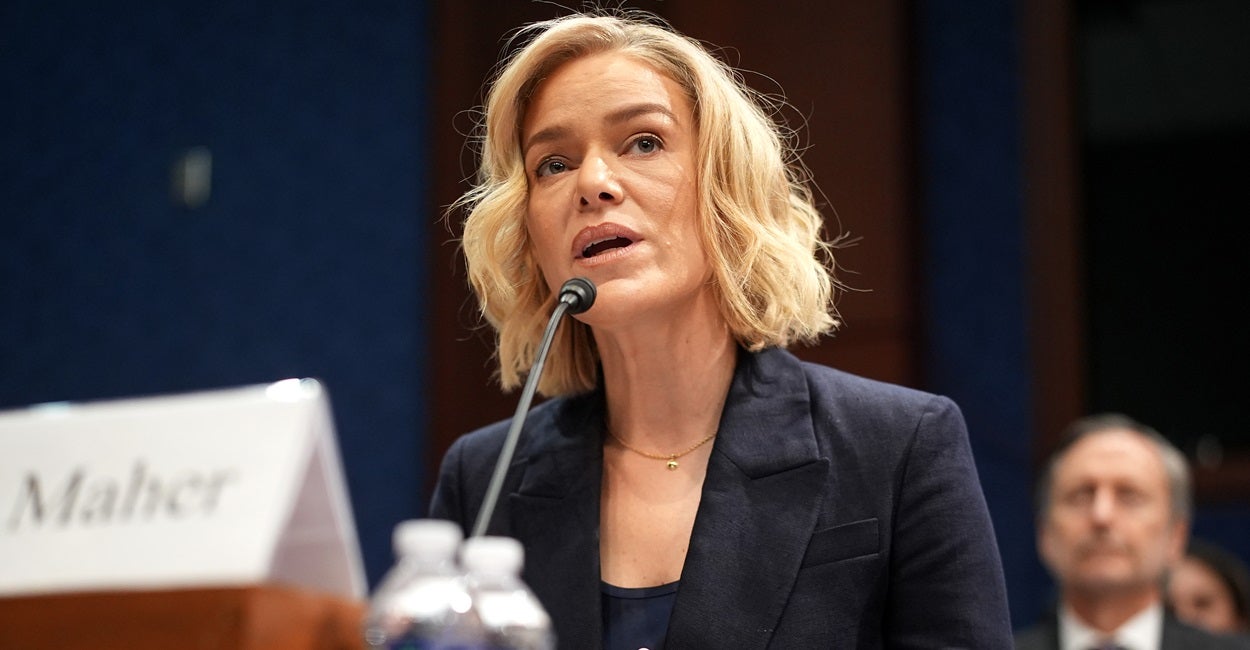
NPR and PBS used to justify their unjustifiable taxpayer funding by telling people that poor children would be harmed if their educational programming was cut. Then, in 2015, “Sesame Street” got a private deal with HBO, and a stream of educational content came online. Now, the mantra is that without public broadcasting, there will be no advance warning systems for weather emergencies in hard-to-reach places and that local news coverage will dry up. The two syllogisms are as follows: 1) Without public media, there is no local coverage, and without local news, there is no democracy, ergo, without public media, there is no democracy. 2) Without public media, there is no warning service, and without warning services, people will die, ergo, without public media, people will die. The last one sounds like a hostage-taking situation: “Send us money, or people will die!” It’s not true, of course, as I said in my testimony this Wednesday in the House Oversight Subcommittee on Delivering on Government Efficiency’s hearing on whether we should cut off public media. The Democrats on the subcommittee, unaware perhaps of the HBO deal, kept bringing out pictures of Elmo, the Cookie Monster, and Big Bird. The CEOs of NPR and PBS, Katherine Maher and Paula Kerger, respectively, who were the star witnesses in the hearing, knew better. They brought with them the head of Alaska Public Media, Ed Ulman. Alaska is exhibit A for “hard-to-reach places.” When I testified, I said that both arguments were hogwash. “Over 98% of Americans today own a mobile phone,” I said. “Even Alaska, one of our most isolated states, has high levels of internet penetration.” To respond to the other argument, I said, “As for the claim that the taxpayer is the last available business model for local news, NPR and PBS are asking us to believe something laughable: that the government can fund a media structure that actually keeps the government in check.” I have thought it out, and I think I may have a solution. If providing warnings for local weather emergencies is really the top concern—it’s not, but let’s call their bluff here—then we should have the taxpayer pay for that, and not for the other nonsense that NPR, PBS, and the rest of state media do. Let’s reduce the Corporation for Public Broadcasting all the way down to a distributor of much-reduced funding to broadcasters of weather emergency systems, and let George Soros, the Tides Foundation, and other donors pick up the tab for NPR and PBS and the public affairs nonsense they put out: “PBS NewsHour,” “Frontline,” NPR’s “Morning Edition,” “Fresh Air,” and the ironically named “All Things Considered.” Congress created the CPB in 1967 with the Public Broadcasting Act. It has two jobs: to collect the monies that Congress appropriates for public broadcasting, $535 million in the continuing resolution that just passed, and distribute that money to PBS, NPR, and more than 1,500 radio and TV stations. So, one way to get rid of the CPB without meeting the 60-vote filibuster threshold in the Senate would be to shrink it to an infinitesimal size. And we would be allaying the fears of the public media folks! Again, this isn’t their real concern, just their latest excuse. The very appearance of Ulman at the hearing was in fact yet another desperate move to keep public funding alive. Conservative presidents and Congresses have tried to get rid of public media since President Lyndon Johnson created it in the late 1960s as part of the Great Society because public media is so biased to the Left. As I said in my testimony, what we have “today is a circular, undemocratic relationship: Democrats unanimously vote for more and more money for public media, and in exchange, public media heavily tip the scales in their favor. It’s a nice arrangement for them, but it must end.” Executives at NPR and PBS really are concerned this time around, with Elon Musk and his Department of Government Efficiency cutting down the bureaucracy. They have been strategizing with their lobbyists for months. Ulman’s appearance was one of these desperate acts of misdirection, the form of deception that magicians practice at children’s birthday parties when they draw the audience’s attention away from one hand and divert it to the other. And what we have here is misdirection on many different levels. First, public media executives wanted Congress and the public to think of Alaska Public Media as the only media outlet that will tell you when the lake is frozen and not think of Alaska Public Media as the stations that led with ugly stories that smeared Sen. Dan Sullivan, R-Alaska, as an antisemite or attacked the administration’s effort to save children from puberty blockers. Second, they want you to think of rural areas such as Alaska as the typical place for NPR and PBS consumers. In reality, as all research shows, the typical NPR listener is a purple-haired adjunct professor in some college town, perhaps teaching gender studies, who actually disparages rural places as “flyover country.” But the ultimate misdirection at the hearing was the attempt to make people think that Ulman, the nice man from Alaska, is the real face of NPR, and not Maher, who wants to suppress ideas she doesn’t like, who calls President Donald Trump a racist sociopath, and who reminds many people of Chairman Mao Zedong at the height of China’s Cultural Revolution. In that, they failed miserably. Republican members eviscerated Maher by just reading back to her her past social media posts and other utterances. A particularly brutal exchange between Maher and Rep. Brandon Gill, R-Texas, went like this: Today I asked @NPR CEO @krmaher to explain her prolific, radically left-wing public commentary. She couldn’t even defend her own words. pic.twitter.com/KuFVylPFsC— Congressman Brandon Gill (@RepBrandonGill) March 27, 2025 Gill: Do you believe that looting is morally wrong? Maher: I believe that looting is illegal, and I refer to it as counterproductive. I think it should be prosecuted to the fullest extent of the law. Gill: Do you believe it’s morally wrong, though? Maher: Of course. Gill: Of course? Then why did you refer to it as counterproductive? They’re very different—very different way to describe it. Maher: It is both morally wrong and counterproductive, as well as being illegal. Gill: You tweeted, “It’s hard to be mad about protests in reference to the BLM protest, not prioritizing the private property of a system of oppression.” You didn’t condemn the looting. You said that it was counterproductive. NPR also promoted a book called “In Defense of Looting.” Do you think that that’s an appropriate use of taxpayer dollars? Maher: I’m unfamiliar with that book, sir, and I don’t believe that [I] was at [that] time. Gill: You tweeted that you read that book, but— Maher: I don’t believe that I did read that book, sir. Gill: Do you think that a few years ago, NPR educated America about “the whole community of genderqueer dinosaur enthusiasts.” Do you think that that’s an inappropriate use of tax dollars? Maher: I was not at NPR at the time, sir. Gill: That’s not the question, though. Do you think that that’s an appropriate use of our tax dollars? Maher: I think our tax dollars that we use are to be able to provide a wide range of perspectives. Gill: I’ll take that as a yes. Things went so badly for Maher that nobody should be surprised if, in yet one more attempt to keep Musk at bay, they find a way to get rid of her. But NPR has tried that before. In 2011, it fired Vivian Schiller as CEO after another scandal in the network, the firing of Juan Williams, and NPR did not get better. It got worse. This is why I told the subcommittee, “Don’t try to mend public broadcasting. End it.” Originally published by the Washington Times The post NPR and PBS Are Begging for Mercy. They Don’t Deserve It. appeared first on The Daily Signal.
Like
Comment
Share
Survival Prepper
Survival Prepper  
1 y

Don’t Get Burned: A Guide to Handling Flammables in a Crisis
Favicon 
www.theorganicprepper.com

Don’t Get Burned: A Guide to Handling Flammables in a Crisis

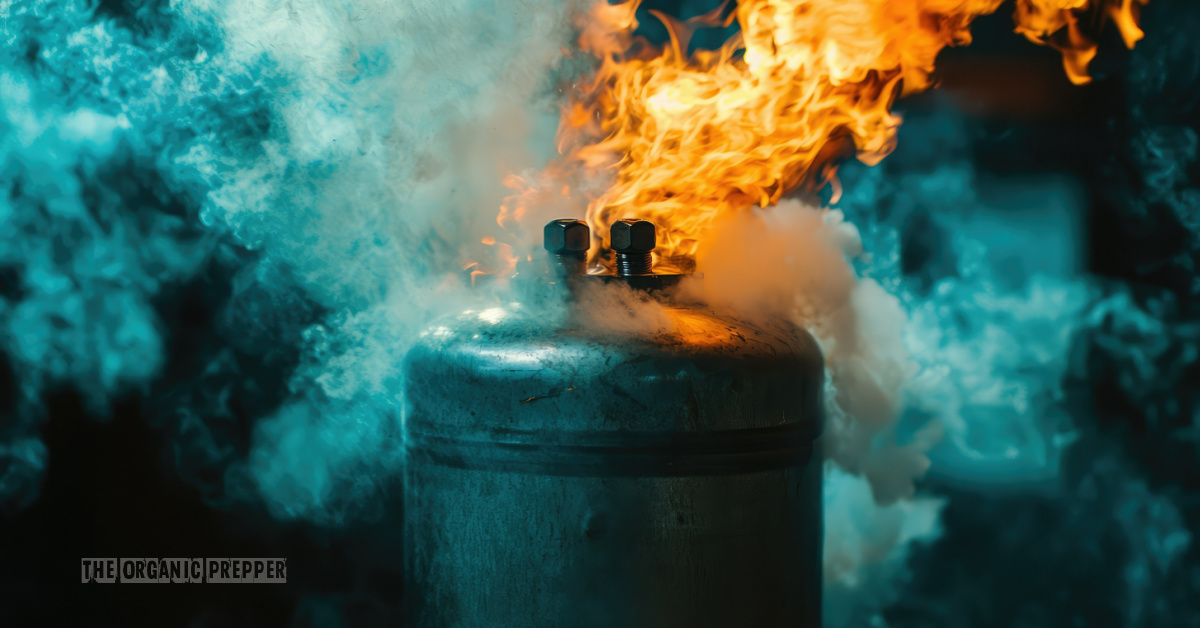
Dear readers, After so much training throughout my career (hazardous atmosphere, confined spaces, and many others), I can’t help but keep fixed in my mind some images I’d prefer not to remember. Yes, I have a vivid imagination, and that works against me. Even in these times where analgesics are easy to find, suffering burns in a large area of the body is an awful way to get hurt. The scary part about this is that we are exposed to such potentially life-threatening situations even in simple tasks, like if we are only working in our car or close to some large pot with boiling water, or a cauldron with melted fat over a stove or firepit. Modern cars use very flammable fuel mixtures with components that, at ambient temperature, start to vaporize. It’s easy for such mixtures to escape through some opening in our engine bay, and with a broken cable or even with the same sparks of the starter, if there is a considerable leak, our engine can catch on fire. There are means to prevent the damage here; installing some heat insulation under the bonnet itself and a blanket of suitable fireproof material means that (probably) some fire that starts underneath could burn and extinguish itself quickly because of the lack of oxygen. Car safety instructors have always informed us that we must NOT open the bonnet if there is a certain indication of fire. An unfortunate tale This advice, sadly, was not followed by one of my neighbors. I hardly met the guy, but it was shocking to learn how he died, indeed. A friend called him (he knew a little about mechanics) to get some assistance with a car that had some combustion problems, and when they were doing a road test, the engine went ablaze. They jumped out of the car…and opened the bonnet. Big mistake. There was an explosion after the excess oxygen hit the flames after the opening, and the heat and flames were enough to melt his clothes on his skin. This was a tragedy in itself. Poor guy was agonizing for almost one year, stripping his family of the savings they all had. The clothes he was wearing were all synthetic, which was almost impossible to remove once they melted, and the subsequent infection kept worsening until the terrible outcome. In times of economic meltdown, hyperinflation, social chaos, natural disasters, or any situation where emergency medical services are as scarce as a decent cup of coffee, preventing accidents becomes your new favorite hobby. You don’t want to play with fire when it comes to handling flammable products like gasoline! I have learned too many stories about people getting badly burned in my life to allow myself NOT to write this article. Risks of Handling Flammables During Crisis Picture this: you’re trying to fill up your generator in the middle of a power outage, it’s pitch black, you’re stressed, and gasoline is spilling everywhere. Sounds like the opening scene of a disaster movie, right? Well, that’s just a typical Tuesday when things go south. Here’s why handling flammables in crisis is like walking a tightrope while juggling flaming torches over a kid pool filled up with gasoline: Resource Scarcity Shenanigans: Once gas is rarer than a unicorn, people get creative—and not in a good way. Overfilling tanks (saw this a lot in the scarcity years, back in 2017-on), using makeshift containers (I even saw people filling plastic garbage bags with fuel. Yikes), and hoarding fuel like a dragon guarding its gold are just a few examples of the shenanigans that can (and surely will) lead to fiery mishaps. Infrastructure Fails and Flaming Fiascos: Damaged pipes, leaky tanks, and other infrastructure failures can turn your surroundings into a giant tinderbox. Keep your eyes open. Stress and Chaos? The Perfect Recipe for Disaster: When you’re stressed, you’re more likely to make mistakes. And when those mistakes involve gasoline, well, things can get toasty. Imagine trying to fill your vehicle gas tank from a jerry can in the middle of the night because you believed you heard someone out there. Heavy, and slippery with all the humidity and fog. It falls down under your car, onto the cement driveway, and keeps pouring until you can reach it and keep filling the tank. Now you are sure someone is watching you from the trees next to the house. There is a pool now right under the engine. The vapors are now concentrating under the hood, waiting for a spark to ignite themselves, setting ablaze the engine bay. You put the jerry can away, and quickly turn the key, and your starter motor then does its thing: spinning at high speed while the brushes generate a few sparks… Medical Care: In crisis situations, hospitals might be overwhelmed, roads might be blocked, and doctors might be busy dealing with more urgent matters. So, a simple burn can quickly turn into a life-threatening situation. They offer a large area for infections, to begin with! Essential Personal Protective Equipment (PPE) Now, let’s talk about what we can do to avoid becoming a human torch. Think of PPE as your superhero suit, protecting you from fiery villains. Here’s what you need: Flame-Retardant Coveralls: These useful coveralls are going to keep your skin safe from splashes, scratches, and bruises in the knees if they’re padded, and even flames. There is a reason why we were issued with these in the oil and gas industry. They’re not stylish for an office everyday garment, but they are comfortable and will protect you from ruining your other clothes. Safety Boots: These boots will protect your toes from falling objects and fiery spills, and your ankles too. We all know survivalists tend to choose good footwear. Not to mention that kicking someone in the shin with a steel-toe boot is going to ruin him the whole week…They could get ablaze but surely will protect them from nasty burns. Fire-Retardant Gloves: Using good safety gloves will let you handle flammable liquids without any harmful effects on your hands if they are rated for these chemicals. I don’t know about you but personally, I hate when my knuckles get scratched wrenching, and I have to handle fuel. These last for some time (I am still using the cheap ones I brought from Peru, and they’re spotless), so if you get good quality ones, they should remain in good shape for a while. Face Masks: Protect your lungs from toxic fumes and gases. Inhaling gasoline fumes is never a good time. I know enough about it: some hydrocarbon derivatives will open holes in your lung tissue. I used to inspect tanks with an organic vapor mask; back then we were allowed by the health regulations to be inside for more than an hour while doing the inspection work I think. Safety Goggles: Protect your eyes from splashes and sparks with good safety goggles. Because nobody wants to wash fuel from an eye, from a gasoline mishap. These things saved me from a nasty injury. I am VERY insistent when my kid or even my dad is working on something even if it is with a small hand tool. These injuries can be really dangerous: eyes are a direct entrance to the brain. Never forget that. Fireproof Blankets: Get a couple of fireproof blankets. These are especially useful for chemical fires, and if you have anything lithium-powered, you better get a few of them just in case. Extra Safety Measures: Because You Can Never Be Too Careful Wearing PPE is like wearing a seatbelt—it’s essential, but it’s not the only thing you should do. Some extra safety measures to keep in mind: Ventilation: Work in well-ventilated areas to avoid those nasty fumes. Open a window, turn on a fan, or work outside. This is common sense, indeed. No Sparks Allowed: Keep flames, sparks, and cigarettes far, far away from flammable liquids. Who smokes nowadays while working mechanics by the way? Electric sparks, however…make sure you won’t have anything to generate an ignition point. Storage: Keep It Cool, Keep It Safe: Store flammables in proper containers, away from heat sources. And remember: modern fuels are more volatile!! Careful Handling: Avoid spills and splashes. Handle those liquids with care, especially if they’re flammable. Emergency Plan: Have a plan in case of fire or spill. Everybody at home should know where the extinguishers are and how to use them. Training: Knowledge is power! Make sure everyone handling flammables knows what they’re doing. Clothes: Avoidance of synthetic clothes is a must. After that awful event I mentioned above, I try to only wear some old work overalla, old jeans, and cotton T-shirts instead of anything plastic when working on my bike. First Aid: When Things Get Toasty Even with all the precautions, accidents can happen. If you or someone else gets burned: Stop, Drop, and Roll (If Applicable): If your clothes are on fire, stop, drop to the ground, and roll around to smother the flames. This is where the fireproof coverall will really shine. Cool It Down: Cool the burn, if any, with cool water for at least 10 minutes. Maybe in a shower or clean tub. Remove Clothing (Carefully): Remove any clothing or jewelry that’s not stuck to the burn. Cover It Up: Cover the burn with a sterile dressing. Get Help: Seek medical attention ASAP, especially for severe burns. If no help is available, this first aid kit contains some prescription burn treatments, among other life-saving products. In my experience, applying aloe vera gel (we have plants at home) is the best we can do. Every time someone gets burned, this is the treatment…because, to be honest, we don’t have anything else. Both my mom and I have had some burns in the kitchen with hot water or oil, and using aloe, in a couple of days, we’re usually good. On a side note, this kid here made a video about reloading extinguishers, which can always be useful once the normal fabric of society is disrupted, we need extinguishers, and there are no firefighters. Disclaimer: Proceed at your own discretion when doing that, of course. It’s not something any of us would advise to do. I hope this experience of mine can help you to maintain the needed safety rules. I know, as well, there are people out there who don’t seem to care too much about safety. Don’t be one of them. Insurance or not. Health is invaluable. Be safe and keep tuned! J. About Jose Jose is an upper middle class professional. He is a former worker of the oil state company with a Bachelor’s degree from one of the best national Universities. He has an old but in good shape SUV, a good 150 square meters house in a nice neighborhood, in a small but (formerly) prosperous city with two middle size malls. Jose is a prepper and shares his eyewitness accounts and survival stories from the collapse of his beloved Venezuela. Jose and his younger kid are currently back in Venezuela, after the intention of setting up a new life in another country didn’t  go well. The SARSCOV2 re-shaped the labor market and South American economy so he decided to give it a try to homestead in the mountains, and make a living as best as possible. But this time in his own land, and surrounded by family, friends and acquaintances, with all the gear and equipment collected, as the initial plan was.  Follow Jose on YouTube and gain access to his exclusive content on Patreon. Donations: paypal.me/JoseM151 The post Don’t Get Burned: A Guide to Handling Flammables in a Crisis appeared first on The Organic Prepper.

Like
Comment
Share
Science Explorer
Science Explorer
1 y

You Have A Helium Balloon In Your Car. What Direction Does It Go When You Accelerate?
Favicon 
www.iflscience.com

You Have A Helium Balloon In Your Car. What Direction Does It Go When You Accelerate?

If you've ever done this, you know it's pretty weird to see.
Like
Comment
Share
Science Explorer
Science Explorer
1 y

Deep Below The South China Sea, China Has Found 100 Million Tons Of Offshore Oil
Favicon 
www.iflscience.com

Deep Below The South China Sea, China Has Found 100 Million Tons Of Offshore Oil

Never mind climate change, here's 100 million tons of oil.
Like
Comment
Share
NewsBusters Feed
NewsBusters Feed
1 y

ABC/CBS/NBC/CNN/MSNBC Spend 10x More Time on Turkish Student Arrest Than MS-13 Leader Capture
Favicon 
www.newsbusters.org

ABC/CBS/NBC/CNN/MSNBC Spend 10x More Time on Turkish Student Arrest Than MS-13 Leader Capture

On March 27 the Trump administration scored a big win with the Virginia arrest of a top MS-13 leader. The day before (March 26) alleged Hamas-supporter and Tufts University student Rumeysa Ozturk was picked up by ICE agents.  So which arrest did the leftist news outlets care more about? The arrest of the Turkish student Ozturk. From March 26 (when the cables first started reporting on Ozturk’s arrest) through March 27 ABC, CBS, NBC, CNN and MSNBC devoted a total of 119 minutes, 18 seconds to the Ozturk case, but just 11 minutes, 42 seconds to the MS-13 leader capture.  That’s ten times more coverage to Ozturk than the capture of MS-13 leader Henrry Josue Villatoro Santos.  In fact, ABC, CBS, NBC didn’t devote a single second to the violent terrorist gang leader’s arrest.  So why the discrepancy? Whereas the arrest of MS-13 leader was a great PR win for Team Trump the footage of Ozturk being arrested on the street prompted leftist anchors, reporters and pundits to decry what they called the “authoritarian” actions of the Trump administration.  On the March 27 edition of MSNBC’s Deadline:White House, Alicia Menendez gravely warned: “The arrest of a Tufts University student captured on video is the latest worrying sign for colleges and universities under the increasing authoritarianism of the Trump administration.” On March 26 CNN News Central host Erica Hill alerted her viewers: “This just into CNN, some chilling video. It shows the moment that a Tufts University grad student from Turkey is arrested and taken into ICE custody.” Over on NBC, anchor Lester Holt opened the March 27 NBC Nightly News this way: “Good evening and welcome. With the Trump administration widening its net against foreigners here both legally and illegally, a rally was held today near Boston in support of a Tufts university doctorate candidate whose arrest by ICE, despite her legal status, has cast a chill across some college campuses.” Executive Editor of NewsBusters Tim Graham observed: “A disparity like this demonstrates that the media prefer one narrative over the other. Trump having a success in arresting a gang leader is too positive to underline. They prefer the narrative that Trump is some kind of dictator arresting foreigners for speaking too freely about the horror of Israel. They don’t even have the shame to notice that Hamas isn’t exactly a free-speech paragon.” Overall, MSNBC allocated the most time on the Ozturk arrest (58 minutes, 48 seconds.) CNN spent 50 minutes, 9 seconds on the Turkish student.  NBC aired 6 minutes, 6 seconds on the Turkish student. CBS provided 2 minutes, 39 seconds on Ozturk. ABC delivered 1 minute, 39 seconds of time to the Tufts University student case.  On the MS-13 leader’s arrest, MSNBC offered a tiny 3 minutes, 43 seconds amount of coverage. CNN aired just 7 minutes, 59 seconds on the gang leader capture.  ABC, CBS, NBC aired zero seconds on the MS-13 leader being brought in. For this study MRC analysts reviewed all the segments on the MS-13 leader and Rumeysa Ozturk arrests aired on ABC, CBS, NBC evening and morning news shows as well as all of the morning, daytime and evening programs on CNN and MSNBC on March 26 and March 27.  
Like
Comment
Share
National Review
National Review
1 y

End Federal School Food Programs
Favicon 
www.nationalreview.com

End Federal School Food Programs

State governments are better positioned to fund and run them.
Like
Comment
Share
National Review
National Review
1 y

Radios and Lifelines
Favicon 
www.nationalreview.com

Radios and Lifelines

On the fate of U.S.-funded news agencies, broadcasting to people in dark places.
Like
Comment
Share
National Review
National Review
1 y

Trump Is Right to Want Open Sea Lanes
Favicon 
www.nationalreview.com

Trump Is Right to Want Open Sea Lanes

Europeans navies aren’t going to deal with the problem (they barely exist), and so it falls to us.
Like
Comment
Share
National Review
National Review
1 y

Republicans Should Squash Tax Hike Talk
Favicon 
www.nationalreview.com

Republicans Should Squash Tax Hike Talk

Raising top marginal rates would be disastrous economic policy and bad politics.
Like
Comment
Share
NEWSMAX Feed
NEWSMAX Feed
1 y

Newsmax IPO Makes Headlines Across the Globe
Favicon 
www.newsmax.com

Newsmax IPO Makes Headlines Across the Globe

Newsmax's debut on the New York Stock Exchange (NMAX) on Monday caught the attention of major media around the globe after its stock price rose over 700% in its first day of trading.
Like
Comment
Share
Showing 58235 out of 125867
  • 58231
  • 58232
  • 58233
  • 58234
  • 58235
  • 58236
  • 58237
  • 58238
  • 58239
  • 58240
  • 58241
  • 58242
  • 58243
  • 58244
  • 58245
  • 58246
  • 58247
  • 58248
  • 58249
  • 58250
Advertisement
Stop Seeing These Ads

Edit Offer

Add tier


Select an image
Delete your tier
Are you sure you want to delete this tier?

Reviews

In order to sell your content and posts, start by creating a few packages. Monetization

Pay By Wallet

Payment Alert

You are about to purchase the items, do you want to proceed?

Request a Refund