YubNub Social YubNub Social
    #music #tew #tuba #euphonium #tew2026 #militarymusic #armymusic #armyband #band #freedom #concertband #tusab #armyorchestra #orchestra #warmup
    Advanced Search
  • Login
  • Register

  • Night mode
  • © 2026 YubNub Social
    About • Directory • Contact Us • Developers • Privacy Policy • Terms of Use • shareasale • FB Webview Detected • Android • Apple iOS • Get Our App

    Select Language

  • English
Night mode toggle
Featured Content
Community
New Posts (Home) ChatBox Popular Posts Reels Game Zone Top PodCasts
Explore
Explore
© 2026 YubNub Social
  • English
About • Directory • Contact Us • Developers • Privacy Policy • Terms of Use • shareasale • FB Webview Detected • Android • Apple iOS • Get Our App
Advertisement
Stop Seeing These Ads

Discover posts

Posts

Users

Pages

Blog

Market

Events

Games

Forum

History Traveler
History Traveler
1 y

Hopes, Fears, and Early Modern Astrology
Favicon 
www.historytoday.com

Hopes, Fears, and Early Modern Astrology

Hopes, Fears, and Early Modern Astrology JamesHoare Thu, 01/09/2025 - 09:45
Like
Comment
Share
Daily Signal Feed
Daily Signal Feed
1 y

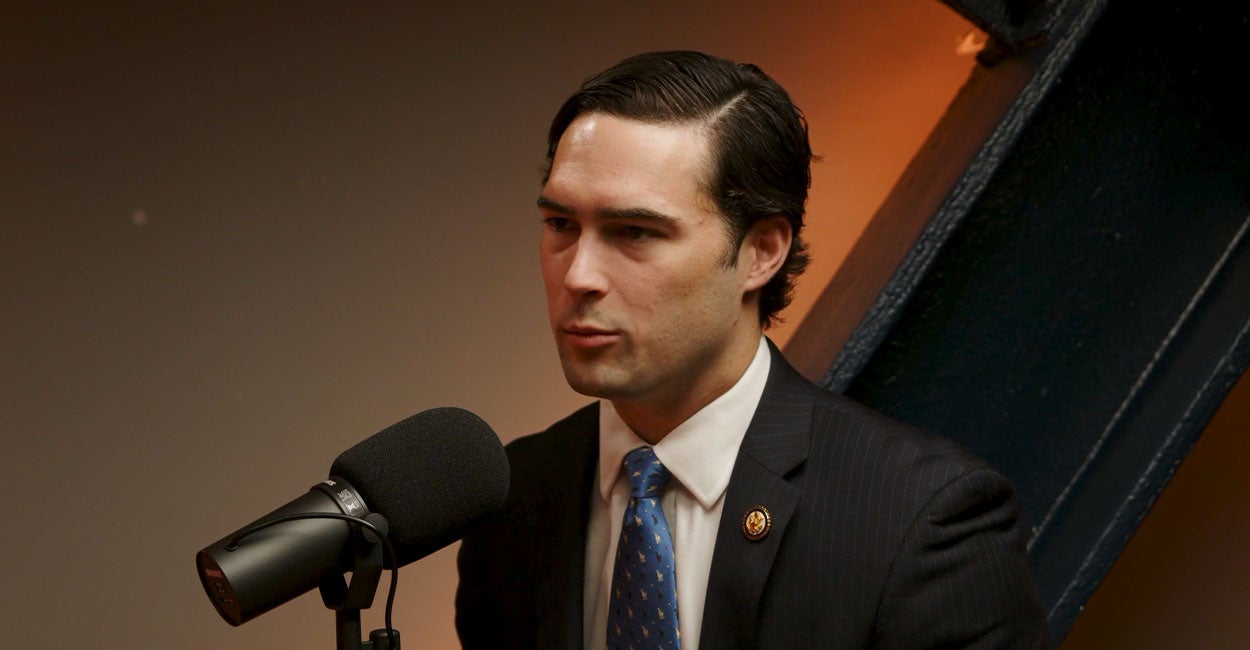
Rep. Brandon Gill: This Could Be Republicans’ Last Chance to Fix Immigration
Favicon 
www.dailysignal.com

Rep. Brandon Gill: This Could Be Republicans’ Last Chance to Fix Immigration

The Republican-controlled Congress has a monumental task ahead of it: Passing the agenda that elected President-elect Donald Trump and gave Republicans control of both the House and Senate. It will be trial by fire for the newest members of the Republican House like Rep. Brandon Gill, R-Texas. This week on “The Signal Sitdown,” I interviewed the newly-minted congressman. Gill gives us an inside look into how new members of Congress go about setting up their offices and getting up to speed on the legislature’s rules and procedures. All the while, these new members are poised to play important roles in the House Republican Conference’s dynamics and in passing the Trump agenda. “Everybody recognizes President Trump’s leadership, and he’s got the ability to sort of bring people in line—to put it nicely—in a way that I don’t think our party has had in decades, if ever,” Gill said of the Republican trifecta. “I think we all recognize this is his mandate,” Gill continued. “We have a majority in the House because of President Trump, not because of anybody else. We have a majority in the Senate because of President Trump. So that is the vision that President Trump has cast for the party, which is an America-first agenda. That’s what we’re going to be focused on passing.” With slim majorities, Republicans in Congress will have to pass large swaths of this agenda through a process called budget reconciliation. Reconciliation is exempt from the 60-vote threshold in the Senate to prevent a filibuster and get legislation passed, but it also to a certain degree limits what can be included in the budget legislation. The razor-thin majority in the House makes the path to success even more narrow and marred with potential pitfalls. House Speaker Mike Johnson is working to guide his energetic and rambunctious Republican conference down this path. “There is no harder job in politics than being a Republican speaker of the House,” Gill claimed. “You’ve got, in the Republican Party, multiple distinct and often irreconcilable ideological factions that he’s got to coalesce into a real political movement that can move legislation. And whenever you have a majority of one or two or three or four, there’s almost no room for error,” Gill explained. “Think about these different factions. You’ve got libertarians, you’ve got the paleoconservatives, you’ve got the neoconservatives, you’ve got the traditional Reagan conservatives, you’ve got variations of that. And there are issues—think of social issues, think of immigration, for instance—where these different factions don’t agree.” “It’s the speaker’s job to bring all of them together and be able to move legislation and at least advance the ball up the field,” Gill said. “That’s going to be particularly difficult with this reconciliation bill.” Nevertheless, Gill has been impressed with Johnson’s leadership in the early days of the 119th Congress and believes Republicans can deliver on a reconciliation bill that passes Trump’s agenda in one fell swoop. But it is new members like Gill who will be keeping GOP mainstays and Republican leadership accountable for delivering the agenda that earned Republicans their trifecta. “This could be the most consequential piece of conservative legislation we’ve seen in decades,” Gill told me. Passing a bold budget reconciliation bill, for example, could mean “real border security,” he said. “We had border security under President Trump. Joe Biden got rid of it. Why is that? It’s because everything’s been done through executive order. Now, I’m thrilled to see President Trump go in and bring back ‘Remain in Mexico’ and bring back all of these executive orders that stopped this flood of—this deluge of—illegal aliens from pouring into the country, but what we really need is to codify those into law so that the next time a Democrat gets elected, which hopefully isn’t for a very long time, they don’t undo all of the progress that Republicans have made.” “That’s what we’ve got to do, and a lot of that can be done in this reconciliation bill. That is enormous—enormously consequential for the trajectory of our country,” Gill said. It could be one of Republican’s last chances before immigration fundamentally changes the nation. “Joe Biden and the Democrats are bringing these people into our country. They’re committing crimes. They’re bringing fentanyl that’s slaughtering American citizens, but they’re also depressing wages and ripping apart our cultural fabric. And if we want to take our country back, we’ve got to send them back to where they came from,” Gill explained. But it’s not just second-order effects of immigration that cause problems. The problem with immigration strikes at the very core of the republic’s representative government. “The purpose for why Democrats are importing these people [is] because they ultimately want these people to be voting for them in future elections. You hear Chuck Schumer talking about, and other Senate Democrats, you hear Democrats in the House occasionally reference that the goal of bringing in illegal aliens is to give them amnesty. And whenever you get amnesty, you become a voter. And that’s what the Democrats want.” Success in budget reconciliation and beyond, Gill suggested, will determine if Republicans are still in control of the House come 2027. “If we want to have a fighting chance at winning the midterms in 2026, we better deliver on the things we said we were going to do,” Gill told me. “And we have to ask ourselves, do we really believe that these tax cuts are going to be beneficial for the economy? Do we really believe that unleashing American energy is going to be good for the working-class American people? Is that going to bring down energy prices? Is that going to create jobs for American citizens? Do we really believe that the American people are against the woke, crazy trans[gender] agenda? Do we really believe that they want border security? I certainly do. And I think most Republicans agree,” Gill explained. “I think that if we want to keep the majority in 2026, we have to do all the things we said we were going to do,” Gill concluded. The post Rep. Brandon Gill: This Could Be Republicans’ Last Chance to Fix Immigration appeared first on The Daily Signal.

Like
Comment
Share
Strange & Paranormal Files
1 y

The Tension Between Anomalies in the Sky and National Security
Favicon 
anomalien.com

The Tension Between Anomalies in the Sky and National Security

The sky is our window to the Universe. Looking up allows us to get informed about our cosmic roots. A lot has happened over the past 13.8 billion years since the Big Bang. At the beginning, there was a nearly uniform soup of elementary particles. But it is sometimes the unimpressive kid in the back of the class that dominates the future. For the cosmos, this unimpressive ingredient was the slight density nonuniformities in the primordial soup. These ended up seeding the gravitational collapse of galaxies, inside of which gas fragmented into stars like the Sun with planets like the Earth forming out of debris disks around these stars. The chemistry of life-as-we-know-it was enabled as soon as the first massive stars exploded in supernovae and enriched their environments with oxygen. Soon afterwards, water molecules emerged when oxygen combined with primordial hydrogen, as demonstrated in a paper I co-authored a decade ago. This sequence of events eventually led to life on Earth, culminating with our modern technological civilization. Given the sextillion Earth-Sun systems in the observable volume of the Universe, it is most reasonable to assume that we are not alone. This premise requires a sense of humility which most humans lack. And so, this humble notion remains controversial with less than a percent of our science funding dedicated to the search for other technological civilizations. This fact alone offers testimony to how unintelligent we sometimes are. Over the past 66 years since the first Luna 1 spacecraft left the Earth’s orbit in 1959, the space around Earth was filled with human-made satellites. Some are U.S. Space Force-operated Defense Support Program (DSP) satellites which serve as early warning systems. These geosynchronous satellites identify missile launches, space launches, nuclear detonations and meteor fireballs by using infrared sensors to detect heat from hot transient plumes against the Earth’s background. Other clusters of satellites improve the ability of the U.S. to conduct other missions of national security relevance, including communication, intelligence, surveillance, reconnaissance, climate monitoring and emergency response. There are currently many more active satellites than there were ever before, even a few years ago. The near-Earth space is becoming increasingly contested, with competitors and adversaries developing counter systems to those employed by the U.S. Department of Defense. In November 2021, Russia launched a direct-ascent anti-satellite weapon that destroyed one of its satellites, creating about 1,500 pieces of debris, many of which are still in orbit. During the Ukraine war, small satellites provided high-speed internet access and backup communications as well as high-quality imagery and geospatial intelligence collection. China employs hundreds of satellites with surveillance and warfare capabilities — aimed to disrupt satellite communications, PNT, GPS, surveillance and reconnaissance. Near-Earth space is currently congested with military assets. In other words, the sky — our only window to the cosmos — is currently cluttered by our warfare gadgets. They not only obscure our view but also introduce tension between our innocent interest in knowing more about the Universe and our down-to-Earth conflicts. This tension is another testimony to how unintelligent we are. Given this tension, it is therefore not surprising that astronomical telescopes which survey the full sky, like Pan STARRS and the upcoming Rubin Observatory, are at risk of revealing the inventory of satellites used for national security purposes by the U.S. Government. For that reason, the U.S. government wishes to remove sensitive information about its space assets from the public database of these survey telescopes, so that the related information will not be available to adversarial nations. In a recent article at The Atlantic, Ross Andersen reported about the experience of the LSST Project Scientist, Željko Ivezić, of the upcoming Rubin Observatory: ‘After some back-and-forth, Ivezić said, he and his counterparts came up with a less invasive way to remove secret American assets from the observatory’s instant alerts. A government agency — no one told him which one — would chip in $5 million for the construction of a dedicated network for moving sensitive data. Each time the telescope were to take one of its 30-second tile images of the sky, the file would be immediately encrypted, without anyone looking at it first, and then sent on to a secure facility in California’. Should we worry that the `baby will be thrown away with the bathwater?’, namely that precious scientific data about our cosmic neighborhood will be lost as the government excises some of the data available to scientists? I was asked these follow-up questions in an email from Arjan Singh. In particular, one may worry that Unidentified Anomalous Phenomena (UAP), potentially linked to extraterrestrial technological gadgets that arrive near Earth, might be removed from the LSST data. I replied to Arjan that as long as UAP have flight characteristics that dramatically exceed human made technologies, they might not be excised from the data. In searching for extraterrestrial artifacts, members of my research team in the Galileo Project will search the publicly available LSST data for UAP and interstellar objects. Arjan replied: “This situation underscores how much hope and trust many of us place in your work with the Galileo Project, which remains free from such constraints. The independence of the project offers a vital avenue for unbiased exploration, and I look forward to seeing the results of its groundbreaking research.” I rest my case. The post The Tension Between Anomalies in the Sky and National Security appeared first on Anomalien.com.
Like
Comment
Share
YubNub News
YubNub News
1 y

UK Government Unveils Sanctions to Disrupt People Smuggling Networks
Favicon 
yubnub.news

UK Government Unveils Sanctions to Disrupt People Smuggling Networks

By Blessing Nweke The UK government is set to introduce new sanctions aimed at undermining the financial operations of people smuggling networks, marking a significant step in the fight against illegal…
Like
Comment
Share
YubNub News
YubNub News
1 y

America’s Public Health Establishment Has Failed the Nation
Favicon 
yubnub.news

America’s Public Health Establishment Has Failed the Nation

The American public is being sold a bill of goods that enrolling everyone in government-approved health insurance — primarily managed care — will improve the nation’s health and close the troubling…
Like
Comment
Share
YubNub News
YubNub News
1 y

U.S. Free Association with Greenland: A Bad Deal
Favicon 
yubnub.news

U.S. Free Association with Greenland: A Bad Deal

In a press conference on Jan. 7, President-elect Donald Trump declined to rule out using military force to acquire Greenland. Previously, he proclaimed that American “ownership and control” of the…
Like
Comment
Share
YubNub News
YubNub News
1 y

New research shows a quarter of freshwater animals are threatened with extinction
Favicon 
yubnub.news

New research shows a quarter of freshwater animals are threatened with extinction

WASHINGTON —  Nearly a quarter of animals living in rivers, lakes and other freshwater sources are threatened with extinction, according to new research published Wednesday. "Huge rivers like the…
Like
Comment
Share
YubNub News
YubNub News
1 y

Whistleblowers: Canadian Doctors Pressuring ‘Useless’ Patients into Euthanasia to Harvest Organs for the ‘Deserving
Favicon 
yubnub.news

Whistleblowers: Canadian Doctors Pressuring ‘Useless’ Patients into Euthanasia to Harvest Organs for the ‘Deserving

Whistleblowers reveal concerns about Canada’s euthanasia program, citing allegations of disabled patients pressured to consent to organ harvesting under the guise of medical assistance in dying. By…
Like
Comment
Share
YubNub News
YubNub News
1 y

Mexico Moves to Disperse Migrant Caravans Ahead of Trump Inauguration
Favicon 
yubnub.news

Mexico Moves to Disperse Migrant Caravans Ahead of Trump Inauguration

The Mexican government is taking steps to disperse migrant caravans heading toward the U.S. border, prompted by President-elect Donald Trump’s threats of imposing significant tariffs on Mexican goods…
Like
Comment
Share
YubNub News
YubNub News
1 y

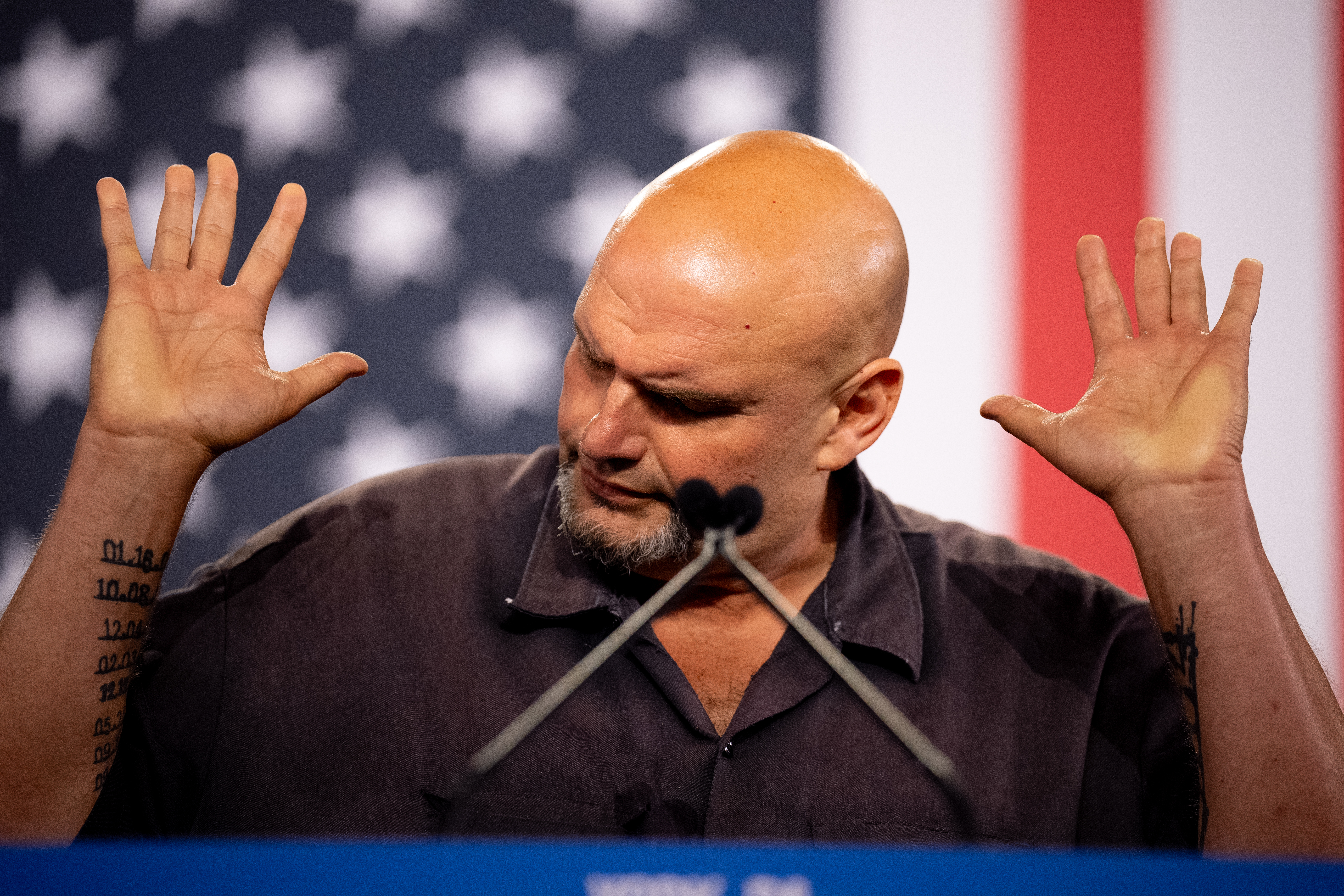
10 Reasons Fetterman Should Just Admit He’s Really a Republican
Favicon 
yubnub.news

10 Reasons Fetterman Should Just Admit He’s Really a Republican

Senator Fetterman, the Pennsylvania Democrat known for his slovenly dress and hulking frame, was once the darling of the party. But all that changed when he began to espouse some more mainstream — some…
Like
Comment
Share
Showing 58655 out of 115332
  • 58651
  • 58652
  • 58653
  • 58654
  • 58655
  • 58656
  • 58657
  • 58658
  • 58659
  • 58660
  • 58661
  • 58662
  • 58663
  • 58664
  • 58665
  • 58666
  • 58667
  • 58668
  • 58669
  • 58670
Advertisement
Stop Seeing These Ads

Edit Offer

Add tier


Select an image
Delete your tier
Are you sure you want to delete this tier?

Reviews

In order to sell your content and posts, start by creating a few packages. Monetization

Pay By Wallet

Payment Alert

You are about to purchase the items, do you want to proceed?

Request a Refund