YubNub Social YubNub Social
    #freedom #americanhistory #amercia250
    Advanced Search
  • Login
  • Register

  • Day mode
  • © 2026 YubNub Social
    About • Directory • Contact Us • Developers • Privacy Policy • Terms of Use • shareasale • FB Webview Detected • Android • Apple iOS • Get Our App

    Select Language

  • English
Night mode toggle
Featured Content
Community
New Posts (Home) ChatBox Popular Posts Reels Game Zone Top PodCasts
Explore
Explore
© 2026 YubNub Social
  • English
About • Directory • Contact Us • Developers • Privacy Policy • Terms of Use • shareasale • FB Webview Detected • Android • Apple iOS • Get Our App
Advertisement
Stop Seeing These Ads

Discover posts

Posts

Users

Pages

Blog

Market

Events

Games

Forum

Conservative Voices
Conservative Voices
1 y

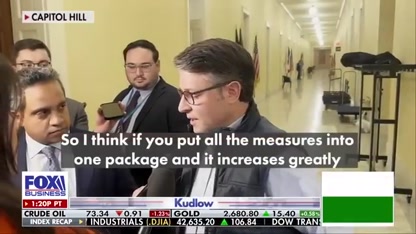
Tariff policy done well can help grow the economy, GOP senator says
Favicon 
www.brighteon.com

Tariff policy done well can help grow the economy, GOP senator says

Follow NewsClips channel at Brighteon.com for more updatesSubscribe to Brighteon newsletter to get the latest news and more featured videos: https://support.brighteon.com/Subscribe.html
Like
Comment
Share
Conservative Voices
Conservative Voices
1 y

This would be a 'major feather in the cap' for Trump, Florida lawmaker hints
Favicon 
www.brighteon.com

This would be a 'major feather in the cap' for Trump, Florida lawmaker hints

Follow NewsClips channel at Brighteon.com for more updatesSubscribe to Brighteon newsletter to get the latest news and more featured videos: https://support.brighteon.com/Subscribe.html
Like
Comment
Share
Conservative Voices
Conservative Voices
1 y

Donald Trump accuses Panama of ‘taking advantage’ of US
Favicon 
www.brighteon.com

Donald Trump accuses Panama of ‘taking advantage’ of US

Follow NewsClips channel at Brighteon.com for more updatesSubscribe to Brighteon newsletter to get the latest news and more featured videos: https://support.brighteon.com/Subscribe.html
Like
Comment
Share
Conservative Voices
Conservative Voices
1 y

THEY HAVE NO WATER’: Trump bashes Newsom’s water preparations in CA
Favicon 
www.brighteon.com

THEY HAVE NO WATER’: Trump bashes Newsom’s water preparations in CA

Follow NewsClips channel at Brighteon.com for more updatesSubscribe to Brighteon newsletter to get the latest news and more featured videos: https://support.brighteon.com/Subscribe.html
Like
Comment
Share
Conservative Voices
Conservative Voices
1 y

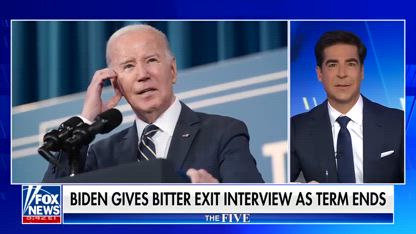
Gutfeld: Biden puts the 'lame' in lame duck
Favicon 
www.brighteon.com

Gutfeld: Biden puts the 'lame' in lame duck

Follow NewsClips channel at Brighteon.com for more updatesSubscribe to Brighteon newsletter to get the latest news and more featured videos: https://support.brighteon.com/Subscribe.html
Like
Comment
Share
Conservative Voices
Conservative Voices
1 y

Getting Russia Right 
Favicon 
www.theamericanconservative.com

Getting Russia Right 


Foreign Affairs Getting Russia Right  A 30-year-old State Department cable sheds light on the Clinton administration’s failures in Russia. (By zodyakuz/Shutterstock) Thirty years ago, March 1994, E. Wayne Merry, a career Foreign Service officer, filed a dissent cable that remained firmly under wraps until last month, when the estimable National Security Archive at George Washington University published it on its website. Many are now comparing Merry’s cable to George F. Kennan’s Long Telegram in its scope and prescience. Merry tells me he finds such comparisons embarrassing—but they are, in my view, both unavoidable and well earned. One big difference of course is that people in positions of influence listened (at first, anyway) to Kennan, but dismissed Merry—and with predictably disastrous results for the U.S.-Russia relationship. The Harvard-inspired economic policies that fell under the rubric of “shock therapy” (which sought to turn what had been a planned, socialist economy for the preceding 70 years into a free market system on Anglo-American lines overnight) contributed to the largest demographic and economic collapse of a modern industrialized country ever recorded in peacetime. Russian economists and scholars compared the economic and social consequences of the American-imposed austerity program on Russia to that which might have been expected from a “medium level nuclear attack.” Merry, who served as chief political analyst at the U.S. Embassy in Moscow 1990–1994, saw what so many within the Washington political establishment chose not to see, that the imposition of the set of foreign economic doctrines on Russia was destroying the lives of ordinary  people—as well as transforming U.S.–Russia relations for the worse.  The story of Washington’s malfeasance toward Russia in the 1990s is not new. The Nobel winner Alexander Solzhenitsyn noted the folly of Washington’s meddling in the post-Soviet space in The Russia Question (1994); the Soviet dissident Andrei Sinyavsky castigated Russia’s Westernizers in The Russian Intelligentsia (1997); here at home, famed Russia scholar Stephen F. Cohen railed against the incompetence of Clinton administration and the myopia of both the scholarly community and the media in Failed Crusade (2000). Yet the release of Merry’s cable is of such note because it shows beyond any doubt that as early as late 1993, the chief architects of the Clinton administration’s doomed project of imposing a foreign economic model on Russia had ample warning from among the best and the brightest analysts at the U.S. Embassy in Moscow. Hubris (even perhaps nihilism) was the hallmark of the American project to remake Russia in its own image in the 1990s. Yet Merry boldly challenged the assumptions underlying the so-called “Washington Consensus” and paid a price for his outspokenness. As Merry has noted, “Washington never forgives the bearer of bad news who is proven right. Never.” And while the State Department is rarely—if ever—welcoming of those who challenge prevailing opinion, Merry credits his then-boss, Ambassador Thomas Pickering, for forwarding on his unpopular missives to Washington. Merry’s critique especially riled America’s free market missionaries at the Treasury Department and within the State Department’s Economic section at the Embassy in Moscow. “Democratic forces in Russia are in serious trouble. We are not helping with a misguided over-emphasis on market economics,” wrote Merry. “There is no reason to believe the Russian economy is capable of rapid market reform,” he continued.  “There is reason to fear,” however, “that an intrusive Western effort to alter the economy against the wishes of the Russian people can exhaust the already diminishing reservoir of goodwill toward America, assist anti-democratic forces, and help recreate an adversarial relationship between Russia and the West.” And on the trajectory Russian foreign policy later took, Merry’s crystal ball was better than most. “They key issue for stability within the former Soviet domain,” said Merry, “is the status and well-being of the twenty-five million ethnic Russians beyond the borders of the Federation. The key country is Ukraine, home to about half of them.” He also noted that “Crimea and the Eastern salient of Ukraine are by far the most dangerous potential conflict zones of the former empire, dwarfing the localized conflicts in the Caucasus and Central Asia in importance.” Read in light of recent events, Merry’s cable makes for riveting reading—by turns startling and depressing, accurately analyzing, in some cases predicting, the myriad problems with the forced transition from a planned to market economy. In so doing Merry intuited the problems that were to come down the line. Toward the end of his cable’s 70 paragraphs, Merry concludes that there was a crucial missing ingredient in the Clinton administration’s best laid plans to transform Russia: respect. “The key to a constructive American role in supporting the growth of Russian democracies, mutual respect,” wrote Merry.  He continued,  One might ask why we should show respect for a country which has inflicted upon itself so many failures over the years. We should do so first because respect is the appropriate medium of interchange with any emerging democracy [and] finally, we should show respect because Russia is their country to do with as they see fit. The more so as we are not prepared to match our advice with money. In this one can hear an echo of Simone Weil’s admonition as to why human beings and nations require respect.  During the Second World War, Weil had written that,  The fact that a human being possesses an eternal destiny imposes only one obligation: respect. The obligation is only performed if the respect is effectively expressed in a real, not a fictitious, way; and this can only be done through the medium of Man’s earthly needs. It is that missing ingredient—perhaps above all else—which goes a long way toward explaining why the U.S.–Russian relationship has unfolded in the way that it has over the past thirty years. The post Getting Russia Right  appeared first on The American Conservative.
Like
Comment
Share
Conservative Voices
Conservative Voices
1 y

Michael Anton: Worthy Heir to George Kennan
Favicon 
www.theamericanconservative.com

Michael Anton: Worthy Heir to George Kennan

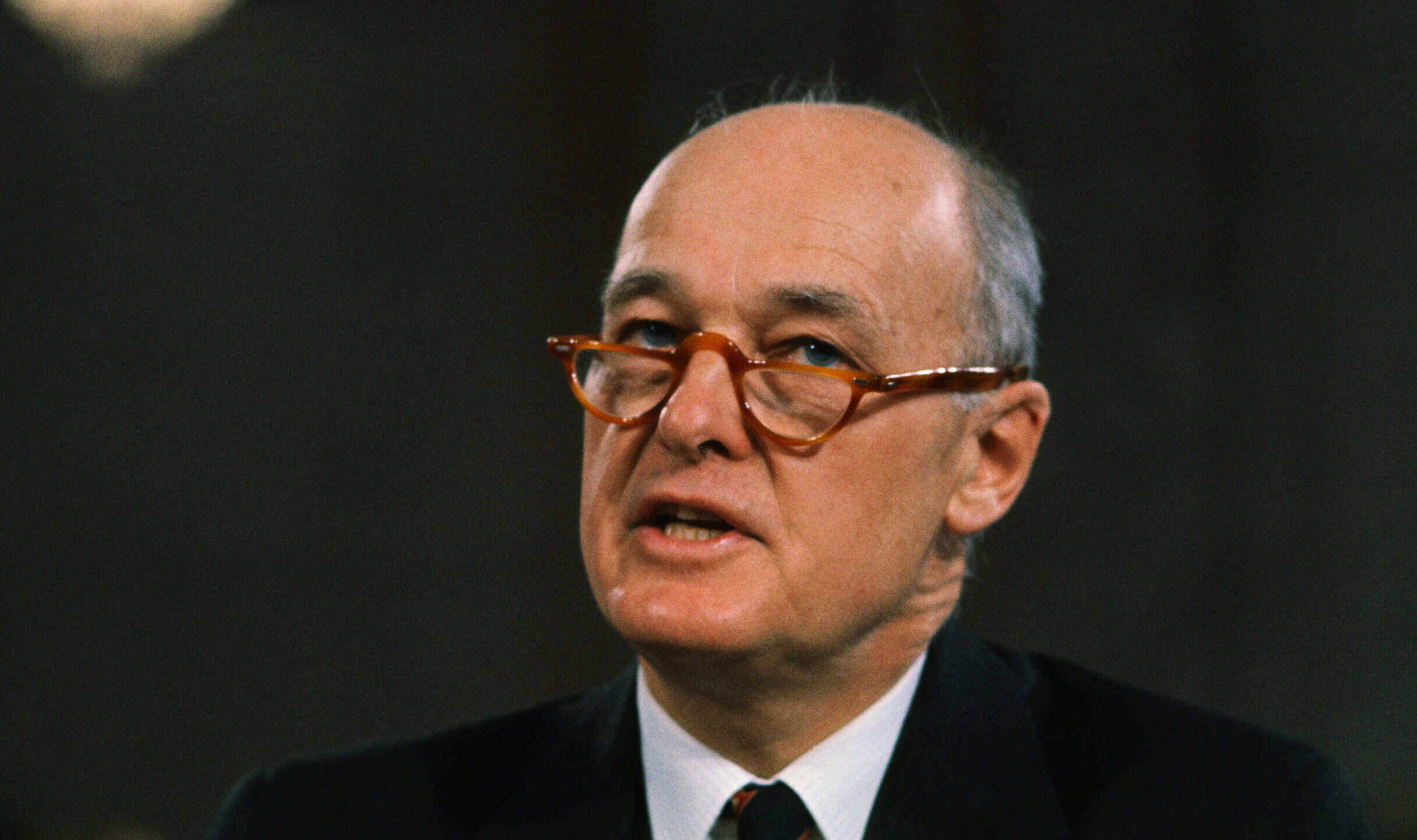
Politics Michael Anton: Worthy Heir to George Kennan More than any recent vintage, the Trumpist intellectual fits the bill for the State Department’s main brain. Credit: Bettmann/Getty Images Michael Anton and I got off on the wrong foot. It’s a dead-and-buried Trumpworld feud, but at one point in time, Michael Anton was on the wrong side of it—or at least he was perceived to be. An April 9, 2018 National Interest article by yours truly declared that “Michael Anton Lost the Faith of the Populist Right.”  The piece featured anonymous quotes by senior Trump administration officials that diagnosed that the then-deputy assistant to the president for strategic communications “was a shill” and to not “believe for a second he resigned out of principle.” Another major Trumpworld interlocutor emailed, “Anton came in as [former National Security Advisor Michael] Flynn’s guy as the biggest proponent of Trump’s ‘America First’ and went to the dark side.”  I stand by the reporting: The quotes were real, and the sentiment against Anton wasn’t beneath the surface; it was piping hot magma spewing from the Trump volcano that weird and fateful spring.  People had it out for Anton. And that’s all I said.  But what wasn’t in the piece (I tried to call balls and strikes a little more fastidiously in those days than I do now as the paleocon crank reporter you know and love) is that the whole feud was doltish. Anton had been a pseudonymous penman behind the virtuoso and now-defunct Journal of American Greatness (one of the few honest outlets in 2016), and put his money where his mouth was by leaving a cush comms job at BlackRock and joining a now self-admittedly ramshackle administration in 2017. Anton went in with Trump’s first national security advisor, Michael Flynn (whom the sage left-wing writer Chris Hedges once floated as Trump’s MAGA heir had the New Yorker lost the 2016 election), and Flynn had been a conquering hero of military intelligence in his commando days. It theoretically was not a joke posting, but Flynn ended up being part railroaded, part naïf, and apparently part enamored of gobs of Turkish dosh.  Flynn lasted a “Scaramucci” or two in the White House, and his most memorable line was “putting Iran on notice,” whatever that meant. It all didn’t work out. Flynn was replaced with H.R. McMaster, a harder-working, more conventional, less interesting version of his predecessor. Anton had two choices: resign in moral protest over his man’s sacking (though it was never clear how close the two ever were or are), or be a good soldier. He chose the latter, and portions of the MAGA right crucified him for it.  I am writing here to say, once and for all, that I don’t regret reporting on the skirmish, but that that kind of criticism was dead wrong. In the years since, Anton has distinguished himself (not that he was lacking) as a cerebral force for those who would like to repair the country along nationalist and populist lines. His retention as the prospective Secretary of State Marco Rubio’s director of policy planning, or Foggy Bottom’s main brain, is a salutary development in what has been a characteristically hurly-burly transition.  Anton survived a rough-hewn cancellation attempt in autumn over his China views for having the temerity to even ask the question, in 2021, on Taiwan if it is “wise to threaten, much less launch, a nuclear strike [emphasis: mine] over a territory [China sees] as a vital organ but is peripheral to us?” Perhaps Anton’s greatest transgression (he is a true student of ideology) is calling out neoconservatives when he sees them.  Also stated in that now-notorious piece in the Federalist: “Even if the great neocon dream for China were suddenly to become reality, a ‘liberal democratic’ Beijing would want Taiwan back too.” (Such realities are seen, on a smaller scale, tonight in the streets of Damascus. In five years’ time, should he still have the throne, will Ahmed al-Sharaa see Syrian interests all that differently than the Assad clan did?) Moving along, Anton has spent the down years between the Trump terms heroically and hilariously combatting the antediluvian Reaganite Mark Helprin on the issue of Ukraine in the pages of the Claremont Review of Books. Anton’s instincts speak well of the fact that at least one member of America’s coming ruling council is skeptical of technocratic blather: “Helprin at times reads like one of those quantitative political scientists supremely confident that everything can be counted, measured, and calculated to exactness. … But he never shows that, not on any point.” If successful, which I suspect will be the case, Anton’s tenure will invariably be compared to that of George Kennan, the hero-founder of the Policy Planning office as Washington was of the presidency and Hamilton of the Treasury Department. Smoothly, Anton has also recently reviewed Kennan, and addressed the late diplomat’s virtues and shortcomings. The two share much: principally, perfectionism and obsessiveness (Anton’s menswear enthusiasm is the stuff of fable at this point.) Per Anton, Kennan had “an overdeveloped conscience.” Anton says Kennan was “sometimes even soft about matters of genuine concern that are better addressed by recourse to that analytical coldness than to emotional appeals, however well-intentioned or deeply felt.”  Anton notes further: “Kennan’s instinctual conservatism ran so deep that he was something of a Luddite. He lived to see the internet but said little about it. Judging from his lifelong disdain for machines and industrialization (he hated cars), he would have loathed Big Tech.” And Anton diagnoses, correctly, how Kennan’s career peaked and then swiftly faded—in the annals of real power, that is:  Kennan continued riding high as long as George Marshall remained secretary of state. But when the former general resigned, citing exhaustion, Kennan’s new boss, Dean Acheson, was far less deferential to his advice. The two went back a long way and were friendly, but Acheson had less patience for Kennan’s mostly long (not to say long-winded) intellectual expositions and preferred attacking problems head-on. Kennan, realizing that his star had dimmed, took a leave, eventually landing a spot at Princeton’s highly prestigious Institute for Advanced Study (then home to Albert Einstein, Robert Oppenheimer, John von Neumann, and many other luminaries). Two years later, he was tapped to return to Moscow, this time as ambassador. But neither President Harry Truman nor Acheson gave him any instructions; to the contrary, they expected him to observe and report—and that’s all. Anton’s goal now? Match—and maybe outlast—his hero. The post Michael Anton: Worthy Heir to George Kennan appeared first on The American Conservative.

Like
Comment
Share
RetroGame Roundup
RetroGame Roundup
1 y ·Youtube Gaming

YouTube
The History of Data East's Captain America and the Avengers - Arcade console documentary - 2025
Like
Comment
Share
Bikers Den
Bikers Den
1 y ·Youtube General Interest

YouTube
Bikers Worst Nightmare | @RowanTheChillGuy
Like
Comment
Share
Conservative Voices
Conservative Voices
1 y Politics

rumbleRumble
Can the FBI Be Reformed?
Like
Comment
Share
Showing 59235 out of 115901
  • 59231
  • 59232
  • 59233
  • 59234
  • 59235
  • 59236
  • 59237
  • 59238
  • 59239
  • 59240
  • 59241
  • 59242
  • 59243
  • 59244
  • 59245
  • 59246
  • 59247
  • 59248
  • 59249
  • 59250
Advertisement
Stop Seeing These Ads

Edit Offer

Add tier


Select an image
Delete your tier
Are you sure you want to delete this tier?

Reviews

In order to sell your content and posts, start by creating a few packages. Monetization

Pay By Wallet

Payment Alert

You are about to purchase the items, do you want to proceed?

Request a Refund