YubNub Social YubNub Social
    Advanced Search
  • Login
  • Register

  • Day mode
  • © 2026 YubNub Social
    About • Directory • Contact Us • Developers • Privacy Policy • Terms of Use • shareasale • FB Webview Detected • Android • Apple iOS • Get Our App

    Select Language

  • English
Night mode toggle
Featured Content
Community
New Posts (Home) ChatBox Popular Posts Reels Game Zone Top PodCasts
Explore
Explore
© 2026 YubNub Social
  • English
About • Directory • Contact Us • Developers • Privacy Policy • Terms of Use • shareasale • FB Webview Detected • Android • Apple iOS • Get Our App
Advertisement
Stop Seeing These Ads

Discover posts

Posts

Users

Pages

Blog

Market

Events

Games

Forum

Conservative Voices
Conservative Voices
1 y

White House cancels USAID funding to media outlets
Favicon 
www.brighteon.com

White House cancels USAID funding to media outlets

Follow NewsClips channel at Brighteon.com for more updatesSubscribe to Brighteon newsletter to get the latest news and more featured videos: https://support.brighteon.com/Subscribe.html
Like
Comment
Share
Conservative Voices
Conservative Voices
1 y

Trump energy chief warns of Biden’s climate change hysteria: ‘Not at all’ how it is
Favicon 
www.brighteon.com

Trump energy chief warns of Biden’s climate change hysteria: ‘Not at all’ how it is

Follow NewsClips channel at Brighteon.com for more updatesSubscribe to Brighteon newsletter to get the latest news and more featured videos: https://support.brighteon.com/Subscribe.html
Like
Comment
Share
Conservative Voices
Conservative Voices
1 y

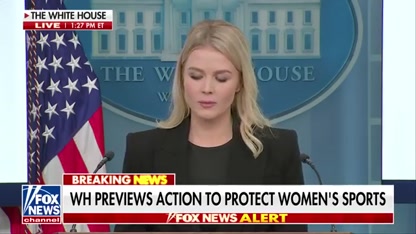
How will the Trump admin protect women's sports?
Favicon 
www.brighteon.com

How will the Trump admin protect women's sports?

Follow NewsClips channel at Brighteon.com for more updatesSubscribe to Brighteon newsletter to get the latest news and more featured videos: https://support.brighteon.com/Subscribe.html
Like
Comment
Share
Conservative Voices
Conservative Voices
1 y

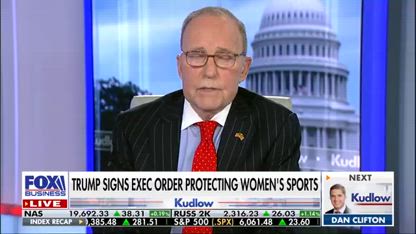
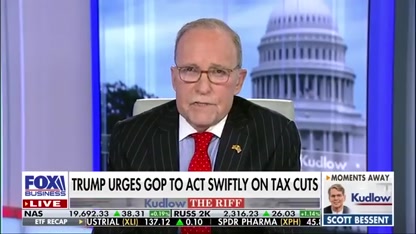
Larry Kudlow: Keep taxes low and revenues will stay high
Favicon 
www.brighteon.com

Larry Kudlow: Keep taxes low and revenues will stay high

Follow NewsClips channel at Brighteon.com for more updatesSubscribe to Brighteon newsletter to get the latest news and more featured videos: https://support.brighteon.com/Subscribe.html
Like
Comment
Share
Conservative Voices
Conservative Voices
1 y

Let South Korea Build the Bomb
Favicon 
www.theamericanconservative.com

Let South Korea Build the Bomb

South Korea is populous and prosperous, ahead of the North on almost every measure of national power, other than possession of nuclear weapons. Yet despite enjoying 50-plus times the economic strength and twice the population of its northern antagonist, the Republic of Korea remains dependent on the United States for its security. However, Washington’s policy of protecting everyone from everyone, treating the Pentagon like an international welfare agency, may be ending. President Donald Trump has said the ROK should pay America $10 billion annually for its defense, horrifying the South Korean public and government alike. Moreover, he has talked about withdrawing U.S. troops, about 28,500 of whom remain on station. Cheong Seong-chang, an advocate of a South Korean nuclear deterrent, recently observed: “Mistrust of the U.S. is growing.” Hence, there is increasingly serious interest in the ROK to match the nuclear capability of the Democratic People’s Republic of Korea. Although South Korean elites have been markedly less enthused about the possibility than the ROK public, given the practical challenges of such a course, a recent poll by the Center for International and Strategic Studies found that these sentiments could change in response to rising “abandonment fears regarding the United States, attendant with policies that denigrate allies and call for troop withdrawals.” Until recently the possibility of a South Korean nuke created near hysteria among U.S. policymakers. For some reason, American analysts and officials prefer to risk Honolulu and Los Angeles for Seoul and Busan. How this is in the interest of the American people is rarely, if ever, addressed. There are lots of good reasons to wish the South well in any conflict on the Korean peninsula, but none warrants America going to war, especially nuclear war. And there is no reason the ROK cannot defend itself. Pusan University’s Robert E. Kelly and Kyung Hee University’s Min-Hyung Kim recently argued that Washington should back a South Korean bomb. They noted that “Today, the biggest obstacle to South Korean nuclearization is not a domestic constituency but a foreign one: the United States.” Yet the U.S. has adapted to friendly nuclear proliferation in the past and could do so in this case. In their view, a “South Korean decision to nuclearize could, on balance, be good not just for South Korea but also for the United States.” Yet their argument comes with a bizarre proviso: Washington should maintain its security commitment to nuclear-armed ROK. Why? Seoul is obviously capable of deploying whatever conventional forces are necessary to deter and, if necessary, defeat the DPRK. If South Koreans also possessed nuclear weapons, why would they need U.S. backing? Even Kelly and Kim acknowledge that “Inter-Korean nuclear parity would end this dangerous impasse, as Seoul would be able to deter Pyongyang without relying on questionable American guarantees.” So why retain questionable American guarantees? A South Korean bomb, they write, “offers strategic benefits for Washington and a salve to a strained alliance. Most obviously, a local South Korean deterrent gets the United States off the hook for direct, immediate involvement in a conflict with North Korea that could go nuclear.” However, if the bilateral relationship is not built on today’s security guarantee backed by tripwire U.S. forces, then what is the “mutual defense” treaty for? The authors contend that their policy “would relieve the United States from its commitment to immediately join a conflict when its very participation would worsen nuclear escalation pressures.” However, Pyongyang is unlikely to be convinced or feel reassured that Washington need not “immediately” enter a war. If American participation is nevertheless expected, the North would still likely believe it necessary to threaten the U.S. homeland. Indeed, as long as the DPRK sees its adversaries as linked militarily, it will have reason to deter America. Would Kelly and Kim have the U.S. withdraw its forces from the peninsula and eschew involvement in a conflict? If so, the treaty should be rewritten. In fact, Seoul and Washington have much they could cooperate on outside of America’s defending the ROK. To avoid any North Korean nuclear threats against the homeland, the U.S. should end its promise to intervene in a conflict between the South and North. Moreover, reducing military commitments is the best way to cut military force structure and budget outlays. In this way the U.S. would take South Korean security concerns seriously. The authors observe: “The United States itself would never tolerate the nuclear vulnerability South Korea now experiences. Rather than insisting that its ally remain imperiled, Washington should drop its barriers to Seoul’s finding its own way to security.” Ultimately, Washington may find that the only way to preserve a productive security relationship with the South—and possibly other Asian allies over time—is to accept their developing nuclear weapons. After all, U.S. opposition increasingly looks self-serving. Observed the Stimson Center’s Asma Khalid: “If Seoul moves to become a nuclear-armed state, it’s conceivable that Tokyo would also acquire atomic weapons to ensure a credible and independent nuclear deterrent. As a result, both nations might view their nuclear capabilities as sufficient deterrence, potentially reducing the need for U.S. forces. From Washington’s point of view, this would weaken the U.S.’ ability to leverage its military footprint in Asia to counter what it considers China’s dangerous and escalatory actions in the South China Sea and Taiwan Strait. Both Tokyo and Seoul look to the U.S. for policy guidance. However, if they develop their own nuclear deterrent, the balance of power between all three governments will shift dramatically. South Korea and Japan could become like France and gain greater strategic autonomy in shaping their security policies. Greater strategic autonomy could weaken the asymmetric dependency that has characterized these alliances, in which the U.S. provides advanced military capabilities in exchange for strategic influence.” Washington should adopt a more restrained, even “humble,” foreign policy, as candidate George W. Bush once advocated. “Strategic influence,” whatever that means in practice, is not worth inserting America into multiple foreign controversies and conflicts of little relevance to U.S. security and risking the homeland to protect friendly states not vital to America’s survival. Washington officials constantly talk about their clout without demonstrating that it exists, and even if it exists, that it matters. American officials have found their ability to impose their will to be limited even when the U.S. is defending client states in war, such as the ROK, Israel, South Vietnam, and Afghanistan. And when the U.S. loses such fights, such as in the latter two cases, the result hasn’t mattered much to America. The predictions of falling dominoes, communist expansion, and rising terrorism proved empty. One of the obvious, or at least what should be obvious, advantages of being a superpower is that most international problems are not existential. Iran matters to Saudi Arabia and Israel, not America. North Korea matters to South Korea, not the U.S. Afghanistan matters to its neighbors, not Washington. Twenty years of nation-building in Afghanistan went bust, and nothing happened internationally. Claims that Moscow attacked Ukraine because of the Biden administration’s botched withdrawal were preposterous on their face. Russia is a nuclear-armed great power, the Taliban is not. Iraq was a terrible debacle, leaving thousands of Americans dead, tens of thousands of Americans wounded, hundreds of thousands of civilians dead, and trillions of dollars wasted. However, most Americans, at least those who did not lose someone close in the conflict, barely noticed. Washington continued to intervene promiscuously around the globe. Consider even World Wars I and II. The first was a stupid battle among colonial powers, with bad guys on both sides—the Entente included the terrorist Serbian regime and anti-Semitic Tsarist despotism. Even a victory by either Germany or the Soviet Union in the second would not have meant America’s destruction. A Eurasia dominated by either of the totalitarian powers would have made an ugly world, but either dictatorial triumph would have been fragile and uncertain. U.S. intervention worked because it was restrained, destroying the most aggressive power while preventing the other one, empowered by American aid, from occupying western Europe. Critically, there was no attempt to “roll back” Soviet domination in the east. U.S. policymakers must decide their ultimate objective. Is it to preserve Washington’s primacy? Or to protect the American people? Many in the foreign policy establishment believe the former enables the latter. Yet when Lord Acton offered his famous aphorism, that “Power tends to corrupt and absolute power corrupts absolutely,” he did not exempt democratic states promoting what they perceive to be the good and wonderful. Given the many inane foreign policies advanced by administrations irrespective of party, it should be evident that hubris, incompetence, corruption, and myopia have grown along with American power. Establishment analysts routinely insist that Washington’s allies are an important strength. If so, the best way to employ them is to shift, not share, defense burdens. Eight decades after the end of World War II, the Europeans should take over their own defense. If Japan fears attack by either North Korea or China, it should accelerate its military spending rather than rely on the U.S. Even more so for the ROK. Seven decades ago it was still recovering from a devastating conflict. However, its economy began taking off in the 1960s. Democracy arrived at the end of the 1980s. Today there is no comparison between the two Koreas. The North is a wreck—impoverished, isolated, backward, and unstable. The South can do whatever it believes is necessary to deter and defeat North Korea. That includes building a nuclear weapon. Rather than objecting, Washington should encourage Seoul to act to protect the South Korean people and nation. Then the U.S. should adjust the bilateral relationship accordingly. A nuclear South would force China as well as North Korea to act more carefully. In this way, a ROK nuclear weapon could allow the U.S. to step back from Asia, simultaneously relieving the U.S. of responsibility for defending the South from the North and reducing the need to constrain Chinese geopolitical and military ambitions.  Politics Let South Korea Build the Bomb President Trump should allow Seoul to develop nuclear weapons in return for ending America’s security guarantee. The post Let South Korea Build the Bomb appeared first on The American Conservative.

Like
Comment
Share
Conservative Voices
Conservative Voices
1 y

Territorial Expansion—and Its Naysayers—Are as Old as America
Favicon 
www.theamericanconservative.com

Territorial Expansion—and Its Naysayers—Are as Old as America

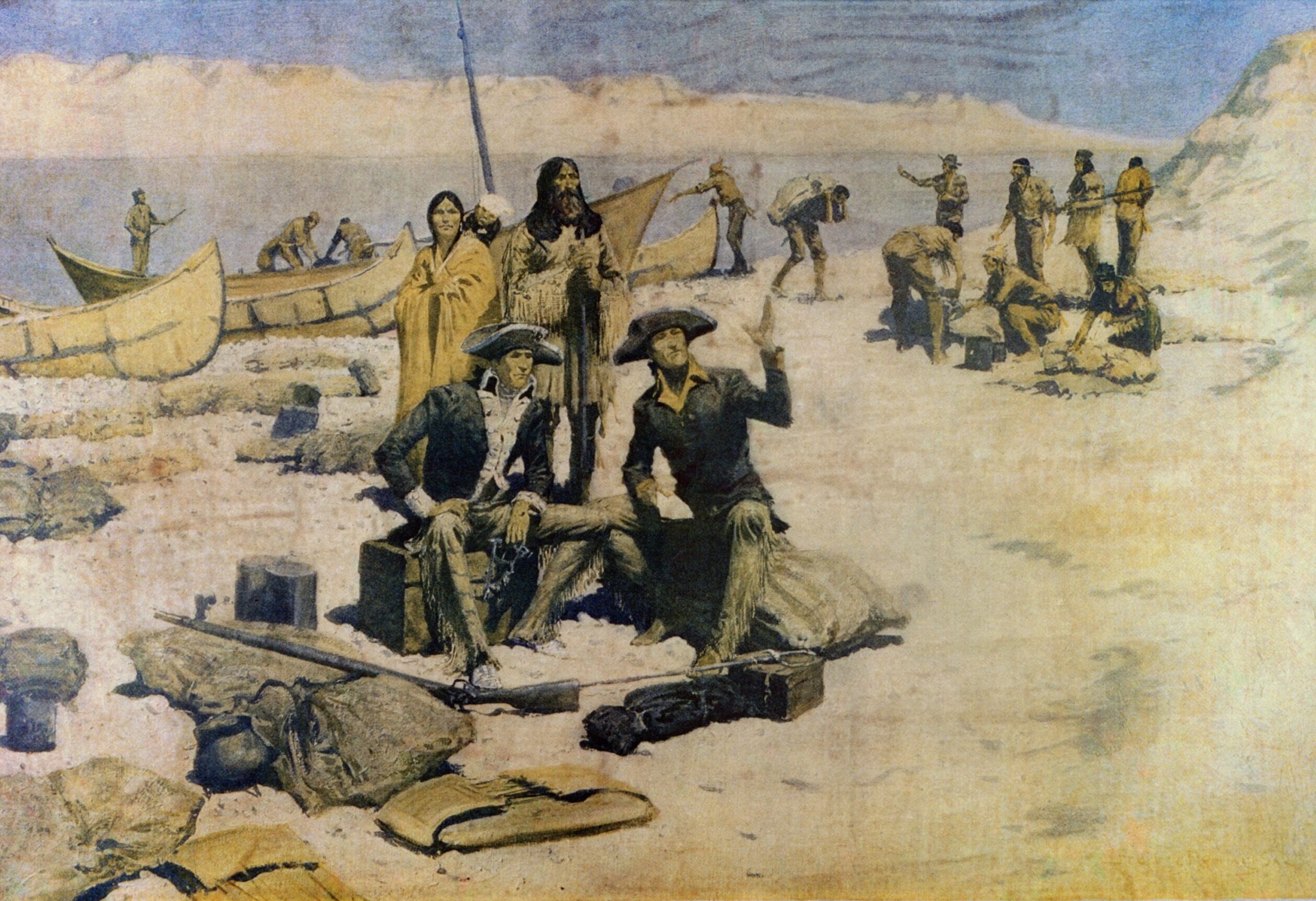
Politics Territorial Expansion—and Its Naysayers—Are as Old as America Nor everyone has been onboard with expanding American borders. The last time the United States expanded its territory—gaining the Northern Marianas and some other Pacific islands—President Donald Trump was just a year old. The fact that so much time has passed makes it easy for critics to dismiss Trump’s recent statements about Greenland and the Panama Canal as outlandish. Looking at the full scope of our 248-year history as a country, however, it is clear that territorial expansion has been an integral and celebrated part of the American story. While it may not be well known, America’s plans for growth in the past—just as today—produced no small amount of protest from the critics.  Take America’s first great expansion, the 1803 Louisiana Purchase, for example. Striking a deal with Napoleon for only about $502 per square mile in today’s dollars, President Thomas Jefferson bought an expanse of wilderness that nearly doubled the size of the country. The Federalists, always eager to oppose Jefferson, acted out of character with their expansive view of the executive branch and argued that the constitution did not give the president the express right to acquire new territory. Fisher Ames, a former Federalist congressman from Massachusetts, complained, “We are to give money of which we have too little for land of which we already have too much.” Alexander Hamilton speculated that the massive territory would likely remain unsettled for centuries to come.  In the 1840s, Whigs like then-congressman Abraham Lincoln saw the Mexican–American War—which eventually won the nation territory comprising all or part of eight of today’s 50 states—as an unnecessary act of land-grabbing aggression. They argued the war served as a pretext on the part of southerners like President James Polk to add new slave states in the southwest. As John Quincy Adams put it, it was a ploy to find “bigger pens to cram with slaves.” In 1847, the Whig-controlled House denounced Polk for the war in a censure vote. The most memorable instance of opposition comes from the 1867 purchase of Alaska from Russia, an initiative of Lincoln’s secretary of state, William Seward. Russia, which had little control over the territory and needed to pay off its Crimean War debts, was eager to sell to anyone but its rival Great Britain. It even considered a deal with tiny Liechtenstein. Some senators, unaware of Alaska’s bounties of gold and oil, regarded the expenditure of $153.5 million in today’s dollars as “reckless and wasteful.” Politicians and journalists famously ridiculed it as “Seward’s folly,” a frivolous purchase of what they called “empty tundra,” a “polar bear garden,” and an “icebox.” The turn-of-the-century acquisition of Hawaii and spoils of the Spanish–American War like Puerto Rico and the Philippines spurred a significant anti-imperialist movement. It gained major backers like the three-time presidential nominee William Jennings Bryan and the writer Mark Twain. The latter suggested the US begin flying a flag with skulls and crossbones in place of the stars. Anti-imperialists warned that owning colonies would lead the U.S. to eventually abandon the principles of self-government laid out in the Declaration of Independence. If Trump manages to purchase Greenland, it would not be the first time the United States acquired land from Denmark. During the First World War, the United States became very concerned that Germany would invade Denmark and use the Danish West Indies – now the U.S. Virgin Islands – as a base to launch submarine attacks. The 1917 deal costing $660 million in today’s dollars was only struck after the United States, frustrated by neutral Denmark’s resistance, suggested it would be willing to take matters into its own hands and occupy the islands. Ninety-nine percent of the islands’ population supported the sale. Support was high in the U.S., as well. When William Seward had floated the idea of purchasing the islands in 1867, though, it failed to receive the support the Alaska plan did. The Senate rejected it despite the fact that Denmark had approved. Some critics argued it was a frivolous adventure at a time when America needed to attend to the more serious issues of Reconstruction. Like the turn-of-the-century anti-imperialists, others saw acquiring a colony to be contrary to the spirit of the American Revolution. As Americans begin to discuss territorial growth in a serious way for the first time in nearly a century, it is worth remembering the great good that expansion has brought us throughout history. California, Alaska, the Mississippi River, and the Rocky Mountains are cherished, integral parts of America. It is hard to imagine America in the 21st century without them. The idea of relinquishing them is unthinkable. This is not to say that the critiques didn’t—or don’t—have some merit. The Mexican–American War produced thorny questions about slave states that set the stage for the Civil War. The occupation of the Philippines is not generally considered a bright spot in American history. Should the new administration pursue new lands, it ought to do so in a just and well-calculated manner. But even for those who believe that Trump’s plans are likely to fail, the possibility should at least spark some excitement. Growth is in our DNA as Americans, from voyages to new continents to journeys into the Wild West to moon landings. In today’s media landscape, the critics have the loudest voices. Should Trump succeed, though, they will likely soon become footnotes for the history nerds. The post Territorial Expansion—and Its Naysayers—Are as Old as America appeared first on The American Conservative.

Like
Comment
Share
Conservative Voices
Conservative Voices
1 y

What Was That?
Favicon 
www.theamericanconservative.com

What Was That?

Foreign Affairs What Was That? Marketing considerations likely motivated President Trump’s statement that Washington “will take over the Gaza strip.”  Credit: image via Shutterstock Among those who have known and worked with him, Donald Trump is said to be an almost compulsive raconteur. His penchant for off-the-cuff pronouncements and, at times, off-color stories, which have earned him the opprobrium of the mainstream media and the pillars of the Washington establishment, has at the same time endeared him to tens and tens of millions of Americans. Only the rarest of political talents could have staged the comeback he engineered in 2024—he is, if nothing else, a brilliant marketer.  The mistake journalists, experts and many millions of Americans (this author very much included) often make when evaluating one or another of Mr. Trump’s pronouncements is to take policy and precedent as a starting point and work backwards from there. More often than not however, the way to successfully untie the Gordian knots that Mr. Trump presents to us, almost as a matter of course, is to start on his home turf: marketing. Let’s briefly consider some of what Trump let fly at last night’s press conference with the MIT-educated Israeli warlord Benjamin Netanyahu.  …The U.S. will take over the Gaza strip, and we’ll do a job with it too. We’ll own it. And be responsible for dismantling all the dangerous unexploded bombs and other weapons on the site, level the site … create an economic development that will supply unlimited jobs and housing for people of the area … I do see a long-term ownership position…We‘re gonna take over that piece and we’re gonna develop it, create thousands and thousands of jobs.” I will leave it to far more seasoned foreign policy hands to explain why such a policy, if implemented, would result in disaster for the country and the Trump presidency. It is almost impossible to believe that Mr. Trump’s closest and most senior advisers like Chief of Staff Susan Wiles or the president’s rather effective and impressive Middle East envoy Steve Witkoff signed off on it. The question I think that needs to be first sorted out is why did he say this? The marketer in Trump had two overarching goals last evening—sadly neither had anything to do with the justice of the Palestinian cause. The first must have had to do with his campaign to win a Nobel peace prize—something that was handed to his predecessor, Mr. Obama, for no reason whatsoever. “I deserve it,” he said in an Oval Office meeting with Netanyahu yesterday, “but no one will give it to me.” This is not the first time Trump has broached the topic of the seemingly out-of-reach Nobel. In 2018, asked if he deserved the prize for his work on easing tensions with North Korea, the master of the paralipsis mused, “Everyone thinks so, but I would never say it.” Trump seems to think that if he can silence Israel’s guns, even at the risk and cost of colonizing the Gaza Strip, he’ll become the toast of Stockholm. Marketing is more often than not about money. And here we get to motive number two. Exactly one year ago, during a talk at Harvard University, Trump’s son-in-law Jared Kushner, who believes he can transform Albania into the next Riviera, said, …Gaza’s waterfront property, it could be very valuable, if people would focus on kind of building up livelihoods, you think about all the money that’s gone into this tunnel network and into all the munitions, if that would have gone into education or innovation what could have been done—it’s a little bit of an unfortunate situation there, but I think from Israel’s perspective I would do my best to move the people out and then clean it up, but I don’t think that Israel has stated that they don’t want the people to move back there afterwards.” Kushner’s talent for understatement (“it’s a little bit of an unfortunate situation there”) is either appalling or enviable. That aside, we see very clearly where Mr. Trump might have gotten his inspiration, if not his talking points, for last evening’s alarming performance. May sanity, somehow, prevail. The post What Was That? appeared first on The American Conservative.

Like
Comment
Share
Conservative Voices
Conservative Voices
1 y

Where Did The Money Go? Zelensky Exposes $102 Billion Black Hole In U.S. Aid To Ukraine
Favicon 
conservativefiringline.com

Where Did The Money Go? Zelensky Exposes $102 Billion Black Hole In U.S. Aid To Ukraine

The following article, Where Did The Money Go? Zelensky Exposes $102 Billion Black Hole In U.S. Aid To Ukraine, was first published on Conservative Firing Line. (Natural News) Ukrainian President Volodymyr Zelensky revealed that only $75 billion of the $177 billion in U.S. military aid intended for Ukraine under the Biden administration has been received. The remaining $102 billion is unaccounted for, sparking outrage and raising questions about accountability and transparency in U.S. foreign aid programs. Zelensky’s comments have reignited debates … Continue reading Where Did The Money Go? Zelensky Exposes $102 Billion Black Hole In U.S. Aid To Ukraine ...
Like
Comment
Share
AllSides - Balanced News
1 y

Favicon 
www.allsides.com

Trump to sign transgender sports order

President Donald Trump will sign an executive order Wednesday that will block transgender athletes from competing in women’s sports. With this latest executive order, Trump will address his campaign promise to “keep men out of women’s sports” and build on the policy he outlined on his first day in office, calling on the federal government to only recognize two sexes: male and female. FULL LIST OF EXECUTIVE ORDERS, ACTIONS, AND PROCLAMATIONS TRUMP HAS MADE AS PRESIDENT “President Trump will...
Like
Comment
Share
AllSides - Balanced News
1 y

Favicon 
www.allsides.com

Trump signs executive order intended to bar transgender athletes from girls’ and women’s sports

President Donald Trump signed an executive order on Wednesday intended to ban transgender athletes from participating in girls’ and women’s sports. The order, titled “Keeping Men Out of Women’s Sports,” gives federal agencies wide latitude to ensure entities that receive federal funding abide by Title IX in alignment with the Trump administration’s view, which interprets “sex” as the gender someone was assigned at birth. “With this executive order, the war on women’s sports is...
Like
Comment
Share
Showing 59802 out of 120293
  • 59798
  • 59799
  • 59800
  • 59801
  • 59802
  • 59803
  • 59804
  • 59805
  • 59806
  • 59807
  • 59808
  • 59809
  • 59810
  • 59811
  • 59812
  • 59813
  • 59814
  • 59815
  • 59816
  • 59817
Advertisement
Stop Seeing These Ads

Edit Offer

Add tier


Select an image
Delete your tier
Are you sure you want to delete this tier?

Reviews

In order to sell your content and posts, start by creating a few packages. Monetization

Pay By Wallet

Payment Alert

You are about to purchase the items, do you want to proceed?

Request a Refund