YubNub Social YubNub Social
    #astronomy #nightsky #florida #humor #law #electionfraud #voterfraud #civilrights #lawsuit #funny #jupiter #policemisconduct #lies #tragedy #transportation
    Advanced Search
  • Login
  • Register

  • Night mode
  • © 2026 YubNub Social
    About • Directory • Contact Us • Developers • Privacy Policy • Terms of Use • shareasale • FB Webview Detected • Android • Apple iOS • Get Our App

    Select Language

  • English
Community
New Posts (Home) ChatBox Popular Posts Reels Game Zone Top PodCasts
Explore
Explore
© 2026 YubNub Social
  • English
About • Directory • Contact Us • Developers • Privacy Policy • Terms of Use • shareasale • FB Webview Detected • Android • Apple iOS • Get Our App
Advertisement
Stop Seeing These Ads

Discover posts

Posts

Users

Pages

Blog

Market

Events

Games

Forum

Science Explorer
Science Explorer
1 y

What Would Actual Scientific Study of UAPs Look Like?
Favicon 
www.universetoday.com

What Would Actual Scientific Study of UAPs Look Like?

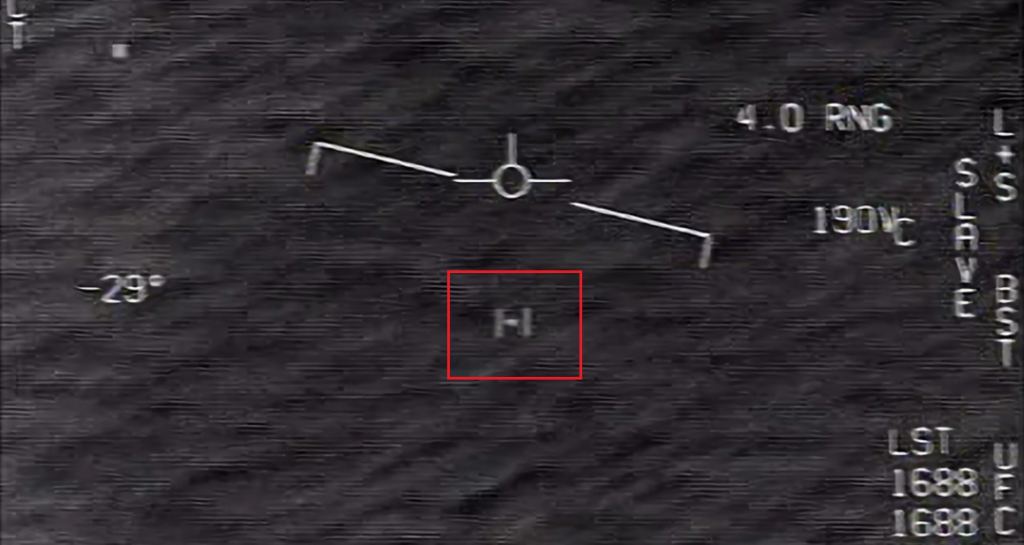
For those who missed the memo, UFOs (Unidentified Flying Objects) are now called UAPs (Unidentified Aerospace-Undersea Phenomena). The term UFO became so closely tied to alien spacecraft and fantastical abduction stories that people dismissed the idea, making any serious discussion difficult. The term UAP is a broader term that encompasses more unexplained objects or events without the alien spaceship idea truncating any useful or honest discussion. While the name change is helpful, it’s just the beginning. We need a way to study UAPs scientifically, and new research shows us how. Though the idea of alien spacecraft visiting us isn’t always taken very seriously, the effort to document UAP and understand them goes back decades. In current times, governments around the world have made more serious efforts to understand what’s behind the phenomena. Most notably, NASA recently initiated a study into UAP called the Unidentified Anomalous Phenomena Independent Study and released its final report in September 2023. New research aims to explore past efforts, dispel some misunderstandings, and enable future research into UAP. The research is titled “The New Science of Unidentified Aerospace-Undersea Phenomena (UAP).” The lead author is Kevin Knuth from the Department of Physics at the State University of New York at Albany. The research is available on the pre-press site arxiv.org. “After decades of dismissal and secrecy, it has become clear that a significant number of the world’s governments take Unidentified Aerospace-Undersea Phenomena (UAP), formerly known as Unidentified Flying Objects (UFOs), seriously–—yet still seem to know little about them,” the authors write. “As a result, these phenomena are increasingly attracting the attention of scientists around the world, some of whom have recently formed research efforts to monitor and scientifically study UAP.” Many UAP have good explanations, like this image from the Apollo 16 mission to the moon that shows what may look like a flying saucer. In 2004, NASA said it was the spacewalk floodlight/boom that was attached to the Apollo spacecraft. Image Credit: NASA The authors review about 20 historical studies, some done by governments and others by private researchers, between 1933 and the present. Countries include the USA, Canada, France, Russia, and China. Their goal is to summarize and clarify the scientific narrative around UAPs. “Studies range from field station development and deployment to the collection and analysis of witness reports from around the world,” the authors write. The main obstacle to studying UAPs is that they’re neither repeatable nor controllable. Another problem is that witness reports are unreliable, often explained away as natural phenomena, or dismissed outright by citizens, scientists, and governments. This has dissuaded serious discussion and study and left us in “a rather disconcerting state of ignorance,” the authors write. Ignorance is seldom desirable, though it can sometimes provide a false sense of relief. Being disconcerted is likewise undesirable. What can be done? “The problem and opportunity that we face today is that the situation has changed dramatically,” according to the authors. We now know that the US Defense Intelligence Agency (DIA) conducted a covert, six-year program called the Advanced Aerospace Threat Identification Program (AATIP) to study UAP. With 50 full-time investigators, the AATIP dwarfed other UAP efforts. The AATIP focused on military-only encounters and considered things like psychic and paranormal phenomena correlated with UAP events. The AATIP created a massive amount of data on UAP that encompassed more than 200,00 cases. (Alarmingly, the effort also produced more than 200 research papers, some over 100 pages long, and none of them have ever been seen by the public or by the US Congress.) This proves that the effort to study and understand UAP has gained traction and moved from the fringe to the mainstream. It’s a signal that UAP research could see increased funding and resources. According to the researchers, that means there needs to be a coordinated effort. The effort needs to be scientific, and data needs to be shared among researchers. The geographic distribution of UFO sightings. One of the puzzling things about sightings is that they’re not distributed in any way that makes sense. Does culture play a role? Image Credit: sammonfort3 Enough research has been done to make the next steps clear. “It is generally agreed that the optimal methodology to study UAP relies on many different types of instruments, spatially separated, to dramatically reduce the possibility of error,” the authors write. “This is the only way in which the scientific community will recognize truly anomalous data.” The authors say that multi-messenger astronomy, in which objects are studied across wavelengths with multiple telescopes, is a good model for the future study of UAP. Rigor is required for UAP studies and data to be taken seriously. One group arguing in favour of more UAP scientific research is the UAlbany-UAPx Collaboration, an organization that the lead author of this research, Kevin Knuth, is involved with. They developed rigorous definitions of what detections constitute a UAP and recommended that “at least two of each type of sensor and 2+ distinct sensor types” be used in the effort to study UAP. The future effort to understand UAP must migrate in from the fringes and adhere to scientific standards in other disciplines. “This way, one rigorously quantifies the meaning of extraordinary evidence, in the same way it has been done historically by particle physicists, who have established a very high bar to clear,” the authors write. The researchers also explain how our burgeoning fleet of satellites could play a larger role in the study of UAP. “UAP researchers are now considering the air and space domains as open-air laboratories, utilizing these vast environments for systematic scientific inquiry,” they write. Throughout most of history, satellite data has been restricted to large governments and their defence and military organizations. But their monopoly on the data is withering away. Satellite imagery and data are routinely shared with the public and are freely available for scientific use. Coinciding with greater accessibility is greater quality. “Thanks to significant technological advancements and the proliferation of commercial satellite services, access to satellite data has expanded dramatically. In addition, rapid advances in information and communication technologies have opened new avenues for many more actors,” the authors explain. This image shows one of the NOAA’s Geostationary Operational Environmental Satellites (GOES)–R Series. It’s the Western Hemisphere’s most sophisticated weather-observing and environmental monitoring system. The GOES-R Series provides advanced imagery and atmospheric measurements, real-time mapping of lightning activity, and monitoring of space weather. Could satellites like it be used in the scientific study of UAPs? Image Credit: NOAA Though current satellites aren’t aimed at studying UAP, their sensors can be used to examine environments near reported UAP. This brings up another parallel between astronomy and UAP. We have telescopes that scan the sky for transients and when they detect one, they send out urgent messages to other telescopes suited for follow-up observations. The same arrangement could work in the study of UAP. Advancements in science and astronomy can also benefit the study of UAP. Tools such as cloud computing, artificial intelligence (AI), and machine learning (ML) now enable scientists to gather, store, transmit, and analyze data more efficiently than ever before,” the authors write. There’s an ongoing democratization of data sharing that can be leveraged in the study of UAP. UAP are not one thing. Only a dedicated, serious effort to understand them as they appear can determine if there’s something there deserving of deeper study. The authors argue that a “paradoxical loop of dismissal in mainstream science” is preventing progress. The paper outlines a way to cancel that paradox based on the sound methods of the scientific method. The problem is that detecting them scientifically requires a very wide net of detectors and significant resources over long periods of time. That, again, parallels how we do other science. “Only long-term, transgenerational research programs, such as enjoyed by many research programs well established and stabilized within academic science now for many decades, can possibly yield the proper data on which a potential resolution to UAP can be founded,” the authors write. However, we’re not starting from scratch. “Our aim here is to enable future studies to draw on the great depth of prior documented experience,” the researchers explain. Research: The New Science of Unidentified Aerospace-Undersea Phenomena (UAP) The post What Would Actual Scientific Study of UAPs Look Like? appeared first on Universe Today.

Like
Comment
Share
Science Explorer
Science Explorer
1 y

Webb Space Telescope Tracks Fireworks Around Our Galaxy’s Black Hole
Favicon 
www.universetoday.com

Webb Space Telescope Tracks Fireworks Around Our Galaxy’s Black Hole

The supermassive black hole at the center of our Milky Way galaxy may not be as voracious as the gas-gobbling monsters that astronomers have seen farther out in the universe, but new findings from NASA’s James Webb Space Telescope reveal that its surroundings are flaring with fireworks. JWST’s readings in two near-infrared wavelengths have documented cosmic flares that vary in brightness and duration. Researchers say the accretion disk of hot gas surrounding the black hole, known as Sagittarius A*, throws off about five or six big flares a day, and several smaller bursts in between. The observations are detailed today in The Astrophysical Journal Letters. “In our data, we saw constantly changing, bubbling brightness. And then boom! A big burst of brightness suddenly popped up. Then, it calmed down again,” study lead author Farhad Yusef-Zadeh of Northwestern University in Illinois said in a news release. “We couldn’t find a pattern in this activity. It appears to be random. The activity profile of this black hole was new and exciting every time that we looked at it.” Yusef-Zadeh and his colleagues observed Sagittarius A* using JWST’s Near-Infrared Camera, or NIRCam, for a total of 48 hours, broken up into eight- to 10-hour increments over the course of a year. They expected to see flares, but they didn’t expect the black hole’s surroundings to be as active as they are. The researchers suggest that two separate processes are sparking the light show. The smaller flares may be due to turbulence in the accretion disk, compressing the disk’s hot, magnetized gas. Such disturbances could throw off brief bursts of radiation that Yusef-Zadeh likens to solar flares. “It’s similar to how the sun’s magnetic field gathers together, compresses and then erupts a solar flare,” he explained. “Of course, the processes are more dramatic because the environment around a black hole is much more energetic and much more extreme.” The bigger bursts could be due to magnetic reconnection events. That would occur when two magnetic fields collide, throwing off bright blasts of particles that travel at velocities near the speed of light. “A magnetic reconnection event is like a spark of static electricity, which, in a sense, also is an ‘electric reconnection,’” Yusef-Zadeh said. Another unexpected finding has to do with how the flares brighten and dim when seen in two different wavelengths. Events observed at the shorter wavelength changed brightness slightly before the longer-wavelength events. “This is the first time we have seen a time delay in measurements at these wavelengths,” Yusef-Zadeh said. “We observed these wavelengths simultaneously with NIRCam and noticed the longer wavelength lags behind the shorter one by a very small amount — maybe a few seconds to 40 seconds.” Those observations could serve as clues to the physical processes at work in the disk swirling around the black hole. It could be that the particles thrown off by the flares lose energy more quickly at shorter wavelengths than at longer wavelengths. That’s the pattern you’d expect for particles spiraling around magnetic field lines in a cosmic synchrotron. Now researchers are hoping to get a longer stretch of time on JWST, which should help them reduce the noise in their observations and produce a more detailed picture of what’s going on at the center of our home galaxy. “When you are looking at such weak flaring events, you have to compete with noise,” Yusef-Zadeh said. “If we can observe for 24 hours, then we can reduce the noise to see features that we were unable to see before. That would be amazing. We also can see if these flares repeat themselves, or if they are truly random.” In addition to Yusef-Zadeh, the authors of the study in The Astrophysical Journal Letters, “Nonstop Variability of Sgr A* Using JWST at 2.1 and 4.8 ?m Wavelengths: Evidence for Distinct Populations of Faint and Bright Variable Emission,” include H. Bushouse, R.G. Arendt, M. Wardle, J.M. Michail and C.J. Chandler. The post Webb Space Telescope Tracks Fireworks Around Our Galaxy’s Black Hole appeared first on Universe Today.

Like
Comment
Share
Strange & Paranormal Files
1 y ·Youtube Paranormal

YouTube
Snow Day Live! Come hangout with Mystery Archives!
Like
Comment
Share
Country Roundup
Country Roundup
1 y

Musical About The Life Of The Late, Great Loretta Lynn In The Works Called ‘Coal Miner’s Daughter’
Favicon 
www.whiskeyriff.com

Musical About The Life Of The Late, Great Loretta Lynn In The Works Called ‘Coal Miner’s Daughter’

Headed to the big stage. Today, it was announced that a musical based on the of the life of Loretta Lynn is headed to Broadway, titled after the iconic 1980 film of the same name and her legendary song, Coal Miner’s Daughter. The musical will star Sutton Foster as Mrs. Lynn, and it will be directed by very famous Broadway names in Tony Award-winner Sam Gold and composer Jeanine Tesori. The production is currently in development, and Loretta Lynn’s manager, producer, and daughter, Patsy Lynn, and longtime adviser, Nancy Russell, will act as consulting producers. According to Deadline, Foster has appeared on Broadway in this season’s Once Upon A Mattress revival, as well as productions like Grease, Little Women, Young Frankenstein, Shrek the Musical, Violet, The Music Man and Sweeney Todd: The Demon Barber of Fleet Street. Her most recent Tony Award nomination came in 2022 for The Music Man, which she starred in opposite Hugh Jackman. Of course, the Broadway musical will feature music from Loretta’s legendary career, share stories from her life that goes past the ending of the film, and chronicles Lorett’s life from humble beginnings in rural Butcher Holler, Kentucky to becoming a country music icon who made the genre what it is. Loretta sadly passed on October 4th, 2022, but she left behind an enduring legacy created by honest songs about her life and experiences as a woman who came from nothing, got married very young, raised six kids and managed to chase her music dreams and live a whole lot of life along the way. She sold over 45 million records worldwide, multiple Grammy Awards, Country Music Association (CMA) awards, and even a Presidential Medal of Freedom. Her family says they are “so grateful” that their mother’s life will be brought to life in such a big an special way: “We are so grateful to see that our mother’s life story and music will continue to touch the hearts of audiences and remain an important statement of the American dream. As one of the last creative projects our mom was so passionate about, we are thankful that she had the opportunity to experience the initial stages of Sutton’s sincere portrayal of Loretta. Mom absolutely fell in love with her and thought she was just the right person to play her onstage. The family is moved by this incredible team’s commitment to her legacy.” Broadway veterans Kristin Caskey, Mike Isaacson, Bee Carrozzini, and ATG Entertainment will produce the musical Coal Miner’s Daughter, which will likely debut sometime later this year or in 2026. Of course, she’s not the only country music icon to have her life featured as a Broadway musical in the near future, as Mrs. Dolly Parton also has one in the works called Dolly: An Original Musical, which is slated to premiere in Nashville later this year. She has been very involved in the writing, development and production of the music for the show, and it’s cool to see two legendary ladies, who were also close friends, be the topic of two such big productions at the same time. You’d be hard-pressed to find two more influential, legendary ladies in the genre, and while country music has largely been ignored when it comes to major productions like this, they are finally getting their flowers, so to speak, and I’m going to do everything I can to make sure and support both of them. Their lives are each way more interesting than any weird concept they could make up, and I have no doubt they’ll each be huge hits. “Coal Miner’s Daughter” The post Musical About The Life Of The Late, Great Loretta Lynn In The Works Called ‘Coal Miner’s Daughter’ first appeared on Whiskey Riff.
Like
Comment
Share
Fun Facts And Interesting Bits
1 y

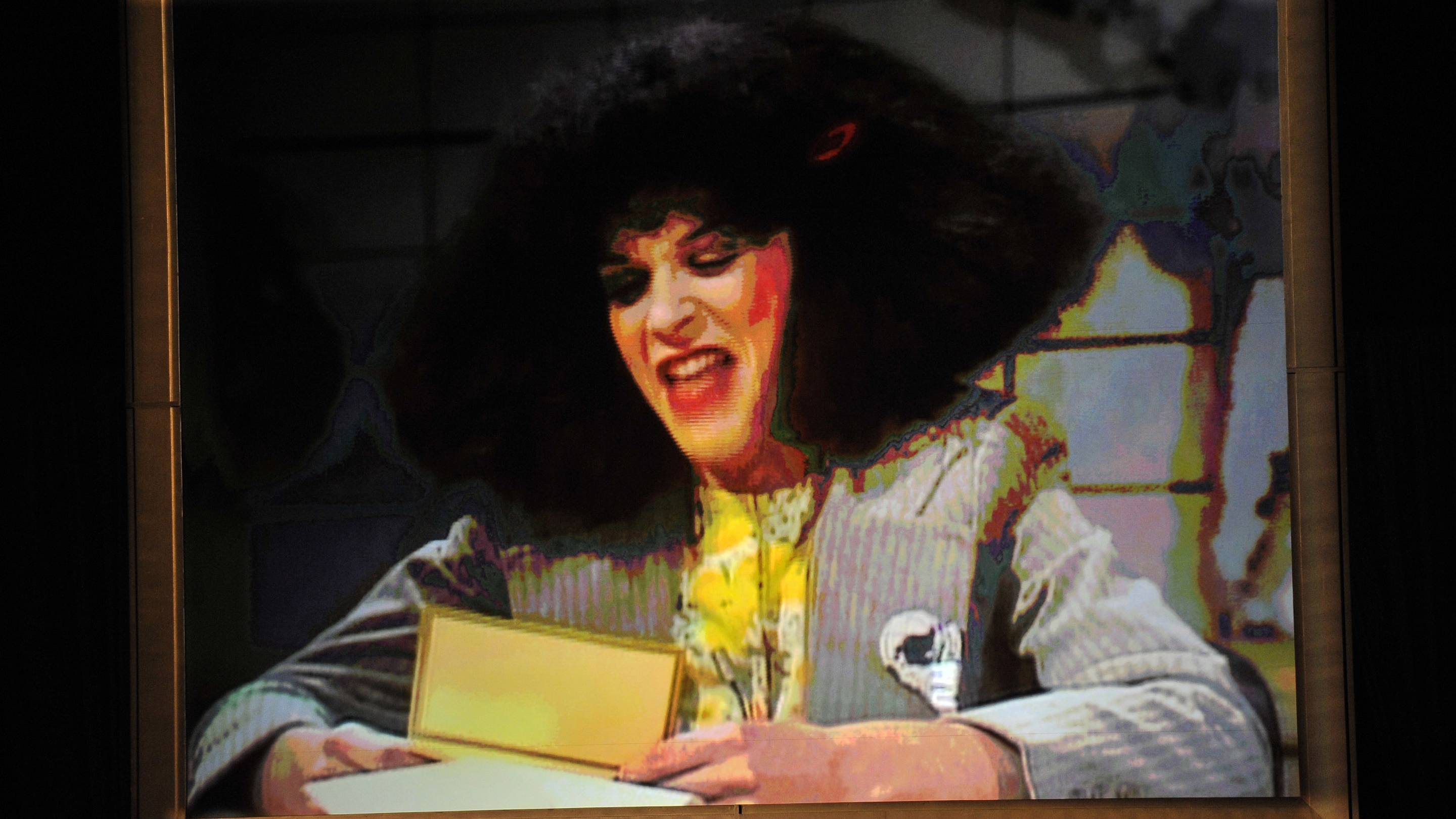
8 Tragic ‘Saturday Night Live’ Deaths
Favicon 
www.mentalfloss.com

8 Tragic ‘Saturday Night Live’ Deaths

As ‘SNL’ celebrates its 50th anniversary, let’s take a look back at the one-time cast members who left us too soon.
Like
Comment
Share
Fun Facts And Interesting Bits
1 y

7 Facts About Measles
Favicon 
www.mentalfloss.com

7 Facts About Measles

Before the measles vaccine, there were between 3 and 4 million cases in the U.S. per year. Now, it’s less than 500.
Like
Comment
Share
Fun Facts And Interesting Bits
1 y

5 Misconceptions About Antarctica
Favicon 
www.mentalfloss.com

5 Misconceptions About Antarctica

Misconception No. 4 : It snows a lot.
Like
Comment
Share
Intel Uncensored
Intel Uncensored
1 y

Organic Bananas are a nutritious addition to a balanced diet
Favicon 
api.bitchute.com

Organic Bananas are a nutritious addition to a balanced diet

The Health Ranger Store wants to make it easy for you to enjoy the many health benefits of organic bananas, which is why we're offering Freeze-Dried Organic Bananas. Sourced from premium banana plants grown by our trusted suppliers under strict organic standards, these diced bananas undergo a careful freeze-drying process to preserve their original taste, texture and nutrients. Shop at https://bit.ly/3EIlizj Health Ranger Store videos would not be possible without you, as always we remain passionately dedicated to our mission of educating people all over the world on the subject of natural healing remedies and personal liberty (food freedom, medical freedom, the freedom of speech, etc.). Together, we’re helping create a better world, with more honest food labeling, reduced chemical contamination, the avoidance of toxic heavy metals and vastly increased scientific transparency. ▶️ Every dollar you spend at the Health Ranger Store goes toward helping us achieve important science and content goals for humanity: https://bit.ly/3rP5CzN ▶️ Sign Up For Our Newsletter: https://www.naturalnews.com/Readerregistration.html ▶️ Download our app: https://www.naturalnews.com/App ▶️ Join Our Social Network: https://brighteon.social/@HealthRanger ? Brighteon: https://www.brighteon.com/channels/healthrangerstore ? Brighteon.Social: https://brighteon.social/@HealthRangerStore ? Bitchute: https://www.bitchute.com/channel/naturalnews ? Rumble: https://rumble.com/c/HealthRangerReport ? Gab: https://gab.ai/NaturalNews ? Gettr: https://gettr.com/user/naturalnews ? Mewe: https://mewe.com/p/naturalnews ? Spreely: https://social.spreely.com/NaturalNews ? Pinterest: https://www.pinterest.com/realhealthrangerstore/ ? Steemit: https://steemit.com/@healthranger ? Telegram: https://t.me/naturalnewsofficial
Like
Comment
Share
Intel Uncensored
Intel Uncensored
1 y

AMAZING POLLY - Don't Let Them Eat Cake! Nanny State Rules for Food Stamp Recipients
Favicon 
api.bitchute.com

AMAZING POLLY - Don't Let Them Eat Cake! Nanny State Rules for Food Stamp Recipients

Dictating what a person can eat is not cool, even if you think you know better. UTL COMMENT:- Depopulation by NWO actors underway at warp speed... Amazing Polly is back she was gone for around 6 months but good to see her back again... With thanks to:- https://rumble.com/v6l73iv-no-soup-for-you-nanny-state-rules-for-food-stamp-recipients.html?e9s=src_v1_upp
Like
Comment
Share
Intel Uncensored
Intel Uncensored
1 y

GREG REESE - Free Jeremy Brown
Favicon 
api.bitchute.com

GREG REESE - Free Jeremy Brown

This is the 'Land of the Free'?
Like
Comment
Share
Showing 63297 out of 125499
  • 63293
  • 63294
  • 63295
  • 63296
  • 63297
  • 63298
  • 63299
  • 63300
  • 63301
  • 63302
  • 63303
  • 63304
  • 63305
  • 63306
  • 63307
  • 63308
  • 63309
  • 63310
  • 63311
  • 63312
Advertisement
Stop Seeing These Ads

Edit Offer

Add tier


Select an image
Delete your tier
Are you sure you want to delete this tier?

Reviews

In order to sell your content and posts, start by creating a few packages. Monetization

Pay By Wallet

Payment Alert

You are about to purchase the items, do you want to proceed?

Request a Refund