YubNub Social YubNub Social
    #satire #democrats #loonylibs #iran #comedy
    Advanced Search
  • Login
  • Register

  • Night mode
  • © 2026 YubNub Social
    About • Directory • Contact Us • Developers • Privacy Policy • Terms of Use • shareasale • FB Webview Detected • Android • Apple iOS • Get Our App

    Select Language

  • English
Night mode toggle
Featured Content
Community
New Posts (Home) ChatBox Popular Posts Reels Game Zone Top PodCasts
Explore
Explore
© 2026 YubNub Social
  • English
About • Directory • Contact Us • Developers • Privacy Policy • Terms of Use • shareasale • FB Webview Detected • Android • Apple iOS • Get Our App
Advertisement
Stop Seeing These Ads

Discover posts

Posts

Users

Pages

Blog

Market

Events

Games

Forum

SciFi and Fantasy
SciFi and Fantasy  
7 w

Get Tangled in Your Next Obsession: Announcing Wildthorn, a New Imprint From Tor Publishing Group
Favicon 
reactormag.com

Get Tangled in Your Next Obsession: Announcing Wildthorn, a New Imprint From Tor Publishing Group

Books publishing news Get Tangled in Your Next Obsession: Announcing Wildthorn, a New Imprint From Tor Publishing Group With a focus on stories that are irresistible, genre-blending, and genre-bending. By Reactor | Published on January 21, 2026 Comment 0 Share New Share Tor Publishing Group, a division of Macmillan Publishers, is thrilled to announce the launch of a new imprint: Wildthorn Books. With its first list of books set to release in Winter 2027, Wildthorn will be overseen by Devi Pillai, President and Publisher, and Monique Patterson, VP, Editorial Director, and will focus on commercial stories that are irresistible, genre-blending, and genre-bending. Wildthorn will be simultaneously launching globally with Tor UK, with the sister companies sharing lead authors while also commissioning in distinct areas. Wildthorn’s mission is to become the destination for compulsive, page-turning reads. Categories will include commercial and upmarket women’s fiction, suspense, paranormal mystery, magical realism, speculative non-fiction, and historical fantasy. Pillai and Patterson previously teamed up to launch the Bramble imprint to much acclaim and success, focusing on romance, and publishing a unique combination of indie pub takeover and original work. In just two years, Bramble has had over 20 New York Times bestsellers including a #1 from BookTok sensation Carissa Broadbent. Wildthorn will join Bramble and the other imprints of Tor Publishing Group to continue the mission of publishing engrossing books in a variety of genres, all driven by the editorial passion that has always been Tor’s signature. Of the new Wildthorn imprint, Pillai says, “Readers have changed—and so has the market. As commercial fiction continues to blend with genre, we realized that Tor—the largest SFF publisher in the world—was the perfect house to create Wildthorn. Wildthorn is where compulsive, genre-bending stories live. These books are commercial, addictive, and built to keep you up way past your bedtime. It will be a small but mighty list, supported by the same powerhouse team that launched Nightfire, Bramble, and Tordotcom Publishing. Welcome to Wildthorn. We’re not here just to bend genre—we’re here to break the mold.” Patterson says, “Wildthorn is the destination for your next reading obsession. We’re building a home for books that thrill, challenge, and entertain. That’s what we love as a team, and it’s what we want every reader to feel when they pick up a Wildthorn book: that irresistible, page-turning pull that you won’t be able to put down until the last twist.” Senior Editor Susan Barnes, who will be acquiring for Wildthorn, adds, “It’s every editor’s dream to fill their list with powerful books that have made an impact on them, no matter the genre. That’s why I’m thrilled to be acquiring for Wildthorn across the board—from zippy, commercial book club fiction, enthralling speculative reads, mysteries, thrillers, and any and everything in between.” Wildthorn will launch with the newest novel from superstar and New York Times bestselling author TJ Klune, The Stars Look Like Home, coming January 2027. As Klune describes, “I am so thrilled to be part of the launch of the new imprint, Wildthorn. My novel, The Stars Look Like Home, is an adventure inspired by my love of animals and favorite childhood films like Homeward Bound, The Adventures of Milo and Otis, and The Incredible Journey. Wildthorn is the perfect fit for this novel, as the imprint gives me the opportunity to tell a different kind of ‘fantasy’ story. I cannot wait for readers to meet the main character, Burke, a dog who is… well. He’s a bit of a drama queen, to be honest. But he has a heart as big as the universe, and his story is one I am so honored to tell. Also, the title is from a Britney Spears song? So, like, just go with it.” Pillai adds, “This is a book you’ll finish and then immediately buy fifteen copies to give to your friends. TJ Klune tells Burke’s story with all the heart of the classic animal adventures we loved as kids.” Other titles on the first Wildthorn list will include New York Times bestselling author Alyssa Cole, Jenny Lundquist, Diana Peterfreund, and debut authors Carrie Kwiatkowski and June Harrington. With Wildthorn, Tor Publishing Group invites you to join us where the wild stories grow, to explore the edge of every genre, and the heart of every story. Get tangled in your next obsession. Founded in 1980 by Tom Doherty, Tor Publishing Group has been at the forefront of the science fiction and fantasy genre for decades and has won every major award in the SFF field. In addition to the eponymous imprint Tor Books, Tor Publishing Group includes a number of specialty imprints, all driven by the editorial passion that has always been Tor’s signature. Nightfire publishes horror books across the breadth of the genre. Bramble publishes a wide array of love stories for the modern reader. Tordotcom Publishing specializes in original science fiction and fantasy novellas, collections, and anthologies. The post Get Tangled in Your Next Obsession: Announcing Wildthorn, a New Imprint From Tor Publishing Group appeared first on Reactor.
Like
Comment
Share
SciFi and Fantasy
SciFi and Fantasy  
7 w

Beyond Neuromancer: Seven Works of Cyberpunk Written Before the Eighties Made It Cool
Favicon 
reactormag.com

Beyond Neuromancer: Seven Works of Cyberpunk Written Before the Eighties Made It Cool

Books Cyberpunk Beyond Neuromancer: Seven Works of Cyberpunk Written Before the Eighties Made It Cool Before 1984, these works were at the bleeding edge of a new genre… By Sam Reader | Published on January 21, 2026 Credit: Yuyeung Lau [via Unsplash] Comment 0 Share New Share Credit: Yuyeung Lau [via Unsplash] In 1984, William Gibson published Neuromancer, blending crime fiction, science fiction, surrealist literature, and a forward look at bleeding-edge technologies to give birth to the genre known as cyberpunk, an aesthetic movement and genre that has influenced countless books, video games, movies, music, and even clothing styles. Except that’s not quite accurate. While Neuromancer certainly mainstreamed cyberpunk, it was far from the first title to explore the moody, cynical, and noirish world that Bruce Sterling famously described as high-tech and low-life. Most of the originators of cyberpunk came well before Gibson wrote about the sky above the port and circling cranes. Far from a few scattered works of “proto-cyberpunk,” these early works prove there was a thriving genre even before it was codified as such in the 1980s. With that in mind, here’s a selection of works that were cyberpunk before it was cool… The Stars My Destination by Alfred Bester (1956) Best described as “The Count of Monte Cristo meets The Ascent of Man meets Neuromancer on very strong drugs,” Bester’s 1956 novel begins with Gully Foyle, a man who’s little more than a beast, working on a ship called the Nomad when it gets attacked and then abandoned. Swearing revenge on those who left him for dead, Foyle duct-tapes the Nomad back together and launches himself into a web of intrigue involving asteroid cults, the criminal underworld, a mysterious substance, a starship-manufacturing corporation, and a radioactive corporate hitman. The Stars My Destination contains within it all the things we’ve come to know as cyberpunk: a morally ambiguous (at times outright monstrous) antihero, cybernetic and genetic enhancements, elements of crime novels, megacorporations, and a cynical but optimistic view of scientific progress and the effects it might have on humanity. Simulacron-3 by Daniel F. Galouye (1964) Galouye’s novel isn’t as well-known in the modern day as some of these other works, but given that it’s had two movie adaptations that made a much bigger impact in the cyberpunk canon (World on a Wire in 1972 and The 13th Floor in 1998), it’s hard to say it’s unworthy of inclusion. The book begins when a scientist dies under mysterious circumstances and a high-ranking member of the REIN corporation, set to launch their fully simulated virtual world Simulacron-3, suddenly vanishes into thin air in the midst of a party, along with any trace he even existed. The cyberpunk elements are all already in place—noir elements courtesy of the detective novel plot, virtual reality, weaponized market research, highly advanced tech—but it kicks into high gear when Hall, the executive trying to unravel the mystery, discovers what was being kept secret and why, calling into question the nature of both reality and virtuality with each uncovered secret. Do Androids Dream of Electric Sheep? by Philip K. Dick (1966) Dick’s work practically helped invent the canon all on its own with his blending of pulp-crime plots, a cynical eye towards technological progress, hallucinatory imagery, and existentialist discussions. While some of Dick’s other books might arguably be more representative of cyberpunk (The Three Stigmata of Palmer Eldritch for example), none have been as influential to the genre as Electric Sheep, a book that frames an argument about empathy within a detective story about a policeman named Rick Deckard sent to “retire” (kill) five highly advanced androids—almost indistinguishable from humans—who have escaped to Earth. If this sounds familiar, you’ve probably already seen the defining cyberpunk movie Blade Runner, where Harrison Ford plays Rick Deckard in a perpetually rainy future Los Angeles. Electric Sheep is more mind-bending than its movie adaptation, but also more incisive, exploring what it means to be human in a society where humanity is eroded almost entirely. You’d be hard-pressed to find something that’s more quintessentially cyberpunk. Stand on Zanzibar by John Brunner (1968) Brunner is a writer whose work feels like it could be contemporaneous with authors like John Shirley and William Gibson, if it weren’t for the fact that he had to wait about twenty years for the science fiction world to catch up with him. Zanzibar uses a documentary-style approach (complete with in-universe TV commercials, transcripts, documents, and “man on the street” profiles) to trace a series of interlocking conspiracies centered around AI, mind control, and geopolitical manipulation. It’s a book that manages to be brutally funny and straight-up brutal in equal measure; it never stops being an unnerving, thorny, timeless exploration of the clash between humans and human progress that takes no sides, but also takes no prisoners. Nova by Samuel R. Delany (1968) Delany is a name that continues to resonate in multiple genres and movements, as his hyper-literary style and imaginative take on science fiction and fantasy are pretty much the original brick tossed through the window of modern science fiction, fantasy, and in some cases, horror. Nova is a worthy addition to that literary canon, a space opera where neo-feudal corporations war over starship fuel and cybernetically enhanced spacers consult tarot cards before making risky business maneuvers. Notably, it’s a work in the genre that portrays human failings, not technological, drawing from the characters’ tragic flaws rather than the technological erosion of humanity. It also prefigures the use of mysticism and mythology in cyberpunk works (for example the tarot motifs in Simon Ings’ Hot Heads, or Neuromancer’s use of Zen mysticism), setting the stage for what would become genre conventions by the 1980s. If The Stars My Destination was the first completely realized work of cyberpunk, then novels like Nova were the codifying force. The Nova Trilogy by William S. Burroughs (1961 to, you guessed it, 1968) A series of works Burroughs wrote and revised using a technique he’d developed in collaboration wth an artist with an interest in the occult and a computer programmer (Burroughs apparently being so cyberpunk that even his writing methods aligned with the genre’s themes): The Soft Machine, The Ticket That Exploded, and Nova Express. This trilogy (which is just begging for an omnibus edition) details in rather confusing fashion the fight between Agent Lee and the Nova Mob, a criminal syndicate dedicated to spreading chaos and violence throughout the known universe. In particular, The Ticket That Exploded deals with the more technological, science fictional, and psychological methods employed by the Nova Mob, using terraforming and other technological means to create chaos and drive planets into perpetual war. While admittedly Naked Lunch was the Burroughs book that inspired Gibson’s writing more directly, it’s the intense focus on technology and techno-mysticism as a form of societal control that earns the trilogy its status as a major influence on cyberpunk as a genre. The Girl Who Was Plugged In by James Tiptree, Jr. (1973) Tiptree’s novella takes a decidedly modern and feminist approach to cyberpunk and thus holds a key place in the canon (even being featured in The Big Book of Cyberpunk). It follows a teenage girl press-ganged with the threat of legal action into becoming the cybernetic operator for a vat-grown Marilyn Monroe-esque influencer, created and controlled by a megacorp in order to get around anti-advertising laws. It all goes tragically wrong in a number of ways of course, but in ways that are exceptionally prescient for 1973, with its plot predicting the modern culture of internet influencers, parasocial relationships, grotesque capitalist materialism, and sinister corporate manipulation of demographics. It also spends its time issuing thunderous broadsides against feminine beauty standards and the vapid nature of celebrity culture, making this not just a quintessential work of cyberpunk, but one of the most vicious and enduring.[end-mark] The post Beyond <i>Neuromancer</i>: Seven Works of Cyberpunk Written Before the Eighties Made It Cool appeared first on Reactor.

Like
Comment
Share
Daily Signal Feed
Daily Signal Feed
7 w

Federal Budget Deficit Shrinks Under President Trump
Favicon 
www.dailysignal.com

Federal Budget Deficit Shrinks Under President Trump

If there’s anything Republicans and Democrats can agree on, it’s how to spend money. Both parties created the federal budget deficit and contributed to the looming $38 trillion national debt, but President Donald Trump’s administration is actively working to close it. Since the budget is essentially financed by taxpayers, closing the gap means reduced borrowing and interest payments, lower national debt, and boosted long-term economic growth all Americans can feel. The Monthly Treasury Statement highlights fiscal year 2025, in which the federal government spent over $7 trillion in outlays and generated $5.2 trillion in receipts. Despite including President Joe Biden’s last four months in office, the budget deficit of approximately $1.8 trillion was still down 2% from fiscal year 2024. Early data for fiscal year 2026 (October to December 2025) shows further fiscal responsibility. The cumulative deficit of $602 billion is approximately 15% lower than the same period in fiscal year 2025. The deficit’s closure—or at least slowed rate of growth—under the Trump administration, can be attributed to a combination of receipt (revenue) increases and targeted outlay (spending) reductions. Tariffs are a sure method to generate federal government receipts which drove the deficit down. Beating economists’ projections, tariff revenue soared to nearly $200 billion in Trump’s first year of his second term. In just the last three months, custom duties boasted $90 billion—an increase of over 330% from the comparable prior period. These tariffs targeted communist Chinese imports—among others—allowing the U.S. to decouple from the Asian giant and boosting government income amid broader economic growth. Individual income tax revenue surged as wage increases outpaced inflation. These receipts rose from $518 billion in fiscal year 2025 to $606 billion in fiscal year 2026 (17% growth), which contributed to a shrinking deficit. And with Trump’s “One Big, Beautiful Bill” tax cuts taking effect in 2026, Americans can expect to feel greater financial relief. On the spending side, budget outlays contracted from the previous period. In an unprecedented opportunity created by the Democrat-engineered October government shutdown, Trump and his team worked hard to cut waste, fraud, and abuse. Trump axed thousands of unnecessary government workers and programs, a decision that contributed massively to efficiency and fiscal savings. Partnering with Treasury Secretary Scott Bessent, the two oversaw financial reallocation and halted billions in wasteful programs. Office of Budget and Management Director Russell Vought made substantial Reductions in Force (RIFs) in health, education, environment, and other agencies with unfavorable political agendas—cutting spending and saving taxpayers billions. For example, federal outlays for the Department of Agriculture fell by 18%, the Department of Education by 26%, the Environmental Protection Agency by 81%, and International Assistance Programs by 82%. Shrinking the public sector tackles the affordability crisis created by the fiscally undisciplined Biden administration. Four years of prices rising faster than wages and inflation reaching 40-year highs encouraged voters to elect Trump who promised to balance the budget—and not just in rhetoric, but in decisive action. The combination of reducing Treasury outlays and increasing receipts reduces the budget deficit and may lead to lower inflation, stabilized prices, and supply side private sector growth—all of which will usher in a golden era of affordability for Americans. Biden is certainly responsible for the economic woes felt by voters today, but Trump continues to make meaningful progress in reducing stubbornly high prices. In a recent Bureau of Labor Statistics report, overall, the 12-month adjusted consumer price index estimated 2.7%. Core inflation fell to a remarkable 2.6%, the lowest since March 2021, with price reductions driven by gains across most grocery groups, used vehicles, gasoline, communications, and energy. With data reflecting broader disinflationary trends, further cooling may even influence the Federal Reserve to cut rates, making the cost of borrowing cheaper and interest on credit cards or loans lower. So long as regulations continue to be cut, tax rates are reduced, brakes are put on government spending, and government revenue is generated in a sustainable manner, there’s hope for the American taxpayer. Rather than feed the government machine and widen the federal budget deficit, Trump is putting Washington on a diet, eating inflation, and cooking up a private sector boom—the real drivers of economic expansion which will provide relief to all Americans. The post Federal Budget Deficit Shrinks Under President Trump appeared first on The Daily Signal.
Like
Comment
Share
Daily Signal Feed
Daily Signal Feed
7 w

When a Generation Abandons Liberty
Favicon 
www.dailysignal.com

When a Generation Abandons Liberty

When New York City elected Democratic Socialist Zohran Mamdani as its next mayor, the left-leaning headlines framed it as a “historic milestone.” But the only milestone I saw was this: more than one million voters choosing a path that has collapsed societies across continents—the empty promise of socialism disguised as progress—and, even more puzzling, a path embraced by an electorate that was 84% women under 30.  As socialism becomes more popular among young Americans, we risk sacrificing the freedoms that shape our country—such as the freedom to work, speak, and take responsibility for our own lives—in exchange for a promise of government-controlled equality. History shows that when good intentions give rise to government control, people often lose both freedom and opportunity.  Post-COVID New York City provides a chilling example of how democracies can slide into dependency. Once the beating heart of American capitalism, the city suffered from inconsistent governance and a global pandemic that shuttered businesses, drove residents away, and made basic living increasingly unaffordable. With taxes and fees imposed at every turn, daily life still feels relentlessly regulated. Recently, several Manhattan restaurants offered $9 discounts to offset the city’s new congestion-pricing toll. These small gestures serve as acts of resistance against policies that continue to burden the working class. In a climate of fatigue and frustration, politicians like Mamdani, whose platform promised to “tax the 1%,” freeze rent, create government-run grocery stores, and provide “free” public transit, eagerly captivated social warriors proudly denouncing capitalism even as they remained fully immersed in one of the largest capitalist hubs in the world.  By treating success as something unfair and inequality as a moral wrongdoing, these movements suggest that prosperity should be guaranteed rather than earned. Their arguments often rely on vague promises—redistributing wealth without addressing the consequences, expanding control without accountability, and claiming the moral high ground without offering practical plans for governance. In the end, they focus more on symbolic wins and emotional satisfaction than on real, workable solutions to complex problems. However, beneath these slogans lies a far more dangerous ideology—one that aims to defund the police and replace them with social workers, even going as far as to frame violence itself as an “artificial construction.” This narrative of downplaying responsibility reflects a broader worldview, one that prioritizes grievances over government. The most revealing data point in Mamdani’s rise is not his platform, but the fact that young women strongly influence his voter base. Their motivations are reflected across platforms and campuses: a Fordham University student’s op-ed praising Mamdani as the embodiment of “economic care”; the viral “Hot Girl Socialism” trend that packages left-wing economic dependence as empowerment; and Instagram reels celebrating his win by joking that “Sharia Law starts now.” The tone may be playful, but it exposes a deeper unseriousness about the stakes of governance.  Recently, Actress Amanda Seyfried described socialism as a “gorgeous idea,” stating that it is rooted in collective care and responsibility. In her ignorance of how socialism actually functions, Seyfried described it this way: “For me, it’s taking care of each other. If I have more money, I can spend more money on other people. Isn’t that right?” When Hollywood is also endorsing these ideologies, especially women, it blurs the line between what socialism actually is and how it has failed repeatedly.  Taken together, these signals suggest a generation of women seeking stability, community, and belonging in misplaced sources. Rather than turning to families, local institutions, or opportunity, many put their faith in the comforting illusion that bigger government can relieve the emotional, financial, and relational burdens modern culture has placed upon them, as Erika Kirk recently noted. The women who propelled Mamdani into office were not irrational; they were responding to a cultural narrative that tells them independence is impossible without government intervention. Our task is to offer a better narrative—one rooted in personal responsibilities, economic freedom, and the belief that women are capable of building the lives they want without surrendering liberty in the process.  And yet, for a place that may seem out of touch, out of reach, and wholly detached from the rest of the United States, New York’s collapse would not be contained. What happens in the nation’s cultural and financial epicenter radiates outward—politically, economically, and socially. Their choices become our consequences. The question is: How do we encourage a return to common-sense leadership before more cities follow New York’s lead? Figures like Mamdani and the broader democratic socialist movement appeal to young voters by tapping into frustration about the economy and a sense that the system is unfair. They present socialism as a more caring and humane alternative to capitalism. But behind the language of “equity” and “justice” is a push for more government control and less room for disagreement. By promising fairness and community, these movements turn shared frustration into political support. New York City shows the contradiction clearly. Many voters support socialist-style policies yet continue to enjoy the benefits of a market-driven lifestyle. On one hand, there is hope that the government can fix deep problems. On the other hand, there is reliance on the freedoms and opportunities that capitalism provides. The question is whether these two ideas can exist together, or whether growing government control will eventually weaken the very freedoms that make opportunity and prosperity possible. If a generation abandons liberty in the pursuit of equality, it risks losing both—and ending up with neither. The post When a Generation Abandons Liberty appeared first on The Daily Signal.
Like
Comment
Share
Hot Air Feed
Hot Air Feed
7 w

Tafoya: You Better Believe I'm Running for Senate in Minnesota
Favicon 
hotair.com

Tafoya: You Better Believe I'm Running for Senate in Minnesota

Tafoya: You Better Believe I'm Running for Senate in Minnesota
Like
Comment
Share
Science Explorer
Science Explorer
7 w

A Massive Star In Andromeda Appears To Have Vanished. What Happened To It?
Favicon 
www.iflscience.com

A Massive Star In Andromeda Appears To Have Vanished. What Happened To It?

While two teams have ideas about what happened to yellow supergiant M31-2014-DS1, ultimately, it remains a mystery.
Like
Comment
Share
Science Explorer
Science Explorer
7 w

Beluga Whales Use Promiscuity To Keep An Isolated Population Healthy
Favicon 
www.iflscience.com

Beluga Whales Use Promiscuity To Keep An Isolated Population Healthy

There are times when you need to play the field for the good of the species.
Like
Comment
Share
The Blaze Media Feed
7 w

How the 30-year mortgage helped create a permanent housing bubble
Favicon 
www.theblaze.com

How the 30-year mortgage helped create a permanent housing bubble

You won’t hear many people object to President Trump’s executive order to ban corporate purchases of residential homes. The idea sounds like common sense. But it targets a minor symptom while leaving the real disease untouched — and in some respects, it risks making that disease worse.Institutional home-buying already peaked during the COVID-era bubble and has receded since then. In most markets, corporate ownership represents a small share of total inventory. Even at its height, it never explained why housing costs exploded for everyone else. High prices created the opportunity for institutional buyers, not the other way around.The goal should not be cheaper debt. It should be cheaper homes.Government policy inflated the housing market. Institutional buyers simply responded.During COVID, the Federal Reserve pushed interest rates toward zero. Mortgage rates fell below 3%. At the same time, the Fed bought roughly $2.7 trillion in mortgage-backed securities, and HUD expanded “affordable homeownership” programs that widened the pool of subsidized buyers. Those policies produced predictable results.When the government offers 2.5% interest for 30 years — often paired with minimal down payments backed by the FHA — buyers flood the market. Sellers respond by raising prices. The bubble becomes a feature, not a bug.Institutional buyers entered that environment because it looked like easy money. Higher home prices also pushed rents up, so developers built more homes for long-term rental. Both trends flowed from the same source: a government-shaped market that made housing unaffordable, then subsidized the unaffordability.Trump now seems focused on the symptom — corporate buyers — while ignoring the machinery that inflated the market in the first place.He has spent months fighting Federal Reserve Chairman Jerome Powell to bring rates back down toward zero. Meanwhile, the Federal Reserve still holds about $2.1 trillion in mortgage-backed securities. Trump has also announced a plan for Fannie Mae and Freddie Mac to purchase another $200 billion in MBS. The stated goal is to lower mortgage rates.But the goal should not be cheaper debt. It should be cheaper homes.RELATED: ‘Rents will come down’ — but not in sanctuary cities: Loan agent chronicles homes apparently abandoned by illegal aliens mphillips007 via iStock/Getty ImagesArtificially lowering rates props up prices and slows correction. Prices in many markets have begun to soften. That correction should continue. Policies designed to suppress rates will keep prices elevated and risk inflating the next bubble.That brings us back to corporate home-buying. Even at the COVID peak, institutional buyers — defined as entities owning at least 100 single-family homes — owned about 3.1% of the housing stock. That number has since fallen to around 1%. Investors see the market turning, and they have started backing away.So Trump’s corporate-purchase ban arrives late, targets a relatively small share of the market, and risks becoming cosmetic cover for policies that keep the bubble inflated.If Trump wants to drive prices down and permanently realign housing with median incomes, he has to reverse the policies that inflated the bubble. That means attacking the structure, not the headline.Get government out of the mortgage market. Trump’s next Federal Reserve chair must commit to unwinding the Fed’s mortgage-backed securities portfolio. That $2.1 trillion cushion keeps mortgage rates lower than the market would otherwise set. Those artificially low rates inflate home prices.End universal “homeownership for everyone” policy. The federal government keeps subsidizing buyers who are not ready to buy. Those programs inject cash into housing demand that would not exist in a real market. The goal should align prices with income, not chase a utopian dream of universal ownership. After decades of subsidies, deductions, and federal credit support, the home ownership rate still sits around the mid-60% range.Stop chasing near-zero interest rates. A 30-year loan at 2% sounds appealing until you realize what it does to prices. Cheap money bids up homes across the board. Buyers pay the price forever even as politicians brag about the “deal.” Trump should let the market set rates. Recent rate cuts have not restored normal home buying either. Sales remain weak because prices remain too high.End the 30-year fixed mortgage. Instead of floating longer loans — 50 years? Madness! — the country should move in the opposite direction. Before the New Deal era, short-term mortgages, often three to seven years, dominated the market. Federal policy transformed that structure.Franklin D. Roosevelt signed the National Housing Act of 1934, establishing the Federal Housing Authority. The FHA insured long-term, fully amortizing mortgages with fixed rates, low down payments, and standardized payment schedules. That system moved the market away from short-term balloon loans and laid the foundation for longer terms.RELATED: America tried to save the planet and forgot to save itself jhorrocks via iStock/Getty ImagesCongress eventually authorized the 30-year mortgage in 1954. VA loans under the GI Bill and the expansion of Fannie Mae and Freddie Mac later built a secondary market that made long-term fixed-rate loans attractive to lenders.Government insurance, guarantees, and liquidity support made 30-year fixed mortgages feasible, which is why they represent 80%-90% of U.S. mortgages today. Without those interventions, lenders would not carry that risk.The larger point remains simple: Sellers can’t charge prices buyers can’t pay. Prices explode only when government subsidies and government-backed long-term debt expand what buyers can “afford” on paper.Unwind the subsidies. Unwind the guarantees. Unwind the cheap-money machinery. Let incomes, not federal policy, set the ceiling.Housing should function like other consumer markets, not be engineered by Washington. Prices should reflect what people earn.That’s the fix. Everything else treats symptoms and pretends to solve the problem.
Like
Comment
Share
Twitchy Feed
Twitchy Feed
7 w

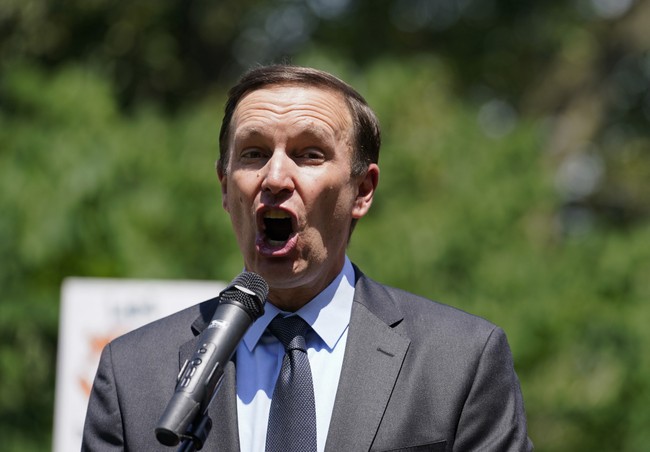
Chris Murphy Trips Over His Own Ignorance Claiming He Was Denied Entry Into Texas ICE Facility
Favicon 
twitchy.com

Chris Murphy Trips Over His Own Ignorance Claiming He Was Denied Entry Into Texas ICE Facility

Chris Murphy Trips Over His Own Ignorance Claiming He Was Denied Entry Into Texas ICE Facility
Like
Comment
Share
RedState Feed
RedState Feed
7 w

CNN Panelist Who May Have Gotten Them in Trouble With Comments About Trump Posts Embarrassing 'Apology'
Favicon 
redstate.com

CNN Panelist Who May Have Gotten Them in Trouble With Comments About Trump Posts Embarrassing 'Apology'

CNN Panelist Who May Have Gotten Them in Trouble With Comments About Trump Posts Embarrassing 'Apology'
Like
Comment
Share
Showing 6346 out of 113444
  • 6342
  • 6343
  • 6344
  • 6345
  • 6346
  • 6347
  • 6348
  • 6349
  • 6350
  • 6351
  • 6352
  • 6353
  • 6354
  • 6355
  • 6356
  • 6357
  • 6358
  • 6359
  • 6360
  • 6361
Advertisement
Stop Seeing These Ads

Edit Offer

Add tier


Select an image
Delete your tier
Are you sure you want to delete this tier?

Reviews

In order to sell your content and posts, start by creating a few packages. Monetization

Pay By Wallet

Payment Alert

You are about to purchase the items, do you want to proceed?

Request a Refund