YubNub Social YubNub Social
    #music #trombone #atw #armymusic #militarymusic #atw2026 #armyband #band #concertband #tusab #jazz #trombonechoir #jazztrombone #quartet #warmup
    Advanced Search
  • Login
  • Register

  • Day mode
  • © 2026 YubNub Social
    About • Directory • Contact Us • Developers • Privacy Policy • Terms of Use • shareasale • FB Webview Detected • Android • Apple iOS • Get Our App

    Select Language

  • English
Night mode toggle
Featured Content
Community
New Posts (Home) ChatBox Popular Posts Reels Game Zone Top PodCasts
Explore
Explore
© 2026 YubNub Social
  • English
About • Directory • Contact Us • Developers • Privacy Policy • Terms of Use • shareasale • FB Webview Detected • Android • Apple iOS • Get Our App
Advertisement
Stop Seeing These Ads

Discover posts

Posts

Users

Pages

Blog

Market

Events

Games

Forum

Daily Signal Feed
Daily Signal Feed
1 y

Report: New York Population Could Shrink by Millions in Coming Years
Favicon 
www.dailysignal.com

Report: New York Population Could Shrink by Millions in Coming Years

THE CENTER SQUARE—New York’s population could decline by more than 2 million people over the next 25 years as fewer people are born in the state and more people move out, according to a new report. The study by Cornell University’s Jeb E. Brooks School of Public Policy’s Program on Applied Demographics projects that New York faces a significant population decline due to low fertility rates and aging that has not been offset by new arrivals. “The projections confirm what we have been seeing for some time, which is that if the demographic trends in the state do not change, its population will continue to decline,” Jan Vink, lead analyst for the study, said in a statement. “Conservative estimates suggest a population decrease of 1 million by 2050, but we think an even greater decline is more likely.” Researchers found that the number of New Yorkers ages 0-17 is projected to drop between 10% and 25% over the next 25 years amid a decline in the number of births. Meanwhile, the state’s population is projected to decline from the current 19.7 million to about 17 million by 2050, mostly through outmigration, the researchers said. The study, which was partially funded by the state of New York, comes as Albany leaders have become increasingly concerned about outmigration from the state and its potential impact on the economy. Bills seeking to improve the state’s business sector and boost its competitiveness are expected to be filed in the upcoming legislative session.  “Policymakers want to know to what extent the crystal ball of demography can project the future of New York state’s population so they can plan for the future,” Cornell Population Center Director Matt Hall said.  Experts say New York’s outmigration has less to do with politics than it does with a lack of housing, prevailing wages, and access to employment. However, federal data shows that the population decline has major implications for the states, as well as revenue and tax collections. New York lost more than $14.1 billion in state-adjusted gross income between 2021 and 2022 as residents fled to New Jersey, Florida, and other low-tax states, according to the latest Internal Revenue Service data. Democratic Gov. Kathy Hochul has blamed a lack of housing as the primary reason New Yorkers are fleeing the state, making the case for expanding housing stock and making existing homes more affordable. But Republicans have long argued that New York’s outmigration is being driven largely by the state’s highest-in-the-nation tax burden, a business sector struggling under excessive regulations, and rising labor costs. Originally published by The Center Square The post Report: New York Population Could Shrink by Millions in Coming Years appeared first on The Daily Signal.
Like
Comment
Share
Daily Signal Feed
Daily Signal Feed
1 y

Stop the Smear
Favicon 
www.dailysignal.com

Stop the Smear

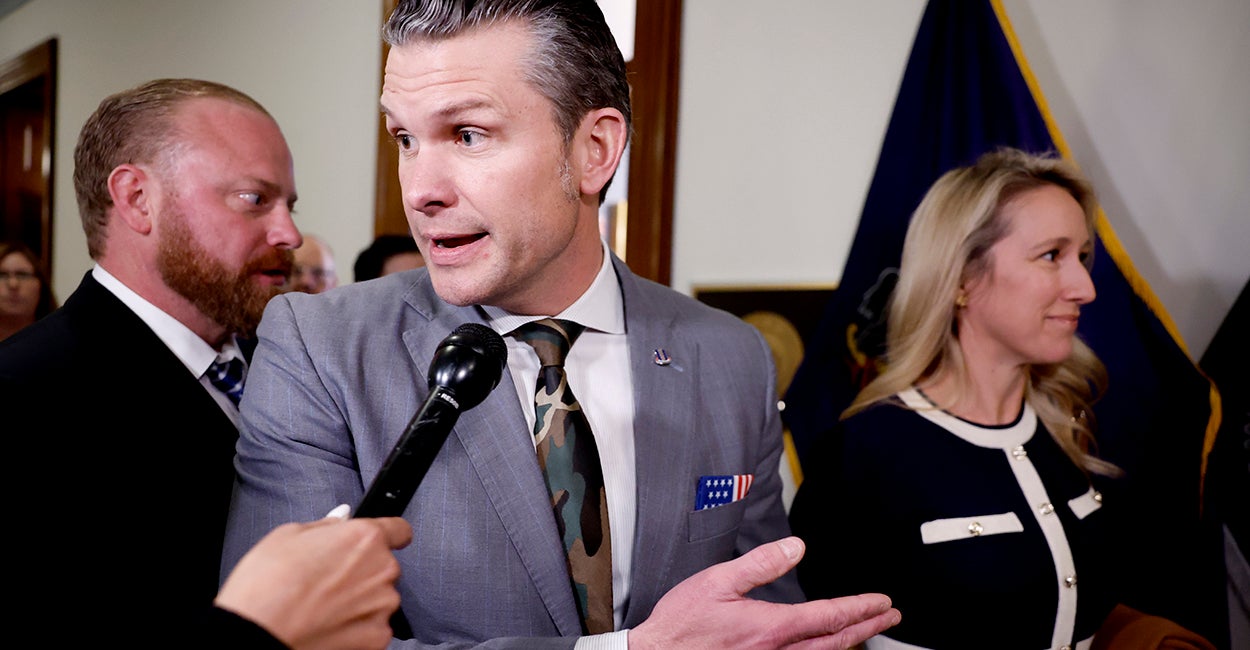
Young blood is here. President-elect Donald Trump has gone full throttle for a new generation of leaders. Consider these Trump nominees for Cabinet posts: Lee Zeldin, 44, for EPA administrator. Pete Hegseth, 44, for secretary of defense. Kash Patel, 44, for FBI director. Tulsi Gabbard, 43, for director of national intelligence. Though Matt Gaetz, 42, withdrew his bid to lead the Justice Department, he fit the profile as well—young, outspoken, willing to cut against the grain. Not everyone welcomes the generational change. When smears and media leaks about nominees’ backgrounds appear, be sure something is happening in the political establishment of Washington. Sen. JD Vance, Trump’s running mate, was labeled “weird” during the campaign. Gabbard isn’t “equipped” to be DNI. Patel hasn’t “built up the muscles” to lead the FBI. Hegseth is a “performative person,” just a “personality,” somebody without the management know-how to lead the Pentagon. As allegations against Hegseth mounted last week, the names of two prominent Republican Gen X’ers—Florida Gov. Ron DeSantis and Sen. Joni Ernst, R-Iowa—mysteriously appeared in the news stream as alternatives if “Hegseth drops out.” Chatter about DeSantis and Ernst evaporated after Hegseth vigorously defended himself on Capitol Hill, and Trump reaffirmed his support. To be sure, this is a nontraditional group of nominees. One was a Democrat. A few have criticized Trump. Each person has said or done something unexpected, even controversial. As a group, their pedigree and credentials won’t impress the Obama highbrows or the jilted Bush-type conservatives whose podcasts dot the new media landscape. But these men and this woman share a qualification that uniquely qualifies them for their roles: They served their country in the Global War on Terror. Hegseth, Zeldin, Gabbard, and Vance volunteered to wear the uniform, and they deployed to combat in Iraq and Afghanistan. Patel, a lawyer, prosecuted criminals affiliated with al-Qaeda, ISIS, and other terrorist organizations. Each experienced the consequences of bad military policy, not as fans or spectators from their comfortable offices in Washington, but on the field, as participants in the campaign. Because war is when the mask comes off, exposing the true patriots and the phonies, separating those who viscerally understand war from those whose knowledge is a sterile mental exercise. After 9/11, they left their homes, jobs, and families. They placed themselves in harm’s way, bearing witness to the chaos of war and the aftermath of war as it disrupts marriage, friendships, and mental health. They mourned the cruelties inflicted on families for a mission unfulfilled. They became skeptical of the government’s ability to solve complex problems, and contemptuously viewed the sycophantic officers whose vanity was served by never-ending war. Most of all, they realized their orders came not from the American people but from their government—a government determined to perpetuate the war, not win it. Now poised to take what they’ve learned and reform government, the establishment sets out to destroy them. But it won’t work. Time is on their side. And a new era of history has begun. Originally published by RealClearDefense and made available by RealClearWire We publish a variety of perspectives. Nothing written here is to be construed as representing the views of The Daily Signal. The post Stop the Smear appeared first on The Daily Signal.
Like
Comment
Share
Daily Signal Feed
Daily Signal Feed
1 y

Your Tax Dollars Not at Work
Favicon 
www.dailysignal.com

Your Tax Dollars Not at Work

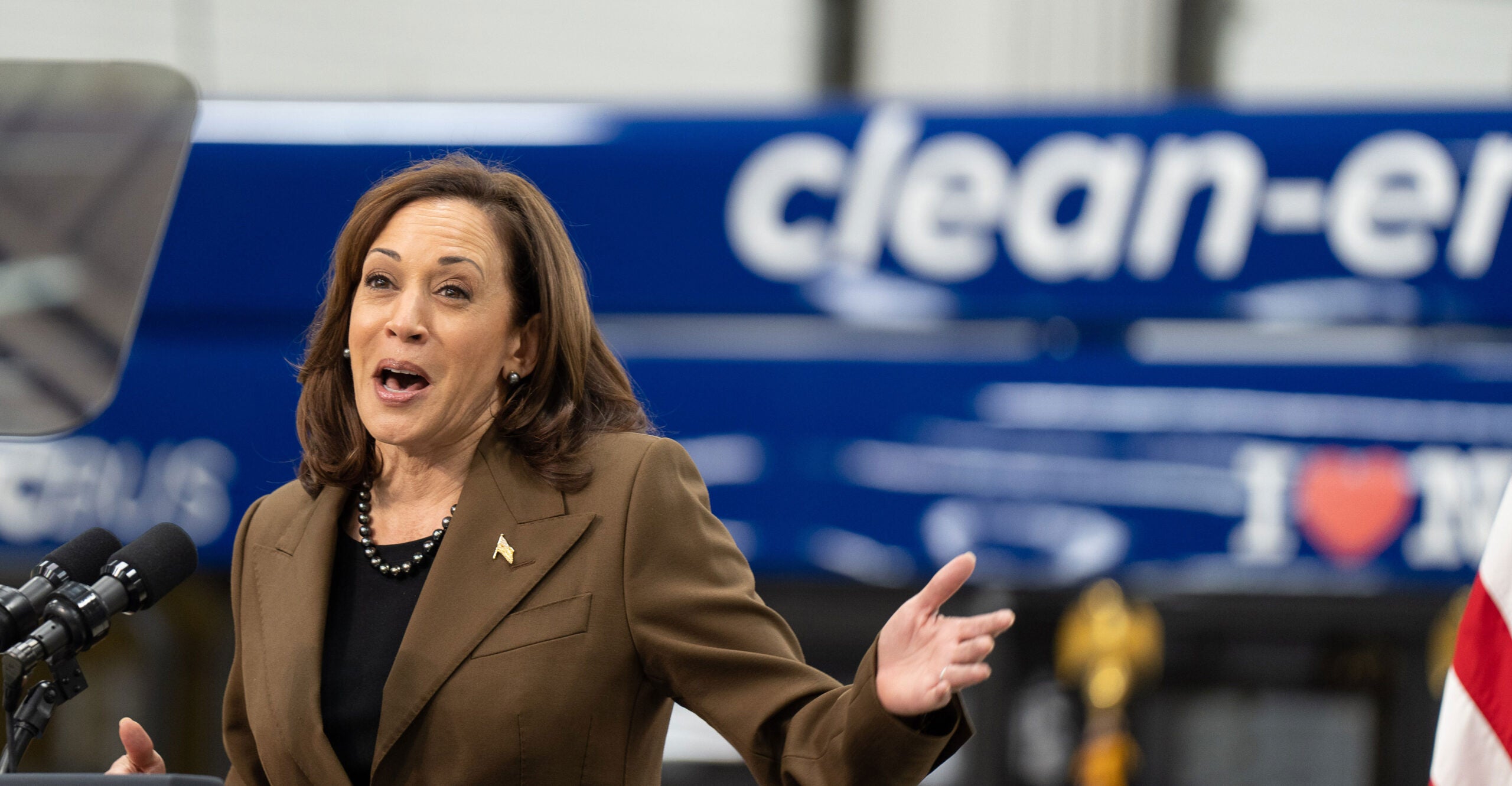
Government excels at NOT getting things done. But politicians promise more things anyway. Kamala Harris declared that our government would “build thousands of miles of fiber-optic cable!” This “broadband connectivity agenda” was supported by “every House Republican on Energy and Commerce,” write Republican representatives. Three years later, not a single person has been connected. Why? Because, as Milton Friedman put it, “Few people spend other people’s money as carefully as they spend their own.” Private individuals and businesses constantly adjust to save time and money. But politicians, spending your money, have little interest in that. They routinely add rules that make everything take longer.  You have to “hire certain people based on their color, their sex,” complains investor Matt Cole in my new video. “You already have a talent problem, now you’re looking at only being able to recruit from a very small minority of individuals. Then you have to do climate pledges. Then you have to hire from unions.” “But diversity is good,” I push back. “That doesn’t mean that you should hire someone because of their race or skin color … . You have all these companies that could actually [build broadband], but its unimplementable with the restrictions. They just walk away.” Eventually, I assume the government will install at least some broadband. By then, their cables may be unnecessary, because of satellite internet, like Starlink, which doesn’t require digging up streets. “They could do it, literally, today,” says Cole. “You could have devices in these people’s homes within the next couple of months.” Why don’t government officials do that? At first, President Joe Biden’s bureaucrats said, “Starlink failed to demonstrate that it had the technical and financial ability.” When it became clear that Starlink obviously did, the administration suddenly called it a monopoly. The Federal Communications Commission chair sneered, “Our economy doesn’t benefit from monopolies.” “First, they’re not functional. Now, it’s a monopoly,” says Cole. “The reality is, they didn’t want that to be the solution.” They didn’t want it to be, because Biden Democrats didn’t want to give money to Elon Musk. Now, Musk has a friend in government. Maybe things will change. But government giving contracts to friends is not good policy. It’s also not a smart way to get things built. Government pumped billions into “high-speed rail.” Fifteen years later, they’re still talking about the future. Bureaucrats wasted $500 million of your money on the solar company Solyndra, which then went bankrupt. They wasted millions more trying and failing to create “synthetic fuel.” More recently, Biden doled out $7 billion to build 500,000 electric vehicle charging stations. Two years later, they’ve built seven. Republicans joined Democrats in funding a CHIPS Act, meant to bring chipmaker jobs to America. It isn’t working. Most chips are still made in Taiwan. “Even if they get what they promise,” I point out to Cole, Congress appropriated “$53 billion for 115,000 promised jobs. Almost half a million dollars per job!” “You expect nothing else from government,” he replies. With Republicans in charge, some say things will be better. But the problem isn’t just Democrats; it’s government. Donald Trump’s steel tariffs destroyed American jobs by raising the price of steel. Politicians should just stop subsidizing certain businesses. Maybe Musk will persuade Trump to do that. He’s actually tweeted the U.S. should “remove subsidies from all industries,” including his own! Good for him. That would be great. End the $30 billion handed to Big Agriculture, useless subsidies for “clean” energy, government-guaranteed loans politically to connected businesses, etc. Maybe Trump will end that part of the deep state. But I won’t hold my breath. Once politicians are in power, they always want to do more.  With your money. COPYRIGHT 2024 BY JFS PRODUCTIONS INC. We publish a variety of perspectives. Nothing written here is to be construed as representing the views of The Daily Signal. The post Your Tax Dollars Not at Work appeared first on The Daily Signal.
Like
Comment
Share
Daily Signal Feed
Daily Signal Feed
1 y

More Corporations Following Walmart’s ‘Rollback’ of DEI Policies
Favicon 
www.dailysignal.com

More Corporations Following Walmart’s ‘Rollback’ of DEI Policies

Walmart executives scuttled the company’s diversity, equity, and inclusion programs recently, becoming the latest corporate giant to drop extreme politics after public outcry. Others on the Fortune 500 list, such as Coors and Boeing, have also rescinded DEI operations in recent months after criticism from activists such as conservative documentarian Robby Starbuck. Employees and customers should cheer the retreat from racial discrimination caused by DEI—such as hiring and promotion policies based on race—but how are the other 497 companies on the Fortune list faring? Not well. A review of the Fortune 500 list finds that 486 businesses still have a statement, report, or other advocacy material on DEI or its ideological-cause twin, ESG (“environmental, social, and governance”). Despite Walmart’s announcement released before Thanksgiving, the company still has a webpage for “Racial Equity & Inclusion.” Some companies, such as the pet services company Chewy, do not prominently host DEI information on their websites, but Chewy posted a job listing on LinkedIn for a director of DEI at its office in Washington state. DEI sounds benign, welcoming even, but the policies that follow are anything but. In fact, Florida Attorney General Ashley Moody asked the state commission on human relations to investigate the coffee giant Starbucks (number 116 on the Fortune 500) based on evidence of hiring practices that were based on racial quotas, which are violations of Title VII of the Civil Rights Act of 1964. In 2023, attorneys general in 13 states issued warnings to the top 100 companies on the Fortune 500 list about corporate policies such as race-based “employment preferences” as part of DEI programs. One year later, in June 2024, Sen. J.D. Vance introduced a proposal to eliminate DEI policies from federal agencies. The Ohio Republican (and future vice president-elect) rightly called DEI a “destructive ideology that breeds hatred and division.” C-suite executives should be on notice. After a 2023 Supreme Court ruling against racial preferences in college admissions, observers recognized that the prohibition on colleges making race a central component in admissions decisions would have implications for corporations. Kenji Yoshino and David Glasgow, law professors at New York University, wrote in the Harvard Business Review, “When the right case reaches the court, the same justices who just endorsed a ‘colorblind’ approach to higher education could also hold that private employers cannot consider race, sex, or other protected characteristics in workplace decisions.” DEI advocates struggle to defend the policies because, aside from clear evidence of discrimination, they cannot describe what DEI represents or accomplishes. One business journal describes DEI has having “evolved into a rather amorphous field where the very word [diversity] invokes a variety of meanings and emotional responses.” For the purposes of civil rights law, executives can call DEI whatever they want—“belonging,” “social justice,” whatever. But if the policies that follow result in racism, the practices are still racist and illegal. Conservative activists such as Starbuck deserve credit for challenging Tractor Supply (no. 293), John Deere (no. 64), and others on social media and elsewhere for their DEI practices. The exposure resulted in backlash on X and other platforms, and moved the companies to abandon the policies. Other companies appear to be paying attention, both to social media and the Supreme Court decision against racial preferences: Microsoft (no. 13) issued a statement in July saying DEI is not “business critical” and that the company would be winding down its DEI initiatives. Federal and state lawmakers are increasingly aware that discriminatory human resource policies are the downstream result of corporate commitments to DEI. The Department of Justice and state attorneys general should continue to investigate claims that businesses are discriminating against individuals based on immutable characteristics. CEOs should follow Walmart’s example and scrap DEI policies as a gift to all Americans, just in time for the holidays. Originally published by The Washington Times The post More Corporations Following Walmart’s ‘Rollback’ of DEI Policies appeared first on The Daily Signal.
Like
Comment
Share
Daily Signal Feed
Daily Signal Feed
1 y

2 of Every 3 Abortion Facilities in US Shuttered Since 1990, Report Says
Favicon 
www.dailysignal.com

2 of Every 3 Abortion Facilities in US Shuttered Since 1990, Report Says

More than two out of every three abortion facilities in the United States have closed their doors since 1990—but abortion still represents “a dark, bloody, hopeless stain on humanity,” according to a new report released Tuesday. A total of 667 abortion facilities currently do business in America, according to Operation Rescue’s 2024 annual survey of abortion facilities, three fewer than last year. That represents a sharp decrease from 706 abortion facilities in 2020 and a whopping 69% lower than the 2,176 abortion facilities operating in 1990. The report from Operation Rescue tracks the ebbs and flows of the U.S. abortion industry. “There is no doubt that abortion facilities are struggling to survive in this post-Roe environment,” Operation Rescue President Troy Newman said. “As we conduct our extensive investigations, we continue to see evidence that abortion clinics are facing challenges hiring and keeping abortionists.” As of the publication date, 29 abortion facilities had closed down or stopped committing abortions this year, and another 20 ceased seeing abortion-minded women in person, often choosing to distribute abortion pills. At the same time, 46 facilities opened or resumed carrying out abortions. Overall, the number of in-person abortion facilities decreased from 670 to 667: a total of 377 surgical abortion facilities and 290 that carry out only chemical abortions. The dramatic number of abortion facility closures over the past three decades tracks with a decrease in the official number of abortions committed in the United States. Officially, the number of abortions peaked in 1990 with 1,429,247 (according to the Centers for Disease Control and Prevention), or in 1985, with 1,578,800 (according to the Guttmacher Institute). “After nationwide legalization of abortion in 1973, the total number, rate (number of abortions per 1,000 women aged 15-44 years), and ratio (number of abortions per 1,000 live births) of reported abortions increased rapidly, reaching the highest levels in the 1980s, before decreasing at a slow yet steady pace,” the CDC noted in its most recent abortion surveillance. “During 2006-2008, a break occurred in the previously sustained pattern of decrease[,] although this break was followed in subsequent years by even greater decreases,” the CDC said. Small increases in the number of abortions took place in 2018 and 2019. The abortion industry carried out 613,383 recorded abortions in the 48 states and cities that reported those numbers to the CDC during 2022, a decrease of 12,595 from the previous year. More Pro-Life Laws, Fewer Abortions The plunging number of U.S. abortions tracks with the progress pro-life advocates have made in protecting unborn children’s lives in the law. An activist Supreme Court opinion in 1973’s Roe v. Wade decision created a so-called “right” to abortion which—together with the companion case Doe v. Bolton—made it virtually impossible to protect children from abortion at any stage of pregnancy. The high court’s 1992 case Casey v. Planned Parenthood affirmed that states may begin to protect children from abortion, as long as the laws don’t present an “undue burden” to that “right.” And the Supreme Court’s landmark June 2022 ruling in Dobbs v. Jackson described the “undue burden” test as “full of ambiguities” and “difficult to apply” while returning democratic control over abortion to the people. Pro-life laws quickly covered young children nationwide in a blanket of protection, before the abortion industry began a costly political campaign to fight for its market share. Since then, 12 states have created a “right” to abortion in their state constitutions. Seven states passed pro-abortion referenda in 2024: Arizona, Colorado, Maryland, Missouri, Montana, Nevada, and New York. But pro-life voters won in three states: Florida, Nebraska, and South Dakota. In all, 14 states remain abortion-free in 2024: Alabama, Arkansas, Idaho, Indiana, Kentucky, Louisiana, Mississippi, Missouri, North Dakota, Oklahoma, South Dakota, Tennessee, Texas, and West Virginia. On the other hand, eight states and the nation’s capital legally allow abortionists to commit abortions throughout all nine months of pregnancy: Alaska, Colorado, Maine, Minnesota, New Jersey, New Mexico, Oregon, Vermont, and the District of Columbia (Washington, D.C.). Additionally, 22 states have chosen to shield the abortion industry from the legal consequences of harming mothers and killing babies in other states: 17 states passed laws and five implemented the measures through executive order. “Abortionists continue to exist as a privileged class of ‘physicians’ who cannot be touched,” Operation Rescue’s Newman said. “Their barbaric work of child-killing is too sacred to ever be lessened by disciplinary actions; meanwhile, preborn children and their mothers pay the cost. States that have enacted these shield laws are only ensuring more women in more states will be exploited, injured, and possibly even killed by greedy pill peddlers who are now considered above the law.” The distribution of abortion clinics nationwide tends to reflect the legal landscape. “California, by far, has the highest concentration of abortion clinics, followed by New York, Florida, Washington, Illinois, Michigan, Colorado, and Virginia,” the report says. The full document, which dubs itself “America’s most comprehensive annual report on the abortion industry,” details the status of the abortion industry in all 50 states. Fewer Abortions, Less Sex Explanations for the falling number of abortions vary. Young people today report having less sex than their parents. Researchers have documented “decreases in all modes of partnered sex” between 2009 and 2018. Additional studies trace the decline to at least 1989. On the other hand, both sexes report getting married later in life than ever before. The national median age at first marriage now is 28 for women and 30 for men, up four years for each sex since 1990. “Since 1990, the midlife first marriage rate has increased by 75% for women and 45% for men,” notes one study. Unmarried women accounted for 87.7% of all abortions last year, according to the CDC. Abortion Costs Up, Wait Times Down The cost of a first-trimester abortion decreased in 2024 from $637 to $605, likely due to an increased reliance on abortion pills. The price of surgical abortions rose from $661 to $682. Yet the cost of chemical abortions, carried out with the abortion pill cocktail of mifepristone and misoprostol, also rose during the same period. The report documents that 64% of all abortion facilities illegally distribute abortion pills after the legal limit of 10 weeks, some as late as early in the second trimester. It doesn’t count the number of online-only, mail-order pill businesses. Average wait times for an abortion fell from eight days in 2023 to an average 5.5 days in 2024, “a 45% decrease,” states the Operation Rescue report. “The lowest wait time recorded before 2024 was 6.6 days in 2018.” Abortion Industry Becomes Transgender Industry The report also documents the abortion industry’s increasing trend of stepping deeply into the transgender industry. “A significant number of independent abortion clinics are offering gender-subversion drugs, and most Planned Parenthood affiliates are capitalizing on this lucrative, population-reducing initiative,” notes Operation Rescue. “An abortionist might spend an hour killing several innocent babies then spend another hour forever sterilizing vulnerable young people,” Operation Rescue’s Newman said. “These facilities are a dark, bloody, hopeless stain on humanity.” Originally published by The Washington Stand The post 2 of Every 3 Abortion Facilities in US Shuttered Since 1990, Report Says appeared first on The Daily Signal.

Like
Comment
Share
Daily Signal Feed
Daily Signal Feed
1 y

How Vietnam Can Be Key to America’s Strength, Stability in Indo-Pacific
Favicon 
www.dailysignal.com

How Vietnam Can Be Key to America’s Strength, Stability in Indo-Pacific

Forget “Made in China.” There’s a much better alternative that puts America first. Born in 1975, the same year the Vietnam War ended, I witnessed Vietnam’s profound struggles under socialism and its remarkable transition toward a market economy. My father, who served alongside U.S. forces during the war, brought our family to the United States, where we became a model immigrant family, striving to achieve the American dream. Reflecting on Vietnam’s challenges—economic scarcity, limited opportunities, and a slow but steady opening to the global stage—I often pondered what it would take to foster mutual benefits between our two nations, rather than perpetuating the usual outsourcing of American jobs. Vietnam’s resilience and adaptability have positioned it as one of the region’s most promising technological innovation and manufacturing growth destinations. That transformation signals a powerful truth: Nations committed to change can achieve mutual benefit. Today, Vietnam is ready for deeper trust, engagement, and partnership with the United States, particularly under the “America First” agenda. Nha Trang: Strategic Asset in South China Sea Vietnam’s deep-water port at Nha Trang, built during the Vietnam War, is a key strategic asset, ideally suited for docking submarines, aircraft carriers, and other naval vessels. Supporting nearly 60% of global maritime trade through the South China Sea, the port is a vital hub for refueling and repairs, but requires significant retrofitting to meet modern demands. Investing in Nha Trang offers the U.S. a dual benefit: strengthening its strategic interests in the Indo-Pacific and positioning Vietnam as a dependable partner in maintaining maritime freedom. Amid China’s construction of artificial islands and regional intimidation, enhancing Nha Trang’s infrastructure serves as a critical counterweight, reinforcing Vietnam’s role as a regional stabilizer while securing U.S. economic and security objectives. Recent collaborations, including U.S. Navy resupply missions, provide a foundation to deepen these ties, making Vietnam an essential ally in ensuring freedom of navigation and stability in a volatile region. Vietnam’s Economic Rise Amid US-China Trade Shifts China’s aggressive trade policies and tariffs have accelerated Vietnam’s rise as a manufacturing powerhouse. Companies seeking to reduce their reliance on China are turning to Vietnam for its skilled workforce, competitive labor costs, and pro-business reforms. This shift presents a unique opportunity for the U.S. The U.S. can leverage this momentum by supporting Vietnam’s economic growth to attract Vietnamese investments into American markets. Many Vietnamese businesses are eager to expand internationally, and fostering bilateral investment creates jobs for Americans while strengthening economic ties. A prime example of this dynamic is VinFast, the Vietnamese automaker creating jobs in the U.S. through its electric vehicle expansion. Vietnam’s Comprehensive and Progressive Agreement for Trans-Pacific Partnership (CPTPP) membership further underscores its commitment to high-standard trade practices. This alignment offers a blueprint for more profound bilateral agreements that reduce U.S. trade deficits and foster resilient supply chains. Strengthening Defense Ties, Regional Stability On the security front, Vietnam’s ongoing military modernization aligns with U.S. objectives for a stable Indo-Pacific. Enhanced defense cooperation through joint exercises, arms sales, and intelligence-sharing bolsters Vietnam’s ability to counter regional threats while reinforcing a rules-based maritime order. On the security front, Vietnams ongoing military modernization aligns with U.S. objectives for a stable Indo-Pacific. Enhanced defense cooperation through joint exercises, arms sales, and intelligence-sharing bolsters Vietnam’s ability to counter regional threats while reinforcing a rules-based maritime order. With $3.4 trillion in annual trade passing through the South China Sea, Vietnam’s role in safeguarding international law and freedom of navigation cannot be overstated. Partnering with Vietnam ensures that the U.S. remains a key player in maintaining regional stability. The Trump administration’s pragmatic approach—emphasizing burden-sharing among allies—resonates with Vietnam’s independent yet cooperative stance. The U.S. can counterbalance China’s aggressive expansion and protect shared interests in this critical region by supporting Vietnam’s defense capabilities. Cultural Connection, Diplomatic Advantage President Donald Trump’s popularity in Vietnam provides a unique diplomatic advantage. The goodwill he commands, combined with the symbolic importance of the upcoming 50th anniversary of the end of the Vietnam War, creates an unprecedented moment for reconciliation and partnership. Appointing a culturally connected U.S. diplomat to Vietnam would signal a deep commitment to mutual respect and trust. Such leadership is vital for navigating the complexities of U.S.-Vietnam relations and ensuring alignment on economic, security, and geopolitical goals. Shared Vision for Prosperity The U.S. can capitalize on its strategic comprehensive partnership with Vietnam as the nation emerges as a key manufacturing hub amid the global shift away from reliance on China. Vietnam’s strategic location, skilled workforce, and pro-business environment make it a prime destination for nearshoring and friend-shoring, with companies such Intel, Samsung, and Nvidia investing billions. As a cornerstone of the “China+1″ strategy, Vietnam offers opportunities to diversify supply chains, reduce risks, and drive growth. Strengthening this partnership is a timely move to secure shared prosperity and stability in a complex global landscape. We publish a variety of perspectives. Nothing written here is to be construed as representing the views of The Daily Signal. The post How Vietnam Can Be Key to America’s Strength, Stability in Indo-Pacific appeared first on The Daily Signal.

Like
Comment
Share
Daily Signal Feed
Daily Signal Feed
1 y

We Need a New Washington
Favicon 
www.dailysignal.com

We Need a New Washington

Months before the November election, a research study with which I was involved asked respondents which of 10 historical presidents they wished were in the Oval Office today. To prevent “recency” bias, we kept the list to former presidents whose legacies are largely defined: George Washington, John Adams, Thomas Jefferson, Andrew Jackson, Abraham Lincoln, Theodore Roosevelt, Calvin Coolidge, Franklin D. Roosevelt, Harry Truman, and John F. Kennedy. Lincoln topped the list by a significant margin. When we probed for why, most of the answers had to do with Lincoln’s steady hand in preserving the republic through a time of great division. In a country that once again is divided, that’s the medicine for which many Americans of all political persuasions are reaching. Given those findings, I find President-elect Donald Trump’s recent magnanimity toward his political enemies encouraging. I don’t know whether it’s truly “with malice toward none,” but Trump repeatedly has stated his desire to be judged based on results rather than retribution. That’s a hopeful sign. Although I understand the majority’s reasoning in choosing Lincoln, I think my instincts would have been to go with the president who came in second in our poll: George Washington. I’ve long thought another Washington is what we need. The reason? His rejection of the predations of power. At the end of the Revolutionary War, Washington had the leverage and prestige to anoint himself America’s monarch, but refused to do so. When Washington resigned his military commission, King George III called him “the greatest man in the world.” And as the only president twice unanimously elected by the Electoral College, Washington could have served for life. He instead chose to step down after two terms and return to Virginia and his beloved Mount Vernon. Now our 47th president has the unique opportunity to emulate the first. Normally, new presidents are both learning on the job and preoccupied with earning a second term, which limit the aggressiveness with which they can pursue their agendas. Then, not far into their second terms, they become lame ducks and lack the political power to get much done. Having already served one term as president, however, Trump is getting off to a running start. And having once again earned the imprimatur of the American people who understand who he is and what he intends to accomplish, he has his mandate. Unable to run again, he can think in historical terms. Washington could be Trump’s model as he exercises the duly elected powers of the executive branch to dismantle its unconstitutional elements and unwind the administrative state. There’s much that can be done. Twenty-five years ago, noted economist Milton Friedman matter-of-factly outlined 11 Cabinet-level departments that should go: Agriculture, Commerce, Education, Energy, Health and Human Services, Housing and Urban Development, Interior, Labor, Transportation, and Veterans Affairs. (There was no Department of Homeland Security at the time, but we can guess what Friedman would have said about that.) To be fair, Friedman argued that some functions of these eliminated government departments, such as stewarding the nuclear stockpile and taking care of veterans, should be maintained. Beyond that, we know that expensive entitlements such as Social Security, Medicare, and Medicaid can’t just be “undone.”  But they can, and must, be reformed. The idea of putting some two-thirds of the executive branch on the chopping block sounds shocking to those of us who’ve grown up in the era of Big Government. And some would say we can’t possibly go that far—these departments are too big, too deeply ingrained in our way of life, and employ too many people to be unraveled. I say that’s why they must be unraveled, to tame the federal Leviathan that has become as dangerous to liberty as it is economically unproductive. That’s not to say the new Trump administration should be cavalier about how it goes about the task, which is why, for example, generous severance packages are being mentioned for employees displaced by the work of Trump’s advisory commission—the Department of Government Efficiency, or DOGE. Nor should the second Trump administration be unrealistic about the unanticipated consequences resulting from a dramatic reduction in the size and scope of the federal government. But there’s nothing that says problems such as poverty, policing, and public health must be handled at the federal level. In fact, the Constitution reserves those powers to the states or the people. To be sure, any unwinding of this giant ball of yarn must be handled wisely and deliberately, and there’s room for plenty of debate regarding what stays and what goes. But the more the federal government can be returned to the limits the Founders intended (and the American people ratified), the more we will return self-governance to the states, to the cities, and to the people, where it belongs. Progressivism has gotten us into quite a mess over the past hundred years, and it’s likely to require a decade or more of conservative victories to return us anywhere close to first things. However, if our new president emulates the example of George Washington and seeks a similar legacy, he can retire to his beloved Mar-a-Lago when his work is done—knowing that America will thrive for another 250 years. We publish a variety of perspectives. Nothing written here is to be construed as representing the views of The Daily Signal. The post We Need a New Washington appeared first on The Daily Signal.

Like
Comment
Share
Daily Signal Feed
Daily Signal Feed
1 y

STRATEGIC PROPERTY: This Plot of Land May Prove Essential To a Central Trump Campaign Promise
Favicon 
www.dailysignal.com

STRATEGIC PROPERTY: This Plot of Land May Prove Essential To a Central Trump Campaign Promise

A 1,402-acre ranch in Texas may become ground zero for the deportation of criminal illegal aliens.  Texas Land Commissioner Dawn Buckingham, a Republican, spearheaded purchase of the ranch, which is located along the border with Mexico in Starr County between Laredo and McAllen, Texas. Now, Buckingham says, Texas may lease the land to the federal government as a site to process illegal aliens for deportation. She figures President-elect Donald Trump may need it. “We just thought we’d write a letter to [Trump] and say, … if we can help, we have this property,” she says.  Deportations of illegal aliens, especially criminal illegal aliens, was a pillar of Trump’s presidential campaign, and Buckingham says she and other leaders in Texas recognize that the incoming Trump administration will “probably need a facility to … relieve the strain on the local jails to get the proper processing before these people are deported.”  Tom Homan, Trump’s incoming border czar, has indicated he is interested in using the 1,402-acre ranch, a popular crossing point for illegal aliens, as the second Trump administration begins a major effort to secure the border and remove criminals who entered the country illegally.  Illegal aliens already have crossed the border into America unlawfully. Generally, “criminal illegal aliens” refers to those who also have been convicted of a crime either in America or in another country. Buckingham joins this episode of “The Daily Signal Podcast” to discuss what will change at the border when Trump returns next month. Listen to the podcast below: The post STRATEGIC PROPERTY: This Plot of Land May Prove Essential To a Central Trump Campaign Promise appeared first on The Daily Signal.

Like
Comment
Share
Daily Signal Feed
Daily Signal Feed
1 y

‘Gladiator II’ Is a MAGA Metaphor
Favicon 
www.dailysignal.com

‘Gladiator II’ Is a MAGA Metaphor

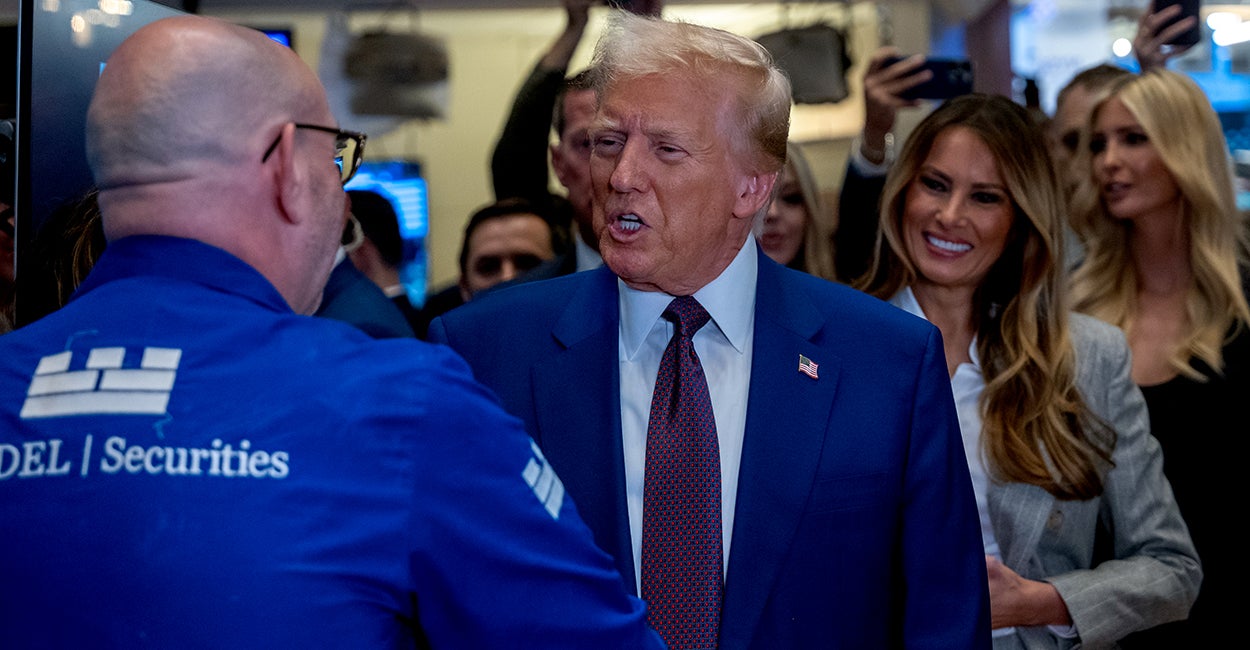
Hollywood sequels rarely achieve the magic of the original, but “Gladiator II” comes close. Except for the familiar populist framework of a lone man taking on “the system” against all odds, the echoes to the original are sufficiently distant that the new movie feels fresh and original.  Plus, it turns out that Ridley Scott’s blockbuster is a timely, if unwitting, metaphor for Donald Trump’s own sequel, which is off to a better start than his original. This time, he won the popular vote and his transition is smoother, most recently featuring Trump’s triumphant trip to Paris, Kash Patel’s appointment to lead the FBI, and Canadian Prime Minister Justin Trudeau’s obeisant visit to Mar-a-Lago.   This is what Trump’s “revenge” looks like. Compared to a Gladiator-inspired populist revolt, it’s both genteel and more satisfying: What red-blooded American viewer doesn’t enjoy seeing Trump arm-wrestling with Macron again and making a nanny-state bully like Trudeau heel, or seeing him appoint bold populists like Patel, Bobby Kennedy Jr., and Tulsi Gabbard to lead, and turn upside down, politicized government agencies that sought to do him in? Ancient Rome has always been both an inspiration and a cautionary tale for America’s leaders. George Washington modeled on Cincinnatus by relinquishing his military power to enhance civilian government, and he frequently quoted the Roman senator Cato, who sacrificed his life in support of the Roman Republic. The Founders chose an eagle as our national symbol—the symbol of the Roman god Jupiter used to represent Roman power. Both John Adams and his son John Quincy Adams idolized the Roman orator Cicero. More ominously, Abraham Lincoln’s stage-actor assassin John Wilkes Booth played the role of Mark Antony in an 1864 New York City performance of “Julius Caesar,” with his brother Edwin playing Brutus. And as he leapt from the president’s box in Ford’s Theater, Booth shouted “Sic semper tyrannis,” the words attributed to Brutus as he killed Caesar. Over the course of our nation’s history, comparisons between the United States and ancient Rome have focused on the fall of the latter as a caution for the former. The comparisons range from financial mismanagement to far-flung and overextended military commitments. So, Roman lessons for the U.S. are nothing new. Ridley Scott, who produced and directed “Gladiator II,” drew parallels between his movie and contemporary American politics in an interview with the Hollywood Reporter, but—this is fun!—he’s spectacularly wrong about both.  Scott told the Hollywood Reporter that he modeled the heavy in “Gladiator II”—a creepy, Machiavellian opportunist whom Denzel Washington brings to life—on Donald Trump. “He evolved into a very rich merchant selling sh– to the Roman armies—food, oil, wine, cloth, weapons, everything,” Scott said. “He maybe had a million men spread around Europe. So, he was a billionaire at the time, so why wouldn’t he [have ambitions toward the throne]? ‘Why not me?’ He’s also a gangster—very close to Trump. A clever gangster. He creates chaos, and from chaos he can evolve.” Is anyone surprised that a Hollywood liberal misses the point about Trump in his own movie? Ridley Scott has it precisely backward: The Trump parallel is not the scheming creature of the Roman political swamp, but the hero, a prince who would not bow to those who sought to crush and kill him. It’s Trump’s rivals, scheming, duplicitous power-seekers seeking to whip up hate, who are whispering in the ear of a non-compos mentis leader. And what ultimately drove the young prince to become the populist leader of Rome? As he approaches the inevitable climatic death match, the gladiator himself reprises the core idea from the first film: “The dream that was Rome.” It’s a fragile dream of a republic that will only be achieved by taking back power from corrupt, weak leaders and scheming politicians. The gladiator’s speech about Rome applies to contemporary America. It’s about recapturing the American dream and refreshing government of, by, and for the forgotten people—instead of the powerful—the very ideas that bring cheers to a Trump rally. With that in mind, consider the words ascribed to Marcus Aurelius—words that the film’s hero and villain both quote: “The best revenge is to be unlike him who performed the injury,” or “The best revenge is not to be like your enemy.” Trump’s many enemies, the folks whipping up fear that he will use government power to go after political enemies as the Democrats did to him, misunderstand MAGA “revenge,” as Trump made clear again during his long Sunday interview with Kristen Welker on “Meet the Press.” Government institutions that have been infused with politics and corrupted away from their purpose are not reformed by changing the politics, but by purging the politics.  Trump’s revenge is to be different, to empower allies to reveal and reform corruption, and to reduce the power of government over the people instead of expanding it. Nothing will crush his haters more than being a great president. “I’m really looking to make our country successful,” Trump told Welker. “I’m not looking to go back into the past. I’m looking to make our country successful. Retribution will be through success. If we can make our success—this country successful—that would be my greatest, that would be such a great achievement. Bring it back.” Trump’s 2024 victory against all the forces arrayed against him is just the opening act of his sequel. Now, the fun really begins. Someday, Hollywood will understand what most Americans already see: Donald Trump is a gladiator for the dream that is America. We publish a variety of perspectives. Nothing written here is to be construed as representing the views of The Daily Signal. Originally published by RealClear Wire. The post ‘Gladiator II’ Is a MAGA Metaphor appeared first on The Daily Signal.
Like
Comment
Share
Daily Signal Feed
Daily Signal Feed
1 y

Why Is American Health Care So Bad?
Favicon 
www.dailysignal.com

Why Is American Health Care So Bad?

Editor’s note: This is a lightly edited transcript of the accompanying video from professor Peter St. Onge. How did American health care get so bad? Why do we tolerate a system where you go bankrupt for a hip replacement? Compared to socialized medicine, on almost any metric the U.S. has one of the best medical systems in the world—doctors per capita, hospital bed capacity, waiting times, surgical outcomes, access to specialists. I’m not saying it’s great, I’m saying almost everybody else is worse. The problem is, this comes with nosebleed prices and a funding system that is corrupt, mind-bogglingly complicated, and often outright predatory. U.S. health care costs two and a half times the average in the Organization for Economic Cooperation and Development. And it can feel like a reverse lottery where every so often it wipes you out and you go back to “start.” So, what went wrong? In short, American health care is expensive because it’s lovingly written by lobbyists—insurers, hospitals, trial lawyers, and especially the doctors union—the American Medical Association. Like all regulation, every word is designed to benefit the industry and the doctors’ union. Never the patient. These rules ban competition and drive up prices. They push overtreatment and overprescription. And above all, the system hides the costs to patients, leaving insurers to police hospitals in ways that destroy patients. So, how to fix it? Happily, it wasn’t always this bad. Our crony medical system is a creature of a World War I-era effort by the American Medical Association—the doctors’ union—to outlaw competition and drive up prices. The AMA destroyed the system of voluntary co-ops that provided care for nearly all Americans and that, by holding prices down, meant that any poor person in America was treated for free. Members would pay a fee—less than $100 a month in modern terms—for health care, disability, and life insurance. That included a so-called lodge doctor who was on-call for members and would do house calls. The AMA, of course, hated this system because it was too cheap. So, they broke it. First, they took over licensing to radically cull the number of new doctors, driving up the price, ending house calls, and giving us 11-plus years of medical school. Then AMA lobbied to deny hospital privileges to lodge doctors, even to deny emergency care to lodge members. This wiped out the lodge system, replaced by heavily regulated—and very well paid—AMA members. Finally, the AMA made it illegal to practice medicine without its license. After this union takeover, every ongoing reform made it worse, driving up prices and shutting out competition because every reform is written by the AMA and incumbents. The 1973 HMO Act, the 1985 COBRA Act, 1997 CHIP, 2003 Part D, and, of course, Obamacare—all written by union and industry for union and industry. So, what’s next? It’s tempting to try to fiddle around the edges—promote price transparency, high-deductible plans, co-payments that control costs. But these are doomed so long as government effectively runs health care in America. Because government rules will always be written by lobbyists. That leaves the radical solution: Go back to the co-ops. They do still exist—the Amish use co-op, and three states still have small functioning co-ops: Maine, Wisconsin, and Montana. But it would take a root-and-branch disgorgement of the tens of thousands of mandates and regulations that make up our crony medical system. They would be replaced with the original intent of afforded pooled risk that actually serves the patient. We publish a variety of perspectives. Nothing written here is to be construed as representing the views of The Daily Signal. The post Why Is American Health Care So Bad? appeared first on The Daily Signal.
Like
Comment
Share
Showing 66217 out of 120007
  • 66213
  • 66214
  • 66215
  • 66216
  • 66217
  • 66218
  • 66219
  • 66220
  • 66221
  • 66222
  • 66223
  • 66224
  • 66225
  • 66226
  • 66227
  • 66228
  • 66229
  • 66230
  • 66231
  • 66232
Advertisement
Stop Seeing These Ads

Edit Offer

Add tier


Select an image
Delete your tier
Are you sure you want to delete this tier?

Reviews

In order to sell your content and posts, start by creating a few packages. Monetization

Pay By Wallet

Payment Alert

You are about to purchase the items, do you want to proceed?

Request a Refund