YubNub Social YubNub Social
    #freedom #law #racism #civilrights #ai #fourthamendment #utah #privacy #lawenforcement #warrant #environmentalscience #surveillancestate #eff #alpr #blackfatigue
    Advanced Search
  • Login
  • Register

  • Night mode
  • © 2026 YubNub Social
    About • Directory • Contact Us • Developers • Privacy Policy • Terms of Use • shareasale • FB Webview Detected • Android • Apple iOS • Get Our App

    Select Language

  • English
Community
New Posts (Home) ChatBox Popular Posts Reels Game Zone Top PodCasts
Explore
Explore
© 2026 YubNub Social
  • English
About • Directory • Contact Us • Developers • Privacy Policy • Terms of Use • shareasale • FB Webview Detected • Android • Apple iOS • Get Our App
Advertisement
Stop Seeing These Ads

Discover posts

Posts

Users

Pages

Blog

Market

Events

Games

Forum

YubNub News
YubNub News
1 y

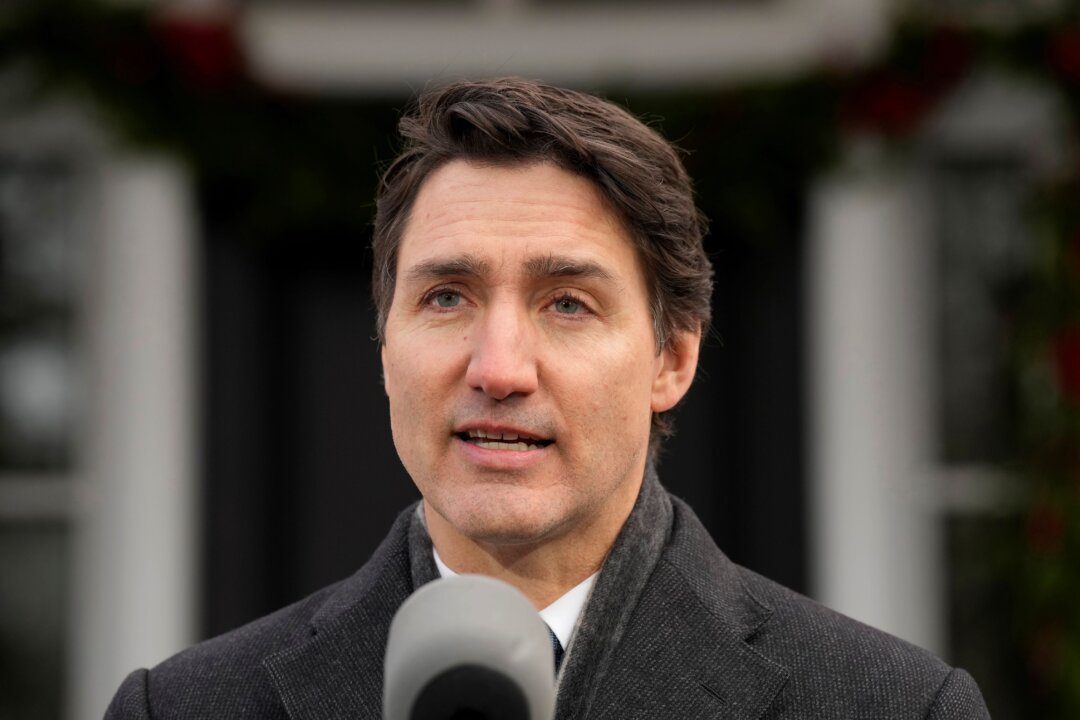
REPLAY: Canada’s Trudeau, LeBlanc Remark on Tariffs Imposed by Trump
Favicon 
yubnub.news

REPLAY: Canada’s Trudeau, LeBlanc Remark on Tariffs Imposed by Trump

[unable to retrieve full-text content]Canadian Prime Minister Justin Trudeau and Finance Minister Dominic LeBlanc deliver remarks at 8 p.m. ET on Feb. 1 on the tariffs imposed by U.S. President Donald…
Like
Comment
Share
YubNub News
YubNub News
1 y

Trump Imposes 25% Tariff on Canadian, Mexican Imports and 10% on China
Favicon 
yubnub.news

Trump Imposes 25% Tariff on Canadian, Mexican Imports and 10% on China

President Donald Trump has officially enacted tariffs on imports from Canada, Mexico, and China, marking a significant shift in U.S. trade policy.Effective immediately, all imports from Canada and Mexico…
Like
Comment
Share
YubNub News
YubNub News
1 y

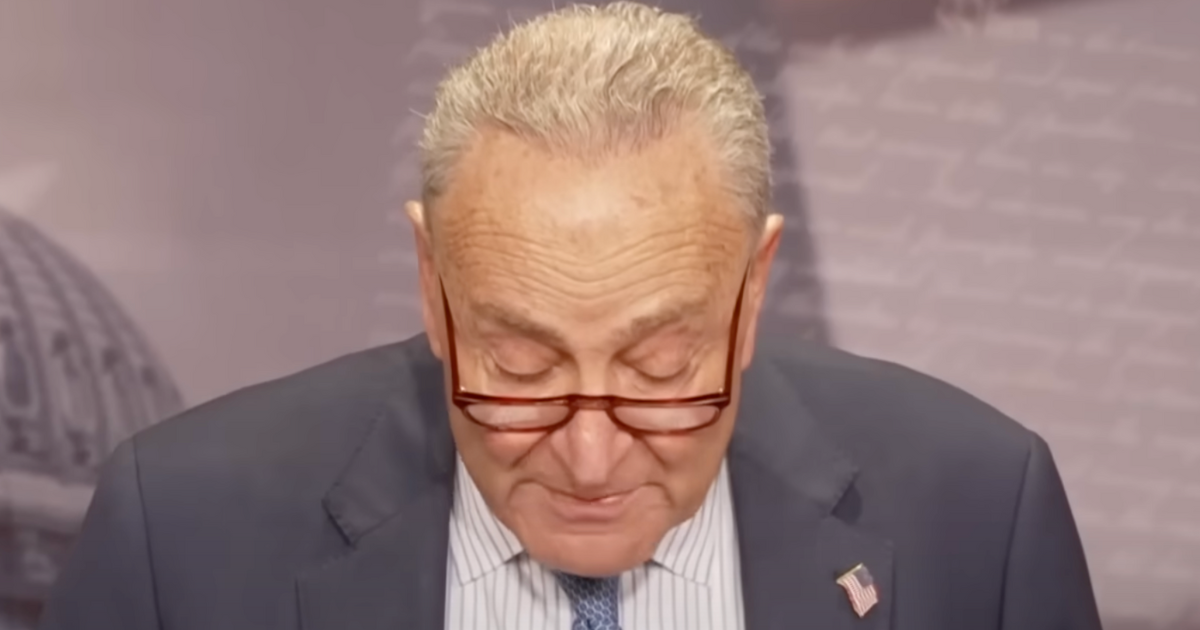
Schumer Under Investigation Over Comments He Made About Kavanaugh, Gorsuch in 2020
Favicon 
yubnub.news

Schumer Under Investigation Over Comments He Made About Kavanaugh, Gorsuch in 2020

Senator Chuck Schumer is facing an investigation after comments he made in 2020. U.S. Attorney Ed Martin has confirmed a preliminary inquiry into Schumer’s statements regarding Supreme Court Justices…
Like
Comment
Share
YubNub News
YubNub News
1 y

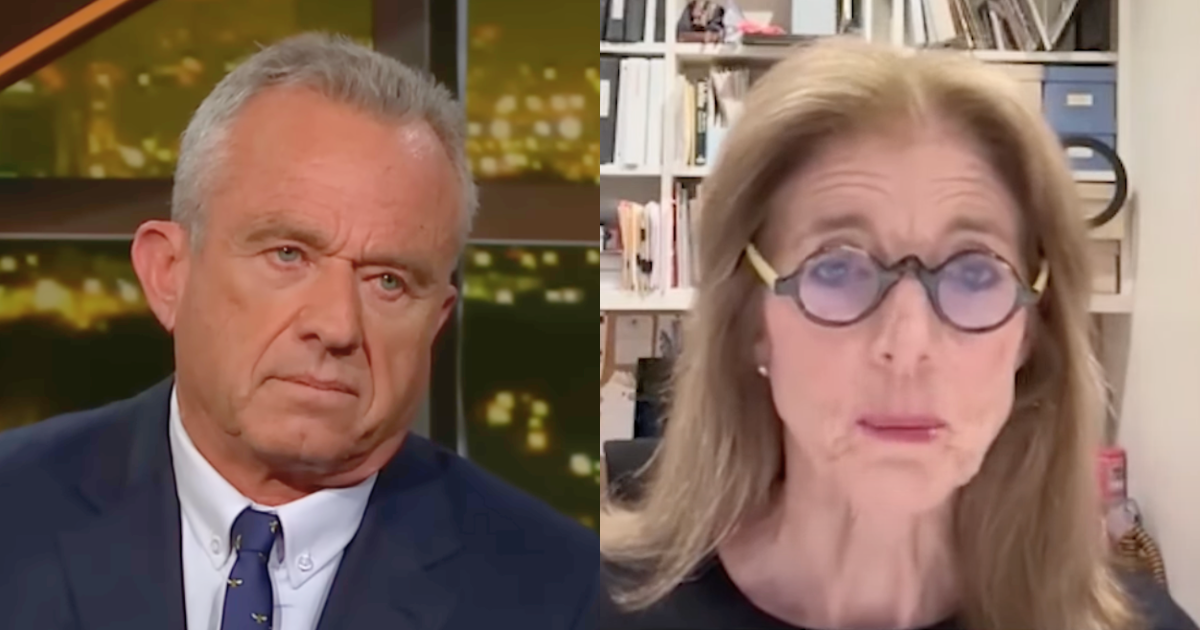
The Kennedy Family Rift: How Ethel Kennedy’s Death and RFK Jr. Deepened the Divide
Favicon 
yubnub.news

The Kennedy Family Rift: How Ethel Kennedy’s Death and RFK Jr. Deepened the Divide

The Kennedy family’s unity, once epitomized by their “Camelot” era, has unraveled in recent years, marked by deep divisions, particularly during Robert F. Kennedy Jr.’s confirmation hearings for…
Like
Comment
Share
Conservative Voices
Conservative Voices
1 y

Loss 'deeply felt throughout' pediatric patient's hospital, comms officer says
Favicon 
www.brighteon.com

Loss 'deeply felt throughout' pediatric patient's hospital, comms officer says

Follow NewsClips channel at Brighteon.com for more updatesSubscribe to Brighteon newsletter to get the latest news and more featured videos: https://support.brighteon.com/Subscribe.html
Like
Comment
Share
Conservative Voices
Conservative Voices
1 y

Op-Ed: Defending Traditional Marriage in Idaho
Favicon 
conservativefiringline.com

Op-Ed: Defending Traditional Marriage in Idaho

The following article, Op-Ed: Defending Traditional Marriage in Idaho, was first published on Conservative Firing Line. Guest post by Dorothy Moon, Idaho GOP Chairwoman January 31, 2025 — The Idaho House of Representatives has been steadfast in its efforts to protect the sanctity of traditional marriage, championing the rights of our state in a battle that dates back to the landmark Obergefell v. Hodges decision in 2015. This controversial Supreme Court … Continue reading Op-Ed: Defending Traditional Marriage in Idaho ...
Like
Comment
Share
Intel Uncensored
Intel Uncensored
1 y

Get Abs In 60 Days (Using Science) - Jeff Nippard
Favicon 
api.bitchute.com

Get Abs In 60 Days (Using Science) - Jeff Nippard

In this video I'm showing you the most effective science-based way to get six-pack abs. We will cover the best ab exercises, how many calories you should eat on your six-pack diet, how much protein you should eat and what supplements I take. We'll also take a look at some of the most common mistakes people make when trying to get their abs to show. WITH THANKS TO:- https://www.youtube.com/watch?v=Tn-XvYG9x7w Try my science-based nutrition coaching app 2 weeks free: http://bit.ly/jeffmacrofactor ------------------------------- ** My Fundamentals Training Program: https://shop.jeffnippard.com/product/... ** MacroFactor Diet App: http://bit.ly/jeffmacrofactor [FREE 2 week trial] ** My Ultimate Guide To Body Recomposition: https://shop.jeffnippard.com/product/... ** Rise Gym Apparel: https://rise.ca/jeff ** PEScience Supplements: https://www.PEScience.com/discount/jeff ** Instagram: / jeffnippard ------------------------------- Categories: 0:00 - How lean do you need to get? 1:21 - Training (the best ab exercises) 4:04 - Cardio 4:33 - Diet (calories, macros and foods) 5:54 - Nutrition mistakes 7:16 - Supplements
Like
Comment
Share
Classic Rock Lovers
Classic Rock Lovers  
1 y

The era David Bowie thought was too bizarre to work: “I don’t know where I was at”
Favicon 
faroutmagazine.co.uk

The era David Bowie thought was too bizarre to work: “I don’t know where I was at”

Not the perfect fit. The post The era David Bowie thought was too bizarre to work: “I don’t know where I was at” first appeared on Far Out Magazine.
Like
Comment
Share
Conservative Voices
Conservative Voices
1 y

President Trump’s Extraordinary Firing of the IGs
Favicon 
spectator.org

President Trump’s Extraordinary Firing of the IGs

Just last week, President Trump fired a large number of inspectors general. He had done much the same thing in 2020, seeing them as a major source of the swamp fever that plagued his rookie administration. Taft weighed in on the Tenure of Office Act as well, ruling it unconstitutional, even though it had been long gone. In his reincarnated presidency and no longer a rookie, Trump has hit the ground running. He hasn’t waited years before addressing entrenched forces within his administration which he believes are ready to hobble him and slow his agenda any way they can. Trump can hardly be blamed for wanting to avoid a term in which far too much of his energy was drained to deal with endless investigations that resulted in not much more than draining his time and energy. Senator Chuck Grassley, Chairman of the Senate Judiciary Committee, last week took a stand against the way the IGs were fired. Together with the ranking minority member, he wrote to the president to object, stating that there is statute law governing how IGs can be fired. They wrote: The law must be followed. The communication to Congress must contain more than just broad and vague statements; rather, it must include sufficient facts and details to assure Congress and the public that the termination is due to real concerns about the Inspector General’s ability to carry out their mission. This is a matter of public and congressional accountability and ensuring the public’s confidence in the Inspector General community, a sentiment shared more broadly by other Members of Congress. Grassley supported Trump strongly in this election. He has been a stalwart throughout the Biden years, doing his best to thwart the woke madness. But as a senior senator, he stands firm for the privileges of the Senate and the Legislative Branch and is willing to form a bi-partisan coalition to protect those privileges. Tensions between the three branches of the federal government are a design feature of our Constitution. The original government of independent America, set up under the Articles of Confederation, had only Congress and no administrative branch. It set up departments to take care of things like foreign affairs and these departments were answerable only to the Congress and served at its pleasure. The flawed Articles gave way to the Constitution, which took administrative power away from the legislature and gave it to the executive. Article Two begins by vesting the executive power in the president and gives no qualification to that power except that for some offices, his appointments require the advice and consent of the Senate. When the First Congress set about establishing the departments of the executive branch, its members saw that even though the Constitution clearly gives the president appointment powers, it says nothing about his power to get rid of officers. Congress had to make sense out of this omission as it debated the issues surrounding the form of this new executive branch. The results of their debate and deliberation is called by historians the Decision of 1789. What that decision was has been interpreted in following generations by the courts. The president’s power to fire was the target of the Tenure of Office Act of 1867. Congress and President Andrew Johnson were at loggerheads. Congress was controlled by Republicans intent on forcing the defeated Confederacy to accept not only the outlawing of slavery but also strong civil rights legislation. Johnson was a Democrat from Tennessee who Lincoln put on his 1864 ticket to appeal to those who supported the Union but were not enthused about expanded civil rights. Many were sure that were Lincoln to lose, his opponent, George McClellan, would have made peace with the Confederacy. Above all, Lincoln wanted to preserve the Union, and Johnson was an important part of branding his re-election effort as that of the National Union Party. With the war won but the nation deprived of Lincoln’s superb political skills by an assassin’s bullet, Congress and the new president began a struggle to the death. Johnson was deeply opposed to the policies of some of Lincoln’s Cabinet appointees. Johnson wanted those men gone. Congress tried to forestall this by passing the Tenure of Office Act, which declared that presidential appointees, even in the Executive Branch, should continue to serve in their office until a successor be appointed with the Senate’s advice and consent. What that meant was that if the Senate refused to consent to a new appointment, the old appointee would continue to serve until the end of the president’s term. Johnson saw the limit it would put on his power, believed it unconstitutional, and vetoed the bill. The House and Senate overrode that veto, passing the law. Johnson then fired the Secretary of War, and then the House impeached Johnson, seeing that breach of the Tenure Act as a high crime or misdemeanor. Johnson was acquitted in the Senate by a single vote. Though the struggle with Johnson was very much Republicans against Democrats, the Tenure of Office Act was also objected to by Republicans Ulysses Grant and James Garfield for the limits it imposed on their power. The issue was resolved during the presidency of the first Democrat to be elected to that office after the Civil War, Grover Cleveland. He successfully pushed for a repeal of the law, and it was taken off the books in 1887. To this point, the issue of the president’s power to fire had not been settled by a court decision. The Decision of 1789 was made by Congress; the Tenure of Office Act was made by Congress; a President in turn asserted what he felt his powers were under the Constitution on his own; and Congress in 1887 decided to negate its own assertion. The Supreme Court finally had its say in 1926 in the Myers case. The majority decision was written by the only man to serve as both Chief Magistrate and Chief Justice of the United States, William Howard Taft. Such service gave him a unique perspective. His decision was based largely on his understanding of the Decision of 1789, which he read, along with Alexander Hamilton and John Marshall, as agreeing that the Constitution gave the President full removal authority. He quoted at length the argument of James Madison, then a congressman, in the 1789 debate: Vest this [firing] power in the Senate jointly with the President, and you abolish at once that great principle of unity and responsibility in the Executive department which was intended for the security of liberty and the public good. If the President should possess alone the power of removal from office, those who are employed in the execution of the law will be in their proper situation, and the chain of dependence be preserved, the lowest officers, the middle grade, and the highest, will depend, as they ought, on the President, and the President on the community. Taft weighed in on the Tenure of Office Act as well, ruling it unconstitutional, even though it had been long gone. With this, he sought to bring all three branches of government to agree that the President’s power to dismiss executive branch officers is virtually unlimited. This recognizes something that is sometimes forgotten due to the genius of John Marshall, who so established the power of the Supreme Court in Marbury that we tend to think that the only branch that has a say in what the Constitution means is the Judiciary. Taft helped show that what the Congress had to say about how the Constitution in 1789 established ruling precedent. In his article on the Decision of !789, Saikrishna Prakash reminds us that presidents have weighed in on constitutional issues. The example of Lincoln in overruling the Supreme Court and asserting that the constitutional power to suspend habeas corpus was his is the most powerful of the examples he lists. Taft’s ruling was contested by strong voices, both in his court (Brandeis and Holmes wrote dissenting opinions that proved influential) and beyond. A later SCOTUS decision, Humphrey’s Executor, seemed to walk back Taft’s decision, but the 2020 Seila Law decision strongly affirmed the President’s ability to fire someone even when Congress had passed a law severely limiting his ability to do so in this case. So what stands now is something extraordinary: the Supreme Court acknowledges an Executive power based on a decision made by Congress to affirm the power of the Executive Branch against its own. What a precedent this is! What makes our nation work is a devotion to an authority that transcends the power base of any one person or branch. It is a kind of musical sensibility to the harmony of the whole. Like music, it does not silence the voice of any instrument or singer, but it does require of every musician a dedication of their own genius to the genius of the whole ensemble. So today, we can see Trump’s assertion of his power and Senator Grassley’s counterpoint as two musical themes, which will at times be dissonant but will ultimately resolve harmoniously. Amidst all the chaos of the past decade, engendered largely by contemptuous dismissal of the Constitution in favor of woke ideology, this is refreshing. Instead of envisioning an America in which dissent must be dismissed, throttled, or even criminalized, we return from Jacobinism to something more humane, broader in conception, and truly inclusive in vision. This is the reappearance of a harmonious spirit capable of reviving a lively national consensus in which our differences challenge each other to rise higher, as we united our varied gifts in service of a united commonwealth. A resurrection of constitutionalism — and not a moment too soon! READ MORE from Shmuel Klatzkin: With Trump’s Return, the Mullah’s Nazi Dreams Are Dead Rights, Responsibility, and the LA Wildfires   The post President Trump’s Extraordinary Firing of the IGs appeared first on The American Spectator | USA News and Politics.
Like
Comment
Share
Conservative Voices
Conservative Voices
1 y

The Vice President and the ‘Ordo Amoris’
Favicon 
spectator.org

The Vice President and the ‘Ordo Amoris’

It may not be a surprise to hear a Catholic convert who was tutored by Dominicans quoting St. Thomas Aquinas. But certainly nobody had the Vice President of the United States publicly citing the Dominican saint and referring to his theology in Latin on their 2025 bingo card. But that’s exactly what happened last week. For generations, we have lived under the rule of those who … deride and despise the ordo amoris. In a Fox News interview, Vance addressed concerns raised by Christians—and especially by U.S. Catholic bishops—over President Donald Trump’s immigration policies, particularly mass deportations. While Vance acknowledged that Christians have a moral obligation to treat others—including strangers and sojourners—with charity, he noted the “Christian concept” that charity must be rightly ordered, that it is, in fact, hierarchical. “You love your family and then you love your neighbor and then you love your community and then you love your fellow citizens in your own country and then, after that, you can focus and prioritize the rest of the world,” Vance explained. He further observed, “A lot of the far Left has completely inverted that.” The “Christian concept” Vance cited is called “ordo amoris” or the “order of love” and is well-grounded in Christian theology. Saints Augustine of Hippo and Thomas Aquinas both wrote extensively on the subject, hundreds of years apart. According to the saints, we have a higher obligation to love certain people based on our proximity to and relationship with them. “One’s obligation to love a person is proportionate to the gravity of the sin one commits in acting against that love. Now it is a more grievous sin to act against the love of certain neighbors, than against the love of others,” Aquinas explained in his Summa Theologiae. He continued: We must, therefore, say that, even as regards the affection we ought to love one neighbor more than another. The reason is that, since the principle of love is God, and the person who loves, it must needs be that the affection of love increases in proportion to the nearness to one or the other of those principles. For … wherever we find a principle, order depends on relation to that principle. In other words, our exercise of charity must be ordered in a particular manner. Our families are to be loved before other people’s families, our neighbors are to be loved before strangers, our fellow Americans are to be loved before citizens of other nations. Aquinas wrote, “Wherefore in matters pertaining to nature we should love our kindred most, in matters concerning relations between citizens, we should prefer our fellow-citizens, and on the battlefield our fellow-soldiers.” Of course, leftists often arrogantly (and not quite correctly) like to remind Christians who take a line such as Vance’s that Christ calls us to love all people, regardless of our relationship to them. While this is technically true, it does not actually contradict the principle of the ordo amoris. Take, for instance, former U.K. politician Rory Stewart, who derided Vance’s profession of longstanding Christian moral teaching as “less Christian and more pagan tribal.” The Vice President doubled down. “Just google ‘ordo amoris,’” he ordered Stewart. Vance went on, “Aside from that, the idea that there isn’t a hierarchy of obligations violates basic common sense. Does Rory really think his moral duties to his own children are the same as his duties to a stranger who lives thousands of miles away? Does anyone?” Loving your own family does not necessarily come into conflict with loving the citizens of an impoverished Third-World nation, provided that everything is in its right order. However, when the citizen of the impoverished Third-World nation indiscriminately violates one’s laws and jeopardizes the well-being and safety of one’s family, then all is thrown into disorder. In such a case, loving one’s family and loving the Third-World immigrant do come into conflict — and the Christian has a moral obligation to love one’s family first. Furthermore, as Vance noted, a father has a greater responsibility to love his own children than to love other people’s children. Yes, of course, a good man can still look out for and take care of other people’s children, but not at the expense of his own. This very fact is written into our souls on the most instinctual levels. It’s why mothers and fathers do not hesitate to give up their lives for their own children, it is why we weep most when our own families are harmed, it is why men have put their lives on the line for their nations since just about the beginning of time. Vance went on to not only correct Stewart, but to shame him for deceptively manipulating Christian teaching so blatantly. “I’ve said before and I’ll say it again: the problem with Rory and people like him is that he has an IQ of 110 and thinks he has an IQ of 130.  This false arrogance drives so much elite failure over the last 40 years,” Vance said. He is not the first to make such an observation. In The Abolition of Man, Christian author and apologist C.S. Lewis not only made the case for taking the ordo amoris to heart, but predicted the moral corruption that would follow abrogating or ignoring the order of love: St. Augustine defines virtue as ordo amoris, the ordinate condition of the affections in which every object is accorded that kind of degree of love which is appropriate to it. Aristotle says that the aim of education is to make the pupil like and dislike what he ought. When the age for reflective thought comes, the pupil who has been thus trained in ordinate affections or ‘just sentiments’ will easily find the first principles in Ethics; but to the corrupt man they will never be visible at all and he can make no progress in that science. Plato before him had said the same. The little human animal will not at first have the right responses. It must be trained to feel pleasure, liking, disgust, and hatred at those things which really are pleasant, likeable, disgusting, and hateful. Is it any wonder, then, that so much of the propaganda promoting mass migration — and, indeed, all tenets of leftism, from transgenderism and same-sex “marriage” to abortion and pornography — relies almost entirely (I feel I might even be justified in simply saying “entirely”) on manipulated emotions? The denizens of the Western world are being trained and conditioned to feel pleasure, liking, disgust, and hatred not as they ought to, but as leftism demands. The ordo amoris demands love of one’s neighbor over love of nameless strangers from the Third World; so why not bombard the American voter with incessant images and videos of immigrants in cages or crying at the border wall? These nameless strangers will become, to him, his neighbor. In fact, he will see them more than his own neighbor. The ordo amoris demands the love of one’s countrymen over the men of other countries; so why not tell the American man that he has no country, that his nation is nothing more than an idea? What then could possibly differentiate him from the hordes of and masses gathering along the border that he no longer believes exists? The ordo amoris demands that one love those who share one’s blood, one’s creed, one’s nationhood; so why not tell the American that diversity is actually our strength? Why not beat him over the brow with this trite, nonsensical axiom for generations? He’ll get it eventually. For generations, we have lived under the rule of those who not only deride and despise the ordo amoris, if they are even aware of its existence, who not only openly and flagrantly abrogate and violate the principle of the ordo amoris, but those who sneeringly claim that such abrogation and violation is good and just. What a relief it is to once again have a national leader who not only understands but boldly proclaims the order which God has written in the hearts of men to govern love. READ MORE from S.A. McCarthy: Vanquish or Die: The Choice Before the Catholic Church in America America’s Bishops Should Heed Church on Sovereignty The post The Vice President and the ‘Ordo Amoris’ appeared first on The American Spectator | USA News and Politics.

Like
Comment
Share
Showing 66690 out of 126617
  • 66686
  • 66687
  • 66688
  • 66689
  • 66690
  • 66691
  • 66692
  • 66693
  • 66694
  • 66695
  • 66696
  • 66697
  • 66698
  • 66699
  • 66700
  • 66701
  • 66702
  • 66703
  • 66704
  • 66705
Advertisement
Stop Seeing These Ads

Edit Offer

Add tier


Select an image
Delete your tier
Are you sure you want to delete this tier?

Reviews

In order to sell your content and posts, start by creating a few packages. Monetization

Pay By Wallet

Payment Alert

You are about to purchase the items, do you want to proceed?

Request a Refund