YubNub Social YubNub Social
    #astronomy #nightsky #physics #moon #astrophysics #fullmoon #supermoon #planet #nasa #zenith #wolfmoon #moonafteryule #cosmology #coldmoon #supermoon2026
    Advanced Search
  • Login
  • Register

  • Night mode
  • © 2026 YubNub Social
    About • Directory • Contact Us • Developers • Privacy Policy • Terms of Use • shareasale • FB Webview Detected • Android • Apple iOS • Get Our App

    Select Language

  • English
Install our *FREE* WEB APP! (PWA)
Night mode toggle
Community
New Posts (Home) ChatBox Popular Posts Reels Game Zone Top PodCasts
Explore
Explore
© 2026 YubNub Social
  • English
About • Directory • Contact Us • Developers • Privacy Policy • Terms of Use • shareasale • FB Webview Detected • Android • Apple iOS • Get Our App
Advertisement
Stop Seeing These Ads

Discover posts

Posts

Users

Pages

Blog

Market

Events

Games

Forum

Conservative Voices
Conservative Voices
1 y

The Faith of Djokovic
Favicon 
www.theamericanconservative.com

The Faith of Djokovic

Culture The Faith of Djokovic The Serbian tennis great used his moment of triumph to defy the International Olympic Committee’s official secularism. Credit: Matthew Stockman via Getty Images No bureaucrat at the IOC was going to steal this performance from Novak Djokovic.  Teary-eyed, drenched in sweat, grateful, sprawled out on the clay, Djokovic rose from the Philippe-Chatrier Court at the Paris Olympics and made the sign of the cross. The gold medal that long eluded the greatest men’s tennis player of all time was now his. The match was an instant classic.  It wasn’t that the 21-year-old Spaniard Carlos Alcaraz played poorly. He played brilliantly. His sensational, cat-like spring was on display throughout every point in the first grueling set, a 90-minute stunner that saw Djokovic repel five straight break points in the all-critical 9th game. The crowd oohed and ahhed. It was a matchup for the ages. Thunderous cheers could be heard in the Bois de Boulogne that lies beyond the stadium. The speed and grace of the youthful Alcaraz against the power and determination of the aging Djokovic.  Every time Alcaraz looked to wrest control of the second set, Djokovic found an answer. Visibly hobbled by a surgically repaired right knee, Djokovic played with all the guts and glory of a man who knew it would be his final chance at gold—drop shots that defied reason, forehand thumpers that left Alcaraz a spectator, and backhand returns that kept the Spaniard firmly planted on the touchline. The 37-year-old Serbian was sensational. His match-winning forehand appeared to be hit with every fiber of his being. He collapsed onto the clay. His dream of winning gold, accomplished. The career golden slam. He had won everything in the sport. Djokovic certainly understood the moment’s gravitas. In his post-match interview, Djokovic called the Olympic triumph “arguably the biggest success I’ve ever had.”  And as with every step of his starlit and at-times controversial career, Djokovic not only won with class, he won with immense courage in the face of political pressure to refrain. In an Olympic Games marred by anti-Christian controversy that prompted the Pope to issue a statement decrying the opening ceremony, Djokovic’s simple and blunt Appeal to Heaven has not gone unnoticed.  Article 50 of the Olympic Charter states that “No kind of demonstration or political, religious, or racial propaganda is permitted in any Olympic site.” And although the International Olympics Committee forced Brazilian surfer João Chianca to remove an image of Christ the Redeemer from his surfboard earlier in the Games, Djokovic was never going to let the suits at the IOC keep him from openly displaying his faith.  Reveling in the cool, night air of Paris, Djokovic told a reporter that “God is great” when he was asked what the gold medal meant to him. It wasn’t the first time Djokovic praised God during the Olympic games. After his dominant semifinal victory against Italian Lorenzo Musetti, a Serbian journalist asked Djokovic what needed to be done to secure the gold medal against Alcaraz.  In an instant, Djokovic pulled out a silver cross tucked into his red shirt. “That’s what needs to happen. I pray to God that everything will be alright.” Djokovic wasn’t the only Christian who defied Article 50 of the IOC charter. The U.S. runners Cole Hocker and Sydney McLaughlin-Levrone both used their gold-winning screen time to praise God. The Ethiopian runner Tsige Duguma penned a handmade sign that read “Jesus is Lord” after her silver-winning performance in the women’s 800m. Djokovic’s display of faith is nothing new to the sporting world. It was those deep set beliefs that propelled him from tennis great to global hero during the Covid era.  Djokovic, whose 24 Grand Slam trophies makes him the most decorated tennis player of all time, was barred from competing in the 2021 and 2022 editions of the U.S. Open for his refusal to get vaccinated against Covid.  He was also deported from Melbourne in 2022 ahead of the Australian Open following a 10-day standoff, again due to Djokovic’s vaccine status. The Serbian giant returned to Australia in 2023 under revised vaccination standards and won the tournament. Despite losing the opportunity to add more Grand Slams to his name, Djokovic stated in 2023 that he has “zero regrets.” It was only days after the Olympic finals when Djokovic announced the news – He would skip the Cincinnati Open. The titan of tennis needed a rest. Somewhere, Novak Djokovic kicked up his feet and opened Instagram. “God gave me this and I’m very grateful because I believe everything in life happens for a reason,” Djokovic wrote. “I’ve tried to use my life’s calling to carry my cross honorably and represent my country and my family.” And carry it honorably, he has.  The post The Faith of Djokovic appeared first on The American Conservative.
Like
Comment
Share
Conservative Voices
Conservative Voices
1 y

Are Team Trump’s Two Good Days Enough?
Favicon 
www.theamericanconservative.com

Are Team Trump’s Two Good Days Enough?

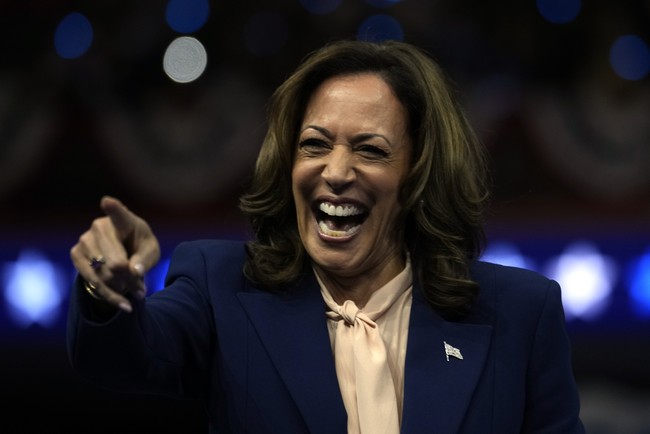
Politics Are Team Trump’s Two Good Days Enough? The wind is at Harris’s back, but she has shown some vulnerabilities. The day after Tim Walz was chosen as Kamala Harris’s  running mate, the Trump-Vance team finally had a relatively good day campaigning. For the previous 16 days, since Biden had been forced out, Kamala Harris had huge wind at her back, her every move receiving hagiographic girlboss press coverage.  The Trump camp should have better anticipated it. It might actually have been quantifiable in the polls—a good day might be worth nearly a point in general national favorability ratings, and Harris had pulled off 16 of them in a row.  Actual “who are you going to vote for” polls were somewhat stickier, but by the end of the period some polls showed the race tied, some showed Harris moving towards a large advantage. One poll—the Marquette Law School poll—showed her moving into a six point national lead. Horserace analysts like Mark Halperin (whose studiously non-polemical streaming show Two Way is surprisingly addictive) conveyed that some leading Republicans in private considered the race nearly over, that Harris was pulling into the kind of lead that Trump would never be able to overcome. (For what it’s worth, Halperin didn’t concur, but it is obviously significant that some well-informed people think that.) What was the good day? Vance was on the trail in Wisconsin, mercifully not required to defend remarks that a conservative intellectual might reasonably make as a polemic make but a national politician wouldn’t, and he found a clever way to talk about Harris and Walz. He walked over to Harris’s plane on Eau Claire airport tarmac and addressed reporters, a way to point out that Harris seemed to be terrified of speaking to reporters without a prepared text and a teleprompter. He shifted the conversation over to Walz and made some points about Walz’s refusal to call the National Guard during the early days of the George Floyd riots, while noting that Harris was raising bail money for the same rioters.  By then some voices in the national press were beginning to take an interest in whether Walz had an actual “stolen valor” issue—inflating his rank and his combat status, and bailing on his national guard unit as soon as it was ordered deployed to Iraq. CNN went as far to proclaim Walz’s campaign claim about guns he used “in combat” false. Walz clearly had less Teflon than Kamala. More importantly, the mainstream press (I was listening to CNN radio at the time) covered Vance’s remarks, without editorializing about how terrible they were.  Kamala’s choice of Walz was important.  Donald Trump is sufficiently unpopular that it is likely that if Harris somehow indicated that she really would try to govern from slightly left of center, as Biden promised but couldn’t manage to do, she would win in a walk. She could have chosen Josh Shapiro, Pennsylvania’s enormously popular governor, ensuring her Pennsylvania, and undermining (because Governor Shapiro has been willing to break from the left on charter schools, and on the general level of respect he is able to convey when speaking to and about Pennsylvanians of all political stripes) the argument that she is too radically left to win. By choosing a devout Jew, Harris would have given some reassurance to conservative Christians (who are closer in sensibility to religious Jews than they are to atheists).   A Shapiro choice would also have given Harris a kind of Sister Souljah moment with the pro-Hamas left, saying, in effect, not only do I not agree with you (she probably doesn’t), but I’m willing to elevate as my governing partner someone who has called you out as bad as the Klan. She might have faced some disruption at the convention for a Shapiro choice, but that could have been overcome. By ensuring herself a smoother convention, Harris has signaled that anti-Zionist forces within the Democratic party (a quite small minority) might well have a kind of veto power over her important decisions. One could imagine that this could come back in unpredictable but potentially momentous ways.  She chose, reportedly, on the basis of good vibes she felt with Walz.  Walz is clearly the most left of the six candidates who made it to the short list, the one endorsed by Bernie Sanders and most progressives in the Democratic party. Perhaps he will draw back some rural white voters to the Democrats, as the Harris press claque claims. More likely, he fits the mold of a progressive who can appeal to rural white voters, which is not the same thing.  What the choice conveys most of all is Harris team’s confidence that no ideological compromises with the center are really needed; yes, she no longer favors a ban on fracking, but the Walz choice doubles down on any number of other divisive culture-war issues where she might have considered herself vulnerable and sought to mitigate.  Driver’s licenses for illegal aliens? Check.   Support for transgenderism in the schools—check.  Support for the George Floyd rioters—check!  The Trump-Vance good day was followed by another at least decent day, in which Donald Trump gave a surprise press conference at Mar-a-Lago. The former president managed mercifully to avoid commenting on Harris’s mixed race background (though he did manage to bring up a helicopter flight he took with Willie Brown) but generally came across as confident and fluent. The cringey hostility between Trump and the media at his early White House press conferences seemed almost absent. He did contrast his availability to the press with Harris’s avoidance, adding that she is not smart enough to hold a press conference. (He had earlier made a gracious reference to Hillary Clinton’s  high intelligence—but “she was her own worst enemy.”)  I expect Harris will eventually have to sit down for some interviews. But perhaps not. There are two great unknowns about the campaign as she surges in the polls. One is whether she is too far left to be elected, if voters were to find out her real views. The other is whether she is smart enough to be president—or is her current elevation our real life version of Being There?  Is the real Kamala Harris the lady one sees speaking confidently at campaign rallies? Or is she the ditz getting before a microphone and speaking like a fourth grader giving a bad book report?  And if the latter, will the press, despite its longstanding disdain for Trump, allow that reality to be seen? We are approaching an election in which Trump and Vance are very much the underdogs, but which is far from decided.  The post Are Team Trump’s Two Good Days Enough? appeared first on The American Conservative.
Like
Comment
Share
The Lighter Side
The Lighter Side
1 y

Mechanic shares secret to knowing if shops really put on new tires when it’s time to change them
Favicon 
www.upworthy.com

Mechanic shares secret to knowing if shops really put on new tires when it’s time to change them

Owning a car is expensive. It's not just expensive to purchase a car, it's expensive to maintain the vehicle. From oil changes to tune ups, to brakes and struts, the price tag can shock you. One of the more expensive maintenance purchases for cars are new tires. It doesn't matter if you have a tiny car that looks like it could fit into your pocket or a Ford F-150–tires are going to cost a good portion of your paycheck. For that reason alone, people want to make sure they're getting the best tires that will last them as long as possible. But what if mechanics were keeping a secret about tires that may impact how long your tires last? Secret may be a stretch but not every mechanic is straightforward so some may use this well known trade information to unload stock that might need to be reduced. Like supermarkets put food that expires soon towards the front and the newer food towards the back, some tire shops may be doing the same with tires and one mechanic is spilling all the details. A mechanic uploaded a video, which was then shared by Glam Home Design, explaining how to tell when your tires are old before you drive away from getting a brand new set of tires installed. In the video, the man points out that every tire has to have DOT (Department of Transportation) printed on it. Follow the line of printed information until you reach an oval with numbers printed inside. That oval is where the manufacture date is found.The man explains that the numbers in the oval represent the week and year the tire was made, and since tires are only good for 6-10 years, according to the mechanic, it's best to make sure the tires being installed are new. Now, the date is only printed on one side of the tires so the man shares that you need to specifically ask for the person changing your tires to put the date on the outside. People were shocked by this information while some took his advice and checked the dates on their tires. View this post on Instagram A post shared by Glam HomeDesign (@glam.homedesign)"I bought brand new tires. Got home and checked the dates on them. All were over 2 yrs old. I called them up and they put brand new tires on the next day. Crooked a**holes. This is a well known franchise. So look before they put them on," one person writes."This is great! Went in for new tires yesterday and one of the 3 was made in 2019. When I told the assistant manager that I didn’t want a 4 year old tire he said ‘I don’t blame you’ and ordered 4 new ones (still, he said he could sell the 4 he was going to put on my car). While I have to wait another several days for my new tires, at least I wont have 1 that’s bad to begin with," another person exposes their mechanic shop.One person contested the information sharing that they didn't see what the big deal was if the tires were unused, so another commenter filled them in on why the date matters, writing, "If the tire is kept indoors, it can last 10 years without any degradation. The number one degrader of rubber is UV light, followed by ozone, both of which can be eliminated if the tire is kept inside. The only other antagonist is oxygen. But degradation of a tire due to normal oxygen levels indoors would take over 20,000 years so there’s no need to worry. Unfortunately, most tire shops keep their tires in an outside hangar, with direct sunlight (and thus UV light) hitting the tires occasionally, indirect sunlight hitting it all the time, ozone and humidity at higher levels, and hot temperatures help it break down. As a result, never buy a tire more than 1 year old if it’s been stored in a hangar, and never buy a tire PERIOD if it was stored outside in direct sunlight with zero elemental protection."The more you know. Now, go check your tires and remember this little trick when it's time to get new ones so you're getting all of your money's worth. In this economy information like this can be extremely helpful.
Like
Comment
Share
The Lighter Side
The Lighter Side
1 y

Teacher explains why he doesn't like the classic kid's book 'Rainbow Fish'
Favicon 
www.upworthy.com

Teacher explains why he doesn't like the classic kid's book 'Rainbow Fish'

Few children’s books are as deeply ingrained into the collective millennial psyche as “Rainbow Fish.” After all, what’s not to love about those oh-so sparkling rainbow scales and heartwarming lesson about how sharing leads to happiness far better than selfishness will. Only, according to some…that’s not the story’s lesson. In a video posted to his TikTok, Fifth-grade teacher Mr. Vương admitted that while the illustrations were, in fact, great, and the author probably had “good intentions, he still “didn’t like” the story behind this award-winning classic. For those who never read the book, or perhaps forgotten, Vương explains that at the beginning, “Rainbow Fish is full of himself because when all the other fish wanted to play with him, he sort of swam past them and thought he was better. Then one of the fish asked for one of his scales and he refuses.” This is where Vương feels the book missed the mark, since the book depicts drawing a boundary to be Rainbow Fish’s character flaw (more on that later). “In my opinion, I think he has the right to do that because he doesn't have to give up part of himself or anybody,” Vương. The real flaw, Vương argues, “was that he was not humble.” @teamvuong Poor Rainbow Fish. #teachersoftiktok #teachersfollowteachers #teachertok #literacy #therainbowfish #readaloud ♬ original sound - Mr. Vương Vương goes on to say that in the book, when Rainbow Fish said no, all the other fish decided not to play with him, which “made it more about how all the fish didn't accept him because he didn't give up his scales rather than them responding to his stuck-up behavior.” Also in the book—the wise Octopus advises that Rainbow Fish overcome his pride and give up all but one of his scales to the other fish. He might no longer be the most beautiful fish in the sea, but he is finally happy. Thus bringing in the moral of the story of sacrificing vanity for peace. “So he got acceptance…when he gave up parts of who he was…” Vương declares matter-of-factly. Vương’s hot take seemed to resonate with a few other adults who thought the Rainbow Fish had lost its luster over time. ““Rereading it as an adult now, it made me angry. Little fish has the audacity to ask for a shiny scale, Rainbow Fish says no, so little fish goes and bad mouths him to all the other fish so they all turn on him and only become his friends when he gives up a part of himself,” one viewer wrote. “I feel like the book had more of a ‘sharing is caring’ moral and just carried out the message in a weird way with the scales” another said. One person even quipped, “…and now I know where I learned to be a people pleaser from. Thanks FYP.”But still…the holographics scales are pretty neat…right? *cries in millennial*It’s worth noting that regardless of his own personal opinion of the book, Mr. Vương still uses it to “teach about how to think critically about themes.”“I opened up with what the theme was and then I read the story without telling them my opinion,” he says. “Then the kids made all these connections themselves and some of them looked at it through the lens of, ‘Oh it's selfishness.’ And some of them were like, ‘Wait, is he buying his friends?’”Not only that, but the class had “really good discussions” about transactional relationships, as well as dissecting what the author's original intent might have been. They will also be creating their own alternate endings, “where the theme is not that you gotta, you know, pay for your friends,” as the last part of their assignment. While not everyone might share Vương’s opinions on this kid’s book, we can probably all agree on his stance that “just because it has an award-winning sticker on it, it does not make it top-notch.”
Like
Comment
Share
The Lighter Side
The Lighter Side
1 y

Boomers and Gen Xers share things they grew up with that they wish young people could experience
Favicon 
www.upworthy.com

Boomers and Gen Xers share things they grew up with that they wish young people could experience

Those of us who grew up in the age before the internet have memories that today's young people will likely never have. Boomer and Gen X childhoods were simpler in many ways, not having access to endless entertainment or the pitfalls of the online world to contend with on a daily basis.The internet has arguably made human life better in many ways, but it has also fundamentally changed what growing up looks like. Where the older generations had a handful of TV shows at set times on limited channels, younger folks can binge watch streaming shows and YouTube channels 24/7. Boomers used manual typewriters while millennials had laptops. Gen X carried Walkmans while Gen Z carries smartphones.And that's just technology. The world has changed in other ways, too, including greater safety awareness that's changed the way people parent and kids having less access to untouched nature. Change isn't inherently good or bad, but there are definitely some nostalgic elements of boomer and Gen X upbringings that those older generations wish today's young people could enjoy. Here are some top answers to the question, "What is something you grew up with that you wish younger generations to experience?" from people born before 1980 on Reddit.Being unreachable"The freedom to be unreachable and unaware of what everyone on earth is doing at any given time, meaning ... life pre-iphone and pre-social media.""Pre CELL phone. Pre pager. (I mean, I know early cell phones were around but virtually no one had them pre-1993 and certainly no one expected or even considered them except high paid business folk).""Yes, I came here to say anonymity but being unreachable was so nice.""I remember leaving my phone home and not thinking anything of it. Now it’s not even ‘optional’. Phone is firmly a part of the ‘keys, wallet’ checklist before leaving the house.""Yes, having people be able to reach out to you 24/7 is not a good thing."Unrestricted, unsupervised outside exploration"Running wild outside in the country for entire day without even considering anything that could go wrong.""We used to just run around the woods by my friends house, and had tree forts and rode bikes around to the neighborhood kids houses. No concept of time outside of sunset. I think that might get lost in the shuffle more today.""This would be mine as well. Hop on your bike with a friend or two and head out. Maybe to the creek or the woods or the dime store downtown. Just an amazing aimless wandering with no fear of being accosted by anyone. A quick ten cent phone call home to let mom know where you were. Just be home for dinner. Our era had the best childhood ever.""This is true. I would wander for miles. But the thing is, looking back I can now see more than a handful of incidents that I was very lucky to escape by the skin of my teeth. I’m talking about hitchhiking or telling my parents I was sleeping over someone’s house, them telling their parents they were sleeping at mine and then staying out all night. Stuff like that. It was fun- good times but when I think of MY kid or grandkids doing the same thing I want to throw up."The joy of wonder without answers"Wonder. Sometimes we would just wonder about something. Watching a movie with friends. Someone says 'I wonder if William Holden is still alive?' Everybody would shrug and say 'I don’t know' and you go on with your lives.""Something humbling and wonderful about not knowing. Now with so much knowledge literally in our hands, we have this anxious 'need to know' everything. And everyone has become a Tik Tok expert.""Or allowing mysterious, wondrous stuff exist without explanations that are instantly available to remove the sense of awe about how odd, crazy, wonderful, talented, insane, or whatever our world can be.""The world was more of a mystery back then. That has both its upsides and downsides, but I can't help but feel that some of the wonder has dissipated."The gift of boredom"Boredom. Boredom breeds creativity. Boredom has been removed from their lives.""The skills you gain from the experience of being bored, every now and then. Principally, how you can develop that inner voice, which has been my friend on many occasions and saved my bacon many more. If you always rely on external sources for information or support you’ll surely get stuck when things go wrong or you have to make a decision quickly.""Boredom leads to reading plus learning to play instruments.""While I’m happy my kids made friends online the desperation of boredom and creating your own things was really important for me.""Boredom. The number of times I whined to my parents I was bored and their answer was just 'then go find something to do' led to all kinds of fun."The freedom to make mistakes"Being able to make a mistake without it going viral online.""Experiencing awkward coming of age scenarios without being documented in a server farm somewhere with world wide access.""I'm sorry kids don't have the chance to make mistakes and correct them without it being memorialized online to follow them forever.""Being able to break things and make mistakes... the cost is way too high now."Tactile pleasures"The satisfaction that comes with slamming down a landline phone receiver.""Encyclopedias.""Paper maps. I’d love to see someone in this day and age successfully use (and fold back to its original form) a paper map.""Reading a book instead of playing video games (most useless invention possible). I'm actually old enough to remember no TV in the house and no radio either (my parents read newspapers and magazines instead for their news but it's a much slower feed and more local).""The thrill of buying a vinyl album. I know you can still do that, but it just doesn't seem the same. Back in the '60s and '70s they were absolute TREASURES.""Sleeping on sheets that had been dried out on a clothesline in spring. The scent on those sheets was intoxicating."Travel feeling more adventurous"Going on a road trip with your friends to somewhere you've never been, navigating your way there with a road atlas, and then exploring it without consulting any online reviews or suggestions from Google Maps.""Experience world travel the way it used to be. There was a time when traveling to another country was a big deal and it was adventurous.Now, we can buy a last minute ticket on a flash sale, read about the destination on the way to the airport, watch Hollywood movies on the plane, rent a car from a familiar brand, stay at a known hotel chain, eat familiar food and use your GPS to guide you around while you chat in real time with your friends.Travel is still fun but the magic and romance are mostly gone. That feeling of being far away and completely submerged in a strange culture almost doesn't exist anymore. It's too easy and homogenized now.""So true. Even back in the early 2000s I remember being on a bus in South America with an American 19 year old who was really captivated by the idea that I travelled in the 1970s "before email." You had to wait two weeks to receive any kind of letter at the General Delivery post office of whatever country you were in. There was so much freedom in that, and a real submersion into the local culture, an ability to let go of your cultural touchstones and become someone new.""The old way of traveling meant there was a lot of serendipity happening. You’d head to some town you knew nothing about and get chatting with someone on the bus who would then invite you to stay at their house. They would feed you and show you around, help you navigate whatever you needed to head on your way. A lovely way to meet people and learn about nearby treasures to see that you knew nothing about. Now , everything can be researched and plotted out beforehand. I still travel in an unplanned way, with no agenda, no lodgings figured out, but when I mention it, other people shudder and say their anxiety wouldn’t allow it. Did we not have anxiety in the old days? Yes, we did, but it was all part of taking risks in life."There's a lot that's better, easier, faster and more convenient about life in the 21st century, but there really was something special about growing up in the pre-internet days, wasn't there?
Like
Comment
Share
Classic Rock Lovers
Classic Rock Lovers  
1 y

The Fleetwood Mac song that would have been perfect for Christine McVie
Favicon 
faroutmagazine.co.uk

The Fleetwood Mac song that would have been perfect for Christine McVie

"Mick loves that song." The post The Fleetwood Mac song that would have been perfect for Christine McVie first appeared on Far Out Magazine.
Like
Comment
Share
Intel Uncensored
Intel Uncensored
1 y News & Oppinion

rumbleRumble
Minnesota Has Gone to Hell in a Handbasket
Like
Comment
Share
Conservative Voices
Conservative Voices
1 y

The Real New Dealer: Remembering Herbert Hoover
Favicon 
spectator.org

The Real New Dealer: Remembering Herbert Hoover

Aug. 10 is Herbert Hoover Day, marked annually on Hoover’s birthday to remember the legacy of America’s 31st president. This year the day is especially notable as it also marks the controversial president’s 150th birthday. To most Americans, Hoover’s presidency is remembered as one of the most disastrous in American history for his mishandling of the worst economic disasters of the 20th century, the Great Depression. It’s not uncommon to hear New Deal historians or progressives argue that it was the failure of capitalism that led to the Great Depression. They argue Hoover had fully embraced a “laissez-faire” mentality that exacerbated the crisis. By extension, they insist that it was Hoover’s successor, FDR, with his economic interventionism, that saved America from the brink. (WATCH: The Spectacle Ep. 133: Thinking of the Roman Empire: Is the US Following In Its Footsteps?) But is this an accurate portrayal of Herbert Hoover, what he believed, and who he was? Was he truly the fatally neglectful laissez-faire supporter that New Deal historians make him out to be? In reality, the progressive narrative of Hoover being a stalwart supporter of the free market could not have been further from the truth. What the progressive narrative completely fails to recognize was that it was not Hoover’s support of the free market that made him a failure, but rather, his disdain for free enterprise. It was the latter that hurt the country’s economy and tarnished his record and legacy. Hoover the Humanitarian Herbert Hoover was a big government manager. Understanding his support for government intervention requires going back to his Quaker upbringing and eagerness to use science to further humanity. The Herbert Hoover Presidential Library notes, “He held fast the Quaker tenets: the power of the individual, the importance of freedom, and the value of charity. Hoover’s beliefs were also shaped by his training as a geologist—that scientific expertise properly employed leads to human progress. He strongly believed in public service.” One could easily be misled to believe that Hoover’s Quaker values would align well with the self-reliant, laissez-faire crowd of his time, making him the defender of the free market that New Deal deal historians make him out to be. However, his engineering background led Hoover to believe the economy and government could be tinkered with. As economist Steven Horowitz put it, “Hoover, a very successful mining engineer, thought that the engineer’s focus on efficiency could enable government to play a larger and more constructive role in the economy.” (READ MORE: College Kids Without Civics and History) As World War I broke out in Europe in 1914, Hoover was approached by U.S. Ambassador to Britain Walter Hines Page to help lead the Commission for Relief in Belgium to assist the thousands of starving civilians in Belgium obtain food, clothing, and other items. Hoover’s actions as Chairman of the Commission for Relief in Belgium eventually got him noticed by members of Congress, particularly President Woodrow Wilson’s confidant, Edward House. This allowed for Hoover’s elevation to the status of Director of the Food and Drug Administration within the Wilson administration. With this appointment, Hoover began focusing on increasing farming production through market manipulation. He twisted market prices via heavy government purchasing of agricultural products. At the same time, he also asked American citizens to voluntarily reduce their own consumption. It wasn’t long before Hoover’s name was a household name, a pejorative: “to Hooverize.” Hooverizing meant to “economize” on food by adopting “Meatless Mondays” and “Wheatless Wednesdays.” After the war, Hoover became a member of the Supreme Economic Council and the head of the American Relief Administration, which sought to organize food shipments to Central and Eastern Europe, which was experiencing major food shortages and famine. Hoover also extended food shipments to Bolshevik Russia during Vladimir Lenin’s “collective system of agriculture,” which was the real culprit for Russia’s famine. These kinds of efforts made Hoover an international rockstar. He was known worldwide as “The Great Humanitarian.” But perhaps most importantly, Hoover eventually applied his centralized approach to the world to his own nation when it found itself in an economic crisis. As he did so, he pushed America away from its free-market roots. The Rise of Secretary Hoover Upon returning home from Europe, Hoover began to turn his sights toward centralizing America’s economy. He proposed a “Reconstruction Program” for America aimed at centralizing the economy and addressing the “waste” brought on by the free market. Austrian Economist Murray Rothbard noted: There was to be national planning through “voluntary” cooperation among businesses and groups under “central direction.” The Federal Reserve System was to allocate capital to essential industries and thereby eliminate the industrial “waste” of free markets. Hoover’s plan also included the creation of public dams, the improvement of waterways, a federal home-loan banking system, the promotion of unions and collective bargaining, and governmental regulation of the stock market to eliminate “vicious speculation.” Hoover’s proposals garnered extensive approval from Progressive Republicans and Democrats. When Democrats were looking for a candidate to run for president in 1920, FDR actually approached Hoover and encouraged him to run as a Democrat. Hoover declined. Following pressure from the progressive wing of the Republican Party, President Harding appointed Hoover as secretary of commerce. It didn’t take long for Hoover to begin (as he told Professor Wesley Mitchell) to “reconstruct America.” (READ MORE: A New Kind of Revolution) During the 1921 Conference on Unemployment, where Hoover sought ways to foster “cooperation” between the government and private sector, particularly via public works projects to facilitate employment. For much of the 1920s, Hoover looked to find ways to promote his proposals to centralize or cartelize America’s industries. This was a sort of “business progressivism.” Rise to Fall Following President Calvin Coolidge’s decision to not run again in the 1928 election, Hoover had his chance to ascend to the nation’s highest position. He won in a landslide against Gov. Al Smith. Immediately following his victory, he began to implement the “Hoover Plan,” which sought to expand public works and garnered the support of progressives and labor leaders, including William Green, president of the American Federation of Labor. Then, came the Stock Market Crash of 1929. Rather than letting the market take its course, the former engineer was swift to manufacture his own “New Deal” program to deal with the growing crisis. In 1930, he signed the Smoot-Hawley Tariff Act, dramatically raising import tariffs on goods abroad, which only worsened the trade situation. Despite Hoover’s optimism, it was not long before he began to realize that government intervention was not doing anything to resolve the crisis. If anything, it was making matters worse. Unemployment rose to astonishing levels. Nearly 25 percent of the country (or 6.4 million Americans) was unemployed, real GDP fell by more than 25 percent, and quality of life decreased significantly. By the time Hoover realized that his efforts at central planning had failed, it was too late to save face. Historian Burton Folsom Jr., in his work New Deal or Raw Deal, states: “President Hoover tried a variety of programs but none seemed to work. His presidency was in shambles.” Hoover’s failure soon became Democrat Franklin Roosevelt’s golden chance to usurp his former colleague’s position. During the 1932 campaign, Roosevelt and his running mate John Nance Garner criticized Hoover’s actions as giving too much authority to the federal government (yes, you read that right). Roosevelt condemned Hoover for “reckless and extravagant” spending and criticized his administration as “the greatest spending administration in peacetime in all of history.” Garner stated that Hoover’s actions were “leading the country down the path of socialism.” Despite his campaign rhetoric, Roosevelt later copied and ballooned Hoover’s approach with his own New Deal. Ever since progressives have exclaimed that FDR’s New Deal was a great triumph over the failures of Hoover’s “laissez-faire capitalism.” Hoover’s Legacy Of course, this narrative created by progressive historians has taken root in mainstream consciousness. Why have they so vigorously promoted this fallacious narrative of history? Well, it is quite clear that progressives needed a fall guy for the Great Depression when they realized that their own programs to end it were a failure. But, Herbert Hoover, like FDR and the progressive movement, was all about big-government management. FDR did the same thing that Hoover did, just more aggressively. While Herbert Hoover’s legacy has been tarnished by Progressives for their own purposes, the truth is that Hoover’s progressivism was at the very heart of his tarnished legacy, not the free market. A laissez-faire president? Not at all. The post The Real New Dealer: Remembering Herbert Hoover appeared first on The American Spectator | USA News and Politics.
Like
Comment
Share
Conservative Voices
Conservative Voices
1 y

Veterans Have Seen His Type Before
Favicon 
townhall.com

Veterans Have Seen His Type Before

Veterans Have Seen His Type Before
Like
Comment
Share
Conservative Voices
Conservative Voices
1 y

Speaker Johnson: Tim Walz Selection Appeases Hamas Wing of the Democrat Party
Favicon 
townhall.com

Speaker Johnson: Tim Walz Selection Appeases Hamas Wing of the Democrat Party

Speaker Johnson: Tim Walz Selection Appeases Hamas Wing of the Democrat Party
Like
Comment
Share
Showing 67450 out of 104962
  • 67446
  • 67447
  • 67448
  • 67449
  • 67450
  • 67451
  • 67452
  • 67453
  • 67454
  • 67455
  • 67456
  • 67457
  • 67458
  • 67459
  • 67460
  • 67461
  • 67462
  • 67463
  • 67464
  • 67465
Advertisement
Stop Seeing These Ads

Edit Offer

Add tier


Select an image
Delete your tier
Are you sure you want to delete this tier?

Reviews

In order to sell your content and posts, start by creating a few packages. Monetization

Pay By Wallet

Payment Alert

You are about to purchase the items, do you want to proceed?

Request a Refund