YubNub Social YubNub Social
    #astronomy #nightsky #newyork #physics #moon #astrophysics #fullmoon #supermoon #planet #nasa #zenith #wolfmoon #moonafteryule #cosmology #coldmoon
    Advanced Search
  • Login
  • Register

  • Night mode
  • © 2026 YubNub Social
    About • Directory • Contact Us • Developers • Privacy Policy • Terms of Use • shareasale • FB Webview Detected • Android • Apple iOS • Get Our App

    Select Language

  • English
Install our *FREE* WEB APP! (PWA)
Night mode toggle
Community
New Posts (Home) ChatBox Popular Posts Reels Game Zone Top PodCasts
Explore
Explore
© 2026 YubNub Social
  • English
About • Directory • Contact Us • Developers • Privacy Policy • Terms of Use • shareasale • FB Webview Detected • Android • Apple iOS • Get Our App
Advertisement
Stop Seeing These Ads

Discover posts

Posts

Users

Pages

Blog

Market

Events

Games

Forum

Survival Prepper
Survival Prepper  
1 y

50 Lost Remedies from The Old Days
Favicon 
preppersdailynews.com

50 Lost Remedies from The Old Days

50 Lost Remedies from The Old Days
Like
Comment
Share
Survival Prepper
Survival Prepper  
1 y

How to Double Your Harvest
Favicon 
preppersdailynews.com

How to Double Your Harvest

How to Double Your Harvest
Like
Comment
Share
Survival Prepper
Survival Prepper  
1 y

Bug Out Bag Packing List – The Top 10 Items to Have
Favicon 
preppersdailynews.com

Bug Out Bag Packing List – The Top 10 Items to Have

Bug Out Bag Packing List – The Top 10 Items to Have
Like
Comment
Share
Survival Prepper
Survival Prepper  
1 y

$10 Recipes That Will Keep Your Family Well Fed During Crisis
Favicon 
preppersdailynews.com

$10 Recipes That Will Keep Your Family Well Fed During Crisis

$10 Recipes That Will Keep Your Family Well Fed During Crisis
Like
Comment
Share
Survival Prepper
Survival Prepper  
1 y

How to Make the World’s Healthiest Yogurt Recipe
Favicon 
preppersdailynews.com

How to Make the World’s Healthiest Yogurt Recipe

How to Make the World’s Healthiest Yogurt Recipe
Like
Comment
Share
Survival Prepper
Survival Prepper  
1 y

12 Thrifty Non-Meat Protein Sources
Favicon 
preppersdailynews.com

12 Thrifty Non-Meat Protein Sources

12 Thrifty Non-Meat Protein Sources
Like
Comment
Share
Hot Air Feed
Hot Air Feed
1 y

Elon Killed Censorship Organization With Lawsuit
Favicon 
hotair.com

Elon Killed Censorship Organization With Lawsuit

Elon Killed Censorship Organization With Lawsuit
Like
Comment
Share
Science Explorer
Science Explorer
1 y

What Are The Strongest Bones In The Animal Kingdom?
Favicon 
www.iflscience.com

What Are The Strongest Bones In The Animal Kingdom?

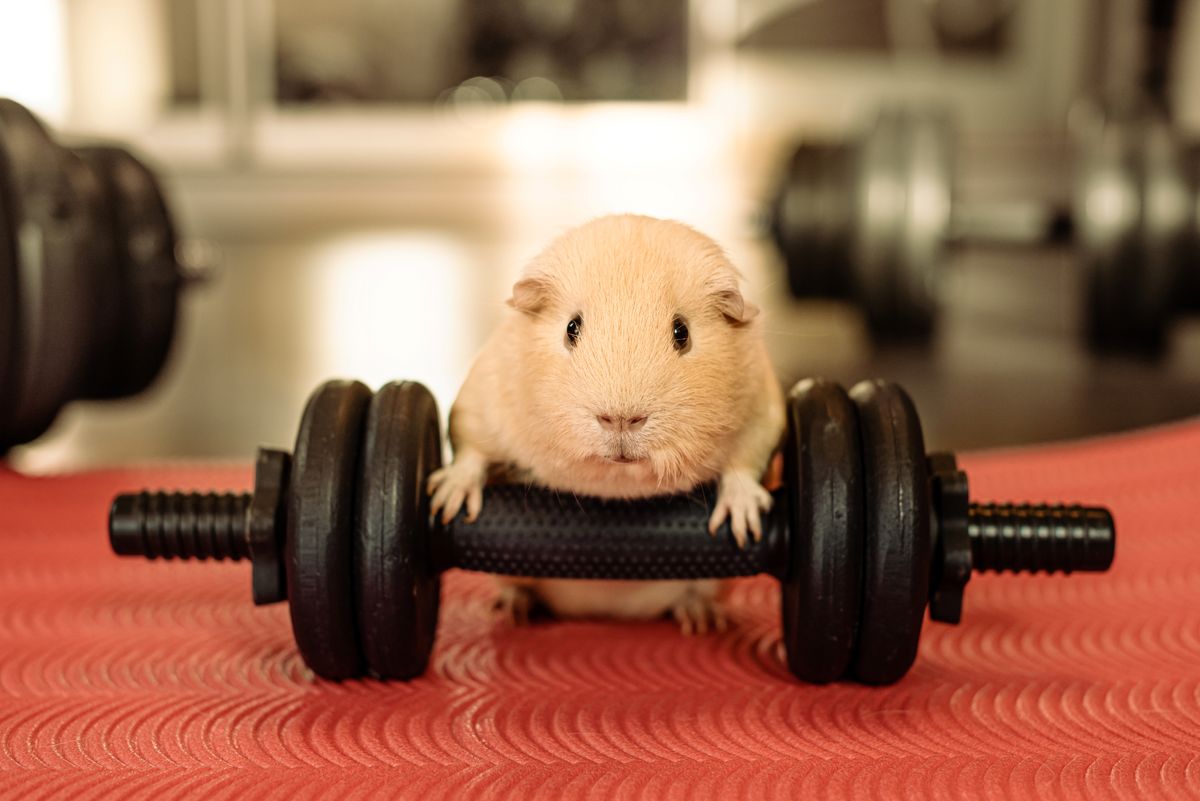
It’s easy to assume that “big” equals “strong”. If you pitted an elephant and a guinea pig against each other in a weightlifting contest, it’s pretty easy to guess how that would go… or is it? While some of the strongest bones to be found in the animal kingdom do belong to the traditional big hitters, some smaller critters pack an outsized punch when it comes to the relative strength of their skeletons.Are bigger bones always stronger?Bigger animals have bigger bones, and you need a certain amount of strength to support all that heft – but the relationship between size and strength is not as simple as that.The biggest skeleton in a living animal today will be found inside a blue whale, but their bones are not the densest or strongest. Lower-density bone tissue means greater buoyancy, so it’s easier for blue whales to ascend back to the surface to breathe once they’ve completed a deep dive.On land, the circumstances are different. Without the supporting effect of all that water, the titans of the Earth have had to evolve various structural changes inside their bones to enable them to grow to ever-larger sizes. One of the largest land animals we know of to date is the extinct Patagotitan mayorum, a truly colossal dinosaur whose bones would have needed exceptional strength to support its body.      However, nature always likes to throw a curveball into the mix. Some of the most impressive bones we know of belong to animals that are definitely on the smaller side.Which animal has the strongest bone?The longest, heaviest, and strongest bone in the human body is the femur or thigh bone – there’s even a Guinness World Record to prove it. Though we humans are relatively puny among mammals, our femurs are stronger than steel, weight for weight. A similar pattern is repeated throughout the animal kingdom – where there are legs, you’ll probably find strong femurs. But which takes the top spot?One likely candidate is the rhino. As evolutionary biologist Professor Ben Garrod explained in the 2014 BBC series Secrets of Bones, “the rhino femur is capable of withstanding 109 tonnes” of compressive force. Well, just look at the size of them.Legs like tree trunks.Image credit: Peter van Dam/Shutterstock.comBut Garrod reached that conclusion by extrapolating from data from a much more surprising source. The delicate roe deer stand at an average height of just 75 centimeters (29.5 inches) and weigh only 25 kilograms (55 pounds), yet testing performed at the University of Bath revealed their slender femurs can cope with a staggering 1.7 tonnes of compressive force before they snap.Inside this adorable package are some seriously sturdy leg bones.Image credit: WildMedia/Shutterstock.comWhich animal has the strongest spine?Strong legs are certainly useful, but what about the bones that support the entire length of the body?Once again, humans do okay here. Our spinal columns have the crucial job of supporting our heads, and protecting the spinal cord and vital blood vessels going to and from the brain, so it’s handy to know that they’re pretty hard to break. When asked by PBS, neurosurgeon Marc Otten estimated that it takes “a force greater than 3,000 newtons” to fracture the cervical spine (the neck).But the strength of the human spine pales in comparison to that of a tiny, unassuming little animal that you may not even have heard of. The aptly named Thor’s hero shrew (Scutisorex thori) has a spine that’s thought to be unique among mammals, and it's this evolutionary marvel that gives it such impressive resilience. Along with their sister species the hero or armored shrew (Scutisorex somereni), Thor’s hero shrews are the only known mammals to have interlocking spinal vertebrae. When compared side-by-side with the spine of the similar white-toothed shrew, the difference is clear.A white-toothed shrew spine (top) vs. the interlocking uniqueness of the hero shrew spine.Image credit: J.A. Allen, Herbet Lang, James Paul Chapin via Wikimedia Commons (public domain); rotated“Hero shrews have crazy-looking spines – their vertebrae are squished flat like a pancake, and they have a bunch of extra places where they touch the vertebrae next to them,” said Stephanie Smith, the lead author of a 2020 study examining this quirky spinal architecture, in a statement.The lore of these super-strong mammals includes a legend that Smith told Science News “may or may not be apocryphal” – and while we wouldn’t want to see it repeated, it does demonstrate just how sturdy these shrews are.The story goes that when the hero shrew was first being described by European naturalists in the early 1900s, in what is now the Democratic Republic of the Congo, the Indigenous Mangbetu people showed off its hardy nature by having a man stand on one for five minutes. The shrew in the tale apparently survived the incident unscathed.Even if this were true, however, these shrews clearly didn’t evolve such curious anatomy to become glorified stepping stones, so why are their spines like this? Scientists aren’t certain, but one hypothesis is that their dense, strong backbones allow them to scrunch and extend their bodies to tear apart wood in search of food.Holding out for a hero (shrew).Image credit: © Julian Kerbis Peterhans, Field MuseumIn any case, “They're dope as hell,” Smith concluded. We’re inclined to agree.
Like
Comment
Share
Science Explorer
Science Explorer
1 y

World's First "Glacier Graveyard" To Be Unveiled Along With First-Ever Glacier Casualty List
Favicon 
www.iflscience.com

World's First "Glacier Graveyard" To Be Unveiled Along With First-Ever Glacier Casualty List

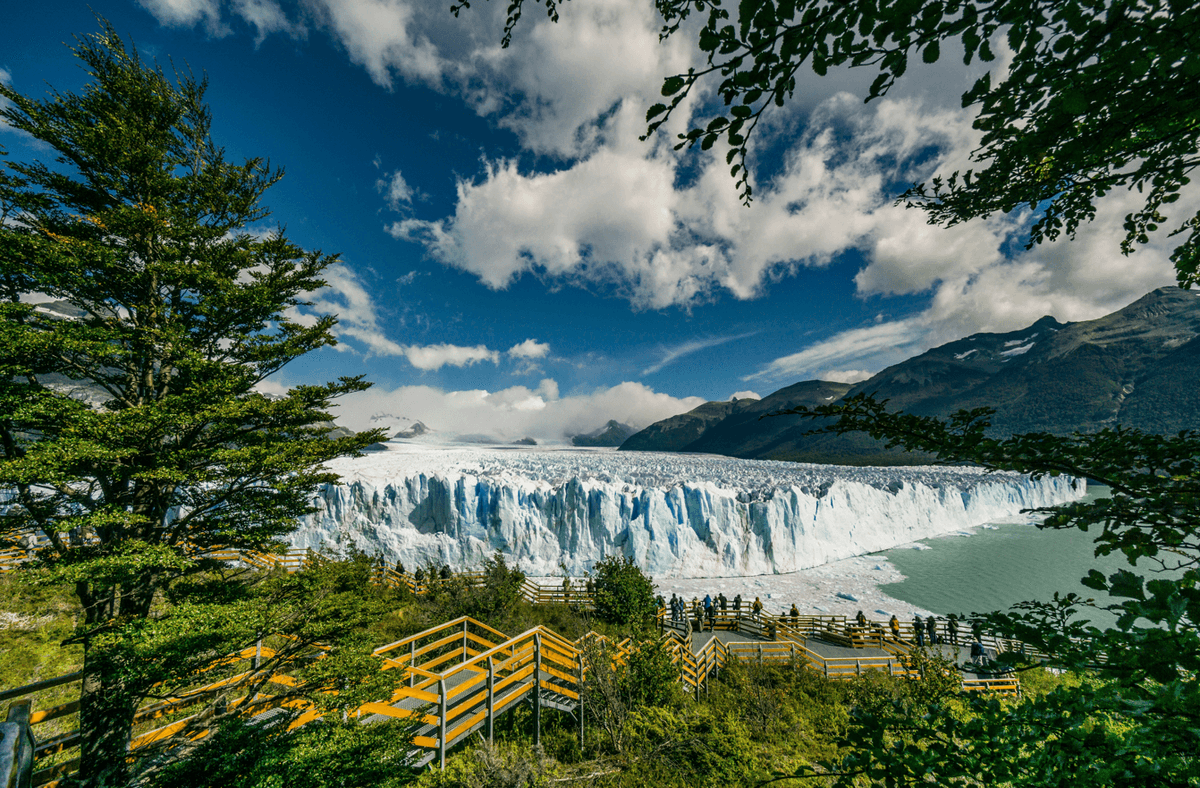
A “Global Glacier Casualty List” is being set up by scientists to keep tabs on the ice sheets that fall victim to climate change. If things continue as they are, the database will have a lot of work on its hands: two-thirds of the world's glaciers are on track to disappear by the end of this century.The project is being led by researchers from Rice University who were inspired by the world’s first glacier funeral that took place in Iceland in 2018. Although purely a symbolic gesture, the funeral for Okjökull was an attention-grabbing event that beautifully highlights what climate change threatens to destroy. “The Okjökull memorial inspired a number of glaciologists around the world to take stock of how many glaciers had already disappeared in their countries,” Professor Cymene Howe, a cultural anthropologist at Rice University, said in a statement.“A 2023 study calculated that 264 glaciers had melted away in New Zealand alone. In China, more than 8,300 glaciers have disappeared in the past several decades. With the Global Glacier Casualty List, we will feature 15 recently lost and critically endangered glaciers around the world, and we will work with scientists and communities to add to the list each year as glaciers continue to expire,” said Howe.The project has been set up ahead of 2025, which the United Nations has designated as the International Year of Glaciers’ Preservation.   The launch of the list will coincide with the unveiling of the world’s first Glacier Graveyard on August 17 on the Seltjarnarnes peninsula near the Icelandic capital of Reykjavík. The graveyard will feature 15 headstones carved from ice by Icelandic ice sculptor Ottó Magnússon and will bear the names of glaciers from around the world that have been lost to global warming. A prototype of the ice headstones.Image credit: Ottó Magnússon/Rice University“Like their glacial counterparts, these monuments will also melt away, but the ceremony and icy headstones will serve as poignant reminders that the world’s glaciers are doomed to the same fate without quick action,” Howe said.It might sound a little bit sentimental, but climate change and the melting of glaciers will have a very serious impact on the real world. Thawing glacial ice contributes to the rise in global sea levels, posing a threat to coastal communities, low-lying areas, and island nations, as well as increasing the risk of flooding and erosion. The loss of glaciers also profoundly affects natural ecosystems, economies, societies, and cultures. The Northern Hemisphere is often the focus of attention when it comes to glacier loss, but warming temperatures are altering cryospheric systems around the world, from the equatorial glaciers of Man Jaya in Indonesia to the ice-capped continent of Antarctica.Earlier this month, researchers published a study that glaciers in South America’s Andes Mountains are the smallest they’ve been in at least 11,700 years since the last Ice Age – a dramatic hint that Earth is undergoing a rapid and intense change.
Like
Comment
Share
NewsBusters Feed
NewsBusters Feed
1 y

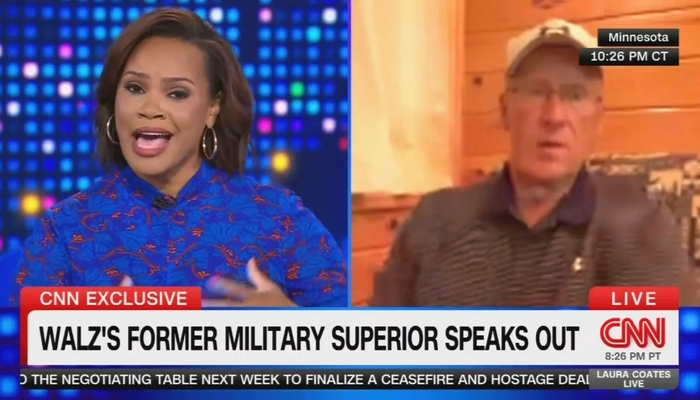
Coates Asks Walz's Superior If Walz Offended The Service Or Just Him
Favicon 
www.newsbusters.org

Coates Asks Walz's Superior If Walz Offended The Service Or Just Him

CNN’s Laura Coates welcomed Democratic VP nominee Tim Walz’s former National Guard superior, Command Sergeant Major Doug Julin, to her Thursday show to try to defend Walz against claims he quit on his unit prior to its Iraq deployment in order to run for Congress. However, Julin refused to play along, leading Coates to object to the word “quit” and wonder if Walz simply offended him personally or the service. Julin recalled a March 2005 meeting where Walz “came in, we sat and talked, he told me, he says, I have not been nominated, I am going forward with the battalion. I said, ‘Good, let's go.’ We got the team built, and we're starting to build the team out there.” Fast forward to June and, “I walked into the team, the meeting hall, and Tom Behrands was there, and I asked Tom what he was doing there. And that's when he informed me that he had quit. The issue that came out of this was, first of all, how did Tim Walz quit without discussing with me, because I was his next level of leadership, or responsibility, or supervisor.”     Coates interrupted, “Excuse me, you're using the word ‘quit.’ I don't want to cut you off, sir, but -- excuse me, Sergeant Major, I just want to be precise in the language. You're using the word quit. You mean that he had opted to retire still, is that right? He had not somehow gone AWOL or been dishonestly discharged in some way. He opted to retire.” Julin further recalled, “Yeah, the terminology that came to me was he quit and went from there. Yes, he opted to retire. I'm going to back up two seconds. He opted to retire, which I found out at a later date in June.” Getting back to the idea that Walz went above and around him, Julin added, “The other issue was that the individual that approved this was two levels higher than myself in the enlisted corps and should have had Tim Walz come back to me and talk to me about this and discuss this as to why he was going forward now or not going forward now after he had already told me he was going forward.” Coates was not convinced any of that matters for the current political controversy surrounding Walz, “But in the way that he has handled how he decided to retire, I do wonder what you make of the way his retirement is being characterized now by political figures and others who are saying that, somehow, he has stolen valor, number one, or that his retirement was an abandonment of his duties. How do you feel about the experience that you are describing to us right now being described as political talking points?” Julin held firm and insisted Walz knew better, “Tim Walz knew the processes and the procedures. He went around me and above and beyond me and went -- and basically went to get somebody to back him, to get him out of there without -- it was just a backdoor process that he handled against me or against the battalion out there.”     Coates then wondered if it was, “the manner in which he did not speak to you or his decision to retire, which he, as we've talked about, he would have been entitled to do, which causes the most concern? Because that is the focus that so many people are wondering about, whether he has done something wrong in service or done something personally to offend you.” Julin claimed the former, “No, he did something wrong in service, as I stated before. He knew the policies and procedures and how we go to leadership and address issues or discuss issues and concerns out there. Again, backing up, he had told me, 'No, I'm going forward, we're going to go with the battalion, and go from there.' So, I'm under the belief; he told me he was going forward...He went around me, which he should have addressed it with me so he could help me with some things out there.” He also theorized that Walz went around him because there was a possibility he would say no, “the fact is that there's a possibility he probably would have realized I would have probably said, ‘no, it's too late, you're going forward,’ because we'd already received our notification of sourcing. And there's one other little point out there that people say, well, he hadn't been notified yet. Yes, he had been notified.” Despite Coates trying to question Julin’s motives, at least she had him on, but it is unlikely CNN will cite his answers when further discussing the controversy. Here is a transcript for the August 8 show: CNN Laura Coates Live 8/8/2024 11:23 PM ET DOUG JULIN: The following month, and it was March of 2005 or it could have been April, give or take a month right in there, we had another meeting at Camp Ripley. At that time, Tim Walz was there. We had our meeting. Everybody was talking about what, when, and where, what we were going to be doing, what our mission was coming up to be, how we were going to handle it, and how we needed to build the team. Again, this whole time period, we're doing what's called building a team to go forward to Iraq. After the meeting, Tim Walz came in and sat down with me because I had talked to him before and said -- I need to know what his answer is at that time. He came in, we sat and talked, he told me, he says, I have not been nominated, I am going forward with the battalion. I said, “Good, let's go.” We got the team built, and we're starting to build the team out there. A month lapsed or a little bit more lapsed, and in June, we went to Camp Ripley for our meeting again. I walked into the team, the meeting hall, and Tom Behrands was there – LAURA COATES: Uh-hmm. JULIN: -- and I asked Tom what he was doing there. And that's when he informed me that he had quit. The issue that came out of this was, first of all, how did Tim Walz quit without discussing with me, because I was his next level of leadership – COATES: Excuse me, you're using the word “quit.” JULIN: -- or responsibility, or supervisor. COATES: I don't want to cut you off, sir, but -- excuse me, Sergeant Major, I just want to be precise in the language. You're using the word quit. You mean that he had opted to retire still, is that right? He had not somehow gone AWOL or been dishonestly discharged in some way. He opted to retire. Okay. JULIN: Yeah, the terminology that came to me was he quit and went from there. Yes, he opted to retire. I'm going to back up two seconds. He opted to retire, which I found out at a later date in June – COATES: Uh-hmm. JULIN: -- is where it went to. When I found this out at that meeting, my focus is to build the team, let's go forward, we've got to do this. COATES: Sure. JULIN: The other issue was that the individual that approved this was two levels higher than myself in the enlisted corps and should have had Tim Walz come back to me and talk to me about this and discuss this as to why he was going forward now or not going forward now after he had already told me he was going forward. COATES: I understand, Sergeant Major. Now, thinking about that timeline, I think it's important, the way you've laid it out, because it sounds as though, yes, he was entitled to retire. There was a protocol where he was supposed to go to you, you say, for that approval, but there was somebody he went to instead of you, which has caused some level of consternation. But in the way that he has handled how he decided to retire, I do wonder what you make of the way his retirement is being characterized now by political figures and others who are saying that, somehow, he has stolen valor, number one, or that his retirement was an abandonment of his duties. How do you feel about the experience that you are describing to us right now being described as political talking points? JULIN: The real thing is that the level that he held at that time, which could have been either a First Sergeant, but he was conditionally promoted to Command Sergeant Major, he knew the rules or the policies or the procedures and the manner of how to address issues going forward. If this would have been an early entry, low-level ranking individual, different story. We would have understood that, okay, he didn't understand the processes and the procedures. Tim Walz knew the processes and the procedures. He went around me and above and beyond me and went -- and basically went to get somebody to back him, to get him out of there without -- it was just a backdoor process that he handled against me or against the battalion out there. The real focus was – COATES: Is your concern that it's -- oh, go ahead. I do want to ask this question quickly, Sergeant Major, and I appreciate your time, but is your – JULIN: Go ahead. COATES: -- concern about the manner in which he did not speak to you or his decision to retire, which he, as we've talked about, he would have been entitled to do, which causes the most concern? Because that is the focus that so many people are wondering about, whether he has done something wrong in service or done something personally to offend you. JULIN: No, he did something wrong in service, as I stated before. He knew the policies and procedures and how we go to leadership and address issues or discuss issues and concerns out there. Again, backing up, he had told me, “No, I'm going forward, we're going to go with the battalion, and go from there.” So, I'm under the belief, he told me he was going forward. I'm underneath that believing that he's going forward. He went around me, which he should have addressed it with me so he could help me with some things out there. COATES: Sergeant Major, this was really -- excuse me, I don't want to cut you off, sir. Finish your point, please, Sergeant Major. JULIN: He went around me. And the fact is that there's a possibility he probably would have realized. I would have probably said, “no, it's too late, you're going forward,” because we'd already received our notification of sourcing. And there's one other little point out there that people say, well, he hadn't been notified yet. Yes, he had been notified. Now, there's another step out there. It is what's called stop loss. Ninety days prior to the actual deployment, we received our orders. And at that time is what's called stop loss, where if you're in a position, you're going forward irregardless, unless there's some really major or process – COATES: Hmm, okay. JULIN: -- that gets you out from not going on the deployment itself. So, there's that window of opportunity there. People say, well, he never knew he was going forward. Yeah, he knew he was going forward. Had he gotten his orders yet? No. At that time, he had not. COATES: Hmm. JULIN: As far as being a command sergeant major, as soon as he retired -- I'm going to go with the term retired, which he did, and he was eligible after 20 years to get a full retirement, he was taken out of the academy at that time. Here's another thing about – COATES: Well, Sergeant Major, I do want to hear -- I do want to hear what you have to say, Sergeant Major. I know -- I want to be sensitive of your time and your audio is beginning to break up just a little bit, but I do want to thank you because I think you've clarified a lot for people and given more information. The question now is how the voters will evaluate it. Sergeant Major Doug Julin, thank you so much.

Like
Comment
Share
Showing 67846 out of 105259
  • 67842
  • 67843
  • 67844
  • 67845
  • 67846
  • 67847
  • 67848
  • 67849
  • 67850
  • 67851
  • 67852
  • 67853
  • 67854
  • 67855
  • 67856
  • 67857
  • 67858
  • 67859
  • 67860
  • 67861
Advertisement
Stop Seeing These Ads

Edit Offer

Add tier


Select an image
Delete your tier
Are you sure you want to delete this tier?

Reviews

In order to sell your content and posts, start by creating a few packages. Monetization

Pay By Wallet

Payment Alert

You are about to purchase the items, do you want to proceed?

Request a Refund