YubNub Social YubNub Social
    #jesuschrist #christmas #christ #merrychristmas #christmas2025 #princeofpeace #achildisborn #noël #sunrise #morning
    Advanced Search
  • Login
  • Register

  • Day mode
  • © 2025 YubNub Social
    About • Directory • Contact Us • Developers • Privacy Policy • Terms of Use • shareasale • FB Webview Detected • Android • Apple iOS • Get Our App

    Select Language

  • English
Install our *FREE* WEB APP! (PWA)
Night mode toggle
Community
New Posts (Home) ChatBox Popular Posts Reels Game Zone Top PodCasts
Explore
Explore
© 2025 YubNub Social
  • English
About • Directory • Contact Us • Developers • Privacy Policy • Terms of Use • shareasale • FB Webview Detected • Android • Apple iOS • Get Our App
Advertisement
Stop Seeing These Ads

Discover posts

Posts

Users

Pages

Blog

Market

Events

Games

Forum

Front Page Mag Feed
Front Page Mag Feed
1 y

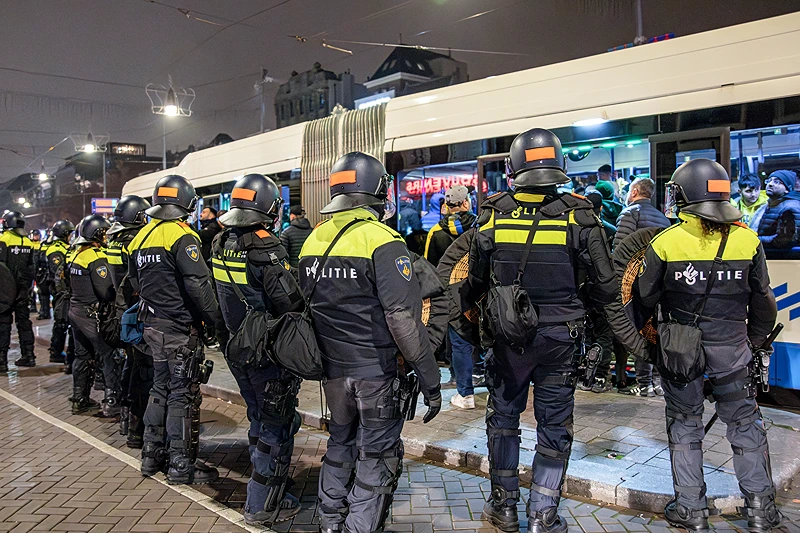
Sanitizing Violent, Flag-Burning Pro-Hamas Protesters
Favicon 
www.frontpagemag.com

Sanitizing Violent, Flag-Burning Pro-Hamas Protesters

The ideological labels that weren't. The post Sanitizing Violent, Flag-Burning Pro-Hamas Protesters appeared first on Frontpage Mag.
Like
Comment
Share
Front Page Mag Feed
Front Page Mag Feed
1 y

America’s Lab Rats?
Favicon 
www.frontpagemag.com

America’s Lab Rats?

An unrecognizable nation. The post America’s Lab Rats? appeared first on Frontpage Mag.
Like
Comment
Share
Front Page Mag Feed
Front Page Mag Feed
1 y

Prosecuting Kamala
Favicon 
www.frontpagemag.com

Prosecuting Kamala

The case against her is strong. The post Prosecuting Kamala appeared first on Frontpage Mag.
Like
Comment
Share
Front Page Mag Feed
Front Page Mag Feed
1 y

Killing of Hamas Top Dog Highlights Question for U.S.: Who’s in Charge Here?
Favicon 
www.frontpagemag.com

Killing of Hamas Top Dog Highlights Question for U.S.: Who’s in Charge Here?

The Biden regime’s non-response - and why it's so troubling. The post Killing of Hamas Top Dog Highlights Question for U.S.: Who’s in Charge Here? appeared first on Frontpage Mag.
Like
Comment
Share
The Lighter Side
The Lighter Side
1 y

Simone Biles & Suni Lee Caught Excitedly Planning TikTok Videos After Winning Gold
Favicon 
www.inspiremore.com

Simone Biles & Suni Lee Caught Excitedly Planning TikTok Videos After Winning Gold

Fans loved watching Simone Biles and Suni Lee’s recent TikTok videos almost as much as they loved the athletes’ gymnastic performances. Thanks to incredible performances by the U.S. women’s gymnastics team, the ladies took home the gold. After learning the results, the crowd was roaring, and Simone and Suni were busy making plans. According to Today, the NBC broadcasters caught Biles and Lee planning the perfect TikTok to celebrate their win.  “I want to do the chomping one,” Simone said. “OK, I want to do the one that says, ‘Imagine if we didn’t win,” Suni excitedly replied. Gold Medals, TikToks, and Friendship Simone Biles and Suni Lee took the gold and the hearts of America. After their incredible performance, fans waited for them to post their new TikTok videos. Each girl called dibs on which one they wanted to create. Simone Biles chose to create a cute video where all of the girls are chomping on their golden medals. She captioned it, “Tastes Golden.” @simonebilesowens TASTE GOLDEN ♬ original sound – Satisfying Lips This video has received over 40 million likes and many positive comments. NBC Olympics & Paralympics commented, “GOLDEN GIRLS.” TikTok commented, “turned on post notifications the second I heard the plans congratsss girls”. Another user commented, “Thank you Suni for the heads up on this one. I was ready and waitingggggg.” Suni Lee also posted her own TikTok video. Her video featured a trending audio of a voiceover from rapper Kayne West saying, “Everybody wants to know what I would do if I didn’t win.” To which the second half of the audio is, “I guess we’ll never know.” Fans reacted just as positively to Suni’s video as they did to Simone’s. It is clear that these girls are stars both on and off the mats. Team USA finished first with an incredible final score of 171.296. Itay received the silver medal, and Brazil came in third and received the bronze. The source for the featured image can be found here. The post Simone Biles & Suni Lee Caught Excitedly Planning TikTok Videos After Winning Gold appeared first on InspireMore.
Like
Comment
Share
The Lighter Side
The Lighter Side
1 y

Kathie Lee Gifford Is Determined To “Slow Down” And Find Peace After Week-Long Hospitalization
Favicon 
www.inspiremore.com

Kathie Lee Gifford Is Determined To “Slow Down” And Find Peace After Week-Long Hospitalization

If we are lucky enough to live a long life, we will probably experience some physical changes as we age. Even though no one wants to admit it, getting older isn’t always easy. We often have to slow down and listen to our bodies, whether we like it or not. Kathie Lee Gifford, 70, has lived an active life. She’s entertained on the stage and screen, but a recent fall made her take pause. View this post on Instagram A post shared by Kathie Lee Gifford (@kathielgifford) She’s taking the setback in stride and focusing on the good in her life. Kathie Lee has had a long and successful career, and now she’s trying to enjoy the fruits of her labor, she told People. “It’s summer for everybody but me,” she continued, expressing disappointment about the timing of her accident. “But it’s OK. I’m going to get out to my little farm one of these days and stick my feet in my salt pool. The Lord is telling me it’s time to slow down. I’ve been running my whole life. The Lord is telling me, ‘You’ve planted a gazillion roses. Try smelling them.'” Getting Older Isn’t Easy Kathie Lee Gifford explained a recent hip surgery and the incredible pain she experiences as part of her recovery. She said her surgeon told her the surgery was necessary. “You climbed mountains; you made movies; you got on stages,” she told the publication. “You never took off your high heels, and you kept going, and that’s why you’re going through what you’re going through.” After her hip surgery, she fell and broke her pelvis. She was humbled but realized that time was passing, and she needed to accept that. “You think you know your body and the next thing you know, your body changes when you get older,” Kathie Lee said. “And as much as I don’t wanna think about it, I am.” This story’s featured image is by Jason Kempin/Getty Images. The post Kathie Lee Gifford Is Determined To “Slow Down” And Find Peace After Week-Long Hospitalization appeared first on InspireMore.
Like
Comment
Share
Living In Faith
Living In Faith
1 y

Bavinck’s Multifaceted View of Spiritual Sickness
Favicon 
www.thegospelcoalition.org

Bavinck’s Multifaceted View of Spiritual Sickness

“What do you mean this feeling won’t last forever?” I was in shock as I sat across from my mentor. A sophomore in college, I’d stopped feeling God’s presence in my soul. The spiritual bliss I once knew was now an infrequent occurrence, and I couldn’t take it anymore. So I sat across from a wise man and asked, “Can I have as much of God’s presence as I want?” I waited for him to say yes and start showing me how to maintain that burning feeling. A curt but kind no was his only response. I didn’t realize it for some time, but I was spiritually sick. What does it mean to be spiritually healthy? What does it mean to be spiritually sick? Without answers to these questions, Christians are hard-pressed to accurately assess their spiritual condition and respond appropriately. If we aspire to live balanced and mature lives before God, we must first understand what spiritual health looks like and be aware of the various pathologies that can attack the spiritual life. Few expound on the concept of spiritual health and disease quite like Herman Bavinck (1854–1921). In his recently published Reformed Ethics, Bavinck notes the goal of every Christian’s life is to imitate Christ. This is, on the most basic level, what it means to be spiritually healthy. But we all know imitating Christ isn’t a simple undertaking. Bavinck writes that “like natural organisms, the spiritual life can be afflicted by illnesses that disrupt it” (415). He puts his finger on a problem every Christian faces: diseases seek to hinder our spiritual development at every turn. How do we recognize them? Spiritual Health Diseases seek to hinder our spiritual development at every turn. Before we can understand spiritual disease, it’s essential to flesh out a biblical concept of Christian health. Bavinck orients his discussion of spiritual health around one word: harmony. A Christian is healthy when the entire counsel and ministry of Jesus Christ works its way harmoniously through our entire being. Bavinck writes, We are healthy when the pure food of the Word of God finds its way through our spiritual personhood, encounters no hindrances or disruptions along the way, and engages all our organs—intellect, soul, and will, together with their subordinate faculties, namely reason, understanding, conscience, feelings and passions, instincts and inclinations. (418) A strong Christian life is one where the Word of God in Jesus Christ is absorbed by each of our “organs.” Our mind intellectually grasps the Word, our affections are stirred by its truth, and our hands are led to do the work Jesus prescribes. Each distinct part of our person works in harmony with the Word. Bavinck looks to Jesus as the perfect example of such health: “[In Jesus] there was no domination of mind, of reason, of the will; he did not lack the capacity for reason but knew its proper place and did not succumb to intellectualism; he was not a fanatic. . . . He is the model of our spiritual life” (418–19). For Bavinck, to be like Jesus and live a healthy spiritual life is to be a whole person. When the Word interacts equally with our mind, affection, and will, we live a harmoniously healthy life with God. Spiritual Disease If “harmony” defines a healthy spiritual life, it’s no surprise that Bavinck counts the opposite as pathology. For him, spiritual disease comes from one-sidedness. He identifies three major spiritual pathologies that regularly attack Christian spirituality and hinder growth. 1. Disease of Mind Bavinck identifies intellectualism as a terrible disease often found in Protestant circles. This pathology leads good Christians to place all their spiritual emphasis on doctrine and knowledge while “failing to appreciate the rights of the emotional life and the practical life” (422). What separates this from healthy orthodoxy? This error esteems correctness and right doctrine, just like good orthodoxy does, “but considers it the highest and the only criterion” (422). Thus, doctrine is the only thing that matters. Agreement with confessions is the only test of value. Bavinck notes this disease inevitably leads to a “doctrinal righteousness which is worse than a works righteousness” (423), one where the Christian life is fossilized and robbed of its true vitality. When Christians overemphasize the work of the mind, Christianity becomes little more than an assortment of ideas and concepts that have no connection to real life or to the transformation that comes from the Holy Spirit. 2. Disease of Heart The pathology of the heart “restricts the religious life to feelings, to the soul, putting emphasis on the subject” (427–28). People who fall ill with this disease make the mistake of building their belief system entirely around their feelings, around a subjective pursuit of spiritual bliss in God’s presence. When the Word interacts equally with our mind, affection, and will, we live a harmoniously healthy life with God. This was the virus I struggled with during my sophomore year. According to this broken way of thinking, true knowledge of God is found when we “allow ourselves to sink away into [God] through our emotions” (428). Some religious forms of this mystical approach annihilate active personhood altogether, and some relegate Scripture to a “lower form” of revelation. Of course, not all mysticism is bad. Bavinck notes that sanctification and real communion with God are truly mystic experiences that work deeply within our souls. The error, however, is to assume only experience and spiritual feelings matter, that they’re the only true sources of intimacy with God. When we overemphasize the role of emotion, Christians will employ all kinds of unhealthy artifices out of a desire to maintain their spiritual ecstasy. 3. Disease of Will The disease of the will occurs when Christians make piety and external acts of morality the main thing. Pietists fall into error when they find value only in what they see as purely religious. They emphasize actions seen as spiritual and proper but can’t find a place for “secular” activities like appreciating art, history, science, or other aspects of culture not deemed religious. Ironically, in focusing so intently on being religious, such pietists often become separatists who tend to neglect the church—“whose value,” Bavinck observes, “the Pietist does not see” (432). Next to pietism, Bavinck denounces what he broadly labels as “Methodism.” This tendency orients itself entirely around being moral, performing evangelistic acts, and zealously pursuing conversions. This error, he says, “is filled with an exaggerated zeal for conversions and makes everything subservient to them” (433). Bavinck says those who overemphasize action and feats of obedience, though well meaning, are often “spiritually poor on the inside” (433). Having failed to cultivate their minds and affections, they seek to give away in their good works more than they possess. Spiritual Cure In the years after I broke down in front of my mentor, God has slowly brought greater health to my life. Through wisdom from Bavinck and others, the Holy Spirit has helped me see that my own internal sense of God’s nearness doesn’t give me an accurate assessment of my spiritual life. When examining myself, I need a whole-person approach. How do we address the three forms of spiritual sickness that Bavinck has identified? When you approach God’s Word, actively engage his truth with each part of your being. For example, Jesus commands us to love people. Intellectually understand what this command entails; define it with clear thinking. Feel Jesus’s call and the affection that accompanies love. Then act on his Word: be loving. When we approach and respond to God’s Word in this way, we live in harmony as whole, spiritually healthy people. Jesus lived an integrated life. Every part of him was engaged in ministry, and thus he stands as the balanced and perfect example we ought to emulate. Let’s walk with healthy heads, hearts, and hands—striving to be Christians within whom God’s Word works harmoniously through every one of our spiritual organs.  
Like
Comment
Share
Living In Faith
Living In Faith
1 y

East Africa: Future Face of the Global Church
Favicon 
www.thegospelcoalition.org

East Africa: Future Face of the Global Church

In one of his expositions of Psalm 73, Martyn Lloyd-Jones said, “There is no possible growth in the Christian life unless we are ruthlessly honest with ourselves.” And yet, as we well know, being ruthlessly honest often reveals unpalatable truths about ourselves and our situations. If we consider the twin themes of Christian growth and ruthless introspection, are we willing to consider both as we look around at the world? More specifically, what should we think of the church’s expanse here on the African continent? If we’re honest, it’s both encouraging and concerning. The African church, which is poised to become the face of global Christianity, desperately needs biblically faithful and humble expositors of God’s Word in the context of healthy local churches. African Trends The archbishop of Canterbury, Justin Welby, said in an interview, “The average Anglican is an African woman in her 30s living in sub-Saharan Africa on less than $4 a day.” That brief statement captures several stark realities that call for a close and honest examination. But in this article, we’ll just look briefly at some general trends in Africa, and in African Christianity specifically, encapsulated in Welby’s assertion. 1. Africa Is Populous Whereas birth rates are declining in the West, populations in Africa tend to be on an upward march. According to some projections, “by 2050, a list of the 20 countries with the world’s largest populations will include at least six black African nations: Nigeria, the Democratic Republic of the Congo (DRC), Ethiopia, Tanzania, Uganda, and Kenya.” If Welby is right in his assessment, and if these projections for 2050 hold, we’ll likely see the face of global Christianity become not simply African but decidedly sub-Saharan. In fact, it could be predominantly East African. We’ll likely see the face of global Christianity become not simply African but decidedly sub-Saharan. In fact, it could be predominantly East African. 2. Africa Is Young Whereas many Western nations grapple with both declining and aging populations, in East Africa, 80 percent of the Kenyan population is younger than 35. Tanzania’s median age was 17 in 2014. Uganda’s is 15.9. These statistics show the future global population—and the face of the global church—will be largely East African. 3. Africa Is Suffering Welby’s comment about an African woman living on $4 per day is a reality many sub-Saharan Christians have to contend with. Given the rising costs of living, $4 per day is barely enough to hold skin and bone together. Walk into the urban slums—say, in Kenya’s capital, Nairobi—and you’re immediately beset by haunting scenes of the most abject economic deprivation. It’s heartbreaking. 4. Africa Goes to Church On any given Sunday in Nigeria, there’ll be more Anglicans in church than in “all the British Isles and North America combined.” This goes beyond the mainstream churches (Anglican, Presbyterian, Baptist, Methodist, etc.): The Hand of God Cathedral led by David Ibiyeomie will open the doors to its 120,000-capacity auditorium. In Lagos, Nigeria, David Oyedepo’s Living Faith Church Worldwide meets at The Ark, a church building comfortably seating 109,345 souls. In sharp contrast to the declining church attendance in the West, African Christians go to church. Hard Truths While we rejoice that there’ll be millions in church on any given Sunday morning across Africa, we must be honest with ourselves, taking a long, hard look at what exactly happens in those churches. Of the six nations listed earlier in the population projections, five are in the greater Eastern Africa region, while Nigeria stands by itself in the West. Yet Nigeria is the country that has wielded the greatest influence on the sub-Saharan church, especially in the phenomenon of the “man of God.” Many in sub-Saharan Africa hold to a superstitious worldview where all that happens under the sun is understood to have been influenced supernaturally. “Good luck” means the recently departed, the ancestors, and the gods (or god) are at peace with you, hence you’re experiencing their benevolence. When things go wrong—the crops fail, the child dies, or the business goes belly up—then something must be wrong in the spiritual realm. What the typical African wants to do is to find a mediator, a power broker, who’ll intercede on his or her behalf in the spiritual realm to resolve these issues in the physical world. Traditionally, this person has been the witch doctor. But with the rise of the African brand of Christian charismatism, the “man of God” has taken that role. This man offers a way out of poverty, sickness, failure, and every other ill that afflicts the congregation—at a price, of course. Many Western Christians are aware of prosperity theology’s dangers. However, on a more practical level, our adversary in Africa isn’t so much the prosperity gospel but rather the man who wields it: the enigmatic, captivating, shrewd, and calculating “man of God.” Our adversary in Africa isn’t so much the prosperity gospel but rather the man who wields it: the enigmatic, captivating, shrewd, and calculating ‘man of God.’ The masses believe him because his worship services are filled predominantly with displays of “power.” Demons are allegedly cast out, all sorts of miracles are supposedly performed, and, of course, lots of money changes hands—enough to buy private jets and make him an exemplar of success. The undergirding theology is about power as much as prosperity. The difficult truth is that Nigeria is home to the most influential “men of God” on the continent. Based on the Nigerian example, we see not only that the “man of God” becomes hugely popular and subsequently wealthy but that he’s able to open branches all over the world. The number one exporter of this art has a branch in Paris and one in Malindi, Kenya, where I live. Such is the reach and appeal of these global brands. What it shows is that the growth of African Christianity is poised to influence and shape the global church’s future. Correcting Course We must acknowledge and intentionally rise up against the influence of the “man of God” and his dangerous teachings. If we don’t, the future of Christianity will still be African, yes. But it’ll be a future fraught with danger. Here are a few recommendations for how we can change course toward a better future for both Africa and the world. 1. Expository Preaching In contrast to prosperity preachers who lust for power and twist God’s promises, Africa’s church needs more faithful and biblical expository preaching. We need true men of God who recognize the power of God’s Word rightly handled. And, by God’s grace, Africa isn’t without a witness when it comes to faithful exposition. The Zambian church is leading the way in training and deploying men in their country and in Tanzania, Kenya, and Uganda to be careful teachers of Scripture. These aren’t men with any inherent power in themselves; rather, they’re weak vessels in the hands of Almighty God. I’m grateful for the preaching example set by brothers such as Joe Simfukwe, Conrad Mbewe, and Ronald Kalifungwa. Their land is home to Victoria Falls, known as “the smoke that thunders.” But praise be to God for how true preaching has thundered even beyond their borders. 2. Church Planting Africans need to see that the local church is meant to be living proof of the gospel’s power. A community marked by holiness and love, living ordinary lives to the glory of God, shows the gospel truly is the power of God unto salvation (Rom. 1:16, KJV). In Malindi, an end-time Branhamite cult (under the influence of a “man of God,” Paul Mackenzie) led 446 people, children among them, to starve themselves to death. In the aftermath of these horrors, even some Muslims began engaging me in conversation, seeking to find out what a true man of God is and what his message should be. But only healthy churches, where the gospel is visible in changed lives, can provide clear answers to this watching and questioning world. Africa needs more of these kinds of kingdom outposts. We need more church planting. What these people need is to see that the local church is meant to be living proof of the gospel’s power. 3. Missionary Sending An hour and a half from Malindi is the small town of Rabai. There, the German missionary Johann Ludwig Krapf set up a mission station in 1846, after losing his wife and child further south in Mombasa. Krapf began work on a Swahili translation of the Scriptures assisted by, of all people, a Muslim judge. This gifted linguist went on to give us the first grammar and dictionary of the Swahili language. As a Swahili translator myself, seeing firsthand the power of unleashing biblical truth in a language our people can understand, I’m grateful for Krapf’s life and work. However, we’re nearly 200 years removed from this exemplary man, and one of the questions of the hour is this: Do we need more missionaries to come in from the West? The answer, in all humility, is no. At least not in the same way. Whereas Krapf landed in a place where there was no Christian presence and little if any education among the locals, the situation on the continent today is vastly different. We have faithful and capable local men serving in God-honoring local churches. We need a new missions paradigm. The time has come for the church in the West to consider coming alongside these brothers and churches to help equip them to do the work on the ground. Send us a team of scholars to teach a modular course at our seminaries. Take some of our young men and help them further their theological training. Mentor and feature our fledgling authors. Help us fund translation and local publishing efforts. These are some ways the church in the West can faithfully steward its resources and walk hand in hand with the African church into this future that’s so vividly sub-Saharan, nay, East African.
Like
Comment
Share
Hot Air Feed
Hot Air Feed
1 y

On Kamala Harris' Role, Media Cross Border Into Outright Lies
Favicon 
hotair.com

On Kamala Harris' Role, Media Cross Border Into Outright Lies

On Kamala Harris' Role, Media Cross Border Into Outright Lies
Like
Comment
Share
YubNub News
YubNub News
1 y

Elon Musk Accepts Nicolás Maduro's Challenge to a Fight
Favicon 
yubnub.news

Elon Musk Accepts Nicolás Maduro's Challenge to a Fight

Venezuela's Nicolás Maduro was declared the winner of the presidential election there the other day. Notice we say he was declared the winner — we didn't say he won. Advertisement BREAKING:Machado’s…
Like
Comment
Share
Showing 67988 out of 104326
  • 67984
  • 67985
  • 67986
  • 67987
  • 67988
  • 67989
  • 67990
  • 67991
  • 67992
  • 67993
  • 67994
  • 67995
  • 67996
  • 67997
  • 67998
  • 67999
  • 68000
  • 68001
  • 68002
  • 68003
Advertisement
Stop Seeing These Ads

Edit Offer

Add tier


Select an image
Delete your tier
Are you sure you want to delete this tier?

Reviews

In order to sell your content and posts, start by creating a few packages. Monetization

Pay By Wallet

Payment Alert

You are about to purchase the items, do you want to proceed?

Request a Refund