www.dailysignal.com
What Does It Mean to Be ‘Woke’?
“Woke.” You keep using that word, but I don’t think it means what you think it means.
A new survey shows that while most Americans think they know what “woke” means, they don’t actually have a firm grasp of the concept behind the term. I’d argue that the definition in my forthcoming book, “The Woketopus: The Dark Money Cabal Manipulating the Federal Government,” best encapsulates the real meaning and that most Americans do not support woke policies.
But what do Americans think?
Scott Rasmussen’s RMG Research surveyed 1,000 registered voters online last week, weighting the sample to make it more representative of Americans as a whole. The survey’s margin of error is plus-or-minus 3.1 percentage points.
Identifying as Woke
Most respondents (77%) said they know what it means to be woke, and 41% of those who say they know what it means to be woke also identified themselves as woke. Half of those who said they know also said they don’t identify as woke (50%).
Self-identified Democrats (63%) proved more likely to call themselves woke than independents (43%) or Republicans (24%), while Republicans (72%) proved more likely to say they were not woke than independents (38%) and Democrats (25%).
When asked if they would approve of a woke political candidate, more respondents said they would have a favorable view (42%) than an unfavorable one (38%), but many said they were unsure (21%). Those who identified as woke unsurprisingly proved more likely to prefer a woke candidate (81%). Democrats (60%) proved more likely to say they would favor a woke candidate, while Republicans proved more likely to view a woke candidate unfavorably (61%), and independents were split between favoring (40%) and not favoring (32%) such a candidate.
Institutional Racism
Respondents did not fully align with the views of critical race theory (a lens that interprets America as institutionally racist, with black people oppressed and white people oppressors), though they did agree that America has systemic racism.
Most respondents said the United States was founded on “the ideals of freedom, equality, and self-governance” (75%), rather than on “slavery, oppression, and racism” (20%). Even most of those who called themselves woke agreed that America had a noble founding (62%), although the self-identified woke proved more likely to say America was founded on slavery (32%).
Respondents proved split on whether they thought a woke person would say America was founded on ideals (45%) or slavery (44%).
Most Republicans (87%), independents (66%), and Democrats (64%) said America was founded on ideals, while independents (31%) and Democrats (29%) proved more likely than Republicans (11%) to say America was founded on slavery.
Most respondents agreed with the statement that the United States is “a force for good in the world” (61%). Even those who identified as woke generally agreed (51%). Only 10% said America is a “force for evil,” and those who identified as woke were slightly more likely to call the U.S. evil (13%). Others said America is a force neither for good, nor evil (22%), or that they were not sure (6%). Republicans (71%) proved more likely than Democrats (58%) and independents (44%) to say America is a force for good.
Many respondents (60%) said they think “there is widespread systemic racism and discrimination against minorities in America,” and those who identified as woke agreed even more (87%). Fewer Republicans (40%) than independents (68%) and Democrats (83%) agreed that America has systemic racism, and younger respondents (70% of those aged 18 to 34) proved more likely to agree.
Woke Policy
While many respondents agreed with some claims of critical race theory, most of them disagreed with policies the “anti-racism” movement supports.
When asked whether the federal government should “impose new regulations requiring businesses to give preferences to minorities in hiring and promotions,” most (56%) said no, while only 31% said yes. Those who identified as woke proved more likely to favor such affirmative action (59%), although about a quarter of them did not (26%). Most who did not identify as woke (81%) opposed it.
When asked “Are most white children taught racism at home?” most Americans said no (54%), while about one-third (29%) said yes. Those who identified as woke proved more likely (45%) to say white children learn to be racist at home, though many (37%) disagreed. Democrats proved slightly more likely to say white children are taught racism at home (41% yes, 39% no), while independents (47%) and Republicans (69%) mostly disagreed.
Among those who said white children are taught racism at home, a sizable minority (38%) said they would support empowering “teachers and school administrators” to “limit the role of parents in the education of their children.” Respondents were more likely to oppose parental rights in this way when they identified as woke (43%).
Most respondents said they would favor “cutting taxes to spur economic growth” (75%), while only 11% said they would not favor that policy. Even those who identified as woke (81%) supported tax cuts. Most Republicans (79%), independents (85%), and Democrats (69%) also supported tax cuts.
Republicans (46%) proved more likely than independents (26%) and Democrats (16%) to say that people who are woke oppose tax cuts.
Most respondents (73%) opposed allowing biological males who identify as women to compete in women’s sports, while only 16% supported it. Even most of those who identified as “woke” (53%) opposed males in women’s sports, while only 31% supported it.
Most respondents said that someone who is woke would support allowing males in women’s sports (53%), while a sizable minority (29%) disagreed. Those who identified as woke were less likely to say the woke support males in women’s sports (42%).
What Does Woke Mean?
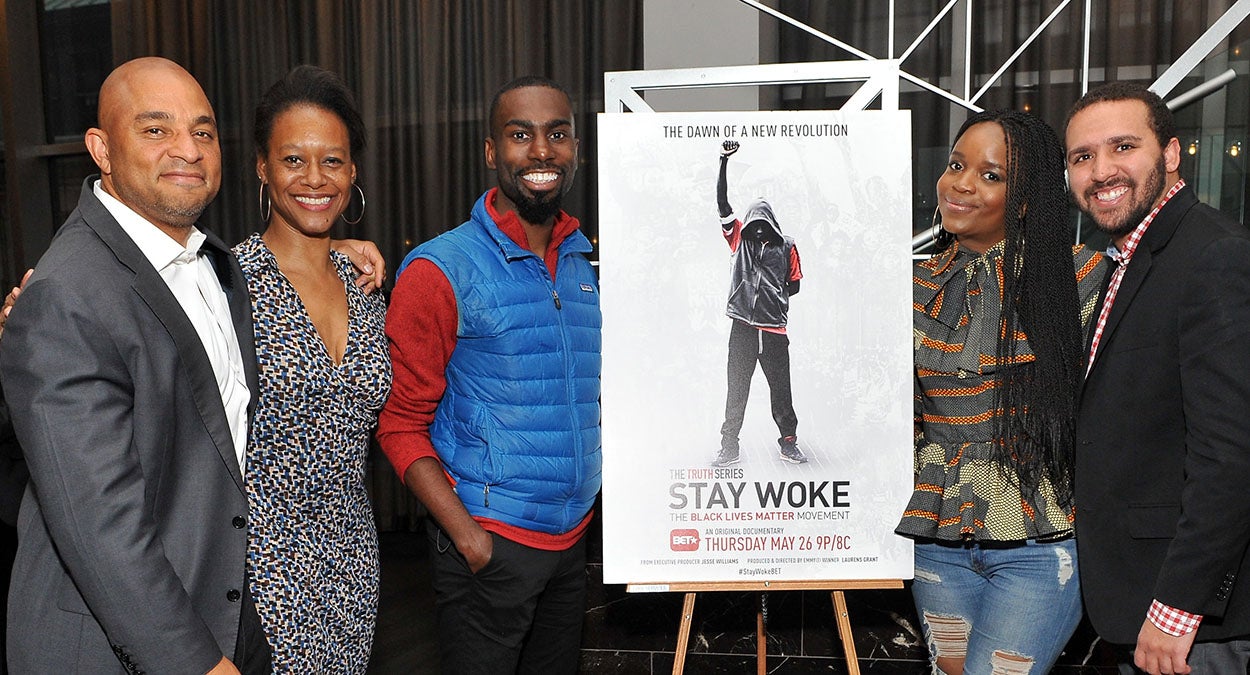
While “woke” is the past tense passive form of the verb “to awaken,” it came to be associated with racial politics after the death of Michael Brown in Ferguson, Missouri, in August 2014 and amid the Black Lives Matter movement. Black Lives Matter activists used it to describe themselves as having woken up to reality.
It has become a catchall term for the Left’s ideology, and I define it as encompassing four different ideas: critical race theory, gender ideology, climate alarmism, and a preference for technocratic government.
Woke activists believe that America is institutionally racist, was founded on slavery, and needs fundamental reform, if not a full revolution and overhauling of the current system. They also view America as oppressing various groups—racial minorities, women, LGBTQ people, and others. They support transgender policies, from allowing males to compete in women’s sports to placing male convicts in women’s prisons. They also believe that the burning of fossil fuels is changing earth’s climate and requires immediate action to save the planet.
Finally, woke activists support bureaucratic solutions to each of these alleged problems. Ibram X. Kendi, one of the leading figures in the “anti-racism” movement, called for an “Anti-Racist Constitutional Amendment” that would “establish and permanently fund the Department of Anti-racism (DOA) comprised of formally trained experts on racism and no political appointees.”
This federal department “would be responsible for preclearing all local, state and federal public policies to ensure they won’t yield racial inequity, monitor those policies, investigate private racist policies when racial inequity surfaces, and monitor public officials for expressions of racist ideas.”
Kendi’s amendment would also empower this agency to discipline “policymakers and public officials who do not voluntarily change their racist policy and ideas.”
According to critical race theory, “racist ideas” can run the gamut from true racism (believing people are inherently inferior due to their skin color) to a preference for virtues like timeliness and a work ethic. In 2020, the National Museum of African American History and Culture published an infographic presenting various aspects of Western culture—including the nuclear family, science, capitalism, and even competition, writing, politeness, and a work ethic—as part of an oppressive “whiteness” that must be rejected.
Portland, Oregon, activist Lilith Sinclair said that “black and indigenous communities” have to fight “colonized thought” among themselves. As examples of “colonized thought,” she mentioned Christianity and the “gender binary.”
The Elite 1%
Most Americans do not agree with this ideology, but it has broad purchase among a population Scott Rasmussen describes as the elite 1%. People who make more than $150,000 a year, live in densely populated areas, and have postgraduate degrees are overwhelmingly liberal and tend to favor more woke policies, according to research from Rasmussen’s Napolitan News Service. The elite 1% give President Joe Biden an 82% approval rating, compared to his 40% average from the rest of Americans.
Rasmussen’s polling found that Americans in the elite 1% are far more likely to support transgender policy, to support government crackdowns on disinformation, to trust government agencies over voters and elected representatives, and favor climate regulations.
A vast majority (77%) of the elite 1% support rationing of the private use of gas, meat, and electricity, while 63% of voters oppose such rationing. Elites favor banning gas-powered cars (72%), gas stoves (69%), and private air conditioning (53%), while voters heavily oppose such measures.
These elites likely support the Left’s infiltration of the federal government. My book, “The Woketopus,” explains how the Left’s dark money network funds woke nonprofits that staff and advise federal agencies.
It explains how climate alarmist groups like the Natural Resources Defense Council and the Sierra Club collude with bureaucrats to tighten restrictions on oil and gas. It reveals how the Human Rights Campaign essentially wrote a transgender blueprint that the Biden-Harris administration followed. It exposes the labor unions who help fund other woke groups and pushed the administration to crack down on Americans’ freedom to work as independent contractors.
“Woke” is an inherent part of “The Woketopus,” and I’d argue that my definition helps reveal exactly what the ideology is, and why it’s dangerous for America.
The post What Does It Mean to Be ‘Woke’? appeared first on The Daily Signal.










 New Posts (Home)
 ChatBox
 Popular Posts
  Game Zone
 Top PodCasts