YubNub Social YubNub Social
    #freedom #americanhistory #amercia250
    Advanced Search
  • Login
  • Register

  • Day mode
  • © 2026 YubNub Social
    About • Directory • Contact Us • Developers • Privacy Policy • Terms of Use • shareasale • FB Webview Detected • Android • Apple iOS • Get Our App

    Select Language

  • English
Night mode toggle
Featured Content
Community
New Posts (Home) ChatBox Popular Posts Reels Game Zone Top PodCasts
Explore
Explore
© 2026 YubNub Social
  • English
About • Directory • Contact Us • Developers • Privacy Policy • Terms of Use • shareasale • FB Webview Detected • Android • Apple iOS • Get Our App
Advertisement
Stop Seeing These Ads

Discover posts

Posts

Users

Pages

Blog

Market

Events

Games

Forum

Hot Air Feed
Hot Air Feed
1 y

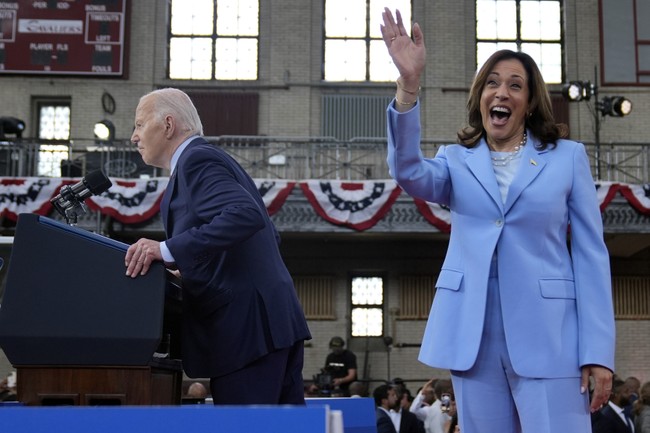
Axios: Harris 'Stiff-Arms' Biden in Closing Days
Favicon 
hotair.com

Axios: Harris 'Stiff-Arms' Biden in Closing Days

Axios: Harris 'Stiff-Arms' Biden in Closing Days
Like
Comment
Share
Science Explorer
Science Explorer
1 y

What Do Americans Fear In 2024? New Survey Shows Political Worries Are Sky High
Favicon 
www.iflscience.com

What Do Americans Fear In 2024? New Survey Shows Political Worries Are Sky High

"This tells me Americans are becoming more afraid in general, about everything."
Like
Comment
Share
Strange & Paranormal Files
1 y

Life May Exist On Planets Considered ‘Uninhabitable’
Favicon 
anomalien.com

Life May Exist On Planets Considered ‘Uninhabitable’

Everybody knows that for life to thrive on any world, you need water, warmth, and something to eat. It’s like a habitability mantra. But, what other factors affect habitability? What if you relaxed the conditions conducive to life? Would it still exist? If so, what would it be? Those are interesting questions that arise as new worlds continue to be discovered around other stars. Astrobiology (the science of life on other worlds) has a general (and conservative) assumption that Earth-like environments are the best places to search. The problem is that Earth is the only place that fits that definition—at the moment. We know of approximately 6,000 exoplanets (and the number is growing) out there. Only a few come close to the Earth-like definition, which sets artificial limits on where we think life could exist. If we widen the definition of habitability, will that expand the places we can look? What other factors should scientists consider as they search for life in the cosmos? A recent paper titled “Self-sustaining Living Habitats in Extreme Environments”, by Harvard scientist Robin Wordsworth and Professor Charles Cockell, University of Edinburgh, examines the possibilities of specific types of organisms arising on worlds where habitability might not fit the “standard definition.” In particular, they examine the viability of photosynthetic-based simple life forms in space or on other worlds. “Our idea is to probe the limits for habitability of non-sentient life. We were able to show that there are no physical limitations on simple forms of life existing outside of planetary gravity wells, which was not a result we expected initially,” Wordsworth wrote in an email. A composite image of the planet Venus as seen by the Japanese probe Akatsuki. The clouds of Venus could have environmental conditions conducive to microbial life. Credit: JAXA/Institute of Space and Astronautical Science Questions about Life Elsewhere that Isn’t Earthlike There’s a lot to unpack in the team’s paper, but the TL:DR summary says that life CAN exist in a variety of situations, provided certain parameters are met. And, they don’t have to be strictly Earth-like. But for the best chances, those organisms need to be photosynthetic and live in a place where sunlight from the system’s star can get through. We only have to look at the other worlds of the Solar System to see that the standard definition isn’t going to fly for them. Venus, for example, can’t support any life on its surface. But, recent findings (and disagreements about) phosphine and warm layers in its atmosphere suggest that it could have habitable spots high above the surface. There’s no evidence that it exists in those clouds. But, they may provide a set of conditions for certain kinds of life—and those conditions don’t fit the Earthlike definition. Scientists also suggest Titan, Enceladus, and Europa as possibly habitable havens for life. Again, nothing’s been found at any of them. However, it’s possible that at least Enceladus and Europa could have safe harbors for certain kinds of life. Not Earthlike, to be sure, since those forms probably wouldn’t survive there. So, the authors ask, how much complexity do you need for life to sustain itself beyond Earth? That leads to a far more interesting question: what’s the minimum physical structure that could sustain habitable conditions on another world? Could non-sentient organisms exist in and modify different conditions? Enceladus is the sixth-largest moon of Saturn. It is about 500 kilometers (310 mi) in diameter, about a tenth of that of Saturn’s largest moon, Titan. Examining Other Parameters for Life To answer those questions, the authors looked at various parameters, including planetary habitability, atmospheric pressure, temperature, volatile loss (from the surface and atmosphere, which also involves looking at the gravity well), radiation, free energy, and nutrients, scale and location, and maintenance and growth. All of these factors affect the rise of life and its ongoing evolution. They considered simple photosynthetic forms (that is, those that depend on photosynthesis) as a test case. That’s because, as Wordsworth points out, a solar radiation energy source is key. “When solar radiation is the energy source, life can flourish and spread over a much larger area, until its growth is limited by other things, such as availability of essential nutrients or raw materials,” he pointed out. That reliance on solar energy is important. However, it plays much less of a role in places like Europa or Enceladus. Those two worlds do have internal energy sources or chemical energy sources, but those do not allow for photosynthesis to occur. If life exists under their ice shells, it won’t be basking in the sunlight. That’s because those surfaces are not transparent enough to allow sunlight to pass. It would have to depend on the central energy sources. That pretty much limits the areas where life can flourish. That’s not to say that it won’t exist there. It will occur under more limited circumstances than simple photosynthetic organisms arising with energy input from the star. As a result of their research, Wordsworth and Cockell argue that non-sentient life can flourish under the proper conditions at other worlds. They found no limitations to it surviving in self-contained ecosystems elsewhere, provided those ecosystems can regulate their habitability internally. In other words, life—particularly simple forms of it—can exist under conditions that aren’t always Earthlike. Jupiter’s moon Europa It’s Not Always About Other Planets One other outcome of the Wordsworth-Cockell research points out benefits for other fields of study. For example, life support for humans in space. That would allow for the use of biotechnology in medicine, food, habitat construction, and spacecraft propulsion. Essentially, we could create biologically generated habitats for environments such as the Moon or Mars. In addition, the idea that such simple life can exist in a wider variety of environments could push astrobiology to get past the idea that only Earth-like places should be the “holy Grail” of the search for life. Of course, once you assume that other places with more extreme environments can support life, you need to figure out ways to detect it. Such detections require new strategies that depend on where you’re searching and what you’re searching for. Finally, we need to look at how much the living beings on our planet have shaped its habitability. We also need to understand what the initial conditions were that shaped life here. Then, scientists can apply that information in the hunt for life in other places. That leads to further speculation about how we could (if we wanted to), shape the biospheres of other worlds. Obviously, Mars comes to mind. That’s terraforming, and scientists continue to examine that possibility. Source: www.universetoday.com The post Life May Exist On Planets Considered ‘Uninhabitable’ appeared first on Anomalien.com.
Like
Comment
Share
Classic Rock Lovers
Classic Rock Lovers  
1 y ·Youtube Music

YouTube
Classic Rock Greatest Hits 60s 70s 80s ? Metallica, Queen, Nirvana, Bon Jovi, Guns N' Roses
Like
Comment
Share
NewsBusters Feed
NewsBusters Feed
1 y

TV Hits Trump With 85% Negative News vs. 78% Positive Press for Harris
Favicon 
www.newsbusters.org

TV Hits Trump With 85% Negative News vs. 78% Positive Press for Harris

One week before Election Day, a new analysis from the Media Research Center finds that broadcast evening news coverage of the 2024 presidential race has been the most lopsided in history. Since July, ABC, CBS and NBC have treated Democratic Vice President Kamala Harris to 78 percent positive coverage, while these same networks have pummeled former Republican President Donald Trump with 85 percent negative coverage. (See Methodology explanation at the end of this post.) The difference in coverage between the two candidates is far greater than in 2016, when both Trump and then-challenger Hillary Clinton received mostly negative coverage (91% negative for Trump, vs. 79% negative for Clinton). It’s even greater than in 2020, when Joe Biden was treated to 66 percent positive coverage, vs. 92 percent negative for Trump. The main reason for the imbalance: Since July, the Big Three have swamped their audiences with more than 230 minutes of airtime — virtually all of it negative — about an array of personal controversies surrounding the former President, yet provided extremely light coverage or altogether ignored many controversies involving Vice President Harris. Instead, Harris’s coverage has been larded with enthusiastic quotes from pro-Harris voters, creating a positive “vibe” for the Democrat even as network reporters criticize Trump themselves. For this report, MRC analysts reviewed all 660 stories about the presidential campaign that aired on the ABC, CBS or NBC evening newscasts from July 21 (the day President Biden ended his candidacy) through October 25, including weekends. Total coverage added up to 24 hours, 15 minutes, almost evenly divided among the three networks: 8 hours, 20 minutes on NBC; 8 hours, 13 minutes on CBS; and 7 hours, 42 minutes on ABC). Details: ■ Zeroing in on Trump: Three months ago, the networks seemingly couldn’t get enough of Kamala Harris, giving her rock-star coverage after she succeeded President Biden as the 2024 Democratic nominee. But following the September 10 presidential debate, the networks shifted attention away from Harris, spending significantly more airtime targeting Trump. From the date Harris entered the race on July 21 through September 10, she received 353 minutes of network evening news coverage, virtually identical to the 355 minutes given Trump during the same period. Since then, however, TV has focused nearly twice as much attention on Trump as Harris: 398 minutes for the former President, compared to just 230 minutes for the Vice President. The additional airtime for Trump was hardly meant as a gift. Instead, it reflected the networks’ intensive focus on Trump controversies, providing opportunities for negative news coverage. ■ Flooding the zone with Trump controversies: Much as they did in 2016, 2020, and throughout his presidency, the networks anointed themselves as the Trump Police, scolding and correcting the former President whenever they decided he’d crossed one of their lines. Of the 753 minutes of evening news airtime devoted to Trump since July 21, nearly one-third (230 minutes, or 31%) has been about personal controversies. This compares to barely five percent of Harris’s airtime (28 minutes, out of a total 583 minutes of coverage) spent on similar topics. The list of top controversies reflects liberals’ main talking points against Trump. Garnering the most airtime: the January 6, 2021 attack on the Capitol, including Trump’s insistence that the 2020 election was rigged (47 minutes). Another 30 minutes was spent amplifying claims that Trump is a “danger to democracy” and/or a “fascist” who would use the military to persecute his opponents. The Big Three spent 18 minutes criticizing Trump for disseminating supposed misinformation about the Biden administration’s response to Hurricanes Helene and Milton; 15 minutes pounding Trump for saying some immigrants in Springfield, Ohio, were eating pets; plus an additional 13 minutes floating concerns about Trump’s age and fitness for another term as President. On each one of these topics, the networks hammered Trump with coverage ranging from 97 to 100 percent negative. Harris faced no such onslaught. Over fourteen weeks, evening news viewers heard a scant 5 minutes, 22 seconds of GOP criticisms that she’s too liberal, barely one-sixth the airtime spent on the claim Trump is a “fascist.” None of this coverage included any criticisms of Harris from either network reporters or nonpartisan sources. In July and August, the networks spent 7 minutes, 8 seconds thrilling over the prospect that Harris would make history as the first woman President. But in October, as polls began to trend in Trump’s direction, the networks spent 3 minutes, 5 seconds worrying that voters might be reluctant to choose Harris because of her gender. Some anti-Harris topics have been completely ignored. MRC’s Geoffrey Dickens detailed five stories — including questions about whether portions of Harris’s 2009 book were plagiarized, her continued advocacy for taxpayer funding for sex reassignment surgery for prison inmates, and the story that her husband, Doug Emhoff, may have hit his girlfriend in the face while in France in 2012. None have been mentioned on any of the Big Three evening newscasts during our study period. ■ Both candidates hit with bad press on policy: There’s one way in which the networks are being relatively even-handed — when it comes to their policies, both Harris and Trump have received mostly negative coverage. Adding up all of the evaluative statements about policy, Trump’s coverage was 63% negative vs. 37% positive. That’s not terribly different from the 54% negative, 46% positive coverage for Harris on the issues — a perhaps surprising bit of balance amid coverage that has otherwise been ridiculously lopsided against the Republicans. Three issues received the most coverage: immigration (100 minutes); the economy (87 minutes) and abortion (44 minutes). On the economy, Trump’s coverage was actually slightly positive (55%, vs. 45% negative), vs. 55% negative for Harris. “I would like to see a president that really supports employees,” one Trump voter explained on the October 4 CBS Evening News. On the August 16 NBC Nightly News, another voter blamed Harris (and Biden) for high prices. “Our food costs here are incredibly high,” he complained. On immigration, we tallied eight negative comments about Harris’s handling of the issue, vs. just one positive comment, for an 89% negative spin. As for Trump, the coverage included eleven positive comments vs. 26 negative comments — 70% negative coverage, but three times as many individual negative statements as for Harris, as the media presented Trump’s rhetoric as more controversial than the Vice President’s actual job performance. The other major issue, abortion and IVF. Here, the networks awarded Harris the best press (73% positive), while trashing Trump (92% negative). “She speaks so eloquently about reproductive freedom,” one voter enthused on the August 24 Nightly News. Another quickly chimed in: “It makes me want to work harder, because she is.” ■ Delighted by Harris, Deploring Trump: Most of the evaluative statements network news viewers heard about the Vice President weren’t about any specific policy or controversy, and nearly all of these general evaluations (90%) were positive, celebrating the candidate without regard for what she would do as president. “Having someone who looks like you, who has the same values as you, on the ticket, is exciting,” one college student proclaimed on the September 12 NBC Nightly News. “I haven’t felt this kind of excitement since Obama,” a voter proclaimed on the August 10 CBS Weekend News. Another fan of Harris popped up on the August 18 World News Tonight: “We’re so excited about the Harris/Walz ticket and the hope and the joy.” While the networks often used voters to relay positive sentiments about Harris, they had no problem condemning Trump themselves. “Former President Trump and some of his allies keep pushing false claims,” declared NBC correspondent Gabe Gutierrez on October 8. “In a town hall aimed at courting women last night, Trump made numerous false and strange statements,” CBS anchor Norah O’Donnell charged on October 16. Add it all up, and the media coverage of the past three months is more lopsided than that of any presidential election in the modern media age. This month, Gallup reported that only a meager 31% of Americans — and just 12% of Republicans — said they had either “a great deal” or “a fair amount” of trust in the media’s ability to report the news “fully, accurately and fairly.” So if Donald Trump regains the White House next week, the media’s campaign against him will have accomplished nothing, except the further erosion of their own reputations.                          +++++ METHODOLOGY: To determine the spin of news coverage, our analysts tallied all explicitly evaluative statements about each candidate from either reporters, anchors or non-partisan sources such as experts or voters. Evaluations from partisan sources, as well as neutral statements, were not included. As we did in 2016 and 2020, we separated personal evaluations of each candidate from statements about their prospects in the campaign horse race (i.e., standings in the polls, chances to win, etc.). While such comments can have an effect on voters (creating a bandwagon effect for those seen as winning, or demoralizing the supports of those portrayed as losing), they are not “good press” or “bad press” as understood by media scholars as far back as Michael Robinson’s groundbreaking research on the 1980 presidential campaign.

Like
Comment
Share
The Blaze Media Feed
1 y

Prepare for the left to raise hell after a Trump victory — but that's all
Favicon 
www.theblaze.com

Prepare for the left to raise hell after a Trump victory — but that's all

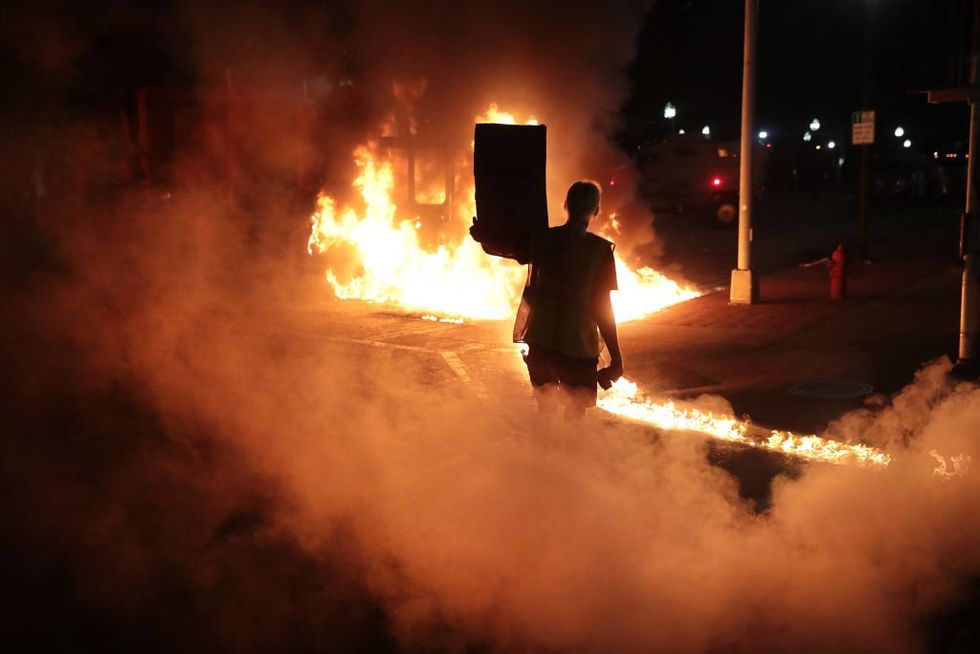
As Kamala Harris continues to embarrass herself in each new interview, especially her recent one with Bret Baier on Fox News, it’s time to seriously consider the possibility that Donald Trump could win this presidential election.At any other time in history, this might be a reason to celebrate, make peace with political opponents, and look forward to better days. Unfortunately, the stakes in this election, along with the intense hostility, give conservatives good reason to fear what could happen if Trump wins. As the old Chinese curse goes, “May you get what you wish for.”A Harris loss would show that most Americans finally understand the status quo no longer serves them and that reform is urgent.Commenting on Harris’ repeated claims that Trump poses an existential threat and will round up and imprison American citizens, John Daniel Davidson, a senior editor at the Federalist, argued that the primary goal of this rhetoric is to prepare Democrat voters for violent resistance if Trump wins in November. If it also scares more people into voting for her or motivates a few would-be assassins to target Trump, that’s just a bonus. But the real aim is to incite riots across the country, like those in the summer of 2020 — only worse.Taking a slightly more optimistic view, political commentator Mark Halperin predicts that America could experience “the greatest mental health crisis in the history of the country.” According to Halperin, leftist propaganda has become so strong and pervasive that a Trump victory would completely shatter many people’s reality: “I think tens of millions of people will question their connection to the nation, their connection to other human beings, and their vision of what their future, and their children’s future, could be.”But a Trump victory may not trigger a national crisis. While both Davidson and Halperin correctly assess the damage leftist gaslighting has done to the mental and emotional state of many Americans, cataclysmic mass tantrums likely won’t follow. Some influencers and pundits will express outrage, but widespread violence in the streets seems unlikely.Instead, a Trump victory would highlight what many are beginning to notice: Today’s leftism is spent and in decline.Despite its traditional claim of championing the “rights of the people,” leftism no longer functions as a populist movement. In reality, it has become a collective effort by elites to maintain their power by preserving a system that keeps them rich and in control. Leftism now entails opposing free speech, opening the border, undermining and dismantling cultural institutions, overturning the constitutional order, and pouring vast amounts of money into ineffective programs.This shift explains why so many union workers, black men, Latinos, and tech bros — once key constituents in the Democratic coalition — are drifting away. Behind the talk of diversity, social justice, and equity lies an agenda that will leave them poorer, less free, less safe, and ultimately less influential. Even if some still vote for Harris out of habit, they are not going to burn the country down or wage civil war against Trump supporters if she loses. Nor will they scream helplessly at the sky. They have no reason to do so.As Margaret Thatcher once said, “The problem with socialism is that you eventually run out of other people's money.” The current system of endless borrowing, taxing, and printing money to fund corrupt regimes, bloated government departments, massive corporate contracts, and entitlements for millions of illegal immigrants is unsustainable. This is why crime is rising, infrastructure is crumbling, and the federal government lacks funds to help victims of devastating hurricanes.This unsustainability explains why Harris cannot articulate a coherent agenda. It’s not just that she’s incompetent and radical but also that she lacks the resources to deliver on any new promises. Everyone knows a Harris administration would lead to higher taxes, mass amnesty, a crackdown on free speech, more inflation, and the creation of a police state to crush dissent. She has no other options.A Harris loss in November would make this reality clear. It would show that most Americans finally understand the status quo no longer serves them and that reform is urgent. A small minority of elites and their paid agitators might try to raise hell, but their efforts would be futile.Look at Argentina after the flamboyant libertarian Javier Milei won the presidential election last year. The fact that he won and delivered on his promises reveals how little influence leftists actually have. Milei took a country deeply in debt, plagued by extreme inflation, and burdened with a bloated government — much like the United States — and, according to writer Joseph Addington, “arrested a catastrophic inflationary spiral, drastically slashed government spending to produce a budgetary surplus for the first time in decades, and completely restructured the Argentine economy and government.”The same could happen here. Most Americans are well past the point of fussing over Trump’s tweets, his character flaws, or his involvement in the January 6 protests. They know he is not a fascist because he already served one term as president and did a much better job than the administration trying to stay in power. And in their heart of hearts, even most leftists probably know this and will feel inwardly relieved at Trump’s return — even as they make a show of shedding some crocodile tears in November for the sake of form.
Like
Comment
Share
Twitchy Feed
Twitchy Feed
1 y

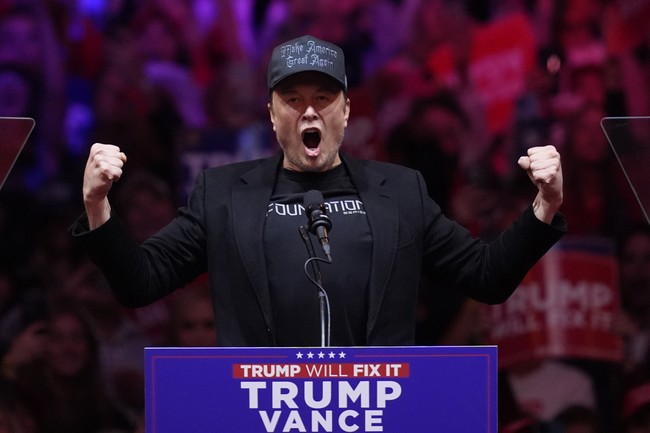
DAAAAMN! Elon Musk Calls MSNBC 'Utter Scum of the Earth' for Its Coverage of Trump MSG Rally
Favicon 
twitchy.com

DAAAAMN! Elon Musk Calls MSNBC 'Utter Scum of the Earth' for Its Coverage of Trump MSG Rally

DAAAAMN! Elon Musk Calls MSNBC 'Utter Scum of the Earth' for Its Coverage of Trump MSG Rally
Like
Comment
Share
History Traveler
History Traveler
1 y

The Impact of Agricultural Developments on Social Hierarchies
Favicon 
www.ancient-origins.net

The Impact of Agricultural Developments on Social Hierarchies

Throughout the history of mankind, major innovations drove us forward. But as they did so, they also changed us profoundly. No great shift in the way humans lived came about peacefully or smoothly. Instead, it caused upheaval, cultural changes, migrations, and the inevitable shaping of the future. Agriculture is, without a doubt, one of the foremost of these innovations that shaped the way humans lived for millennia. It came about gradually and influenced the traditional societies of prehistory in a very profound way. And, without a doubt, it set the course for the future as we know it today. But how did agriculture impact social hierarchies of the time? Or better yet, did agriculture create them? Read moreSection: Ancient TechnologyNewsGeneralHistory & ArchaeologyAncient PlacesPremiumPreviewRead Later 
Like
Comment
Share
NEWSMAX Feed
NEWSMAX Feed
1 y

How the Left Lost Elon Musk
Favicon 
www.newsmax.com

How the Left Lost Elon Musk

In 2009, one would be hard-pressed to find a CEO more beloved by the progressive movement than Elon Musk.
Like
Comment
Share
NEWSMAX Feed
NEWSMAX Feed
1 y

McConnell's Exit Sparks GOP Leadership Race
Favicon 
www.newsmax.com

McConnell's Exit Sparks GOP Leadership Race

Sen. Mitch McConnell, R-Ky., will vacate his seat in January 2027 after nearly four decades, but it is his vacated role as the Republican Senate leader in November that has a handful of senators jockeying to be the hand at the reins.
Like
Comment
Share
Showing 68158 out of 115752
  • 68154
  • 68155
  • 68156
  • 68157
  • 68158
  • 68159
  • 68160
  • 68161
  • 68162
  • 68163
  • 68164
  • 68165
  • 68166
  • 68167
  • 68168
  • 68169
  • 68170
  • 68171
  • 68172
  • 68173
Advertisement
Stop Seeing These Ads

Edit Offer

Add tier


Select an image
Delete your tier
Are you sure you want to delete this tier?

Reviews

In order to sell your content and posts, start by creating a few packages. Monetization

Pay By Wallet

Payment Alert

You are about to purchase the items, do you want to proceed?

Request a Refund