YubNub Social YubNub Social
    #astronomy #nightsky #newyork #physics #moon #astrophysics #fullmoon #supermoon #planet #nasa #zenith #wolfmoon #moonafteryule #cosmology #coldmoon
    Advanced Search
  • Login
  • Register

  • Night mode
  • © 2026 YubNub Social
    About • Directory • Contact Us • Developers • Privacy Policy • Terms of Use • shareasale • FB Webview Detected • Android • Apple iOS • Get Our App

    Select Language

  • English
Install our *FREE* WEB APP! (PWA)
Night mode toggle
Community
New Posts (Home) ChatBox Popular Posts Reels Game Zone Top PodCasts
Explore
Explore
© 2026 YubNub Social
  • English
About • Directory • Contact Us • Developers • Privacy Policy • Terms of Use • shareasale • FB Webview Detected • Android • Apple iOS • Get Our App
Advertisement
Stop Seeing These Ads

Discover posts

Posts

Users

Pages

Blog

Market

Events

Games

Forum

Daily Caller Feed
Daily Caller Feed
1 y

FACT CHECK: Bell Covered In Pro-Palestine And Anti-Israel Graffiti Is Freedom Bell, Not Liberty Bell
Favicon 
checkyourfact.com

FACT CHECK: Bell Covered In Pro-Palestine And Anti-Israel Graffiti Is Freedom Bell, Not Liberty Bell

The graffiti was written on the Freedom Bell, which is a double-scale replica of the Liberty Bell, according to The Hill
Like
Comment
Share
Daily Caller Feed
Daily Caller Feed
1 y

Rebecca Ferguson Joins Cast Of Highly Anticipated ‘Peaky Blinders’ Movie
Favicon 
dailycaller.com

Rebecca Ferguson Joins Cast Of Highly Anticipated ‘Peaky Blinders’ Movie

By order of the Peaky Blinders
Like
Comment
Share
Daily Caller Feed
Daily Caller Feed
1 y

‘The View’ Co-Host Alyssa Farah Griffin Reality Checks Sunny Hostin After She Calls Kamala Harris ‘A Moderate’
Favicon 
dailycaller.com

‘The View’ Co-Host Alyssa Farah Griffin Reality Checks Sunny Hostin After She Calls Kamala Harris ‘A Moderate’

'Prosecutors are not really leftists'
Like
Comment
Share
Science Explorer
Science Explorer
1 y

Incredible Fossil Of 38-Million-Year-Old Entangled Snakes Discovered In Wyoming
Favicon 
www.iflscience.com

Incredible Fossil Of 38-Million-Year-Old Entangled Snakes Discovered In Wyoming

Four snakes found buried together are shedding new light on our understanding of snake evolution. The specimens – which represent a brand new species – lived in North America around 38 million years ago and could help explain how boas and pythons evolved. The new species has been named Hibernophis breithaupti and the four individual snakes that make up the finding were discovered in the White River Formation in Wyoming, USA. The fossils are extra special since they are nearly complete, and are articulated, meaning the fossils are preserved with the bones still arranged pretty much in the right order. Most other snakes of this period are only known from a few isolated vertebrae, making this find extremely useful for researchers. One of the snakes within the four is twice the size of the others, allowing the researchers to learn more about the different life stages of this ancient species. The team thinks the new species could belong to the boidae, a family which contains boas and pythons that we see today. The evolution of boas is not well understood. These new specimens are thought to be part of a group called the rubber boas, which were small burrowing snakes.  “We learn quite a bit more about boidae evolution in the broad sense,” says Michael Caldwell, a U of A paleontologist who co-led the research in a statement. “It seems that they probably started out as relatively small-bodied snakes, which is interesting.”The cluster of the snakes together suggests they were sheltering together during a colder period in what is known as a hibernaculum. The researchers think that this could be the first evidence of the social behavior of snakes preserved in the fossil record. The name "Hibernophis" comes from the Latin "hibernate", meaning to pass winter, owing to the suspected hibernaculum the snakes were found in. The team thinks that the snakes were probably preserved during a “small flood episode”. The largest snake is presumed to be an adult while the best preserved smaller snake is thought to be a juvenile. A third specimen is hidden under the body of one of the other snake fossils but is between the two in length. "Modern garter snakes are famous for gathering by the thousands to hibernate together in dens and burrows," continued Caldwell in another statement. "They do this to conserve heat through the effect created by the ball of hibernating animals. It's fascinating to see possible evidence of such social behavior or hibernation dating back 34 million years."The paper is published in the Zoological Journal of the Linnean Society.
Like
Comment
Share
Science Explorer
Science Explorer
1 y

The Beast Of Busco: The Mystery Of Indiana's 500-Pound Turtle Sightings
Favicon 
www.iflscience.com

The Beast Of Busco: The Mystery Of Indiana's 500-Pound Turtle Sightings

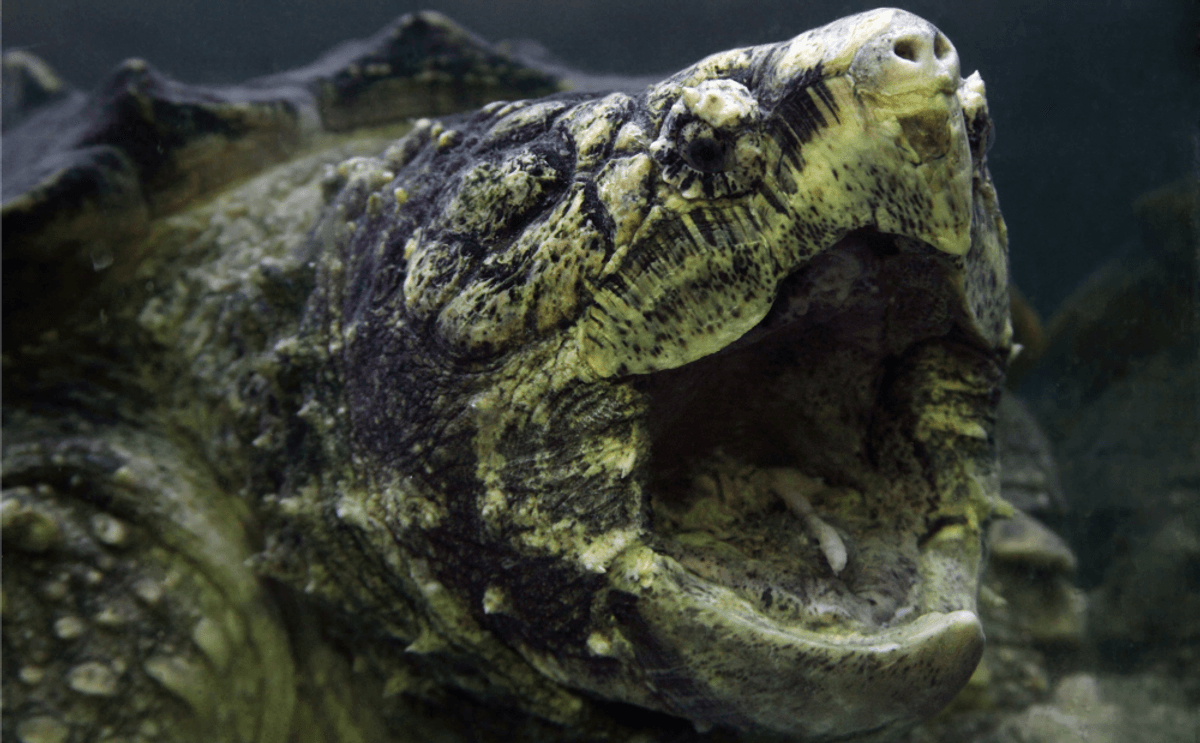
In the late 1940s, Indiana residents were gripped by rumors of a "500-pound turtle" allegedly spotted by two men as they were fishing in a lake. Curiously, it wasn’t the first time the giant turtle had been seen, with a previous sighting having been reported at the same lake. So, what on Earth were all these people seeing?The otherworldly turtle was estimated to weigh around 226.8 kilograms (500 pounds) and have a shell the size of a dinner table, according to Smithsonian Magazine. It muscled its way into the news cycle under the catchy nickname “the Beast of Busco”, attracting flocks of visitors hoping to catch a glimpse of the absolute unit.The legend hails from Churubusco, Whitley County, Indiana known to some as Turtle Town. According to the Indiana Magazine of History, the nickname originally stems from ‘Little Turtle,’ the name of a sagamore (chief) of the Miami tribe, but it’s later become associated with the giant turtle sighting at Fulk Lake.               The giant turtle became quite the celebrity in the area, becoming Indiana’s answer to the Loch Ness Monster. The Beast of Busco also went by a second, rather less grand name: Oscar.At IFLScience, we really love science, but we bloody love cryptozoology too. It’s a fantastic field of pseudoscience that allows us to debate the existence of bizarre beasts that are quite literally too good to be true.Among the most famous is the Loch Ness Monster, a slithery beast whose appearance in a few grainy photos over the years has raised eyebrows, and which has now gotten its own paper to explore the “eel hypothesis”. Then there’s good old Bigfoot who, as it turns out, could well be black bears. And who could forget Mokele-Mbembe, the “living dinosaurs” people used to think lived in the Congo, but could well have been a case of mistaken identity with elephants or hippos.With a strong bite and large claws, it's not a creature you want to mess with.Image credit: Noel Powell / Shutterstock.comIn the case of the Beast of Busco, it’s possible that another real animal could be behind the otherworldly sighting. The largest species of freshwater turtle in North America is the alligator snapping turtle, Macrochelys temminckii, and these things are pretty mythically huge as it is.With males weighing around 99.8 kilograms (220 pounds) at 0.66 meters (26 inches) long, they're about half the weight and dinner-table-scale of that reported back in the 40s, but they remain one of the biggest freshwater turtles in the world. Their historic range includes Indiana, though such a sighting would be considered “extremely rare” today.So, was the Beast of Busco just a hefty alligator snapping turtle, or is one of Monarch’s titans lying in wait at the bottom of Fulk Lake? We know which version we prefer.
Like
Comment
Share
Science Explorer
Science Explorer
1 y

Italy's "Tomb Of Cerberus" Has Been Opened, Revealing Incredible 2,000-Year-Old Mummy
Favicon 
www.iflscience.com

Italy's "Tomb Of Cerberus" Has Been Opened, Revealing Incredible 2,000-Year-Old Mummy

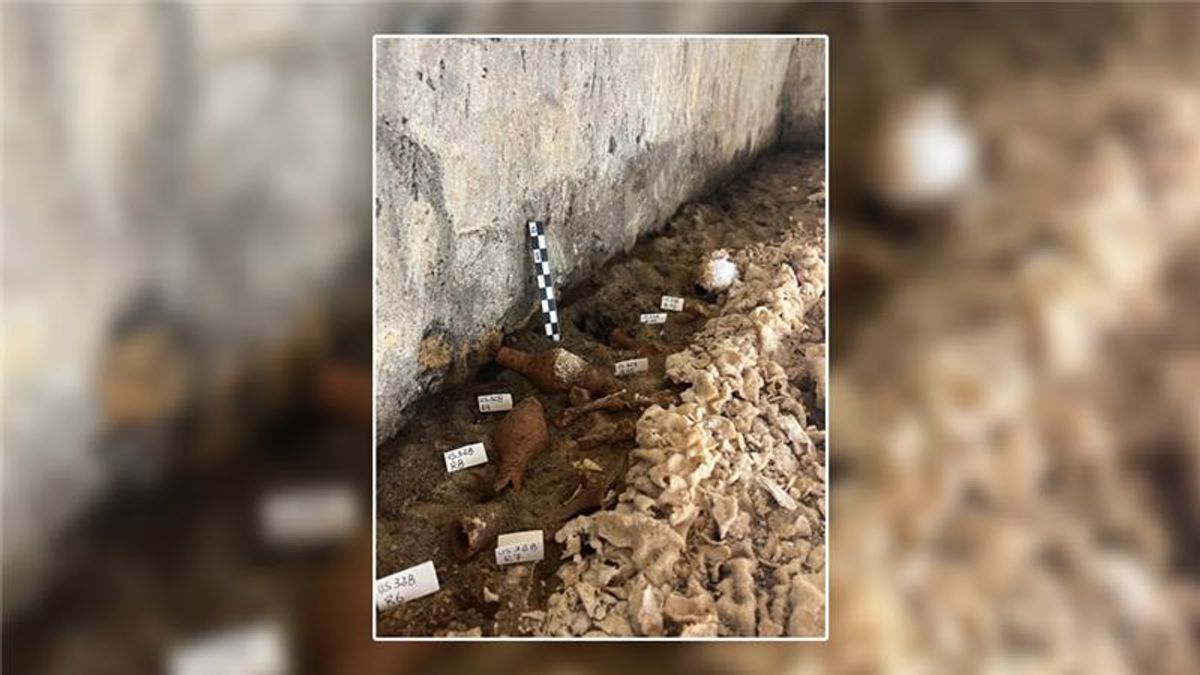
Archaeologists investigating the "Tomb of Cerberus" in Giugliano, Naples, have unsealed a 2,000-year-old sarcophagus. But while this may sound like the introduction to a Hammer horror story, the researchers actually found a remarkably well-preserved body wrapped in a shroud.  The archaeologists had been examining the tomb with microcameras before they found a passage that led into the sarcophagus, which had remained sealed for thousands of years. The team, led by Dr Simona Formola, found the “supine inhumed” body of someone who, according to a translated statement, was in an “excellent state of conservation”.It is possible that this person’s preservation was assisted by the climatic conditions of the burial chamber, which seems to have mineralized the shroud.In the tomb, the team also found various goods, including ointment jars (known as unguentaria) and body-cleaning tools (strigils) that were used to scrape dirt, sweat, and oils from the body. Given the rich nature and chronology of these finds, along with the care given to the deceased, it is likely the body belongs to the founder of the family to whom the mausoleum was built.The site was uncovered in 2023.Image credit: Italian Ministry of CultureThe Tomb of Cerberus was discovered last year at the necropolis site near Naples, Italy. It received its name because of the ornate and vivid frescoes of the titular three-headed guardian of the Underworld, Cerberus, that were painted on its walls. Since its discovery, researchers have continued to analyze the tomb’s contents, which is how they came across this particular sarcophagus.“The Tomb of Cerberus continues to provide valuable information on the Phlegraean territory near Liternum, expanding knowledge of the past, and offering opportunities for research of a multidisciplinary nature,” Superintendent Mariano Nuzzo explained in the translated statement.“In recent months, in fact, laboratory analyses conducted on samples taken from the inhumations and the depositional beds have returned a considerable amount of data on the treatment of the deceased’s body and the funerary ritual carried out, significantly enriching the panorama of our knowledge.”The excavation work represents a massive interdisciplinary effort, bringing forward the expertise of archaeologists, technicians, anthropologists, chemists, and palaeobotanists, each contributing insights and data that are revealing the secrets of this fascinating site.In particular, the fabric used to shroud the body is being analyzed to determine its structure and the type of yarn is made from, as well as its quality. The hope is that this will reveal more cultural and social information about the person it covers. Pollen analysis of the bottles found in the tomb suggests that the body may have been treated with creams based on Chenopodium (goosefoot) and absinthe, which would have helped preserve it. The team is currently awaiting the results of DNA analysis for more information.The wider necropolis in which the tomb is found is already known to be home to important ancient burials, many of which date back to the Roman Republic and the Roman Imperial Age. As such, as more information emerges from this tomb, the more we will know of both the lives and deaths of its mysterious occupants.
Like
Comment
Share
Science Explorer
Science Explorer
1 y

Woman Went On The Run To Avoid TB Treatment – Now She’s Been Cured
Favicon 
www.iflscience.com

Woman Went On The Run To Avoid TB Treatment – Now She’s Been Cured

Officials in Pierce County, Washington State, have announced that a woman who initially refused to be treated for tuberculosis (TB), even spending three months evading the police in order to do, has successfully been cured of the disease.Staff from the local health department had been attempting to persuade the Tacoma resident, known only as V.N., to get treated for a TB infection for well over a year. Under most circumstances, people have the right to refuse medical treatment, but in Washington, it’s a different matter when it comes to TB.“State code directs us to prevent the spread of tuberculosis,” explained Tacoma-Pierce County Health Officer James Miller in a blog post. “In the unusual situation in which a patient refuses to isolate, we have a legal responsibility to take steps to protect community health. Occasionally, that can include seeking a court order to persuade patients to isolate,” he continued, noting that such an approach is used as a very last resort.A court order was given out to the woman and renewed several times, until in March 2023, a judge found the woman in contempt of court and issued a civil arrest warrant.The story didn’t end there though – V.N. managed to avoid custody for three months, even taking a bus trip to a local casino. Eventually, however, law enforcement agents caught up with her, and she was taken to Pierce County Jail.There, said Miller, “she realized how serious her situation was and decided to treat her illness.”TB is a serious illness that primarily affects the lungs and can be fatal when left untreated. In fact, it’s the world’s most deadly infectious disease, killing 1.5 million out of the 10 million people it infects around the globe each year.While it’s more often seen in low- and middle-income countries, cases of TB in the US have been increasing every year since 2020, according to the Centers for Disease Control and Prevention. In Washington, an average of four people are diagnosed with TB per week.The disease is, however, curable (and preventable). Though some drug-resistant forms of TB exist and take a little longer to treat, many infections can be tackled with a one to six-month course of four different antibiotics.Having spent the last year in custody receiving such treatment, V.N. has now been successfully cured of TB.“With her family’s help, our disease investigators earned her trust. She began to take her medication and regained her health over time,” said Miller. “She’s tested negative for tuberculosis (also called TB) multiple times. She gained back weight she’d lost and is healthy again.”
Like
Comment
Share
Science Explorer
Science Explorer
1 y

A Geobiologist Found Possibly The Oldest Complex Fossil – In Her Pet Rock
Favicon 
www.iflscience.com

A Geobiologist Found Possibly The Oldest Complex Fossil – In Her Pet Rock

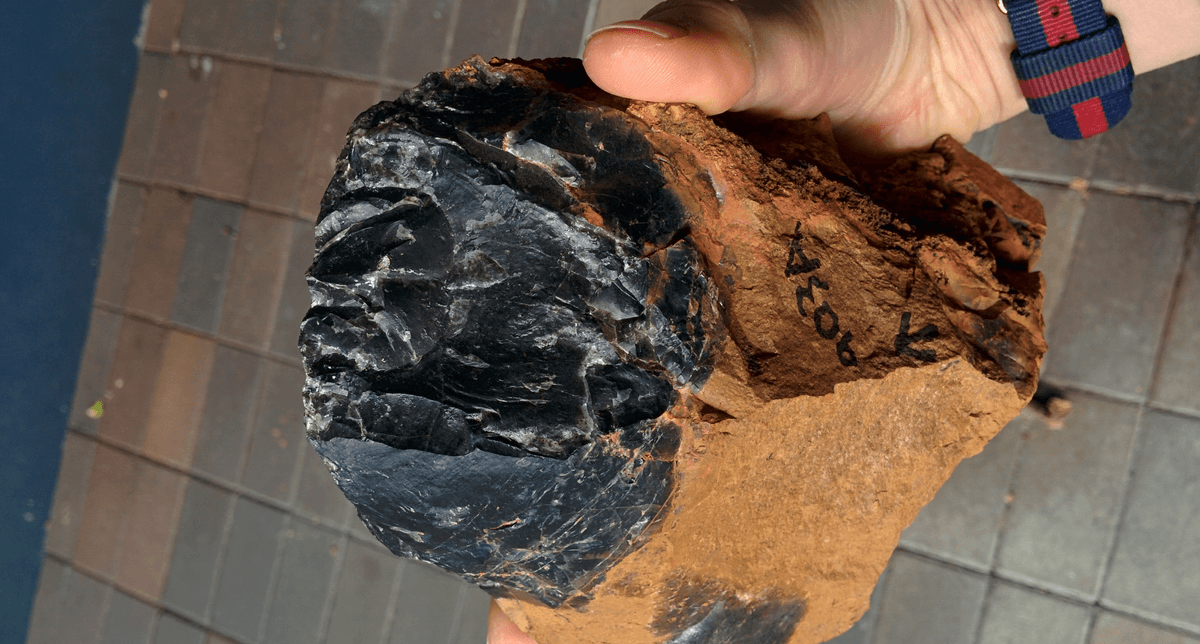
As an undergraduate at the University of New South Wales, Dr Erica Barlow picked up a rock that would change her life, and quite possibly how we see the history of life on Earth. It took a long time to work out what she had, however, and even today no one can be sure the rock contains what Barlow and others suspect.Barlow was in Western Australia's Pilbara region to study stromatolites, some of the oldest fossils we know. The trip involved many long walks between the campsite and the fossils; on one journey back Barlow noticed a shiny black rock catching the setting Sun against the region’s famous red dirt. She picked it up as a reminder of the trip. “I kept it on my desk as a kind of pet rock while I wrote my [honors] thesis,” Barlow said in a statement.Barlow was still working on stromatolites when her supervisor, Martin Van Kranendonk, noticed the rock and identified it as black chert. Kranendonk told her black chert has been known to hold microfossils from early in life’s development on Earth, (although this is debated) and suggested she check it out. Buried in her thesis, Barlow needed some encouragement to take the time to prepare and examine a sample, but was astonished when she did.One of the specimens Barlow found showing some of the complexity.Image credit: Erica BarlowFossils in the chert looked like nothing Barlow had seen before. Moreover, no one else had seen anything like them either. Given the chert’s age, if there were any microfossils inside they were expected to be of single-celled organisms. The microfossils Barlow had found look more like a soccer ball: almost round, but with a complex outline and an internal honeycomb structure.“There was nothing else like the microfossil I found in the geological record,” Barlow said. The closest living analog for what Barlow found appears to be certain algae, such as this sample of Volvocacean coenobial, showing hollow structures surrounded by hair-like flagella, which are both encircled by a thick, gum-like substance called mucilage.Image credit: Antonio GuillénThat’s a big claim under any circumstances, but considerably bigger when the chert was thought to date back long before complex life was thought to have appeared.The stromatolites Barlow had been studying involve thousands of cells that collectively form layered structures out of their own bodies and sand. However, they are not what we consider complex life.As far as anyone knew, the first complex life forms were hundreds of millions of years younger than this discovery. Barlow’s find might be a predecessor of the eukaryotes, the branch of the tree of life that includes all animals, plants, fungi, and algae. Or it might be an evolutionary dead-end, an early flowering of complexity that was snuffed out. Then again, it might be just an illusion, mimicking complexity in some way we can’t explain.There was only one thing for it – make the rock the subject of her PhD.First Barlow needed to know if the chert was unique. Returning to the collection site answered that almost immediately. Barlow found a rock wall dotted with thousands of black chert nodules 30 meters (100 feet) up a nearby slope. Like the Pilbara itself, the wall stretched out of view in both directions.  Barlow told IFLScience she has since measured the formation at 12 kilometers (7 miles) long, all laden with chert nodules averaging 20 centimeters (8 inches) wide and 7 centimeters (3 inches) high.It's a thin line through the vastness of the Pilbara, but the chert-containing formation stretches out of view.Image credit: Erica BarlowMany chert samples appear to contain no fossils at all. Others hold organisms that look like those found worldwide from this time – “either long thin filaments or unicells – like bubbles,” Barlow told IFLScience. A scientist who collected a small sample could easily go home thinking there was nothing unusual.Aware of the potential significance of her discovery, however, and the need to replicate it, Barlow collected hundreds of samples. Back in Sydney she found several contained specimens resembling her original, with some even having amber spheres within the honeycomb shapes. She has now expanded the specimens to 19, including half a dozen from a single rock. Barlow’s hundreds of samples also contain some that might have originally looked similar, but are too degraded for her to be sure. If she’d picked up one of these instead, she would probably not have recognized its value.The formation is not primarily black chert, but the modules are not hard to find.Image credit: Erica BarlowThe chert samples are clearly of the same age, and independent testing verified they all formed about 2.4 billion years ago. Crucially, that coincides with the date geologists have now settled on – after much debate – for the Great Oxidation Event. This is the point where oxygen levels in the atmosphere and the oceans grew so dramatically that it became possible to breathe, opening the door to complex life.Previously there had been an unexplained gap of around 750 million years between oxygen becoming available and the first eukaryote fossils, demonstrating something was taking advantage of it.Unfortunately, however, none of the specimens Barlow has found can be proven to be predecessors of eukaryotes.“When you’re working with material from this time, it’s really hard to prove or disprove something like this, because we just don’t have enough information preserved,” Barlow said in the statement. Geneticists date the timing of major advances in life using “molecular clocks”, but Barlow told IFLScience these produce “a huge range of estimates” for the time when eukaryotes emerged. Some of these are close to the age of her chert, but others are hundreds of millions of years later. “One problem is molecular clocks are informed by fossil record, which makes it a bit grey when you look back this far, where the fossil record is so patchy,” she said.There are 6-700 million years represented by a handful of sites on the planet.Dr Erica BarlowTheoretically, chemical analysis might provide valuable evidence. “If we can identify the type of carbon, it might tell us what the organism ate,” she said, potentially proving its complexity. However, this is nearly impossible because samples are so easily contaminated with carbon from the modern world.“Working with such tiny fossils, with so little carbon, if we got a positive result the [scientific] community would not believe it because of possibility of contamination,” Barlow told IFLScience.Some future technology might improve the process, but in the meantime Barlow’s work has struggled to get recognition. The remoteness of the location might be part of the problem. When the oldest animals were found in the Ediacaran Hills in South Australia, many palaeobiologists refused to believe they were real until they saw them personally. The location made that a slow process.If similar fossils were found elsewhere in the world it might help Barlow’s case, particularly if something somewhat later showed signs of further development. So far, nothing has turned up. Barlow admitted to IFLScience this could be the only evidence of an early experiment with complexity that was snuffed out, and did not reoccur for a long time.On the other hand, the lack of another location is not entirely surprising given how few sites preserve fossils more than 1.6 billion years old. “There are 6-700 million years represented by a handful of sites on the planet,” Barlow told IFLScience. It’s not easy to preserve a fossil site, but Barlow thinks such an extreme shortage may be a consequence of the state of plate tectonics at the time.If these specimens are ancestral eukaryotes, they wouldn’t have looked very exciting by modern standards. “From what we can tell, the life would have been soft, squishy and gooey – kind of like slime that you see at the edge of a pond,” Barlow said in the statement. Nevertheless, Van Kranendonk noted the similarity to modern eukaryotic algae,While Barlow waits for something to break that could help us learn more about her discovery, she has completed a postdoc with NASA in the marvellously named Laboratory for Agnostic Biosignatures. There she tried to design ways to identify life on other worlds if it doesn’t look like Earth-life; she might have had about the best training that exists for such a task.Barlow’s most recent study on the discovery is published open access in Geobiology. 
Like
Comment
Share
NewsBusters Feed
NewsBusters Feed
1 y

Robots: Morning Joe Hypes The Obamas' Staged Phone-Call Endorsement of Kamala
Favicon 
www.newsbusters.org

Robots: Morning Joe Hypes The Obamas' Staged Phone-Call Endorsement of Kamala

Gag me with an iPhone! Morning Joe opened Friday's show with a clip of Kamala Harris acting surprised as she was handed a phone, only to find it was -- what a shock! -- Barack and Michelle Obama on the line, expressing their endorsement! That was about as authentic as Kamala's laugh. You'll hear Kamala enthuse: "aww: you're both together"—as if she hadn't been entirely aware in advance that such would be the case! Substitute host Jonathan Lemire vouched for the Obamas' enthusiasm for Kamala, saying: "There had been some chatter on the right, nonsensical, that the Obamas were having doubts about the Vice President. That could not be further from the truth." And Lemire knows that how?  He was presumably alluding to this New York Post article, which reports that Obama "doesn’t think she can beat Donald Trump." And as National Review noted, after Biden dropped out: "Obama expressed confidence in Democratic leaders’ ability to 'create a process from which an outstanding nominee emerges' but pointedly declined to endorse Harris." Lemire himself noted that Obama didn't endorse Kamala when others were doing so, to give room for "a process for somebody else to get in the race." If Obama hadn't had doubts about Kamala, why would he have wanted to make it easier for someone else to challenge her? So spare us, Jonathan Lemire, your claim that it is "nonsensical" to suggest that Obama isn't confident about Kamala's ability to win. He also insisted "I think also the Obamas wanted to give room to President Joe Biden. He, of course, a friend. And yes, the Obamas behind the scenes certainly had concerns about his ability to win, but after Biden dropped out, they wanted to give him a little more space." As Mark Halperin has mentioned on his 2Way Zooms, the MSM's all-in backing of Harris will be worth billions of dollars in advertising. Morning Joe's highlighting at the top of the show this blatantly staged phone-call endorsement is a good illustration of the liberal media's contributions in kind.   Here's the transcript. MSNBC Morning Joe 7/26/24 6:02 am EDT JONATHAN LEMIRE: We'll begin this hour with a big development in the race for president here in the United States, where former President Barack Obama and former First Lady Michelle Obama have officially endorsed Vice President Kamala Harris for president.  Here's a video released by the Harris campaign, showing the moment the Obamas called the Vice President to offer their full support. BARACK OBAMA: Kamala! KAMALA HARRIS: Hello, hi-i-i-i! MICHELLE OBAMA: Hey there. HARRIS: Aww: you're both together. Oh, it's good to hear you both. MICHELLE: I, I, I can't have this phone call without saying to my girl, Kamala, I am proud of you. This is going to be historic. BARACK: We called to say, Michelle and I couldn't be prouder to endorse you and to do everything we can to get you through this election and into the Oval Office. HARRIS: Oh, my goodness. Michelle, Barack, this means so much to me. I am looking forward to doing this with the two of you, Doug and I both, and getting out there, being on the road.  But most of all, I just want to tell you that the words you have spoken and the friendship that you have given over all these years mean more than I can express. So thank you, both. It means so much. And we're going to have some fun with this, too, aren't we? LEMIRE: Jen Palmieri, no surprise here. This was, of course, part of a coordinated roll-out of endorsements. Though there had been some chatter on the right, nonsensical, that the Obamas were having doubts about the Vice President. That could not be further from the truth.  So, no surprise, but still important. Tell us what you think this means. JENNIFER PALMIERI: Well, I think, you know, one thing that's important about it is that Mrs. Obama was on the call, right? And that the president said they're both going to do everything they can. She, yu know, politics is her husband's thing. And she's been a phenomenally effective campaigner, but it doesn't always -- she doesn't necessarily look for opportunities to spend a lot of time campaigning. But, I think, for her to be on the call, too, says how important it is to her and that she wants to help, as well. And the two of them are such a major force, and there is a, they are long-time friends. And I think that President Obama had stepped back from endorsing, as other party leaders had, to sort of give there room to be a process for somebody else to get in the race if they wanted to, but also to show that this was -- this is a real, you know, legitimate nominating process. And now you're at the point where both of the Obamas are fully able to express being on board and wanting to campaign for her. And that's going to be a huge help. LEMIRE: Yeah. And Sam Stein, I think also the Obamas wanted to give room to President Joe Biden. He, of course, a friend. And yes, the Obamas behind the scenes certainly had concerns about his ability to win, but after Biden dropped out, they wanted to give him a little more space. We also shouldn't lose sight of the history here, Sam. Where this is the nation's first black president endorsing the woman who could be the second.
Like
Comment
Share
NewsBusters Feed
NewsBusters Feed
1 y

PBS Previews Olympics, Ties Opposition To Transgenderism With Nazism
Favicon 
www.newsbusters.org

PBS Previews Olympics, Ties Opposition To Transgenderism With Nazism

With the Paris Olympics set to begin on Friday, PBS’s Amanpour and Company devoted their entire show to the games on Thursday, including a wild history lesson on the 1936 Olympics in Berlin, where The Other Olympians: Fascism, Queerness and the Making of Modern Sports author Michael Waters tried to tie Nazism with opposition to transgender ideology. As part of his history lesson, Waters touched on the Czech runner, Zdenek Koubek. Koubek was a champion female runner who would later identify as a man. It should be noted that Koubek was intersex, not transgender.     However, as CNN International’s Hari Sreenivasan claimed, not everyone was thrilled with the idea, “There's an interesting character you write about, kind of—it's sort of behind this interest in figuring out how to test athletes. His name is Wilhelm Knoll. Tell us a little bit about him. Who is he? Who was he?” After recalling the publicity around Koubek, Waters recalled, “While the public is just kind of curious about, like, okay, it's literally, like, how is it possible to move between these categories? Like what are the medical advances that, that sort of allow this, you do see this small group of sports officials who have a very different reaction. And the most prominent among them is Wilhelm Knoll, who in January 1936, writes this op-ed, essentially accusing Koubek of being a fraud and deceitful in some way.” Waters further claimed, “Knoll seemed to take issue with the fact that Koubek had been in women's sports at all. And Knoll, just for some background context, you know, he was a quite influential sports doctor in 1936. He was the head of this group of sports doctors who advised, you know, the IOC, the Track and Field Federation. This is a very early era of sports science. And so, he, just by nature of having that position, had a lot of cachet.” However, he “was also a registered Nazi at the time and he was really an ardent believer. You know, he taught at a university and he wore the brown shirt uniform to classes. And he, you know, like, separately from Koubek, he had all of these writings about how he wanted to eliminate Jewish athletes, athletes of color from sports in general. So, he just kind of has a tendency because of his belief in eugenics to push out athletes. And he saw Koubek and this possibility of transition as some kind of threat. And you know, something that needs to be weeded out.” The controversy around transgenderism and sports today relates to men competing in women’s sports, not the other way around. Women have been football kickers, competed in male golf tournaments, and played on male baseball teams, so that’s not the sports problem. However, Waters still tried to tie opposition to the “possibility of transition” to Nazism, and that is simply ridiculous. Men are men and women are women, the existence of intersex individuals do not change that.  Here is a transcript for the July 25 show: PBS Amanpour and Company 7/25/2024 HARI SREENIVASAN: There's an interesting character you write about, kind of -- it's sort of behind this interest in figuring out how to test athletes. His name is Wilhelm Knoll. Tell us a little bit about him. Who is he? Who was he? MICHAEL WATERS: Yeah, so, so Koubek transitioned -- like announced that he was transitioning gender at the end of 1935. And like I said, you know, it becomes a global news story that is written about, you know, really with this sense of curiosity about the possibilities of transition. And so, while the public is just kind of curious about, like, okay, it's literally, like, how is it possible to move between these categories? Like what are the medical advances that, that sort of allow this, you do see this small group of sports officials who have a very different reaction. And the most prominent among them is Wilhelm Knoll, who in January 1936, writes this op-ed, essentially accusing Koubek of being a fraud and deceitful in some way. And Knoll seemed to take issue with the fact that Koubek had been in women's sports at all. And Knoll, just for some background context, you know, he was a quite influential sports doctor in 1936. He was the head of this group of sports doctors who advised, you know, the IOC, the Track and Field Federation. This is a very early era of sports science. And so, he, just by nature of having that position, had a lot of cachet. He was also a registered Nazi at the time and he was really an ardent believer. You know, he taught at a university and he wore the brown shirt uniform to classes. And he, you know, like, separately from Koubek, he had all of these writings about how he wanted to eliminate Jewish athletes, athletes of color from sports in general. So, he just kind of has a tendency because of his belief in eugenics to push out athletes. And he saw Koubek and this possibility of transition as some kind of threat. And you know, something that needs to be weeded out.

Like
Comment
Share
Showing 69585 out of 105259
  • 69581
  • 69582
  • 69583
  • 69584
  • 69585
  • 69586
  • 69587
  • 69588
  • 69589
  • 69590
  • 69591
  • 69592
  • 69593
  • 69594
  • 69595
  • 69596
  • 69597
  • 69598
  • 69599
  • 69600
Advertisement
Stop Seeing These Ads

Edit Offer

Add tier


Select an image
Delete your tier
Are you sure you want to delete this tier?

Reviews

In order to sell your content and posts, start by creating a few packages. Monetization

Pay By Wallet

Payment Alert

You are about to purchase the items, do you want to proceed?

Request a Refund