YubNub Social YubNub Social
    #astronomy #pandemic #death #vaccination #biology #terrorism #trafficsafety #crime #astrophysics #assaultcar #carviolence #stopcars #nasa #mortality #notonemore
    Advanced Search
  • Login
  • Register

  • Night mode
  • © 2026 YubNub Social
    About • Directory • Contact Us • Developers • Privacy Policy • Terms of Use • shareasale • FB Webview Detected • Android • Apple iOS • Get Our App

    Select Language

  • English
Night mode toggle
Community
New Posts (Home) ChatBox Popular Posts Reels Game Zone Top PodCasts
Explore
Explore
© 2026 YubNub Social
  • English
About • Directory • Contact Us • Developers • Privacy Policy • Terms of Use • shareasale • FB Webview Detected • Android • Apple iOS • Get Our App
Advertisement
Stop Seeing These Ads

Discover posts

Posts

Users

Pages

Blog

Market

Events

Games

Forum

Daily Caller Feed
Daily Caller Feed
2 yrs

Earth Is Wobbling So Much, Humans May See Daily Impacts By 2029
Favicon 
dailycaller.com

Earth Is Wobbling So Much, Humans May See Daily Impacts By 2029

No one has assessed the impact of fat people on the planet
Like
Comment
Share
The Lighter Side
The Lighter Side
2 yrs

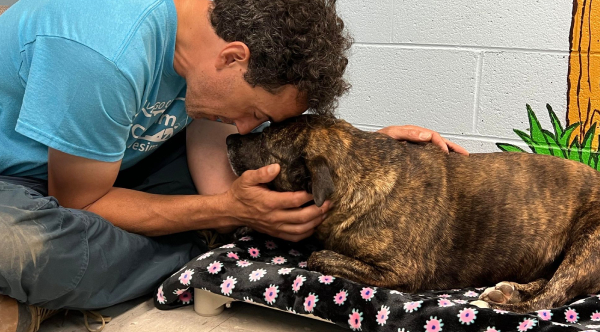
and#039;Miracleand#039; Dog Found Alive In Underground Virginia Cave
Favicon 
www.sunnyskyz.com

and#039;Miracleand#039; Dog Found Alive In Underground Virginia Cave

Like
Comment
Share
SciFi and Fantasy
SciFi and Fantasy  
2 yrs

Violence Chose Us: Chainsaw Man and the Horrible Beauty of Modern Adolescence 
Favicon 
reactormag.com

Violence Chose Us: Chainsaw Man and the Horrible Beauty of Modern Adolescence 

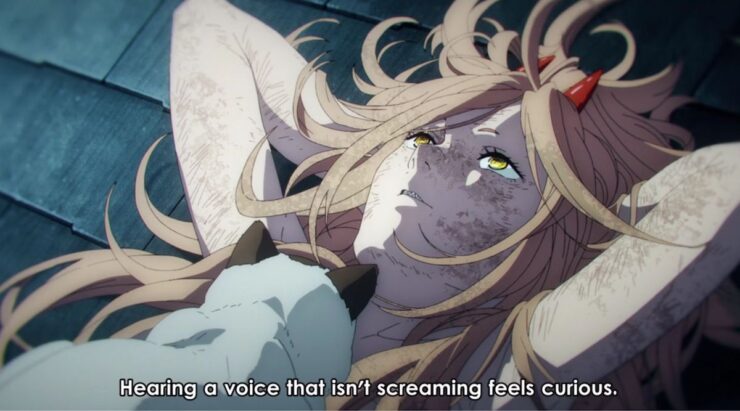
Column Anime Spotlight Violence Chose Us: Chainsaw Man and the Horrible Beauty of Modern Adolescence  The perfect show for a generation of young people who know exactly how broken the world is, but still believe in basic decency. And adorable chainsaw-dogs. By Leah Thomas | Published on July 18, 2024 Credit: MAPPA Comment 0 Share New Share Credit: MAPPA Note from the blogger: Chainsaw Man is an ongoing series with a devoted fanbase, but for the purposes of the article I will be discussing only the first season of the anime.  There will be no spoilers beyond that.  When I was a sophomore in high school, my Life Skills teacher presented our class with the paradox of selflessness. She asked us whether there was any such thing as a selfless act, and informed all those who raised their hands to talk about loving family members or public service workers or soldiers that those people were also, arguably, fundamentally selfish: “Every kindness could be seen as the selfless person stroking their own ego, meeting social expectations, or manipulating others with their kindness.” Now, at the time, I outright disagreed with this pessimistic worldview, not in the least because the same Life Skills teacher had also decided that the best way to teach Sex Ed to a class of public high schoolers was to tell them that cohabiting before marriage is living in sin and abstinence is the only way forward.  But the paradox did stick with me, unlike her other bullshit. I’ve always been a cynic, and kids these days? Well, naturally they have plenty of reasons to be cynical, too. The world presented to teens today is rife with devastating climate change, shitty job markets, inequality, low wages, unaffordable housing, another spike in global fascism, and a healthy garnish of the highest reported rates of mental illness in modern history. Frankly, the future feels fairly fucked, and it was fucked long before today’s teens were born. So who can blame them for being apathetic about, well… everything? Credit: MAPPA And while there are endless studies delving into the psychology of growing up in the modern world, maybe every generation has had similar feelings. And anime, for the past half a century and change, has always been there to confront those feelings. Evangelion for the ’90s teens, Death Note for the emo aughts, Attack on Titan for the college kids of 2013, and now? Well, today’s angry youth are perhaps the most fortunate of all, despite being possibly the most doomed, because they get Chainsaw Man. Chainsaw Man is a masterpiece for so many reasons, both artistically and conceptually, but it is undeniably brutal. It understands how screwed the planet is, but is inexplicably hopeful, too. It presents its traumatized cast of young people as not just incredibly violent, but capable of beautiful growth. A Boy and His Chainsaw  Credit: MAPPA For those unfamiliar, Chainsaw Man is a fantasy-horror shonen series set primarily in an alternate version of modern-day Tokyo. In this reality, monstrous creatures called devils are a constant plague on society. Each devil is the personification of some concept or object; there are tangible things like Tomato Devils and also Sea Slug Devils and Katana Devils, but also intangible concepts given shape, such as Curse Devils and Eternity Devils. Essentially, the more fear the namesake of the devil instills, the more powerful the devil, because most devils feed on fear. Yet when the Chainsaw Devil appears before our bedraggled protagonist, Denji, who is then only a child standing at his father’s grave, the devil looks almost docile, a wounded dog with a blade jutting from his forehead. Denji gives the devil a name, Pochita, and presents it with a contract, offering up his blood in exchange for its loyalty. Blood heals devils, and blood is binding, and Pochita takes a bite. Aided by his beloved, sharp-edged pet, Denji somehow makes it to 16, living in a shack and hunting devils in a failed effort to pay off his dead father’s debt, dreaming of one day eating strawberry jam and fooling around with a girl before he, inevitably, dies at the hands of a devil or of the same disease that killed his mother. Denji has already sold a kidney, an eye, and a testicle to afford his meager lifestyle. But inevitably he is killed by a devil he knows, and it is then, after Denji is literally decapitated, that his pet chainsaw sacrifices itself to save him. Pochita fuses to Denji’s corpse and turns the protagonist into a thing that is neither human nor devil. Soon thereafter, Denji is recruited to work for the public devil hunting bureau. Thus the eponymous Chainsaw Man is born, though it’s worth noting that Denji is not a man at all, but a boy, and a very damaged one at that. But mangaka Tatsuki Fujimoto has a dark sense of humor, and since Denji has never had a childhood, so maybe the name suits him fine. Denji, Heartless and/or Heartfelt Credit: MAPPA “You’re obedient like a dog,” one of Denji’s yakuza abusers says, after he pays the desperate teen 100 yen to swallow a cigarette. In a prime example of the series’ hallmark brilliant characterization, the moment the abuser turns his back, Denji spits the cigarette out.  Already Denji, though admittedly a guy with low expectations and no education aside from what being a devil hunter has taught him about cutthroat slaughter, is more than he is assumed to be.   The irony is even Denji does not think of himself as human, and not only because he lost his mortality and his heart when he fused with his beloved Pochita. Denji’s internalized loss of personhood started much earlier. In the last quarter of the first season, after a devastating confrontation leads to the demise of several of his devil hunter colleagues, Denji realizes he feels no grief. He cannot understand his own lack of reaction, and assumes it is caused by the devil that has replaced his heart. He mulls it over for a brief moment, then shrugs, because worrying won’t help. But Pochita, while a devil, was far from heartless. Pochita was shown to be a more empathetic creature than most in the series, willing to sacrifice himself for an orphan boy’s dreams. If Denji lacks a heart, it isn’t Pochita’s fault.  Credit: MAPPA Denji, my guy, you spent your entire childhood in a shack, selling your organs to afford breadcrumbs and slaughtering monsters to survive. Friendless, abused, and alone apart from a sentient chainsaw, who the hell would develop a sense of empathy? It is Denji’s humanity that has left him permanently dissociated. That’s trauma, folks, deep and unaddressed, and possibly also a hardwired personality disorder.  When Denji joins the bureau, he is given a home and all the jam he could want. For the first time in his existence, this kid is comfortable enough to climb a few feet up Maslow’s Hierarchy and engage in actual self-reflection. So what if he finds himself empty? At least he finally has a cup…though it’s anyone’s guess whether he will fill it or shatter it. Aki-Kun and the Insanity of Persistence  Credit: MAPPA Madness is a motif throughout the series, an addendum to the apathy that helps keep the main protagonists alive. The older members of the bureau say time and again throughout the series that the only devil hunters that survive are the crazy ones. But Aki, Denji’s assigned devil hunting partner in the bureau, as well as his unwilling roomie, is far from crazy. He is described by another character as “cool, generous, and kind,” and therefore doomed. In most other shows, Aki would be the lead protagonist. He is the only level-headed character in the entire cast, and his motives for fighting are pure. When he was a child, Aki’s entire family was destroyed by the Gun Devil in an instant.  Aki has every reason to fight, and he knows what he is risking and why he is risking it, and vows to avenge not only his family but all of mankind. Aki is a good person—a ludicrous thing to be, given the circumstances. So Aki could never be the hero in this setting, because heroism cannot prevail in a world where devils break all the rules. Aki knows this, but remains good even though he knows goodness will ultimately fail him. From an audience perspective, however, Aki is essential. Without Aki’s presence, the first season might crumble under the weight of its own manic characters. Every series needs an anchor. After the demise of a beloved peer, another bureau member asks Aki whether he will quit or continue pursuing his futile quest to destroy the Gun Devil. Aki doesn’t hesitate. “My partner and my family are dead. How could I ever quit?”  But what kind of sane person chooses death? In a world of devils and fiends, being moral is another kind of madness. Aki truly is selfless (suck it, high school Life Skills teacher!). Every time he draws his katana, the devil he has contracted with steals more of his life, and that rarely stops him from drawing it. When Denji is first assigned to Aki’s team, Aki protests. “We can’t afford any more weirdos!” Welp. Don’t look in the mirror, then. Power, Grime, and Grit Credit: MAPPA It is hard to think of another shonen show that treats its male and female characters so equally. Not kindly, but equally. In the near future, I hope to write an entire article on the women of Chainsaw Man, because damn, are they wonderful.  So many anime are guilty of abusing fan service for the sake of comedy or smut, but Chainsaw Man hits different. It doesn’t shy away from the reality of what an adolescent like Denji might want, but it also does not romanticize it. The women around Denji learn pretty quickly that he can be easily manipulated because, well, he’s horny and inexperienced. They have learned that sexuality is another tool at their disposal, a token that can be bartered to make headway in a difficult world. For Makima, the terrifying devil hunter who has taken in Denji as her “human pet,” that means promising him sex should he do the impossible and kill the Gun Devil. For the blood fiend Power, this means promising Denji he can touch her boobs if he saves her cat. And while there is so much to say about Makima, this is an essay for the kids, and Power deserves all the attention fans have given her. Power is a fiend, which means she is not a person, but a devil that possesses a corpse. In her case, Power can manipulate her blood and use it as a weapon, and she has possessed the corpse of a teenaged girl. Power is ruthless, delighting in bloodshed and pain, forced to work for the bureau or perish at their hands. While Denji’s apathy stems from a rough, human lot, Power’s apathy is a feature, not a bug. Power is a wild card, serving a desperate organization as a type of experimental weapon. She has every reason to loathe mankind. But Power is also a cat person, and an aspiring Nobel Prize winner (spoiler: she really, really isn’t bright enough to win one), and a fantastic fighter. She is as blunt as she is ruthless, and, possibly most delightfully, she is never presented as a romantic interest. She’s another of the misfits, a murderous creature with her own agency. Is it any wonder she’s so beloved? Credit: MAPPA Also, let’s applaud one of the best aspects of this fiend: Power is gross. She clogs the toilet, she refuses to bathe, she laps up blood and picks her nose. All too often, female characters are resigned to being beautiful. But Power is a mess, and doesn’t mind being a mess. And holy shit, I think a lot of girls, neurotypical and neurodivergent and straight and queer all, really needed to see that in a lead character. Power doesn’t care for people or society or expectations at all, but she really loves her cat. I think a lot of us disillusioned trash goblins can get behind this sentiment. Numb Characters, Numb Audience  Credit: MAPPA Hyperviolence and anime are old bedfellows, and while this has often inspired a fair amount of controversy for the medium, fans know that in the hands of superior storytellers, violence can serve a variety of purposes. In the case of Chainsaw Man, there’s no denying that the violence is gratuitous. The protagonist is decapitated in the first episode, for fluff’s sake, and then returns to life as a monster with chainsaws for arms, and a chainsaw for a head for good measure. Right away, the audience knows what they’re in for, and once the initial shock wears off, the gratuity actually feels essential to the storytelling. Watching Chainsaw Man, I was reminded of the first time I watched Peter Jackson’s horror cult-classic Braindead (Dead Alive in some countries), a movie that aspires to be as disgusting as it is funny. As in Dead Alive, the violence in Chainsaw Man is tinged with humor and often incredibly creative. Denji is a demented Spidey, throwing zingers as he delights in burying his whirling blades in the skulls of monster after monster.  Like the characters themselves, the audience soon sees nuances in the onslaught. And the point here is as galling as it is familiar; who in the modern world has not felt desensitized to violence? And, if violence in this world is unavoidable, can’t it at least be fun? That’s a dark question to pose, but we live in a world where school shootings are a weekly occurrence. People these days, in reality and in this show, are given few options, and none of them are to live in a peaceful world. While in reality we are resigned to cowering, protesting, weeping, or, all too often, ignoring the state of things in order to cope, these kids have been given another option: Reclaim the violence. Denji and company take command of violence, and use it to help them shape their warped futures. It’s a unique middle finger to give a condemned planet, but weirdly empowering to watch, too. When Denji shoves a blade into the head of a monster and declares, “Your blood tastes like nasty ditchwater, but drinking it while looking at your suffering faces… it’s like having strawberry jam!” I think we all kind of… get it. He’s sticking it to the man by sticking it into the monsters, amen. Humble Dreams Are Dreams All the Same Credit: MAPPA Some say that young people don’t have the ambitions they once did, or that the ambitions they have are just unrealistic; you probably aren’t going to make a living on TikTok, former sad beige child. But frankly, what used to be realistic is far from it, so I say let the kids have their dreams. I was born in ’89, and boy have I learned to lower my expectations. It would be enough, we millennials and younger say, to have a place to rent and the ability to travel, and maybe healthcare that doesn’t kill us or ruin us financially. It would be enough, we say, to live a life where a single emergency won’t set us back for a decade. We are far past the point of judging others for their dreams, however misguided.  In Chainsaw Man, the situation is even more dire. Aki has his noble, impossible dream of destroying the Gun Devil, and many of his peers share that one. Power? After her cat is rescued, she has no goals, really, apart from surviving, being on the winning team and enjoying bloodshed (oh, and the Nobel prize). And Denji? Well, at first he just wants to eat strawberry jam, and later he just wants to touch a boob, and later he wants to kiss someone he actually likes. There’s nothing noble about his dreams, and he never pretends otherwise. But gradually, as Denji survives and he learns to hope for more from the world, his dreams grow infinitesimally larger. Moving goalposts are, in his case, a sign that he is developing as a person. Soon enough Denji resents having to defend his small, petty dreams. If his motive for fighting is a french kiss, well, who cares, so long as the devils get dead? As he declares to an enemy mid-battle, “If I defeat you, that means my dream of touching boobs is better than your noble, lofty dream!” It’s hard to argue with any of Denji’s would-be logic at the best of times… but damn he is philosophical by accident sometimes. Contracts, Consent, and the Complexities of Friendship Credit: MAPPA Look, these dumb kids aren’t good at making friends. And why would they be? Making friends isn’t a valuable skill in the Chainsaw Man universe. However, they are very good at making contracts. And, I want to holler at said dumb kids: that’s the same damn thing! None of these characters know how to live a life that isn’t transactional. We’ve gone over the things Denji will do to protect a future that features strawberry jam; Aki gave up the bulk of his lifespan to enlist the power of the curse devil. On a more mundane level, the devil hunter Himeno tells Denji that she will help him get with Makima if he helps her get with Aki.  In a world so chaotic, making deals makes a lot of sense. We learn that when a devil makes a contract, they cannot break it, lest they die. Only contractual agreements have a tangible sense of power in this world, and so many people feel powerless. These characters can only hope that making contracts in place of friendships will mean those connections can’t be broken. Interestingly, this contract-based society also ties inextricably to an underlying respect for consent. Power tells Denji he can touch her boobs if he rescues her cat. He never once considers that he could touch them otherwise, and the show never once presents nonconsensual interactions as a possibility. This idea reinforces the notion that not only does Denji retain his humanity, but also that even in this devil-ridden world, some things are sacred. Consent being among them is, frankly, refreshing, especially given how often other shows have made a joke of the concept. Credit: MAPPA Eventually, contractual obligations, be they social or literal, can alter the parties involved. Agreements develop into habits and then into deeper understandings, and those understandings are a type of bond that’s a lot closer to friendship. Somehow despite the apathy and gore and death, despite characters who think of themselves as irredeemable, a buried current of affection begins to connect them, and it becomes a strange sort of goodness. And sorry, questionable Life Skills teacher of my youth, I don’t really care if that affection originates from self-preservation. It’s a good thing. After spending days slicing up a regenerating monster in a hotel hallway and dying dozens of times in the process, Denji and other bureau members, several of whom tried to sacrifice Denji’s life for their own in the struggle, attend a nomikai that should be awkward. But Denji holds no grudges, and when he mentions that he is only 16, the first thing a senpai says is, “Oh, no! You haven’t been drinking, have you?” Denji grins and holds up his glass. “It’s tea!” Because living well might be a contract, too, and these characters, for all their blatant faults, still try to keep some of society’s basic promises, despite the world breaking every one of them. The kids have been forever denied a real education, family, stable homes, personal agency, and safety, but they still can’t help but stumble into remarkable displays of human decency. And damn it, isn’t that a beautiful, optimistic way to interpret a much-beleaguered generation? I’d love to hear your thoughts on this gem, and any other series that resonate on a similar level. Next up I’ll be writing about The Eccentric Family and then Delicious in Dungeon, and I hope to be writing a column every two weeks starting in August! Suggestions and conversation are encouraged! Also, fun bonus: I have been to two different iterations of the Chainsaw Man pop-up cafes here in Japan, and at the first one I drank Pochita as an orange slushie. I am paying the Pochita tax and sharing evidence of this here.[end-mark] Photo: Leah Thomas In this article: Chainsaw Man (MAPPA, 2022) Available via Netflix, Amazon Prime, and Hulu. Up Next: The Eccentric Family (P.A. Works, 2013-2017) Available via Crunchyroll, Amazon Prime, and Hulu. Delicious in Dungeon (Trigger, 2024- ) Available via Netflix, Amazon Prime, and Hulu. Frieren: Beyond Journey’s End (Madhouse 2023-2024) Available via Crunchyroll and Netflix. The post Violence Chose Us: <i>Chainsaw Man</i> and the Horrible Beauty of Modern Adolescence  appeared first on Reactor.

Like
Comment
Share
Hot Air Feed
Hot Air Feed
2 yrs

The Fat Lady May Not Be Singing, Yet, But She's Sipping Tea with Lemon In Delaware Right Now
Favicon 
hotair.com

The Fat Lady May Not Be Singing, Yet, But She's Sipping Tea with Lemon In Delaware Right Now

The Fat Lady May Not Be Singing, Yet, But She's Sipping Tea with Lemon In Delaware Right Now
Like
Comment
Share
Science Explorer
Science Explorer
2 yrs

Where Does Creativity Come From? Scientists Work Out A Piece Of The Puzzle
Favicon 
www.iflscience.com

Where Does Creativity Come From? Scientists Work Out A Piece Of The Puzzle

Creativity. We usually associate it with the work of great artists or thinkers: from Beethoven to Einstein, from Picasso to the mastermind that gave us Tiramisu. Creativity is also part of our everyday lives. Every time we make novel associations between concepts, or come up with a new hack to use a straw to hull a strawberry, we are being creative. But where in the brain does creativity come from? A recent study suggests it involves the joint activity of many parts of your brain.The brain is not just a shapeless blob of cells, but is organized into many interconnected regions. Decades of research have pointed to various functions and roles for all of these: there are areas for visual processing, for motor control, for spatial memory, and so on. Alas, there does not seem to be a brain region for creativity.The activity of the brain has also been described in terms of networks: groups of interconnected brain regions that are active together. One of these networks, the default mode network (DMN), might be what is involved in creative thought.The default mode network was first described only 20 years ago, when it was observed that a group of regions in the cortex of the brain were active together during periods of quiet waking. It was called “default” because it seemed to be the state that the brain returned to when it wasn’t actively engaging in a task.Since then, the DMN has been shown to be active during daydreaming, mind wandering, self-reflection, meditation, and now, creative thinking.In the recent study, Eleonora Bartoli, assistant professor of neurosurgery at Baylor College of Medicine, and colleagues recorded from the brains of 13 participants. They asked them to engage in a task that tested their ability to creatively associate ideas, by having them list new alternative uses for common everyday objects (“what else can you do with a chair besides sit on it?”). They call this “divergent thinking”, which pushes individuals to search for connections between seemingly unrelated concepts. They were scored both on how many novel uses they came up with, and how original they were.When the participants were asked to think of alternate uses, the DMN became active during the presentation of the object. But it wasn’t alone. The fronto-parietal control network (FPN) was active too. This is a network usually associated with problem-solving and attention, and as the participants started to list alternative uses, the FPN activity became dominant. The connections between the DMN and FPN had previously been associated with divergent thinking. Maybe new ideas need to first be generated, and then evaluated and filtered.The researchers in this study took it one step further. They had found a correlation between creative idea association and activity in the DMN, but is there a causal link between the two? To test this they disrupted the activity in the DMN during the task and saw a decrease in originality of the uses they came up with. No, there is no one brain region that controls creativity. There may not even be one network that does so (the DMN wasn’t the only active network during divergent thinking). By definition, creativity tries to form associations between disparate concepts, exploring uncharted territories. Maybe it’s no surprise that it requires the cooperation of several brain regions and networks.This study is published in the journal Brain.
Like
Comment
Share
Science Explorer
Science Explorer
2 yrs

What Made Genghis Khan So Successful?
Favicon 
www.iflscience.com

What Made Genghis Khan So Successful?

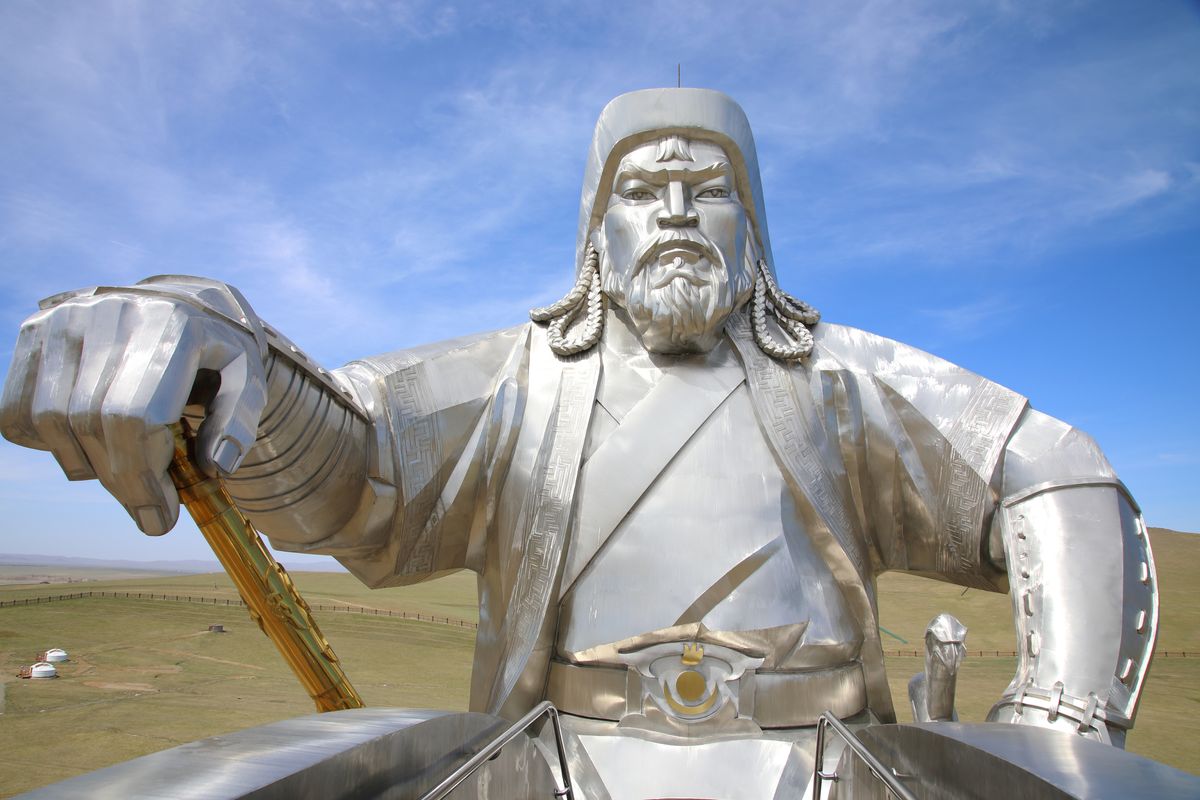
In the annals of history, few names inspire as much awe and fear as Genghis Khan. And that’s for good reason: he was arguably the greatest conqueror in history, building what would become the largest continental empire ever seen out of a group of squabbling nomadic tribes in central Asia.That’s not the kind of resumé you get by sheer luck. So what made Genghis and his army so incredibly successful? The truth is more complex than you might realize.The war machineFrom the very moment he was born, Genghis Khan was marked for greatness. At least, that’s what his most contemporary biographers tell us (and why would they lie?): according to the oldest-surviving literary work in the Mongolian language, The Secret History of the Mongols, he was born clutching a blood clot – a sure sign that he would become a brave warrior.But before he became Genghis Khan – back when he was just Temujin, the tribeless semi-orphan who survived out on the Mongolian steppe by foraging for berries and hunting rats and birds – you probably wouldn’t have guessed how his story would end up.So how did he get from one extreme to the other? At first, it was through the shrewd establishment of alliances – the earliest of which was to his first wife, Börte. The second-earliest, forged after Börte was kidnapped by a rival tribe, was with a powerful fellow Khan named Toghrul.Temujin now had an army. And, as he was about to prove, he had an almost preternatural sense for how to use it.“The strength of the Mongol army lay in its ability to conduct combat operations with an efficiency and effectiveness that far surpassed the abilities of their enemies to resist,” described military historian Richard Gabriel in his 2006 book Genghis Khan's Greatest General: Subotai the Valiant. “The Mongols seem to have been the first army to conceive of military command in a manner that stressed objectives while leaving the choice of ways and means to the unit commander,” Gabriel explained. “Stress was placed on initiative, innovation, and flexibility of execution.”The army under Genghis Khan was unusually well-connected both internally and externally: they employed an innovative system of communication couriers, and embraced the tactics of subterfuge and espionage. And when it was finally time to strike, the enemy wouldn’t know what hit them: the Mongols were nothing short of professional shock troopers, sending in tightly packed lines of horse-mounted archers – fighters who represented a “quantum leap in military technology,” according to historian Frank McLynn, as reported by History Extra.It wasn’t long before the little Temujin had become ruler of an empire spanning from China to Iran. But that only explains how he got the land – not how he stayed there.A benevolent tyrantWhen you rule over one of the largest empires in the history of the world, you’re going to come into contact with some pretty diverse peoples. For many imperial forces, this has been seen as a problem: consider, say the forced Christianization of the indigenous South and Mesoamericans by the conquistadors, or the Indian Removal Act in the USA.It may surprise you, given his reputation, that Genghis Khan wasn’t really interested in any such violent measures against different identity groups. “Generally, the Mongols were tolerant of religious differences,” writes Stanford University Professor of History Norman Naimark in his cheerily-titled 2017 book Genocide: A World History, “and, as such, [they] promoted the interaction between the culturally rich communities of faith in Central and South Asia, Europe and the Middle East.”“The Mongols also held little interest in racial, ethnic, or linguistic distinctions, which in the end fostered communications and the mixing of peoples and cultures in their vast empire,” Naimark continued. “Many of the khans' most trusted generals and officials represented a wide variety of nationalities and religions from Eurasia.”Indeed, you need only think back to Genghis Khan’s lasting impressive lineage to see how, ahem, enthusiastically the Mongol occupiers intermingled with the people they conquered. They married locals; hired their craftspeople and took their military advice; they even absorbed and promoted the philosophy and art of the cultures they defeated.“The widely held image of the Mongols [is of] barbaric plunderers intent on slaughter and destruction,” wrote Morris Rossabi, a Columbia University historian of China and Central and Inner Asia, in 2002. “Little attention has been paid, however, to the significant contribution these steppe peoples made as patrons of the arts during the thirteenth and fourteenth centuries.” Far from destroying everything they came into contact with, Genghis Khan and his descendants oversaw the building of great cities and infrastructure. They funded the development of medicine and astronomy, and sponsored ambitious engineering projects. In the arts, they promoted theater and historical scholarship. They “gave employment to Confucian scholars and Tibetan Buddhist monks, encouraging the construction of temples and monasteries,” Rossabi pointed out, and had a “policy of support for trade and the crafts.”“Though the brutality of their military campaigns cannot be ignored, neither should their impact on Eurasian culture be overlooked,” Rossabi said.It was, to be honest, a better deal than many were offering at the time – and it was especially enticing when compared to the alternative. And that’s because… Surrender or dieAs open-minded as Genghis Khan was, you wouldn’t like to get on his bad side. His rule for conquered peoples was simple and unwavering: submit, or be destroyed.“Massacres of defeated populations, with the resultant terror, were weapons he regularly used,” wrote Charles Bawden, Emeritus Professor of Mongolian at the University of London, in the Encyclopedia Britannica. “His practice of summoning cities to surrender and of organizing the methodical slaughter of those who did not submit has been described as psychological warfare […] Resistance brought certain destruction.”Indeed, so extreme was the Mongol policy of razing to the ground those who opposed them that they are frequently described as genocidal by today’s standards. Contemporary Mongol accounting of the number of survivors in conquered Middle Eastern lands show populations only one-tenth of what would be expected had they not arrived; Hungary and China are both said to have had their populations halved by their occupation. Kyiv, according to one European envoy to Genghis Khan’s grandson in 1246, was reduced by the Mongols from “a very large and thickly populated town” to “almost […] nothing, [with] scarce two hundred houses there and the inhabitants are kept in complete slavery.”Other conquered lands fared better, but not necessarily by much. Those who attempted to resist militarily – not usually a sensible option, since the Mongols were usually far superior in numbers, ability, and equipment – may have escaped with their lives if the Khanate deemed them useful: “Once the enemy was vanquished, the defeated men were usually separated into distinct groups,” Naimark writes. “Highly valued craftsmen were often spared and sent back to the Mongolian capitals to ply their trades.” “Women and children were given over to the Mongolian soldiers as slaves and wives and incorporated into Mongolian society,” he continues. “Everyone else was killed, often in groups of victims assigned for execution to individual Mongol soldiers.”Even a minor perceived slight against Mongol honor could be enough to trigger what would nowadays be considered a genocide. Basically, while the Mongols wouldn’t kill you for your religion or your race, they would destroy everyone in your city right down to your beloved cats and dogs if you didn’t show them unwavering loyalty. And when you put it like that, it’s not much of a choice, is it? “The Mongolian empire spread through sheer terror,” Naimark writes. “What prince and population would be willing to resist the Mongols knowing that the fate of extermination awaited them?”
Like
Comment
Share
Science Explorer
Science Explorer
2 yrs

Largest Floating Wind Platform's Twin Giant Turbines Withstand Category 5 Hurricanes
Favicon 
www.iflscience.com

Largest Floating Wind Platform's Twin Giant Turbines Withstand Category 5 Hurricanes

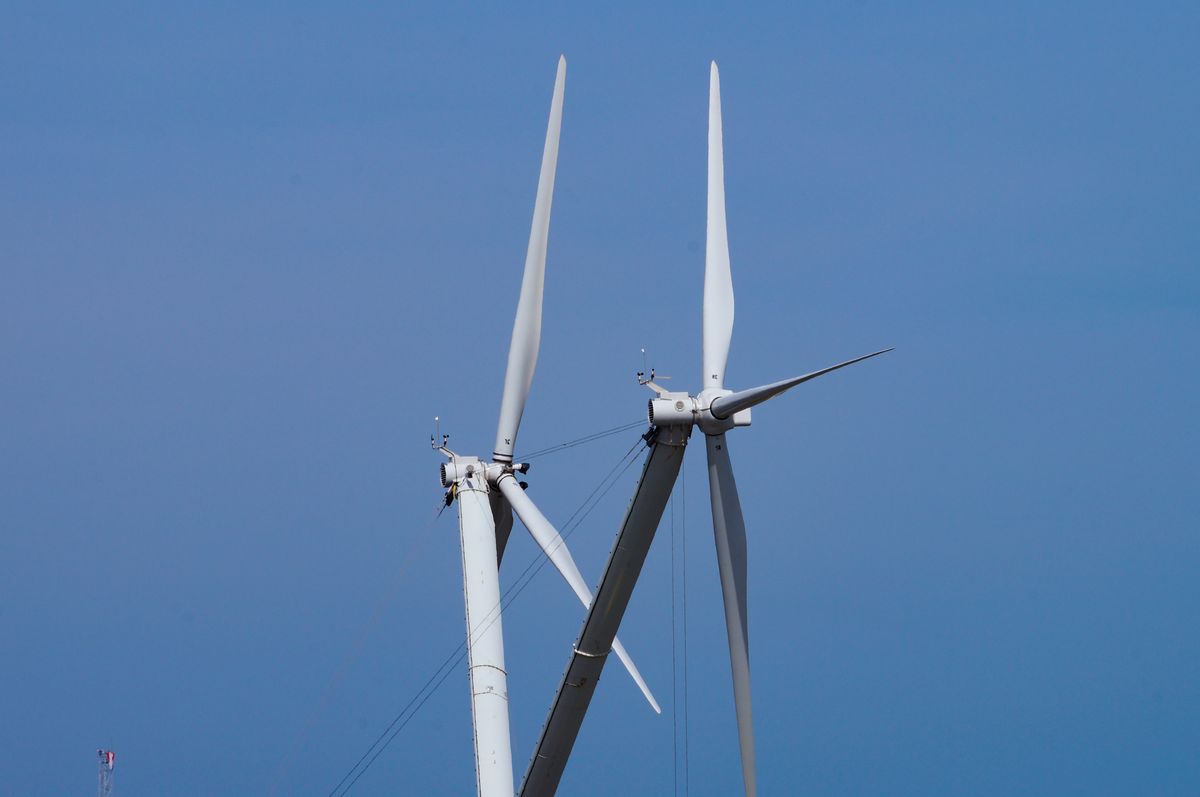
A newly launched floating platform will trial a novel way around the challenges of harvesting the wind over deep waters, putting two giant 8.3-megawatt (MW) turbines in a V formation. This enables a combined power greater than any existing floating turbine, or indeed any wind platform in widespread use.Offshore wind provides a small percentage of the total wind energy in the world, but it is rising fast. Winds tend to be stronger and steadier offshore than over land, where surface roughness gets in their way. Moreover, the increasingly long blades used in a quest for greater efficiency can be very difficult to transport by road; ships have no such problems for offshore installation.However, waters deep enough for ships to install turbines, but shallow enough for towers of practical height, are only extensive in a few places. Floating wind turbine platforms have become the next frontier. These can be anchored in much deeper water. Although they are more expensive to build, the hope is that the stronger winds they will harvest, and the wider opportunities allowing greater mass production, will eventually make floating wind farms the cheapest source of wind energy. We may need some innovations to get there, however, which is where the OceanX by Mingyang Smart Energy comes in – although it might have been more appropriate to call it the OceanY, given its shape.Some wind power experts are questioning the size race for ever bigger turbines, but Mingyang are clearly not among them. They are one of two companies with 18-MW wind turbine models, the world’s largest, in testing, They’ve also revealed plans for even larger models.Mingyang is also the company behind the largest current mass deployed wind turbines, at 16 MW; its hub sits at 152 meters (500 feet) above the water and is driven by blades 123 meters (403 feet) long.The stresses such long blades must resist are enormous, however. Using two smaller turbines, it is theoretically possible to get a similar amount of power out of a single mooring without needing such long blades.The two turbines spin in opposite directions, so the forces they transmit to the rest of the system balance each other, a little like the counter-spin of helicopters’ two sets of rotors. Cables to three floating arms provide extra stability.Although there's nothing on their website at the time of writing, according to Mingyang’s LinkedIn page, the OceanX is “capable of producing 54 million kWh annually, sufficient to power 30,000 households.” That’s a capacity factor of 37 percent, well below what the biggest offshore turbines in the North Sea manage. Whether this reflects lower wind reliability in the South China Sea, where the OceanX is to be deployed, or indicates there is some downside to the design, is not clear.Mingyang also advertises a “Single-Point Mooring: An adaptive system that ensures stability and safety even in extreme typhoon conditions,” adding, “Breaking barriers in offshore wind, Mingyang's OceanX heralds a new dawn in marine energy. Join the celebration and let's charge into a sustainable future together!”Although much smaller prototypes of the design have been trialed, the functionality of the OceanX still needs to be tested in real world conditions before mass deployment begins. Comments on the post ask how it will respond to rapid changes of wind direction during a typhoon, and whether it will yaw in a full circle if faced with conditions that require it. 
Like
Comment
Share
NewsBusters Feed
NewsBusters Feed
2 yrs

Charlamagne to Colbert: Trump's Rhetoric Is 'Not Even Safe For Him'
Favicon 
www.newsbusters.org

Charlamagne to Colbert: Trump's Rhetoric Is 'Not Even Safe For Him'

CBS’s Stephen Colbert welcomed radio host Charlamagne Tha God to a live edition of The Late Show on night three of the Republican National Convention to irresponsibly suggest that if President Biden, or some other Democrat, wins in November, the Supreme Court will nullify it. He also suggested that Donald Trump’s rhetoric led to his being shot on Saturday, while also attacking the media for not calling him a threat to democracy in the shooting’s aftermath. Colbert asked, “You’re very honest about your struggles with anxiety. I admire you're willing to talk about that. Is there anything right now in the world that is making you anxious? Or particularly anxious?”     Charlamagne immediately launched into a broad attack on the Supreme Court, “I feel, you know, right now the Supreme Court as we know it is no longer a legitimate institution. I think the Supreme Court is a completely— I think the Supreme Court is completely corrupt.” After running through cases related to bribery, presidential immunity, and Chevron deference, he mused: Do we think that our democracy is healthy enough to have a free and fair election come November? Right, and the reason I ask that question is because I don't know who's going to be at the top of the Democratic ticket, but we know these elections are usually close. So, let's say, you know, the Democratic candidate does win come November. What happens when, you know, Donald Trump challenges that ruling? What happens when that ruling gets to the Supreme Court? In light of all the recent rulings that the Supreme Court has done, who do you think they are going to side with? Trump brought all sorts of lawsuits after 2020, and they all went nowhere. As for Colbert, he simply replied, “Well,” before Charlamagne continued, “Don't start hmming about it now. You all should’ve been thinking about this.” Colbert retorted, “I think about little else, man. Have you watched my show?” Later, Colbert would wonder, “The idea of toning down the rhetoric…You speak frankly on any issue. How can you speak frankly to the state of politics in America and the United States without risking inflaming someone?”     Charlamagne then proceeded to go on an extended diatribe against everybody, from Donald Trump to the media to Speaker Mike Johnson to VP-nominee JD Vance to Nikki Haley. First, on Trump, he appeared to blame the victim: You can condemn what happened to Donald Trump on Saturday, but you have to be honest and say that the rhetoric that Donald Trump has been spewing since 2016 has been creating an environment of political violence that's not even safe for him, and, you know, he's been cavalier about a lot of the political violence that has been happening in this country, and, you know, it's easy to be cavalier about it when it's happening to the other side, but when it starts happening to you, then what?  He also lamented, “I have been very disappointed in the media this week because I knew this was going to happen. I knew people were going to stop talking about, you know, the things that the Supreme Court was doing. I knew they were going to stop saying Donald Trump is a threat to democracy. I knew they were going to stop talking about things like Project 2025 and I think that's doing a disservice to the American people by doing that because we're all adults.” Before anyone could ask if we were talking about the same media, he continued, “And when you saw— when I see House Speaker Mike Johnson say things like, what did he say about Trump? He said that, oh yeah, he said, ‘We have to tamper down on the rhetoric. Everyone has to tamper down on the rhetoric.’ No, one person should actually tamper down on the rhetoric, right?” Finally, Charlamagne wondered what the big deal about Doomsday prophecies is, “then you see his now running mate, JD Vance, you know, he said it was the Democrats dangerous rhetoric that caused something like that to happen. Really? JD Vance, you said he was Hitler. Nikki Haley said he was an agent of chaos. So, it wasn't just Democrats, you know, speaking the truth to the matter. It's okay, I think, you know, to tell the truth in this country.” In that case, it shouldn’t be considered controversial to say that Charlamagne Tha God is losing his mind. Here is a transcript for the July 18 show: CBS The Late Show 7/18/2024 12:53 AM ET STEPHEN COLBERT: We’ll go to the book in a moment, Get Honest or Die Lying. CHARLAMAGNE THA GOD: Yes. COLBERT: There you go right there, but first, I want to talk to you about some other stuff that I've read in your other books. You’re very honest about your struggles with anxiety. CHARLAMAGNE: Absolutely. COLBERT: I admire you're willing to talk about that. Is there anything right now in the world that is making you anxious? Or particularly anxious? CHARLAMAGNE: Oh, man. Where to begin. We are in the United States of Anxiety. You know, one thing I've been talking about a lot with my listeners, man, is that I feel, you know, right now the Supreme Court as we know it is no longer a legitimate institution. I think the Supreme Court is a completely— I think the Supreme Court is completely corrupt. I mean, when you look at things like the fact that they made bribery legal for public officials, when you look at— COLBERT: Well, people may not know—this is my favorite ruling. There's some good ones recently— CHARLAMAGNE: Okay. COLBERT: — but there was a guy who solicited, like, $13,000 from some business interest before he did something in his official capacity. They tried to charge them with bribery. But the Supreme Court said no, they gave it to them afterward— CHARLAMAGNE: Yes. COLBERT: — so it's more like a gratuity— CHARLAMAGNE: It's called gratuity now. COLBERT: Exactly. CHARLAMAGNE: Then the presidential immunity where they made it —presidents can get away with committing crimes as long as it's an “official act.” COLBERT: Which, they get to decide what's official or not. CHARLAMAGNE: That's right. Then they overturned the Chevron ruling.  COLBERT: Right. CHARLAMAGNE: So, my fear is that we have to really ask ourselves a question. Do we think that our democracy is healthy enough to have a free and fair election come November? Right, and the reason I ask that question is because I don't know who's going to be at the top of the Democratic ticket, but we know these elections are usually close. So, let's say, you know, the Democratic candidate does win come November. What happens when, you know, Donald Trump challenges that ruling? What happens when that ruling gets to the Supreme Court? In light of all the recent rulings that the Supreme Court has done, who do you think they are going to side with? COLBERT: Well. CHARLAMAGNE: Don't start hmming about it now. You all should’ve been thinking about this. COLBERT: I think about little else, man. Have you watched my show? … COLBERT: Let's get to something that he’s been talking about— CHARLAMAGNE: Okay. COLBERT: — a lot of people been talking about, is that the idea of toning down the rhetoric and I'm not trying to tone down your rhetoric but what you said made me think of it, is that you have described yourself as the ruler of rubbing people the wrong way. You speak frankly on any issue. How can you speak frankly to the state of politics in America and the United States without risking inflaming someone? CHARLAMAGNE: I think that we can, you know, condemn political violence in this country. None of us agree with what happened, you know, to Donald Trump this past Saturday. Like, none of us want to see that and if you are a person that feels like "oh, you know, that was a good thing," then I would do a quick social experiment. Ask yourself if that was somebody that you supported politically, would you want that to happen to them, right?  So, it's simple. You can condemn political violence in this country. You can condemn what happened to Donald Trump on Saturday, but you have to be honest and say that the rhetoric that Donald Trump has been spewing since 2016 has been creating an environment of political violence that's not even safe for him, and, you know, he's been cavalier about a lot of the political violence that has been happening in this country, and, you know, it's easy to be cavalier about it when it's happening to the other side, but when it starts happening to you, then what?  So, I have been very disappointed in the media this week because I knew this was going to happen. I knew people were going to stop talking about, you know, the things that the Supreme Court was doing. I knew they were going to stop saying Donald Trump is a threat to democracy. I knew they were going to stop talking about things like Project 2025 and I think that's doing a disservice to the American people by doing that because we're all adults. We're big boys and big girls. I think we can have, you know, two conversations at once.  And when you saw— when I see House Speaker Mike Johnson say things like, what did he say about Trump? He said that, oh yeah, he said, "We have to tamper down on the rhetoric. Everyone has to tamper down on the rhetoric."  No, one person should actually tamper down on the rhetoric, right? And then you see his now running mate, JD Vance, you know, he said it was the Democrats dangerous rhetoric that caused something like that to happen. Really? JD Vance, you said he was Hitler. Nikki Haley said he was an agent of chaos. So, it wasn't just Democrats, you know, speaking the truth to the matter. It's okay, I think, you know, to tell the truth in this country.
Like
Comment
Share
NewsBusters Feed
NewsBusters Feed
2 yrs

Morning Joe Admits: We've Known For 'A Long Time' That Biden Was Losing
Favicon 
www.newsbusters.org

Morning Joe Admits: We've Known For 'A Long Time' That Biden Was Losing

Turns out, Joe Scarborough wasn't telling the truth when for weeks and months he was talking up Biden's chances of winning, discounting any polling that indicated the opposite. We now find out that Scarborough knew better all along. On today's Morning Joe, Willie Geist told the truth. "I think what we saw yesterday was everything we'd been hearing in private. Not just, frankly, for the last three weeks, but for a long time, spilled out publicly. Which is that the polling now shows, private polling and now public polling, that we're seeing, internal polling and public polling, that this is an uphill climb, not just for the president but for everybody down ballot."  So for "a long time," not just the last three weeks, Scarborough & Co. knew that Biden was in a serious hole and in danger of dragging down his entire party. But Scarborough put on a resolutely false face of optimism. This doesn't come as any real surprise. After all, Scarborough has been bragging about spending hours at a time with Biden, and serving as an informal campaign adviser. He was no more likely to be truthful about Biden's chances than the formal members of the Biden campaign. Still, it does put a final nail in the coffin of any pretensions Scarborough might have had of being anything other than an all-in Biden lackey and hack. Scarborough has also established himself as a world-class weathervane. He went from being a Biden dead-ender, to strongly suggesting, just the day after the debate debacle, that he step aside. Only to somehow get back on the Biden team bus within a day. To now, today, suggesting that we're headed to a Biden announcement similar to that LBJ made in 1968, when he said he would not seek or accept the Democrat nomination for another term. In other grim news for the Morning Joe crew, Jonathan Lemire acknowledged that "like it or not," the Republicans are totally unified around Trump.  And you know that Morning Joe and the rest of the liberal media don't like it one bit.  In contrast, said Lemire of the Democrats, there is "this sense of doom that's permeated the party." Sad! Here's the transcript. MSNBC Morning Joe 7/18/24 6:03 am EDT JOE SCARBOROUGH: We've had so many momentous days over the last several weeks. I can't believe there won't be history books that just detail what's happened, maybe over the last three weeks, the last 21 days. It's really dizzying.  And it feels like when, when, when you see documentaries of 1968. When, when, the chaos that went on. Just one event after another after another. But yesterday, Willie, was just a day, in and of itself that, may be determinative, that may lead to that March 1968 moment when LBJ announced that he wasn't going to seek the Democratic nomination. . . .  WILLIE GEIST: And then at the end of the day, we learn that the President of the United States has tested positive for Covid. Which feels like a coda to the day you just laid out, where Democrats just went, "ugh. How much more of this can we take?" And I think what we saw yesterday was everything we've been hearing in private. Not just, frankly, for the last three weeks, but for a long time, spilled out publicly. Which is that the polling now shows, private polling and now public polling, that we're seeing, internal polling and public polling, that this is an uphill climb, not just for the president but for everybody down ballot. . . .  JONATHAN LEMIRE: He has been out there publicly saying I'm staying in this. Stop asking me. And the questions have only grown. The Biden team's efforts to push this aside simply haven't worked. And as Joe just ran through, yesterday felt like a really significant day. And we should note, the Schumer meeting was over the weekend. Pelosi was several days ago. Jeffries was several days ago. But what was not coincidental is that they all leaked yesterday. And I think that there is a sense that this is the time, that Democrats see this as their final moment. As a contrast of what we're seeing at the RNC, where, like it or not, the Republicans are totally unified around Donald Trump. They've embraced his running mate. We're going to hear from Trump tonight. The confidence there! And they're also expected to put up a record fundraising total in the wake of the assassination attempt. You contrast that with the Democrats, their own fundraising drying up, and this sense of doom that's permeated the party. And maybe that's not fair to President Biden, but that's where the party is right now.
Like
Comment
Share
The Blaze Media Feed
2 yrs

Globalist energy projects are destroying rural America — with GOP help
Favicon 
www.theblaze.com

Globalist energy projects are destroying rural America — with GOP help

Liberal Republicans like Wyoming Governor Mark Gordon are allowing our beautiful rural landscapes to be colonized by dystopian environmental hazards such as solar panels, wind turbines, and carbon pipelines. These projects destroy our property and freedom under the guise of saving the environment.Imagine Norman Rockwell’s America now overrun by anti-environment wind turbines and solar panels. Much of that part of America is under Republican stewardship. Globalists need vast amounts of land to promote their “transition” to unworkable energy projects. GOP governors willingly offer their land for these projects to create temporary jobs built on government lies, mandates, subsidies, and misallocation of resources that would never succeed in a free market.These untested and unnatural green grift projects are like the COVID shots. They are unnatural mandates and subsidies imposed by the global government monopolizing the public square, law, and economy.After Gordon announced his plan to make the Cowboy State “carbon negative,” foreign companies, supported by anti-market tailwinds from the federal government, are entering the state to fill the landscape with unsightly wind farms. Spanish energy giant Repsol plans to establish a massive wind farm several miles northwest of Cheyenne. The company has already received approval for a Rail Tie wind power project west of Cheyenne in Tie Siding. Now those traveling north of the capital city on I-25 or west on I-80 will be subjected to this Agenda 2030 blight. Additionally, traveling south of Cheyenne on I-25 will reveal the great blight of 1.2 million conspicuous solar panels turning rural America into something worse than an urban asphalt jungle.Meanwhile, an $80 million “carbon capture” facility is being built in the southwest part of the state to sell “carbon credits” in the ultimate form of venture socialism. Carbon capture is cumbersome, costly, unfeasible, untested, and built on Gordon’s lie that carbon, which is essential to human life, is somehow a pollutant.Homeowners at Fish Creek Preserve outside Laramie oppose the Rail Tie wind project due to environmental concerns and the potential lowering of their property values. Red-state legislatures and county governments should support these homeowners by placing as many zoning obstacles as possible to obstruct such projects nationwide.Although this might sound like the left’s tactics against natural, effective fuel sources, it differs significantly. Coal, natural gas, oil, and nuclear power serve as public goods that help power the nation. Mindful zoning of any project is vital, but these energy sources are ultimately necessary.In contrast, wind farms harm the environment, incur high costs, rely on fossil fuels for operation, and cannot sustain themselves in a free market without federal and state subsidies and mandates. Addressing these projects with regulatory headwinds exercises free-market governance to counter the artificial support they receive from subsidies and mandates.As part of the Green New Deal, the Biden administration is using every tool of government in its arsenal to implement 30,000 megawatts of offshore wind-generating capacity by 2030. Plus, half the states, including many red states, have Renewable Portfolio Standards to mandate the use of these ridiculous products. Projects like wind farms, solar panels, and carbon capture enjoy a 30% investment tax credit as part of the broader subsidy scheme. An April 2023 Goldman Sachs report estimated that all of the subsidies included in the “Inflation Reduction Act” will add up to $1.2 trillion by 2032.Too many Republican governors hide behind an “all of the above approach.” They might support fossil fuels, but in a world with so many subsidies and mandates for unworkable energy, this approach unnaturally tips the playing field toward anti-market forces. Wyoming, for example, is the nation’s leading producer of coal. Without government propaganda, such as Gordon’s push for “carbon negative,” nobody would destroy the state’s beauty with wind turbines, solar panels, and carbon capture when they have access to more efficient, cheaper, and less conspicuous energy sources.The ultimate tragedy of this green grift lies in the detrimental imprint on the land, resulting in a worse environment after sacrificing our quality of life and prosperity on the altar of this pagan god of the sun and wind. Nobody has a plan to deal with the retirement of an endless array of solar panels and turbines, of which the first generation is now heading toward retirement. They do not biodegrade and pose numerous environmental and health risks.“It’s going to be a waste mountain by 2050, unless we get recycling chains going now,” said Ute Collier, deputy director of the International Renewable Energy Agency, in an interview with the BBC. An estimated 2.5 billion solar panels are in use globally, and the first generation, with a life cycle of about 25 years, is now coming due for disposal.As Alex Epstein explained in a recent column, it would take 10 watts per square meter of solar projects to power the world. Which would mean you’d need 1.8 million square kilometers of solar photovoltaic projects, which is “more than all cities, towns, villages, and human infrastructure combined ([around] 1.5 million square kilometers).” That’s before we get to the land needed for mining of all the metals needed to produce panels, turbines, and batteries, as well as the transmission lines.The more usage we have, the more space we will need for disposal.If fossil fuels are allowed to remain in use, the carbon capture scheme will require us to use significant underground storage space. Robert Bryce observes that we would need storage space equivalent to 41 oil supertankers each day, 365 days a year. This would result in an absurd amount of metal blighting the landscape and carbon being stored underground, which raises concerns about safety and effectiveness.All this effort is based on claims about climate and carbon that disrupt human life, economy, and health, similar to the disruptions caused by the response to COVID-19 and the associated vaccines.In many respects, these untested and unnatural green grift projects are like the COVID shots. They are unnatural mandates and subsidies imposed by the global government monopolizing the public square, law, and economy. They are untested products, not subject to the sort of trial and error that would make them safe and effective. The vaccines were absolved of all market forces that confer safety.We are now witnessing a rash of electric car fires across the country, with firefighters being trained to handle the intense heat these fires produce. These incidents, much like sudden unexplained deaths, often go unnoticed by the media unless one actively looks for them. This pattern is likely to continue with solar and wind energy unless we change the culture and priorities of Republicans in red states.Red states have the regulatory authority to impose hurdles on mass wind and solar farms, carbon capture, and electric vehicle infrastructure until these industries prove the safety and efficacy of their products and offer a realistic long-term plan that doesn't consume our scarce land with unsightly, out-of-place structures.We must ultimately end this nonsense at the federal level. Conservatives need a commitment from Trump and GOP leaders not just to expand oil drilling in the budget reconciliation bill but to fully repeal the Green New Deal. The GOP donor class and industry lobbyists are pushing to only partially loosen parts of the bill, much like the fight to repeal Obamacare. This approach is a colossal mistake. We need our own all-of-the-above strategy, but only for fuels proven to work and that don't rely on subsidies and mandates to survive.
Like
Comment
Share
Showing 72252 out of 106919
  • 72248
  • 72249
  • 72250
  • 72251
  • 72252
  • 72253
  • 72254
  • 72255
  • 72256
  • 72257
  • 72258
  • 72259
  • 72260
  • 72261
  • 72262
  • 72263
  • 72264
  • 72265
  • 72266
  • 72267
Advertisement
Stop Seeing These Ads

Edit Offer

Add tier


Select an image
Delete your tier
Are you sure you want to delete this tier?

Reviews

In order to sell your content and posts, start by creating a few packages. Monetization

Pay By Wallet

Payment Alert

You are about to purchase the items, do you want to proceed?

Request a Refund