YubNub Social YubNub Social
    #covid #music #bible #america #trombone #atw #militarymusic #armymusic #god #armyband #atw2026 #tyranny #jesuschrist #jazz #quartet
    Advanced Search
  • Login
  • Register

  • Night mode
  • © 2026 YubNub Social
    About • Directory • Contact Us • Developers • Privacy Policy • Terms of Use • shareasale • FB Webview Detected • Android • Apple iOS • Get Our App

    Select Language

  • English
Night mode toggle
Featured Content
Community
New Posts (Home) ChatBox Popular Posts Reels Game Zone Top PodCasts
Explore
Explore
© 2026 YubNub Social
  • English
About • Directory • Contact Us • Developers • Privacy Policy • Terms of Use • shareasale • FB Webview Detected • Android • Apple iOS • Get Our App
Advertisement
Stop Seeing These Ads

Discover posts

Posts

Users

Pages

Blog

Market

Events

Games

Forum

Constitution Watch
Constitution Watch
8 w

Tariffs, Takings, and Les Mis
Favicon 
pacificlegal.org

Tariffs, Takings, and Les Mis

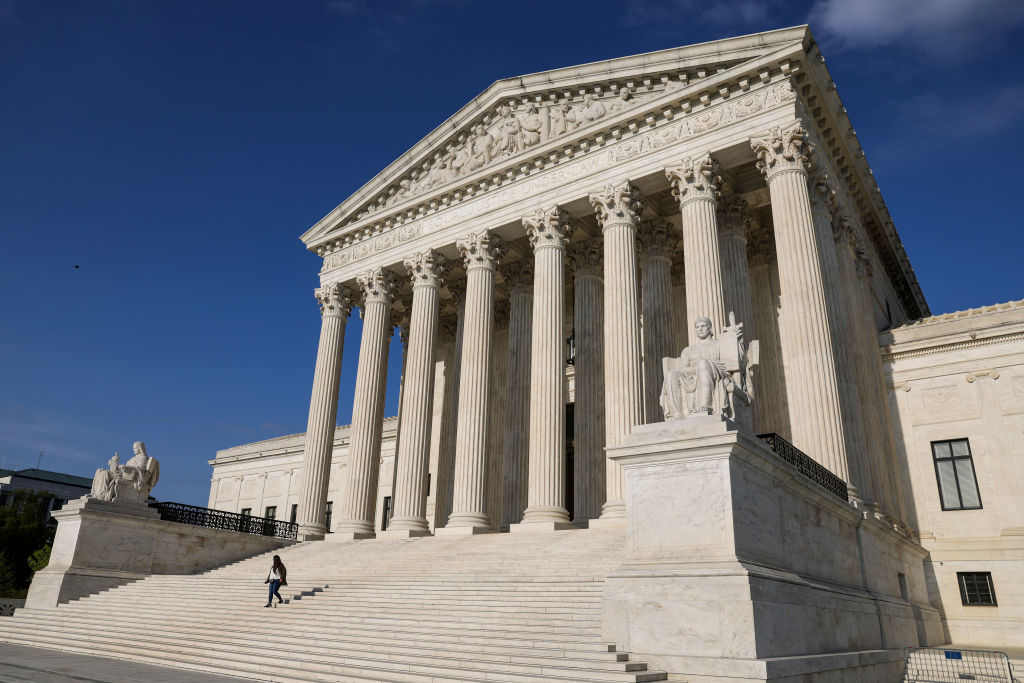
Two quick, but important scoops. First, the Court released its opinion in the highly anticipated tariffs case. Second, PLF is back at SCOTUS (baby!). The Tariffs Case: 170 Pages, Six Opinions, One Historic Result Last week the Supreme Court handed down its ruling in the tariffs case, and wow. Historic. Nuanced. A 170-page opinion in all, even though Chief Justice Roberts’ majority opinion was only 21.5 of those. The question: Does IEEPA—the International Emergency Economic Powers Act—authorize the president to impose tariffs? The answer: 6-3 no. Background: President Trump declared national emergencies over both drug trafficking from Canada, Mexico, and China and a “large and persistent” trade deficit, then imposed tariffs under IEEPA, which authorizes the president to “regulate” trade during an emergency. The tariffs were modified, raised, and reshuffled so many times that even trade experts needed a spreadsheet and a prayer. China’s rate at one point hit 145%, which feels more like eliminating trade than regulating it. Two sets of small businesses harmed by increased costs sued, arguing that IEEPA doesn’t authorize a president to impose tariffs and even if it did, there was no “emergency.” The administration argued that the president’s actions were authorized and, anyway, effectively immune from judicial review. The cases were consolidated and the Supreme Court took them. (N.B. Pacific Legal brought its own suit, but ours was held pending the two consolidated cases in this case.) The headline: A majority held that tariffs are taxes, taxes are Congress’s job, and the president can’t impose them by invoking an emergency statute with loose wording. Lest we forget, the entire point of the Revolution was that taxes belong with the legislature—it’s not a power that Congress hands over lightly. The word “regulate” appears in countless statutes, and none of those have ever been read to give the executive the power to tax. Congress knows how to delegate tariff authority: It has done so before, explicitly and with careful limits. None of those limits are present here. What’s more, reading “regulate” to include “tax” would create a separate constitutional problem: IEEPA also authorizes the president to “regulate…exportation,” but the Constitution expressly forbids taxing exports. A little deeper: The Chief, Gorsuch, and Barrett invoked the Major Questions Doctrine—the idea that if Congress wants to hand off an extraordinary power, it has to say so clearly. But they all kind of disagreed about how that doctrine works. ACB argues it’s a canon of statutory interpretation: If someone is delegating a huge power, we’d expect them to be clear about it. If a parent wants to give a babysitter the authority to take the kids to Disneyland, we’d expect them to use clearer language than “Make sure the kids have fun.” Gorsuch, however, thinks the Major Questions Doctrine is a substantive canon that prevents other branches from exercising powers not within their inherent authority without clear authorization, especially because once given, these powers usually cannot easily be clawed back (the president will just veto it!). Gorsuch wrote the best concurrence. He described “regulate” as a word so broad it captures most of what the government does—broad, yes, but not a clear-enough delegation of the core Article I power to tax. His bottom line that will get forgotten in the news cycle? Congress can delegate the power to impose tariffs; it just has to do so in a clear way that preserves the structure of government. His parting shot to those disappointed by the outcome: Take it up with your elected representatives, where “deliberation tempers impulse,” rather than relying on unilateral action by the president (which felt… pointed). Justices Kagan, Sotomayor, and Jackson agreed with the result but declined to join the Major Questions Doctrine reasoning. Kagan called it the “so-called major-questions doctrine,” which was a choice. She’d prefer “straight-up statutory construction,” which she thinks would’ve gotten to the same place. Fine. She also had one of her killer Kagan footnotes, even if I’m Team Gorsuch on this one. Justice Jackson relied on legislative history, because she wants to give effect to “the will of the people.” My own view is that the guiding premise of the Constitution is liberty, not popular vote. But all of the justices got to the same place: IEEPA doesn’t allow tariffs. Dissent watch: The dissenters—Thomas, Kavanaugh, and Alito— argued that tariffs have historically been a tool to regulate importation, that “regulate” is super broad, and that the Major Questions Doctrine shouldn’t apply in the foreign affairs context. (In recent terms, these justices have been big on MQD! I’m wary of any foreign affairs exception that swallows the rule). Kavanaugh got a little consequentialist, worrying about refunding billions to importers. But the Constitution requires what it requires! Notably, nobody leaned on the nondelegation doctrine, which the Court just doesn’t seem to have an appetite for lately. I find that odd when so many of the justices appear supportive of unitary executive theory, or the idea that the president has complete control of the executive branch and that control cannot be burdened by Congress. In my mind, the nondelegation doctrine is unitary executive theory for Congress. In any event, the Court took the narrower path. So the underlying question of how much Congress can hand off to the executive branch remains very much alive. The takeaway: This opinion is a Rorschach test for anyone who thinks the Court is simple or partisan. Despite this being an allegedly hyper-divided court, or a 6-3 court, or a partisan court, this Court is nuanced, complex, and divided even within similar ideological camps. Pung v. Isabella County: PLF Goes to the Supreme Court (Again) Yesterday, the Supreme Court heard Pung v. Isabella County—PLF’s 21st appearance before the justices if you’re keeping score (I am). Background: In 2023, the Court unanimously ruled in Tyler v. Hennepin County (another PLF case) that when the government seizes your home to recover a tax debt, it can keep only what is owed, not all your equity too. Great! And yet, here we are again. Isabella County seized the Pungs’ home over a small debt that two courts suggested was never actually owed and sold it at auction for $76,000. However, the fair market value of the home was around $190,000. In fact, the buyer then flipped the home for $195,000. This meant that the Pungs got a fraction of their equity back; more than $100,000 in equity was wiped out overnight. The lower court held that property owners are categorically barred from challenging the amount of compensation they receive back from an auction after a tax foreclosure, even when the auction has suspect processes, because the auction price is necessarily fair market value. The questions before the Court are 1) whether the Fifth Amendment’s Takings Clause requires the government to pay fair market value minus the debt when it seizes and sells your home, or whether the government can sell it for whatever the auction happens to fetch even under suspect auction circumstances and return to you the amount of that sale minus the debt, and 2) is selling a $194,000 home for $76,000 to satisfy a $2,200 debt (that was never actually owed) an excessive fine under the Eighth Amendment? The short version: The argument was lively, and the egregious facts of the case were doing a lot of hard work. No justices bit on excessive fines. Favorite moment encapsulated in a meme?     It’s Les Mis in Michigan: Justice Barrett noted that the case had “Jean Valjean vibes,” (still waiting on a Wicked or Hamilton reference) or perhaps worse, since here Jean Valjean hadn’t actually stolen the bread. She was concerned about when the taking occurs, at the time the property owner is dispossessed or sometime later. If later, that would make it easier to say that the property owner is only owed for what the property is sold for. The Solicitor General, however, agreed that the taking occurs at the time of dispossession, meaning just compensation has to be measured by reference to the property value at that time. I think that will end up being a big deal. Gorsuch got it (although I was surprised neither he nor anyone else took the bait on excessive fines, especially since Gorsuch wrote separately on the issue in Tyler). He seemed to think that wherever the Court landed, it simply could not be true that the government could do this with impunity. At the beginning of the argument, Sotomayor had some difficult questions about historical practice and the fact that auction price will almost never fetch fair market value, but by the end she seemed genuinely bothered by the facts—a $2,200 contested debt, the government plowing ahead despite knowing it’s likely wrong, a home sold for half its value, then immediately flipped for full price—and asked whether the Fifth Amendment doesn’t have something to say about that. Even Alito, who kept asking “but what did you want the government to do?” seemed receptive when Phil explained that the answer is literally anything other than this. Take the car, take the bank accounts, take the damn Peloton, but don’t seize someone’s house. When you do, you assume a sort of responsibility to not then sell it under unfair circumstances for pennies. That home equity is someone’s college fund. Kavanaugh was concerned about what would happen on remand (not a bad sign!). The Chief was concerned with what might happen if the process was totally fair but still didn’t retrieve fair market value (as were many other justices). Doesn’t need to be resolved here. The more skeptical voices—Kagan and Jackson—worried about disrupting the entire structure of tax foreclosure sales, since auctions almost never fetch fair market value. Fair point. But the ask isn’t to abolish tax foreclosures; it’s simply to let homeowners challenge the process rather than accept a categorical rule that whatever the auction spits out is, even if a product of unfair processes, by definition just compensation. The only one who didn’t seem moved by the facts was Justice Jackson, who indicated she viewed this case differently from someone whose house had been taken via eminent domain. According to her, the equities of the homeowner being behind on taxes make the taking of large sums more “just.” But culpability does not come into the just compensation analysis. Also, this was all a little surprising from the former public defender! She also seemed to think this was a due process problem rather than a takings problem. My view is that the Takings Clause has its own fairness/process limit built in, but sure, Justice Jackson—due process can come along too! Watch this space for the opinion. Crossing fingers for liberty. That’s your two big scoops. More to come. The post Tariffs, Takings, and Les Mis appeared first on Pacific Legal Foundation.

Like
Comment
Share
Constitution Watch
Constitution Watch
8 w

Court rejects ICE contractor’s right to immediate appeal
Favicon 
www.scotusblog.com

Court rejects ICE contractor’s right to immediate appeal

The opinion yesterday in The GEO Group v. Menocal rejects the efforts of a contractor for ICE to get an immediate appeal from a district court judgment. The case involves claims by ICE detainees challenging the conditions of their confinement by a contractor operating an ICE detention facility – specifically, the detainees contended that the contractor’s operation of the facility involved forced, unpaid labor, violating various federal and state laws. The contractor, GEO Group, asked the trial court to dismiss the suit out of hand, arguing that it was simply following ICE’s instructions. When the district court refused, the contractor appealed. It lost again in the appellate court, as that court concluded that this is not the kind of question that justifies an immediate appeal – the contractor, so the court of appeals held, had to wait until after a trial in the district court to bring the case to the appellate court. Justice Elena Kagan’s opinion reaches the same result. She starts from Yearsley v W.A. Ross Construction, the case in which the Supreme Court created the defense on which the contractor relies. As she states in the opinion’s introduction, “Yearsley provides a defense to liability, not an immunity to suit.” For that reason, “an order denying its protection can be effectively reviewed [only] after a final judgment” and “[s]o appellate review of such an order, as of most pretrial rulings, must await completion of the district court’s proceedings.” Kagan emphasizes that “[f]inality [of a decision] as a condition of review is an historic characteristic of federal appellate procedure,” dating to the First Judiciary Act of 1789. Under the current version of that statute, she explains, the appellate courts have jurisdiction only over “final decisions” of the district court, which happen when it “resolves the entire case” and “leaves nothing for the court to do but execute the judgment.” The point of the rule, in her words, is that “by preventing piecemeal appeals,” finality “promotes the efficient administration of justice and preserves the proper balance between trial and appellate courts.” To be sure, Kagan acknowledges that a “‘small class’ of decisions” are exempt from the finality rule under what is known as the “collateral-order doctrine,” which she describes as “narrow” and “stringent.” Among other things, the doctrine is available only for rulings that are “effectively unreviewable on appeal from a final judgment” – such as “a right ‘that would be irretrievably lost absent an immediate appeal.’” She then goes on to say that appealability of a refusal to dismiss an action before trial typically will “turn on whether the defendant has asserted a defense to liability or instead an immunity from suit.” The heart of her opinion is Kagan’s explication of the “fundamentally different kind of argument” that you get from a “party asserting a merits defense in a lawsuit” as compared to “a party asserting an immunity.” The party asserting a defense “advances some reason why his conduct was not unlawful,” arguing that for that reason “he should not be found liable: Because he obeyed the law, he should not, for example, have to pay damages.” An immunity defense looks much different, according to Kagan, because “a party asserting an immunity ‘makes no challenge’ to ‘the merits of the charge against him.’” That person “need never say he followed the law, because his claim of immunity does not turn on his conduct’s legality.” The “classic example” she offers “is sovereign immunity: It shields the Government from suit (absent a waiver) regardless whether the Government violated the law.” Next, Kagan reasons, “[t]hat difference between a merits defense and an immunity entails another: The latter, but not the former, is in its ‘essence’ an ‘entitlement not to stand trial.’” Thus, immunity “ensures that the defendant need not ‘answer for his conduct’ in court at all.” In contrast, she says a defense “offers something different, and of lesser value,” a “judgment of non-liability. But it does not allow the defendant to escape the varied rigors and costs of legal proceedings.” For that reason, Kagan concludes, only an immunity can be “effectively unreviewable on appeal from a final judgment.” The immunity, unlike a defense “is irretrievably lost once trial occurs, even supposing the defendant were to prevail.” By contrast, “the right to a finding of non-liability … can be effectively vindicated after a trial has occurred, through the reversal of an adverse final judgment.” Against that background, it is easy for Kagan to justify denying an appeal to the contractor in the present case. Reviewing the Yearsley opinion, she shows it is replete with references to liability – conclusions that there is “no liability on the part of the contractor” and “no ground for holding [the contractor] liable.” That reasoning, she comments, “describes a defense, not an immunity,” which means that the contractor by “invoking Yearsley” here is “making the argument of a merits defense—that it is not liable because it complied with the law.” She emphasizes that Yearsley “never refers to an ‘immunity,’ or otherwise suggests that the defendant receives a pass from legal proceedings; it asks only whether the contractor may be found ‘liable.’” Although that reasoning seems more than sufficient to justify the decision, Kagan goes on to explore a more basic weakness of the contractor’s view – the notion that a private contractor can accede to immunity solely because of a contract with the government. Kagan recounts numerous Supreme Court decisions ranging throughout the 20th century to support the general idea that “sovereign immunity belongs alone to the Government” and to “deny that government agents can assert [some] ‘derived’ form of sovereign immunity.” To accept the contractor’s argument that the contract in this case sheltered the contractor under the government’s sovereign immunity is a step that seems palatable to none of the justices. The only justices who did not join Kagan’s opinion were Clarence Thomas and Samuel Alito. They did not, though, disagree with her conclusion that the trial should proceed against the ICE contractors. If anything, their views on appealability are even more restrictive than the majority’s. Thomas, for example, calls for the court to more or less completely abandon the collateral-order doctrine. And Alito asks for a more direct analysis of whether the basis of the claimed defense raises a sufficiently important public policy question to justify an immediate appeal. Here, he concludes, Yearsley is not sufficiently weighty to justify that result. The majority decision was heavily foreshadowed at the argument when counsel for the contractor faced withering and all-but unceasing criticism of its argument for immunity. I don’t have the sense that this decision will change anything markedly in what people would have understood about the availability of interlocutory appeals. My guess, though, is that it will find relatively frequent citation by the lower courts for Kagan’s thoughtful delineation of the differences between immunities and defenses. Aside from the court’s answer to the question before it is the practical import of the decision, which both paves the way for litigation in the district court about this particular ICE facility and offers a Supreme-Court-validated roadmap for similar litigation against other such facilities. The post Court rejects ICE contractor’s right to immediate appeal appeared first on SCOTUSblog.
Like
Comment
Share
Freedom First Health
8 w

Vaccine Advisers to Address COVID
Favicon 
americanfaith.com

Vaccine Advisers to Address COVID

The Advisory Committee on Immunization Practices (ACIP), a vaccine advisory board for the CDC, will discuss the COVID-19 vaccines and their injuries during an upcoming meeting. According to a notice on the meeting, “The agenda will include updates on ACIP Workgroups and discussions on COVID-19 vaccine injuries and Long-COVID and ACIP recommendation methodology. Recommendation votes may be scheduled for COVID-19 vaccine injuries and Long-COVID and ACIP recommendation methodology. Agenda items are subject to change as priorities dictate.” The CDC adopted a previous recommendation from the committee surrounding the hepatitis B vaccine for newborns. The recommendation allowed parents to choose whether to give their child the vaccine if the mother tests negative for the virus. For infants not receiving the birth dose, it is suggested that they be vaccinated no earlier than two months old. Infants born to mothers who test positive for hepatitis B are still encouraged to receive the birth dose of the vaccine. “This recommendation reflects ACIP’s rigorous review of the available evidence,” said then-Acting Director of the CDC and Deputy Secretary of Health and Human Services Jim O’Neill. “We are restoring the balance of informed consent to parents whose newborns face little risk of contracting hepatitis B.” In September, Health Secretary Robert F. Kennedy Jr. announced the appointment of five members to the ACIP. “ACIP safeguards the health of Americans by issuing objective, evidence-based vaccine recommendations,” Kennedy said in a statement. “Its new members bring diverse expertise that strengthens the committee and ensures it fulfills its mission with transparency, independence, and gold-standard science.” The post Vaccine Advisers to Address COVID appeared first on American Faith.
Like
Comment
Share
Entertainment News
Entertainment News
8 w

FIXER TO FABULOUS Star Reflects on ‘Emotional’ Season 7
Favicon 
www.movieguide.org

FIXER TO FABULOUS Star Reflects on ‘Emotional’ Season 7

Ahead of the FIXER TO FABULOUS Season 7 finale, Jenny Marrs took a moment to reflect on the "emotional" season with cast and crew.
Like
Comment
Share
Entertainment News
Entertainment News
8 w

Romanian court rejects Wiz Khalifa's appeal against 9-month jail sentence for drug possession
Favicon 
www.washingtontimes.com

Romanian court rejects Wiz Khalifa's appeal against 9-month jail sentence for drug possession

A Romanian court on Thursday rejected an appeal by American rapper Wiz Khalifa to annul his nine-month jail sentence handed down for drug possession in the Eastern European country.
Like
Comment
Share
Entertainment News
Entertainment News
8 w

Chris Evans, Javier Bardem and Maya Rudolph among new wave of Oscars presenters revealed
Favicon 
www.washingtontimes.com

Chris Evans, Javier Bardem and Maya Rudolph among new wave of Oscars presenters revealed

Chris Evans, Javier Bardem and Maya Rudolph are just a few of the celebrity actors set to present at the Oscars on March 15.
Like
Comment
Share
Entertainment News
Entertainment News
8 w

Culture Wire: Jonathan Majors' film comeback with Daily Wire, Crispin Glover's lawsuit and more
Favicon 
www.washingtontimes.com

Culture Wire: Jonathan Majors' film comeback with Daily Wire, Crispin Glover's lawsuit and more

A little over two years after a criminal conviction derailed one of Hollywood's fastest-rising careers, Jonathan Majors is back on a film set.
Like
Comment
Share
Entertainment News
Entertainment News
8 w

Dolly Parton adds children's hospital to a legacy of giving that spans vaccines, books, scholarships
Favicon 
www.washingtontimes.com

Dolly Parton adds children's hospital to a legacy of giving that spans vaccines, books, scholarships

Dolly Parton's name might inspire full-throated sing-alongs to her working woman's anthem "9 to 5," or evoke memories of thrilling days spent at her Dollywood theme park.
Like
Comment
Share
Entertainment News
Entertainment News
8 w

Denise Richards’ ex shares financial sob story with only $200 to his name in spousal support hearing
Favicon 
nypost.com

Denise Richards’ ex shares financial sob story with only $200 to his name in spousal support hearing

Phypers took the stand Thursday in a downtown Los Angeles courtroom seeking temporary spousal support from ex Denise Richards plus attorney fees.
Like
Comment
Share
Young Conservatives
Young Conservatives
8 w ·Youtube General Interest

YouTube
Chicago Found GUILTY Of City Run Ticket SCAM
Like
Comment
Share
Showing 7239 out of 118929
  • 7235
  • 7236
  • 7237
  • 7238
  • 7239
  • 7240
  • 7241
  • 7242
  • 7243
  • 7244
  • 7245
  • 7246
  • 7247
  • 7248
  • 7249
  • 7250
  • 7251
  • 7252
  • 7253
  • 7254
Advertisement
Stop Seeing These Ads

Edit Offer

Add tier


Select an image
Delete your tier
Are you sure you want to delete this tier?

Reviews

In order to sell your content and posts, start by creating a few packages. Monetization

Pay By Wallet

Payment Alert

You are about to purchase the items, do you want to proceed?

Request a Refund