YubNub Social YubNub Social
    #astronomy #europe #biology #history #plantbiology #terrorism #trafficsafety #stopcars #gardening #carviolence #carextremism #notonemore #endcarviolence #assaultcar #bancarsnow
    Advanced Search
  • Login
  • Register

  • Night mode
  • © 2026 YubNub Social
    About • Directory • Contact Us • Developers • Privacy Policy • Terms of Use • shareasale • FB Webview Detected • Android • Apple iOS • Get Our App

    Select Language

  • English
Night mode toggle
Featured Content
Community
New Posts (Home) ChatBox Popular Posts Reels Game Zone Top PodCasts
Explore
Explore
© 2026 YubNub Social
  • English
About • Directory • Contact Us • Developers • Privacy Policy • Terms of Use • shareasale • FB Webview Detected • Android • Apple iOS • Get Our App
Advertisement
Stop Seeing These Ads

Discover posts

Posts

Users

Pages

Blog

Market

Events

Games

Forum

Intel Uncensored
Intel Uncensored
8 w

Brazil Launches Mandatory Age Verification Law for Online Platforms
Favicon 
www.sgtreport.com

Brazil Launches Mandatory Age Verification Law for Online Platforms

by Ken Macon, Reclaim The Net: Brazil built a national age verification system, called it child protection, and buried the surveillance infrastructure in the footnotes. Brazil’s Digital ECA (Estatuto da Criança e do Adolescente Digital) took effect today, March 17, requiring nearly every tech product accessible to children to clear a long list of compliance […]
Like
Comment
Share
Intel Uncensored
Intel Uncensored
8 w

Silver Price Misdirection: Strong Hands Accumulate | Andy Schectman
Favicon 
www.sgtreport.com

Silver Price Misdirection: Strong Hands Accumulate | Andy Schectman

from Liberty and Finance: TRUTH LIVES on at https://sgtreport.tv/
Like
Comment
Share
Pet Life
Pet Life
8 w ·Youtube Pets & Animals

YouTube
Baby Goat With Sepsis Gets A Second Chance At Life | The Dodo
Like
Comment
Share
Let's Get Cooking
Let's Get Cooking
8 w

The New Cookbook Our Editors Can't Stop Cooking From Right Now
Favicon 
www.thekitchn.com

The New Cookbook Our Editors Can't Stop Cooking From Right Now

We’ll be cooking these recipes on repeat. READ MORE...
Like
Comment
Share
History Traveler
History Traveler
8 w

When and How Did the Olympics Start in Ancient Greece?
Favicon 
www.thecollector.com

When and How Did the Olympics Start in Ancient Greece?

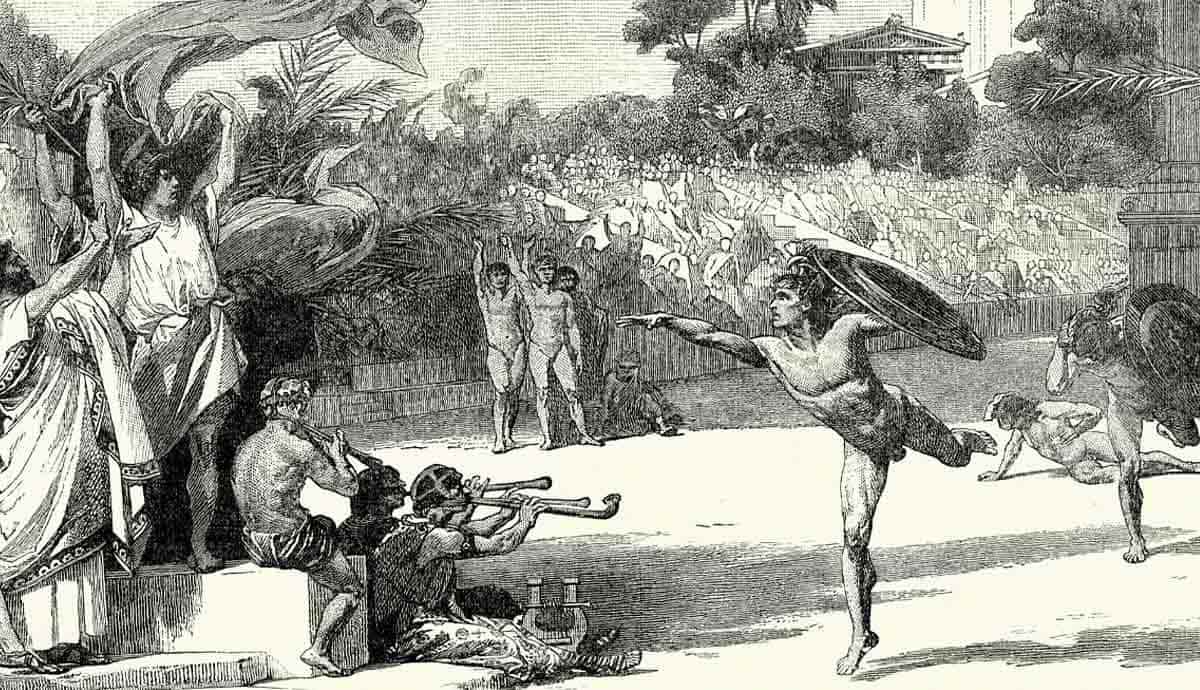
  While the modern Olympic Games are huge, lucrative, and often controversial events, their significance still does not match that of ancient Greece. Back then, a win at the Olympics could set you on the path to absolute power at home, while the sequence of games every four years formed the basis of the collective Greek calendar. The festival of running, horse racing, and fighting took place every four years at Olympia in western Greece for a thousand years.   The history and origins of the Olympics occupied some of the greatest minds in Greece, such as Aristotle. Yet, the origins of the games are vague and shrouded in myth. Searching for them reveals a lot about Greek society.   Sports and Society in Ancient Greece Archaeological site of Olympia. Source: Wikimedia Commons   The Olympic Games were held for five or six days every four years at the site dedicated to Zeus at Olympia in the north-west of the Peloponnese. The Greeks recognized the games as the most prominent sporting and religious event in their calendar, but they were by no means the only show in town. Exercise and competitive sport, much of it performed publicly, were central elements of Greek society. While every society has its sports and spectacles, perhaps only the proliferation of sport in our times matches that of ancient Greece.   Some of the earliest Greek works, such as the poetry of Homer, depict mythic heroes organizing games for funerals or demonstrating their prowess with the discus. Pindar, one of the most renowned Classical Greek poets, celebrated successful athletes in verse. A gymnasium became such a common feature of cities that it was one of the elements that defined a city as Greek (Waterfield, 2018, 66). By the Classical and Hellenistic eras, the Olympics were just the pinnacle of a pyramid of international and local games.   A footrace, c. 530 BC, Athens. Source: The Met Museum   The Olympics were recognized as the most prestigious of a series of four so-called crown games. Olympia, Delphi, Isthmia, and Nemea all hosted major periodic athletic and artistic contests in which the glory of receiving a crown of olive, laurel, celery, or pine leaves trumped any material reward. Below these major games were a huge number of local events. One scholar estimates at least 150 by the Classical era (Nielsen, 2018, 14). Tens of thousands of people traveled from across the Mediterranean-wide Greek world to compete or watch these events, putting them amongst the largest public gatherings of their day.   Religion and Glory A view of the archaeological site of Nemea, author’s photo   Olympia, Delphi, Isthmia, and Nemea were all sites of major sanctuaries to a variety of gods and heroes. The Olympics and other games were part of religious festivals, with the events taking place next to temples and sacrifices as part of their schedules. It was undoubtedly worship of the god Zeus, in the case of Olympia, that first drew people together.   Funeral games of heroes, mythic or real, may lie at the origins of public games, which throughout their long life remained infused with a religious character. But Greek sport clearly took on a life of its own, and its link to religion should not be overstated (Golden, 1998, 23).   The key to understanding the Olympics and Greek sport is the question of who was competing and how. While there are references to some female participation, Greek games were an essentially male affair. An elite male affair. To compete at Olympia, an athlete not only had to travel to the games and stay there a month beforehand, but they had to swear they had followed a long training program. Only an elite few had the leisure time to be serious athletes.   Chariot races and equestrian events were even more exclusive, as only a small minority could afford to keep and train horses. If they could get sponsorship or support, poorer athletes could compete, but we are essentially talking about contests amongst the Greek elite.   The extensive Olympia Complex. Source: Wikimedia Commons   Underlying the popularity of sports in ancient Greece was the pursuit of glory. In these games, only the victor got recognition. Win a race at Olympia, and your name would live on; many are still known to us today. Come second, and you were anonymous. It was this competitive spirit and the desire of an elite for glory that explains the popularity and success of Greek sports and its central role in society (Nielsen, 2018, 167). Sports were a way for the elite to display their brilliance. Olympia became the most important stage.   Olympia Ruins of the Temple of Zeus, Olympia. Source: UNESCO   Olympia has been described as a place where, above all else, victory was celebrated (Miller, 2004, 91). All Greek sanctuaries were filled, cluttered even, with dedications of statues, inscriptions, altars, weapons, and armor. Dedications connected to war dominated at Olympia (Sinn, 2021, 67). One of Olympia’s early uses was as an oracle to consult before a campaign, and Olympian seers often marched with armies. This backdrop was seen as the ideal place to compete in a winner-takes-all contest.   Olympia was well situated for an international meeting ground (Waterfield, 2018, 14). Not too far from the coast in the north-west Peloponnese, the site was accessible by sea whilst being distant from any overly powerful city-state. The closest major city to Olympia was Elis, which organized the games and managed the site but was never a significant power.   The first traces of religious activity currently known date back to the 11th century BC, with some possibility that Zeus was being worshiped in some form (Sinn, 2021, 65/Waterfield, 2018, 17). It was some time, though, perhaps not until the 8th century BCE, that any connection with athletics was visible. Instead, what emerged here was a regionally important site focused on the worship of Zeus that drew people from central Greece.   Following waves of colonization across the Mediterranean, Olympia’s location on the west coast made it popular with Greeks from Sicily, Italy, and beyond. This increased Olympia’s importance, making it a place where Greeks could recognize each other as Greeks.   Detail of the west pediment of the Temple of Zeus, Olympia Archaeological Museum, author’s photo   Zeus, the king of the gods, remained the central figure at Olympia, but he was not alone. As well as the worship of his wife, Hera, and other versions of the Olympian pantheon, two mythic heroes stand out: Herakles and Pelops. Both were descendants of Zeus (though there was some confusion over which Herakles appears in some stories). Myths concerning the two figures linked them with the origins of the games, but both were heavily connected with the local area, as many in the Peloponnese saw themselves as descendants of Herakles and his followers, while Pelops is the origin of the name Peloponnese.   Contest and battle were key elements in the stories of Zeus, Herakles, and Pelops, and Olympia was built around them. By the time we reach the height of Classical Greece in the 5th century BCE, Olympia is perhaps the most significant site in Greece. At its core was the Altis, an enclosed sacred area containing the temples of Zeus and Hera and the grave of Pelops. Inside the temple of Zeus stood one of the seven wonders of the world, the colossal gold and ivory statue of Zeus created by Phidias. When the games were on, and tens of thousands of people were in attendance, it was the heart of the Greek world.   Mythic Origins Statue of Zeus at Olympia, by Alfred Charles Conrad, 1913-1914. Source: British Museum   Zeus, Herakles, and Pelops were central to a variety of myths and stories that explained the origins of the games. Greek myths did not derive from a single authority but instead were an accumulation of stories varying over time and from place to place. Such an important location as Olympia naturally acquired a great wealth of myths which, whatever their origin, reveal aspects of the games’ history and character.   Some stories place the origin of the Olympics as far back as possible, with Zeus’s father, Kronos. Pausanias (5.7), writing a detailed description of Olympia in the 2nd century CE, said this was the local Elean belief, but that others said Zeus wrestled Kronos at Olympia or arranged games to celebrate his eventual triumph over his father.   If it was not Zeus who founded the games, it could have been Herakles. His strong association with Olympia has already been mentioned, and his famous twelve labors were part of the iconography at the site. Herakles was credited with laying out Pelops’s tomb and founding contests (Pindar, Olympian Odes, 10), perhaps a reminder of an early link between athletic contests and funerals.   Pelops and Hippodamia, terracotta plaque, c. 27 BC-68 AD. Source: The Met Museum   Pelops’s story is one of the most famous of the myths linked to Olympia, centering on his deadly chariot race with Oinomaus. Pelops was said to have come to Pisa, a small city near Olympia and occasional rival of Elis, to marry Oinomaus’s daughter Hippodamia. Fearful of a prophecy warning him to be wary of a son-in-law, Oinomaus challenged potential suitors to a chariot race, which inevitably ended in death for the would-be groom. In one version of the story, Pelops gets Oinomaus’s charioteer to replace parts of the chariot with wax, ax leading it to crash during the race. Another version replaces those suspicions of cheating with divine help in the form of horses lent by Poseidon (Pindar, Olympian Odes, 1). Out of Pelops’s victorious race came the games.   It has been noted that this story is probably a relatively late addition to the games’ origin myths. Chariot races were a major part of the games, but they were not part of the original program and were only added in the 7th century BC. It is likely then that this story reflects a later interest in the races (Waterfield, 2018, 36).   These different myths connect the Olympics and participating in the games not just to worshiping the gods and heroes but directly to those divine figures. An Olympic athlete was following in the footsteps of Herakles, Pelops, and Zeus.   Historical Origins The stadium at Olympia, author’s photo   The Greeks did more than just tell stories about the origins of the Olympics. Some of them at least believed they could put a date on it: 776 BC in our calendar. That was the date chosen by Hippias of Elis in the 5th century BC. That date has been questioned since antiquity, but may not be far off (Sinn, 2021, 69).   The exact date may be inaccurate, but scholars now believe that the games started around the 8th-7th centuries BC. There were substantial changes in and around the sacred Altis c. 700 BC, pointing toward a large festival, such as the digging of wells and the first stadium (Sinn, 2021, 67/Waterfield, 2018, 47). It therefore seems likely that Hippias was broadly correct, and a large-scale athletics festival was underway around the 8th-7th centuries BC.   The importance and popularity of the Olympics meant that lists of victors, myths, and traditions around its origins were preserved and well-known. So too was a tradition of which events were included and when (Miller, 2004). The first, and initially only, event was the stadion, a footrace of just under 200m. A double stadion (diaulos) and a long-distance race (dolichos) were added by the end of the 8th century BC. Wrestling (pale), boxing (pyx), and a form of all-in fighting (pankration) were gradually added from the late 8th to mid-7th centuries.   Wrestlers on a funeral monument from Athens, c. 510-500 BC. Source: National Archaeological Museum   Equestrian events such as the four-horse chariot race probably began around a century into the life of the games. As the story of Pelops’s race shows, this became one of the most popular features of the Olympics. However, its character was somewhat different from the other events. The footraces, fighting, and the pentathlon (added c. 708 BC) all celebrated the athletes and their personal display of skill. In the equestrian events, it was the owner of the horses who took the prize rather than the charioteer or jockey, who could be a youth or slave. This did, however, mean that this was a rare event that could be won by women who were generally excluded from the Olympics.   Other Greek games also included musical competitions. At Olympia, the games would start with contests to choose a herald as a stadium announcer and a trumpeter, but the Olympics retained its focus on competitive athletics.   While there would be further modifications by the 6th century, the Olympics were in a recognizable form as a five or six-day summer festival of athletics every four years at Zeus’s Olympia. Why the Olympics? Terracotta skyphos (deep drinking cup), attributed to the Theseus Painter, c. 500 BC. Source: The Met, New York   Bringing all these threads together, we can start to understand the origins of the Olympics. They were born in a society with a high degree of competitiveness, especially amongst its elite. Athletic contests became another site to fight for glory.   Olympia, with its focus on military victory and gods and heroes such as Zeus, Herakles, and Pelops, was a perfect fit to host competitive contests celebrating both humans and divinities. The site of Olympia, which had a long tradition of worshiping Zeus, was easily accessible to Greeks spread across the Mediterranean, whilst not being under the control of an overly powerful city-state. Once the tradition of the games was established, it quickly grew into the fabric of Greek life, becoming a major spectacle, meeting-place, source of glory, and even a framework to organize time.   Bibliography   Golden, M. 1998. Sport and Society in Ancient Greece. Cambridge University Press.   Miller, S. 2004. Ancient Greek Athletics. Yale University Press.   Nielsen, T.H. 2018. Two Studies in the History of Ancient Greek Athletics. The Royal Danish Academy of Sciences and Letters.   Sinn, U. 2021. “Origins of the Olympics to the Sixth Century BCE”. In Futrell, A, and Scanlon, T, The Oxford Handbook of Sport and Spectacle in the Ancient World. 65-73. Oxford University Press.   Waterfield, R. 2018. Olympia: The Story of the Ancient Olympic Games. Bloomsbury Publishing
Like
Comment
Share
History Traveler
History Traveler
8 w

The Surprising Reality of What Roman Gladiators Actually Ate
Favicon 
www.thecollector.com

The Surprising Reality of What Roman Gladiators Actually Ate

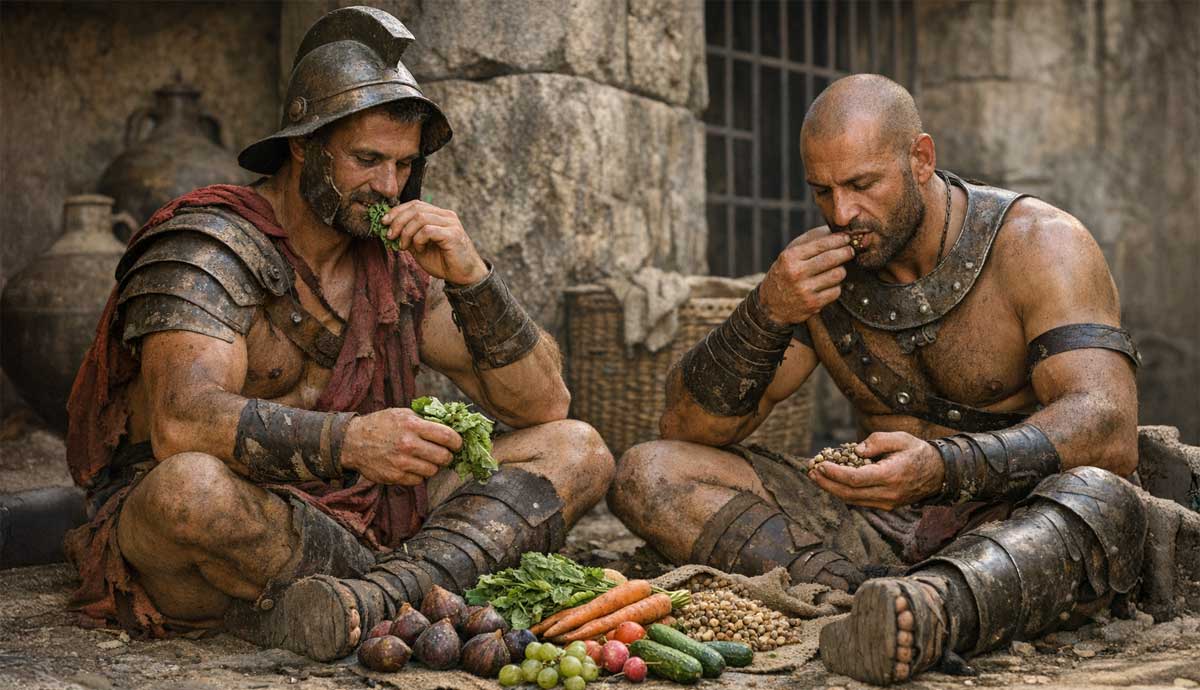
  Modern movies often portray Roman gladiators as muscle-bound warriors who mainly ate large slabs of meat and drank wine. The physical evidence, however, tells a much different story. The men who fought in the arenas and considered the high-performance athletes of the Roman world apparently had a very plain diet. This is according to an analysis of their bones done by experts.   What the Scientific Evidence Says About Their Diet Gladiator Fight During Meal at Pompeii, by Francesco Netti, 1880. Source: Museo di Capodimonte, Naples   In 1993, a team of researchers from the University of Vienna found a dedicated gladiator cemetery in the ancient city of Ephesus in modern Turkey. Years later, a scientific analysis of the bones changed much of what people thought they knew about the lives of ancient gladiators. The experts who examined the remains performed isotopic analysis on the bones to determine what they ate over their lifetimes.   Because the chemical levels in the skeletons showed a high strontium-to-calcium ratio, the researchers concluded that the gladiators followed a mainly plant-based diet rich in grains and beans. Specifically, the bone studies from Ephesus found that the gladiators had much higher strontium-to-calcium ratios compared to those of the local citizens.   The Life of a Barley Man A fragment of a glass drinking vessel depicting a gladiator, possibly a Retarius, 4th century CE, via the British Museum   At the time, the warriors were often referred to as hordearii, a Latin term that translates to barley men or barley eaters. Barley was considered a low-grade grain, at the time, and was mostly given to animals or poor people in the city. However, because it provided the energy needed for training, the warriors frequently consumed barley and other plant-based foods in large quantities.   Notably, it was the care of the lanista, the man who owned the school and the lives of the fighters, that kept them ready for the games. He viewed the gladiators as a valuable investment. As such, he provided foods that were relatively cost-effective to him. Under his watch, the fighters received massages and medical attention. They followed a strict routine while living together in groups.   How Gladiators Lived at the Ludus Magnus A 5th-century mosaic in the Great Palace of Constantinople depicts two venatores fighting a tiger   Around the late first century AD, the emperor Domitian started the Ludus Magnus, the biggest gladiator training school in Rome right next to the Colosseum, that was later rebuilt by Emperor Trajan. The school had its own small arena and rows of tiny cells where the men lived, though they typically ate together in communal dining areas. According to historical records, a gladiator at the school would eat hundreds of pounds of barley, chickpeas, lentils, broad beans, and other legumes.   The fighters consumed the legumes almost every day, as they are a rich source of plant protein. The diet also helped the men to put on weight quickly. For the gladiator school owners, having a lot of subcutaneous fat meant that a blade wound would often not cut deep into the muscles or the nerves. The complex carbohydrates fueled the long drills under the hot southern European sun while the slow energy release from barley sustained the fighters. Modern science confirms the caloric efficiency of the ancient plant-based diet.   The Mysterious Ancient Recovery Drink A Cestus boxer and a rooster in a Roman mosaic at the National Archaeological Museum, Naples, 1st century AD   In the Naturalis Historia text written by the Roman writer Pliny the Elder, a very strange drink is mentioned as a remedy for fatigue. Apparently, after a hard workout or a fight, the men would drink a mixture made of charred plant ash mixed with water or vinegar. While the drink may sound disgusting in the contemporary world, it is believed to have been a very effective early version of a sports drink. Because the fighters needed strong bones and required fast healing to survive, the ash is thought to have provided the extra minerals needed to boost their recovery.   What Caused the Gladiator Diet to Disappear? A duel, using whip, cudgel and shields, mosaic from a Roman villa at Nennig, Germany   Gladiators were treated like expensive pieces of property as well as celebrated heroes. On special occasions, the men received rare luxuries before major events. Organizers sometimes held a public feast called the cena libera for those scheduled to fight the next day. Historical records describe better food for these events that included meats, fruits, bread, salted fish, and spiced wine.   However, as the Roman empire began to face trouble in the 5th century, the schools had less money to feed the declining number of fighters. The games were finally banned in the city of Rome in the year 404 CE. The specialized diet of the hordearii disappeared along with the schools.
Like
Comment
Share
History Traveler
History Traveler
8 w

6 Most Important Battles of the Peloponnesian War
Favicon 
www.thecollector.com

6 Most Important Battles of the Peloponnesian War

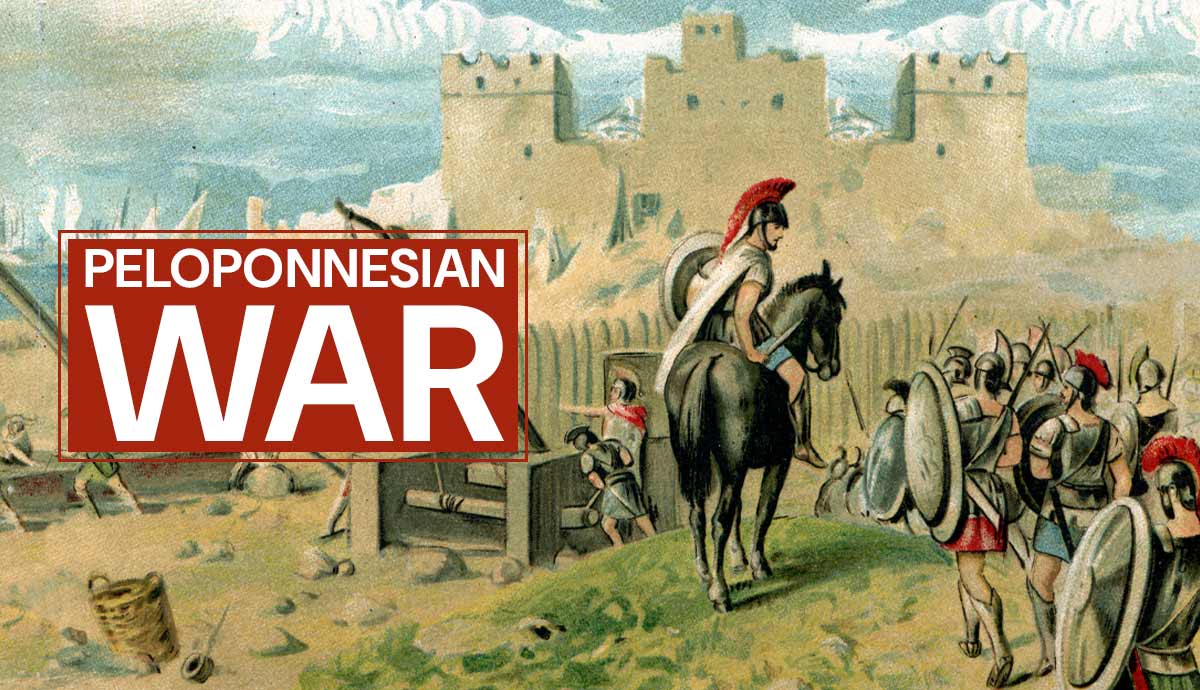
  For 27 years, from 431 to 404 BC, the Spartans and Athenians fought for supremacy of the Greek world in what would become known as the Peloponnesian War. Scores of battles were fought over the course of the conflict. Discover the six most important battles that defined the war.   1. Battle of Pylos – 425 BC Ancient Greece at the start of the Peloponnesian War. Source: The Collector   The Peloponnesian War was a clash of opposites. Athens was a democratic sea power with a powerful fleet and an Aegean Empire. Sparta was an oligarchic land power whose feared heavy infantry of hoplites led the alliance of neighbouring states called the Peloponnesian League. The Athenians could not challenge the Spartan hoplites even when they invaded their home territory of Attica. The Spartans could not defeat the Athenian navy. It was not until six years into the war that surprising events broke this deadlock.   The Athenian general Demosthenes had an idea. He wanted to use the navy to set up bases in Spartan territory to raid and induce the subjugated population of Messenia, the economic base of the Spartan system, to revolt. In 425 BC, he set up a base in the bay of Pylos in the south-west Peloponnese. Pylos was deep in Spartan-controlled Messenia, but was easily fortified with a large natural harbor, almost entirely closed off by the long, narrow island of Sphacteria.   Pot showing a hoplite with their equipment, c. 500-475 BC. Source: Koninklijke musea voor kunst en geschiedenis, Brussels   The Spartans rushed forces back from an invasion of Attica. They attacked by land and sea. To block Athenian reinforcements, they landed several hundred hoplites on Sphacteria. This turned out to be a critical mistake. An Athenian fleet sailed in, and suddenly, the men on Sphacteria, including over a hundred elite Spartans, were stranded. The number of Spartan citizens had been shrinking throughout the previous century due to its rigid and unsustainable social system. The loss of just over 100 was a high price. The Athenians accepted the gift that had fallen into their hands. They rejected peace offers, and the politician Cleon set out with reinforcements to join Demosthenes and capture the men on Sphacteria.   Spartan shield taken from Sphacteria, c. 5th century BC. Source: Ancient Agora Museum, Athens, Copyright Neil Middleton   Still wisely unwilling to confront Spartan hoplites directly, the Athenians drove them back to the edge of the island using archers and light-armed troops. When a group of Messenian exiles got around the back of the Spartan position and surrounded them, the stage was set for a last stand. What happened next was, according to the historian Thucydides (4.40), the most surprising event of the war. Rather than living up to their reputation of fighting to the last man, 120 Spartans and over a hundred allies surrendered.   At Pylos, the Athenians capitalized on a Spartan mistake to severely damage Spartan prestige and morale and gain a significant advantage.   2. Battle of Amphipolis – 422 BC Gold crown and ossuary of Brasidas. Source: Amphipolis Archaeological Museum   One of the few Spartans to emerge from Pylos with their reputation intact was Brasidas. He was entrusted to strike back at the Athenians.   With 120 hostages in Athens, the Peloponnesians could not invade Attica again. But the Athenians were still vulnerable. Just as the Athenians had hit at Sparta’s weak underbelly, Brasidas sought to do the same. In 424 BC, he marched a small force of fewer than 2,000 freed slaves and mercenaries all the way to the Chalkidiki and Thrace regions of northern Greece. Many cities in the region were Athenian subjects or allies and sat on the key trade routes that brought grain to Athens.   During 424 to 423 BC, Brasidas induced some Athenian subjects to revolt through a combination of threats and promises of liberation. Most painfully for the Athenians, this included their prized possession in the region, Amiphipolis. Brasidas had regained some leverage for the Spartans, rescuing them from the dire situation post-Pylos at minimum cost. This, coupled with a failed Athenian invasion of the Spartan ally Boeotia in 424 BC, produced an armistice. But neither side was ready for peace. During the negotiations, Brasidas continued to win over cities. The Athenians claimed this broke the armistice and sent Cleon, one of the more hawkish Athenians, north.   Roman funeral stele of a Greek hoplite warrior, Roman, c. 1st century BC. Source: British Museum   In 422 BC, Cleon approached Amiphipolis, but the politician was no general. Brasidas watched Cleon closely and pounced on a mistake. Cleon came forward to observe Amiphipolis with a small force and was now isolated. By the time he saw Brasidas preparing to emerge from the city, it was too late to launch an attack. Cleon ordered a withdrawal, but that only meant turning and exposing their side and backs to Brasidas’ forces. The disorganized Athenians were routed, and Cleon himself was killed with around 600 of his men (Thucydides, 5.11). The remaining Athenians withdrew to their ships. The Spartan allies lost only seven men, but one of those was Brasidas himself.   Both sides now counted their losses and bargaining chips. With Cleon and Brasidas both gone, peace was agreed in 421 BC, but it did not last long.   3. Battle of Mantinea – 418 BC Socrates drags Alcibiades away from pleasure, by Jean Baptiste Regnault, 1791. Source: Louvre   Though officially at peace, the distrust and manoeuvring continued. Spartan prestige was tarnished, and it faced a number of disaffected cities in the Peloponnese. Even while at peace, this was an irresistible opportunity to some Athenians. The result was the largest land battle of the war.   The Argives, Eleans, and Mantineans all had reasons to be looking for anti-Spartan allies in the early 410s. The Argives, Sparta’s great rival in the Peloponnese, were worried as a peace treaty was about to expire. By allying with the Eleans, the guardians of Olympia, in the north-west and the Mantineans in the central Peloponnese, the Argives created a band of anti-Spartan states cutting across Sparta’s supposed sphere of influence. An ambitious Athenian, the aristocratic and charismatic Alcibiades, jumped at this opportunity. By 419 BC, a defensive alliance connected these states with Athens. The demoralized Spartans lacked confidence in their king, Agis, but they had to act or see the basis of their power dissolve.   Attic black-figure calyx krater displaying hoplite heavy infantry engaged in close-quarters combat, Greek, 530 BC. Source: National Archaeological Museum of Athens   In 418 BC, Agis mobilized as many Spartans as possible, perhaps 5,000 (Thucydides, 5.68), and linked up with Peloponnesian allies outside Mantinea. The exact numbers are unknown, but Agis likely had more than 10,000 hoplites and slightly outnumbered the combined forces of Argos, Mantinea, and Athens. The Athenians have been criticized (Hanson, 2006) for committing to the alliance but only supplying 1,000 hoplites, but they were still not openly at war, and many in Athens wished it to stay that way. The Peloponnesian War saw few large hoplite battles, though the clash at Mantinea with over 20,000 was one of the largest recorded Greek battles.   Sparta’s position was precarious, but a large-scale hoplite battle on an open field was exactly where it excelled. It has been called a soldier’s battle (Tritle, 2010, 125), as Agis and his officers blundered as they advanced, but once the Spartan hoplites were in contact with the enemy, their reputation and skill won the day. The Spartan left flank was overwhelmed, but on the right, they easily pushed through their opponents before coming to the assistance of their beleaguered colleagues. The result restored Spartan morale and broke the threatening alliance. Within a year, the Argives had removed their democracy and made peace with Sparta. The Athenians would not threaten Sparta in its own backyard again for the duration of the war.   4. The Sicilian Expedition – 415-413 BC Theater of Syracuse, 5th century BC. Source: Wikimedia Commons   In 415 BC, the Athenians committed their greatest mistake of the war. For Thucydides (7.87), it was the greatest disaster the Greeks had ever seen.   The Athenians dispatched a large but poorly conceived expedition to Sicily. The Athenians had allies amongst the Greek cities on the rich island of Sicily. These allies, Egesta and Leontini, were under pressure from Syracuse, a democratic city on a similar scale as Athens but favorable to Sparta. Thucydides was clear that the Athenians were led to disaster by their ambition to conquer Sicily despite the ongoing threat of Sparta and their ignorance of the size of the task. Alcibiades is once again central to the story as his dreams of glory encouraged the Athenian people.   In 415 BC, 134 ships sailed for Sicily carrying 7,000 soldiers and tens of thousands of sailors under three generals: Nicias, Alcibiades, and Lamachus. The expedition was in trouble from the beginning. The three generals disagreed. The initial plan of winning over allies and collecting money that existing allies had already offered failed. Alcibiades, the most enthusiastic of the generals, was then recalled to face trial at Athens on charges of sacrilege. Instead, he defected to Sparta and started advising the enemy. By the time Nicias and Lamachus turned on Syracuse, the first year had been wasted, and the Syracusans were better prepared.   The Athenians spent the second year of the campaign in 414 BC on an unsuccessful siege of Syracuse. For over a year, the Athenians attempted to take one of the Greek world’s largest cities, while hundreds of miles from home, with few allies, and with a force too small for the task. Remarkably, they almost succeeded, as the Athenians nearly completed a wall isolating the Syracusans, who started to despair. Crucially, the wall was never finished, allowing support to come from the Peloponnese in the form of the Spartan officer Gylippus.   Retreat of the Athenians from Syracuse, by William Heysham Overend, c. 19th century. Source: Wikimedia Commons   By late 414 BC, Nicias wrote to Athens, warning that the initiative was lost and requesting reinforcement or withdrawal. Having invested so much in the effort, the Athenians could not give up now. Demosthenes was dispatched with an additional 70 ships. The total Athenian commitment to Sicily was now over 40,000 men and 200 ships (Hanson, 2006). Demosthenes quickly tried to regain the initiative with a night attack. After a promising start, the effort failed in the darkness. Withdrawal was now the best option, but Nicias, fearful of returning to Athens empty-handed, hesitated. Nicias’ delay helped the Syracusans block the harbor where the Athenians based their fleet. When a desperate attempt to break out failed, the last option was to retreat by land to the few remaining pro-Athenian cities.   The Athenian force was still above 40,000 men, but they were dispirited and desperate to escape. When the Syracusan cavalry harassed them and blocked their route, the retreat became a rout. Demosthenes and Nicias became separated and eventually surrendered. They were both executed. Thousands were killed on the roads, with thousands more sold into slavery. At least 7,000 Athenian prisoners were herded into quarries outside Syracuse and left exposed for months. Few ever returned home.   5. Battle of Arginusae – 406 BC Representation of Athenian rowers, c. 5th century BC. Source: Acropolis Museum, Athens, Copyright Neil Middleton   After the loss of men, money, and ships on Sicily, Athens’ allies revolted. The Spartans permanently occupied part of Attica. An oligarchic counter-revolution briefly overthrew the democracy. Yet, the Athenians fought on, even winning a string of victories that kept the war going. But their survival was precarious. Cut off from their own land, the Athenians relied more than ever on the sea. A single naval defeat would be the end.   In 406 BC, an Athenian fleet was trapped on the island of Lesbos. To save it, the Athenians ordered an extraordinary mobilisation that manned 150 ships. Such was Athens’ need for sailors that slaves and members of the elite, who normally preferred to serve in the cavalry rather than the distinctly lower-class fleet, boarded the ships together.   The crews were inexperienced, and there were doubts about the quality of the ships pressed into service (Xenophon, 1.6.32). The Spartans, on the other hand, had learnt how to fight at sea and were now supplied and paid by the Persians.   The two fleets faced each other at the Arginusae islands close to Lesbos. The Spartan commander Callikratidas was outnumbered with around 120 ships but engaged in battle nonetheless. The Athenians again won a hard-fought battle, losing around 25 ships compared to the Spartan losses of 69. However, the aftermath turned the victory into a tragedy.   A storm prevented the Athenians from rescuing survivors, and when news reached Athens, the generals were blamed. As the fleet represented a wider cross-section of Athenian society than normal and Athens could ill-afford any losses, the anger is perhaps understandable. However, sections of the Athenian people now broke their own laws and put the eight generals on trial for their lives. In the highly charged atmosphere, the six who had returned to Athens to face the charges were convicted and executed.   6. Battle of Aegospotami – 405 BC An illustration depicting the naval engagement between the Athenian and Spartan fleets during the Battle of Aegospotami, 405 BC   The year after Arginusae, the Athenians were again having to set sail to save themselves. The most competent Spartan naval commander of the war, Lysander, had taken up position in the Hellespont (the Bosphorus) to cut off the grain that flowed from the Black Sea and starve the Athenians.   In 405 BC, the Athenians once again amassed a fleet of 180 ships, aiming to dislodge Lysander. They based themselves at a site called Aegospotami on the modern Gallipoli peninsula. Their position was directly across from Lysander’s fleet, but inconveniently far from supply lines. For four days, the Athenians sailed out and offered battle to Lysander. When the Spartans refused, the Athenians sailed back, disembarked, and proceeded to gather supplies.   Lysander observed this routine, and on the fifth day, had ships watch the Athenians and signal when they left their ships. At this point, Lysander, whose fleet had supplies close at hand, ordered his ships into the attack. Taken by surprise, the Athenians barely managed to fully man a handful of ships. Less than ten escaped as the Spartans swept in and captured the entire fleet and thousands of sailors. After a debate, the Athenian prisoners were summarily executed.   The Athenians had lost their last fleet, and in 404 BC, surrounded and starving, Athens finally surrendered. The 27-year-long Peloponnesian War was finally over.   Select Bibliography   Hanson, V. D. (2005). A War Like No Other: How the Athenians and Spartans Fought the Peloponnesian War. Random House.   Tritle, L. A. (2010). A New History of the Peloponnesian War. Wiley-Blackwell.
Like
Comment
Share
Country Roundup
Country Roundup
8 w

E. Coli Outbreak Linked to Raw Cheddar Cheese, CDC Warns
Favicon 
tasteofcountry.com

E. Coli Outbreak Linked to Raw Cheddar Cheese, CDC Warns

A cheese favorite is causing quite a stir, with E. coli making its way into kitchens across the country. Stay tuned for the details. Continue reading…
Like
Comment
Share
Conservative Voices
Conservative Voices
8 w

What’s the Beef in Britain Over Halal Meat?
Favicon 
www.dailysignal.com

What’s the Beef in Britain Over Halal Meat?

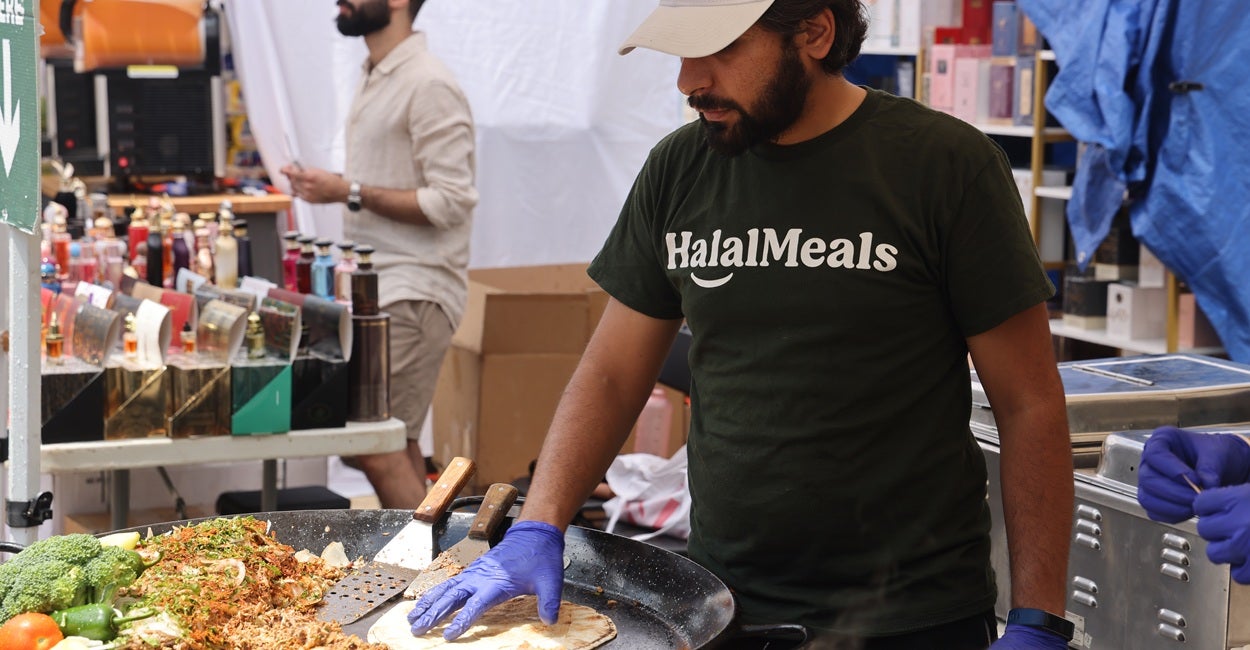
Since I last lived in London 30 years ago, Britain has seen the largest inward migration in its recorded history of more than two thousand years, most of it from outside Europe. In 1996, the country was more than 90% indigenous English, Irish, Scottish, and Welsh. Today it is only 73%. One story that really captures the mass migration and assimilation crisis of modern England is that of Harman Singh Kapoor, a Sikh immigrant who owns a restaurant called Rangrez in Hammersmith, north London. Kapoor publicly declared that he would not serve halal meat. “Halal” is the Arabic term for permitted, or clean, as opposed to “haram”—forbidden, or unclean. Observant Muslims will only eat halal food, just as observant Jews will only eat kosher. Singh’s need to declare that he would not serve halal meat, or his manner of doing so, could be questioned. But it’s his restaurant and his call. The simple thing for any objecting Muslims to do would be not to eat there. But this is “multicultural” London, where indigenous English are barely a third of the population. Conflicts from the old country are imported intact. Magnified on social media, the halal issue resulted in confrontations at Rangrez. At one point, a large group of men showed up outside. Singh had said he carried a knife for defense (one of five items a religious Sikh man must carry at all times, incidentally) and he was arrested. He has now apparently decided to close up shop. This spat highlights a bigger one: to what degree should natives in Britain, or Western countries that take in large numbers of immigrants, concede to the religious and cultural demands of the newcomers? Should inhabitants of Minneapolis, who are mostly not Muslim, be obliged to hear the Muslim call to prayer broadcast five times a day from dawn to dusk? Should all of us have to eat food prepared according to the sensibilities and rituals of a minority? There are over 200 schools in Britain that serve halal food. Halal, like kosher for Jews, requires a specific method of killing animals. One provision is that the animal’s “wind pipe, gullet, and preferably 2 cartoid [sic] arteries and 2 jugular veins must be cut in a single action,” by a Muslim man, with a knife, according to the Association for Public Service Excellence. British law, with the intent of avoiding unnecessary cruelty to animals, requires that they be stunned prior to slaughter. But in 1995, a law was passed to make an exception for religious slaughter. Presumably that was thought at the time to be a fairly minor exception, but now, with a growing Muslim population, it is a controversial issue affecting the mass market. Vegetarians don’t have a dog in the fight (excuse the pun). But carnivores divide into those who want their meat killed humanely versus religiously. Large institutions in Britain—as in the U.S.—are often woke, so happy to pander to special interests. Just look at Budweiser, Disney, and Hollywood. But they also want to avoid negative publicity. For those in the food business, sometimes the sly but easy way out is to make everyone eat halal—whether or not they know it. In 2010, the Daily Mail reported that a large government-run London hospital chain was serving halal meat in its cafeteria without labeling it as such. So were some sporting events, private schools, pubs, and restaurants. In 2014, the Sun newspaper reported that all chicken served at the national chain Pizza Express was halal. In 2017, a London hospital told Breitbart that they served only halal food in their cafeteria “so that it caters for all visitors, staff, and patients who visit the restaurant.” In other words, halal was the default, making it “inclusive” for those who are observant Muslim meat-eaters, but not those who object to religious verses from the Quran being part of their meal preparation. In 2019, an English college student was suspended for stating during a debate that halal was “an inhumane and barbaric way of slaughtering animals.” Deciding how far to accommodate those with the strict religious rules about what they eat is a dilemma for big chains, including American ones. The requirements are not only that halal meat is served, but that the premises be clear of “haram” items. So, no bacon bits on your salad. Today, 20% of Britain’s 1,000 Kentucky Fried Chicken outlets serve halal chicken. McDonald’s in Britain, meanwhile, does not have halal restaurants, although some franchises obtain halal supplies for certain menu items. Buddhists, Christians, Hindus, Sikhs, and other religions have their rituals and food preferences, but they don’t demand everyone else accommodate them. Many Muslims also feel that their religious needs can be accommodated in private without coercing the behavior of others. But some more militant Islamists feel otherwise. They are willing to use political and economic power, and sometimes intimidation, to get their way. Where Muslim immigrants decide to go with this issue is at the heart of whether this latest, largest cohort of migrants to historically Christian countries will succeed or fail. The post What’s the Beef in Britain Over Halal Meat? appeared first on The Daily Signal.
Like
Comment
Share
Conservative Voices
Conservative Voices
8 w

Pure Evil: Trans 'Youth Advocate' Arrested Over Rape of Infant He Was Asked to Look After - and It Gets Even Worse
Favicon 
www.westernjournal.com

Pure Evil: Trans 'Youth Advocate' Arrested Over Rape of Infant He Was Asked to Look After - and It Gets Even Worse

A 25-year-old man pretending to be a woman has been arrested and charged with raping a 6-month-old baby girl, as well as with distributing child pornography. William Kelso Flournoy IV, a "transgender" activist who goes by the moniker "Izzy" or "Isabelle" online, had access to vulnerable children as recently as...
Like
Comment
Share
Showing 7610 out of 122072
  • 7606
  • 7607
  • 7608
  • 7609
  • 7610
  • 7611
  • 7612
  • 7613
  • 7614
  • 7615
  • 7616
  • 7617
  • 7618
  • 7619
  • 7620
  • 7621
  • 7622
  • 7623
  • 7624
  • 7625
Advertisement
Stop Seeing These Ads

Edit Offer

Add tier


Select an image
Delete your tier
Are you sure you want to delete this tier?

Reviews

In order to sell your content and posts, start by creating a few packages. Monetization

Pay By Wallet

Payment Alert

You are about to purchase the items, do you want to proceed?

Request a Refund