YubNub Social YubNub Social
    Advanced Search
  • Login
  • Register

  • Day mode
  • © 2025 YubNub Social
    About • Directory • Contact Us • Developers • Privacy Policy • Terms of Use • shareasale • FB Webview Detected • Android • Apple iOS • Get Our App

    Select Language

  • English
Install our *FREE* WEB APP! (PWA)
Night mode toggle
Community
New Posts (Home) ChatBox Popular Posts Reels Game Zone Top PodCasts
Explore
Explore
© 2025 YubNub Social
  • English
About • Directory • Contact Us • Developers • Privacy Policy • Terms of Use • shareasale • FB Webview Detected • Android • Apple iOS • Get Our App
Advertisement
Stop Seeing These Ads

Discover posts

Posts

Users

Pages

Blog

Market

Events

Games

Forum

YubNub News
YubNub News
1 w

Documents Show U.S. Trade Officials Helped Shape EU Law Now Used to Penalize Musk’s X
Favicon 
yubnub.news

Documents Show U.S. Trade Officials Helped Shape EU Law Now Used to Penalize Musk’s X

Newly released records indicate Biden-era trade agencies coordinated with European counterparts on digital regulations that later formed the basis for enforcement actions against U.S. technology platforms.By…
Like
Comment
Share
YubNub News
YubNub News
1 w

Criminalizing Bad Luck: North Carolina Dad Back in Court After His Son’s Tragic Death
Favicon 
yubnub.news

Criminalizing Bad Luck: North Carolina Dad Back in Court After His Son’s Tragic Death

North Carolina dad Sameule Jenkins is due back in court this month on charges stemming from the downstream impact of his arrest after the tragic death of his son. Jenkins and his wife, Jessica, let their…
Like
Comment
Share
Classic Rock Lovers
Classic Rock Lovers  
1 w

Annie Lennox’s favourite Christmas song: “The best, most poignant festive song”
Favicon 
faroutmagazine.co.uk

Annie Lennox’s favourite Christmas song: “The best, most poignant festive song”

A festive classic. The post Annie Lennox’s favourite Christmas song: “The best, most poignant festive song” first appeared on Far Out Magazine.
Like
Comment
Share
Intel Uncensored
Intel Uncensored
1 w

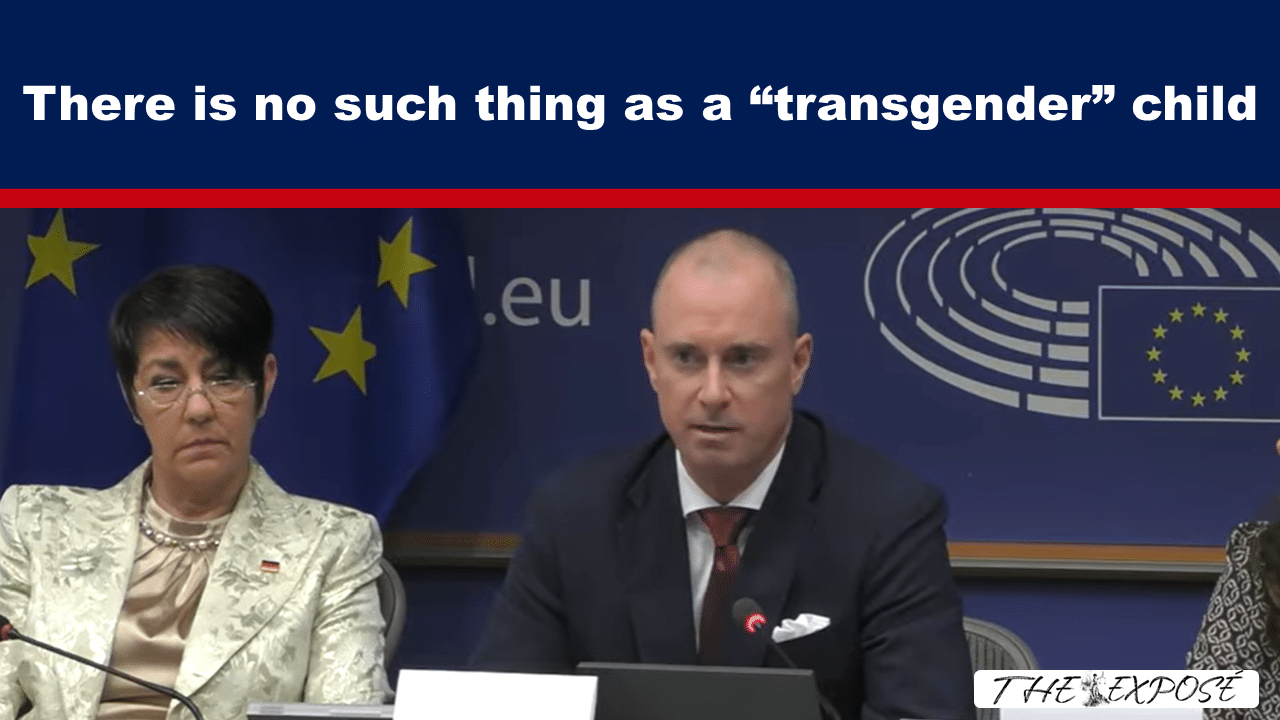
There is no such thing as a “transgender” child
Favicon 
expose-news.com

There is no such thing as a “transgender” child

Earlier this month, Billboard Chris addressed the European Parliament to present the facts about the transgender ideology. “There’s no such thing as a transgender child,” he said. “I consider [transgender to be] […] The post There is no such thing as a “transgender” child first appeared on The Expose.
Like
Comment
Share
Intel Uncensored
Intel Uncensored
1 w

Why is Britain now openly admitting the death of British soldiers in Ukraine?
Favicon 
www.sgtreport.com

Why is Britain now openly admitting the death of British soldiers in Ukraine?

from Strategic Culture: The death of a British paratrooper reported this week was the first public admission by Britain’s authorities that a serving member of its armed forces has been killed in Ukraine. The timing of the official disclosure and its very public, emotive nature raise questions about the motives of the British authorities. The […]
Like
Comment
Share
Conservative Voices
Conservative Voices
1 w

Watch: The Most Cowardly Man in the World? Tourist Shredded Online for Letting Knifeman Attack His Female Companion While He Ran and Hid
Favicon 
www.westernjournal.com

Watch: The Most Cowardly Man in the World? Tourist Shredded Online for Letting Knifeman Attack His Female Companion While He Ran and Hid

A shocking video out of Colombia is sparking outrage online after a young male tourist appeared to abandon his female companion during a knife attack. The man left her to fend off an assailant alone, but luckily other men -- real men -- intervened. According to footage published on X...
Like
Comment
Share
Classic Rock Lovers
Classic Rock Lovers  
1 w

"I'm genuinely amazed and blown away": Steven Wilson's The Overview voted Best Album of 2025 by Classic Rock magazine
Favicon 
www.loudersound.com

"I'm genuinely amazed and blown away": Steven Wilson's The Overview voted Best Album of 2025 by Classic Rock magazine

The full Top 50 is now online
Like
Comment
Share
Classic Rock Lovers
Classic Rock Lovers  
1 w

The 50 Best Rock Albums of 2025
Favicon 
www.loudersound.com

The 50 Best Rock Albums of 2025

Twelve months of life-enriching, extraordinary new music
Like
Comment
Share
The Blaze Media Feed
1 w

It’s not politics, it’s spiritual war — and the church is still sitting on the sidelines
Favicon 
www.theblaze.com

It’s not politics, it’s spiritual war — and the church is still sitting on the sidelines

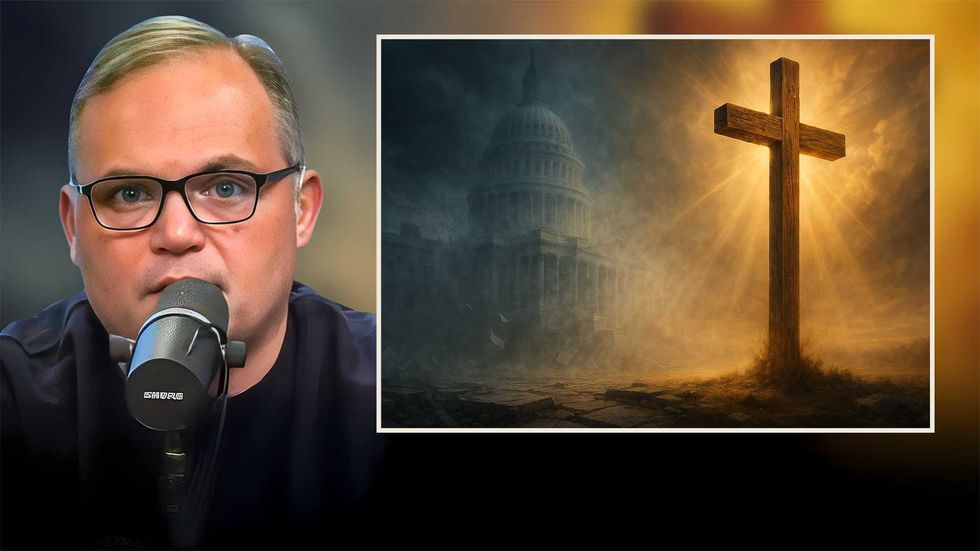
Never has it been more obvious that politics are spiritual in nature. The partisan battles over authority, morality, justice, life, and truth can no longer mask the supernatural war raging between good and evil in the unseen realm.Although the great war has already been won through Christ, the forces of good often lose earthly battles because Christians refuse to enter the fray. Progressives have a zeal and commitment to their doctrine more ferocious than the majority of Christians these days.We’re “dealing with a rival religion,” says Steve Deace, BlazeTV host of the “Steve Deace Show.”“If you aren't as convicted in yours, you cannot defeat [your progressive opponents]. They'll just keep beating you.”So what needs to happen in order to flip the script?To explore this query, Deace spoke with former U.S. senator, author, and devout Christian Jim DeMint. “The great divide in Washington and across America really comes down to whether or not you believe the Bible is true. Our whole culture, all of Western civilization, is built on Judeo-Christian ideas that come from the Bible,” says DeMint. “Everything from the moral laws that we see in the Old Testament to how families are formed to marriage, concepts of compassion and charity — everything we take for granted as a country is derived from the Bible.”Twenty-five years ago, both parties acknowledged and respected this reality, he says. But today, that isn’t true. One party has departed so far from any sort of moral standard that it fights for nationwide abortion through all three trimesters, equating the barbaric murder of babies to essential health care.When these progressive policies are successful, it’s a win for Team Satan, but Christians at large tend to just shrug and hope for better days.But they need to pick up their sword and fight. “Pastors and Christian leaders and folks who call themselves Christians [need] to step out of the shadows and start to participate more in deciding how we're governed as a nation,” says DeMint.DeMint has a brand-new book out that tackles this subject. Titled “What the Bible Really Says: About Creation, End Times, Politics, and You,” it dives into how centuries of theological misinterpretation and church tradition have neutralized the Bible’s explosive political power, leaving Christians defenseless in today’s spiritual war. It also argues that returning to the plain, unfiltered text of Scripture can re-arm believers to fight and win the battles over authority, life, marriage, justice, and truth that now define our culture.Today’s churches are often too “watered down,” “lukewarm,” and “you-centered” to be effective in the political sphere, Deace adds.But if Christians got biblically serious, they’d see that Washington's war is God’s war.“Republicans have their flaws, and I spent most of my time in the House and the Senate criticizing Republicans for not doing what they said they were going to do, [but] their platform is built on Judeo-Christian concepts. But the Democrat platform is not,” say DeMint.But while political victories should be important to Christians, they aren’t the end-all, be-all. “We can't win the battle that way,” says DeMint.The real battle remains in each individual heart, where people must finally settle the question DeMint keeps asking: Is the Bible actually true — or isn’t it? Because until we bet our lives that every word is God-breathed, we’ll keep losing the culture to a rival religion that is far more convinced of its own lies.To hear more of Deace and DeMint’s conversation, watch the episode above.Want more from Steve Deace?To enjoy more of Steve's take on national politics, Christian worldview, and principled conservatism with a snarky twist, subscribe to BlazeTV — the largest multi-platform network of voices who love America, defend the Constitution, and live the American dream.

Like
Comment
Share
History Traveler
History Traveler
1 w

16th c. gibbet, skeletons found in Grenoble
Favicon 
www.thehistoryblog.com

16th c. gibbet, skeletons found in Grenoble

The remains of a 16th century gibbet and dozens of skeletons of the executed have been discovered in Grenoble, France. The site, an esplanade at the Porte de la Roche entrance to Grenoble, was built on reclaimed marshland on the bank of the Isère river. For centuries the area was used for its natural resources (sand, timber), and for celebrations, games, fairs, military encampments, even though it was still flooding with regularity until the early 19th century. It was excavated by INRAP archaeologists before redevelopment, revealing a quadrangular masonry structure that contained ten pit burials inside and outside of its northern wall. Most of the pits held the skeletal remains of multiple individuals — between two and eight people — with occasional single burials. From what can be determined by bone count, there are at least 32 people buried, most of them men, a few women, placed in contact with each other in various positions and orientations. Researchers were able to conclusively identify the structure by comparing the masonry foundations with a timber frame plan from 1546 of the Grenoble Port de la Roche gibbet. The measurements corresponded exactly. The construction records allow us to follow the stages of the building project between 1544 and 1547 and to reconstruct the architecture of the gallows. On a masonry foundation measuring 8.2 meters on each side, eight stone pillars rose, surmounted by capitals that supported a timber frame made of pieces of wood placed 5 meters high. The gallows was built on a slight elevation of the alluvial terrace to protect it from flooding. Its eastern side was further protected by a drainage ditch, perhaps also intended to delimit its space. Its eight pillars give it a significant originality, as this number was correlated with the judicial hierarchy of the kingdom: from two to six pillars for seigneurial courts, up to the 16 pillars of the royal gallows of Montfaucon in Paris. This is not where the condemned were executed. This gibbet was where the bodies of the executed were displayed for varying lengths of time. The shameful exposure of the dead was part of the sentence, mostly reserved for people convicted of crimes against the king. In 16th century France, that was often Huguenots. When this gibbet was constructed, tensions between Protestant and Catholics had spiked and the official government position drastically shifted from toleration of Protestantism to persecution. The Edict of Fontainebleau, issued by King Francis I in 1540, was the first of a series of punitive codes targeting Hugenots. It declared Protestantism treasonous and is adherents subject to torture, confiscation of property and execution. His successor Henry II went even further with the Edict of Châteaubriant of 1551, calling for draconian punishment of all “heretics,” and in 1557, the Edict of Compiègne established the death penalty for all convicted heretics. The persecution and religious conflicts exploded into civil war in 1562 that would continue until the end of the century. Exposing the dead body of somebody convicted of heresy or treason was part of the punishment. The humiliation of it, the violation of deeply-felt religious beliefs regarding the resurrection of the flesh, extended the judicial sentence beyond the execution itself. Burial on-site without proper rituals in unconsecrated ground had eternal consequences. Burying a condemned person in this way was a means of prolonging the sentence pronounced during their lifetime into death: the individuals found during the excavations were therefore deliberately denied burial. Their bodies, sometimes dismembered, were subjected to shameful treatment: deposited or thrown into simple pits, sometimes layered, sometimes rearranged without any observable care or funerary gestures. Circumstances seem to have guided the burials. Thus, in the large central pit, a deposit of superimposed bodies preceded that of body parts and disconnected skeletal remains. Elsewhere, several condemned individuals may have been taken down and buried simultaneously in the same pit. The gallows at Port de la Roche were built at a time when the repression of the Reformation was intensifying in the Kingdom. It may have remained in use until the early 17th century , when pacification policies were implemented and Grenoble expanded under the leadership of Lesdiguières, a former Protestant leader and the king’s new lieutenant general in the Dauphiné. The discovery of this gallows and the understanding of the practices it engendered provide a new case study for a rapidly growing field of research on these places of justice—markers of jurisdiction, symbols of security, instruments of social degradation—and more generally for reflections on what it could, or still can, mean to be condemned to a shameful death.
Like
Comment
Share
Showing 1205 out of 103739
  • 1201
  • 1202
  • 1203
  • 1204
  • 1205
  • 1206
  • 1207
  • 1208
  • 1209
  • 1210
  • 1211
  • 1212
  • 1213
  • 1214
  • 1215
  • 1216
  • 1217
  • 1218
  • 1219
  • 1220
Advertisement
Stop Seeing These Ads

Edit Offer

Add tier


Select an image
Delete your tier
Are you sure you want to delete this tier?

Reviews

In order to sell your content and posts, start by creating a few packages. Monetization

Pay By Wallet

Payment Alert

You are about to purchase the items, do you want to proceed?

Request a Refund