YubNub Social YubNub Social
    #music #tew #tuba #euphonium #tew2026 #militarymusic #armymusic #armyband #uk #jazz #armyorchestra #orchestra #quartet #warmup #history
    Advanced Search
  • Login
  • Register

  • Day mode
  • © 2026 YubNub Social
    About • Directory • Contact Us • Developers • Privacy Policy • Terms of Use • shareasale • FB Webview Detected • Android • Apple iOS • Get Our App

    Select Language

  • English
Night mode toggle
Featured Content
Community
New Posts (Home) ChatBox Popular Posts Reels Game Zone Top PodCasts
Explore
Explore
© 2026 YubNub Social
  • English
About • Directory • Contact Us • Developers • Privacy Policy • Terms of Use • shareasale • FB Webview Detected • Android • Apple iOS • Get Our App
Advertisement
Stop Seeing These Ads

Discover posts

Posts

Users

Pages

Blog

Market

Events

Games

Forum

Heroes In Uniform
Heroes In Uniform
20 hrs

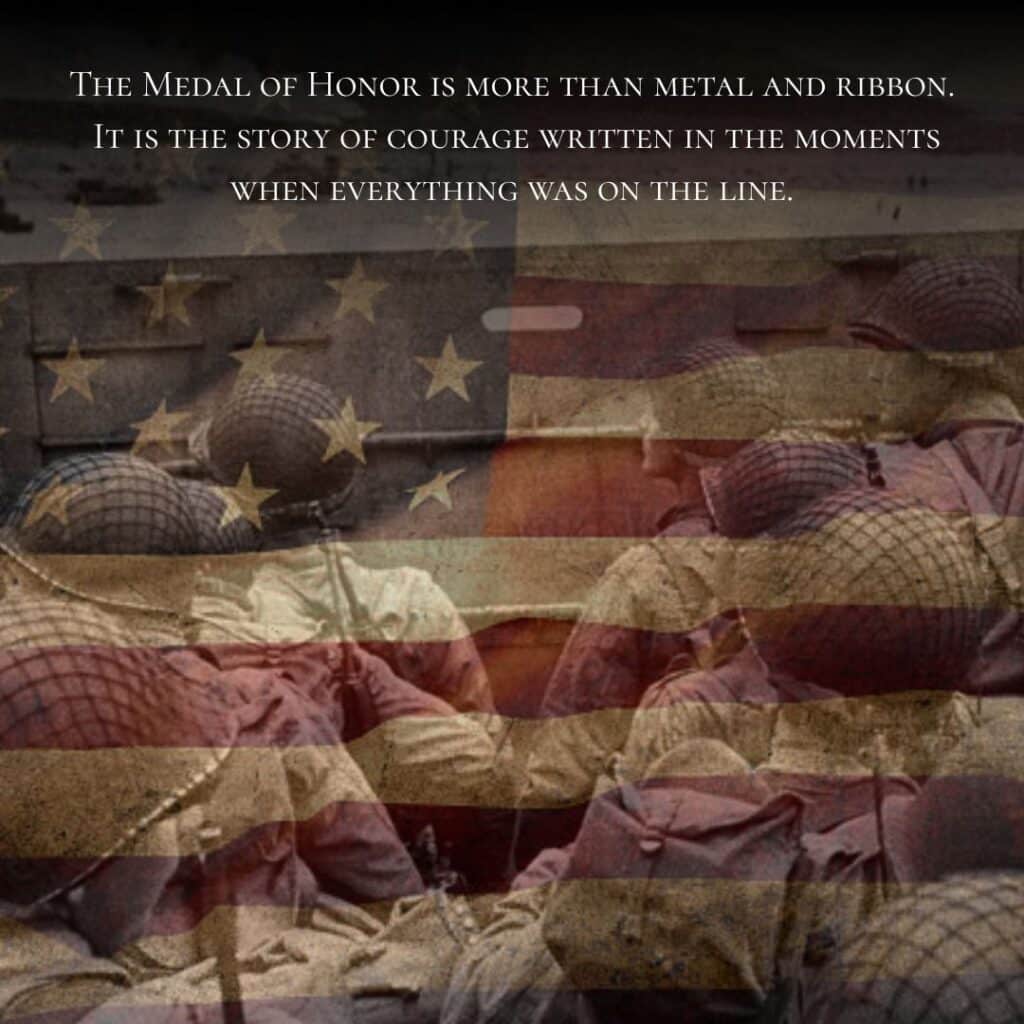
Valor Beyond Measure: The Legacy of the Medal of Honor 
Favicon 
soldiersangels.org

Valor Beyond Measure: The Legacy of the Medal of Honor 

In the heart of every nation beats the story of courage, sacrifice, and the extraordinary spirit of those who step forward when others step back. In the United States, this story finds its purest symbol in a single, gleaming medal: the Medal of Honor. To wear it is to carry a legacy that transcends time, a testament to valor beyond measure, and a reminder that freedom is never free.  The Medal That Tells a Nation’s Story  The Medal of Honor is not just a decoration. It is a living narrative of American bravery, awarded to those who risk everything for the lives of others, for the safety of their comrades, and for the ideals that define this nation. Each recipient etched their story into history, not for fame or recognition, but out of an unyielding commitment to something greater than themselves.  From the Civil War to modern conflicts, the Medal of Honor has honored men and women whose courage changed the course of battles and, in many cases, the lives of countless people. It is the highest military award in the United States, given sparingly, precisely because the acts it recognizes are extraordinary. It is a medal not only of heroism but of the profound human spirit that refuses to yield in the face of danger.  Stories of Courage That Define a Nation  Consider the courage of Paul R. Smith in Iraq, who fought relentlessly to defend his outpost despite being wounded, ultimately sacrificing his life to save countless others. The daring of Michael A. Monsoor, who threw himself on a grenade to shield his team, embodies the essence of selfless heroism. Or the bravery of Air Force combat controller John A. Chapman, who charged an enemy bunker threatening his team. Even after being wounded, he continued fighting to protect his fellow Service Members, holding the position and saving lives. These acts are not just historical moments. They are the heartbeat of a nation that refuses to abandon its principles, even in the face of unimaginable danger. Or think back to the beaches of Normandy during D-Day, where young soldiers stormed the shoreline while facing overwhelming fire. Many knew the odds were against them, yet they pressed forward anyway. Some performed acts so remarkable that their names became forever linked with courage itself. Each Medal of Honor tells the story of ordinary people achieving the extraordinary. It reflects a bravery that cannot be measured in rank, age, or experience. It can only be measured in action. The Medal of Honor represents moments when individuals chose duty over fear and sacrifice over survival, reminding us that courage has always been at the heart of the American story.  Valor Beyond the Battlefield  While most associate the Medal of Honor with wartime heroics, its essence goes beyond combat. It is about the unwavering commitment to protect others, to act selflessly when the stakes are highest. From rescuing comrades under fire to shielding civilians from harm, these recipients embody the ultimate ideals of service: sacrifice, integrity, and courage.  Every action recognized with the Medal of Honor is a reminder that heroism is not about seeking glory. It is about the willingness to act when others cannot, to place the welfare of others above oneself. This kind of courage inspires not only military personnel but all Americans, teaching us that bravery can exist in every walk of life, sometimes on the battlefield, sometimes in the quiet, unseen moments of service.  Families Who Carry the Legacy  The Medal of Honor also carries a profound personal story. Families of recipients bear both the pride and the burden of knowing their loved ones faced mortal danger for the sake of others. The medal is a symbol of sacrifice, not just for the individual but for the family who shares in the honor and the heartbreak.  These families carry forward a legacy that extends beyond medals and ceremonies. They embody resilience, pride, and an enduring connection to the values their loved ones defended. Their stories remind us that courage has a ripple effect; it strengthens communities, inspires generations, and preserves the ideals that define a nation.  A Call to Courage for Every American  Beyond honoring military valor, the Medal of Honor inspires every American to act with integrity, courage, and service. It challenges us to stand up for justice, protect those who cannot protect themselves, and embrace the responsibility that comes with freedom. While we may not face enemy fire in our daily lives, we can honor the spirit of these heroes in our choices, our actions, and the way we treat others.  Courage extends beyond the battlefield. It exists in schools, hospitals, neighborhoods, and homes. It is the teacher who defends a child from harm, the first responder who enters danger to save lives, the community leader who acts for the greater good. The Medal of Honor reminds us that extraordinary courage can take many forms and that every act of bravery matters.  Lessons That Transcend Time  From the deserts of Afghanistan to the forests of Vietnam, from the beaches of Normandy to the skies over Korea, recipients of the Medal of Honor have redefined what it means to be brave. Their stories are lessons in resilience, determination, and the power of selflessness.  These acts remind us that freedom does not come automatically; brave men and women protect it by risking everything. They teach that courage is not the absence of fear but the decision to act in spite of it. And they remind us that heroism is not about recognition but about doing what is right when it matters most.  Preserving the Legacy  In a world that often takes freedom for granted, the Medal of Honor stands as a beacon of what true sacrifice looks like. It is more than a medal; it is a legacy of valor, a symbol of patriotism, and a timeless reminder that the strength of a nation is measured not by its wealth or power, but by the courage of its people.  Institutions, schools, and communities share the stories of Medal of Honor recipients to preserve this legacy. Each tale serves as both inspiration and education, teaching young Americans about the cost of freedom and the extraordinary men and women who paid that cost willingly.  Honoring the Spirit of Valor  As we reflect on the Medal of Honor, we celebrate more than acts of heroism; we celebrate the unwavering spirit of America itself. We honor those who answered the call when duty demanded everything, faced fear with resolve, and left an unerasable mark on history. Their courage teaches us that valor is eternal, and that the legacy of heroes is a gift we must cherish, remember, and aspire to emulate every day. It is a call to all Americans to act with courage, to protect what is right, and to honor those who risk everything for others.  Valor Beyond Measure  Let us not only salute these extraordinary men and women but carry forward their example in our lives, striving for integrity, courage, and selflessness. The Medal of Honor reminds us that greatness is not measured by accolades but by the depth of one’s commitment to others and the willingness to rise when it matters most.  In the end, valor is not defined by medals or ceremonies; it is defined by the heart that dares, the hands that protect, and the souls who choose honor above all else. And that, truly, is a legacy beyond measure. About The Author Mike Isaac-Jimenez is a 25-year U.S. Air Force Veteran based in San Antonio, TX. He currently serves as a Marketing and Communications Contractor with Soldiers’ Angels, where he shares his passion for storytelling with his dedication to honoring military service. Mike holds a B.S. in Technical Management (Project Management) from Embry-Riddle Aeronautical University, along with A.A.S. degrees in Mechanical & Electrical Technology and Mechanical Engineering. He writes to preserve the legacies of America’s heroes and honor those who served and are still serving. The post Valor Beyond Measure: The Legacy of the Medal of Honor  appeared first on Soldiers' Angels.

Like
Comment
Share
Constitution Watch
Constitution Watch
20 hrs

A rancher’s land dispute could prompt SCOTUS to clarify sovereign immunity
Favicon 
pacificlegal.org

A rancher’s land dispute could prompt SCOTUS to clarify sovereign immunity

Tammy Blakey’s career as an airline captain took her all over the world from Shanghai to the Middle East. Now retired, she may soon be heading to the most exotic location yet: The Supreme Court. In 1990, Tammy and her husband acquired 165 acres of ranchland in Snohomish County, Washington. Together, they ran their small business, Flying T Ranch. When her husband passed, Tammy’s daughter Alexis stepped in to help and Flying T became a mother-daughter operation. Tammy fell in love with the idea of working the land when she was a little girl. Farming is in her blood, with her mother coming from a long line of Nebraska farmers. While Tammy’s parents did not continue that tradition, her uncle owned a farm where she would often spend her weekends. “I loved the whole thing,” she says of her time on her uncle’s farm. Rural life has always called to Tammy. She tried to move away from Washington once, but after a brief time in San Diego, which she says was “all concrete,” she quickly returned to the wide-open spaces she loved so much. For decades, Tammy would spend six to nine days a month flying passengers around the world. When she wasn’t in the air, she devoted all her time to Flying T Ranch. When she finally retired, she was excited to focus on the ranch and her three grandchildren. But life had other plans, and her potential Supreme Court lawsuit has thrown her a curveball. Two tiny strips of land Flying T Ranch sits between a former railroad easement to the north—now a public hiking trail—and the North Fork of the Stillaguamish River to the South. Along the northern edge of the ranch, running parallel to the old railroad easement, sits a barbed-wire fence that has been there since at least 1962. Within that fenced area are two small strips of land that are now the source of Tammy’s ongoing legal battle. In 1995, Snohomish County purchased the land adjacent to Flying T from a private owner. The deed included the first small strip of land. In 2021, the Stillaguamish Tribe of Indians purchased land that was adjacent to both Flying T and the County’s property, also from a private owner. Included in that deed is the second strip of land. While the two strips of land are not officially part of Flying T’s land deed, they have been enclosed within the fenced area for decades and maintained by either the Blakeys or their predecessors, both of whom used the land for grazing without any dispute. Under Washington law, an individual can make an adverse possession claim and gain official ownership if they can show that they have possessed a parcel of land continuously for a period of at least 10 years. To prevent any future land dispute, Tammy sought quiet title on the two strips of land within her fence line shortly after 2021. Tammy met the law’s qualifications, so she assumed that the quiet title claim would be a walk in the park. “I thought this would just be easy-peasy, a slam dunk,” she said. She couldn’t have been more wrong. Before she filed any claim with the courts, she wrote a letter to both the County and the Tribe, explaining her intent. Neither party responded. “I don’t know why they just didn’t answer my initial letter before I even filed anything. Why not answer that? I mean, it’s just a teeny swath of property,” Tammy says. She then filed a quiet title action in Washington State Court. Shortly after the suit was filed, the County transferred its portion of the property to the Tribe. The Tribe soon filed a motion to dismiss, claiming that it had sovereign immunity from quiet title suits. The superior court granted the motion and when Tammy took her case to appeals court, it upheld that decision. The case then went to the Washington Supreme Court, where the motion to dismiss was affirmed once more. Tammy argued that the immovable property rule limits a tribe’s sovereign immunity in cases where the real property involved is not on tribal land. The justices rejected that argument and held that Washington courts did not have jurisdiction to hear quiet title cases against sovereign tribal governments unless Congress directed them to do so. After exhausting all options to settle the dispute in the lower courts, Tammy teamed up with Pacific Legal Foundation and has asked the United States Supreme Court to hear her case and answer a question that went unanswered in an earlier 2018 case: Does the immovable property rule limit tribal sovereign immunity? The immovable property rule For centuries, European common law has accepted and practiced the immovable property principle, which dictates that when a sovereign owns land in another sovereign’s territory, that land is subject to the jurisdiction of the land, and courts, where it rests. The rule was articulated by the 18th-century Dutch jurist Cornelis van Bynkershoek, who wrote that when a prince buys property in another country, that property shall be treated just like the property of private individuals. American courts continued this European tradition. In the 1838 Massachusetts case United States v. Wilder, Judge Joseph Story, who later served as a United States Supreme Court justice, explained that sovereignty did not necessarily imply that a sovereign’s property is exempt from jurisdiction of the courts. In 1924, this principle was more broadly applied in Georgia v. Chattanooga. Georgia had tried to claim sovereign immunity on land it owned in Tennessee. The Supreme Court rejected the claim, holding that Georgia could be sued in Tennessee state courts regarding property that was held within the state. The Court’s reasoning was clear: When a sovereign acquires property in another jurisdiction, it submits to that jurisdiction’s property laws. Even the Foreign Sovereign Immunities Act (FSIA) says that foreign states are not immune from suits to “obtain possession of or establish a property interest in in immovable property.” In the 2007 case, Permanent Mission of India to the United Nations v. City of New York, the Supreme Court emphasized that sovereign immunity never extended to disputes over land ownership. Yet, even with the immovable property rule’s longstanding history, the Supreme Court has never directly applied it to tribes. Although it did get close in the 2018 case, Upper Skagit Indian Tribe v. Lundgren. Upper Skagit Indian Tribe was a land dispute case similar to Flying T. The Washington Upper Skagit Indian Tribe purchased land outside of its reservation and then told neighboring property owners that their fence was encroaching on tribal land. The neighbors then filed a quiet title action on adverse possession claims. The Washington Supreme Court had allowed the claim to proceed, holding that because the lawsuit was about property itself, and not personal liability, sovereign immunity was not applicable. The Supreme Court disagreed, saying the lower court had relied on an incorrect precedent. The case was then vacated and remanded back to Washington Supreme Court. While the Court acknowledged that the immovable property rule might have relevance in the case, the justices’ hands were tied because the issue had not been briefed and had not first been addressed in the lower court. Even so, four justices mentioned the rule specifically. In their dissent, Justices Clarence Thomas and Samuel Alito expressed their belief that the immovable property rule should apply to tribal sovereigns. Chief Justice John Roberts and Justice Anthony Kennedy, who voted with the majority, also recognized the issue’s importance, saying they would take up the immovable property question if Upper Skagit Indian Tribe returned to the Supreme Court and would likely find themselves in agreement with Justices Thomas and Alito. The rule would have likely come up when the case went back to the Washington Supreme Court, but both parties settled before that could happen and the immovable property rule never got its moment in the sun. Nine years later, Flying T presents the perfect opportunity for the Court finally to clarify whether the immovable property rule limits a tribe’s enjoyment of absolute sovereignty over land disputes on property outside of its sovereignty. Not her first rodeo While Tammy would have preferred to resolve the dispute without a legal battle, she is calmer than most would be when faced with a potential Supreme Court case. This isn’t her first rodeo. In 2000, Tammy won a landmark case at the New Jersey Supreme Court. In 1989, Tammy became the first female captain for Continental Airlines qualified to fly the Airbus A300. It was a tremendous honor, but it came at a cost. Tammy experienced ongoing discrimination that became the basis of a lawsuit that ended in the New Jersey Supreme Court. The case was groundbreaking and still is taught in college courses across the country today. For all her accomplishments, Tammy is humble. She isn’t motivated by fame or recognition, but she does feel a responsibility to stand up for her rights and the rights of other property owners who may find themselves in a similar situation. If tribes can buy land anywhere and then declare themselves immune to lawsuits, individuals have no means of asserting their rights, should a property dispute arise. In the next few weeks, the Supreme Court will decide whether it will take Tammy’s case, where they will have the opportunity to further secure property rights for all individuals. The post A rancher’s land dispute could prompt SCOTUS to clarify sovereign immunity appeared first on Pacific Legal Foundation.
Like
Comment
Share
Constitution Watch
Constitution Watch
20 hrs ·Youtube Politics

YouTube
Ashli Babbitt Court Battle Update
Like
Comment
Share
Constitution Watch
Constitution Watch
20 hrs ·Youtube Politics

YouTube
Judicial Watch sues for records on NIH scientist royalties, including Dr. Fauci!
Like
Comment
Share
Constitution Watch
Constitution Watch
20 hrs ·Youtube Politics

YouTube
Judicial Watch battles NIH over employee royalties—transparency restores trust!
Like
Comment
Share
Constitution Watch
Constitution Watch
20 hrs ·Youtube Politics

YouTube
Judicial Watch & Open the Books sue to expose taxpayer-funded royalty payments!
Like
Comment
Share
Freedom First Health
20 hrs ·Youtube Health & Fitness

YouTube
New Docs Show NYC Illegally Fired Unvaccinated + Microwave Weapon Causing Havana Syndrome
Like
Comment
Share
Freedom First Health
20 hrs

Federal Court Halts Changes to Childhood Vaccines
Favicon 
americanfaith.com

Federal Court Halts Changes to Childhood Vaccines

A federal judge ruled that Health and Human Services Secretary Robert F. Kennedy Jr. illegally appointed 13 members to a vaccine advisory panel, invalidating their votes and blocking a new vaccine schedule for children. According to District Judge Brian Murphy, federal officials “disregarded” historical methods and “thereby undermined theintegrity of its actions.” “First, the Government bypassed ACIP [Advisory Committee on Immunization Practices] to change the immunization schedules, which is both a technical, procedural failure itself and a strong indication of something more fundamentally problematic: an abandonment of the technical knowledge and expertise embodied by that committee,” Murphy wrote. “Second, the Government removed all duly appointed members of ACIP and summarily replaced them without undertaking any of the rigorous screening that had been the hallmark of ACIP member selection for decades.” Furthermore, Murphy criticized the CDC for scaling back childhood vaccines without the input of the ACIP. “The CDC must, at least, consider ACIP’s recommendations before adopting an immunization schedule, and following or failing to follow that requirement is reviewable by this Court,” Murphy wrote. The CDC initially acted in response to a directive from President Trump calling for a review of vaccines. American Academy of Pediatrics President Andrew Racine said in a statement that the decision “effectively means that a science-based process for developing immunization recommendations is not to be trifled with and represents a critical step to restoring scientific decision-making to federal vaccine policy that has kept children healthy for years.” He added that parents can “continue to turn to the AAP’s childhood vaccine recommendations and talk with their pediatrician about how to best protect their children’s health.” According to the AAP’s updated vaccine schedule from 2025, children between 6 and 23 months should receive a COVID-19 vaccine, while children between the ages of 2 and 18 “should be offered a single dose of age-appropriate COVID-19 vaccine.” Similarly, the AAP asserted in its policy statement for the COVID-19 vaccine that children 6 months through 18 years of age who are “moderately or severely immunocompromised require 2 or more doses of age-appropriate 2025-2026 COVID-19 vaccine depending on previous vaccination status.” The post Federal Court Halts Changes to Childhood Vaccines appeared first on American Faith.
Like
Comment
Share
Entertainment News
Entertainment News
20 hrs

HOPPERS Holds Tight to No. 1 Box Office Spot
Favicon 
www.movieguide.org

HOPPERS Holds Tight to No. 1 Box Office Spot

Disney Pixar’s HOPPERS holds tight to its No. 1 at the box office in its second week. The animated movie made $28.5 million in its second...
Like
Comment
Share
Young Conservatives
Young Conservatives
20 hrs ·Youtube General Interest

YouTube
Mayor Canceled For Making Fun Of GAYZ
Like
Comment
Share
Showing 138 out of 114418
  • 134
  • 135
  • 136
  • 137
  • 138
  • 139
  • 140
  • 141
  • 142
  • 143
  • 144
  • 145
  • 146
  • 147
  • 148
  • 149
  • 150
  • 151
  • 152
  • 153
Advertisement
Stop Seeing These Ads

Edit Offer

Add tier


Select an image
Delete your tier
Are you sure you want to delete this tier?

Reviews

In order to sell your content and posts, start by creating a few packages. Monetization

Pay By Wallet

Payment Alert

You are about to purchase the items, do you want to proceed?

Request a Refund