YubNub Social YubNub Social
    #virginia #texas #biology #newyork #trafficsafety #terrorism #carviolence #stopcars #carextremism #endcarviolence #assaultcar #stopcrashing #notonemore #bancarsnow #google
    Advanced Search
  • Login
  • Register

  • Night mode
  • © 2026 YubNub Social
    About • Directory • Contact Us • Developers • Privacy Policy • Terms of Use • shareasale • FB Webview Detected • Android • Apple iOS • Get Our App

    Select Language

  • English
Community
New Posts (Home) ChatBox Popular Posts Reels Game Zone Top PodCasts
Explore
Explore
© 2026 YubNub Social
  • English
About • Directory • Contact Us • Developers • Privacy Policy • Terms of Use • shareasale • FB Webview Detected • Android • Apple iOS • Get Our App
Advertisement
Stop Seeing These Ads

Discover posts

Posts

Users

Pages

Blog

Market

Events

Games

Forum

Daily Wire Feed
Daily Wire Feed
1 d

Trump Admin Pauses All Immigrant Visa Appointments
Favicon 
www.dailywire.com

Trump Admin Pauses All Immigrant Visa Appointments

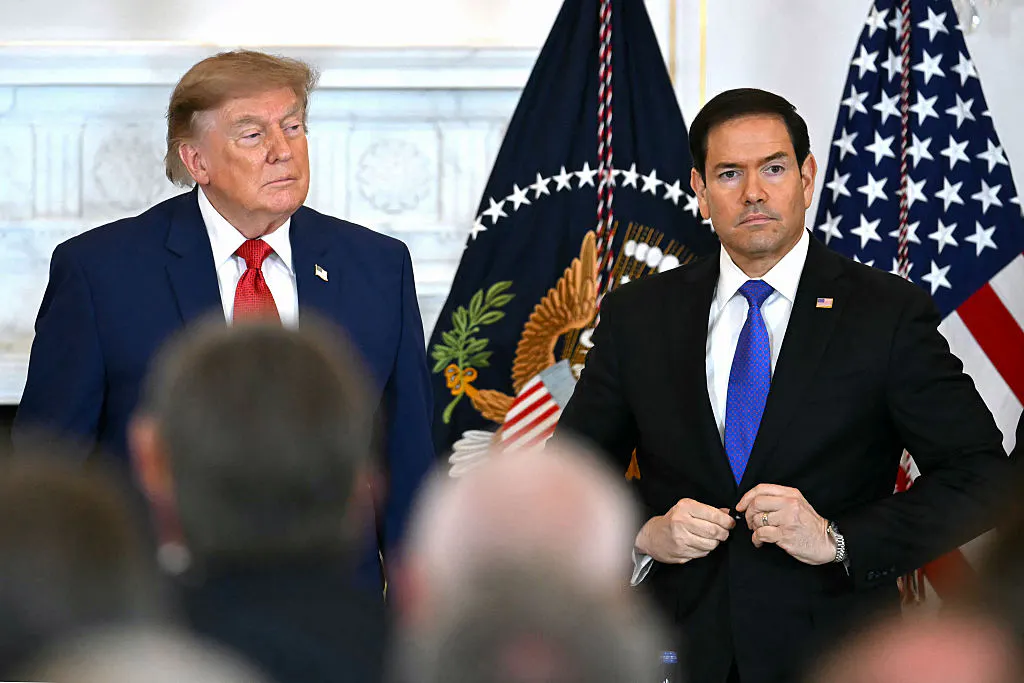
The State Department has temporarily paused all immigrant visa appointments for applicants across the globe. The federal government said it made the decision because it needs time to train all consular staff to better screen visa applicants to determine whether they are likely to become dependent on the American welfare system, the Washington Post reported on Wednesday. It is not clear when the appointments will restart. “A more prosperous America means ensuring that visa applicants are not likely to become a public charge, as defined under U.S. law and regulation, and not likely to become dependent on U.S. public benefits reserved for qualified Americans in need,” the State Department said in a statement. The department said the training would ensure consular officers “are fully equipped to evaluate every visa applicant comprehensively and consistently.” Last Friday, a federal judge struck down the Trump administration’s 75-country visa ban that sought to target those looking to take advantage of taxpayer-funded public benefits. U.S. District Judge Jeannette Vargas, who was appointed by President Joe Biden, said the 75-country policy  “represents a direct abrogation” of the consular officers’ authority to determine which foreigners are eligible for visas. The latest move comes as the Trump administration has taken recent actions to reform legal immigration programs. As part of the effort, the federal government has revoked roughly 175,000 visas tied to individuals accused or convicted of crimes. Federal officials are preparing to revoke the business and tourist visas of up to 200,000 foreigners who later sought asylum in the United States. The targets of the plan received their visas between 2016 and 2026. In an X post on Monday, Deputy Secretary of State Christopher Landau voiced the administration’s concerns about immigrants who game the visa system to extend their stay in the United States by later applying for asylum. “People in the US and all over the world are fed up with bogus asylum claims. Asylum isn’t supposed to be a loophole to circumvent immigration laws; rather, it’s supposed to provide a narrow safe harbor for persons persecuted because of their race, religion, nationality, membership in a particular social group, or political opinion,” Landau wrote. The Trump administration also recently proposed a $103,265 fee for employers looking to hire employees through the H-1B visa program, arguing that employers have abused the program to replace American workers with cheaper foreign labor and that the existing system fails to prioritize the most highly skilled workers. It is the administration’s second attempt at instituting a six-figure fee for the program after a federal judge struck down a previous plan to charge a $100,000 fee.
Like
Comment
Share
Daily Wire Feed
Daily Wire Feed
1 d

Trump Scores Second Major Win In Mail-In Voting Fight
Favicon 
www.dailywire.com

Trump Scores Second Major Win In Mail-In Voting Fight

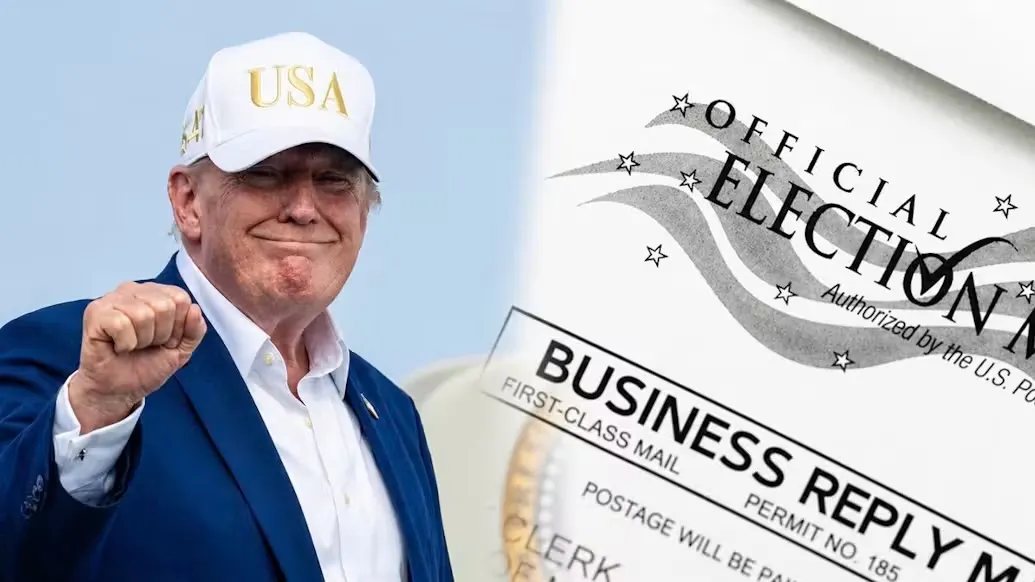
A Boston federal judge on Wednesday lifted her remaining block on key portions of President Donald Trump’s executive order seeking to tighten mail-in voting rules ahead of the midterm elections. U.S. District Judge Indira Talwani’s decision comes two days after a divided Supreme Court stayed a previous ruling from Talwani that blocked the Trump administration from implementing portions of the order. In her nine-page order, Talwani, an Obama appointee, expressed frustration with the Supreme Court’s intervention and cited Justice Ketanji Brown Jackson’s dissent but said she was “compelled” to lift the injunction in light of the high court’s ruling. The development allows the U.S. Postal Service (USPS) to move forward for now with new requirements for mail ballots in federal elections, even as Democratic-led states challenge the new rule in a separate lawsuit. “This is a major win for the security of American elections,” White House spokeswoman Lauren Bis told The Daily Wire. “These are commonsense measures that protect the security of mail-in ballots and ensure only Americans are electing American leaders. This Administration will continue to lawfully enact the agenda President Trump was elected on — which includes the safety and security of our elections.” The Supreme Court’s unsigned 6-3 decision Monday marked an interim victory for Trump but did not resolve the order’s underlying legality. The justices found that the Trump administration was likely to prevail on its argument that the states challenging the order lacked standing because they had not demonstrated the concrete and imminent injuries necessary to bring their claims at this stage. “The Court’s disposition of this application does not mean that any measure taken by the Government to implement the Order will necessarily be lawful. On that score, time will tell,” the court wrote. “But the Order itself does not harm the States, so the District Court lacked jurisdiction to bar the Government from trying to implement it.” In March, Trump signed an executive order directing the Department of Homeland Security to create and distribute “State Citizenship Lists” identifying residents who are U.S. citizens and will be at least 18 years old by the next federal election. A separate provision directed the U.S. Postal Service to establish new procedures for mail-in and absentee ballots in federal elections. Last Friday, the USPS issued a final rule establishing new standards for mail-in ballots in federal elections. Under the rule, election officials would have to submit voters’ names, addresses, and unique ballot-envelope barcodes through a federal portal before handing ballots over to the Postal Service. Ballots in violation would be rejected and returned to the authorized ballot mailer. All three liberal justices dissented from Monday’s Supreme Court decision. Justice Jackson wrote a solo dissent to blast the court’s order. “This is not a close call. The Government suffers no harm from an injunction limiting unlawful actions, much less ‘hypothetical’ and ‘speculative’ acts that the Government says it was not even sure it would take,” Jackson wrote.  “When the Government’s obvious goal is to interfere with the Plaintiff States’ practices and prerogatives in a manner that the Constitution does not authorize, it is both a serious legal error and a grave misuse of our equitable emergency powers to let the Executive proceed even one step further,” Jackson added.
Like
Comment
Share
The Conservative Brief Feed
1 d

Scripture Shock: Blue Playbook Goes Moral
Favicon 
theconservativebrief.com

Scripture Shock: Blue Playbook Goes Moral

In red America, where congregations are community and scripture is common vocabulary, a growing number of Democratic candidates have decided that meeting voters where they actually live means speaking fluently about faith — not as costume or code, but as a throughline to public purpose. At a Glance Democratic candidates in red and red-leaning states are centering faith and scripture in their messaging to broaden appeal beyond the party’s base. This is a strategic revival, not a novelty: Democrats have periodically leaned into religious outreach when the “God gap” widened and cultural distance from churchgoing voters grew. Named candidates — including pastors and seminarians — are running explicitly faith-forward campaigns that link religious duty to policy aims. The approach seeks to connect on shared moral ground without abandoning progressive commitments, particularly around justice, anti-corruption, and community care. What is happening: a faith-forward turn with red-state specificity A wave of Democrats running in conservative terrain are putting faith at the center of their arguments for office: telling their own religious stories on the stump, quoting scripture in ads, and framing policy as an expression of moral duty. Major outlets have cataloged the pattern, describing “an unusually high number” of Democratic candidates in red states who now discuss their faith openly as they court independents and disaffected Republicans alongside Democrats who worship regularly. The list is concrete, not theoretical. Reuters, for example, identified clergy and lay candidates — among them Iowa’s Sarah Trone Garriott, Texas’s James Talarico, and others — who are explicitly incorporating religious themes as part of their core message rather than as occasional garnish. This reorientation is not about mimicking Republican religiosity; it is about replacing a defensive crouch with moral confidence in spaces where religious language structures civic life. In practice, that means candidates testify to what their faith asks of them — honesty in office, care for the poor, protection of the vulnerable — and then connect those imperatives to familiar policy debates: corruption, health care access, schools, and community safety. Videos, church basements, potlucks, and small-town newspapers are the distribution channels; scripture, not slogans, is the connective tissue. Why this is happening now: the long arc of the “God gap” and periodic Democratic revivals The religious and partisan sorting that accelerated after the late 20th century left many churchgoing Protestants, especially evangelicals and Latter-day Saints, concentrated in red states and aligned with the GOP, while Democrats grew stronger among the nonreligious and in urban centers. Political scientists and journalists have described that structural divide for two decades; state religious composition still maps roughly onto red-blue electoral differences, which creates an obvious incentive for Democrats in religious regions to speak the language their neighbors speak. After the 2004 election, Democratic leaders tried to narrow the resulting “God gap” by building formal faith outreach — House faith working groups, DNC advisory channels, and candidate rhetoric that made moral reasoning legible from the pulpit to the union hall. Barack Obama’s 2006-2008 vocabulary — from “we worship an awesome God in the blue states” to cadences that quoted the prophets — showed how faith and progressive policy could sit comfortably together without collapsing church-state boundaries. Today’s revival follows the same logic. Journalists describe a new comfort among some Democratic contenders — including white progressives who once avoided religious talk — to name their beliefs and invite conversation, especially in places where church attendance remains a weekly norm. The recent crop differs from mere outreach staff in that the candidates themselves, including pastors and seminarians, are the messengers, which compresses the distance between private conviction and public program. How campaigns are operationalizing faith without pandering Effective faith-forward campaigns in conservative states share several mechanics. First, biography is the doorway. Candidates narrate how a tradition shaped their conscience and civic calling — not to demand agreement but to explain motive. Second, scripture appears as moral frame, not as proof text: verses about the stranger, the widow and the orphan, or the demands of honest scales are invoked to ground ethics in governance — anti-corruption, fair markets, and dignity in public services. Third, they pair inclusive language with local institutions. Rather than siloing religion, they visit food banks, VFW halls, and ecumenical councils, showing how churches already sustain community life. The line between authenticity and pandering is bright. Consultants who work this terrain stress that voters punish candidates who suddenly discover church at campaign time. The durable play is to speak from one’s own tradition and welcome others’, to avoid litmus tests, and to treat religious liberty as a shared good. Advocates argue that Democrats can reach faith voters “without compromising progressive values” by foregrounding common-good concerns like corruption, competence, and care for neighbors — themes that resonate across pews even when doctrinal views diverge. Examples and the messages they carry Consider the candidates named by national reporting. Sarah Trone Garriott, a Lutheran pastor in Iowa, and other clergy-formed Democrats have campaigned as people for whom ministry and public service are adjacent callings, translating pastoral commitments — truth-telling, tending to the vulnerable, stewardship — into the prosaic work of budgets and oversight. Texas’s James Talarico has pushed his party to stop treating religion as a liability in red states and, according to allied analyses, has framed his policy fights — from schools to anti-corruption — in terms that churchgoing voters recognize as moral rather than technocratic priorities. These are not generic “values” ads; they are explicit claims about what faith requires in public life and what honest government looks like in practice. That specificity is the point. Voters who tithe, volunteer in children’s ministries, and bury their dead from church sanctuaries can smell opportunism. Candidates who show up in those spaces — not just for photo-ops, but for conversations — can open doors that would otherwise remain closed. The resulting coalition is rarely a wholesale partisan flip; it is often a margin. But in states where margins decide statewide control, moving two or three points among practicing Christians can be decisive. What this strategy is — and is not — likely to achieve Faith-forward messaging will not erase deep issue divides on abortion, sexuality, or education; those remain fault lines. It can, however, reframe familiar debates around shared moral goods like honesty, neighbor-love, and responsibility, shifting some voters from reflexive partisanship to case-by-case evaluation. The practical target is coalition elasticity: independents who attend church, moderate Republicans disenchanted by corruption or harsh rhetoric, and Democrats who are themselves religious but feel culturally exiled from politics that treat faith as an embarrassment. National coverage suggests party strategists see enough opportunity in that overlap to field and fund candidates who can credibly inhabit it. Historically, Democrats make their biggest religious inroads when they lead with competence and anti-corruption and invite theological conservatives to cooperate on adjacent, less doctrinally charged priorities: addiction treatment, rural hospitals, foster care, disaster response, and honest budgeting. That has precedent in earlier Democratic surges with religious voters and aligns with how pastors and lay leaders already organize community life — by solving problems at hand. The current crop of candidates is betting that moral credibility, not ideological shape-shifting, is the necessary first condition for any of that to happen at scale. Bottom line Democrats running in red states are not importing religion into politics; they are reentering a conversation that never left those communities. When the messenger is credible and the message links scripture’s imperatives to the work of clean government and neighborly care, faith can be a bridge — not to unanimity, but to enough shared ground to win. That is the strategic wager. Recent reporting shows more Democrats are willing to place that bet, and in places where church remains the center of civic gravity, it is a rational one. Sources: youtube.com, usatoday.com, cnn.com, yahoo.com, purdue.edu, reuters.com, salon.com, religionunplugged.com, theweek.com
Like
Comment
Share
Daily Caller Feed
Daily Caller Feed
1 d

Philadelphia District Attorney Larry Krasner Says He Wants To ‘Blow Up’ White House Ballroom
Favicon 
dailycaller.com

Philadelphia District Attorney Larry Krasner Says He Wants To ‘Blow Up’ White House Ballroom

‘We are all going to be sitting here with smiles on our faces’
Like
Comment
Share
Daily Caller Feed
Daily Caller Feed
1 d

EXCLUSIVE: New Jersey School District Pushed ‘Secret Gender Transitions Behind Closed Doors,’ New Lawsuit Alleges
Favicon 
dailycaller.com

EXCLUSIVE: New Jersey School District Pushed ‘Secret Gender Transitions Behind Closed Doors,’ New Lawsuit Alleges

‘hide life-altering decisions from parents’
Like
Comment
Share
The Lighter Side
The Lighter Side
1 d

Scientists and Volunteers Take Big Step Towards Saving Rare ‘Cryptic’ Australian Orchid
Favicon 
www.goodnewsnetwork.org

Scientists and Volunteers Take Big Step Towards Saving Rare ‘Cryptic’ Australian Orchid

There are many orchids at risk of extinction in Australia alone, few more than this rosella spider orchid. Thanks to a dedicated team of volunteers however, the Royal Botanic Gardens in Victoria actually possess a nursery with twice as many orchids as were estimated to exist in the wild when they started, providing a stable […] The post Scientists and Volunteers Take Big Step Towards Saving Rare ‘Cryptic’ Australian Orchid appeared first on Good News Network.
Like
Comment
Share
SciFi and Fantasy
SciFi and Fantasy  
1 d

It’s In the Cards: Ali Trotta’s Offerings for Ordinary Gods
Favicon 
reactormag.com

It’s In the Cards: Ali Trotta’s Offerings for Ordinary Gods

Books book reviews It’s In the Cards: Ali Trotta’s Offerings for Ordinary Gods Myths, legends, and arcana are the materials with which Trotta reflects our lives, showing readers how close they might be to the stuff of legends. By Tobias Carroll | Published on August 26, 2026 Comment 0 Share New Share In an essay on Tarot cards and storytelling, Rachel Pollack wrote about the deep connections between the two. “I found I had no interest in any predictions, it was the Tarot itself that fascinated me,” Pollack wrote. “Each card seemed a frozen moment in a story.” Pollack, the author of both compelling stories and authoritative explorations of Tarot cards, possessed plenty of expertise in both fields. And the use of Tarot as a means to explore the place where stories and rituals converge continues in a myriad of forms. In the case of Ali Trotta’s Offerings for Ordinary Gods, that takes the form of a series of poems, each of them laced with archetypal figures and the kind of intention that fuels a particularly intense session of divination. In the case of Trotta’s book, that comes in part from the incantatory aspect of these works. “There is no better love spell than a poem,” Trotta writes. “An effective poem is a hand held out into the darkness, a reminder that we are not alone, even when we feel that way.” Trotta goes on to describe the way a story is told as “a kind of incantation.” What this means, in practice, are a number of poems in this collection that incorporate the imagery of Tarot cards. Among the titles readers will find within these covers are “The Magician Courts the Hierophant,” “The Page of Wands Is Fickle at Best,” and “The Hanged Man Passes Judgment.” Elsewhere in the book, Trotta incorporates characters from mythology, folklore, and fairy tales, including Athena, Rumplestiltskin, and Little Red Riding Hood.  In the case of “The Queen of Cups Considers the Magician,” that intersection finds the poem’s narrator recalling a meeting whose occult references go far beyond the characters’ point of origin: “At the crossroads,/ you kissed me goodbye/ but left a secret in my mouth,/ salt and ash, honey and apples—/ the way you said my name/ always felt like a ceasefire,” Trotta writes. The imagery itself is freighted with supernatural abilities, but the overwhelming feeling here is one of weariness: a narrator who has tired of the flaws of a onetime paramour. There’s also something of the paradox about these poems—and this book. Part of the very concept of gods is, well, divinity; is an ordinary god much of a god at all? (Terry Pratchett might have something to say in this debate, as might Godshaper collaborators Si Spurrier and Jonas Goonface.) The way Trotta blends archetypes with familiar emotional territory points to one resolution of the dilemma of “ordinary gods.” That takes a different form later in the collection, with poems like “Circe Meditates On Betrayal.” The title is the stuff of myths and legends that have endured for thousands of years, but the concerns raised are more mundane: “You pretend you slept well./ You hit the snooze button twice./ You make stronger coffee./ You wear your favorite shoes./ You laugh louder than you should.” And “Love Spell” begins by juxtaposing “madness” and “magick” before concluding “What is this then/ but love?” Buy the Book Offerings for Ordinary Gods Ali Trotta Buy Book Offerings for Ordinary Gods Ali Trotta Buy this book from: AmazonBarnes and NobleiBooksIndieBoundTarget Not all of these poems translate the mythic or grandly supernatural to a more accessible scale. “Nimue Speaks to Merlin on the Occasion of Their Parting” plays out in a more familiar fantastical territory, with its references to how “[t]his cave of secrets/ is full of echoes, its magic dark and unforgiving.” The same is true of “Hephaestus Councils Rumplestilstkin,” which opens with sage advice: “Just because you are given straw/ doesn’t mean you have to turn it into gold.”  Trotta’s collection falls into a long tradition of literary works that juxtapose everyday concerns with the stuff of myths and legends. There were elements of it reminiscent of Cesare Pavese’s The Leucothea Dialogues, for instance, in which the mid-century Italian author in question used the stuff of classical myths to address certain contemporary concerns. Trotta’s methodology feels similar: In an era where it can be all too easy to feel unimportant, she reminds the reader of the ways in which their own experiences might not be too far removed from the conflicts discussed in ancient tales.  The incorporation of Tarot into the mix is especially telling here. In a recent New York Times article on a Morgan Library exhibit dedicated to the history of Tarot cards, Nina Siegal spoke to curator Claire Gilman about the show. Gilman, in turn, pointed to Pamela Colman Smith’s artwork in the Rider-Waite-Smith deck.  “Gilman said that it was probably Smith’s evocative illustrations, which seem to offer an enchanting range of narrative interpretations, that led to the continuing appeal of tarot in modern times,” Siegal wrote. For Trotta, myths, legends, and arcana—both major and minor—are the materials with which she reflects our lives, showing readers how close they might be to the stuff of legends, a source of both exultation and caution. If that means that Trotta’s own collection might spark inspiration in the mind of another writer years from now, it’s just a sign that the tradition is continuing.[end-mark] Offerings for Ordinary Gods is published by CLASH Books. The post It’s In the Cards: Ali Trotta’s <i>Offerings for Ordinary Gods</i> appeared first on Reactor.
Like
Comment
Share
SciFi and Fantasy
SciFi and Fantasy  
1 d

Read an Excerpt From The Lost Spectacular by Zoé Duhaime
Favicon 
reactormag.com

Read an Excerpt From The Lost Spectacular by Zoé Duhaime

Excerpts fantasy Read an Excerpt From The Lost Spectacular by Zoé Duhaime Noon Bonaventure and Munro Forrest weren’t always rivals chasing each other through the pages of books… By Zoé Duhaime | Published on August 26, 2026 Comment 0 Share New Share We’re thrilled to share an excerpt from The Lost Spectacular by Zoé Duhaime, a new fantasy novel out from Erewhon Books on September 29th. Noon Bonaventure and Munro Forrest weren’t always rivals chasing each other through the pages of books. They grew up listening to stories from Munro’s grandmother and arguing over their favorites. But then one night, they discovered the Spectacular, a mysterious, ever-changing festival glittering with everything lost: lone pearl earrings and apple orchards, abandoned first drafts and shipwrecks, a skyful of umbrellas. This Spectacular, found only by invitation or in the pages of misprints, is the most precious thing in the world. In its wake, stories settle. Noon has always been the sort to move on with grace, and Munro goes into the business of never letting go—their divide starker than ever after a misstep abruptly closes the door on what could have been.Now long estranged yet forever drawn to one another, Noon and Munro’s differences have defined their ways of life. Munro, an ambitious museum curator, vows his next exhibit will trap the Spectacular and return its lost treasures, while Noon, queen of cat-and-mouse, has been chosen as the next captain of the show.As opening night for Munro’s exhibit draws closer, he and Noon will have to stop running and finally agree on how their story ends—and perhaps, find a way to start again. Buy the Book The Lost Spectacular Zoé Duhaime Buy Book The Lost Spectacular Zoé Duhaime Buy this book from: AmazonBarnes and NobleiBooksIndieBoundTarget Chapter One This Too Shall Pass In the third chapter entitled “The Wild Wood” in the book The Wind in the Willows (1908) by Kenneth Grahame, the character Mole had an umbrella stand with no umbrella. This is because it was stolen. It had been quite some time since Noon Bonaventure had last seen a book move. Words just didn’t dance for her like they used to, the secret in the margins had gone on holiday. She had even forgotten about the man in the charcoal cloak—or something like forgetting—and had been showing customers to their books without care. Even to the shelves of rare landscape fiction, she hadn’t been too concerned. The worst that could happen, after all, was that a client would think they needed glasses, or had stayed up too late, or maybe that they should go to church. There had been no one in years looking on purpose at La Tobaganne, no one since her dad had passed and the households drifted. It was a peculiar rainy day in the City Not-Unlike-Montréal when Odette came looking for her usual order of misprints. Odette visiting wasn’t itself odd—she was a spirited retiree who liked to backseat drive the failing English-language bookshop—but already that day things had gone quite wrong. The only other shop hand had given in her two weeks’ notice, a home visit for a private collection had ended with a marriage proposal from a septuagenarian, and the barista next door had visited to warn that their basement had entirely flooded. The misprint of The Wind in the Willows hadn’t raised any alarm bells, it was only a typo in the table of contents. The illustrations were all where they were supposed to be when Noon pulled it off its shelf for one of her only reliable clients. Then, clear as day, the foreword stirred. Like sand in a sieve, a sentence percolated and reordered itself. The man in the charcoal cloak fumed. “Where the hell have you been? The draft is done and Wordsworth is over.” Noon closed the book as casually as she could manage it and started to pull its neighbours: the letters of Jules Verne, A. A. Milne, E. T. A. Hoffmann, and other stars of her childhood. Odette, who wasn’t an easy customer at the best of times, watched coolly. Years ago she’d explained she was a retired archivist, and occasionally her temperament betrayed a fierce need for order, usually at the bargaining table or whenever a client of the café brought a coffee to the bookshelves. “You know, I’d forgotten, but the Grahame is actually on hold,” Noon tried. “That’s bad business, angel. I’d have given five for it yesterday.” Five hundred for a typo in the table of contents was outrageous even for Odette. The young shopkeeper drummed her fingers on the cover and weighed a basement flood against the worst-case scenario for a fellow in a charcoal cloak. “But I’d give seven today, I’ve got an appointment.” “You might be interested in this—here, it’s got “The Sandman” (1816) by Hoffmann, and it’s Desplechin’s signed copy.” That was, she knew, Odette’s weakness—operatic set designers, lush illustrators. “He’s intolerably dramatic—absolutely not.” “Andersen’s diaries (1871)? It’s got a dedication—” As if on cue, it started to thunder. Surely the basement waterline was rising. “Seven is a fair price for Grahame and you know it,” Odette continued. The radio was doing nothing to cut the quickly growing tension between the two women. There had only been two customers that morning, and just yesterday there had been a hydro bill. Noon clapped the cover of the book together a few times, hoping maybe she could at least scare off any interlopers. Seven would give her a moment to breathe. She hoped they weren’t by the riverbank, in the first chapter—that was her favourite part. But you couldn’t trust storybook characters who’d crawled out of their books to throw a circus, not as far as you could throw them. At this point in her life, however, money meant more than the secrets of others: Money meant a break in the rain for the bookshop. “Seven is more than fair,” she agreed. Every receipt she hand-wrote in her dead father’s fountain pen (always). We all know where this is going. The apartment upstairs was only zoned for living by a prayer, but things were easier in the City Not-Unlike-Montréal. Inspectors were rare, and Noon Bonaventure was charming. The visits so far had ended with many comments about how difficult it was to run a business these days, much less as a young woman, and how well did books even sell, anyways. Inspectors were not the problem. The corner of Rue Bader Ginsberg and Blvd Rigaud was not the bookseller’s paradise that it had been, back before Noon’s life had gone to hell. On the bright side, there were now two dentists she could turn to in a pinch, and her smile had never been brighter. She was the last bastion of a dying neighbourhood trade. Her tastes were eclectic, but she was the child of a bookshop owner and an apprentice of surrender. Those days she was on a steady march of gardening memoirs, transport history, letter collections, and cookery. Fiction felt those days like an empty hall of mirrors. If the basement next door hadn’t been flooding, Noon would have spent the night with her binding tools and a glass of wine, and might have entertained a date. Hell, she might have even sensed something was wrong. But as it was, she was up to her knees in swamp water and helping to haul up buckets. The café owner was beside himself. “Ah fuck, there goes the eight ounces— Are you sure your dad didn’t tell you where he kept the pump?” Long stacks of paper cups were sailing around the gurgling floor drain, now a whirlpool. The radio from upstairs was reporting on citywide flooding. Even the mayor and her pretty bicycle were lamenting. “You know, I forgot to ask,” Noon shouted, a bucket in each hand. “Can you call your mom?!” Noon nodded and dragged the buckets up the stairs, past frantic baristas. If she’d been more approachable that year, they might all be friends. A napkin plumed by her, the door blew open, all things passed her by. She dialed her mom. “Allô maman, how’s the dinner crowd?” A rainstorm in that city always meant more bottles of wine. Hardly anyone could keep track of their umbrellas, and everyone in a City Not-Unlike-Montréal looked better with wet hair anyways. Her mom said as much from her popular restaurant that she ran like a newsroom. “Did Dad ever tell you where he kept the storm supplies? The pump? No, I don’t know, he just said the pump. Oh, god—” The door to the café burst open. A siren somewhere was joined by another. Noon’s hair was a river down her neck, and a cyclist spun across the intersection. There were a million things she had forgotten to ask when her dad got sick, and they ranged from inconvenient to devastating. Most she had made peace with, and then every so often there was a rainstorm. Apparently her dad had lent it out to a friend. Then, of course, he’d gotten sick and died, and in the interim, they’d had bigger fish to fry at La Tobaganne, never mind in la famille Bonaventure. She was personally proud that she had made it out of brain cancer without a one-way ticket anywhere else. Of course, her dad had many friends, and those friends had many businesses, and she would bet that all of them had flooded basements at that very moment. There was a boom of thunder and a split of lightning. The rain was thick as pencils. “I’ll add it to the list then, thanks, Mom! Courage!” She took a deep breath and turned around. Her neighbour had made one of his employees cry. “You know what, Joseph? I have no clue where the pump is, my mom doesn’t know, and I’ve got to get back.” There was silence and a crash. “Can you call the Lafitte boy?!” The Lafitte boy was one degree of proximity too close to a bad time, but years ago, he’d been good with downspouts and drains and all that. Noon didn’t call for help, and she certainly didn’t call in that direction. Instead of answering, she stepped out into the storm. Across the street, blurred by water, interrupted by bicycles leaving a wake behind them and children in ladybug jackets, was a man in a charcoal cloak. A mail carrier in yellow galoshes stomped past her. She was a character in a story—she knew it, and she hated it. On her desk was a stack of correspondence and bills in a puddle, plus an omen of doom. The notice had the City Not-Unlike-Montréal motif on the corner. All business owners flinched upon receiving one. Notices of road construction had closed the bookshop down the road, her favourite Cajun restaurant, and a florist. It seemed like Blvd Rigaud was under construction so often that Noon wondered if they’d gotten anything right the first time they built it. Only the dentists and lawyers survived. Noon took a deep breath and did what had gotten her through the decade. “This too shall pass,” she murmured, and shrugged off her jacket. Construction would eventually bring wider sidewalks and better foot traffic. Perhaps she could have a terrace, serve wine, and have also have her bookshop. La Tobaganne needed a paint job too. Maybe she could take advantage of the slower traffic, and the loud noise, and the death knell of flimsier businesses. She’d give her contact at The Gazelle a call and see if they couldn’t do another joint event. Most importantly though, nothing was worse than brain cancer, and besides, she needed to get through the flood—first things first. The mobiles her dad had hung up, wooden whales and toboggans and somersaults of flowers spun on their threads. A toy train slowly rolled around a table of locomotive memoirs, each carriage a candleholder. The glass lamps glowed like honey jars in the dark, and the toboggan nailed above the door cast shadows that looked like dentures. A portrait of her dad and Vermillion Forrest was framed behind the front desk. Just out of frame, though she felt their presence constantly, was her as a girl and her best friend, the bad time mentioned above, the king of sour nostalgia and good shoes, museum curator of never letting go, Munro Singh Forrest. Beside that photo was a painting of Millie as a girl, something Noon had inherited after the woman’s death, artist unknown. There were many, many feature pieces from The Gazelle, also framed. Along the floor was a thin spiral of sand, leading from the desk to the door. Noon looked up again, to be sure of what she had seen on her way over—beyond the blur, through the rain, the man in the charcoal cloak. More than anything, he annoyed Noon, a nuisance from a folktale she tried not to entertain. She didn’t wave, and wondered gloweringly what they wanted this time. It was a quiet life, but she was making it work. That was true until she saw beneath the notice of construction a grey envelope. June Clara Bonaventure, La Tobaganne, proprietor 852 Rue Bader GinsbergA City Not-Unlike-Montréal***The Spectacular!9 o’clock this evening, in the garden behind the library.Come as you are. It had been years since she’d last seen the red seal on the back, pressed on a long white feather and dusted with a gold lustre. There were marvellous things just down the street, and luxuries she didn’t look at. The invitation might have been recycled there and then, like the rest of them, if she hadn’t first noticed that her fountain pen was missing, and then lost her damn mind. Excerpted from The Lost Spectacular, copyright © 2026 by Zoé Duhaime. The post Read an Excerpt From <i>The Lost Spectacular</i> by Zoé Duhaime appeared first on Reactor.

Like
Comment
Share
Daily Signal Feed
Daily Signal Feed
1 d

State Policy Network Hosts Annual Meeting, Former Attorney General Jason Miyares Speaks on Federal Overreach
Favicon 
www.dailysignal.com

State Policy Network Hosts Annual Meeting, Former Attorney General Jason Miyares Speaks on Federal Overreach

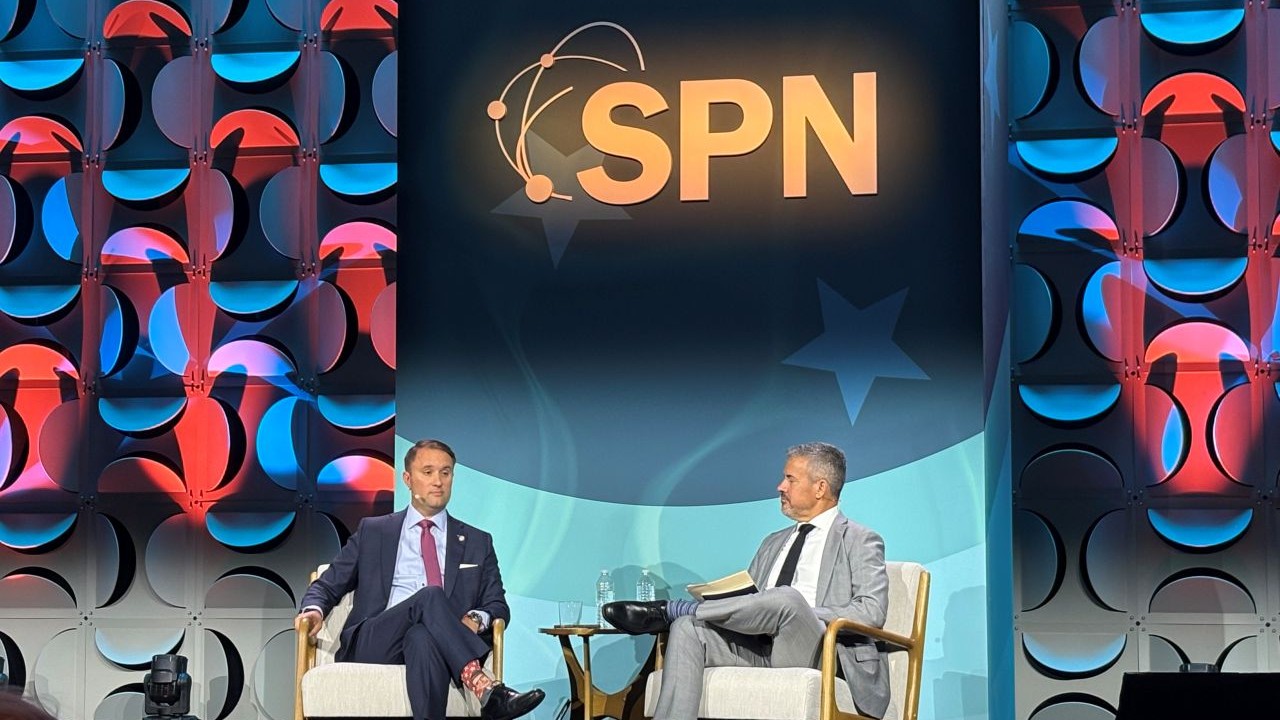
ORLANDO, Fla.—This week, State Policy Network is hosting its annual meeting in Orlando, Florida, gathering leaders and experts in state policy, nonprofits, and industries to share ideas and consider answers to problems that American citizens face. With over 100 sessions and more than 350 organizations represented at the conference, the meeting seeks to create opportunities for attendees to discover solutions that create opportunities for Americans to flourish. The meeting attracts professionals from each state in the country, allowing space and opportunity for them to network and share best practices for their states. Tuesday’s schedule of events featured various well-known speakers. Dr. J. Robert McClure, president and CEO of The James Madison Institute, a nonpartisan, public policy research organization based in Florida, offered hope to the largely conservative audience by reminding them that the Sunshine State used to be a politically blue state but now is a red state—due in part to groups like State Policy Network. “Today, [Florida is] a red state, and it’s getting more and more red,” he said. “So, I tell you that to give you hope. Whether you’re in a small state, a large state, red, purple, or blue—keep fighting, keep working.” “Together, we can continue to advance freedom and liberty, and do it together at the state level, and ultimately in Washington as well.” Miyares on Biden Administration, Federal Overreach Later in the afternoon, former Virginia Attorney General Jason Miyares gave a keynote speech at an event titled “Federalism and the Power of States.” He began by noting that his family fled communist Cuba to come to the United States to find freedom. He recounted that his uncle was arrested in Cuba during the Bay of Pigs Invasion and went through “the humiliation of a mock execution” along with other political prisoners. “I remember, as a child, telling him, ‘I don’t understand.'” His uncle answered, “Well, you don’t understand because you were born here [in the United States], and we have laws.” Miyares then spoke on the importance of federalism, the system of government where power is divided between a central national government and individual state governments. After highlighting his personal reasons for accepting a role in public service, he told the audience, “I think federalism is the great tool of liberty that too often is left in the toolbox.” “The [State Policy Network’s] Center for Practical Federalism gets it right, where it is talking to legislators and leaders in the 50 states, to explain that you have to choose to fight back,” Miyares said. He went on to describe his role as attorney general and the work he did to fight back against overreaches by the Biden administration. “In the four years of the Biden administration, if you look at all of the laws and rules and [regulations] imposed on the American people, we calculated 95.8% of every law, rule, and regulation imposed on the American people was not an act of Congress,” Miyares said. As one example in Virginia, he recalled that fellow attorneys working in his office urged him to sue the U.S. Department of Agriculture over a new regulation related to the reduced school lunch program. A federal update from the Biden administration required schools receiving federal nutrition and school lunch assistance to include sexual orientation and gender identity in their anti-discrimination policies. The attorneys told Miyares that if a school district is “accepting a single dime of federal money to provide reduced lunches for your children, as a catch to that, if you accept this federal money, you also have to accept the Biden administration’s redefinition of what sex is under Title IX … [therefore] allowing trans athletes into your schools, your teams, and your locker rooms.” So, in 2022, Miyares and 22 other Republican state attorneys general sued the Biden Administration and the USDA. “[That] radical redefinition … would affect over 90% of the school districts in some states across the country,” Miyares said. He ended his address by saying that states must use federalism to push back against the federal government. “Federalism is the great tool of liberty available to us,” he concluded.
Like
Comment
Share
NewsBusters Feed
NewsBusters Feed
1 d

Why Hasan Piker Mocks a Murdered Man
Favicon 
www.newsbusters.org

Why Hasan Piker Mocks a Murdered Man

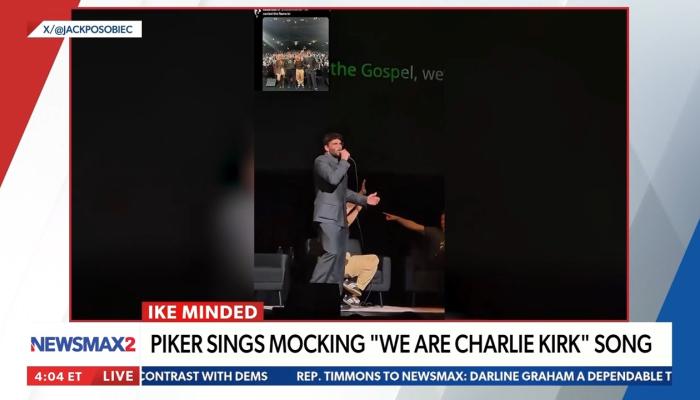
Screenshot via Newsmax2/Snapstream Hasan Piker is deeply envious of Charlie Kirk.The hard-left influencer debated Kirk in 2017 and was set to do so again before Kirk was murdered last year.Yet now Piker is going around mocking Kirk’s assassination, leading a crowd last weekend, during his live podcast tour, in a sarcastic singalong of an AI-generated song called “We Are Charlie Kirk.”“We are Charlie Kirk, we carry the flame. We’ll fight for the Gospel, we’ll honor his name,” Piker sang off-key, the crowd howling along, while the celebrity socialist’s co-hosts guffawed and waved their arms in the air.This wasn’t satirizing a political opponent — Kirk has been dead nearly a year.Why make him the subject of this derision?It’s because Piker knows his audience, and they’re not looking for thoughtful politics. They want a hatefest.Readers of George Orwell’s “Nineteen Eighty-Four” might remember the totalitarian leftist party that runs the dystopian state in that novel regularly held events called a “Two Minutes Hate” to whip up hostility against the regime’s enemies.Piker has improved on that — his podcast and live events like this offer more than an hour’s hate.And nobody stirs the Piker crowd into a frenzy like Charlie Kirk.The slain Turning Point USA founder represents everything they’re against, and not just because he was a widely successful conservative organizer who won young Americans away from socialism on the unfriendly campuses where he spoke — and where he ultimately died for his beliefs.Kirk’s faith in God, his devotion to his family, his happiness all infuriated his enemies.His self-sacrifice did, too, and more than anything else:Kirk knew the risks he took by going where he wasn’t welcome and speaking truths the left didn’t want to hear — and was determined to prevent anyone else from hearing.Yet Kirk did it anyway, fearlessly, and put his life on the line because of the strength of his convictions.That’s what Piker’s mob hates most: Charlie Kirk shamed them by showing them how much better a human being could be.So Piker knew just how enthusiastic the response to his mockery would be.He could count on Kirk’s memory to incite a jeering frenzy.Yet there’s something more going on with Piker himself.Kirk was the man Piker can never be, and as the audience reaction shows, Kirk remains important, even to his enemies, in ways that Piker isn’t.People care deeply about Charlie Kirk’s memory, whether they cherish it or resent it.Piker, a guy who broadcasts his banal existence for up to eight hours a day on the streaming platform Twitch, craves the kind of attention Kirk still commands even in death, and even among his enemies.It’s not that Piker isn’t trying — he’s even resorted to animal cruelty, seemingly shocking his dog with an electric collar on camera, to get views.(Piker denies the collar was electric; he claims it was vibrate-only, and the dog yelped in pain for some totally other reason.)One place the firebrand leftist influencer does get the notice he wants is in the Democratic Party, though Democrats are starting to feel queasy about the attention they receive from campaigning with Piker.Abdul El-Sayed, Michigan Democrats’ nominee for the U.S. Senate, evidently feels embarrassed enough by his appearances with Piker during the primaries that he’s now issued a statement insisting Piker’s not an official campaign messenger: “Nobody speaks for this campaign besides me and my campaign spokespeople.”But that’s a far cry from disavowing Piker outright, even after the streamer recently threatened, “If Jews in America keep putting this idea out there that they are singularly invested in Israel, eventually someone is going to come around and take action, not against the state of Israel, mind you, but against American Jews.”What might that mean coming from someone like Piker, who gets cheap laughs off the victim of a political murder?Piker has also said “America deserved 9/11,” a belief his buddy El-Sayed had to squirm away from on “Meet the Press” earlier this month.“I think Hasan himself would say that was a dumb statement,” the Senate hopeful said — tellingly, trying to get not only himself but also Piker off the hook for the reprehensible remark.El-Sayed isn’t the only Democrat who’s campaigned alongside Piker and welcomed his support.The Piker audience is a Democratic audience, and the party wants his support, even if Democratic candidates don’t want to take responsibility for what Piker and his followers actually believe.But it’s all on open display — on the Twitch stream and on stage.Hasan Piker is exactly the opposite of Charlie Kirk:He’s not an apostle bringing reasoned argument to audiences who disagree with him; he’s a man who trades on resentment, vitriol and not just the prospect of political violence but its lethal reality.Daniel McCarthy is the editor of Modern Age: A Conservative Review. To read more by Daniel McCarthy, visit www.creators.com.
Like
Comment
Share
Showing 150 out of 134282
  • 146
  • 147
  • 148
  • 149
  • 150
  • 151
  • 152
  • 153
  • 154
  • 155
  • 156
  • 157
  • 158
  • 159
  • 160
  • 161
  • 162
  • 163
  • 164
  • 165
Advertisement
Stop Seeing These Ads

Edit Offer

Add tier


Select an image
Delete your tier
Are you sure you want to delete this tier?

Reviews

In order to sell your content and posts, start by creating a few packages. Monetization

Pay By Wallet

Payment Alert

You are about to purchase the items, do you want to proceed?

Request a Refund