YubNub Social YubNub Social
    #trump #democrats #loonylibs #sotu #exodermin
    Advanced Search
  • Login
  • Register

  • Night mode
  • © 2026 YubNub Social
    About • Directory • Contact Us • Developers • Privacy Policy • Terms of Use • shareasale • FB Webview Detected • Android • Apple iOS • Get Our App

    Select Language

  • English
Night mode toggle
Featured Content
Community
New Posts (Home) ChatBox Popular Posts Reels Game Zone Top PodCasts
Explore
Explore
© 2026 YubNub Social
  • English
About • Directory • Contact Us • Developers • Privacy Policy • Terms of Use • shareasale • FB Webview Detected • Android • Apple iOS • Get Our App
Advertisement
Stop Seeing These Ads

Discover posts

Posts

Users

Pages

Blog

Market

Events

Games

Forum

The Lighter Side
The Lighter Side
1 w

Daylife is the new nightlife: Why more people are socializing before sunset
Favicon 
www.optimistdaily.com

Daylife is the new nightlife: Why more people are socializing before sunset

BY THE OPTIMIST DAILY EDITORIAL TEAM For decades, nightlife has been framed as the default setting for fun. Late dinners, crowded bars, booming music, and the unspoken assumption that a good social life begins after dark. But a growing number of people are starting to step away from that script. No, not because they dislike fun, but because they’ve found a version of it that feels better. Enter “daylife,” a term gaining traction in wellness and social circles alike. “Traditional nightlife isn’t fulfilling anymore,” says Mandi Zhou, co-founder of Sweatpals along with Salar Shahini, an app that connects users with fitness and wellness events. “We’re seeing record-low drinking rates, with only 54 percent of U.S. adults saying they drink alcohol now, and nearly half of Americans saying they want to drink even less.” That cultural shift has created space for something new. “Daylife is a term we coined at Sweatpals to capture a shift in how people socialize and look for connection,” Shahini explains. “It’s the idea that going out doesn’t have to mean late nights at bars or clubs anymore… but instead is about finding that same energy, adrenaline rush, and connection during the day through movement and wellness experiences.” In other words, socializing is no longer confined to dim lighting and last calls. It’s moving into yoga studios, hiking trails, Pilates classes, and even dance floors that open before noon. What daylife actually looks like Daylife isn’t one specific activity. It’s more of a mindset that replaces draining social rituals with experiences that energize rather than exhaust. Think silent disco yoga sessions instead of late nights out. Early-morning run clubs instead of recovery brunches. Group workouts that feel more like celebrations than obligations. One popular entry point is the growing number of hybrid social-wellness events. A silent disco yoga class, for instance, offers music, movement, and a surprisingly easy way to connect with strangers. The appeal often lies in how these experiences feel afterward. Instead of the familiar cocktail of fatigue, dehydration, and regret, participants typically walk away with elevated mood, clearer minds, and maybe even a few new friends. Wellness-centered gatherings are also reshaping what “going out” means. A daylong wellness event might blend meditation, massage, and a challenging workout, delivering both physical stimulation and mental reset in a single outing. And then there are the workouts that genuinely feel like parties. Dance cardio sessions, for example, blur the line between exercise and entertainment. The room buzzes with music, shared effort, and an easy camaraderie. Why the daytime high feels different The benefits of daylife aren’t just psychological; they’re biological. Movement, sunlight exposure, and social interaction are all powerful mood regulators. Combined, they create a noticeably different emotional aftertaste than traditional nightlife. Participants often report feeling more present, more energized, and less socially drained. Conversations flow more naturally when everyone is fully alert rather than battling fatigue or alcohol-induced haze. Shahini argues that this contrast is exactly the point. “Nightlife culture leaves you depleted. Daylife is the antidote,” he says. “It lets you build real connections while doing something that supports your health… you’re meeting people in an environment where you’re all showing up as your best self.” That shift in environment can subtly transform social dynamics. Without the pressure to drink or stay out late, interactions tend to feel more relaxed, more authentic, and often more memorable. The surprising social advantage One unexpected outcome of daylife is the type of connections it fosters. Shared activities like yoga, hiking, or group workouts naturally create moments of collaboration. People laugh, struggle, encourage each other, and celebrate small wins together. These micro-interactions often build rapport faster than small talk across a table. There’s also a sense of alignment. Daylife spaces tend to attract individuals with overlapping priorities: health, balance, curiosity, and connection without excess. That doesn’t mean nightlife disappears entirely. Late dinners, celebratory nights out, and the occasional spontaneous midnight adventure still have their place. But for many, they’re becoming highlights rather than habits. A new definition of fun Daylife reflects a broader cultural recalibration. Fun is no longer defined solely by intensity, volume, or how late the night runs. Increasingly, it’s measured by how experiences feel afterward. More people are seeking social rituals that leave them feeling restored rather than depleted, connected rather than overstimulated. And perhaps most notably, they’re discovering that joy, energy, and meaningful connection don’t require darkness or alcohol. As Shahini puts it, daylife isn’t about rejecting fun. It’s about redesigning it.     Did this solution stand out? Share it with a friend or support our mission by becoming an Emissary.The post Daylife is the new nightlife: Why more people are socializing before sunset first appeared on The Optimist Daily: Making Solutions the News.
Like
Comment
Share
The Lighter Side
The Lighter Side
1 w

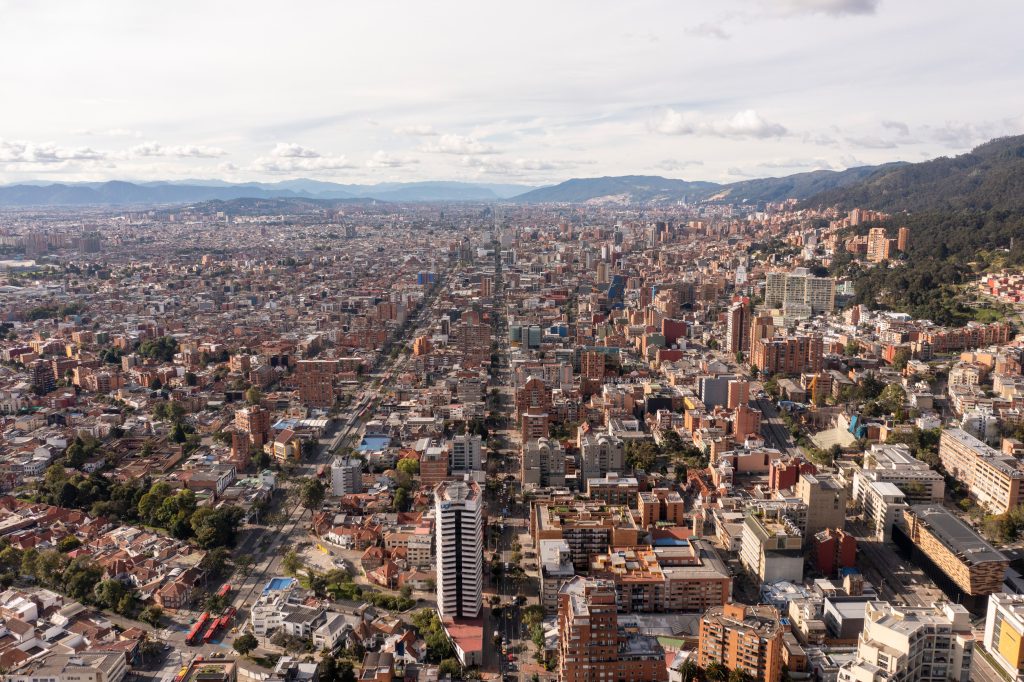
How Bogotá is tackling air pollution by greening its poorest neighborhoods
Favicon 
www.optimistdaily.com

How Bogotá is tackling air pollution by greening its poorest neighborhoods

BY THE OPTIMIST DAILY EDITORIAL TEAM In Bogotá, Colombia’s bustling capital, the battle against air pollution isn’t just about cleaner skies. It’s about equity. While many cities focus on environmental reforms in wealthier districts, Bogotá is flipping that model. It’s bringing its first clean air zones to communities that have long borne the brunt of the city’s toxic air, poor infrastructure, and climate vulnerability. The transformation is as visible as it is ambitious. On Sundays, major streets are closed to traffic and filled with cyclists, rollerbladers, and families strolling in the sun. But this car-free celebration is just one part of a sweeping strategy to improve air quality in the places that need it most. From one of the most polluted to a regional leader At the turn of the century, Bogotá ranked among Latin America’s most polluted cities, with harmful particulate levels up to seven times the World Health Organization (WHO) limit. But in the past six years, the city has made measurable progress, cutting pollution levels by 24 percent between 2018 and 2024. A major factor has been a shift toward cleaner transportation. Bogotá now boasts 350 miles of cycle lanes, and is the largest such network in Latin America. The city also runs one of the world’s biggest electric bus fleets, with 1,400 vehicles on the road, and has expanded its reach with three new cable car lines (two more are underway), helping residents commute from hillside neighborhoods into the city center. Clean air zones, starting where it’s needed most One of the city’s boldest moves came with the introduction of ZUMAs (zonas urbanas por un mejor aire), or urban zones for better air. These clean air zones weren’t piloted in affluent, well-manicured neighborhoods; they were launched in Bosa, a southern district home to more than 700,000 residents, many of whom face economic hardship. “This is where air pollution has the most serious impacts on people’s health,” said Adriana Soto, Bogotá’s Secretary for the Environment. “It’s really killing people.” Bosa’s air quality statistics back her up. PM2.5 pollution levels are more than three times higher than WHO guidelines, and respiratory illness rates are significantly elevated, sitting at between 8.7 and 17.3 deaths per 100,000 people, compared with 7.47 citywide. In this district, wide roads serve as freight corridors. Trucks with high exhaust stacks spew thick black smoke, and many streets remain unpaved. According to Soto, nearly 40 percent of PM2.5 emissions in Bogotá come from dust churned up by traffic on dirt roads. Breathing room: repaving, rerouting, and reimagining The ZUMA initiative goes far beyond vehicle restrictions. It’s a complete neighborhood overhaul. In Bosa, the plan includes repaving roads, rerouting freight traffic away from schools, and planting trees to create buffer zones between motorways and homes. The transformation is rooted in urban planning, with local schools acting as the center of 39 planned upgrades, including new parks, urban forests, and green corridors. This is critical in a district where residents have just five square meters of green space each, which is among the lowest in the city. For residents like Carolina Roches Díaz, the impact is personal. Dust from nearby roads covers her home and her son’s school. Her three-year-old, hospitalized at birth, still struggles with respiratory issues. “”I constantly tell him to cover up his little eyes,”” she says, holding his hand. They hope for rain to wash away the grime, but what they really need is lasting, systemic change. From clean air to climate justice What makes Bogotá’s approach notable is how it prioritises environmental justice, not just the measurable progress. Instead of starting where change is easiest, city leaders are focusing efforts on where health risks are highest. “Bogotá is living proof of how cities can cut air pollution, fight climate change, and give their residents healthier futures,” said Jaime Rueda, the Bogotá lead at Breathe Cities, a global initiative supporting local air pollution solutions. That approach is winning international recognition. In 2025, the ZUMA project was named one of the five winners of the Earthshot Prize, and the momentum isn’t slowing. Mayor Carlos Fernando Galán has announced plans to turn city bridges and parts of the new metro into walled gardens, adding to an ambitious goal of planting 1,500 trees, over 2,700 gardens, 362 urban gardens, and three urban forests by 2027. “Clean air should not be a privilege,” Galán said. “With the ZUMAs we are bringing environmental action to neighborhoods that have carried the heaviest burden for too long.” A model for other cities Bogotá’s success is already inspiring other regions. According to Jane Burston, CEO of the Clean Air Fund, the momentum from Bosa is spreading. “Improving the green spaces and public transport as well means there is a lot of excitement about the clean air zone,” she said. “Other neighborhoods are already asking for one.” That ripple effect is what city leaders are counting on. By showing that clean air can be delivered equitably and that it unlocks other community benefits, Bogotá is proudly rewriting the playbook on urban transformation. And in doing so, it’s proving that breathing easy should not depend on your zip code.     Did this solution stand out? Share it with a friend or support our mission by becoming an Emissary.The post How Bogotá is tackling air pollution by greening its poorest neighborhoods first appeared on The Optimist Daily: Making Solutions the News.

Like
Comment
Share
Daily Caller Feed
Daily Caller Feed
1 w

US Skater Takes Gold In Stunning Olympic Comeback
Favicon 
dailycaller.com

US Skater Takes Gold In Stunning Olympic Comeback

'It has not been easy'
Like
Comment
Share
Hot Air Feed
Hot Air Feed
1 w

'Far Right' Is Now a Meaningless Term
Favicon 
hotair.com

'Far Right' Is Now a Meaningless Term

'Far Right' Is Now a Meaningless Term
Like
Comment
Share
Hot Air Feed
Hot Air Feed
1 w

Democrats Have a Terrible New Idea: Capping Grocery Prices
Favicon 
hotair.com

Democrats Have a Terrible New Idea: Capping Grocery Prices

Democrats Have a Terrible New Idea: Capping Grocery Prices
Like
Comment
Share
The Blaze Media Feed
1 w

CNN’s ‘Christian nationalism’ hit piece targets faith, Trump, and Charlie Kirk
Favicon 
www.theblaze.com

CNN’s ‘Christian nationalism’ hit piece targets faith, Trump, and Charlie Kirk

A new report from CNN host Pamela Brown examining what she describes as the rise of “Christian nationalism” is drawing fierce criticism from BlazeTV host Sara Gonzales — who is disturbed by the concerted effort to discredit Christianity.“For the past several months, I’ve been working on a special project examining the growing influence of Christian nationalism in America. If you’re not familiar, Christian nationalism is an ideology rooted in the belief that our country was founded as a Christian nation and that our laws and institutions should reflect Christian values,” Brown reported.“I’d imagine she makes a s**t-ton more money than me to stand there and lie to the American people and try to gaslight them and try to explain to them why Christianity is evil,” BlazeTV host Sara Gonzales comments.“Do I need to bring up the Pledge of Allegiance? You know, the thing that you guys are trying to get us to not say in schools because it says that dastardly word ‘under God.’ Can’t have that. And somehow this woman Pamela Brown has spent several months — several months! — just scratching her head trying to research a way to gaslight America into thinking that these basic founding principles never existed,” she continues.“Now you might be thinking, ‘Boy, that’s sh***y.’ And it is. But I regret to inform you, it gets worse,” she adds.The mainstream media are not only attempting to bury the Christian values our nation was founded on, but they’re attempting to make Charlie Kirk “the villain in the afterlife.”“Now they’re like, ‘Well, his death is being used as a launching point for this evil Christianity movement,’” Gonzales says, before playing another clip of Pamela Brown explaining her “research.”“With the assassination of Charlie Kirk last year, experts say it was a pivotal moment for the movement and an occasion where the tragedy of his loss unified Christian nationalists and the Trump administration as they honored him,” Brown reported.In an interview Brown shared with “expert” Matthew Taylor, he claimed that the “memorial service was one of the most potent examples of this shift in our culture that we’re experiencing right now.”Taylor went on to lament that a “large segment of American Christians are being activated by these ideas — radicalized by these ideas that say that they are the persecuted ones and that they need to stand up for Christians' rights.”“Are you denying that Christians are constantly targeted in this country? Have you forgotten? Have you forgotten how the Biden administration actually went after Christians? Like, sir, are you living on this planet?” Gonzales asks.“We’ve got all of these transgenders, and when they feel like they are being persecuted or oppressed, even though they’re not — it's the mental delusion — they actually go out and kill people,” she continues. “What did we do? What did we do that day?”“I was in that stadium. … We gathered there not just to celebrate Charlie’s life, but to celebrate Jesus. That’s not radical at all,” she adds.Want more from Sara Gonzales?To enjoy more of Sara's no-holds-barred takes on news and culture, subscribe to BlazeTV — the largest multi-platform network of voices who love America, defend the Constitution, and live the American dream.
Like
Comment
Share
The Blaze Media Feed
1 w

'He made a big mistake': Trump accuses Obama of revealing classified information on aliens
Favicon 
www.theblaze.com

'He made a big mistake': Trump accuses Obama of revealing classified information on aliens

President Donald Trump said that former President Barack Obama revealed classified information when he made comments that appeared to confirm the existence of extraterrestrial aliens.Obama made the comments during an interview with Bryan Tyler Cohen, and they quickly went viral on social media, though both he and Trump had previously spoken about the possibility of aliens.'He’s not supposed to be doing that. He made a big mistake. He took it out of classified information.'On Thursday, Trump was questioned by Peter Doocy of Fox News, when he appeared to confirm that Obama had spilled classified information."Barack Obama said that aliens are real. Have you seen any evidence of non-human visitors to Earth?" Doocy asked the president while they were both on Air Force One."Well, he gave classified information. He’s not supposed to be doing that,” Trump replied."So aliens are real?" Doocy asked."I don’t know if they’re real or not," Trump responded. "I can tell you he gave classified information. He’s not supposed to be doing that. He made a big mistake. He took it out of classified information."He went on to say that he never talks about classified information about aliens and doesn't have an opinion about the topic. "I may get him out of trouble by declassifying," he joked.Obama referred to the famous Area 51 facility in Roswell, New Mexico, in his interview."They’re real, but I haven’t seen them," said Obama about aliens. "There’s no underground facility, unless there’s this enormous conspiracy and they hid it from the president of the United States."RELATED: Astronomers shocked to 'discover the impossible' from new telescope images: 'I nearly spit out my coffee' Obama walked his comments back after they went viral."I was trying to stick with the spirit of the speed round, but since it’s gotten attention let me clarify. Statistically, the universe is so vast that the odds are good there’s life out there," he added.Like Blaze News? Bypass the censors, sign up for our newsletters, and get stories like this direct to your inbox. Sign up here!
Like
Comment
Share
The Blaze Media Feed
1 w

Juvenile hit by car at student anti-ICE protest in Florida
Favicon 
www.theblaze.com

Juvenile hit by car at student anti-ICE protest in Florida

A minor was reportedly struck by a vehicle Monday afternoon during a student-led protest against U.S. Immigration and Customs Enforcement in Palm Beach County, as hundreds of high school students walked out of class and took to nearby streets.According to the West Palm Beach Police Department, officers responded around 12:30 p.m. to a pedestrian-vehicle crash near South Wind Plaza on North Military Trail.'Students retain constitutional rights to ... engage in peaceful protest when such expression complies with applicable law and school district policy.'Authorities said the minor — believed to have been participating in the protest — was transported to the hospital with non-life-threatening injuries. The driver reportedly remained at the scene and cooperated with law enforcement.Video obtained by CBS12 shows the minor lying on the pavement as police and fire rescue personnel render aid.The incident unfolded amid coordinated walkouts involving students from at least four Palm Beach County high schools: Lake Worth Beach High School, John I. Leonard High School, Royal Palm Beach High School, and Palm Beach Lakes High School.According to CBS12, the incident occurred in connection with the walkout at Palm Beach Lakes.RELATED: LAPD defies Newsom: Chief refuses to enforce mask ban on ICE Student protest in ChicagoPhoto by Jacek Boczarski/Anadolu via Getty ImagesStudents exited campus during school hours in protest of federal immigration enforcement policies. The demonstrations drew large crowds downtown and near major intersections.A memorandum written by Commissioner of Education Anastasios Kamoutsas for the Florida Department of Education, released on Feb. 3, warned districts about student protests occurring during instructional time."Students retain constitutional rights to free expression, including the ability to engage in peaceful protest, when such expression complies with applicable law and school district policy," Kamoutsas wrote in the memo dated February 3. "Any student whose actions are to the contrary should be appropriately disciplined."RELATED: ‘We do not support ICE’: Speedway gas station sparks backlash after booting Border Patrol boss Photo of protest in HoustonPhoto by Reginald Mathalone/NurPhoto via Getty ImagesThe memo further directs administrators not to organize or facilitate protest activity during the school day and to address violations promptly.Palm Beach County School District previously stated that leaving campus during school hours violates safety protocols and could result in disciplinary action.When reached for comment, the district directed Blaze News to school police, who have not responded. Palm Beach County Police Department declined a request for comment.Authorities have not released additional details about how the crash occurred or whether any citations were issued. Like Blaze News? Bypass the censors, sign up for our newsletters, and get stories like this direct to your inbox. Sign up here!
Like
Comment
Share
History Traveler
History Traveler
1 w

The Fascinating Story Of The Remote Island Lodge Known As The ‘Loneliest House In The World’
Favicon 
allthatsinteresting.com

The Fascinating Story Of The Remote Island Lodge Known As The ‘Loneliest House In The World’

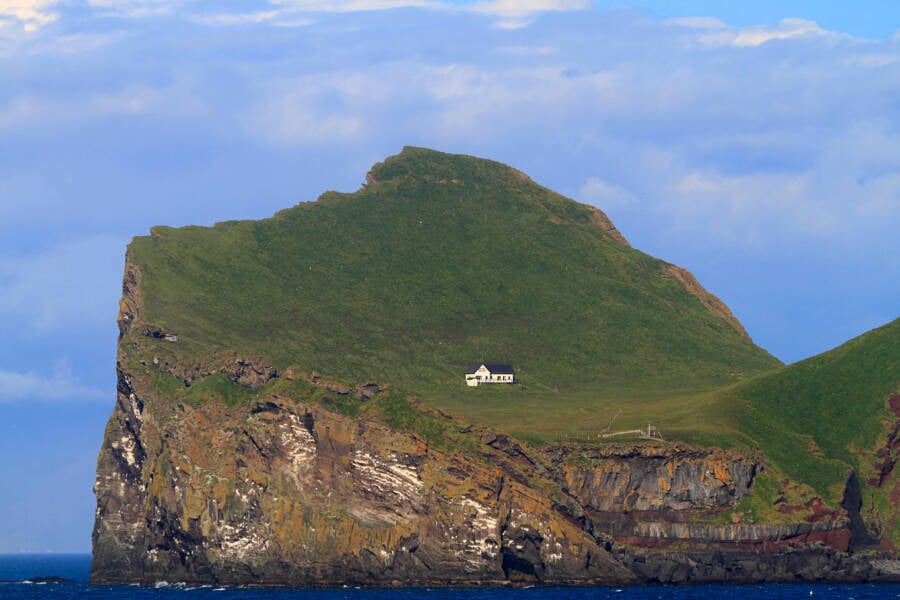
Photononstop / Alamy Stock PhotoThe “loneliest house in the world” on the Icelandic island of Ellidaey. Perched on a remote island near Iceland, battered by North Atlantic winds and surrounded by nothing but the endless ocean, stands a solitary white building often referred to as the “loneliest house in the world.” This isolated structure has garnered significant interest over the years, with various rumors and legends spreading about its history. Some say it was built by a billionaire survivalist as a bunker to ride out a zombie apocalypse. Others believe it belongs to Icelandic singer Björk. However, the truth is much less thrilling: The world’s loneliest house is nothing more than a humble hunting lodge. The home can only be reached by traveling to Ellidaey Island by boat and scrambling up a steep, rocky cliff. And with just puffins as neighbors, any visitors are guaranteed to be the only humans as far as the eye can see. The Uninhabited Island Of Ellidaey In The Vestmannaeyjar Archipelago Hansueli Krapf/Wikimedia CommonsEllidaey as seen from the Atlantic, with mainland Iceland looming in the background. The loneliest house in the world stands on Ellidaey, the northernmost island in the Vestmannaeyjar archipelago, which is located about five miles south of Iceland’s mainland. At 110 acres, the tiny isle is roughly the size of Vatican City. Known for its steep cliffs, grassy slopes, and rocky terrain, Ellidaey is part of a chain of 18 volcanic isles formed by a series of eruptions over the past 12,000 years. While only one of the islands is permanently inhabited today, the others may have historically held small camps or settlements where residents survived on fish, birds, and eggs. The area’s population began rising with the invention of motor boats in the late 19th century, and the town of Vestmannaeyjabær on Heimaey, one of the islands next to Ellidaey, began to grow. Today, Vestmannaeyjabær’s population is around 4,400. In January 1973, a volcano on Heimaey called Eldfell erupted, and volcanic ash covered the surrounding islands, including Ellidaey. At least 400 homes in Vestmannaeyjabær were destroyed, and the lava flow almost closed off the harbor, which would have been devastating to the town’s fishing industry. However, an operation to pump seawater onto the flow successfully cooled and stopped it before it reached the ports. Hansueli Krapf/Wikimedia CommonsVestmannaeyjabær, the closest town to Ellidaey and the world’s loneliest house. In addition to active volcanoes, the Vestmannaeyjar archipelago is also home to one of the world’s largest puffin colonies, with hundreds of thousands of these seabirds flocking to the region to nest during their breeding season. The surrounding waters of the Atlantic Ocean are equally rich in marine life, from lobsters and seals to several whale species. But beyond its importance as a North Atlantic ecosystem, there would be little to say about Ellidaey if it were not for the solitary white house standing in stark contrast to the green slopes around it. Theories About The World’s Loneliest House Over the years, many rumors have spread about the so-called loneliest house in the world. The fact that it’s not frequented by tourists has only bolstered some of the stranger conspiracy theories surrounding Ellidaey. Some people believe that the isolated home was built by a mysterious billionaire to survive a future zombie apocalypse, though there is no evidence to support this. Bjarni Sigurdsson/YouTubeAn interior view of the loneliest house in the world. There’s even a common misconception that the singer Björk owns Earth’s loneliest house. As reported by Snopes, Prime Minister David Oddsson of Iceland offered Björk “the exclusive use” of an uninhabited island called Ellidaey in February 2000 because of her contributions to the country. She turned down the offer, as she didn’t want her home to draw tourists. However, the island Oddsson was referring to is located in western Iceland, more than 100 miles from the loneliest house in the world. So, who does own the famous white home on Ellidaey? Who Built The Loneliest House In The World? Despite the lively rumors surrounding the world’s loneliest house, it was actually built in 1953 as a hunting lodge by the Ellidaey Hunting Association. Members would seemingly gather to shoot the large numbers of puffins that gathered on Ellidaey’s shores. Aconcagua/Wikimedia CommonsAn Atlantic puffin on the shores of Iceland. Also known as Ball House, the lodge has a small kitchen, bathroom, and living space downstairs and a bunk room upstairs. There is also a small storage building nearby and — in true Nordic fashion — a sauna. The home’s front porch looks out on the grassy expanse of Ellidaey, the surrounding Atlantic Ocean, and other nearby islands that are part of the Vestmannaeyjar archipelago. The closest is Bjarnarey, which sits less than a mile away and also has a small lodge. And a little more than two miles away is the island of Heimaey, home to the town of Vestmannaeyjabær. The only way to reach the world’s loneliest house is by boat, but there are no docks or ports on Ellidaey. Instead, visitors must carefully climb a rocky cliff, hauling any supplies up with them. This trek doesn’t scare off many people, though — as of 2022, there were more than 11,000 signatures in the lodge’s guest book. Still, tourism is limited due to the island’s conservation status. Ellidaey is protected as part of Iceland’s natural heritage. The hunting association maintains the property while preserving the island’s ecosystem. Puffin populations on the island are also monitored by researchers, as the birds have faced declining numbers in many parts of Iceland due to changing ocean conditions and food availability. Wojciech Strzelecki “Wojtrix”/Wikimedia CommonsThe world’s loneliest house can only be reached by boat. The world’s loneliest house itself has undergone periodic maintenance to preserve it against the harsh North Atlantic weather, but it remains intentionally rustic to maintain its historical character. So, while there are no grand conspiracies involving billionaires or Björk at play on Ellidaey, it does still have plenty to offer in terms of scenic views and its vibrant ecosystem. If nothing else, the loneliest house in the world has helped shine a brighter light on Icelandic culture, history, and humanity’s complex relationship with the natural world. After reading about the loneliest house in the world, learn about Rat Island, the only privately-owned island in New York City. Or, go inside the legend of Hy-Brasil, the mythical Irish isle that is said to appear once every seven years. The post The Fascinating Story Of The Remote Island Lodge Known As The ‘Loneliest House In The World’ appeared first on All That's Interesting.
Like
Comment
Share
Twitchy Feed
Twitchy Feed
1 w

WaPo: Some Say Atlantic Story ‘Felt Misleading’ Once They Learned It Was Made Up
Favicon 
twitchy.com

WaPo: Some Say Atlantic Story ‘Felt Misleading’ Once They Learned It Was Made Up

WaPo: Some Say Atlantic Story ‘Felt Misleading’ Once They Learned It Was Made Up
Like
Comment
Share
Showing 1537 out of 112272
  • 1533
  • 1534
  • 1535
  • 1536
  • 1537
  • 1538
  • 1539
  • 1540
  • 1541
  • 1542
  • 1543
  • 1544
  • 1545
  • 1546
  • 1547
  • 1548
  • 1549
  • 1550
  • 1551
  • 1552
Advertisement
Stop Seeing These Ads

Edit Offer

Add tier


Select an image
Delete your tier
Are you sure you want to delete this tier?

Reviews

In order to sell your content and posts, start by creating a few packages. Monetization

Pay By Wallet

Payment Alert

You are about to purchase the items, do you want to proceed?

Request a Refund