YubNub Social YubNub Social
    #trump #democrats #loonylibs #sotu #exodermin
    Advanced Search
  • Login
  • Register

  • Night mode
  • © 2026 YubNub Social
    About • Directory • Contact Us • Developers • Privacy Policy • Terms of Use • shareasale • FB Webview Detected • Android • Apple iOS • Get Our App

    Select Language

  • English
Night mode toggle
Featured Content
Community
New Posts (Home) ChatBox Popular Posts Reels Game Zone Top PodCasts
Explore
Explore
© 2026 YubNub Social
  • English
About • Directory • Contact Us • Developers • Privacy Policy • Terms of Use • shareasale • FB Webview Detected • Android • Apple iOS • Get Our App
Advertisement
Stop Seeing These Ads

Discover posts

Posts

Users

Pages

Blog

Market

Events

Games

Forum

YubNub News
YubNub News
1 w

The Hand That Feeds: Commie Mamdani Wants to Take a Big Bite Out of NYC Teacher's Pension Fund
Favicon 
yubnub.news

The Hand That Feeds: Commie Mamdani Wants to Take a Big Bite Out of NYC Teacher's Pension Fund

He's barely been in office for a month, and NYC residents are already learning the hard way that the warmth of collectivism promised by self-described socialist Mayor Zohran Mamdani was a lie. Advertisement…
Like
Comment
Share
Survival Prepper
Survival Prepper  
1 w

The Off-Grid “Metabolism Fix” Hiding In A Bright Yellow Root
Favicon 
prepping.com

The Off-Grid “Metabolism Fix” Hiding In A Bright Yellow Root

<span style="display: inline-block; width: 0px; overflow: hidden; line-height: 0;" data-mce-type="bookmark" class="mce_SELRES_start"></span> From Folk Remedy To Lab-Tested Fat Burner: The Real Story Behind Berberine Berberine’s been everywhere lately. Every health podcast, every supplement shelf, every “miracle metabolism” ad seems to be shouting about it. But when you’re living a little farther from pharmacies and billboards, the question shifts. Out here, the real issue isn’t hype — it’s usefulness. Is berberine actually helpful for a practical, real-world life? Or is it just another trendy capsule that burns bright for a season and fades? And maybe more importantly, is there a smarter version that gives you more benefit with fewer gut issues and less long-term cost? If you’ve ever cracked open a goldenseal root or scraped the bark off Oregon grape, you’ve seen that deep, stubborn yellow that stains your fingers and tools. From Old-World Root Medicine to Modern Metabolic Fix — The Yellow Compound Making a Comeback From wild root to refined power: dihydroberberine turns old‑school yellow medicine into a lean, off‑grid metabolic tool you can actually count on. That’s berberine — a bitter, bright alkaloid tucked into the roots and bark of plants like goldenseal, Oregon grape, and tree turmeric. For generations, traditional Chinese and Indian medicine used it to calm infections, settle digestion, and deal with stubborn weight. Out along fence lines and in shady draws, these plants almost look like nature’s high-visibility markers. That same yellow pigment once dyed wool and leather long before synthetic colors existed. Meanwhile, old-timers leaned on berberine for gut trouble and infections. Today, lab researchers are studying it for blood sugar, cholesterol, inflammation, and body fat. That steady shift — from folk remedy to lab-tested tool — is what makes berberine especially interesting for anyone trying to keep their medicine cabinet small and their pantry strong. “Nature’s Ozempic”… But Slower And Steadier Now, these days, you’ll hear berberine called “nature’s Ozempic.” It’s a catchy phrase, but it oversimplifies things. Ozempic works by locking onto GLP-1 receptors and pushing insulin release in a very specific way. Berberine takes a different route. It flips on a master energy switch in your cells called AMPK — the same pathway triggered by exercise and calorie restriction. Once that switch flips, your body starts burning fuel more efficiently and handling glucose more smoothly. Because of that, berberine tends to improve several metabolic markers at once: blood sugar, cholesterol, and body fat all get nudged in a better direction. But the key word here is nudged. This isn’t a dramatic drop-twenty-pounds-in-a-month situation. Instead, it’s a steady hand on the wheel. For example, a well-known 12-week study using 500 milligrams three times daily showed about five pounds of weight loss on average, along with meaningful drops in triglycerides and cholesterol. Meta-analyses tell a similar story: modest weight loss, small reductions in waist size and BMI, and stronger effects in people already dealing with metabolic problems like diabetes. So if you’re expecting a miracle melt-off, you’ll probably be disappointed. But if you’re looking for slow, steady improvement — especially when paired with better food, movement, and sleep — berberine starts to make practical sense. Where Berberine Really Earns Its Keep Even if the scale doesn’t move dramatically, berberine shines in areas that matter for long-term resilience. For blood sugar, studies in people with type 2 diabetes show A1C reductions in the range of about 0.7 to 1 point. In some cases, that rivals common medications like metformin. That kind of shift can move someone from dangerous territory into something far more manageable. Meanwhile, on the heart side, research consistently shows drops in total cholesterol, LDL, and triglycerides, along with modest increases in HDL. The changes aren’t flashy, but they’re dependable. Over time, those small shifts stack up. At the same time, berberine appears to influence the gut microbiome, inflammatory markers like CRP and IL-6, and even liver fat. In other words, it doesn’t just target one number on a lab sheet. It works across multiple systems. And that kind of whole-body support matters when you’re trying to stay healthy without constantly leaning on conventional medical care. The Catch: Absorption Problems Here’s the part you don’t hear in flashy ads: plain berberine is poorly absorbed. In both animal and human studies, less than one percent of an oral dose makes it into the bloodstream. Most of it gets stuck in the gut or broken down by the liver before it ever circulates. Because of that, effective doses tend to run high — often 1,000 to 1,500 milligrams a day. And those higher doses can bring digestive side effects: cramping, loose stools, and general gut irritation. For someone at home all day, that might be annoying. For someone working outdoors, traveling between properties, or living far from a bathroom, it’s a real drawback. Then there’s cost. Quality berberine at those doses can run 60 to 100 dollars a month. Over time, that adds up fast, especially when you’re already budgeting for fuel, feed, and everything else that keeps a household running. Enter Dihydroberberine: A More Efficient Form This is where dihydroberberine comes in. Chemically, it’s a hydrogenated form of berberine — the same form your body naturally converts berberine into during absorption. But when you take dihydroberberine directly, you skip several bottlenecks. Early pharmacokinetic research shows that doses as low as 100–200 milligrams of dihydroberberine can produce several-fold higher blood levels than a standard 500-milligram dose of regular berberine. In plain language, that means you can often take far less and still get equal or better results. Lower doses usually mean fewer digestive issues. They also mean less wasted supplement sitting in your gut. And because you’re taking smaller amounts, monthly costs often drop into a much more manageable range — sometimes closer to 10–20 dollars instead of the higher price tags tied to heavy berberine dosing. For anyone trying to build sustainable, long-term health habits, that efficiency matters. How It Behaves Inside The Body Even though dihydroberberine is newer on the scene, the research so far lines up with what you’d expect: it behaves like berberine, just more efficiently. Higher blood levels, longer half-life, and steadier metabolic effects all show up in early studies. Some data suggests improved insulin sensitivity at lower doses compared to standard berberine. Meanwhile, inflammatory markers like IL-6 and TNF-alpha appear to trend downward. Early findings also hint at improvements in triglycerides, body fat, and other metabolic markers, though long-term trials are still limited. For now, it’s best to think of dihydroberberine as a more bioavailable extension of berberine rather than a completely different compound. Same toolbox — better delivery. What This Means For Real-World Weight Goals Now, back to that “nature’s Ozempic” comparison. In real clinical practice, GLP-1 drugs can lead to dramatic weight loss — sometimes 50 to 100 pounds over time. That’s the kind of change you can see from across a room. Berberine works on a smaller scale. Think five pounds over a few months. Some studies show less. Others show more when doses are higher and timelines longer. But overall, it’s a modest assist, not a transformation. So if your expectation is a whole new wardrobe by summer, you’ll likely be disappointed. But if your goal is a small, steady push in the right direction — especially alongside strength training, better food, and solid sleep — the numbers start to look realistic. Turning Supplements Into Tools For anyone building a resilient lifestyle, compounds like berberine and dihydroberberine work best as tools, not crutches. They don’t replace the basics. Instead, they amplify them. A supplement that improves insulin sensitivity, nudges down triglycerides, and keeps inflammation a little lower can act like a quiet force multiplier. Over time, that translates into better energy, steadier weight, and fewer chronic issues. So picture your health like a cabin you’re building by hand. Diet lays the foundation. Movement raises the frame. Sleep and stress form the roof. In that setup, berberine is like extra bracing in the corners — useful, steady, supportive. And dihydroberberine is simply stronger lumber that does the same job with fewer materials. It won’t build the house for you. But it might help everything you build hold together when the weather turns rough.

Like
Comment
Share
Survival Prepper
Survival Prepper  
1 w

They Want Us To Move On So Nothing Will Be Done...
Favicon 
prepping.com

They Want Us To Move On So Nothing Will Be Done...

On The Angry Truth Channel, we are going to talk about how They Want Us To Move On So Nothing Will Be Done. They are really desperate to have us move on from the Epstein files & focus on someone else or something else.
Like
Comment
Share
Survival Prepper
Survival Prepper  
1 w

This Could Be Worst Than We Thought...
Favicon 
prepping.com

This Could Be Worst Than We Thought...

On The Angry Prepper, we are going to talk about how This Could Be Worst Than We Thought. We are heading towards a few scenarios that could & will happen but we talk about how we should prepare for them.
Like
Comment
Share
Survival Prepper
Survival Prepper  
1 w

A Quick and Dirty Review Of An Old Wasteland Golf Club
Favicon 
prepping.com

A Quick and Dirty Review Of An Old Wasteland Golf Club

Just a fun video to review an old golf club I found out in the Wasteland quite some time ago. Really, this video is just about setting up the framework for my new review series, and letting my subscribers know that there won't be any sponsored content shenanigans on this channel when it comes to gear and reviews.
Like
Comment
Share
Survival Prepper
Survival Prepper  
1 w

WTF! They Can Now Kill Us and No One Would Know!!! META's Project Lazerus!
Favicon 
prepping.com

WTF! They Can Now Kill Us and No One Would Know!!! META's Project Lazerus!

Metas new patent to keep people alive forever has one major downside Use discount code HALFPRICE for 50% off https://canadianpreparedness.com/ GET EMERGENCY PRESCRIPTION MEDS AND ANTIBIOTICS (affiliate link) https://jasemedical.com/canadianprepper GET WHOLESALE FREEZEDRIED FOOD (World reknown quality) USE DISCOUNT CODE 'CanadianPrepper' https://tinyurl.com/nhhtddh6
Like
Comment
Share
Science Explorer
Science Explorer
1 w

Ancient Massive Stars Enriched Early Clusters and Birthed First Black Holes
Favicon 
www.universetoday.com

Ancient Massive Stars Enriched Early Clusters and Birthed First Black Holes

The early Universe was a busy place. As the infant cosmos exanded, that epoch saw the massive first stars forming, along with protogalaxies. It turns out those extremely massive early stars were stirring up chemical changes in the first globular clusters, as well. Not only that, many of those monster stars ultimately collapsed as black holes.
Like
Comment
Share
Science Explorer
Science Explorer
1 w

Another Early Universe Surprise From The JWST: A Jellyfish Galaxy
Favicon 
www.universetoday.com

Another Early Universe Surprise From The JWST: A Jellyfish Galaxy

Astronomers have found a candidate Jellyfish Galaxy only about 5 billion years after the Big Bang. This is earlier than expected, since the ram pressure stripping responsible for it wasn't thought to be possible so early in the Universe's history. The galaxy could explain the puzzling "Red Nugget" galaxies, but first it has to be confirmed.
Like
Comment
Share
Young Conservatives
Young Conservatives
1 w ·Youtube General Interest

YouTube
Riley Gaines Responds to Debate Over Shooter Pronouns #shorts #podcast
Like
Comment
Share
Heroes In Uniform
Heroes In Uniform
1 w

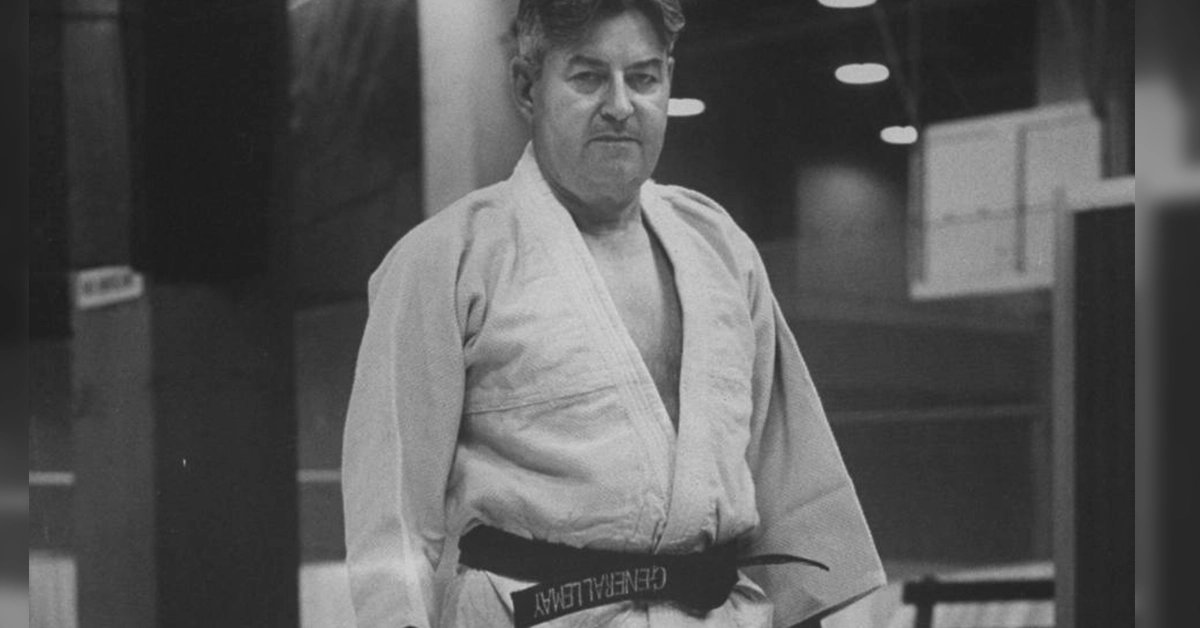
Curtis LeMay: World War II bomber, cold warrior, and judo champion
Favicon 
www.wearethemighty.com

Curtis LeMay: World War II bomber, cold warrior, and judo champion

Okay, Curtis LeMay wasn’t a judo champion in the sense that he was winning awards for tossing people around. He did, however, popularize the martial art for the postwar world, bringing it into the U.S. Air Force, and through the military, to the rest of America.Time has not been kind to LeMay. He’s remembered for firebombing cities across Japan, especially Tokyo, an attack that killed 100,000 Japanese civilians in a single night. He also built the Strategic Air Command into a nuclear powerhouse with the belief that he would one day nuke the Soviet Union “back into the Stone Age.”Also Read: 7 awesome airpower quotes from General Curtis LeMayFor all his bluster, LeMay was an innovative thinker, a problem solver, and the first to make the changes he wanted to implement. When “Old Iron Pants” decided the Air Force was out of shape, he found a way to fix it. He even put on his own judogi. Presumably after smoking a cigar. (National Archives) A Fitness Problem When LeMay took command of Strategic Air Command in 1948, he inherited a mess. SAC was supposed to be the nation’s nuclear deterrent, but its planes were unreliable, and—some veterans might be shocked to hear—the Air Force was out of shape.More importantly, the Air Force had new B-36 Peacemaker bombers that could keep crews airborne for 30 hours at a stretch, and physically unfit airmen could make mistakes during those long flights. Mistakes can cause accidents, especially at 40,000 feet.LeMay despised any kind of inefficiency.He needed something that would do more than just get airmen running laps. He needed a program that built endurance, coordination, and mental toughness. If it could also keep a downed aircrew alive and evasive behind enemy lines, that would be even better.Judo was the answer.  From the Kodokan to Omaha In 1950, LeMay ordered Lt. Gen. Thomas Power to stand up an experimental physical conditioning unit at Offutt Air Force Base in Nebraska. The program combined preflight conditioning with post-flight recovery. Flight surgeons recommended steam baths and massages for recovery. For conditioning, they chose judo.There were a lot of good reasons to choose judo. It taught airmen how to fall and roll, a great skill for anyone who might have to bail out of an aircraft. It built functional strength and situational awareness. And it gave crew members a fighting chance if they were shot down and unarmed in enemy.To run the program, LeMay hired Emilio “Mel” Bruno, a former national wrestling champion and sixth-degree black belt in judo. It was Bruno’s job to build SAC’s judo program from the ground up. The Air Force officially dubbed it “Combative Measures,” a perfectly bureaucratic name for throwing around your fellow airmen.  (U.S. Air Force) Training With Judo Masters LeMay’s biggest challenge was instructors. There simply weren’t enough qualified judo teachers in the Air Force. His solution was characteristically bold. He decided to send airmen directly to the Kodokan Judo Institute in Tokyo, the birthplace of judo. There, they received advanced training under the world’s foremost experts.It was a “train the trainer” kind of program. The first class of 13 instructors shipped out in 1952. They trained in judo, jujitsu, karate, and other martial arts, then returned to teach at SAC bases across the country.In 1953, LeMay also brought 10 of Japan’s highest-ranking judo, karate, and aikido masters to the United States for a 60-day tour of SAC installations. The group included legends like eighth-degree black belt Sumiyuki Kotani and future Japan Karate Association head Masatoshi Nakayama.Japanese instructors were struck by how American airmen approached training. Unlike students in Japan who followed instructions without question, the Americans demanded to understand the why behind every technique. Nakayama later said that the experience pushed him into an intense study of kinetics, physiology, and anatomy under his own master’s guidance.It was a mutually beneficial cultural exchange. American judo players like Staff Sgt. George Harris proved that big, athletic Western fighters could compete at the highest levels, and by the late 1950s, even Olympic-caliber Japanese judoka started adding weight training to their routines. American heavyweight judoist George Harris (left) and heavyweight boxer Joe Frazier compare their “weapons” as they meet in the Olympic Village in 1964. (Bettman) America Becomes a Judo Powerhouse  LeMay, as usual, was unorthodox but turned out to be right. Within a decade, SAC produced more than 160 black belt judo instructors. Between 1959 and 1962, a judo instructor course at Stead Air Force Base in Nevada graduated nearly 10,000 instructors through a five-week curriculum that covered judo, aikido, karate, air police techniques, aircrew self-defense, and tournament procedures.Moreover, SAC’s competitive judo team became a national force. In 1957, Harris (who had only studied judo for only five years) won the Grand Championship at the National AAU Judo Championships in Hawaii. The Air Force team captured the National Five-Man Team Championship that same year, then successfully defended it the following year.Harris went on to represent the United States at the second World Judo Tournament in Tokyo in 1958, where his performance earned him a promotion to fourth-degree black belt. He was the first Armed Forces judoka to receive that honor.The SAC Judo Society became a chartered black belt organization under the Kodokan in 1956, the first and only U.S. Armed Forces judo association to receive that recognition. Continuing a grand Air Force tradition, Senior Master Sgt. Dustin Clocherty prepares to throw an opponent. (U.S. Air Force/Staff Sgt. James Crow) The Air Force Changed American Martial Arts Forever LeMay’s judo program eventually wound down during the Vietnam era. Downed B-52 crews over Southeast Asia had little practical use for hand-to-hand combat techniques, and by the mid-1980s, Air Force physical conditioning had shifted almost entirely toward cardiovascular fitness and weight management.The Strategic Air Command Judo Association evolved through several name changes. First came the Air Force Judo Association, then the Armed Forces Judo Association, and finally, in 1969, the United States Judo Association (USJA). By the 1990s, the USJA had 10,000 members.More importantly, discharged Air Force judo instructors carried the art into civilian life. They opened schools in garages and YMCAs across Middle America, places where Asian martial arts may never have existed before.A four-star Air Force general’s quest to keep bomber crews alive during the Cold War planted martial arts in the American heartland, almost by accident.It’s understandable why history either loves Curtis LeMay or hates him. He remains a deeply complicated historical figure. His World War II bombing campaigns are still controversial, and his hawkish Cold War politics made him a lightning rod for criticism.Running for vice president alongside George Wallace, the pro-segregation governor of Alabama, doesn’t help his legacy. President Lyndon B. Johnson once remarked to an aide, “LeMay scares the hell out of me.” (National Archives) His foundational role in the story of American martial arts, however, is undeniable.He solved a practical problem of unfit aircrews flying long, dangerous missions with a program that rippled far beyond anything he likely imagined. The judo instructors he sent to the Kodokan became the seed stock for organized martial arts in America. The competitive teams he funded proved that American fighters could stand with the best in the world. The judo schools that dot strip malls across America can trace their roots back, in part, to a cigar-chomping Air Force general who wanted his airmen to know how to fight with their bare hands. Don’t Miss the Best of We Are The Mighty • The ‘Chopper Popper’ scored the A-10’s first air-to-air kill against an Iraqi helicopter• 5 Seldom-told tales about Air Force legends• The A-10 training guide from the 1970s was a hilarious coloring book Air Force Cold War Curtis LeMay: World War II bomber, cold warrior, and judo champion By Blake Stilwell Resources Everything you need to know about military ranks and what they mean By Jessica Evans Sports The US service members competing in the 2026 Winter Olympics By Stephen Ruiz Aviation 4 things that made the F-16 Fighting Falcon years ahead of its time By Ward Carroll Cold War The 1952 UFO Washington sighting that upended decades of denial By Daniel Tobias Flint The post Curtis LeMay: World War II bomber, cold warrior, and judo champion appeared first on We Are The Mighty.
Like
Comment
Share
Showing 1575 out of 112261
  • 1571
  • 1572
  • 1573
  • 1574
  • 1575
  • 1576
  • 1577
  • 1578
  • 1579
  • 1580
  • 1581
  • 1582
  • 1583
  • 1584
  • 1585
  • 1586
  • 1587
  • 1588
  • 1589
  • 1590
Advertisement
Stop Seeing These Ads

Edit Offer

Add tier


Select an image
Delete your tier
Are you sure you want to delete this tier?

Reviews

In order to sell your content and posts, start by creating a few packages. Monetization

Pay By Wallet

Payment Alert

You are about to purchase the items, do you want to proceed?

Request a Refund