YubNub Social YubNub Social
    #racism #elections #conservatives #gerrymandering
    Advanced Search
  • Login
  • Register

  • Night mode
  • © 2026 YubNub Social
    About • Directory • Contact Us • Developers • Privacy Policy • Terms of Use • shareasale • FB Webview Detected • Android • Apple iOS • Get Our App

    Select Language

  • English
Night mode toggle
Featured Content
Community
New Posts (Home) ChatBox Popular Posts Reels Game Zone Top PodCasts
Explore
Explore
© 2026 YubNub Social
  • English
About • Directory • Contact Us • Developers • Privacy Policy • Terms of Use • shareasale • FB Webview Detected • Android • Apple iOS • Get Our App
Advertisement
Stop Seeing These Ads

Discover posts

Posts

Users

Pages

Blog

Market

Events

Games

Forum

Intel Uncensored
Intel Uncensored
4 w

Jet Fuel Costs Skyrocket, Airlines to Hike Prices, Italy Rations Supply
Favicon 
www.sgtreport.com

Jet Fuel Costs Skyrocket, Airlines to Hike Prices, Italy Rations Supply

by Mish Shedlock, Mish Talk: A reader asked for an update on jet fuel prices. Trump Truth Social on Jet Fuel All of those countries that can’t get jet fuel because of the Strait of Hormuz, like the United Kingdom, which refused to get involved in the decapitation of Iran, I have a suggestion for […]
Like
Comment
Share
Intel Uncensored
Intel Uncensored
4 w

Trafficked to the White House, Cathy O’Brien Exposes 30 Years of CIA MK Ultra | SURVIVOR STORIES EP2
Favicon 
www.sgtreport.com

Trafficked to the White House, Cathy O’Brien Exposes 30 Years of CIA MK Ultra | SURVIVOR STORIES EP2

from Man in America: TRUTH LIVES on at https://sgtreport.tv/
Like
Comment
Share
History Traveler
History Traveler
4 w

Why Special Interest Groups Were Crucial to the Fall of European Colonialism
Favicon 
www.thecollector.com

Why Special Interest Groups Were Crucial to the Fall of European Colonialism

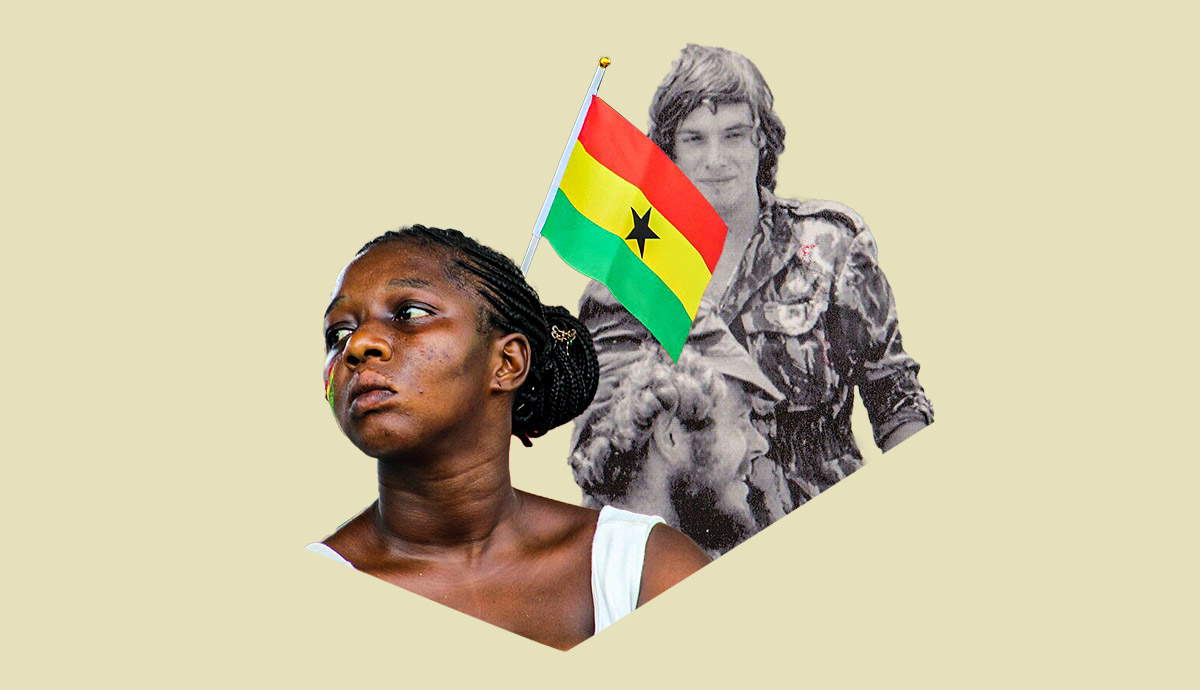
  In 1945, as the world emerged from the ashes of the Second World War, little did people know that it was about to be engulfed by a new wave of conflict, destruction, and mass migration. A new wave that historians today call the wars of decolonization (or national liberation). The imperial governments that opposed them at the time steadfastly refused to call them wars, opting for terms like “uprising,” “rebellion,” “insurgency,” and “emergency.” For about three decades, the efforts of various special interest groups led to the dissolution of several European intercontinental empires and the creation of nation-states all around the globe. But what do we mean by special interest groups and how have they concretely affected the decolonization process?   Decolonization, a Complex Process Soldiers taking position in a destroyed house during World War II, photograph by Dmitri Baltermants. Source: Smith College Museum of Art   Obvious as it may seem, decolonization is the process of reversing colonization, more accurately, the political, economic, and cultural undoing of colonialism. 20th-century decolonization is usually framed between two dates: 1945, marking the end of the Second World War, and 1975, the year of the Carnation Revolution in Portugal and the dissolution of the Portuguese Empire. However, its actual temporal boundaries are more unclear.   Colonialism rarely ends with the departure of the colonial authorities from a colonized country. The internalized psychological and cultural effects of colonialism linger on, as generations of the colonized try to shake off the negative and stereotypical self-understandings imposed on them by decades (and sometimes centuries) of colonialism to create what Frantz Fanon (1925-1961) calls the “new” self.   Portuguese soldiers withdrawing from Angola, photograph by Horst Faas, 1975. Source: Wikimedia Commons   Decolonization, he writes in The Wretched of the Earth (1961), “… never takes place unnoticed, for it influences individuals and modifies them fundamentally. It transforms spectators crushed with their inessentiality into privileged actors, with the grandiose glare of history’s floodlights upon them. It brings a natural rhythm into existence, introduced by new men, and with it a new language and a new humanity. Decolonization is the veritable creation of new men.”   In some countries, independence was achieved peacefully through negotiations, treaties, demonstrations, mass strikes, and boycotts. Ghana, for example, was the first African colony to achieve independence from Great Britain in 1957 through non-violent means. That was also the case in other African countries, such as Botswana and Zambia.   A young woman celebrating Ghana’s Independence Anniversary in 2017. Source: Wikimedia Commons   In many former colonies, however, the colonial authorities refused to relinquish power and accept the transition initiated by local leaders. Various nationalist movements in two of Portugal’s most important colonies, Mozambique and Angola, waged a guerrilla campaign against Portuguese forces for more than a decade before the fall of the Portuguese Empire in 1975. Thousands of people paid with their lives for the blind determination of the French, Portuguese, and British governments to deny them self-determination. Thousands more died in the political instability that followed decolonization, as in Angola, which was plunged into one of the deadliest wars in the history of the African continent, a 26-year-long war that, it could be argued, was the direct result of decades of colonial rule.   What Do We Mean by Special Interest Groups? People attending the annual LGBT-even Stockholm Pride parade in Sweden, photographed by Jonatan Svensson Glad, 2015. Source: Wikimedia Commons   Special Interest Groups (SIGs) are formally organized associations of people who share the same goals, demands, and concerns. These groups can be made up of specialized individuals or organizations and companies, ranging from Indigenous and non-Indigenous environmental organizations (such as the World Rainforest Movement, which protects and advances the claims of forest-dependent communities in the Global South, or Amazon Watch, a nonprofit organization dedicated to protecting the Brazilian rainforest) to labor organizations (such as the Irish Farmers’ Association, founded in 1955, which represents the rights and demands of Irish farmers) and civil rights groups (such as the National Association for the Advancement of Colored People (NAACP) in the United States).   SIGs also include religious organizations such as the American Jewish Committee (AJC), LGBTQ-rights groups, and international human rights NGOs such as Amnesty International and Médecins Sans Frontières (Doctors Without Borders).   Amazon, Brazil, photograph by Nathalia Segato. Source: Unsplash   What unites these diverse groups is their determination to influence and/or change government policy on a particular issue. They do so in a variety of ways, from lobbying to mass strikes, from political negotiations to (violent and non-violent) demonstrations. Special Interest Groups can exist at all levels: local, provincial, national, and international. Some are defined as single-issue groups because they promote and raise awareness on a single issue, while others are more broadly based. Sometimes their actions enjoy general public support, particularly in democratic parliamentary systems.   Others, such as LGBTQ-rights groups operating in authoritarian or semi-authoritarian regimes, often face discrimination and opposition from both an unsympathetic public and the government and may have to operate unofficially and in secret to protect the physical well-being of their members.   Empowerment Through Education Deer Hunt, painting by Kiowa artist Stephen Mopope. Source: Gilcrease Museum   In many museums across Canada, visitors are now greeted by explanatory panels written not only in English and French (as in Québec), but also in the Indigenous languages spoken by the local Indigenous groups. Many museums in North America and Australia include opening messages on their websites to acknowledge the Custodians of the lands on which they were built.   For example, the Western Australia Museum and the State Library of Western Australia recognize the strength and culture of the Nyoongar Whadjuk people, while the Museum of Contemporary Art Australia  “acknowledges the Gadigal people of the Eora Nation, the traditional owners of the land and waters upon which the MCA stands.” In Toronto, Canada, the Art Gallery of Ontario (AGO) acknowledges that it operates on “land that is Michi Saagig Nishnawbe territory,” which over time has also been occupied by “other Anishinaabe, Haudenosaunee, and Wendat confederacies.”   One Way Ticket to Hell, a painting by Aboriginal artist Aunty Fay Moseley remembering the tragedy of the Stolen Generations in Australia, 2012-2020. Source: Australian Museum   The McCord Steward Museum in Montréal/Tiohtiá:ke not only acknowledges that its building “sits on land used and occupied by Indigenous peoples for millennia that has never been ceded by treaty,” but also that “colonialism has had devastating consequences on First Peoples.” Thousands of miles to the west, the Manitoba Museum recognizes that “We are on Treaty No.1 land, the ancestral lands of the Anishinaabeg, Ininíwak, and Michif,” and that these “lands, water, and waterways are the unceded territories of the Dakota, and the homeland of the Red River Métis Nation.” The list goes on.   These are the most visible results of decades of efforts by Indigenous anti-colonial movements and organizations across North America to raise awareness of the continuing impact of colonialism on their lives and their determination to ensure the revival of their ancestral languages and cultures.   The McCord Stewart Museum in Montreal is one of those museums that publicly acknowledge the Indigenous people whose lands it was built on. Source: McCord Stewart Museum   The Native Women’s Association of Canada (NWAC), the Manitoba Métis Federation (MMF), the Assembly of First Nations (AFN), the Federation of Saskatchewan Indian Nations (FSIN), and the Inuit Tapiriit Kanatami (ᐃᓄᐃᑦ ᑕᐱᕇᑦ ᑲᓇᑕᒥ) are just a few of the many political organizations created by First Nations across what is now Canada to defend their rights.   By organizing protests, hosting powwows (most of which are open to non-Indigenous audiences), and using their ancestral languages in books and music alongside European languages, Indigenous activists, politicians, and artists continue to prioritize education as a tool for revitalization, self-determination, and, ultimately, empowerment. But Canada’s First Nations are not alone.   Standing Figure Container, Colombia, 1500 BC-100 AD (Ilama Tradition). Source: Musée des beaux-arts de Montréal   In Australia, the Kimberly Land Council (KLC) has been “working with Aboriginal people to secure native title recognition, conduct conservation and land management activities and develop cultural business enterprises” for over 40 years, since it was established at Noonkanbah Station, on the Fitzroy River in the south-central Kimberley region of Western Australia, in May 1978.   In Colombia, the National Indigenous Organization of Colombia (Organización Nacional Indígena de Colombia) has been fighting since 1982 to defend the autonomy, history, and culture of Indigenous Colombians, the country’s Indigenous peoples. Similar peaceful organizations exist throughout Central and South America, in Peru, Mexico, and Ecuador, as well as in Africa.   Fostering and Celebrating a Pan-African Identity Postage stamp commemorating Kwame Nkrumah and Ghana’s Independence. Source: Wikimedia Commons   In December 1958, the All-African People’s Conference (AAPC) galvanized the struggle of African colonies against British (as well as Portuguese and French) colonialism. Held in Accra, Ghana, it lasted six days, from December 8 to 13, 1958, and was the first major pan-African conference to bring together hundreds of leaders of various groups, from youth organizations to nationalist movements, directly on African soil, away from the centers of European power.   The location was highly symbolic. Under the leadership of Kwame Nkrumah (1909-1972), the first president of Ghana and father of the influential Ghanaian activist and politician Samia Nkrumah, Ghana became the first African colony to gain independence from Great Britain on March 6, 1957. Nkrumah’s opening speech set the tone for the conference as “a gathering of Africans speaking for Africa and Africans.”   Amansuri Lake, Ghana, photograph by Ato Aikins. Source: Unsplash   Before that, Africans had “had Pan-African Congresses before — in fact, five of them — but all of these, by force of circumstances, were carried on outside Africa and under much difficulty.”   The 1945 Pan-African Congress, for example, organized “and made up largely of those outside Africa who had the cause of African freedom at heart,” had been held in Manchester, on British soil.   By the late 1950s, however, circumstances had changed. The purpose of the 1958 Conference was to promote solidarity and cooperation between colonized nations (and diaspora communities), primarily in Africa, but ideally throughout the world. As Nkrumah said in his opening speech, “If we are to attain the major objective to which we are all committed — the total liberation of Africa — then it is necessary to bury our political hatchets in the interest of Africa’s supreme need.”   The stated goal of the Pan African Heritage Museum is “to create an environment for people of African descent and all others to discover and experience the true history of the origins of humanity.” Source: Pan African Heritage Museum   At the conference, in a powerful celebration of African identity, Nkrumah urged his fellow African leaders and citizens not to be afraid to proclaim their right to self-determination openly and freely to the world, to “make no apology to anyone” for seeking self-determination and freedom.   By encouraging grassroots participation and involving civil society in the anti-colonial struggle, the 1958 Conference also emphasized the importance of Pan-Africanism in achieving independence. It also served to reinforce the belief that the freedom of an African nation was inextricably linked to the freedom of the African continent as a whole, therefore creating and nurturing a cohesive, all-encompassing anti-colonial narrative.   The cause that African nations are called to embrace, Nkrumah said in his opening speech, “is a noble and irresistible Cause. As long as we remain true to that Cause — the Cause of national freedom and independence — we have nothing to fear but fear itself.”   Paramilitary Groups or Special Interest Groups? Paula Baeza Pailamilla, a Mapuche artist raising awareness on the history of her people and the colonization of Chile, photograph by Irene Arango, Territori Festival. Source: Wereldmuseum Leiden   Paramilitary groups, like Special Interest Groups, are organizations made up of individuals who are committed to a cause and have a particular political and/or religious agenda. This has led some to include paramilitary groups in the category of SIGs, but it is not that simple. What distinguishes paramilitary organizations from SIGs are the methods the former use to achieve their goals.   Paramilitary groups typically operate outside the law and outside the normal military framework. Their heavily armed members use force, coercion, and violence, both physical and psychological, to achieve their goals and punish or kill anyone who does not share their aims or prevents them from achieving them. In many cases, they target members of the police, as well as public and private property. On the other hand, Special Interest Groups are inherently non-violent and determined to abide by the law.   Four Araucanians outside their home in Chile, 1920s. Source: Wikimedia Commons   Some paramilitary groups are politically motivated, such as the Irish Republican Army (IRA) or the Kurdistan Workers’ Party (PKK), while others, such as Boko Haram in Nigeria, pursue an agenda rooted in religion and animated by the belief that state and religion should go hand in hand. Some organizations, such as the Coordinadora Arauco-Malleco (CAM), in Chile, operate on the borderline between violence and non-violence.   CAM’s actions have a very clear, anti-colonial aim: to regain control of the ancestral lands of the Mapuche, the indigenous people of south-central Chile and south-west Argentina, which were seized during the so-called Pacification of Araucanía, and to protect them from the invasive and destructive power of mining and logging companies. These lands are now owned by landowners and corporations. To this end, they have allegedly often resorted to arson attacks and sabotage against the companies’ machinery and property.   Protesters clashing with the British Army in front of an IRA sign during riots in William Street, Derry/Londonderry, Northern Ireland, 1972. Source: The Museum of Free Derry   Some paramilitary groups operate in the context of civil war. This was the case with the IRA and the Ulster Volunteer Force (UVF), two of the various paramilitary groups active in Northern Ireland during the Troubles. While Irish Nationalists in the IRA sought Irish unity and the withdrawal of British forces from the island of Ireland, the UVF and its members, Loyalist Protestants, fought to maintain Northern Ireland’s status within the United Kingdom. While paramilitary groups can’t be categorized as special interest groups because of their reliance on violence, physical and psychological, they share with SIGs a determination to champion a cause, in some cases directly linked to decolonization.   Aboriginal Australian activist Faith Bandler, celebrating the historic outcome of the 1967 referendum in June 1967. Source: National Museum of Australia   From Africa to Chile, from Australia to North America, the actions of Special Interest Groups (SIGs) have contributed to the dissolution of European empires and the creation (sometimes peacefully, sometimes violently) of nation-states around the world. The process historians call decolonization continues in many countries today, albeit in different ways.   When visitors enter a museum and have the opportunity to read explanatory panels in English alongside the language of the indigenous group on whose land the museum was built, they are engaging in a form of decolonization, decolonization through education and culture. Decolonization continues in the form of sabotage, demonstrations, boycotts, and legal battles, such as those many Aboriginal and Torres Strait Islanders have waged since the 1970s to have their connection to their ancestral lands officially recognized.

Like
Comment
Share
Bikers Den
Bikers Den
4 w ·Youtube General Interest

YouTube
8 Things That Get Bikers Put Out of Their MC Forever
Like
Comment
Share
100 Percent Fed Up Feed
4 w

Activist Says She Is “Personally Working” With Multiple Women Prepared To Bring S*xual Harassment Allegations Against Eric Swalwell
Favicon 
100percentfedup.com

Activist Says She Is “Personally Working” With Multiple Women Prepared To Bring S*xual Harassment Allegations Against Eric Swalwell

An activist said she is “working with a number of women” who will soon bring forward sexual harassment allegations against Rep. Eric Swalwell (D-CA), who is running for Governor of California. “I have been working with a number of women who are in the process of coming forward and sharing their stories of sexual harassment and even alleged abuse at the hands of Eric Swalwell. Here’s why we’re talking about it before mainstream media,” Gen-Z for Change Executive Director Cheyenne Hunt said. I have been working with a number of women who are in the process of coming forward and sharing their stories of sexual harassment and even alleged abuse at the hands of Eric Swalwell. Here’s why we’re talking about it before mainstream media: — Cheyenne Hunt (@CheyenneHuntCA) April 6, 2026 “I got involved because the first victim who approached me is a close friend, but when I saw that there were others who’s experiences fit the same pattern of manipulation and abuse of power, I knew I couldn’t stay silent,” Hunt continued. “Targeting employees, interns, and fans. Acting as a mentor just to exploit that power. DMs and Snapchat messages. Allegations ranging from uncomfortable comments to potentially criminal conduct,” she added. Targeting employees, interns, and fans. Acting as a mentor just to exploit that power. DMs and Snapchat messages. Allegations ranging from uncomfortable comments to potentially criminal conduct — Cheyenne Hunt (@CheyenneHuntCA) April 6, 2026 Daily Caller shared further: Hunt posted a video to Instagram on March 31 alleging that Swalwell “has a known history of being predatory towards women.” “And while it may be seen as politically expedient to sweep this under the rug, it is the wrong thing to do and we know it,” she added in the video. “I worked on the Hill, I know many women who still do and this message that I received yesterday is not unique.” Against the video’s backdrop, Hunt displayed a text message that a woman appears to have sent to her reading: “You know Eric Swalwell has slept with many of his interns and makes them all sign NDAs [non-disclosure agreements] so they don’t speak up, right? And when I was 19 he tried hitting on me and sliding into my DMs.” “I am an attorney. I am well aware of the risk I am taking by speaking out publicly and that fact that if I were to lie about a powerful public figure on a platform of my size, I could easily be subject to a defamation lawsuit,” she wrote later in her series of posts. Hunt indicated that while she knows Swalwell’s team “is aware of my video and the other creators talking about” the allegations, she has not yet “been served with legal paperwork” or received a “cease and desist.” The congressman, who has been in the House since 2013 and is alleged to have had ties to a Chinese spy, announced his run for California governor on comedian Jimmy Kimmel’s show in November 2025. An Emerson College poll released on March 11 showed Swalwell polling in first place at 17% of the vote. “Other women needed to know that they were not alone and that someone had their backs if they came forward. After I spoke about my friend’s experience, many brave women came forward and shared their stories with me,” Hunt said. “We have secured pro bono legal representation for them and they are in the process of sharing information with reporters and ensuring that they are physically and legally safe. That process takes time,” she continued. We have secured pro bono legal representation for them and they are in the process of sharing information with reporters and ensuring that they are physically and legally safe. That process takes time. — Cheyenne Hunt (@CheyenneHuntCA) April 6, 2026 “The number of credible women who have come forward since I posted my video is pretty shocking and connecting them with the investigative reporting teams who have been working on breaking this for years has greatly expedited this process. I am confident this story will break soon,” Hunt said. “I understand that people want as much information as possible regarding these women, their stories, and their identities. The problem is, most of these women stayed silent because they believe that they are alone in their experience & that coming forward could ruin their careers,” she added. I understand that people want as much information as possible regarding these women, their stories, and their identities. The problem is, most of these women stayed silent because they believe that they are alone in their experience & that coming forward could ruin their careers — Cheyenne Hunt (@CheyenneHuntCA) April 6, 2026 Watch below: NEW: Eric Swalwell will soon face s*xual harassment accusations from his former staffers, according to lawyer and activist @CheyenneHuntCA. Hunt says she is working with multiple women to expose his "pattern of manipulation." One woman says Swalwell makes all his interns,… pic.twitter.com/5tSenj8iZt — Collin Rugg (@CollinRugg) April 6, 2026 More from The Washington Free Beacon: The allegations loom as Swalwell narrowly leads a crowded field of candidates in the closely watched California gubernatorial race. He has landed endorsements from prominent Democrats like Sens. Adam Schiff (Calif.) and Ruben Gallego (Ariz.) and from prominent labor unions like Service Employees International Union California. An Emerson College poll published in March found Swalwell leading the open primary with 17 percent of the vote, a 4-point lead over Republican commentator Steve Hilton and a 6-point lead over Democratic billionaire Tom Steyer. Hunt acknowledged in her video on Sunday that the allegations “will have an impact on the California governor’s race.” She dismissed “any suggestions that we should refrain from talking about this or seeking justice for these women because it is not good ‘political strategy,'” saying, “I frankly refuse to dignify the idea with a response.”
Like
Comment
Share
One America News Network Feed
4 w

Report: Iran rejects ceasefire as Trump’s deadline looms
Favicon 
www.oann.com

Report: Iran rejects ceasefire as Trump’s deadline looms

The situation between Washington and Tehran has reached a critical boiling point. As of Monday, Iran has officially rejected the 45-day ceasefire proposal, heightening the risk of a massive regional escalation as a deadline set by the White House draws near.
Like
Comment
Share
One America News Network Feed
4 w

NASA Administrator Jared Isaacman backs Trump’s proposed $5.6B agency funding cut
Favicon 
www.oann.com

NASA Administrator Jared Isaacman backs Trump’s proposed $5.6B agency funding cut

NASA Administrator Jared Isaacman has publicly defended the White House’s fiscal year 2027 budget request, which proposes a $5.6 billion cut to NASA's funding.
Like
Comment
Share
The Blaze Media Feed
4 w ·Youtube News & Oppinion

YouTube
How China is Building an Army of "US Citizens" | The 'Birthright Citizenship' SCAM
Like
Comment
Share
Daily Wire Feed
Daily Wire Feed
4 w

Daily Wire 1, Hollywood Union 0: Production Wraps On Jonathan Majors Action Movie
Favicon 
www.dailywire.com

Daily Wire 1, Hollywood Union 0: Production Wraps On Jonathan Majors Action Movie

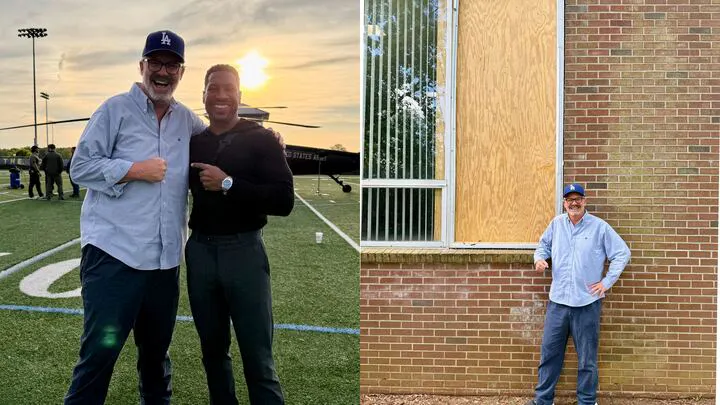
After a long weekend of union agitator-fueled rumors about The Daily Wire’s new action film, production has wrapped after five weeks, as planned, and the union reps didn’t get their way. It all started with Deadline publishing an exclusive story about actor Jonathan Majors falling through a window while on set of the production in progress, which, according to their sources, led to a union strike and other allegations of safety concerns on set. Faithful Daily Wire fans won’t be surprised to learn that there’s more to the story. Film producer Dallas Sonnier provided a short, yet direct, statement to Deadline, saying simply: “The entire industry is in freefall due to strikes, and now that their members are out of work, they’re trying to sabotage the few people who are still producing. We don’t negotiate with communists.” So what really went down? During the fourth week of filming, an executive from the International Alliance of Theatrical Stage Employees, best known as IATSE, reached out to Sonnier claiming that she “represented the majority of the crew,” which consisted of both local hires in South Carolina and returning staff from previous projects. The IATSE rep “demanded” that they immediately be recognized and negotiate a collective bargaining agreement to cover staff wages, hours, benefits, and working conditions. Before the deadline she proposed even arrived, a small handful of picketers were out creating a nuisance. It was that same day that Majors and actor JC Kiljoyne fell through a window filming a scene. Deadline posted video of the incident, and reported it was a six foot drop — though pictures posted show it was barely four feet off the ground. The height of the window btw https://t.co/Lr1KlckW9c pic.twitter.com/sAZF0UYiLb — Daily Wire (@realDailyWire) April 6, 2026 That stunt with the window was part of production’s plans for later that day, and Sonnier says it was far from an emergency. “Everyone handled it quickly and successfully. We always have licensed medics on our sets, and this day, we had two,” Sonnier said. “The production was immediately halted to ensure safety sign-offs by both medics before moving forward.” He also says the clip leaked to Deadline is definitely going to make it into the final cut. The actors’ comments are fully aligned. Kiljoyne’s rep told Deadline in the aftermath that he “did not feel unsafe on set and continues to have a positive experience working on the project.” Majors made similar comments to TMZ. “I’m ok. I was happy to be on set and help tell the story. I am grateful for whoever is checking on me, the cast and crew for regarding our safety. It’s going to be a great movie and I am looking forward to fans seeing it!” While IATSE came out of left field, there was a SAG rep on set many days who confirmed that the actors “should show up and finish the movie as planned” following the accident. It was noted that the SAG rep had “zero safety concerns” for the movie. “We had a licensed armorer every single day,” Sonnier said. “We had a safety meeting at the top of each day, and prior to any special effect or stunt. The reason we don’t have a ‘RUST’ situation is because we take this stuff so seriously,” he added, referring to Alec Baldwin’s firearm discharging while filming and killing cinematographer Halyna Hutchins in 2021. During the fourth week of filming, 15% of the crew decided to leave. Based on conversations Sonnier had with the whole crew, this was the result of IATSE pressure and not because of any safety concerns, he said. All the staff who left were replaced by the next morning. Crucially, those who left did not appear to be part of the picketing. “The ‘strikers’ were just angry union rep protestors,” Sonnier said, noting that by day two, their numbers were reduced to about seven people total. The picketers caused minor annoyances, such as yelling at actors, encouraging cars to honk to disrupt filming, pressuring vendors to pull gear, sending threatening letters, and yelling “CUT!” and “ACTION!” as a way of confusing the actors on set. But in the end, production rolled on. The Deadline article was released after all these efforts failed, especially after Sonnier refused to engage with their demands. Sonnier said IATSE reps never called him or contacted him beyond the first email “because they are total cowards and whiny busybodies.” The producer says this was an illegitimate strike. Does IATSE have any response to this? IATSE, of course, did not respond to questions from The Daily Wire.
Like
Comment
Share
Daily Wire Feed
Daily Wire Feed
4 w

‘Bright Spot’: Artemis II Crew Names Moon Feature After Mission Commander’s Late Wife
Favicon 
www.dailywire.com

‘Bright Spot’: Artemis II Crew Names Moon Feature After Mission Commander’s Late Wife

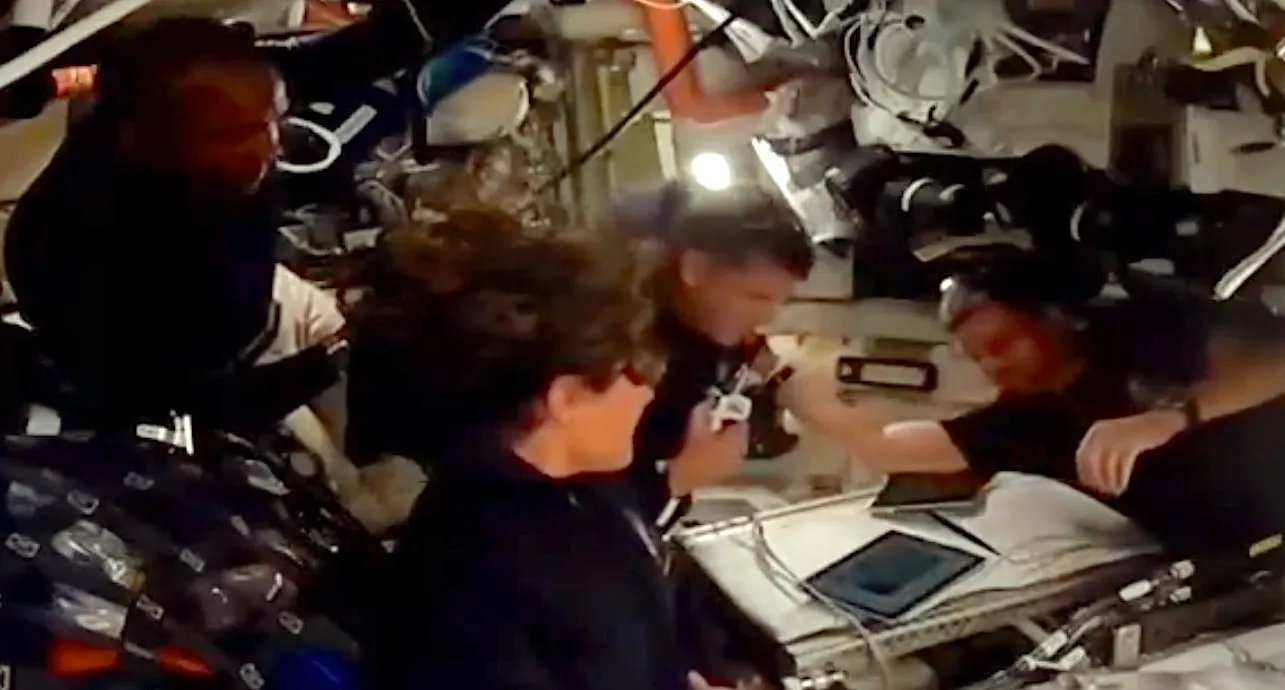
The crew of NASA’s Artemis II mission spent Monday looking at parts of the moon that had never been seen by the human eye — and they paused briefly to pay a one-of-a-kind tribute to a lost family member. The crew shared video on Instagram as they discussed the new features and craters they’d observed while seeing the far side of the moon for the first time, and shared the names they’d chosen for two of them: Integrity, for their spacecraft; and Carroll, for mission Commander Reid Wiseman’s late wife who died of cancer in 2020 at just 46 years old.   View this post on Instagram   A post shared by NASA Artemis (@nasaartemis) “Our science team helped us out with a couple of relatively fresh craters on the moon that have not been previously named, and our crew would like to propose a couple of potential names for those items or those areas,” Canadian astronaut and mission specialist Jeremy Hansen explained. “We spent a bit of time this morning looking out the window and we’re able to see them now, both with our naked eye and through the long lens, and so we feel this is a good time to send this down, and a special shout out to Kelsey for helping us with this.” Hansen said that the first of the two features was a crater that the crew wanted named “in honor of our great spacecraft Integrity,” but the second was one that held far deeper meaning for the members of the Artemis II crew. “A number of years ago, we started this journey [with] our close-knit astronaut family and we lost a loved one, and there’s a feature and a really neat place on the moon and it is on the near side/far side boundary, in fact it’s just on the near side of that boundary, and so at certain times of the moon’s transit around earth you can — we will be able to see this from earth. And so we lost a loved one, her name was Carroll, the spouse of Reid, the mother of Katey and Ellie,” Hansen said, his voice breaking. Wiseman could be seen in the video wiping away tears, as could mission specialist Christina Koch. “And if you want to find this one, you look at Glushko and it’s just to the northwest of that at the same latitude as Ohm and it’s a bright spot on the moon. We would like to call it Carroll,” he continued, his voice still shaky as he spelled out the name. The microphone cut then, and the three other astronauts quickly converged on Hansen, enveloping each other in a zero-gravity group hug.
Like
Comment
Share
Showing 3529 out of 120498
  • 3525
  • 3526
  • 3527
  • 3528
  • 3529
  • 3530
  • 3531
  • 3532
  • 3533
  • 3534
  • 3535
  • 3536
  • 3537
  • 3538
  • 3539
  • 3540
  • 3541
  • 3542
  • 3543
  • 3544
Advertisement
Stop Seeing These Ads

Edit Offer

Add tier


Select an image
Delete your tier
Are you sure you want to delete this tier?

Reviews

In order to sell your content and posts, start by creating a few packages. Monetization

Pay By Wallet

Payment Alert

You are about to purchase the items, do you want to proceed?

Request a Refund