YubNub Social YubNub Social
    Advanced Search
  • Login
  • Register

  • Night mode
  • © 2026 YubNub Social
    About • Directory • Contact Us • Developers • Privacy Policy • Terms of Use • shareasale • FB Webview Detected • Android • Apple iOS • Get Our App

    Select Language

  • English
Night mode toggle
Featured Content
Community
New Posts (Home) ChatBox Popular Posts Reels Game Zone Top PodCasts
Explore
Explore
© 2026 YubNub Social
  • English
About • Directory • Contact Us • Developers • Privacy Policy • Terms of Use • shareasale • FB Webview Detected • Android • Apple iOS • Get Our App
Advertisement
Stop Seeing These Ads

Discover posts

Posts

Users

Pages

Blog

Market

Events

Games

Forum

History Traveler
History Traveler
4 w

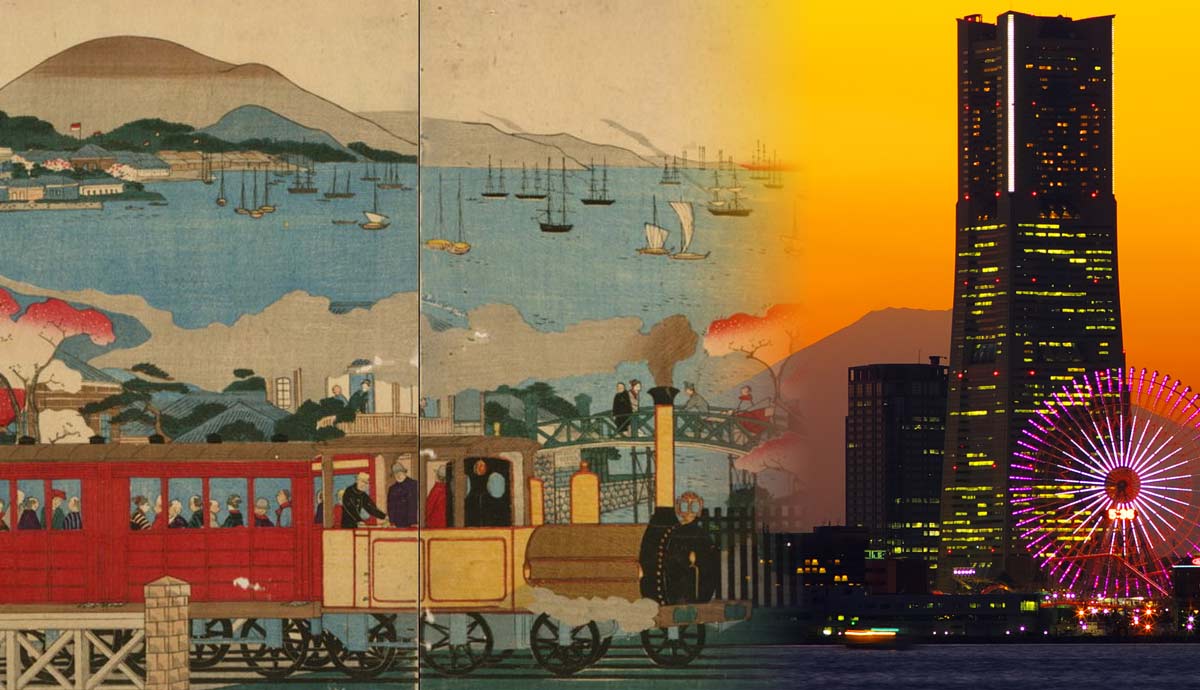
How Yokohama Rose From a Fishing Village to Japan’s Second Largest City
Favicon 
www.thecollector.com

How Yokohama Rose From a Fishing Village to Japan’s Second Largest City

  Yokohama, Japan’s second most populous city at 3.8 million residents, began as little more than a cluster of fishing huts by the water southwest of Edo (modern-day Tokyo). Its transformation was neither gradual nor isolated. Rather, it was explosive; the product of international pressure, uneasy compromises, an experiment in multiculturalism, and, eventually, recovery from a devastating natural disaster. The port’s opening in the mid-19th century marked a break from centuries of seclusion going back to the 1600s, positioning Yokohama as the window through which Japan welcomed and understood the outside world.   When Black Ships Decided a Small Fishing Village’s Fate Commodore Matthew Calbraith Perry, Mathew Benjamin Brady, c. 1856-58. Source: Wikimedia Commons   Yokohama’s rise began under pressure from foreign powers. By the mid-19th century, Western nations sought footholds throughout Asia. Russia’s expansion to the Pacific and the British dominance in China created a sense of geopolitical anxiety for the United States.   Wary of being excluded, the country dispatched Commodore Matthew C. Perry to Japan with his “Black Ships” (nicknamed so for the black smoke of their coal-fired steam engines) in 1853 and again in 1854 to secure America’s interest in the region. Upon his arrival, Perry presented a demand: Japan must open its ports to foreign trade. With his superior weapons, Perry’s unspoken threat of violent consequences if the US demands were not met was heard loud and clear.   “The ‘General Convention of Peace and Amity’ … of 1854, opened the two ports of Shimoda [Izu] and Hakodate [Hokkaido] to foreign vessels in need of provisions or safe haven. It assured safe treatment of shipwrecked sailors … Perry’s Convention was quickly followed by comparable treaties with Britain and Russia” (Totman, p. 289). The later Treaty of Amity and Commerce of 1858 expanded the United States’ access, promising additional ports, initially planned for Kanagawa.   However, the shogunate ultimately shifted the location away from the central Tokaido tract and the capital to the less developed fishing village of Yokohama. After about a year of tireless work, Yokohama was transformed into a massive port city, officially opening on June 2, 1859.   A View of the Amusements of the Foreigners in Yokohama, Utagawa Yoshitora, 1861. Source: Wikimedia Commons   This decision marked a turning point in Japanese history. While Western powers considered the treaties a diplomatic success, many Japanese viewed them as a humiliating defeat, especially in the face of granting foreigners extraterritorial rights (Totman, p. 289) and tariff concessions. Dissatisfaction spread, contributing to the growing opposition to the Tokugawa regime. The resentment culminated in the collapse of the shogunate during the 1860s as samurai and reformers rallied for a return to imperial rule. They succeeded and the Meiji Restoration of 1868 ended Japan’s feudal system.   However, the discontent surrounding the treaties that gave birth to Yokohama lingered on. Samurai were especially resistant, not just because of the unequal terms on which the city was built, but also because the end of feudalism that followed it caused many of them to lose their sources of income. The Satsuma Rebellion of 1877 was a “last stand” against a new world represented by Yokohama, even if the city itself never became a battlefield. In just a few years, an overlooked fishing settlement had become the symbol of Japan’s forced debut on the global stage.   Brothels, Lotteries, and Building a City Nobody Wanted View of the Miyozaki Brothel District in Yokohama, Utagawa Yoshitora and Robun Kanagaki, 1864. Source: Wikimedia Commons   Constructing a functioning port at Yokohama was a tremendous endeavor. The choice of site—away from established trading and political centers in an effort to prevent Japan from being strong-armed by foreign powers—meant that officials had to build the infrastructure from almost nothing.   The government designed a walled compound in the Kannai area (today one of the most vibrant parts of Yokohama) to house foreign residents. Surrounded by a moat and checkpoints, it offered both convenience for traders and control for the authorities. Within those walls, merchants and diplomats were unbound by Japanese law, further fueling Japanese resentment.   Yet a city requires more than wharfs and customs offices. It also needs brothels. Japan has a long tradition of well-regulated red-light districts but this was not about that. “[T]he commissioners also recognized that by providing sexual services to foreigners, they would be able to exercise a measure of control … ‘We have heard of repeated incidents in which foreign sailors, from their extreme boredom, enter the shops of merchants, steal liquor, and then go on a drunken rampage.’ The commissioners reasoned that an officially monitored entertainment quarter would … prevent ‘major trouble arising from a trivial cause’” (Partner, p. 15).   An English Woman with a Chinese Servant in the Foreign District, Utagawa Yoshikazu, 1861. Source: Wikimedia Commons   Yokohama’s entertainment district would eventually gain notoriety and come to be known by the vivid name of “Bloodtown.” However, it served its political purpose by keeping prostitution confined and under surveillance. Few wanted to live or work there, though, and there are historical records describing professional women from brothels in Edo having to draw lots to decide who would go to this new city. Some had to be locked inside their palanquins to make sure they did not try to escape on the way there (Partner, p. 16).   Despite the initial difficulties, Yokohama’s foreign and domestic settlements quickly expanded, with residents of both looking for new commercial opportunities in this strange, hybrid port city. The city trade was facilitated by Chinese immigrants who could communicate with both foreigners—thanks to their knowledge of English acquired through contact with the British—and Japanese people through the use of kanji characters. Gradually, what began as an experiment evolved into a functioning, multicultural community.   The Phoenix City of Firsts First Steam Train Leaving Yokohama, Utagawa Kunisada III, 1872. Source: Wikimedia Commons   By the Meiji Period, silk exports became the backbone of Yokohama’s trade, with Britain as the main partner. The city also quickly distinguished itself as a hub of innovation and cultural exchange. Japan’s first daily newspaper, first gas-powered streetlamps, first ice cream, first beer brewery, first railway (linking Yokohama to Shinbashi in Tokyo in 1872) all originated in Yokohama.   These symbols of modernity played an unexpected role in shaping Japanese identity. The constant, visible presence of contrasting Western customs, from clothing to cuisine, forced people to reflect on what it truly meant to be Japanese in an ever-shrinking world.   Yokohama’s rapid ascent was not without devastating interruptions. On September 1, 1923, the Great Kanto Earthquake leveled much of the city. Over 30,000 residents were reported dead, with tens of thousands more injured. Rumors of sabotage led to tragic violence against Korean residents, exposing social tensions beneath the city’s seemingly cooperative surface. Reconstruction followed, with rubble repurposed to build new infrastructure like Yamashita Park, today one of the symbols of Yokohama.   1923 Great Kanto Earthquake Destructions, Unknown Author, 1923. Source: Wikimedia Commons   The city suffered another wave of destruction during World War II. Attacks by Allied forces culminated in the 1945 firebombing of Yokohama when American planes reduced nearly half the city to ashes in a matter of hours, killing untold thousands of people.   And yet, despite all these setbacks, the postwar decades were a time of fast-paced revitalization for Yokohama, the phoenix city that always gets back up on its feet. Shipyards and wharfs were rebuilt, and by the 1950s, plans for a “Port Future” vision began. The Minato Mirai 21 project, launched in the 1980s, symbolized Yokohama’s reinvention as both a business hub and a cultural destination. The area’s Landmark Tower was the tallest building in Japan when it was completed in 1993 and stood as a statement of its home’s ambitions. The Bay Bridge and waterfront developments such as the reconstruction of Osanbashi Pier, now nicknamed “The Whale’s Back” for its wavy rooftop, also reconnected the city with its port identity.   By hosting the 2002 FIFA World Cup final and international conference after international conference thanks to PACIFICO Yokohama, one of the largest MICE (Meetings, Incentives, Conferences, and Exhibitions) spaces in Japan, Yokohama made itself known to the world again. By charging from repeated destruction to modern reinvention, Yokohama has more than earned its modern reputation for resilience.   From Fishing Nets to Skyscrapers Minato Mirai 21 and Mt. Fuji at Sunset, Nagoya Taro, 2007. Source: Wikimedia Commons   Standing on the foundations of a fishing village once overlooked by history, Yokohama’s story encapsulates Japan’s shaky path into modernity from feudal beginnings. From the opening forced by Perry’s fleet to the city’s role as a testing ground for cultural exchange, Yokohama has been both a product of foreign influence and an expression of Japanese initiative, which seemed to have made it indestructible. It endured earthquakes, war, and occupation, yet emerged stronger each time. Yokohama remains not just Japan’s second city, but its first gateway to the world.   Bibliography   Partner, S. (2018). The Marchant’s Tale. Yokohama and the Transformation of Japan. Columbia University Press.   Totman, C. (2016). A History of Japan, Second Edition. Blackwell Publishing.
Like
Comment
Share
Fun Facts And Interesting Bits
4 w ·Youtube General Interest

YouTube
Something Is Very Wrong at the Bottom of the Red Sea
Like
Comment
Share
cloudsandwind
cloudsandwind
4 w ·Youtube

YouTube
There IS a Connection between IMMIGRATION and CRIME !! We're Not STUPID !!
Like
Comment
Share
The People's Voice Feed
4 w

Favicon 
thepeoplesvoice.tv

Israeli Media Say Iran’s Supreme Leader Was Likely Killed In Airstrike

Iran’s supreme leader Ayatollah Ali Khamenei is likely dead according to Israeli media reports. There are growing indications that he was killed or at least very badly hurt in an Israeli strike earlier today, Channel [...] The post Israeli Media Say Iran’s Supreme Leader Was Likely Killed In Airstrike appeared first on The People's Voice.
Like
Comment
Share
NEWSMAX Feed
NEWSMAX Feed
4 w ·Youtube News & Oppinion

YouTube
Robert Wilkie: Strikes alter balance of power in Middle East; weaken Russia, China
Like
Comment
Share
Independent Sentinel News Feed
4 w

Ex-Vogue Editor Stormed Out of 1st-Class Over “White, Middle-Aged Men”
Favicon 
www.independentsentinel.com

Ex-Vogue Editor Stormed Out of 1st-Class Over “White, Middle-Aged Men”

Wacism A former Vogue editor stormed out of a first-class cabin on an American Airlines flight because all of the other passengers were “white, middle-aged men,” reports the Telegraph. Wacist Gabriella Karefa Johnson “downgraded” herself to business class on the flight from US to Milan, partly because she felt she was being treated like a […] The post Ex-Vogue Editor Stormed Out of 1st-Class Over “White, Middle-Aged Men” appeared first on www.independentsentinel.com.
Like
Comment
Share
BlabberBuzz Feed
BlabberBuzz Feed
4 w

Maduro Attorney Claims Trump Is Violating Dictator’s Rights By Freezing Venezuela-Funded Legal Team
Favicon 
www.blabber.buzz

Maduro Attorney Claims Trump Is Violating Dictator’s Rights By Freezing Venezuela-Funded Legal Team

Like
Comment
Share
BlabberBuzz Feed
BlabberBuzz Feed
4 w

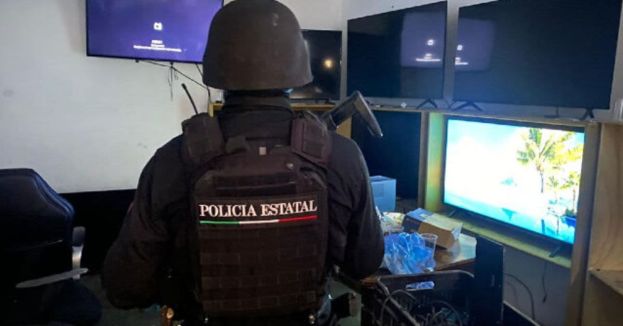
El Mencho Is Dead—Now A Coastal Jailbreak Near Puerto Vallarta Exposes A Terrifying New Cartel Power Play
Favicon 
www.blabber.buzz

El Mencho Is Dead—Now A Coastal Jailbreak Near Puerto Vallarta Exposes A Terrifying New Cartel Power Play

Like
Comment
Share
Daily Caller Feed
Daily Caller Feed
4 w

‘Not Under Cover Of Darkness’: Bret Baier Opines About Implications Of Daylight Strike On Iran
Favicon 
dailycaller.com

‘Not Under Cover Of Darkness’: Bret Baier Opines About Implications Of Daylight Strike On Iran

'This was not overnight at 3 a.m.'
Like
Comment
Share
Survival Prepper
Survival Prepper  
4 w

Dear Diary: It’s Me, Jessica: Chapter 2 (Book 3)
Favicon 
www.theorganicprepper.com

Dear Diary: It’s Me, Jessica: Chapter 2 (Book 3)

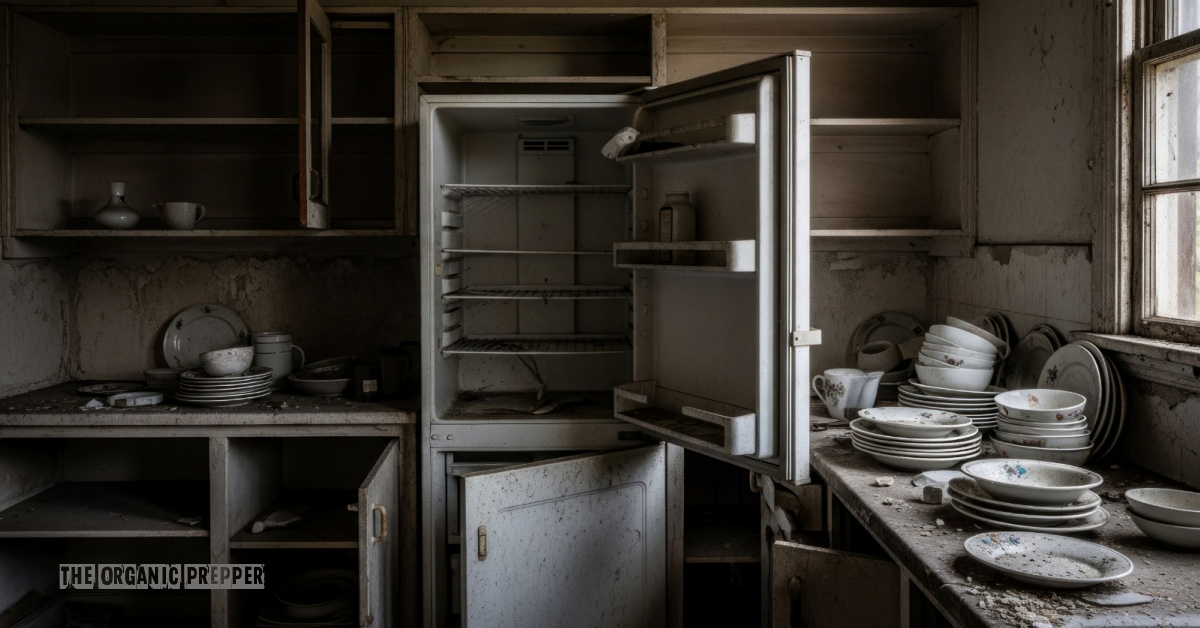
By the author of Dear Diary: It’s Me, Jessica In case you missed the last chapter, you can find it here. Dear Diary, It is me, Jessica. Dad had his engineering class come up with an interesting project.   They hauled a refrigerator out of one of the abandoned homes, put it up on three upended logs about three feet standing.  Dad found an old metal trash can, and cleaned it out good.  He then had the class cut it in half using a hacksaw.  Even with the class rotating in and out when they got tired, it still took them about an hour to cut it.  Meanwhile, Dad had another team cut a six-inch hole in the trash can lid, and another team dug a hole big enough to fit the bottom half of the trash can in.  While they were doing that, Dad took out a length of six-inch HVAC pipe from the abandoned house.  He then cut a hole in the side of the refrigerator near the bottom and one in the top.  Dad put some dirt in the bottom of the trash can, put the lid back on, and started a fire in it.  Once it got the fire going, he put the lid on and connected the hole in the top of the lid to the hole in the bottom side of the refrigerator with the HVAC pipe. Dad and his class made a smoker out of a refrigerator and a trash can. “If I can get some more fire brick, I could line the trash can with it and make it into a bean pole cooker,” he observed as we all watched the smoke come out of the top of the refrigerator. “What is a bean pole cooker?” I asked. “Back in the old days, they would dig a hole, build a good-sized fire in it, let it burn down to coals, and put a Dutch Oven in it.  Put some of the coals on the Dutch Oven lid and slow-cook the food.  The fire brick would make it that much more efficient.  Give us another option of how to cook food.” “HAM Guy could contact Jamal and see if they could find some to trade for.” “Actually, I was thinking about that hardware store we went to, to the East,” Dad said with his head slightly cocked to one side. “The one we had to hide out in during the tornado?” “Yes.”  Dad had his thinking face on.  “I’d like to do a little shopping.” Entry two After the troubles we had while in the city with the gang attack and the mob, Dad did not want to risk Mr. Miller, his wagon, and his Percherons.  He thought Katie and her men would be faster, and their ability to shoot on horseback would be a better choice.  Dad ran the idea past Jack at dinner that night.  Jack agreed.  We would not be able to bring back as much if we used the massive Percherons and the wagon, but with the pull-behind cart and the saddle bags, we could get a decent amount of supplies.   The next day, I rode out to Katie’s encampment to see if they would be willing to make the trip.  Dad told me to offer in trade to make them a refrigerator-trashcan smoker.   “He made a smoker out of a refrigerator and a trash can?”  Katie blinked a few times and then started laughing.  “The man is brilliant.  He has a deal!  Come here this evening, have dinner with us, stay the night.  We will leave at first light tomorrow.” I rode back home to tell Dad Katie agreed, and we were to go to them for dinner and the night for a first light departure.  Dad nodded and started to get things together for the trip.  I rode over to Jack’s to tell him and I figured he would come with.   “Sounds good,” he nodded.  “Let’s get Rae too.  She can ride one of Katie’s horses and she can shoot.  Your Dad, Rae, and I will ride in the pull-behind cart to Katie’s today.  Samson and the puppies will come alongside.  We will be at your place later.  I will bring the tents.  Pack what you need for two days on the road, just in case.  Weapons and ammo too.” With my horse pulling the cart carrying three people, all our gear and supplies, I set out at an easy walk.  It took longer than when I rode out to Katie’s encampment by myself, but I did not want to tire my horse, knowing the next day we would be on the road.  Rae said that was good thinking.   “What she,” Jack nodded to Rae, “said.” Dad just nodded. Dinner at Katie’s encampment was very different than at our place.  It was much more formal.  Everyone had only what I could call duties, tasks, and then when dinner was done, everyone sat down and ate at the same time.   At our place, when something was done, we ate it.  Little here, little there as it came out of the oven, or from a Dutch Oven.  This was much more set in time.  It seemed more organized but at the same time, almost like a set schedule.  Not sure if I like it or not.  Even after dinner was the same – everyone had a duty or task.  Dad, Jack, Rae, and I offered to help, but Katie said we were ‘guests’ and should stay out of the way.  We would only interfere with the ‘flow.’ Dad and I slept in one of Jack’s tents with Samson at my side.  Jack and Rae slept in the other with the puppies.   Diary, I am not sure of it, but I think I heard Rae’s laugh just before I fell asleep.   Entry three He is such a bad influence.  Jack that is.  I woke up on my own at pre-dawn twilight.  Sensing my awakening, Samson sat up and gave me a big doggy kiss.  Dad was still asleep, snoring lightly.  Samson and I quietly slipped out of the tent.  It would be another hour or so before Dad and the rest of the camp would be up.   I was not surprised to find Jack was already awake and out of the tent with the puppies.  He was talking quietly with the night watch as they tended a fire.  Jack brought a bag of coffee he traded with Jamal for some of his home brew.  It smelled fantastic. They all turned as I walked up. “Good morning,” Jack said.  “How did you sleep?” “Good morning.  I slept well.  Did I hear Rae laugh last night?” Diary, I do not know why I asked so directly.  It just came out. “Uh, I do not know.  Coffee is ready,” Jack said, and suddenly turned to press the plunger on the French press.  Some of the night watch chuckled or smiled behind their hands.   Something was up. “Uh, there is fresh cream over there,” Jack nodded over my shoulder. “Right, Jack,” I said with a sly smile.   He took a pull of the hot coffee and turned to look at the fire.  Samson and the puppies sat down next to him as I got some cream for my coffee.  I never knew how good fresh cream was till now.  Especially in good coffee. When I returned to the fire with my coffee, I asked Jack what he thought of the trip to the hardware store.  He turned to his usual militia leader self, all business. “We did not see any indications or warnings of hostiles like we did in the city.  But we should not let our guard down.  Keep a sharp eye out at all times.” “On it, Jack,” I said with all seriousness.   “Good.  Okay, let’s get your Dad and Rae up.  First light is coming.  Others are waking to prepare fires for breakfast.” “On it, Jack.  I will wake Dad.  Will you wake Rae?”  I asked with another sly smile. “Uh, yeah.  Sure.  Samson, the puppies, and I will get her up.” “Right, Jack.” About 1stMarineJarHead 1stMarineJarHead is not only a former Marine, but also a former EMT-B, Wilderness EMT (courtesy of NOLS), and volunteer firefighter. He currently resides in the great white (i.e. snowy) Northeast with his wife and dogs. He raises chickens, rabbits, goats, occasionally hogs, cows and sometimes ducks. He grows various veggies and has a weird fondness for rutabagas. He enjoys reading, writing, cooking from scratch, making charcuterie, target shooting, and is currently expanding his woodworking skills. The post Dear Diary: It’s Me, Jessica: Chapter 2 (Book 3) appeared first on The Organic Prepper.
Like
Comment
Share
Showing 4345 out of 116253
  • 4341
  • 4342
  • 4343
  • 4344
  • 4345
  • 4346
  • 4347
  • 4348
  • 4349
  • 4350
  • 4351
  • 4352
  • 4353
  • 4354
  • 4355
  • 4356
  • 4357
  • 4358
  • 4359
  • 4360
Advertisement
Stop Seeing These Ads

Edit Offer

Add tier


Select an image
Delete your tier
Are you sure you want to delete this tier?

Reviews

In order to sell your content and posts, start by creating a few packages. Monetization

Pay By Wallet

Payment Alert

You are about to purchase the items, do you want to proceed?

Request a Refund