YubNub Social YubNub Social
    #music #tew #tuba #euphonium #tew2026 #militarymusic #armymusic #armyband #band #freedom #concertband #tusab #orchestra #armyorchestra #warmup
    Advanced Search
  • Login
  • Register

  • Night mode
  • © 2026 YubNub Social
    About • Directory • Contact Us • Developers • Privacy Policy • Terms of Use • shareasale • FB Webview Detected • Android • Apple iOS • Get Our App

    Select Language

  • English
Night mode toggle
Featured Content
Community
New Posts (Home) ChatBox Popular Posts Reels Game Zone Top PodCasts
Explore
Explore
© 2026 YubNub Social
  • English
About • Directory • Contact Us • Developers • Privacy Policy • Terms of Use • shareasale • FB Webview Detected • Android • Apple iOS • Get Our App
Advertisement
Stop Seeing These Ads

Discover posts

Posts

Users

Pages

Blog

Market

Events

Games

Forum

Michael Savage on YouTube
5 w ·Youtube Politics

YouTube
THE COMING STORM - SAVAGE'S WARNING - #9226
Like
Comment
Share
Constitution Watch
Constitution Watch
5 w ·Youtube Politics

YouTube
Supreme Court to Rule on Counting Late Mail Ballots -- Let’s Get Back to Election Day!
Like
Comment
Share
Constitution Watch
Constitution Watch
5 w ·Youtube Politics

YouTube
5.8 Million Dirty Names Removed from Voter Rolls!
Like
Comment
Share
Constitution Watch
Constitution Watch
5 w ·Youtube Politics

YouTube
MORE Trump Shooting Docs STILL Hidden by FBI!
Like
Comment
Share
Constitution Watch
Constitution Watch
5 w

The art of the circuit split: an explainer
Favicon 
www.scotusblog.com

The art of the circuit split: an explainer

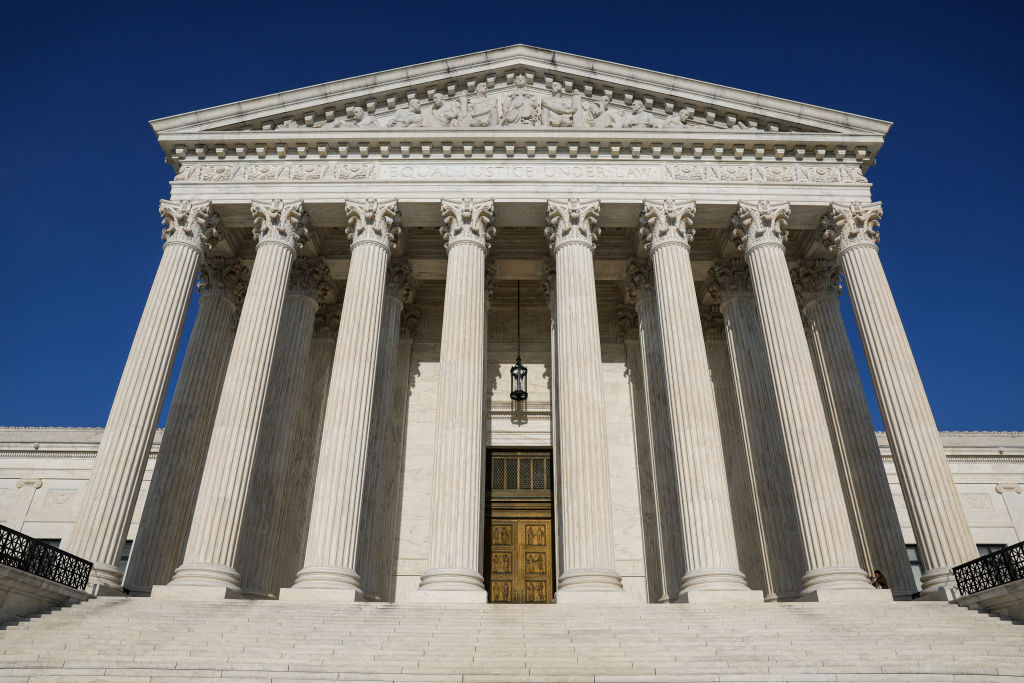
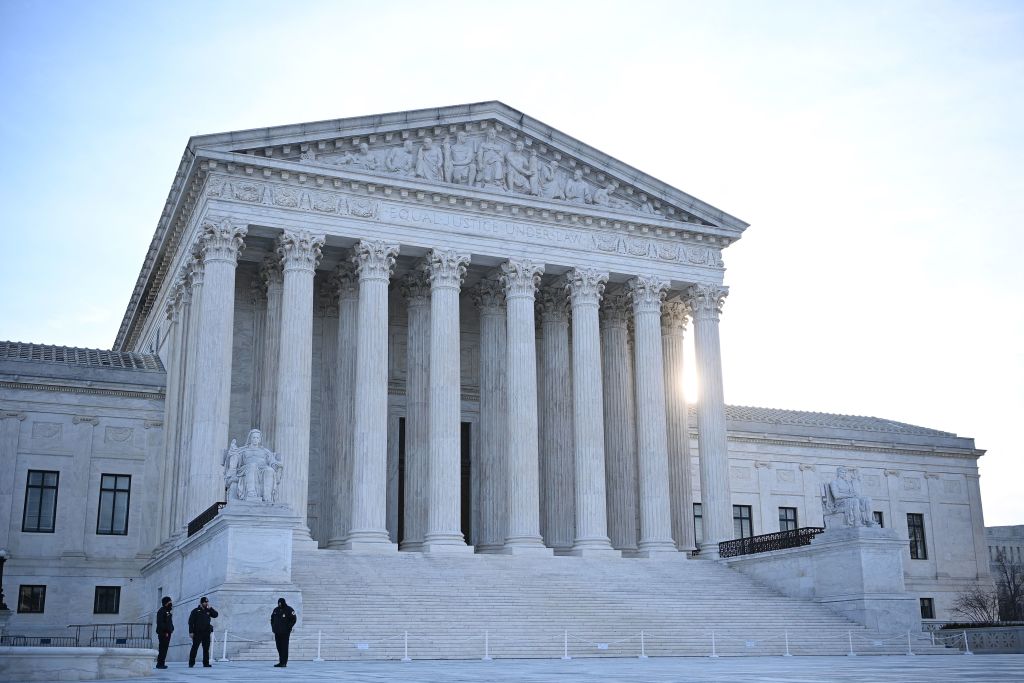
In their petitions for review, litigants spell out – in detail – why the Supreme Court should take up their case. These petitions can cover a wide range of topics, but many of them include a lengthy discussion of what is known as a circuit split – that is, a disagreement between the federal courts of appeals – on the legal issue on which they are asking the court to weigh in. Why? Circuit splits are among the top factors that the court considers when determining whether to grant review. Circuit splits themselves, however, come in a variety of forms. Splits can be messy or clean. Percolating or persistent. Old or new. Indeed, there is sometimes controversy on whether a circuit split even exists in the first place. Part of grabbing the Supreme Court’s attention is thus deciding what characteristics to play up and when – hence, the art of the circuit split. Why circuit splits matter Before we get into those nuances, let’s back up and revisit why circuit splits feature prominently in petitions for review. The biggest reason the justices (well, their clerks) look out for circuit splits is somewhat obvious: when different circuits have reached separate conclusions, it means a law or legal principle applies differently throughout the country. Resolving a circuit split therefore does more than bring clarity to a single case; it can clear up confusion that persists nationwide. In some cases, this confusion is primarily a problem for the federal government, which, in its petitions for review, often describes the challenges associated with upholding one interpretation of a law or regulation in one region of the country and a different interpretation elsewhere. Similarly, companies that operate in multiple states regularly bring circuit splits to the court’s attention and explain that the confusion makes it more difficult to do business. Circuit splits may also be raised in petitions from individuals in the midst of a crisis – for example, fighting a criminal charge, a fine, or job loss. These people may emphasize that their fate has been determined simply by where they are located. Opportunities to address widespread issues with a single case also matter to the justices because they currently only hear about 60 arguments per term. Circuit splits are perhaps the best way for the justices to ensure the cases they select provide the maximum impact.   Circuit splits come in many forms That said, the court is not looking for just any circuit split. Petitioners – that is, the litigants seeking review – need to show not just that there’s a disagreement between the courts of appeals, but also that the time is right for the justices to address it. This is where jargon like “clean” and “persistent” comes in. To be clean, a circuit split has to be straightforward and clearly established. In other words, courts of appeals need to have drawn on the same Supreme Court precedents and doctrines on the exact same legal question but come to different conclusions. When this happens, the courts themselves often acknowledge the split in their rulings.   Messy splits, on the other hand, occur when multiple courts of appeals have addressed the same legal question but come at it in different ways, whether because the cases in front of them involved complicated sets of facts or because the question implicated multiple precedents. In other words, the courts of appeals reached different conclusions, but their reasons for doing so (and the facts before them) are fairly easy to distinguish. As you might have guessed based on the names, the Supreme Court is more interested in clean splits than messy splits, because it may not be possible to resolve messy splits in one go. But that’s not all. Another element that the justices consider is the status of the split. Is it percolating – that is, actively developing as multiple related cases work their way through the legal system? Or is it persistent, meaning that such cases have been decided and the appellate courts have settled themselves along the battle lines and are unlikely to budge? The court’s reaction to percolation varies depending on the context. Sometimes, the justices may be eager to jump into the fray and clear up the confusion before it gets any worse. Other times, they appear to prefer to sit back and wait to see if one or more courts of appeals arrives at an answer they like. For example, when the court turned down a case last June on whether AR-15 bans violate the Second Amendment, Justice Brett Kavanaugh wrote that the issue was “currently being considered by several other Courts of Appeals,” which “should assist this Court’s ultimate decisionmaking.” As for a persistent split, sometimes this may be appealing and other times less so. If such a split has existed for decades without causing chaos, the court may feel no need to disturb the status quo. That was one factor (among many) that likely worked against Ghislaine Maxwell’s effort to get the Supreme Court to review her conviction on the basis that the U.S. attorney’s office which brought sex trafficking charges against her had ignored a relevant non-prosecution agreement. The U.S. Court of Appeals for the 2nd Circuit had noted in its ruling against Maxwell that “circuits have been split on” how to determine the scope of non-prosecution agreements “for decades.” By comparison, a persistent or recurring split that developed more recently may be ripe for the court’s attention. (Splits can also be old or new, although these descriptors overlap with the labels I’ve already discussed. New splits are often still percolating, while old splits may be persistent.) Assessing splits Given all these factors, it is common for respondents – that is, the party that won before the lower court and that typically opposes Supreme Court review – to reject the petitioner’s description of a split or to deny that a circuit split even exists. They may do so in several ways, such as by highlighting key differences between the lower court rulings that have been explored or by exploring the complicating factors present in the current case. But even if the respondent is unsuccessful on that score, it doesn’t end the court’s inquiry. After determining that there is, indeed, a split and that it could be worth addressing, the court also usually considers whether the case before them is the right vehicle, or opportunity, with which to take on that task. For example, cases won’t make the cut if they are too “factbound” (that is, heavily dependent on the application of the law to the unique facts of the case) or if they raise other problems, such as questions of mootness or standing, that make it questionable whether they could be heard at all. To put it simply, the court is looking for clean cases in addition to clean splits. This prevents most legal teams from making claims about a circuit split that are easy to disprove. But it certainly won’t stop good advocates from embracing the unique language of splits to paint their petition in the best possible light. The post The art of the circuit split: an explainer appeared first on SCOTUSblog.
Like
Comment
Share
Constitution Watch
Constitution Watch
5 w

A return to the separation of powers
Favicon 
www.scotusblog.com

A return to the separation of powers

Please note that SCOTUS Outside Opinions constitute the views of outside contributors and do not necessarily reflect the opinions of SCOTUSblog or its staff. In recent years, the Supreme Court has gradually abandoned an idea – the separation of powers – that the Framers thought was vital to the preservation of liberty. Instead, the court seems to have been captured by a different – and, I would argue, contrary – idea: a strong presidential system supported by a concept known as the “unitary executive,” which advocates that the president has total authority over the executive branch. This was first made clear in a 2020 case called Seila Law v. Consumer Financial Protection Bureau, where the Supreme Court created a kind of “just-so story” about why the presidency alone is able to operate without the limitations and constraints that cover the other members of the tripartite government created by the Constitution. Specifically, the question presented by Seila Law was whether a regulatory agency headed by a single administrator appointed for a term of years was constitutional. The court found that this was an unconstitutional violation of the separation of powers unless the president could remove the agency head at will. In reaching this result, the court posited that multi-headed bodies were favored in the government structure, and attributed this to the Framers’ wisdom: The Framers recognized that, in the long term, structural protections against abuse of power were critical to preserving liberty … Their solution to governmental power and its perils was simple: divide it. In particular, according to the court: The Framers viewed the legislative power as a special threat to individual liberty, so they divided that power to ensure that “differences of opinion” and the “jarring of parties” would “promote deliberation and circumspection” and “check excesses in the majority.” But the court then went on to describe the executive branch as unique among the three branches: By contrast, the Framers thought it necessary to secure the authority of the Executive so that he could carry out his unique responsibilities. According to the court: The Framers deemed an energetic executive essential to “protection of the community against foreign attacks,” “the steady administration of the laws,” “the protection of property,” and “the security of liberty.” Accordingly, they chose not to bog the Executive down with the “habitual feebleness and dilatoriness” that comes with a “diversity of views and opinions.” Instead, they gave the Executive the “[d]ecision, activity, secrecy, and dispatch” that “characterize the proceedings of one man.” At this point in Seila Law, the court – perhaps realizing that what it had described was a president without any significant controls or restraints – went on to outline why that would not be the result: [U]nique in our constitutional structure—the Framers made the President the most democratic and politically accountable official in Government. Only the President (along with the Vice President) is elected by the entire Nation. And the President’s political accountability is enhanced by the solitary nature of the Executive Branch, which provides “a single object for the jealousy and watchfulness of the people.” In other words, in the majority’s view, the Constitutional Convention created a president with sweeping powers over the executive branch but ultimately subjected him to control by the people. *** With all respect, the court got its history entirely wrong. The Supreme Court’s Seila Law description isn’t even close to what happened at the 1787 Constitutional Convention. There is no sense in which the presidency – finally created as a single person after months of debate near the very end of the Convention – was considered by anyone at the Convention as “directly accountable to the people.” In fact, the idea that the president would be responsible to voters is exactly what the Convention delegates wanted to avoid. They did not want the president to be able to claim he was responsible to the people. That, to them, was the foundation for dictatorial behavior. To prevent just such a development, the Convention created an early form of the Electoral College to cut the connection between the popular vote and the election of the president, foreclosing an opportunity for the president to claim the very type of power that the Seila Law court contemplates – as an “elected monarch” or a dictator – if he were to be directly elected by a popular vote. After all, the Constitutional Convention occurred only 11 years after the colonies freed themselves from King George III, and creating another powerful ruler was out of the question. The Electoral College remains in effect, of course, and since 1824 there have been five cases in which the Electoral College winner lost the popular vote, and 15 cases (including as recently as 2016) where the person formally elected president by the Electoral College had only a plurality – not a majority – of the national popular vote. So the Convention was successful in beating back the idea of a popularly elected president with extensive uncontrolled popular power, at least until the current era.  All of this is to say that the Supreme Court in Seila Law was wrong in its description of what happened at the Constitutional Convention. The delegates there did not intend to give the president any special sweeping powers, such as the ability to remove the members of bipartisan independent regulatory agencies, established by Congress, who were appointed for terms of years, except in cases of maladministration. Nevertheless, as noted above – using this flawed historical understanding of the president’s power in Seila Law as a precedent – the Trump administration has begun removing officials from these agencies as well. *** So what is the true role of the president in our constitutional system? Does the president have any inherent power to remove the officers of agencies who serve for terms specified by Congress? Even more important, although the president clearly has the authority under Article II to appoint heads of agencies created by Congress without specified terms, does he or should he have the power to control their policies? And finally, where in a government wholly dominated by a single figure, is the separation of powers, lauded by the Framers as the only way to preserve the liberties of the people? Based on the history described above, as well as the text of the Constitution itself, there is strong evidence that although the delegates at the Constitutional Convention considered the president as an essential office, it was only for the purpose of administering – not controlling – the government they were in the process of creating. That’s why the powers of the president in Article II are limited to commander-in-chief of the armed forces, making foreign treaties with the advice and consent of the Senate, appointing other officials, and taking “care that the laws be faithfully executed.” There was nothing at all suggesting that the president should control executive personnel or make policy in the way he does today. Indeed, according to Section 2 of Article II, the president “may require the opinion, in writing, of the principal officer of each of the executive departments” – an authority that would be unnecessary if the Constitutional Convention had thought he was intended to control all of the executive’s departments. Nor does the “vesting clause” in Article II of the Constitution, which states that “[t]he executive power shall be vested in a President of the United States” give him any such power. This was solely to allow the president to carry legislation into effect and was tempered by his limited powers. *** Nevertheless,  a number of factors – decisions by the Supreme Court (such as Seila Law), the Civil War, the Great Depression, a decline in the capacities of Congress, the wars of the 20th and 21st centuries, and the rise of a theory like the “unitary executive” – have all endowed the presidency with powers that no one who designed the Constitution, or followed the debates that ensued before it was ratified, could ever have imagined. This brings us back to the separation of powers, which underlines many of the points made above and which is especially threatened by the concept of the “unitary executive.” The Constitution was based on a concept known as the separation of powers for a reason: to assure that the liberties of the people would not be threatened by their own government, including that of the executive. The revolutionary concept here was that the three governmental powers created by the Constitution – Congress, the president, and the judiciary – were to be as far as possible in tension with one another, each with specialized powers enabling them to limit the powers of the others, so that the liberties of the people were not jeopardized. This assumed that each branch of government – Congress, the president, and the judiciary – would jealously guard its own powers against dangerous growth in the powers of the others. The governmental sectors were not intended to be hostile to one another, of course, but each had a speciaI governmental function that made it independent of the others and thus able to protect the liberties of the people in the area it covered. That is the constitutional structure that fully embodies the separation of powers and the only one that the delegates to the Constitutional Convention approved. The post A return to the separation of powers appeared first on SCOTUSblog.

Like
Comment
Share
Red White & True History
5 w

Today in World War II History—February 17, 1941
Favicon 
www.sarahsundin.com

Today in World War II History—February 17, 1941

Silver salvaged from wreck of SS Gairsoppa in 2011 (Sarah Sundin collection) 85 Years Ago—Feb. 17, 1941: Off Ireland, German U-boat U-101 sinks British freighter Gairsoppa (85 killed) carrying 2,800 bars of silver to fund the war (110 tons recovered in 2011). In Jersey in the German-occupied Channel Islands, bread rationing begins: 4 pounds, 10 ounces per week for adults.The post Today in World War II History—February 17, 1941 first appeared on Sarah Sundin.
Like
Comment
Share
Entertainment News
Entertainment News
5 w

New JIMMY Biopic Will Tell You Everything You Never Knew About Iconic Hollywood Star
Favicon 
www.movieguide.org

New JIMMY Biopic Will Tell You Everything You Never Knew About Iconic Hollywood Star

The new JIMMY biopic sheds a light on Jimmy Stewart’s whole life — not just as an actor but also as a veteran.
Like
Comment
Share
Entertainment News
Entertainment News
5 w

Why Kathie Lee Gifford Calls Herself ‘Anti-Religion’
Favicon 
www.movieguide.org

Why Kathie Lee Gifford Calls Herself ‘Anti-Religion’

Kathie Lee Gifford is outspoken about her faith, but the former TV host recently explained why she considers herself “anti-religion.”
Like
Comment
Share
Entertainment News
Entertainment News
5 w

Warner Bros reopens takeover talks with Paramount after receiving a waiver from Netflix
Favicon 
www.washingtontimes.com

Warner Bros reopens takeover talks with Paramount after receiving a waiver from Netflix

Warner Bros. will reopen takeover talks with Paramount Skydance after receiving a seven-day waiver to do so from its preferred bidder, Netflix.
Like
Comment
Share
Showing 4801 out of 115131
  • 4797
  • 4798
  • 4799
  • 4800
  • 4801
  • 4802
  • 4803
  • 4804
  • 4805
  • 4806
  • 4807
  • 4808
  • 4809
  • 4810
  • 4811
  • 4812
  • 4813
  • 4814
  • 4815
  • 4816
Advertisement
Stop Seeing These Ads

Edit Offer

Add tier


Select an image
Delete your tier
Are you sure you want to delete this tier?

Reviews

In order to sell your content and posts, start by creating a few packages. Monetization

Pay By Wallet

Payment Alert

You are about to purchase the items, do you want to proceed?

Request a Refund