YubNub Social YubNub Social
    #music #tew #tuba #euphonium #tew2026 #militarymusic #armymusic #armyband #band #freedom #concertband #tusab #armyorchestra #orchestra #warmup
    Advanced Search
  • Login
  • Register

  • Day mode
  • © 2026 YubNub Social
    About • Directory • Contact Us • Developers • Privacy Policy • Terms of Use • shareasale • FB Webview Detected • Android • Apple iOS • Get Our App

    Select Language

  • English
Night mode toggle
Featured Content
Community
New Posts (Home) ChatBox Popular Posts Reels Game Zone Top PodCasts
Explore
Explore
© 2026 YubNub Social
  • English
About • Directory • Contact Us • Developers • Privacy Policy • Terms of Use • shareasale • FB Webview Detected • Android • Apple iOS • Get Our App
Advertisement
Stop Seeing These Ads

Discover posts

Posts

Users

Pages

Blog

Market

Events

Games

Forum

Intel Uncensored
Intel Uncensored
5 w

U.S. Airlifts Nuclear Microreactor in First-of-Its-Kind Demonstration
Favicon 
www.sgtreport.com

U.S. Airlifts Nuclear Microreactor in First-of-Its-Kind Demonstration

from Your News: Energy and Defense officials say the transport showcases rapid deployment potential for small-scale nuclear power in civilian and military applications. By yourNEWS Media Newsroom The U.S. Departments of Energy and Defense have completed what officials described as the first-ever air transport of a nuclear microreactor, flying the unit aboard a military C-17 […]
Like
Comment
Share
Front Page Mag Feed
Front Page Mag Feed
5 w

Fed Judge Rules George Washington Home Must Call Him a Racist Because of “Harm and Anxiety”
Favicon 
www.frontpagemag.com

Fed Judge Rules George Washington Home Must Call Him a Racist Because of “Harm and Anxiety”

Federal judges are losing their minds. The post Fed Judge Rules George Washington Home Must Call Him a Racist Because of “Harm and Anxiety” appeared first on Frontpage Mag.
Like
Comment
Share
BlabberBuzz Feed
BlabberBuzz Feed
5 w

John Kennedy Slams $5.5M In U.S. Funding for LGBTQI Advocacy In Uganda
Favicon 
www.blabber.buzz

John Kennedy Slams $5.5M In U.S. Funding for LGBTQI Advocacy In Uganda

Like
Comment
Share
The Lighter Side
The Lighter Side
5 w

4 daily habits to clear your mind and get stuff done
Favicon 
www.optimistdaily.com

4 daily habits to clear your mind and get stuff done

BY THE OPTIMIST DAILY EDITORIAL TEAM Between the nonstop news cycle, workplace demands, and life’s everyday challenges, maintaining focus has never felt harder or more important. From rising interest rates to relationship stress to the mental clutter of daily life, distractions seem built into modern existence. But whether you’re managing a team, working solo, or just trying to stay present at home, building better focus is a skill anyone can strengthen. These four research-backed techniques are especially helpful in chaotic times. They’re simple to learn, adaptable to any lifestyle, and powerfully effective whether you apply them to your job, in relationships, or on the playing field. 1. Compartmentalize: keep stress in its lane Stress from one area of life has a habit of leaking into others. Bringing work worries home or vice versa makes it harder to show up fully in either space. One of the most effective ways to regain clarity is to mentally assign your stressors to the proper category: work, home, health, etc. Unless something is urgent, compartmentalize it. That means letting home concerns stay at home when you’re on the clock, and leaving work issues at the door when you walk into your living room. Doing this consistently builds stronger boundaries and helps you stay focused on what’s in front of you. 2. Decompartmentalize: make room to engage Just as it’s useful to keep stress in its lane, it’s equally important to fully arrive in each new environment. This is where decompartmentalization comes in. This means taking a conscious moment to set aside previous concerns and focus on the present setting. That could look like a short walk between meetings, a quick music break during your commute, or even just a deep breath before stepping into the house after work. These transitions help reset your nervous system and allow you to bring your full attention to the people and tasks that matter most. 3. Prioritize: not everything matters equally Without clear priorities, everything can start to feel equally urgent… and that’s a fast track to overwhelm. Start each day by updating your to-do list. Bring forward unfinished tasks, add anything new, and then sort your list by urgency and importance. Do the tasks that are both urgent and important first. Items that are less pressing or less vital can come later, or be scheduled for a quieter day. Is there something small you’ve been putting off that would only take five minutes? Knock it out once the bigger priorities are handled. Effective prioritization not only sharpens focus, but it also helps reduce decision fatigue and prevents energy from being wasted on distractions that feel urgent but aren’t. 4. Understand yourself: get clear on what’s pulling your focus Focus begins with self-awareness. You can’t solve a problem you haven’t noticed. If you find yourself distracted or stressed, pause and ask: What’s really going on here? This kind of check-in takes discipline, but it’s essential. Is your stress coming from something unresolved at work? Then it may be time to address it directly. Is the source unrelated to your current setting? If it’s not urgent, compartmentalize it. If it is urgent, give yourself permission to step away and deal with it properly. Ignoring stress only drains your focus further. By identifying it and making a choice to address it or to set it aside, you reclaim control over your attention. Building a culture of focus These techniques aren’t just for individuals; they’re also powerful tools for leaders. Whether you’re coaching a team or managing a department, modeling focus and teaching these skills can transform group dynamics. Regular check-ins with your team, honest conversations about mental load, and shared prioritization sessions can all help people refocus and work more effectively. If it feels like everyone is struggling, consider holding a “halftime huddle” to regroup and re-strategize. Ask: What’s getting in the way? What are we really trying to achieve? Which stressors are we carrying that don’t belong here? Encouraging a culture of focus, self-awareness, and intentionality doesn’t just boost productivity; it also builds trust, well-being, and long-term resilience.     Did this solution stand out? Share it with a friend or support our mission by becoming an Emissary.The post 4 daily habits to clear your mind and get stuff done first appeared on The Optimist Daily: Making Solutions the News.
Like
Comment
Share
The Lighter Side
The Lighter Side
5 w

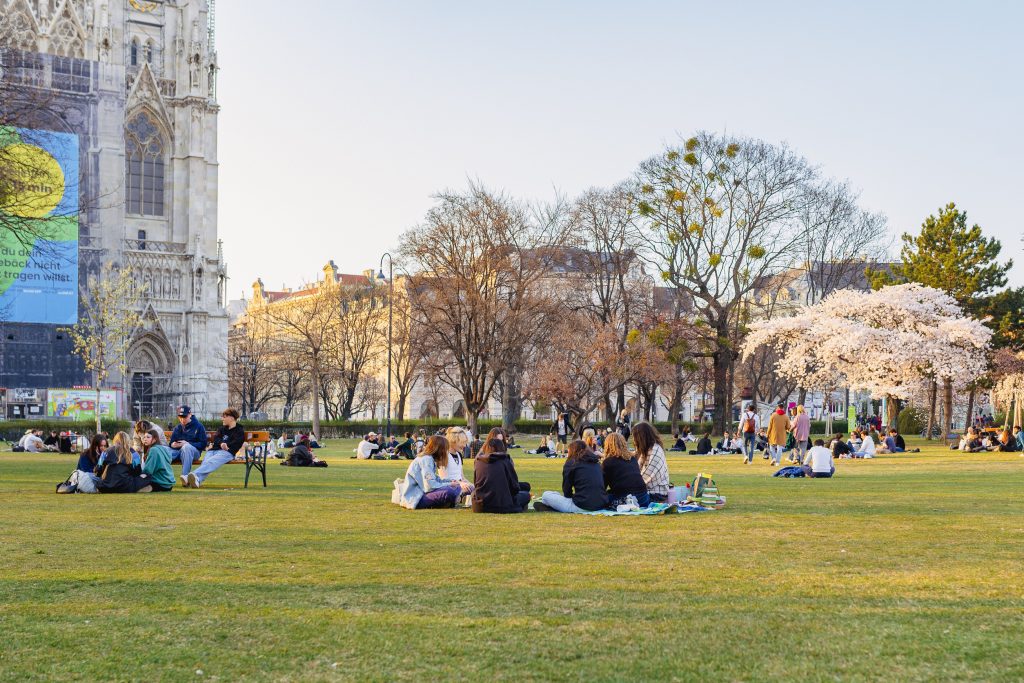
Vienna is turning parking spaces into parks and it’s changing the city
Favicon 
www.optimistdaily.com

Vienna is turning parking spaces into parks and it’s changing the city

THE OPTIMIST DAILY EDITORIAL TEAM Finding parking in a city has always been a small daily nightmare. In places like Los Angeles, drivers can spend more than 80 hours a year circling the block, and cities across the globe, from London to Frankfurt, offer little relief. But Vienna is taking a different approach: instead of building more places to park, the Austrian capital is removing them. Surprisingly, it’s going pretty well. Faced with the dual challenge of climate change and limited space, Vienna is on a mission to swap asphalt for trees, bike lanes, and public seating. In doing so, it’s not just making the city cooler and more livable but also challenging a long-held assumption in urban planning: that cars should always come first. The hidden cost of parking lots Parking spots may be individually small, but collectively, they take up an enormous amount of space. In the United States, roughly 25 percent of developable urban land is devoted to parking. That’s a lot of heat-trapping pavement and a lot of real estate that could be doing something else. All that asphalt contributes to rising summer temperatures, worsens flooding by blocking stormwater drainage, and prioritizes cars over people. Some cities are starting to realize the trade-offs aren’t worth it. Vienna’s plan: break up the asphalt Vienna has been quietly removing street parking in favor of public space, and not just in the outer districts. Even Neuer Markt, a historic square in the heart of the city, has been transformed. Once packed with parked cars, it’s now a pedestrian-friendly area with trees, benches, and open space for people to gather. The city has more than 350 projects underway to replace parking spots with green infrastructure and public areas. That includes a major street reimagined as a Dutch-style cycling corridor, where 140 parking spaces were swapped for nearly a mile of bike lanes and plants. Residents can even apply to convert individual parking spots into what the city calls “neighborhood oases” made up of community gardens, playgrounds, or outdoor seating areas. On top of this, in a major policy shift, Vienna now requires payment for all street parking city-wide, with a strict two-hour limit for non-residents. Free parking is a thing of the past. The key to success: offer real alternatives Of course, making parking harder isn’t the point; making alternatives easier is. Vienna has invested heavily in a reliable, affordable transit system. “Park and ride” garages allow commuters to leave their cars outside the city center and connect seamlessly to subways or trams. The public transport system is fast, cheap, and well-connected, which is exactly what’s needed to encourage behavioral change. “We have to take people on board,” said Ina Homeier from Vienna’s Department of Urban Planning and Development. “We have to ask: how do you want your neighborhood? Do you want it to be filled with cars and without any trees, or do you want something different?” This approach is working. The city’s investment in greener infrastructure is partly funded by parking fees, which now bring in around €180 million ($209 million) annually. Those funds go right back into cycling infrastructure and public transit. As a result, car use in Vienna has dropped by 37 percent compared to the 1990s. Changing car culture isn’t easy Still, resistance remains. “There’s been very complicated politics around taking back some of the space we’ve accorded the automobile,” said journalist Henry Grabar, author of Paved Paradise: How Parking Explains the World. For those who rely on cars, especially in places where transit isn’t a viable option, reducing parking can feel like an attack. This tension is especially strong in countries like the United States, where 92 percent of households own at least one car. Drivers are a powerful political group, and car culture is deeply ingrained in urban policy. Yet even in the US, cities are beginning to rethink their approach. Dallas turned a large downtown parking lot into a 3.7-acre park. San Francisco and New York have kept many of the “parklets” that popped up during the pandemic, turning curbside parking into outdoor dining and gathering spaces. Raising street parking fees has also proven an effective measure to manage demand and fund better alternatives. “There are lots of cities that are starting to realize the opportunity that parking offers for cities that have relatively limited budgets,” said Dana Yanocha of the Institute for Transportation and Development Policy. And cities like San Jose and Austin are rolling back zoning laws that required new developments to include a minimum number of parking spaces, freeing up land for housing, green space, or businesses instead. It’s not just about cars, it’s about choice At the heart of all this is a simple idea: people need options. “You cannot reduce anything without offering a good alternative,” said Homeier. That’s especially true for transportation. When people have a cheap, fast, and pleasant alternative to driving, they’re far more likely to use it. Vienna’s success didn’t come from banning cars. It came from making room for something better. The city is betting that the future of urban life is not about where to park, but about what kind of place we want to live in.     Did this solution stand out? Share it with a friend or support our mission by becoming an Emissary.The post Vienna is turning parking spaces into parks and it’s changing the city first appeared on The Optimist Daily: Making Solutions the News.

Like
Comment
Share
The Blaze Media Feed
5 w

If you are a K-12 student, it has never been easier to skip class consequence-free
Favicon 
www.theblaze.com

If you are a K-12 student, it has never been easier to skip class consequence-free

Anyone who has been a teenager for more than five minutes can probably reach the same conclusion after watching the flood of videos recently posted to social media. Many of the kids streaming out of school to take part in anti-ICE protests look less like committed activists and more like students thrilled to be out of class. You can see it written all over their faces.Perhaps the plan is to destroy the current system before deciding what the new one should be. But students who simply want to ditch class are not the ones coordinating nationwide demonstrations against Immigration and Customs Enforcement. Most young people are not deeply invested in politics, if they are interested at all. Large-scale, coordinated walkouts don’t materialize organically. Unfortunately, perception often becomes reality. Videos of tens of thousands of students leaving school buildings across the country are invaluable propaganda for left-wing activists seeking to foment cultural and political upheaval. This is not hyperbole. It comes directly from the far-left nonprofit organizations helping to organize, train, and mobilize K-12 students.One such group is the Sunrise Movement, a far-left climate organization that has increasingly expanded beyond environmental activism. Originally focused on promoting a Green New Deal, the group recently announced it was pivoting toward “fighting Trump.” To accomplish this shift, Sunrise appears intent on eliminating opposition to its ideology by any means necessary. The organization has openly bragged about harassing hotel staff and guests for allegedly hosting ICE agents. Central to Sunrise’s strategy is recruiting young people and embedding itself in K-12 schools. The organization sponsors clubs nationwide, which are then described as “student-led.” Unsurprisingly, these same clubs often organize walkouts centered on climate activism and anti-Trump messaging. These protests are not meant to be one-off events. According to training materials obtained by Defending Education, Sunrise calls for monthly “direct actions” designed to “disrupt business as usual” and advance a so-called political revolution. The group’s 25-page guidebook — riddled with tired Marxist clichés — explicitly urges minors to engage in Boycott, Divestment, and Sanctions-style actions against businesses deemed to be “propping up ICE.” The issue, in other words, is never the issue. The issue is the revolution. Sunrise’s materials offer little clarity about what this revolution will actually achieve; perhaps the plan is to destroy the current system before deciding what the new one should be. RELATED: When parents pay twice to escape public schools, the verdict is in id-work / Getty ImagesBut these acts of “civil disobedience” have become less about expressions of student voices and more about spectacles of class-skipping that benefit activists who openly call for dismantling the very system that allows these protests to occur. In 2018, Robert Pondiscio warned schools that refusing to enforce discipline for the Parkland gun-control walkouts would make them “regret it down the road.” If students are permitted to disrupt learning for one political cause, he argued, schools would have to refrain from punishing disruptions for any cause that follows. Eight years later, that warning looks prescient. Parents, activists, and even school officials now routinely encourage or excuse walkouts tied to the cause of the month. Meanwhile, the activist groups behind these demonstrations are targeting businesses and institutions that fail to conform to prescribed political views. History suggests that once a movement normalizes coercion, its circle of targets inevitably expands. It is time for parents, administrators, and school board members to put an end to mass student walkouts before they become a permanent feature of a school system that is already failing far too many children. Roughly 70% of American students are not proficient in core academic subjects. Schools cannot afford to treat instructional time as expendable. Students absolutely retain their First Amendment rights. But they also have a civic responsibility to become educated citizens. Real, lasting change comes from knowledge, discipline, and understanding — not from performative outrage and adults who confuse activism with education.
Like
Comment
Share
History Traveler
History Traveler
5 w

Analysis Nördlingen bronze sword shines spotlight on Bronze Age craftsmanship
Favicon 
www.thehistoryblog.com

Analysis Nördlingen bronze sword shines spotlight on Bronze Age craftsmanship

A scientific investigation of the spectacular 3,400-year-old highly decorated bronze sword discovered in Nördlingen, Southern Germany, in 2023 has uncovered how the metal was worked, the sword constructed and decorated. The exceptional state of preservation of the weapon — it is intact from pommel to tip, still shines in some place and has a honed edge — gave researchers a unique opportunity to reveal new information about Bronze Age metalwork and craft techniques. The Bavarian State Office for the Preservation of Monuments (BLfD) sent the sword to Berlin where it was analyzed using non-destructive methods including 3D computed tomography, X-ray diffraction and X-ray fluorescence spectroscopy. The results found the metal was worked with an incredibly high level of precision and skill. The resolution of the 3D CT scans is so high that every detail is exposed, down to the tool marks left on the weapon. Examination of the imaging found that the blade was clamped and riveted to the hilt with a tang, just like great German steel kitchen knives are today. The deep grooves on the pommel and pommel plate that form a geometric pattern contain what appears to be a different material from the bronze. Just based on how the what the material looked like, researchers expected the decoration in the grooves to be tin, which is soft and malleable and easy to use on such a tiny detail job. Instead, X-ray fluorescence spectroscopy, which floods the surface of the object with synchrotron radiation, causing atoms to emit measurable element-specific X-rays, identified the inlaid material as copper wires joined together. Copper is a harder material, and much more difficult to work with than tin would have been to inlay into grooves. It attests to have highly skilled the metalworker could be. Traces of tin and, in some places, a little lead, which probably came from the bronze alloy, were also detectable. ’We are familiar with this type of inlay work using copper wires in bronze from other finds,’ says [Dr Johann-Friedrich Tolksdorf, regional representative of the BLfD]. ‘To make the reddish copper stand out better from the gold-coloured bronze, it may have been patinated, i.e. chemically blackened, for example with urine.’ […] The thorough evaluation of the measurement data will take some time, after which the experts plan to publish their results and conclusions. ‘We hope that we will also be able to reconstruct whether this sword was made in a specific workshop, for example – so far, we can only assume that it was manufactured in southern Germany, one of the two main areas where octagonal swords were prevalent in the Bronze Age in Germany,’ says Tolksdorf.
Like
Comment
Share
YubNub News
YubNub News
5 w

Satan, Prince of this World: An overview of Chapter 2
Favicon 
yubnub.news

Satan, Prince of this World: An overview of Chapter 2

Please share our story! Print
Like
Comment
Share
YubNub News
YubNub News
5 w

The Morning Briefing: GOP Will Hit the Lottery if AOC Is Dems' 2028 Nominee
Favicon 
yubnub.news

The Morning Briefing: GOP Will Hit the Lottery if AOC Is Dems' 2028 Nominee

Top O' the BriefingHappy Tuesday, dear Kruiser Morning Briefing friends.  (It's the final week of preparation for the whirlwind book tour, and the Sine Qua Non Sequitur is distributing Vincent Price…
Like
Comment
Share
YubNub News
YubNub News
5 w

El Salvador Makes History... Again
Favicon 
yubnub.news

El Salvador Makes History... Again

El Salvador and its president, Nayib Bukele, are stacking up the wins lately. The latest one comes as part of the Western Hemisphere's war against organized crime and narco-terrorism.   Advertisement…
Like
Comment
Share
Showing 5065 out of 115362
  • 5061
  • 5062
  • 5063
  • 5064
  • 5065
  • 5066
  • 5067
  • 5068
  • 5069
  • 5070
  • 5071
  • 5072
  • 5073
  • 5074
  • 5075
  • 5076
  • 5077
  • 5078
  • 5079
  • 5080
Advertisement
Stop Seeing These Ads

Edit Offer

Add tier


Select an image
Delete your tier
Are you sure you want to delete this tier?

Reviews

In order to sell your content and posts, start by creating a few packages. Monetization

Pay By Wallet

Payment Alert

You are about to purchase the items, do you want to proceed?

Request a Refund