YubNub Social YubNub Social
    #freedom #americanhistory #amercia250
    Advanced Search
  • Login
  • Register

  • Night mode
  • © 2026 YubNub Social
    About • Directory • Contact Us • Developers • Privacy Policy • Terms of Use • shareasale • FB Webview Detected • Android • Apple iOS • Get Our App

    Select Language

  • English
Night mode toggle
Featured Content
Community
New Posts (Home) ChatBox Popular Posts Reels Game Zone Top PodCasts
Explore
Explore
© 2026 YubNub Social
  • English
About • Directory • Contact Us • Developers • Privacy Policy • Terms of Use • shareasale • FB Webview Detected • Android • Apple iOS • Get Our App
Advertisement
Stop Seeing These Ads

Discover posts

Posts

Users

Pages

Blog

Market

Events

Games

Forum

Daily Caller Feed
Daily Caller Feed
1 y

California Caught Off Guard By Massive Fires After LA Fire Dept Spent Years Pushing Diversity, ‘Racial Equity’
Favicon 
dailycaller.com

California Caught Off Guard By Massive Fires After LA Fire Dept Spent Years Pushing Diversity, ‘Racial Equity’

'racial equity and inclusion goals'
Like
Comment
Share
Daily Caller Feed
Daily Caller Feed
1 y

Mark Halperin Says He Has ‘Zero Doubt’ That There Is ‘More Coordination’ On Trump ‘Lawfare’ To Be Uncovered
Favicon 
dailycaller.com

Mark Halperin Says He Has ‘Zero Doubt’ That There Is ‘More Coordination’ On Trump ‘Lawfare’ To Be Uncovered

'Lawfare is not going to age well'
Like
Comment
Share
Daily Caller Feed
Daily Caller Feed
1 y

ROOKE: The Left Loves Incompetent Women; Now LA Is Engulfed In Flames
Favicon 
dailycaller.com

ROOKE: The Left Loves Incompetent Women; Now LA Is Engulfed In Flames

'Women deserve better representations than the ones the left promotes'
Like
Comment
Share
Daily Caller Feed
Daily Caller Feed
1 y

Former Orioles Player Brian Matusz Dead At 37
Favicon 
dailycaller.com

Former Orioles Player Brian Matusz Dead At 37

'He dedicated his time to connecting with any fan he could'
Like
Comment
Share
Daily Caller Feed
Daily Caller Feed
1 y

Errors That Cyclists Often Make That May Harm Their Personal Injury Claims
Favicon 
dailycaller.com

Errors That Cyclists Often Make That May Harm Their Personal Injury Claims

Are you aware that thousands of cyclists sustain injuries, in the United States? Many of these cyclists miss out on receiving compensation for their injuries because of preventable errors they make after an accident occurs. To help you navigate this process effectively and ensure you get the compensation you deserve, you need to know the […]
Like
Comment
Share
Daily Caller Feed
Daily Caller Feed
1 y

Nancy Pelosi’s Stock Portfolio Explodes In Value, Beats Market By Nearly 200%
Favicon 
dailycaller.com

Nancy Pelosi’s Stock Portfolio Explodes In Value, Beats Market By Nearly 200%

Outperforming
Like
Comment
Share
Daily Caller Feed
Daily Caller Feed
1 y

FACT CHECK: No, Keir Starmer Is Not Going To Cancel County Council Elections In May 2025
Favicon 
checkyourfact.com

FACT CHECK: No, Keir Starmer Is Not Going To Cancel County Council Elections In May 2025

There is no evidence for this claim.
Like
Comment
Share
The Lighter Side
The Lighter Side
1 y

US Newspapers Are Deleting Old Crime Stories, Offering Subjects the ‘Right to be Forgotten’
Favicon 
www.goodnewsnetwork.org

US Newspapers Are Deleting Old Crime Stories, Offering Subjects the ‘Right to be Forgotten’

An Ohio news outlet is leading a change of tradition in American reporting which their editor-in-chief calls the “right to be forgotten.” Long considered taboo to retract or erase old stories from newspaper archives, those that feature mug shots and report on residents charged with crimes can, in our search engine-powered world, continue to detract […] The post US Newspapers Are Deleting Old Crime Stories, Offering Subjects the ‘Right to be Forgotten’ appeared first on Good News Network.
Like
Comment
Share
SciFi and Fantasy
SciFi and Fantasy  
1 y

Star Wars: Skeleton Crew Makes It Home in “We’re Gonna Be In So Much Trouble”
Favicon 
reactormag.com

Star Wars: Skeleton Crew Makes It Home in “We’re Gonna Be In So Much Trouble”

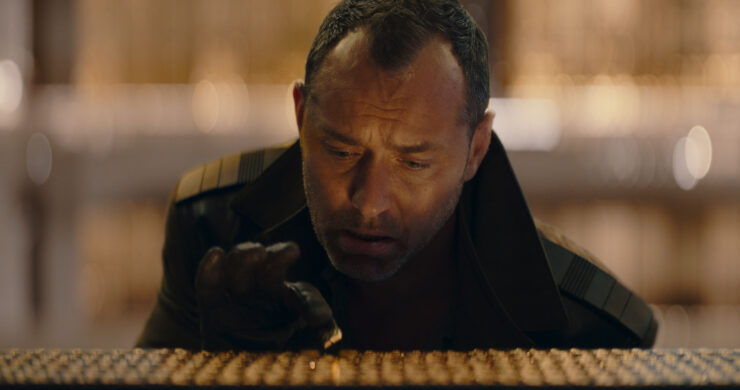
Movies & TV Star Wars: Skeleton Crew Star Wars: Skeleton Crew Makes It Home in “We’re Gonna Be In So Much Trouble” You knew that lightsaber was coming back… By Emmet Asher-Perrin | Published on January 8, 2025 Image: Lucasfilm Comment 0 Share New Share Image: Lucasfilm So what’s a Great Barrier look like anyway? Recap Image: Lucasfilm The kids’ parents are working in the woods at night on their communications device to contact the kids. They are discovered by security droids and form a relay race to pass off the device to each other as each of them is stunned in turn. Once the device is passed to Fara, it is powered up and ready to be released, and she gets it to launch. On the new Onyx Cinder, the kids are playing, but Wim is depressed—he knows their adventure is coming to an end and they’ll be right back where they started. His friends insist that they’re still glad they had this experience and that everything will be fine. In the meantime, the pirates arrive at the coordinates of At Attin and discover a planet of toxic gas storms. Jod insists this is all a trick, so they send out a scout and promptly lose contact. As Jod is sent to the airlock, the new Onyx Cinder comes out of hyperspace, and Jod tells them this is how they’ll get to At Attin. The ship is caught in the pirates’ tractor beam, and the ramp to the ship lowers. Brutus tells the occupants to surrender and the kids use the cargo claw to grab him, using a voice-changing mechanism to tell the pirates to let them go or they’ll kill him. Jod does the job for them, shooting Brutus in the head, and telling the pirates that they obviously want to follow him. The crew agrees, and Jod tells them the ship is full of kids who can be easily subdued. The kids are taken hostage and the Onyx Cinder is under pirate control. Jod wants to find out why the Cinder can get through the storms to At Attin, and as his crew works to that end, the message from the kids’ parents makes it through the Barrier: They tell the children that they can’t reveal the location of At Attin to them directly, but that the children should be able to make it home if they find a Republic Emissary who knows the planet’s location. They weren’t supposed to find out about any of this until they graduated. Wim decides they need to take control of the ship and tries to attack, but is quickly stopped. However, SM-33 points out that, according to the pirate code, you can only captain one ship at a time. Jod claims the ship, but Fern calls “unclaimsies” and claims the ship for kids only. That’s good enough for SM-33, who has clearly been looking for a glitch in the rules, and he throws the pirates off the ship, knocking Jod out. The kids and 33 escape the pirate freighter and begin to fly through the Barrier, pursued by pirate fighters. They realize that the reason the Onyx Cinder can get through the Barrier is because the ship is from At Attin. They make it through to find their planet, getting put on an autopilot sequence for landing. Jod got back on the ship, however, and means to take over again. SM-33 goes to fight him and Jod decapitates him with the lightsaber he pilfered from Rennod’s treasure room.  Jod tries to contact his ship, but can’t get through the Barrier interference and makes the kids get on the ground and not say a word, calling them spoiled and weak. He tells them that if they out him to anyone on At Attin, he’ll kill them or their families. The kids’ parents are currently being told off by a security droid, when there’s an interruption: An Emissary is arriving for a shipment. KB’s moms get the light back on their bracelet and know the kids are aboard. The Cinder lands on At Attin and Jod introduces himself as the Republic Emissary, and is told that he must proceed directly to the Mint to begin offloading procedures. He and the kids are taken underground, and the safety droids refuse his request to contact his ship outside, saying he must speak to the Supervisor about the Barrier. They make it to the Vaults and Jod finds himself surrounded by Old Republic credits, more than anyone could ever imagine. He begins to laugh hysterically at the sight. The kids’ parents are brought down to the Vault and the children are reunited with their families… but Jod comes toward the group with his lightsaber. Commentary Image: Lucasfilm This was another short, sweet, fun episode, but we’ve gotta talk about how At Attin seems to work, now that we have some more information. So, when you live on At Attin, you don’t find out what the planet is for until you’re essentially grown enough to be thinking of entering this society and getting one of your (extremely limited) possible jobs. Which means that right as you’re becoming an adult, you learn that you have only a couple of options for lifelong purpose and employment forever, and that if you choose to have a family, your kids will be given the exact same (lack of) choices. Now, it’s possible that when the planet was in more consistent Republic contact, it was a bit easier to leave if that’s what you wanted. But leaving would mean that you might never really see your family again, since you can only enter the atmosphere on a special Republic ship designed for the planet. Essentially, if you’re a denizen of At Attin, you’re supposed to exist in service of the Mint and have children who exist in that same service and no one is really all that bothered by this? Because the planet does need these people to breed in order to have more workers for the Mint, right? That’s how you keep the system running. The brainwashing quotient on this population is so high that I’m forced to ask how it was achieved in the first place. Genuinely, I need someone to tell me how this system was put in place and when and who conceived it and why it was considered to be the best system at the time… I’m not saying I don’t like the concept—it’s horrific and screwy and I’m fascinated—but I don’t imagine the show is gonna get into that before end? Like, we might end on a dismantling of this world as it functions since there is no Old Republic anymore, but that doesn’t mean that anyone is going to address how this very upsetting place came to be and continued for so long uninterrupted. Having said that, Jod is really getting the chance to stretch his villain legs properly, and I’m enjoying it immensely. Killing Brutus was kind of a given—the guy was beyond useless and such a pushover—but the way he treats the kids in this episode is absolutely monstrous. He knows exactly what buttons to push after spending so much time with them, precisely what they’re all afraid of. He knows that Wim is the most sensitive and that Neel is the most frightened. He knows that Fern can’t stand not being able to do something. (The look on her face as she keeps quiet, the repressed rage, ugh. That one hit me right in the childhood.) And the fact that Jod uses the lightsaber, poisoning something that brought Wim so much comfort and joy… What a hideous piece of work he is. A shoutout to SM-33 who was clearly looking for any possible loophole out of his programming and took the opportunity with both brawling hands. At least we know he’s not permanently dead, and we’ll hopefully see him restored next week. We’ve got some fun Wizard of Oz-esque shenanigans at this point around the Supervisor and what is truly running the planet. Bets on who it’s going to be? Perhaps the biggest droid on At Attin? The planet’s a big computer? It’s Rennod himself? An Emperor clone? Jod’s former Jedi master? We’ll know soon enough… Spanners and Sabers Image: Lucasfilm It’s important to note that the mechanisms that create the Great Barrier are the same sort of implements used to carry out Operation: Cinder at the end of the Empire’s reign—this was an orbital bombardment initiative against key worlds with great resources that the Emperor put in place to be executed in the event of his death. Undoubtedly, a planet like At Attin would have been high on that list had anyone still known of its location. Sorry, but when did Jod get the ligthsaber back? Why was the pirate crew just keeping all his effects on the ship, wouldn’t they have left his stuff back at the port? Again, why is this planet the Mint? What are the dataries made of that’s so valuable and can’t be made elsewhere? I just need someone to make it make sense. Really wanna know if KB’s moms are both her bio parents—it’s always a possibility within sci-fi premises and I want that to be an easy thing in Star Wars for queer couples, should they want their own kids. Next week it’s the finale! Can’t wait to find the man/woman/being/droid being the curtain…[end-mark] The post <i>Star Wars: Skeleton Crew</i> Makes It Home in “We’re Gonna Be In So Much Trouble” appeared first on Reactor.
Like
Comment
Share
SciFi and Fantasy
SciFi and Fantasy  
1 y

Grappling with Godhood: The Goddess of the River by Vaishnavi Patel
Favicon 
reactormag.com

Grappling with Godhood: The Goddess of the River by Vaishnavi Patel

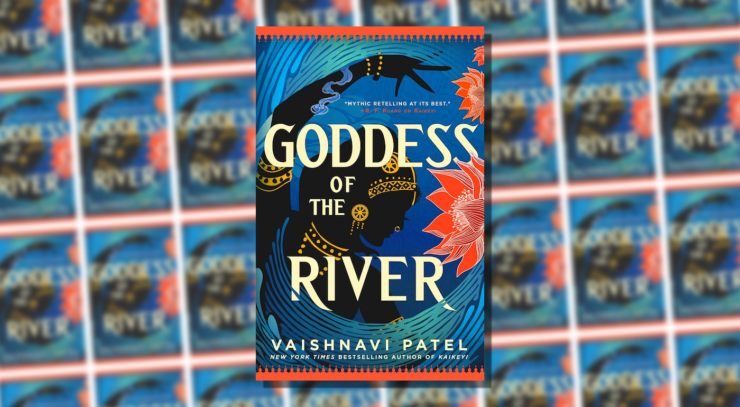
Books book review Grappling with Godhood: The Goddess of the River by Vaishnavi Patel A review of Vaishnavi Patel’s new retelling of the Mahabharata’s river goddess Ganga. By Liz Bourke | Published on January 8, 2025 Comment 0 Share New Share Vaishnavi Patel is the bestselling author of Kaikeyi, a retelling of the Sanskrit epic Ramayana focused on Rama’s stepmother Kaikeyi. Goddess of the River is Patel’s second novel. Rather than the Ramayana, this one reworks the Mahabharata, the second of the Sanskrit epics. Goddess of the River focuses on Ganga, the goddess of the eponymous river (the river which in English is usually rendered “Ganges”), and on her son by a mortal husband. That mortal husband is Shantanu, king of the Kuru kingdom, with its capital at Hastinapor, progenitor of the family whose dynastic squabbles were to culminate in the great clash of armies that is the Mahabharata‘s centrepiece. When it comes to the history, mythology, and religions of the Indian subcontinent, I’m far less well read than I’d like. So I’m treating Goddess of the River solely as a novel on its own merits here, while remaining aware that it is in dialogue with an unfamiliar mythic tradition, and so its references to and any deviations from that mythic tradition are largely opaque to me. The novel begins and ends with Ganga. It begins with her descent to earth, where she is bound by Shiva in order that her great strength not destroy the world. It ends with her freedom, and her choice to turn that strength towards love and protection. At its heart, Goddess of the River seems to me to be a story about how motherhood can change people, as well as an argument about what constitutes appropriate and moral behaviour—but I get ahead of myself. In the beginning, Ganga is at best indifferent to humans, despising their destruction of the natural world around her. Her protective urges centre on a group of playful divine beings, the eight Vasus. Unfortunately, this protective inclination leads her—and the eight Vasus, who have played a trick on a human settlement—to be cursed by a sage who carries some of Shiva’s power. The eight Vasus are cursed to be born as mortals, only to be released to their previous existence at the end of their mortal lives, and Ganga is cursed to be mortal until she has borne the Vasus as her children. At this point, naturally, King Shantanu shows up and demands that Ganga become his wife. The part of the narrative where Ganga must adjust to being mortal, living among mortals, prey to mortal frailties, and dealing with mortal concerns, is to me the most compelling and affecting portion of the entire novel. Ganga has no power now but her wits and her knowledge, and she fears that a mortal life will trap the Vasus and change them in ways that will make them unrecognisable to their former selves. She fears the suffering and destruction this could lead to, and so she resolves to kill each of her Vasu-children painlessly as soon after their birth as she can manage it. And she does, too, manage it, though not without being changed herself by the experience, and living with grief at each infanticide. (This is a mythic retelling, or I would have to take exception to the portrayal of drowning as a death without pain or distress.) But with her last son, Ganga is already turning back into a river goddess. The king interrupts her, taking her son—the incarnate eighth Vasu—out of the river’s reach to raise as his heir and train up to war, killing, and the destructive exercise of mortal power. For ten years, the restored river goddess Ganga loves and misses her son, named Devavrata by his father, meeting him only one night a month, until in the tenth year Shantanu tries to keep Devavrata away from her. He chooses to go away with Ganga instead, when she is able to offer him this option, until within a year or two the pull of duty and the familiarity of ten mortal years draws him back to Hastinapor, and away from Ganga. Buy the Book Vaishnavi Patel Goddess of the River Buy Book Vaishnavi Patel Goddess of the River Buy this book from: AmazonBarnes and NobleiBooksIndieBoundTarget From this point on, Ganga’s first-person perspective is interspersed with the viewpoint of a man called Bhishma, whose narrative timeline is initially many years later than Ganga’s “present” (though the timelines do converge). Over time, Ganga reconciles herself to the absence of her son and the concerns of a river goddess, though her time as a mortal and a mother has changed her: She is now more interested in, and more compassionate towards, mortal concerns, and keeps some of her attention always looking for news of her son. But she does not see him, and after a while, does not even hear his name. Shantanu has married another woman and had other sons, and those sons are his heirs now. Bhishma’s narrative concerns itself with dynastic politics and the competition between two opposing factions of cousins. He is an old man, though very hale, and these cousins are Shantanu’s descendants. The reader familiar with the Mahabharata will immediately recognise that Bhishma is the much older Devavrata, and that events are well on their way towards a cataclysmic clash of armies; the unfamiliar reader soon learns that Bhishma is now so-called because he swore an oath to stand aside from the succession and father no children, prioritising his father’s happiness and his stepmother’s wishes over his own. Had he not, he would be king, and the great rivalry of cousins perhaps averted. Did he yet break his oath, much slaughter might perhaps not happen. But he is sworn to the side that he believes less worthy of rulership, and he will not break his oath. This latter part of the novel—political, involving multiple players in extensive and destructive family dramas and jealousies—is less unified than the first, which kept its focus on Ganga and her journey as a goddess, a person, and a mother. To my mind it’s rather less interesting: The slide down into tragedy is inevitable, and the paradox of honour in which Bhishma finds himself is a theme that has been treated many times. Perhaps my opinion would be different if the (large) cast of other characters in Bhishma’s family drama came across as individuals rather than set dressing, but there is little time or space on the page for them to do so. (One of the perils of adapting an epic.) Yet Ganga’s ongoing journey to reconcile the vastness and the values of a goddess with the intimate and personal concerns of a mother for her family, and how the Ganga of after Devavrata is different from the one of before—still a goddess, but one more connected to human concerns—remains compelling. This is particularly true when she chooses to aid someone who has been harmed by her son, or when she comes to the edges of the battlefield in the terrible war that forms the Mahabharata’s culmination, and finds herself comforting other women’s sons. Patel is a vivid prose writer, straightforward yet fluidly evocative, and her style as well as her material reminds me of Natalie Haynes’s work. I expect she may find similar success: Goddess of the River is certainly a very readable novel, and one whose endnote makes clear than Patel is a thoughtful and well-read interpreter of the myths behind her work.[end-mark] Goddess of the River is published by Redhook. The post Grappling with Godhood: <i>The Goddess of the River</i> by Vaishnavi Patel appeared first on Reactor.

Like
Comment
Share
Showing 59089 out of 115686
  • 59085
  • 59086
  • 59087
  • 59088
  • 59089
  • 59090
  • 59091
  • 59092
  • 59093
  • 59094
  • 59095
  • 59096
  • 59097
  • 59098
  • 59099
  • 59100
  • 59101
  • 59102
  • 59103
  • 59104
Advertisement
Stop Seeing These Ads

Edit Offer

Add tier


Select an image
Delete your tier
Are you sure you want to delete this tier?

Reviews

In order to sell your content and posts, start by creating a few packages. Monetization

Pay By Wallet

Payment Alert

You are about to purchase the items, do you want to proceed?

Request a Refund