YubNub Social YubNub Social
    Advanced Search
  • Login
  • Register

  • Night mode
  • © 2025 YubNub Social
    About • Directory • Contact Us • Developers • Privacy Policy • Terms of Use • shareasale • FB Webview Detected • Android • Apple iOS • Get Our App

    Select Language

  • English
Install our *FREE* WEB APP! (PWA)
Night mode toggle
Community
New Posts (Home) ChatBox Popular Posts Reels Game Zone Top PodCasts
Explore
Explore
© 2025 YubNub Social
  • English
About • Directory • Contact Us • Developers • Privacy Policy • Terms of Use • shareasale • FB Webview Detected • Android • Apple iOS • Get Our App
Advertisement
Stop Seeing These Ads

Discover posts

Posts

Users

Pages

Blog

Market

Events

Games

Forum

Classic Rock Lovers
Classic Rock Lovers  
1 y

Favicon 
www.classicrockhistory.com

10 Best Rock Songs About Sleep

When it comes to rock music, few themes are as universally relatable as sleep. Whether it’s the escape, the peace, or the struggle that sleep represents, rock artists across decades have captured these moments in ways that resonate deeply with listeners. In this list of the 10 Best Rock Songs About Sleep, we’ve deliberately left out songs about dreams or dreaming—though sleep and dreams are closely linked, they are distinct experiences, and we’ve already explored the best songs about dreams in a separate list. This time, we focus solely on the state of sleep itself—the solace, the yearning, and even The post 10 Best Rock Songs About Sleep appeared first on ClassicRockHistory.com.
Like
Comment
Share
The Lighter Side
The Lighter Side
1 y

Stem Cells Reverse Woman’s Type-1 Diabetes–a World First
Favicon 
www.goodnewsnetwork.org

Stem Cells Reverse Woman’s Type-1 Diabetes–a World First

“I can eat sugar now,” said a woman from Tianjing, China, who recently became the first human to have their type-1 diabetes cured through a stem cell procedure. Using the patient’s own stem cells, the results offer hope of limitless treatment options for type-1 diabetes, where special insulin-producing cells were previously needed from a donor. […] The post Stem Cells Reverse Woman’s Type-1 Diabetes–a World First appeared first on Good News Network.
Like
Comment
Share
Survival Prepper
Survival Prepper  
1 y

Dear Diary, It’s Me, Jessica: Part 19
Favicon 
www.theorganicprepper.com

Dear Diary, It’s Me, Jessica: Part 19

Missed the other parts? Find them here: Check out Part 1 Part 2 is here. Part 3 Part 4 Part 5 Part 6 Part 7 Part 8 Part 9 Part 10 Part 11 Part 12 Part 13 Part 14 Part 15 Part 16 Part 17 Part 18 Dear Diary, It’s me, Jessica. Once Sean and Jack returned, Jack said he needed to do a RECON mission to get a better idea of what we were up against.   I didn’t even think about it.  Just out of habit, I went to follow Jack when he stopped, gave me a small grin, and said, “Not this time.  I need speed and stealth for this mission.  I move faster and quieter on my own.  Stay here with Rae, Billy, and the rest, and keep looking out.”  He nodded toward the other side of the barrier.   I actually felt a little disappointed as he left, but I knew he was right. Surprisingly, he was not gone long.  About an hour later, Jack reappeared seemingly out of nowhere, dirty and sweaty.  To Sean, he said, “Just as I thought he would.  Their military guy put four guys up on the hill, overlooking their position, as guards.  The terrain, there was not enough cover, I couldn’t get around them without risking them seeing me.” “How did you know he would put them there,” Rae asked. “It is what I would have done,” Jack replied simply.   “What about the hills on the far side of the bridge?” Sean suggested.   Jack looked to the West at the hills across the river. “Not sure my binoculars could make out much of use at that distance.” “Nate has a pair of high-power ones.  He says near spotting scope power.” “Those just might work.”  He then glanced at me and grinned, “Okay, Jessica.  It is going to be something of a hump.” And nodded to the hills on the other side of the river. “What else is new?” I grinned back. After nearly two hours of a fast walk and humping it up the hill, we came to a vantage point where we could view their position.  We both sat behind a tree next to each other.  Jack looked through Nate’s binoculars for a few minutes, then handed them to me.  The binoculars were so high-powered I had to steady them on my knee to see anything.   “What do you see?” Jack asked. After a few moments, I responded, “The wagons are set well back from our barrier.  It looks like they are in a line, so they could use them as their own barrier.  I can see some armed men behind the wagons.  Two groups of horses, six each on each side of the road.  Saddled and ready to ride if needed.  I can see rifles on them.  The rest of the horses have been unsaddled, and it looks like two groups picketed in two different areas.” “The one group is the rest of the horses we saw the armed men on.  The other is the horses that pull the wagons.” “There looks like one large white tent.  It has a stove chimney, smoke coming out of it.  There are two smaller white tents.  No chimney.  They have set up cooking fires, and a few women appear to be cooking.  I see what looks like barrels.” “What would they hold?” Looking through the binoculars, I thought for a moment. “Water.” “Right.  Let’s head back.” Entry two By the time Jack and I returned to Four Corners from across the bridge, it was late afternoon.  We were hot and sweaty from the long hump.  We first went to refill our canteens and took long pulls of cool water from them.   Sean, Rae, Daniel, and Savannah sat in front of Sean’s shack on the logs.  There were three children.   Sean explained about a half hour ago, there was a commotion at the Northern barrier.  These children were running full out from the cult, with six armed men in pursuit behind them on horseback.  The children were screaming,  “Help!” Once the children ran through the defensive trenches, the men on horseback reigned in, seeing a multitude of rifles aimed at them.  They turned and rode back to their camp at a gallop.   The two, a boy and a girl, looked about ten or eleven years old.  The other girl was in her early teens.  They had escaped from the cult and were shaky with relief.  Daniel and Savannah were looking them over for any medical issues.  Once done, Daniel motioned for Sean, Jack, and me to one side out of earshot. “I did not find any major issues, but they are slightly malnourished and underweight for their age.  The younger girl has head lice.  Savannah and I will ask around if anyone has Ivermectin, Permethrin, Benzyl alcohol, or Spinosad.  If we cannot find those, we just might have to use some of Jack’s industrial strength cleaner.  It might burn her scalp, though.  We can use some of the goat milk soap to help with that.” “They have experienced some kind of severe trauma.  I know.”  Savannah said with a strange look in her eyes.  “When we ask, they get quiet and look away.  They won’t make eye contact.  It may take some time, but they may come around and talk about what happened to them.  It will require long-term therapy.  They seem to trust Rae, though,” she said as she looked back at them.  Rae was talking with them and got them laughing.  “Their names are Samuel,  Abigail, and Sarah.  We need to make them feel safe and cared for.”   “Aye.  Get them a proper meal.  See to the girl’s lice.  We need to find them a proper bed for the night,” Sean said to Daniel and Savannah.  They took the children toward the South side to get them dinner and somewhere to sleep.   “I will need to talk with them,” Jack said with a stern tone in his voice.   “Agreed.  But they have needs to be tended to first,” Sean replied, looking after the children as Daniel and Savannah led them away.  “What did you and young Jessica find?” Sean asks, turning to Jack. Jack’s eyes seemed to be thinking for a long moment. “They are nomads.  The horses.  The wagons.  Tents.  They move from place to place, looking for resources, food, and water.  I don’t know if there are any other military members in the group aside from their military tactician.  But we would not stand a chance against armed mounted cavalry on foot even armed.  We do not have enough horses or enough people who know how to ride in combat. Me included,” Jack said with a sense of irony.   “Aye.  So what do we do? “Warfare is a question of economics, logistics, and manpower.  The economic equation is which side can produce the most military material at the lowest cost with the manpower to put it to use.  The logistic equation is which side can field that material to the battlefront and supply the manpower at the lowest cost.  In this case, we do not know how much material he has, but we know that with horses, he can field what material he has faster than we can.  We have the advantage of being on the defense.  Historically, it takes three on the offensive to overcome one on the defensive.  They do not have those numbers.  But they have the advantage of armed mounted cavalry.  He will try for a decisive win.  We need to fight for a draw, where neither they nor us wins.  Fighting for a draw versus a win will give us the advantage.  We still have some of the medium weapons and the grenade launchers but limited ammo.  He does not know that.  We don’t know if he has any medium or heavy weapons either.” “Jack, ole boy.  Methinks that is not a good feeling.” “No, Sean.  I don’t have a good feeling about it either.  We need to adjust accordingly to mitigate his win and cost him more economically, logistically or manpower to quit the field.  That could prove to be hard.” “When will he come at us?” “Maybe tonight.  First light, most likely.” “Aye.  Let’s get set up for watches and pull some from both the East and South defensive lines.  Then, put skeleton teams on those lines, everyone else to the Northern barrier before dawn.” But no attack came either during the night or at first light. Entry three It was nearly mid-morning, nearly everyone manned the Northern barrier and still nothing.  A sense of tension was in the air.    “Well, Jack,” Sean asked. Jack looked through Nate’s binoculars at the wagons in the distance.  There were several men behind the wagons, armed, facing Four Corners.  He could see the tops of the tents.  He could see smoke rising from their cooking fires.  He could see the two sets of saddled horses on the sides of the road, none of them mounted with riders.  He could see someone with their own set of binoculars looking back at him.  He handed the binoculars to Sean. “He is waiting for something,” Jack said.  He left the barrier at a slow walk, looking at the ground.  To no one, he said, “What is he waiting for?” Jack then stopped, looking toward the East.  Then, the South.  A number of the people of Four Corners who could not fight were tending to fires or bringing water up from the river for those standing guard.  The children who escaped the cult were there, helping the others where they could.  Jack looked to see Sarah, the teen girl, looking at him nervously.  After a long moment, he suddenly gave a rare smile, walked up to her, put a hand on her shoulder, and said, “Hi, honey.  Everything is going to be fine.  You’re safe.”   She smiled back. Jack then walked past to find Mr. Miller sitting on a log in front of one of the cooking fires, eating breakfast.  They talked for a few minutes when Jack suddenly turned and ran back to the Northern barrier. “Billy!  You and your father need to get the whole militia and march eastward!  Find a spot to set up an ambush!  They are trying to outflank us,” Jack shouted.   Billy gave me a quick glance in alarm, then, with his rifle in hand, ran to his dad. They both ran for their horses and galloped away for the east gate.   Jack swore a few times, very much unlike him.  He realized several of us were watching him and said simply,  “Pardon my French.”   He then looked at Sarah and sheepishly said, “Sorry for swearing.” “It’s okay. I’ve heard worse,” she replied with a small smile.   He sighed and said,“Thanks, kid.”  He then announced to those manning the Northern barrier, “Okay.  They are trying to flank us to the East with others we have not seen, likely another group armed on horseback.  I have dispatched the militia to the East.  But if they fail, we need to split our forces between the Northern barrier and the East gate.  They will come at us in a pincher movement.  We need to be ready.” Jack then began to give orders for who should remain at the Northern barrier and who should re-deploy to the East gate, taking a number of the medium machine guns and rifles with grenade launchers.  As people began to move, I walked up to Jack and asked, “You really think they are going to attack from the North and the East at the same time?” “Yes.  It is what I would have done.” Jack turned and walked off to see to defensive preparations when I noticed Sarah looking very concerned.  “It’s okay,” I told her, thinking on what Savannah said about making them feel safe and cared for. “Everything will be fine.  Jack has everything under control,” and gave her a reassuring smile. Sarah did not smile back. Diary, I am not sure how I felt about that. Entry four “They’re gone!” Rae exclaimed as she ran up to the Northern barrier shortly after daybreak. “Who’s gone,” Sean asked. “Samuel, Abigail, and Sarah.  The children from the cult!  Sometime during the night!” Sean turned to Jack as Jack put the binoculars down when Rae announced the news. “What do you make of it Jack?” Jack responded flatly, “They didn’t escape from the cult.  He staged it.  He sent them.  He sent them as spies.” Diary, I suddenly had a very bad feeling. About 1stMarineJarHead 1stMarineJarHead is not only a former Marine, but also a former EMT-B, Wilderness EMT (courtesy of NOLS), and volunteer firefighter. He currently resides in the great white (i.e. snowy) Northeast with his wife and dogs. He raises chickens, rabbits, goats, occasionally hogs, cows and sometimes ducks. He grows various veggies and has a weird fondness for rutabagas. He enjoys reading, writing, cooking from scratch, making charcuterie, target shooting, and is currently expanding his woodworking skills. The post Dear Diary, It’s Me, Jessica: Part 19 appeared first on The Organic Prepper.
Like
Comment
Share
Hot Air Feed
Hot Air Feed
1 y

It's Official: Nasrallah, Top Hezbollah Commanders Killed in Israeli Strikes
Favicon 
hotair.com

It's Official: Nasrallah, Top Hezbollah Commanders Killed in Israeli Strikes

It's Official: Nasrallah, Top Hezbollah Commanders Killed in Israeli Strikes
Like
Comment
Share
The Blaze Media Feed
1 y

Are we ready for designer babies? CRISPR gene editing is about to unleash a new eugenics revolution
Favicon 
www.theblaze.com

Are we ready for designer babies? CRISPR gene editing is about to unleash a new eugenics revolution

What if the technology that holds the promise to cure cancer also heralds an era of “designer babies”? This notion isn’t merely speculative; it’s a pressing bioethical concern that demands our attention.Traditionally, the medical industry focuses on healing. Antibiotics are doled out for infections, chemotherapy and radiation remain standard cancer treatments, and over-the-counter medications offer temporary relief from ailments like the common cold. This reactive approach implies a system designed to address health issues only after they emerge rather than attempting to cure the human body of what has long been deemed ultimately incurable: mortality. Can we cautiously explore CRISPR's healing possibilities without encroaching into eugenic-like enhancement?Yet, a “transhumanist” faction movement of scientists and futurists seeks to change all that. They propose a future in which biomedical technology doesn’t just react to disease but rather actively prevents it by going to the source: the human genome. Imagine viewing the human genome as a piece of software — a system ripe for reprogramming. The role of scientists and doctors can morph into that of an engineer to modify our very DNA, eradicating diseases like cancer before they can take root. Can ending death itself be far behind?At the heart of this ambition lies CRISPR-Cas9, a revolutionary gene-editing tool hailed as the “preferred method” for genomic modification by the National Institutes of Health. According to the NIH, it has the ability to “modify the genome ... in any region.” With CRISPR, scientists can target and eliminate genetic “malware” long before it manifests into illness. vchal/Getty ImagesUsing CRISPR to alter the human genome is largely banned under international law due to its unknown and potentially species-altering consequences. If you tamper with one part of the genome, there is no way to tell what effects that will have several generations down the line. However, the illegal work of a Chinese scientist, Dr. He Jiankui, gave the world a glimpse into the practical application of CRISPR in the immediate present. Jiankui made headlines in November 2018 when he announced the birth of twin girls, Lulu and Nana, whose genomes he had edited to become resistant to HIV. His announcement ignited a global firestorm, followed by his three-year jail sentence on charges of engaging in "illegal medical practices.” However, his illegal experiment had already opened Pandora’s box: Did the world just witness the cure for AIDS? Can his experiment be applied to other deadly and terminal diseases?Despite CRISPR’s seemingly miraculous potential to cure the incurable, it also has a shadowy side. The ability to manipulate human DNA is something that the 20th-century eugenicists could only dream of, and the 21st-century transhumanists appear eager to cloak their predecessors’ ambitions in a more palatable form."Dark Aeon: Transhumanism and the War Against Humanity" author and transhumanism analyst Joe Allen explains the dual ambitions of the transhumanist movement — to heal the broken and to “enhance” the human species into becoming stronger, smarter, and more beautiful through technology like CRISPR:There are two objectives [regarding the transhumanists] — healing and enhancement. The first step is healing. They seek to genetically engineer new therapies, such as mRNA "cures" and CRISPR gene therapies, to overcome suffering. Applications include everything from eliminating HIV and malaria to Tay-Sachs and cancer. The next step is enhancement. The dream is to engineer smarter, stronger, more beautiful human beings, whether after birth, or before birth through targeted germline mutations (sperm, ova, or zygotes). The latter creates a semi-permanent mutated bloodline. Allen references Nicholas Agar’s term “liberal eugenics” or “soft eugenics” to describe the transhumanist’s aims with CRISPR. He explains, “Rather than a totalitarian state enforcing genetic hygiene on the population, consumers in a free market will increasingly choose to "upgrade" their own biological abilities, and those of their children.”If this seems like a fringe movement, recent surveys from Pew, Cambridge, and Harvard indicate otherwise: Around a third of Americans are comfortable with the eugenics-like enhancement of tampering with the human genome to optimize for strength, intelligence, and beauty. As Allen poignantly concludes, “The idea is no longer radical.”Several key bioethical questions will grow both in importance and pertinence as resistance to this technology is broken down. The first concern is socio-economic: Will the current divide between the elites and “the rest of us” take on a genetic dimension? Allen describes this danger as the emergence of “a genetic elite — Humanity 2.0 — that exploits or displaces Humanity 1.0.” In a Huxleyan-like fashion, those who can afford to transform their germline into “alpha-plusses” will be perched on top of the unfortunate “gammas and epsilons.”Another concern is if the opposite takes shape: if our genetic tampering backfires. If, as Allen describes, “a critical mass of the population is genetically altered, but rather than becoming superhumans, they become a stylized breed of warped, dysgenic mutants,” then we, playing God, very well could become the instrument of our demise. Technology is always served on a razor’s edge. On one side is the possibility for unbelievable good and progress. On the other hand, there is the possibility of incredible and often unforeseeable damage. Can its good be harnessed without falling into its shadowy side? Can we cautiously explore CRISPR's healing possibilities without encroaching into eugenics-like enhancement? Unfortunately, history has proven that technology’s promise is served hand-in-hand with its dangers. We shouldn’t be too quick to open Pandora’s box, expecting CRISPR’s healing potential only to find the transhumanists’ hand extended to us instead — or irreversible damage to the human genome altogether.
Like
Comment
Share
Twitchy Feed
Twitchy Feed
1 y

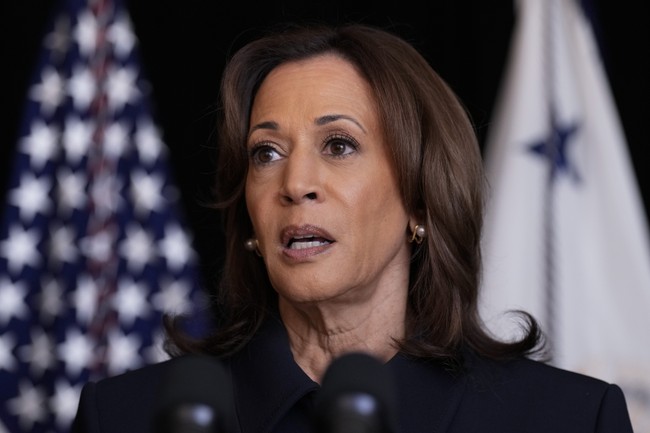
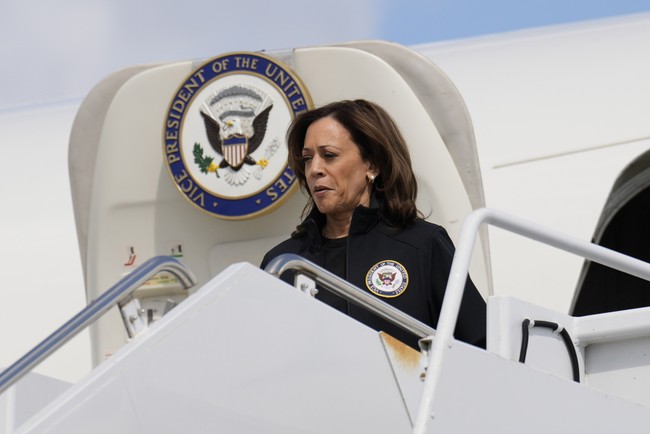
Border Patrol Union Keeps Truth Nuking Harris Over Phony Concern About a Secure Border
Favicon 
twitchy.com

Border Patrol Union Keeps Truth Nuking Harris Over Phony Concern About a Secure Border

Border Patrol Union Keeps Truth Nuking Harris Over Phony Concern About a Secure Border
Like
Comment
Share
RedState Feed
RedState Feed
1 y

Israel Confirms Death of the Terrorist Nasrallah; Does This Open a Door for Peace in the Region?
Favicon 
redstate.com

Israel Confirms Death of the Terrorist Nasrallah; Does This Open a Door for Peace in the Region?

Israel Confirms Death of the Terrorist Nasrallah; Does This Open a Door for Peace in the Region?
Like
Comment
Share
History Traveler
History Traveler
1 y

The Sykes-Picot Agreement: The Agreement that Haunts the Modern Middle East
Favicon 
www.historyisnowmagazine.com

The Sykes-Picot Agreement: The Agreement that Haunts the Modern Middle East

During the First World War, the Triple Entente was faced with the very real prospect of the dissolution of the Ottoman Empire. Eager to secure their interests in the Middle East, the British and the French drew up the Sykes-Picot Agreement to divide the region in the case of victory against the Central Powers. Although the Sykes-Picot Agreement was never enacted, it set the framework for the Middle East’s current borders and the name Sykes-Picot has since become synonymous to many with an era of colonial misrule.Holly Farrell explains. Sir Mark Sykes. Francois Georges-Picot.During the First World War, the Triple Entente was faced with the very real prospect of the dissolution of the Ottoman Empire. Eager to secure their interests in the Middle East, the British and the French drew up the Sykes-Picot Agreement to divide the region in the case of victory against the Central Powers. Although the Sykes-Picot Agreement was never enacted, it set the framework for the Middle East’s current borders and the name Sykes-Picot has since become synonymous to many with an era of colonial misrule.Holly Farrell explains. ‘The Sick Man of Europe’: Why did the Allies anticipate the dissolution of the Ottoman Empire?By the turn of the 20th century the Ottoman Empire, which controlled areas across North Africa, the Middle East, and Eastern Europe, was struggling both economically and militaristically. The Ottomans became unable to maintain such an extensive bureaucracy and a vast decentralized political structure. Although reforms attempted to modernize the Empire, these measures were of short-lived success and contributed to a growing debt crisis in the late 19th century. The Ottoman Empire also lost many territories in the decades preceding the First World War. France gained control of Algeria in 1830 and Tunisia in 1881, Italy took Libya in 1911, and Britain took control of Oman in 1861, the Arabian Gulf Chiefdoms in 1820, Kuwait in 1899, Egypt in 1882 and Sudan in 1899. In October 1914 the Ottoman Empire joined the First World War on the side of the Central Powers, hoping to confront Britain and France, and benefit from German aid. Drawing up the Sykes-Picot AgreementNegotiations between the Entente Powers of Britain, France, and Russia for the division of Ottoman territories began in November 1915. They were initially between Mark Sykes, a scholar and guard in the British military during the Boer War, and Francois Georges-Picot, a lawyer-turned-delegate for the French government. However, the eventual agreement was also up to the assent of Russia. All three powers aimed to secure territory, trade routes, and oil wealth, but also had their own ambitions for particular areas. Russia hoped to gain ports in the Dardanelles, including Constantinople, to access trade routes to the Black Sea. Britain wanted to control Palestine due to its proximity with the Suez Canal, and secure access to India through the Persian Gulf. France, meanwhile, was the largest investor in the Ottoman Empire and sought to maintain their influence in the region to protect their investments.The Entente Powers had already given Constantinople and its surroundings areas to Russia as part of the Constantinople Agreement in March 1915. This crucially granted Russia access to the Mediterranean Sea. Meanwhile, the Sykes-Picot Agreement sought to coordinate Britain and France’s interests in the region. On May 16 1916 a deal was secretly signed between Sykes and Picot and approved by Russian foreign minister, Sergey Sazonov.Under the terms of the agreement, France was allocated control of Syria, Lebanon, Cilicia, and Mosul, whilst Britain was allocated Baghdad and Basra and northern Palestine (this included the ports of Haifa and Acre, and modern-day Jordan). However, as shown on the map below, these territories were divided into spheres of control and those of ‘influence’. It was decided that Palestine would be put under international administration due to its holy sites. Independent states would be created in the remaining Arab territories.  Britain’s contradictory promises: Sykes-Picot, the Hussein-McMahon Correspondence, and the Balfour DeclarationWhilst Britain, France and Russia appeared to have settled their vision for the post-war Middle East, the Sykes-Picot Agreement was threatened by two additional contradictory agreements which Britain had made with the Arab nationalist and Zionist movements.In July 1915, several months prior to the beginning of Sykes’ and Picot’s negotiations, Hussein bin Ali (Arab nationalist leader and Sharif of Mecca) wrote to Henry McMahon (the British High Commissioner in Egypt) to request British support for an independent Arab state. McMahon was initially reluctant to collaborate with Hussein, believing his territorial ambitions to be ‘extravagant’, however he was eventually persuaded to offer his support. When McMahon replied to Hussein, British and French troops were suffering defeats by Turkish forces in the Gallipoli campaign. McMahon believed that an Arab uprising would distract and weaken Ottoman forces in the region, enabling the Entente troops to make a tactical withdrawal. Consequently, Britain saw an advantage in working with Hussein. Over the course of ten letters between July 1915 and March 1916 (referred to as the Hussein-McMahon Correspondence) Hussein and McMahon negotiated a plan of British support for an independent Arab state if the Arab nationalists launched a revolt against the Ottoman Empire. However, the British excluded three areas from the independent state as they claimed they were not ‘Arab enough’. This affected the provinces of Basra and Baghdad, the Turkish districts of Alexandretta and Merson, and the districts of Syria that lay west of Damascus, Homs, Aleppo and Merson. The nationalist uprising began in June 1916 and, although the Entente provided limited manpower, they provided officers, gold, and munitions to support the war against the Ottomans. However, the Hussein-McMahon correspondence lacked the formality of a treaty and its contradiction with Britain’s plans under Sykes-Picot ultimately made it an empty promise.However, Britain’s conflicting plans for the Middle East did not end here. On November 2 1917 the British government issued an arrangement for Palestine in the Balfour Declaration. In a letter to prominent Zionist Lord Rothschild, the British foreign secretary Arthur Balfour outlined Britain’s promise to establish a Jewish homeland in Palestine. This support was later publicized. However, the question of why the British government issued this declaration has still gone unanswered. Whilst some historians have argued that many members of the British government had Zionist sympathies, others have suggested that antisemitism increased support for a Jewish homeland in Palestine. Alternatively, it has been argued that Britain was trying to gain the support of Jews across the world, particularly in the US, who the British hoped would take a more active role in the war. However, this declaration was a bitter betrayal for the Arabs.Despite initially being kept secret, the Sykes-Picot Agreement was eventually publicized by the Bolsheviks in late November 1917 following the Russian Revolution. Leon Trotsky published the Sykes-Picot Agreement in Izvestia newspaper on November 24 1917 to expose the plans which Vladimir Lenin called ‘the agreement of the colonial thieves’. This caused a political scandal for Britain and France and created a strong mistrust between the Entente and Arab nationalists. The British assured their allies in the Middle East that the Sykes-Picot Agreement was merely discussion amongst the Entente powers and that they would stand by the Arab people.  The Treaty of Sèvres (1920) and the Treaty of Lausanne (1923)Following the defeat of the Ottoman Empire during the First World War, Entente forces (mainly the British) occupied the former Ottoman territories. Whilst the original division of land planned in the Sykes-Picot Agreement did not materialize during peace negotiations, the borders of the newly created states were similar to those agreed upon in 1916. This was determined in the Treaty of Sèvres (1920) and the Treaty of Lausanne (1923).Before signing the Treaty of Sèvres, the former Entente powers met at the Conference of San Remo in April 1920 to determine the division of the Ottoman Empire’s territories. Under article 22 of the newly created League of Nations, certain former colonies were classed as ‘mandates’ (ranging from A to C depending on perceived levels of development) if they were deemed unable to govern themselves independently. The former Ottoman territories became Class A mandates, meaning that they had ‘reached a stage of development where their existence as independent nations can be provisionally recognized subject to the rendering of administrative advice and assistance by a Mandatory until such a time as they are able to stand alone’ (as stated in Article 22). As a result, the newly created states in the Middle East became British and French mandates rather than colonies. Under the Treaty of Sèvres:·       The Ottoman Empire was dismantled·       Turkey had to relinquish claims to territories in North Africa and the Middle East ·       Greece gained Smyrna (now called İzmir), Adrianople (now called Edirne), most of the hinterland to Constantinople and the Aegean islands commanding the Dardanelles·       Iraq, Jordan, and Palestine became British mandates·       Lebanon and Syria became French mandates·       Morocco and Tunisia became French protectorates ·       Hejaz became an independent kingdom (it would later unite with Najd and other districts in 1932 to form the Kingdom of Saudi Arabia)·       Armenian independence was recognized ·       The League of Nations controlled the Turkish straits·       British, French, Italian and Greek troops occupied Turkey·       The Turkish army could have a maximum of 50,700 men, it was forbidden to have an air force, and the navy could have a maximum of thirteen boats·       The Allies were to control Turkish finances The Treaty of Sèvres was resented in Turkey and popular discontent fueled an uprising against Sultan Mehmed VI. The new nationalist government under Kemal Atatürk drove the Greek and British troops out of Turkey and repudiated the Treaty of Sèvres. Consequently, the Allies agreed to renegotiate the settlement and signed the Treaty of Lausanne in 1923. Under the Treaty of Lausanne:·       All the territories given to Greece were returned to Turkey·       All foreign troops were ordered to leave Turkey·       Turkey regained control of the Straits, but they had to remain demilitarized·       Turkey was recognized as the successor to the Ottoman Empire ·       The Allies no longer imposed controls over Turkey’s finances or military·       The Allies dropped demands for autonomy for Kurdistan and Turkish cession of territory to Armenia  The Legacies of Sykes-Picot and the post-WW1 settlement in the Middle EastAlthough the Sykes-Picot Agreement was never implemented, it set the framework for the modern-day frontiers of the Middle East. This has created a lasting resentment in the region, especially amongst Pan-Arabists who oppose the division of majority Arab-populated territories into separate states and associate Sykes-Picot with European colonial misrule. Sykes-Picot has since been targeted by various groups in the region, including by the so-called Islamic State who declared their intention to remove Sykes-Picot as they bulldozed the border between Iraq and Syria in 2014.One of the most controversial aspects of the division of former Ottoman territories was the eventual fate of Palestine. As a British mandate, Britain called for the migration of Jews to Palestine, paving the way for region to be declared a Jewish state (known as Israel) once they ended their mandate in 1948. This led to the displacement of the Arab population and the ongoing conflict between Israeli and Palestinian groups.The post-First World War settlement in the Middle East also lay the groundwork for sectarian conflict elsewhere in the region due to the limited regard for the ethnic, tribal, religious, or linguistic groups of the new states’ inhabitants. Although the British and French eventually withdrew from the region in the 1960s and 1970s, there has been hardly any change to national borders. Crucially, this has left the Kurdish population without a homeland as the Treaty of Lausanne failed to accommodate for Kurdish self-determination.As sectarian conflict continues in the Middle East, the question remains as to whether the national borders created by the Treaty of Sèvres can survive into the future, or if all traces of Sykes-Picot need to be removed to ensure peace in the region. Find that piece of interest? If so, join us for free by clicking here.  References:Al Jazeera. ‘A Century on: Why Arabs Resent Sykes-Picot’. Accessed 28 August 2024. https://interactive.aljazeera.com/aje/2016/sykes-picot-100-years-middle-east-map/index.html. Al Tahhan, Zena . ‘More than a Century on: The Balfour Declaration Explained’. Al Jazeera, 2 November 2018. https://www.aljazeera.com/features/2018/11/2/more-than-a-century-on-the-balfour-declaration-explained. Britannica. ‘Sykes-Picot Agreement ’. Accessed 28 August 2024. https://www.britannica.com/event/Sykes-Picot-Agreement. Britannica. ‘Treaty of Lausanne’, 17 July 2024. https://www.britannica.com/event/Treaty-of-Lausanne-1923. Britannica. ‘Why Was the Ottoman Empire Called “the Sick Man of Europe”? ’. Accessed 28 August 2024. https://www.britannica.com/question/Why-was-the-Ottoman-Empire-called-the-sick-man-of-Europe. Kearey, Kat. International Relations and Global Conflict C1890-1941. Oxford AQA History Series. Oxford: Oxford University Press, 2015.Muir , Jim. ‘Sykes-Picot: The Map That Spawned a Century of Resentment’. BBC News, 16 May 2016. https://www.bbc.com/news/world-middle-east-36300224. Oxford Reference. ‘Sykes–Picot Agreement’. Accessed 28 August 2024. https://doi.org/10.1093/oi/authority.20110803100546581. Oxford Reference. ‘Treaty of Sèvres’. Accessed 28 August 2024. https://doi.org/10.1093/oi/authority.20110803100457377.Rabinovich, Itamar, Robbie Sabel, and Oded Eran. ‘A Century since the Sykes-Picot Agreement: Current Challenges’. Institute for National Security Studies, 2016. http://www.jstor.org/stable/resrep08741.The Avalon Project. ‘The Sykes-Picot Agreement : 1916’. Accessed 28 August 2024. https://avalon.law.yale.edu/20th_century/sykes.asp. The Economist. ‘Unintended Consequences’, 12 May 2016. https://www.economist.com/special-report/2016/05/12/unintended-consequences.‘The Treaty of Sevres’. Accessed 28 August 2024. https://historylearning.com/modern-world-history/treaty-of-sevres/. United Nations Digital Library. ‘Article 22 of the Covenant of the League of Nations’. Accessed 28 August 2024. https://digitallibrary.un.org/record/829695. Young, George. ‘Deceit in the Desert: The Partition of the Ottoman Empire’. Hohonu 17 (2019): 37–40. https://hilo.hawaii.edu/campuscenter/hohonu/volumes/documents/DeceitintheDesertThePartitionoftheOttomanEmpire.pdf.
Like
Comment
Share
NEWSMAX Feed
NEWSMAX Feed
1 y

Mark Robinson Treated for Burns Received at Campaign Appearance
Favicon 
www.newsmax.com

Mark Robinson Treated for Burns Received at Campaign Appearance

North Carolina Republican Lt. Gov. Mark Robinson received burns Friday night while attending a truck show as he was campaigning for governor, his campaign said.
Like
Comment
Share
Let's Get Cooking
Let's Get Cooking
1 y

Crock Pot French Onion Chicken
Favicon 
www.thecountrycook.net

Crock Pot French Onion Chicken

Crock Pot French Onion Chicken combines tender chicken with the rich flavors of French onion soup, all effortlessly cooked in a slow cooker! A FLAVORFUL SLOW COOKER CHICKEN RECIPE This Crock Pot French Onion Chicken is super flavorful, insanely simple to make, and very comforting. I am always figuring out and playing with new crock pot recipes. Some work and some don’t – ha! This one was a winner! With very little effort and only ten minutes of prep, you’ll love how this savory dish comes together in no time at all! Any time when I can have the slow cooker going, doing all the heavy work in the kitchen and I can get a delicious dinner out of it – that is a winner in my book! FREQUENTLY ASKED QUESTIONS:  Can I cook this longer than 4-5 hours? Yes. Cooking it longer will mean the chicken will get extra tender and will pretty much fall apart when you go to take it out. It won’t be like you see in my pictures below. As long as you don’t mind that, then go for it. You can shred it then put it back into the crock pot to allow it all to be flavored by the juices and serve over mashed potatoes or noodles or rice. It also helps if you have a digital crock pot that lets you cook it for so many hours then it switches over to a keep warm setting. I really recommend those for those of you who need to pop this in the slow cooker before heading into work. Can I make this creamier? Yes, for a creamier flavor profile and texture, mix in a dollop of sour cream or cream cheese before serving for added richness. Or a splash of heavy cream. What can I add for some heat? I know a lot of people always like to add a bit of spice. Try adding a pinch of red pepper flakes for a hint of heat. What to serve with Crock Pot French Onion Chicken? Here are some of my favorite things to serve with this chicken:Side Salad: Fresh greens with a light vinaigrette.Crusty Bread: Some kind of crusty sourdough, sliced French bread or Garlic Bread is perfect for soaking up the flavorful broth.Roasted or Steamed Vegetables: Such as carrots, broccoli, or asparagus. I’m out of chicken breast, can I use chicken thighs instead? Yes, you can substitute chicken thighs for chicken breasts in this recipe. Can I double this recipe? Yes, you can double the ingredients to make a larger batch of Crockpot French Onion Chicken. Ensure your crockpot is large enough to accommodate the increased quantity and adjust the cooking time as needed. How to store leftover Slow Cooker French Onion Chicken? Store leftovers in an airtight container in the refrigerator for up to 3 days. You can freeze cooled down portions in a freezer-safe containers for up to 3 months. Thaw overnight in the refrigerator before reheating. INGREDIENTS NEEDED: (SEE RECIPE CARD BELOW FOR THE FULL RECIPE) boneless skinless chicken breasts – as stated above, you can use chicken thighs or chicken tenders. red onion – or sweet yellow onion if preferred. packet onion soup mix– grab the packet from the store, or use my Homemade Onion Soup Mix recipe. low or no sodium beef broth– I highly recommend sticking to a low sodium or no sodium version of this simply because the onion soup mix has plenty of salt in it. You don’t want an overly salty dish. You can always add more but you can’t take away. Dijon mustard– I would say if you don’t have dijon mustard then just leave it out. Regular yellow mustard would be too strong a flavor for this recipe.  shredded Swiss cheese– if you want to swap this out, you can use provolone or mozzarella cheese instead. Additionally, Gruyère cheese, which has a similar flavor profile can also be used. parsley– this is an optional ingredient, but I like to use it for color. HOW TO MAKE CROCK POT FRENCH ONION CHICKEN Place the chicken breasts into the bottom of a 5 or 6 quart oval crockpot. Spread the thinly sliced yellow onion over the chicken breasts. In a bowl mix onion soup, beef broth, and Dijon mustard. Pour this mixture over the chicken. Place the lid on the crock pot. Cook on low heat for 4-5 hours, or until the chicken is tender and fully cooked. When done, taste for seasoning and add salt and pepper to your tastes.  During the last 30 minutes of cooking, sprinkle the grated Swiss cheese over the chicken. Cover the crock pot again and allow the cheese to melt and become bubbly. Once the cheese is melted and the chicken is cooked through, garnish with freshly chopped parsley (optional). Serve with your choice of sides, such as rice, a salad, mashed potatoes, or crusty bread. CRAVING MORE RECIPES?  Slow Cooker French Onion Soup Crock Pot Marry Me Chicken Crock Pot Chicken Parmesan Crock Pot Chicken and Gravy Crock Pot Chicken and Dumplings Crock Pot Chicken and Stuffing Crock Pot Chicken and Rice Crock Pot Round Steak and Gravy Crock Pot Beef Tips Crock Pot Cheddar Bacon Ranch Potato Soup Crock Pot Chicken and Noodles Crock Pot Chicken Alfredo for Two Print Crock Pot French Onion Chicken A simple and flavorful French onion soup inspired juicy tender chicken dish. Course Main CourseCuisine American Prep Time 10 minutes minutesCook Time 5 hours hoursTotal Time 5 hours hours 10 minutes minutes Servings 4 Calories 402kcal Author Brandie @ The Country Cook Ingredients4 boneless skinless chicken breasts (about 2 pounds)1 red onion thinly sliced (or sweet yellow onion if preferred)1 ounce packet onion soup mix1 cup low or no sodium beef broth1 Tablespoon Dijon mustard1 cup shredded Swiss cheese can use provolone or mozzarella1 Tablespoon parsley chopped (optional, for color) InstructionsPlace the chicken breasts into the bottom of a 5 or 6 quart crockpot.Spread the thinly sliced yellow onion over the chicken breasts. In a bowl mix onion soup, beef broth, and Dijon mustard. Pour over the chicken. Cover the crockpot with its lid.Cook on low heat for 4-5 hours, or until the chicken is tender and fully cooked. Cooking times may vary depending on your crockpot model.When done, taste for seasoning and add salt and pepper to your tastes. During the last 30 minutes of cooking, sprinkle the grated Swiss cheese over the chicken. Cover the crockpot again and allow the cheese to melt and become bubbly. Once the cheese is melted and the chicken is cooked through garnish with freshly chopped parsley..Serve the Crockpot French Onion Chicken hot with your choice of sides, such as rice, a salad, mashed potatoes, or crusty bread. Notes Please refer to my FAQ’s (Frequently Asked Questions) and ingredient list above for other substitutions or for the answers to the most common questions. NutritionCalories: 402kcal | Carbohydrates: 8g | Protein: 57g | Fat: 14g | Sodium: 1034mg | Fiber: 1g | Sugar: 2g
Like
Comment
Share
Showing 59096 out of 103023
  • 59092
  • 59093
  • 59094
  • 59095
  • 59096
  • 59097
  • 59098
  • 59099
  • 59100
  • 59101
  • 59102
  • 59103
  • 59104
  • 59105
  • 59106
  • 59107
  • 59108
  • 59109
  • 59110
  • 59111
Advertisement
Stop Seeing These Ads

Edit Offer

Add tier


Select an image
Delete your tier
Are you sure you want to delete this tier?

Reviews

In order to sell your content and posts, start by creating a few packages. Monetization

Pay By Wallet

Payment Alert

You are about to purchase the items, do you want to proceed?

Request a Refund