YubNub Social YubNub Social
    #bible #freespeech #censorship #facebook #jesus #americafirst #patriotism #culture #fuckdiversity
    Advanced Search
  • Login
  • Register

  • Night mode
  • © 2026 YubNub Social
    About • Directory • Contact Us • Developers • Privacy Policy • Terms of Use • shareasale • FB Webview Detected • Android • Apple iOS • Get Our App

    Select Language

  • English
Night mode toggle
Featured Content
Community
New Posts (Home) ChatBox Popular Posts Reels Game Zone Top PodCasts
Explore
Explore
© 2026 YubNub Social
  • English
About • Directory • Contact Us • Developers • Privacy Policy • Terms of Use • shareasale • FB Webview Detected • Android • Apple iOS • Get Our App
Advertisement
Stop Seeing These Ads

Discover posts

Posts

Users

Pages

Blog

Market

Events

Games

Forum

Living In Faith
Living In Faith
1 y

The Post-Christian Morality of ‘Wicked’
Favicon 
www.thegospelcoalition.org

The Post-Christian Morality of ‘Wicked’

One of the most noteworthy theological trends in 21st-century pop culture has been the rehabilitation of the “villain.” From Cruella to Maleficent to the Joker and more, iconic villains are now routinely given spinoff movies and sympathetic backstories that complicate our categories of good and evil. This has dovetailed with the rise of the “trauma plot” and a narrative fixation on how destructive choices (let’s just call it “sin”) can be explained by past trauma. Part of why Hollywood has gravitated toward this narrative is simply that it makes good (and financially lucrative) drama. Giving villains origin stories is intriguing. But I think this trend’s rise is also connected to the post-Christian culture’s confusion about sin and evil, morality and justice. In this world, the theological word “sin” has been replaced by the psychological word “brokenness,” and transcendent concepts of justice have been replaced by oppressor-oppressed power dynamics. All this is on full display in Wicked (out today in theaters), the Jon M. Chu–directed movie about the Wicked Witch of the West’s origin story. The Wicked franchise (first a book, then a popular Stephen Schwartz Broadway musical, and now a two-part cinematic saga) is perhaps the clearest example yet that contemporary pop culture struggles with the category of evil. The title alone playfully probes the concept, redefining it as a word of empowerment (think “Wicked awesome!” as Bostonians might say). Rather than being the iconically despicable, nightmare-inducing character immortalized by Margaret Hamilton in 1939’s The Wizard of Oz, the Wicked Witch of the West is reconsidered in Wicked as a good-natured, well-intentioned outcast named Elphaba who has been seriously misunderstood. ‘Why Does Wickedness Happen?’ Why does wickedness happen? This question opens the film, posed by a munchkin in Munchkinland to Glinda the Good Witch (Ariana Grande) following news that ends the original Oz film: the Wicked Witch of the West is dead. Glinda answers the question by narrating the life of her frenemy, Elphaba (Cynthia Erivo), from her birth in a broken home to a childhood marked by bullying to adult years when she and Glinda attended Shiz University—an institution reminiscent of Hogwarts for would-be witches to learn magic. Much of Wicked (part 1, with part 2 set to release a year from now) follows the relational development between Glinda and Elphaba as roommate rivals-turned-friends at Shiz U. Their odd-couple dynamic is fun to watch; much of Wicked’s pleasures come from the way Elphaba and Glinda complement and learn from each other. There are genuinely moving scenes of them caring for one another against all odds (the Ozdust Ballroom scene stands out). Wicked is perhaps the clearest example yet that contemporary pop culture struggles with the category of evil. Grande is perfectly cast as Glinda, who reminds me a lot of Reese Witherspoon’s iconic character in Election, Tracy Flick: a popular, ambitious, but slightly annoying queen bee. “I’ve decided to make you my project,” Glinda informs Elphaba, exuding the sort of condescending liberal guilt of a privileged “do-gooder” whose altruism is largely about virtue signaling. She represents privilege, power, and Karen-esque entitlement; even her gestures of allyship and solidarity feel opportunistic. Meanwhile, Elphaba is a marginalized icon of intersectionality: born with green skin, the daughter of an unknown father, ostracized in childhood, prone to quirky dance moves. It’s no doubt intentional that Elphaba is played in the film by a queer black woman (Erivo). Her character doesn’t neatly fit mainstream society’s binaries and norms. And as the story progresses, she becomes a freedom fighter for the oppressed, a “villain” only insofar as those in power mischaracterize her cause. Wickedness in ‘Wicked’: Oppressive Power Structures If Wicked finds wickedness anywhere, it’s not in Elphaba. Rather, it’s in Oz’s privileged power structures—namely the Wizard of Oz (Jeff Goldblum), Madame Morrible (Michelle Yeoh), and others who gain power by using and abusing the less fortunate. It’s interesting that the Wizard is a God-proxy in the film’s world (characters exclaim things like “Thank Oz!” and “What in the name of Oz?”). This “deity” turns out to be a manipulative, self-serving, untrustworthy villain; religious mythology is exposed as a convenient means of perpetuating human power. One subplot basically equates Oz’s elites with Nazi fascists. The talking animals—previously valued members of society—are now an oppressed group “othered” in ugly ways, blamed for everything (“scapegoat,” literally), silenced, and even locked up. “Animals should be seen and not heard” is the mantra of the fascist regime. Elphaba emerges as the voice of resistance to this oppressive prejudice. “No one should be scorned or laughed at or looked down upon, or told to keep quiet,” she says, animated by her painful childhood trauma (we see a scene of her being bullied by a gang of white kids). But she’s also motivated by real compassion for others who are marginalized—chiefly her paraplegic sister (Marissa Bode) and the goat professor, Doctor Dillamond (Peter Dinklage). If Elphaba has a flaw in Wicked, it’s that she cares too much. Unlike many in the film who live decadent, thoughtless lives (“dancing through life” rather than “studying strife”), Elphaba can’t turn a blind eye to injustice. Her “wickedness” emerges out of an earnest passion that begins to consume her. Her character is emblematic of the hyperserious, humorless stereotype of the “woke.” How can one smile and make jokes when the world is so cruel and unjust? Indeed, vice in the world of Wicked isn’t just embodied by powerful people who actively oppress; it’s also evident in those who don’t care enough that this is happening—the privileged who can eat, drink, and merrily dance while nefarious forces ruin the world. Silence is violence. In Wicked’s view of sin and culpability, some individuals are actually heinous and Hitler-esque; but entire classes of people are culpable for their willful ignorance; guilty on account of their naive, comfort-prioritizing “complicity” in an evil system. ‘Defying Gravity’: Anthem of Moral Autonomy Elphaba’s framing as Wicked’s heroic protagonist has a lot to do with her advocacy for others. But it also has to do with her resolute belief in herself and a bold rejection of imposed expectations and limits. This too reflects our post-Christian culture’s reframing of virtue and vice. To be radically autonomous, fiercely whoever you want to be: this is a high virtue. To conform to external norms and submit to authority outside yourself: this is the “vice” of weakness and uncritical complicity. Wicked ends where act 1 of the musical ends, with Elphaba picking up her iconic broomstick, learning to fly, and fleeing Oz as an exiled villain. She and Glinda sing “Defying Gravity,” Wicked’s trademark empowerment anthem. It’s a thesis statement of sorts for the film’s remaking of Elphaba as a post-Christian messianic hero more than a depraved villain. ‘Defying Gravity’ is a thesis statement of sorts for the film’s remaking of Elphaba as a post-Christian messianic hero more than a depraved villain. Elphaba defies gravity literally but also philosophically, rejecting higher authorities and moral norms: I’m through with playing by the rules of someone else’s game . . . / I’m through accepting limits / ’Cause someone says they’re so. She asserts her “woken up” virtue (Too late to go back to sleep), moral autonomy (It’s time to trust my instincts) and “born this way” self-acceptance (Some things I cannot change). It’s not surprising “Defying Gravity” has become a favorite anthem of the LGBT+ community, often performed at Pride events. The song (and Wicked generally) has a campy ambiance of naughtiness and shameless transgression. But it also narrates the choice many LGBT+ people make to sever relationships and separate from “nonaffirming” communities (including families) so they can live in freedom, on their own terms: As someone told me lately / “Everyone deserves the chance to fly” / And if I’m flying solo / At least I’m flying free. There’s a sadness to Elphaba’s choice to “fly solo” and embrace her exile, justified by her “no one can bring me down” freedom: To those who’d ground me / Take a message back from me / Tell them how I am defying gravity. Glinda recognizes the sadness of it but doesn’t necessarily think Elphaba is making the wrong choice. She sings, I hope you’re happy / Now that you’re choosing this / I hope it brings you bliss. Glinda’s way of loving Elphaba is, in the end, to affirm her choice—however destructive it may be for her and others. Indeed, “I hope it makes you happy” has become the grid of moral evaluation in a post-Christian world. You do you. Be yourself. Follow your heart. As long as you’re happy. Gravity Can’t Be Defied Without Consequences But gravity is an inescapable law of the universe. It can’t be defied without consequences. Universal laws and limits exist, no matter how forcefully we sing, “Unlimited!” God’s creation has a “grain,” and going against the grain always leaves you with splinters. ‘I hope it makes you happy’ has become the grid of moral evaluation in a post-Christian world. This is the real tragedy of Wicked. It’s a well-intentioned story driven by an earnest exploration of right and wrong. The residue of Christianity informs its moral intuitions (e.g., the inherent dignity of all people, advocacy for the weak), and we can celebrate that Wicked wants us to think and talk about morality rather than simply “dancing through life.” But even if the story helpfully praises the costly pursuit of justice and fighting for the marginalized, in the end its rejection of moral absolutes leaves audiences without real hope or clarity. In a “trust my instincts” world where subjective authority reigns, questions of what’s just and unjust, good and evil, are ultimately unanswerable. Heroes and villains are constructs; “wicked” is merely an arbitrary label imposed by one group over another as propaganda to consolidate power. We can praise elements of Wicked as a well-told story and creatively rendered world. The songs and costumes are fun. The vibes are pleasant. But the moral ideas—however well intentioned—are ultimately incoherent and unhelpful.
Like
Comment
Share
Living In Faith
Living In Faith
1 y

Fresh Insight into the Life of the Prince of Preachers
Favicon 
www.thegospelcoalition.org

Fresh Insight into the Life of the Prince of Preachers

Charles Haddon Spurgeon (1834–92) continues to be a colossal influence on gospel-centered ministry. Contemporaries recognized his significance, resulting in many biographies of him in the months and years following his death, not to mention those written during his lifetime. However, new developments, like the creation of the Spurgeon Center at Midwestern Baptist Theological Seminary, have opened up new opportunities for exploring studies of Spurgeon’s legacy. In Spurgeon: A Life, Alex DiPrima provides an updated and accessible biography of the Prince of Preachers. Few of Spurgeon’s many biographies accurately portray his life or reflect the scholarly precision his legacy warrants. This new portrayal serves the church because it “makes some improvements over previous accounts of his life and also takes into view many of the new studies and new data now available to historians and researchers” (15–16). Beyond increasing appreciation of Spurgeon, this book aims to help readers develop “a deeper love for the glorious Savior who captivated Spurgeon’s heart and life” (17). Formed by the Saints Raised in a deeply convictional Christian home, Spurgeon learned from his parents and grandparents the truth of the gospel. His father, John, served as a lay preacher among Congregationalists, and his mother, Eliza, intentionally taught her children the gospel. Yet his grandfather James, a Congregationalist preacher, proved one of the most influential individuals on the young man. Spurgeon lived with his grandparents for several years and had access to his grandfather’s library, which was filled with Puritan authors and their meditations on Christ. His early enthrallment with the Puritans continued throughout his life, and these saints of old formed his life, theologically and pastorally. As DiPrima explains, “Spurgeon’s childhood was deeply shaped by the gospel” (37). And yet he remained unconverted. As Spurgeon matured, he faced growing anxiety about his future, his career, and his burden of sin. All this likely weighed on his mind as he walked into the Primitive Methodist Chapel in Colchester. On that snowy day in January 1850, Spurgeon heard the gospel from Isaiah 45:22, and God brought about new life. Spurgeon’s own account reveals this to be one of the most simplistic but effective sermons ever documented. Spurgeon’s spiritual formation obviously didn’t stop there. As DiPrima shows, Spurgeon’s path to discipleship was marked by baptism and local church membership. Early on, people began to recognize talent in young Spurgeon, but it’s those like Mary King, a cook at the Newmarket school Spurgeon attended, who were keys to his spiritual maturity. Her piety and motherly guidance led him to write, “I do believe I learnt more from her than I should have learned from any six doctors of divinity of the sort we have nowadays” (52). In Spurgeon’s life, we see that ordinary people investing in young people through ordinary means can accomplish extraordinary purposes. Committed to Doctrine Spurgeon’s preaching ministry began shortly after his conversion. DiPrima writes that, unlike many beginner preachers, “Spurgeon’s first preaching experience was perhaps something like Bach’s first encounter with the organ or Michelangelo’s first efforts with a mallet and chisel, in the sense not only that in preaching Spurgeon discovered the work of his life but also that this was manifestly a matter of personal destiny” (59). In Spurgeon’s life, we see that ordinary people investing in young people through ordinary means can accomplish extraordinary purposes. Spurgeon went on to pastor Waterbeach Baptist Chapel north of Cambridge before being called to London to pastor the New Park Street Chapel, which became the Metropolitan Tabernacle. DiPrima’s chronological narrative relates important aspects of Spurgeon’s life and ministry, such as the challenges he faced in his early years as a pastor, and the joys of marriage and family. This exploration of his personal life benefits from recent interest in the life of his wife, Susie Spurgeon. Much of this reflects the usual history of Spurgeon’s life. DiPrima’s unique contribution comes from his evaluative work as he helps us understand how Spurgeon’s ministry prefigures, in some ways, the best of modern evangelical ministry. For example, he argues that “Spurgeon’s preaching was Protestant, Puritan, Calvinist, Baptist, and evangelical” (153). “Undoubtedly,” DiPrima writes, “the depth of Spurgeon’s doctrine and the content contributed to the unusual power and appeal of his preaching” (159). Thus, it was the substance as much as his magnificent oratorical style that earned him the title “Prince of Preachers.” Dedicated to Discipleship Spurgeon was deeply invested in discipling others. Beyond his primary responsibilities as pastor at the Metropolitan Tabernacle, he committed himself to ministries like the Pastors’ College, about which he said, “This is my life’s work, to which I believe God has called me” (169). How many of us have benefited from reading Lectures to My Students, which distills wisdom from his ministry to those young men? The man seemed indefatigable. His courage and visionary leadership shone through challenges like the baptismal regeneration controversy in the mid-1860s, the formation of the Sword and the Trowel magazine, church planting, and the Stockwell Orphanage. Spurgeon’s final years were marked by the Downgrade Controversy in his denomination, the Baptist Union. DiPrima’s updated account of this turmoil reaffirms Spurgeon’s “characteristic commitment to conviction over pragmatism” (265). It was the substance as much as his oratorical style that earned Spurgeon the title ‘Prince of Preachers.’ Through all this, Spurgeon endured substantial health struggles, including kidney issues, rheumatic gout, and depression. As DiPrima says, “Although he suffered greatly, he suffered successfully as a child of God. Much of his piety as a Christian and as a minister was forged in the fires of distress and affliction” (218). Spurgeon’s persistence in overwork due to his dedication to discipleship likely contributed to his early death at age 57. It’s hard to summarize Spurgeon’s ministry’s influence and reach, which stretches to our contemporary moment. He accomplished more in his four decades of ministry than most could dream of. God is still working through his legacy as his story is retold, especially in well-researched and accessible volumes like this one. DiPrima’s biography offers a vivid and edifying portrayal of the Prince of Preachers, one that will stir readers’ affections for Christ while moving them to engage others with the gospel.
Like
Comment
Share
Living In Faith
Living In Faith
1 y

I Am the Way, Truth, and Life (John 14:1–14)
Favicon 
www.thegospelcoalition.org

I Am the Way, Truth, and Life (John 14:1–14)

In her TGCW24 message, Ruth Chou Simons unpacks Jesus’s statement “I am the way, and the truth, and the life” from John 14:1–14. When we believe that Jesus is the Way, the Truth, and the Life, we find comfort and hope, knowing that nothing in the world can shake this truth. Jesus’s claim is exclusive, and many will find it offensive. But the truth that no one can come to the Father except through Jesus is the greatest comfort for troubled hearts. Christ, the perfect offering, is the only One who could make a way to God for us. Simons teaches the following: Struggles with striving and seeking clear paths Jesus’s response to the disciples’ troubled hearts Believing in Jesus and his promises Hoping in Christ and our eternal home Looking to Jesus as the way, truth, and life Choosing Jesus and following his path
Like
Comment
Share
NewsBusters Feed
NewsBusters Feed
1 y

BALANCE: Telemundo, GLAAD Activist Engage in Capitol Toilet Talk
Favicon 
www.newsbusters.org

BALANCE: Telemundo, GLAAD Activist Engage in Capitol Toilet Talk

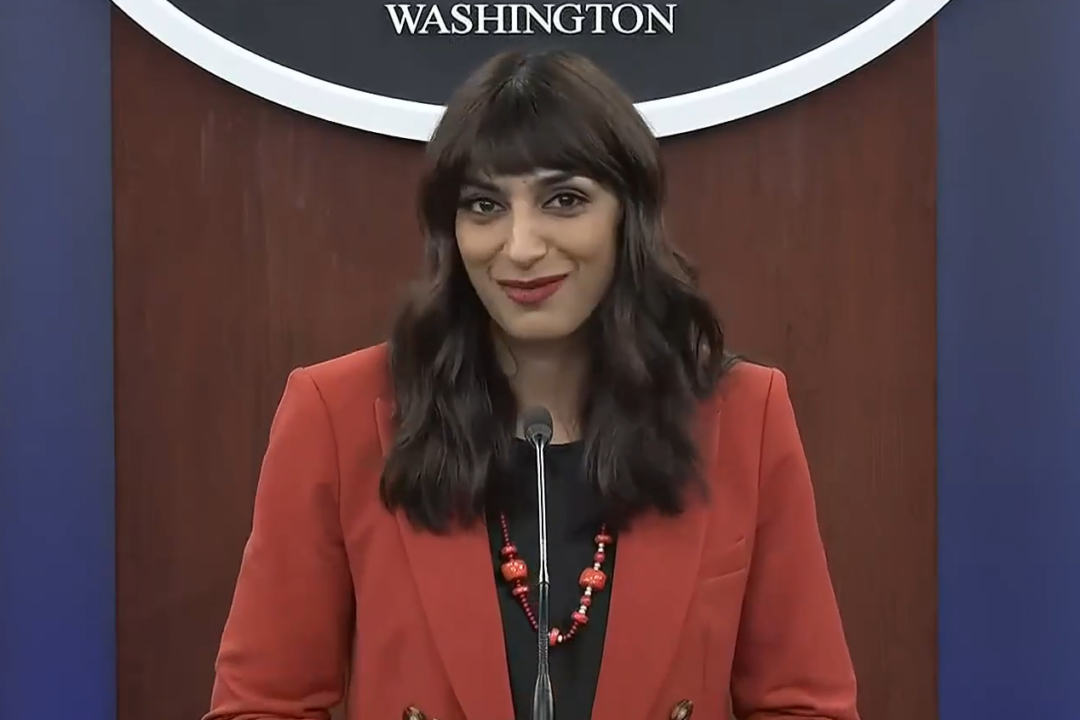
Telemundo’s most recent coverage of the controversy surrounding bathroom privileges for a transgender freshman Member of Congress confirms that those who depend on the national Spanish-language media are the most disinformed cohort among the electorate.  Watch the wild open to the Bathroomgate segment on Telemundo’s midday newscast:  NOTICIAS TELEMUNDO MEDIODÍA 11/21/24 12:38 PM OCTAVIO PULIDO: Well, and on other topics, Democrat Sarah McBride, representative of Delaware, is the first transgender congresswoman to arrive at the Capitol. But she will not be able to use the women's bathroom, since on the other side, Republican Nancy Mace, of South Carolina, has introduced an ordinance that would prohibit transgender women from using facilities on federal property such as bathrooms and locker rooms that do not correspond to the sex that they were assigned at birth. It's a position shared by Speaker Mike Johnson. In fact, he has already issued a new policy that stipulates this. NICOLE SUAREZ: And we are joined now by Mónica Trasandes, Executive Director of Representation and Hispanic media at GLAAD. Thank you for being here with us. First of all, what is your reaction to this rule? MONICA TRANSANDES: I find it incredibly disrespectful. Incredible that our Congress is focusing on this, instead of all the problems we have in this country, they are focusing on this. She is an elected member of Congress, chosen to represent her state and deserves the respect of her colleagues. So, that's my personal reaction. And GLAAD's too. Incredible that this is what they are focusing on. For those keeping score at home, we are on Day Four of the Bathroomgate cycle. And Telemundo’s idea of balanced coverage is to bring on a GLAAD activist and do four and half minutes of “advocacy journalism.” There were no advocates for women present. Telemundo did not book anyone who might explain why protecting women’s spaces from the ongoing intrusion of masquerading men is a good idea. In fact, the questions appeared to be written by GLAAD. For example: PULIDO: This year alone, more than 600 anti-transgender laws have been introduced in at least 43 states in the country. What does this mean? Especially in the fight for the rights of the LGBT community. And what is GLAAD, for example, doing to protect them? PULIDO: Monica, a new study indicates that 82% of people who participated in this UCLA study have experienced some type of discrimination in their area of ​​employment. If you are in a situation like this, what help is there or what can these people do? SUAREZ: And well, since we're on that political topic, President-elect Donald Trump has also promised to roll back protections for trans students. What do you expect for the future? None of these questions had anything to do with the situation at The Capitol. It is as if all of that was a mere conveyance for Telemundo to beat viewers over the head with trans agenda. Telemundo is working extra hard to earn and uphold Comcast’s CEI score. Unfortunately, they are also working hard at further alienating viewers. Click “expand” to view the full transcript of the aforementioned report as aired on Noticias Telemundo Mediodía on Wednesday, November 21st, 2024: NOTICIAS TELEMUNDO MEDIODÍA 11/21/24 12:38 PM OCTAVIO PULIDO: Well, and on other topics, Democrat Sarah McBride, representative of Delaware, is the first transgender congresswoman to arrive at the Capitol. But she will not be able to use the women's bathroom, since on the other side, Republican Nancy Mace, of South Carolina, has introduced an ordinance that would prohibit transgender women from using facilities on federal property such as bathrooms and locker rooms that do not correspond to the sex that they were assigned at birth. It's a position shared by Speaker Mike Johnson. In fact, he has already issued a new policy that stipulates this. NICOLE SUAREZ: And we are joined now by Mónica Trasandes, Executive Director of Representation and Hispanic media at GLAAD. Thank you for being here with us. First of all, what is your reaction to this rule? MONICA TRANSANDES: I find it incredibly disrespectful. Incredible that our Congress is focusing on this, instead of all the problems we have in this country, they are focusing on this. She is an elected member of Congress, chosen to represent her state and deserves the respect of her colleagues. So, that's my personal reaction. And GLAAD's too. Incredible that this is what they are focusing on. PULIDO: Mónica, but the problem goes further. This year alone, more than 600 anti-transgender laws have been introduced in at least 43 states in the country. What does this mean? Especially in the fight for the rights of the LGBT community. And what is GLAAD, for example, doing to protect them? TRANSANDES: Oh, we have a lot, a lot to do to educate, because I believe that in a certain way this has been politics. There are still many people who do not know transgender people, who do not have a transgender person in their life and who can, who can understand more about transgender people. So they use this as a way to - to - to - to lie and to try to get transgender people to be treated like they are outside of our communities. And the reality is that there are at least one point two million transgender people in this country. Many of them, and they are Latinos and there have always been transgender people, but there is a lack of understanding, knowledge of who they are. So what we in the LGBTQ community have to do is tell our stories. Thank you for inviting me to speak on the subject. This is so important. Simply tell who we are. I am not a transgender woman, but we are helping people Transgender people tell their stories. That's the most important thing. I think what we can do at this moment. SUAREZ: And well, since we're on that political topic, President-elect Donald Trump has also promised to roll back protections for trans students. What do you expect for the future? TRANSANDES: We have a lot to do, but we are not going to let our young people go without- without protection. We're not going to let them do that. Let them continue playing politics with the lives of young people. Young people have to be protected so that they can stay in school so that they can stay healthy and alive, so that depression does not attack them. And these politicians getting between families, doctors and trans people, it's horrible. Then we will continue fighting. This is a strong moment for us, the LGBTQ community, for immigrants, for people who are so concerned about DACA, about deportations. It is a very difficult moment and more. But you know what? Right now we don't stop fighting at all. PULIDO: Monica, a new study indicates that 82% of people who participated in this UCLA study have experienced some type of discrimination in their area of ​​employment. If you are in a situation like this, what help is there or what can these people do? TRANSANDES: There are several organizations that help with work, with elements of work that- with discrimination. If anyone has any questions or doesn't know where to go for help, they can contact me at GLAAD, which is glaad dot org. We have some resources there, but we can connect them. The most important thing is not to stay - not to stay silent. Of course, find trusted people you can talk to. But- but seek help and know that there are people in this world. Allies, many allies. People within the LGBTQ community and outside the LGBTQ community who love you, who want to help you. So the most important thing is not to lose optimism and not- and not to feel alone and not- and not to remain silent with discrimination. That's the most important thing, try to seek help. SUAREZ: Well, thank you very much for that valuable information. TRASANDES: Thank you for inviting me.  
Like
Comment
Share
Twitchy Feed
Twitchy Feed
1 y

Draggin' Over Dragons: Joe Rogan Shields Himself Against Joy Behar's Fiery Flames
Favicon 
twitchy.com

Draggin' Over Dragons: Joe Rogan Shields Himself Against Joy Behar's Fiery Flames

Draggin' Over Dragons: Joe Rogan Shields Himself Against Joy Behar's Fiery Flames
Like
Comment
Share
YubNub News
YubNub News
1 y

Benjamin Netanyahu accused of war crimes
Favicon 
yubnub.news

Benjamin Netanyahu accused of war crimes

The International Criminal Court accuses Israeli Prime Minister Benjamin Netanyahu and former Defense Minister Yoav Gallant of war crimes for Israel’s actions in Gaza. Russia launched a new, larger…
Like
Comment
Share
YubNub News
YubNub News
1 y

Feds outline 'necessary steps' for Colorado River agreement by 2026
Favicon 
yubnub.news

Feds outline 'necessary steps' for Colorado River agreement by 2026

LAS VEGAS —  Federal water officials made public on Wednesday what they called "necessary steps" for seven states and multiple tribes that use Colorado River water and hydropower to meet an August…
Like
Comment
Share
YubNub News
YubNub News
1 y

Kabul residents queue up for hours to collect water
Favicon 
yubnub.news

Kabul residents queue up for hours to collect water

Kabul residents are struggling with severe water shortages, often waiting hours at the Afghan capital’s dwindling wells for drinking water. The United Nations cautions that urbanization and climate…
Like
Comment
Share
YubNub News
YubNub News
1 y

Dana White Surprises With Political U-Turn After Supporting Trump During Election: ‘I’m Never F***ing Doing This Again’
Favicon 
yubnub.news

Dana White Surprises With Political U-Turn After Supporting Trump During Election: ‘I’m Never F***ing Doing This Again’

In a surprising turn of events following Donald Trump’s recent presidential victory, UFC President Dana White has made a dramatic declaration about his future involvement in politics, despite being…
Like
Comment
Share
YubNub News
YubNub News
1 y

Helping Middle America Means Getting D.C. Out of The Way
Favicon 
yubnub.news

Helping Middle America Means Getting D.C. Out of The Way

National industrial policy’s siren song of rebuilding blue-collar American manufacturing and restoring widespread prosperity has been difficult for many on the political right to resist. Yet industrial…
Like
Comment
Share
Showing 59187 out of 110151
  • 59183
  • 59184
  • 59185
  • 59186
  • 59187
  • 59188
  • 59189
  • 59190
  • 59191
  • 59192
  • 59193
  • 59194
  • 59195
  • 59196
  • 59197
  • 59198
  • 59199
  • 59200
  • 59201
  • 59202
Advertisement
Stop Seeing These Ads

Edit Offer

Add tier


Select an image
Delete your tier
Are you sure you want to delete this tier?

Reviews

In order to sell your content and posts, start by creating a few packages. Monetization

Pay By Wallet

Payment Alert

You are about to purchase the items, do you want to proceed?

Request a Refund