YubNub Social YubNub Social
    #freedom #americanhistory #amercia250
    Advanced Search
  • Login
  • Register

  • Night mode
  • © 2026 YubNub Social
    About • Directory • Contact Us • Developers • Privacy Policy • Terms of Use • shareasale • FB Webview Detected • Android • Apple iOS • Get Our App

    Select Language

  • English
Night mode toggle
Featured Content
Community
New Posts (Home) ChatBox Popular Posts Reels Game Zone Top PodCasts
Explore
Explore
© 2026 YubNub Social
  • English
About • Directory • Contact Us • Developers • Privacy Policy • Terms of Use • shareasale • FB Webview Detected • Android • Apple iOS • Get Our App
Advertisement
Stop Seeing These Ads

Discover posts

Posts

Users

Pages

Blog

Market

Events

Games

Forum

NEWSMAX Feed
NEWSMAX Feed
1 y ·Youtube News & Oppinion

YouTube
Trump: If I did something wrong, I wouldn't be standing here
Like
Comment
Share
Daily Wire Feed
Daily Wire Feed
1 y

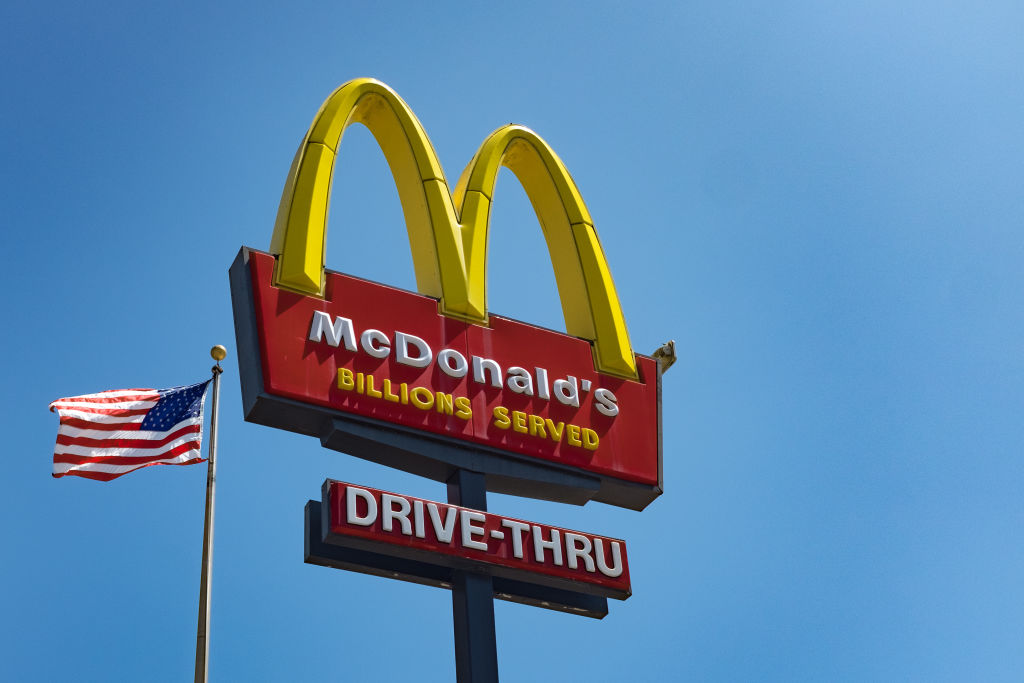
McDonald’s Backs Away From DEI Programs Amid ‘Shifting Legal Landscape’
Favicon 
www.dailywire.com

McDonald’s Backs Away From DEI Programs Amid ‘Shifting Legal Landscape’

Fast food giant McDonald’s announced Monday that it would step back from several diversity, equity, and inclusion initiatives in light of a “shifting legal landscape.”  The move comes after a number of other major corporations like Tractor Supply and Toyota have scaled back their DEI commitments following public scrutiny. McDonald’s executives said in a letter to company employees that the Supreme Court’s decision to overturn affirmative action prompted the changes.  The changes announced by McDonald’s include no more participation in third-party surveys, eliminating “aspirational representation goals,” and axing its supply chain DEI pledge.  “Following the Supreme Court ruling in STUDENTS FOR FAIR ADMISSIONS, INC. v. PRESIDENT AND FELLOWS OF HARVARD COLLEGE, we also assessed the shifting legal landscape to anticipate how this ruling may impact corporations such as McDonald’s,” the executives wrote. “And finally, we benchmarked our approach to other companies who are also re-evaluating their own programs.” McDonald’s said it would stop “setting aspiration representational goals” and instead work to “embed inclusion practices that grow our business into our everyday process and operations.”  The fast-food chain added that it would pause participation in “external surveys to focus on the work we are doing internally to grow the business.” Previously, the company had participated in the leftwing Human Rights Campaign Corporate Equality Index Survey, boasting that it had received a 100% score for “advancing LGBTQ+ friendly policies.” JOIN THE MOVEMENT IN ’25 WITH 25% OFF DAILYWIRE+ ANNUAL MEMBERSHIPS WITH CODE DW25 McDonald’s added that it was ending its supply chain commitment to the DEI pledge “in favor of a more integrated discussion with suppliers about inclusion as it relates to business performance.” Despite the changes, the company said that it reports demographic information on its board, employees, and suppliers and rebranded its diversity team as the Global Inclusion Team.  Conservative activist Robby Starbuck celebrated the news, saying he contacted McDonald’s three days before the announcement to ask about its “woke policies.”  “Companies can see that America wants sanity back. The era of wokeness is dying right in front of our eyes. The landscape of corporate America is quickly shifting to sanity and neutrality. We are the trend, not the anomaly anymore,” he posted on X. “We’re winning and one by one we WILL bring sanity back to corporate America.”
Like
Comment
Share
Daily Caller Feed
Daily Caller Feed
1 y

Biden Reportedly In Negotiations With Taliban To Bring Home Americans Detained For Years
Favicon 
dailycaller.com

Biden Reportedly In Negotiations With Taliban To Bring Home Americans Detained For Years

'It’s hard to continue to have faith'
Like
Comment
Share
Daily Caller Feed
Daily Caller Feed
1 y

Mark Zuckerberg’s Embrace Of Physical Violence Has Made Him A Better Man
Favicon 
dailycaller.com

Mark Zuckerberg’s Embrace Of Physical Violence Has Made Him A Better Man

Full glow up...
Like
Comment
Share
Daily Caller Feed
Daily Caller Feed
1 y

ISAIAH HANKEL: Now Is The Moment For America To Reform The Broken H-1B System
Favicon 
dailycaller.com

ISAIAH HANKEL: Now Is The Moment For America To Reform The Broken H-1B System

'Such investment in American youth would yield substantial returns'
Like
Comment
Share
Daily Caller Feed
Daily Caller Feed
1 y

Trump Plans On Changing Gulf Of Mexico’s Name To ‘Gulf Of America’
Favicon 
dailycaller.com

Trump Plans On Changing Gulf Of Mexico’s Name To ‘Gulf Of America’

'The Gulf of America, what a beautiful name'
Like
Comment
Share
Daily Caller Feed
Daily Caller Feed
1 y

WWE Officially Sells Out By Putting 2026 Royal Rumble In Saudi Arabia
Favicon 
dailycaller.com

WWE Officially Sells Out By Putting 2026 Royal Rumble In Saudi Arabia

I'm utterly disgusted as a WWE fan
Like
Comment
Share
SciFi and Fantasy
SciFi and Fantasy  
1 y

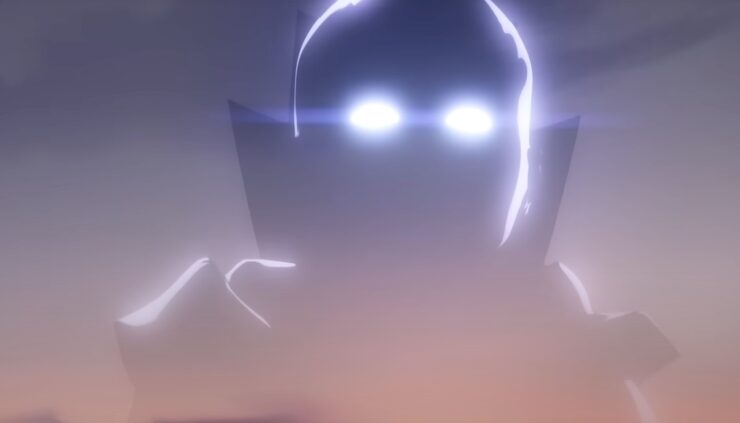
The Good, the Bad, and the Offensive: The Final Season of Marvel’s What If…?
Favicon 
reactormag.com

The Good, the Bad, and the Offensive: The Final Season of Marvel’s What If…?

Movies & TV Marvel Cinematic Universe The Good, the Bad, and the Offensive: The Final Season of Marvel’s What If…? And now our Watch has ended. By Leah Schnelbach | Published on January 7, 2025 Credit: Marvel Studios Animation Comment 0 Share New Share Credit: Marvel Studios Animation And thus as a new year begins, Marvel’s What If…? ends. The eight-episode third and final season of the animated show rolled out over over the last week of December, and I have done my best to corral some thoughts about it. While some of the episodes were sharp and fun, I think this season showed even more of the strain of season two: some of the ideas simply needed more time and space for them to work. The episodes that worked the best (for me, at least) were the light, poppy ones that introduced a strong premise and then focused on one or two elements of it. The clash between Red Guard and Winter Soldier; Howard and Darcy The Duck becoming parents; Agatha Harkness becoming a movie star—those are all perfect for this type of show. But when What If…? tried to delve into larger questions, or stories about tyranny and rebellion, it became so top-heavy that not even Jeffrey Wright’s mellifluous voice could carry me through. But in the interest of good faith, I’m going to dig into the two big questions the show seems to be asking. Unfortunately I have to start with a pretty big, pretension-adjacent thought, because the big question asked by What If…? this season is, to paraphrase Nick Cave, do we want an interventionist God? If you zoom out enough, what are superheroes really about? They can be aspirational, showing us what we can be if we try hard enough. They can be seen as a threat, an unnatural replacement of ordinary hard-working humans. They can be salvific figures that swoop in in times of extreme stress and do things that regular humans can’t. What are our superheroes saying about us right now, in 2025? What If…? opened its first season by reiterating that The Watcher wasn’t allowed to break his Oath. He had to stand back, apart from life, and Watch stories as they played out—no matter how much it sucked, no matter how many times the bad guys won, or kids got killed, or whole universes ended, or his heart was broken. He was not allowed to intervene… and of course, the series kicked into high gear when he did. This trend continued in season two, and now, in season three, his interventionist tendencies have become the fulcrum point of the whole show. Should he intervene? Why or why not? Who gets to decide? Obviously my tendency, as a mortal, regular, non-superheroic person, is to yell YES HELP THEM—but should that be my reaction? Shouldn’t these people work together to solve their own problems instead of abdicating the responsibility of being human, and throwing themselves on the mercy of an unseen deity? Now I think these questions work for the show, or at least they would have if given a bit more runtime. The other big question led to the episode that offended me, and that one is: how do you rebel against an impossibly strong tyrant? Follow me as I recap What If…? and ponder that question below. “What If… the Hulk Fought the Mech Avengers?”  Credit: Marvel Animation Studio The opening episode in the third season of What If…? follows tradition by being… not that great. (I wish I could say this was my least favorite episode. Alas, there is one that’s a little worse, and one that’s infuriating”—but we’ll get there!) In this universe, Sam Wilson befriends Bruce Banner and talks him into coming to therapy sessions, but after Bruce suffers a setback he tries to cure himself by applying even more gamma. This does not work. The result is an overstuffed episode that tries to do way too much, and my only advice is to watch Godzilla Minus One instead. “What If… Agatha Went to Hollywood?”  Credit: Marvel Animation Studios This is mostly fun! Not quite as fun as its concept—but I’m not sure anything could be? Agatha Harkness is the biggest star in Howard Stark’s movie studio (!!!), where she uses her magic to create practical effects. The only problem is that her spell to siphon a Celestial’s power isn’t quite coming together. At least not until she calls for some help from an Eternal.   Favorite Quotes: “Cary Grant owes owe me a favor” —Howard Stark (Say more immediately, Howard.) “I want Busby Berkeley to see this and contemplate becoming a realtor!” —Howard Stark “Never mess with Number One on the call sheet.” —Agatha “That chemistry was hotter than the Hindenberg! ” —Howard Stark “It’s the house that will make you question the decency of capitalism.” —Jarvis, about Howard’s house. “I’m Howard Stark. I’m the smartest person on earth. Of course I knew! And I also knew I’d save a hell of a lot of money on special effects if I used actual magic.” —Howard Stark “What If… the Red Guardian Stopped the Winter Soldier?”  Credit: Marvel Studios Animation This is almost my favorite episode of the season. Red Guardian travels to the U.S. to prove that he’s just as important to Mother Russia as the recently-defrosted-and-deployed Winter Soldier, and watching him try to foment a workers’ revolution, whilst pretending to be average American citizen Bob Toledo, whilst also becoming surprise BFFs with Bucky, is fun as heck. As with a lot of these, I wish the creators had committed to doing longer episodes, because I’d love to see more of the universe where Red Guardian saved Howard and Maria Stark. Favorite Quotes:  “You know what Karl Marx said about machines—they make men lazy!” —Red Guardian on the Winter Soldier’s over-reliance on guns “This is a quality automobile! …which is a credit to the workers union that built it.” —Red Guardian on an impressive American car.  “Ahh, all these lights! Who is paying the electric bill??? The worker, that is who.” —Red Guardian on the glitz and glamor of Las Vegas, Nevada. “What If… Howard the Duck Got Hitched?”  Credit: Marvel Studios Animation This is my very favorite episode. Just when I thought they weren’t going to give us a Christmas story, we get a skewed Marvel Nativity. Howard the Duck and Darcy (Seth Green and Kat Dennings) had a whirlwind romance and a Vegas wedding two seasons ago, and apparently these two crazy kids have made the relationship work, because Darcy has (AFTER NINE HOURS OF LABOR THAT THEY THANKFULLY SPARED US) laid an egg. But since she laid their egg during the Convergence, when the Nine Realms align and mystical shit occurs, people have decided that the baby is going to be an extra-special being once it hatches. Shady people, like Kaecilius, Malekith, Zeus, and a couple of Thanos’ henchpeople. So the proud parents have to become refugees, on the run from various factions who want to steal their baby for its power (or, in the Grandmaster’s case, want to cook the egg up for brunch—which is even worse than all the rest of them) and on top of that Nick Fury’s decided to take the egg because he doesn’t think Darcy and Howard can parent it. Meanwhile poor Loki just wants to open a ski resort on Jotunheim, and he’s excited for the new family to be his first guests. Somehow there’s actual emotion under all the wackiness. Favorite Quotes: “I am a master of the Dark Arts.”—Kaecelius“I am a Dark Elf! It’s in the name, you dimwit!”—Malekith “An egg? You called me for an egg???”—Thanos “What If… the Emergence Destroyed the Earth?” Credit: Marvel Studios Animation This is the one that offended me. Not an easy feat, let me tell you! I’ll explain more at length below a spoiler warning, but as for the plot: after a Celestial’s emergence destroyed the Earth, Quentin Beck used the chaos to take over Stark Industries and what was left of the world. He’s turned it into a vaguely defined dystopia, so cluttered with his illusions that it’s almost impossible to fight back. But now, decades later, Riri Williams and a ragtag Alliance (Okoye, Wong, Valkyrie, and Ying Nan) are trying to bring him down.   Least Favorite Quote: “A lot of people died for all this. if you really think there’s no hope in this world then make some yourself.” —Ying Nan“…y’all got any snacks? I work better with brain food.” —Riri Williams “What If… 1872?”  Credit: Marvel Studios Animation This episode has two main threads. In the first plot, Shang Chi and Kate Bishop patrol the Old West on horseback. You see, round these parts a nefarious outlaw called The Hood has enslaved Chinese railroad workers, and whipped up bigotry and hatred for the Chinese railroad workers, and now it seems he’s taken to kidnapping them. Or at least, they seem to be disappearing. This is a pretty solid, slightly fantastical take on real anti-immigrant fearmongering. Both Simu Liu and Hailee Steinfeld have fun with the voice acting, with Liu adding a great twang to his lines, and Walton Goggins shows up as the secondary antagonist and is, as always, fabulous. In the other, The Watcher tells us that the further out you get in the Multiverse, the weirder things get (“Think less what if…? and more What the hell???”) and informs us that in one such universe, Ultron was programmed to sing showtunes. Which if that’s the case why are we getting a Marvel Zombies spin off and not that. And of course when we check back in with The Watcher, we see him ONCE AGAIN breaking his Oath, like he always freaking does, except this time the Other Watchers have finally Watched Him when does it. Oops. Favorite Quote: “You get it at this point: small choices, big changes, etc.” —The Watcher “What If… the Watcher Disappeared?”  Credit: Marvel Studios Animation This episode introduces us to a sort of inter-multiversal Avengers team consisting of Peggy Carter (Hayley Atwell), Kahhori (Devery Jacobs), the now-grown-up Byrdie The Duck (Natasha fucking Lyonne), and… ORORO AKA STORM THE GODDESS OF THUNDER WIELDING FUCKING MJOLNIR. Sorry. I just, that one got me. Storm is, of course, voiced by Alison Sealy-Smith. Right after saving Nebula (Karen Gillen), Groot (Fred Tatasciore), and Korg (Taika Waititi) from a big tentacle-y thing, they’re all almost impaled by shards of the fifth dimension. Which should be the title of a fantasy series, but no, it’s the detritus that resulted when the Eminence (Jason Isaacs), the Incarnate (D. C. Douglas), and the Executioner (Darin De Paul). apprehended the Watcher. So naturally this episodes ragtag team head off to save him, with an assist from a very unlikely ally. “What If… What If?”  The Watchers Council couldn’t help noticing your vibe. (Credit: Marvel Studios Animation) Part two of the previous episode, the conclusion of What If…?, and about half of a solid episode. Unfortunately it falls victim to the the usual Marvel problem: overpowered superbeings hit each other while grunting and screaming, with no indication of their relative strengths or weaknesses, until the fight is resolved in a sustained flash of blinding light. But when it focuses on the characters and the ideas behind the show, it manages a surprising amount of emotional heft. Favorite Quotes:  “Your mother didn’t invent inter-universal communication so you could ignore our calls.” —Howard The Duck“Can you get me those donuts I like from the universe where carbs make you lose weight?” —Darcy“We need those donuts.” —Howard The Duck“I need those donuts!!!” —Darcy “There is no peace without life. But there is no life without conflict.” —Infinity Ultron “…some girl named Madisynn with two ‘N’s and one ‘Y’???”—The Eminence listing out people The Watcher has saved through his interference. “Everything…it’s beautiful…” —The Watcher“No, it just is. You are a Watcher now. You make no judgements, only observations.” —The Eminence What If… I talk about spoilers now? Credit: Marvel Studios Animation Overall, I think last season was stronger than this one, which is annoying since this is What If…?‘s final bow. Having said that, the four episodes that worked for me were all fun, but more than that, they took the premise of What If…? and ran with it. The point of this show, I think, is to take all the training wheels off the MCU and take characters in directions they would never normally go. So not only does 1872 take on the very real exploitation of Chinese railroad workers, and ask what would have happened if superheroes existed, but also it gives the somewhat buttoned-down Shang Chi and the very urban Kate Bishop the chance to be a pair of gunslingers roaming the deserts of the West. And turning the “Ten Rings” into the ten chimes of church bells you can use to summon the pair? That’s the kind of remix I’m here for. Taking monosyllabic, stoic Winter Soldier and pairing him up with boisterous commie true believer Red Guard? Let’s get a whole season of that. I didn’t know I wanted to see Howard Stark as a lighthearted mashup of Howard Hughes and Orson Welles, but now that I’ve seen it, I feel like my life is more complete than it was. And Natasha Lyonne voicing the nigh-messianic offspring of Howard and Darcy The Duck??? Have you been reading my diary. That kind of stuff is so much more lively and fun to watch than yet another rehash of The Crushing Guilt of Bruce Banner. It’s so much better, on ever level, than watching characters punch each other into oblivion! This is my frustration with the show—when it really ran with its premise it was fantastic, but I ended up feeling like it squandered a lot of its three seasons. And again, I am glad that it occasionally dealt with the other side of its double-edged sword premise: what is it to be a Watcher? What do free will or choice mean in a multiverse of infinite possibilities? Should the Watcher ever intervene? I just wish we lived in one of the universes where every single problem, even in our fiction, resulted in people whipping out either fists or guns. But I think I have to dig into my real problem. I think this will be a real, lengthy essay at some point, but for now I feel I should explain why “What If… the Emergence Destroyed the Earth?” offended me. In this universe the Elemental buried within the Earth burst forth, destroyed the planet, killed a LOT of people, and caused untold destruction. Opportunist Quentin Beck used that tumult to take over Stark Industries, and rebuilt the world in his own image. Beck manipulates people’s perception of reality to his own ends, so as he rebuilds society, those illusions are built into the structure of reality. Basically, what’s left of this Earth’s populace are living inside a gaslight. No one can know the facts or the truth about anything, and the concept of sanity itself is rendered irrelevant. How the hell do you fight that? Now, this is an incredible premise—for a full-length film. Obviously this idea has a disturbing resonance as I write this, in a world addled by social media, “AI”, deep fake videos, fake news, truthiness, conspiracy theories, would-be autocrats, and successful (for now) autocrats. One almost longs for an Elemental. The Watcher opens the episode with a grim warning that he’s Watched Riri try and fail to save this world many, many times. He laments that she’s doomed to fail again. So, knowing that it’s hopeless, we join him. We Watch as she  tries to circumvent Beck, and more dire, his henchbeing, Vision, by buying black market analogue tech for weapons that will be beyond his reach. In this instance, it’s an Easy-Bake Oven, a touch I really did love. Obviously she’s caught—and presumably the story sometimes ended here—but in this universe she’s rescued by an Alliance and taken to their HQ in The Titanic. Another touch I loved. Credit: Marvel Studios Animation And here’s where the trouble starts. The part of the Alliance that we meet are the A-Listers, Ying Nan (Michelle Wong), Okoye (Kenna Ramsey), Wong (David Chen), and Valkyrie (Tessa Thompson), and they’re the only ones who are in full color. They’re the only ones who get speaking roles. The other few dozen Alliance members are animated with the same colors as the background, none of them speak, I think they all wear helmets the entire time they’re onscreen. And then we watch as they’re all mown down by Vision, who has, of course, infiltrated HQ. They all die voiceless faceless nameless deaths, protecting a girl none of them have even been introduced to, because she such a super genius the leaders of the Alliance think she might finally give them an edge. Specifically as she tries to create a blaster that she says will take about 12 hours to finish. Except then Wong tells her she has seven-and-a-half minutes. And we watch the Alliance members die, as Riri curses and scowls and screws parts together and insists that she won’t finish the thing—because how can she do a twelve hour job in seven-and-a-half-minutes—except then she DOES. Vision comes through the wall, and she’s able to shoot him down. She strips him for parts with the intention of becoming a Synthezoid hybrid herself. The A-List Alliance, the only ones who survived, are all astonished and over the moon that they have a real shot against their oppressor. The Watcher is unsurprised and sad. Apparently, in all the variations of this story, this is where it all goes wrong. But he says nothing. But hang on. The show has already gone wrong as far as I’m concerned, because a scientist has told us how long a job will take, and is able to do it in a ludicrously shortened timeline, because… she’s just that good? Seriously? That’s not how engineering or computer programming or anything works. If they’d at least gone with, I don’t know, four hours to make the analogue doohickey, and she had talked about corners she was cutting, and those cut corners proved relevant to the plot, I might be willing to go along with it. But not this. This is magic, not science, and I don’t care how many times you tell me she’s a genius, if you don’t show me her work, I can’t believe you. Now on to where it gets worse. Credit: Marvel Animation Studios Using Vision’s tech, Riri can see through Beck’s illusions and guide what’s left of the Alliance to Beck’s inner sanctum. They travel through Beck’s weaponry, they lose Wong, Okoye, and Valkyrie along the way, and finally Ying Nan leads her into the hub of Beck’s tech… where Riri finds out that most of what she just experienced was an illusion. Because of course it was an illusion—but not from the point where she did a twelve-hour tech job in less than ten minutes, no AFTER THAT. She did, in fact, defeat Vision. It’s just that since Beck and Vision are neuro-linked or whatever Beck was able to run the show as soon as she became a Synthezoid. She realizes in flashes that the A-List Alliance is dead—and now she’s sad, because she actually spoke to them for a few hours—and oh yeah all hope is lost etc. The Watcher exposits about how she’s given up, etc., and then he finally intervenes and tells her to fight. He calls her by name, gets her to look up at him, and tells her to fight back. And she does! Somehow! She’s just able to pull her power back from Beck, and then she flies up into the sky and writes a big sparkling cosmic graffito of an Avengers A in the sky, and as Beck dies she says she’s fighting him with “Hope”. I think the reason I’m so pissed is that this episode offended me on two different levels. First of all, don’t tell me a character’s a scientist and then show me a mockery of the scientific process. But also, don’t give us this weird fake version of “hope”. The writers wanted to make this entire season a question of intervention, of The Watcher asserting his own individuality, of him learning that “no one is no one” and helping precisely because he sees people—all people—as worthy of a fair shot in a decent world. And that’s GREAT. That’s the kind of story we so goddamned desperately need right now. But this one episode undercuts all of that, because The Watcher has to wait until all hope is lost, and Riri’s spirit is broken, way past the point when she’d actually be able to fight, for maximum drama. And yes, yes, I know, it’s just a TV show. But it’s a TV show about how every tiny choice we make can build or destroy a world—and the lazy writing of this one episode nearly destroys the series.[end-mark] The post The Good, the Bad, and the Offensive: The Final Season of Marvel’s <i>What If…?</i> appeared first on Reactor.

Like
Comment
Share
SciFi and Fantasy
SciFi and Fantasy  
1 y

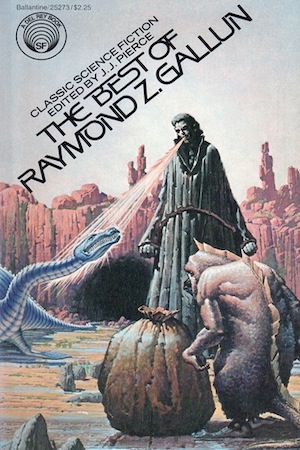
A Forgotten Favorite: The Best of Raymond Z. Gallun, edited by J.J. Pierce
Favicon 
reactormag.com

A Forgotten Favorite: The Best of Raymond Z. Gallun, edited by J.J. Pierce

Books Front Lines and Frontiers A Forgotten Favorite: The Best of Raymond Z. Gallun, edited by J.J. Pierce Let’s discuss the legacy of a true science fiction pioneer… By Alan Brown | Published on January 7, 2025 Comment 0 Share New Share In this bi-weekly series reviewing classic science fiction and fantasy books, Alan Brown looks at the front lines and frontiers of the field; books about soldiers and spacers, scientists and engineers, explorers and adventurers. Stories full of what Shakespeare used to refer to as “alarums and excursions”: battles, chases, clashes, and the stuff of excitement. Today, I’m going to look at another of the excellent single-author collections that Del Rey Books put out in the 1970s. In this case, the author is Raymond Z. Gallun, whose name I’ve seen mentioned frequently in science fiction histories, but whose work was unfamiliar to me. So, when I saw his fiction featured in one of those Del Rey collections, I ordered it online, and was rewarded with a diverse collection of quite excellent stories. Gallun is not as widely known today because much of his best fiction was of shorter lengths, and he was not prolific. But modern readers will find that his work is well worth a look, as it was quite innovative for its day. This volume of the “Best of…” series was published in August 1978, and has an intriguing cover by long-time Astounding/Analog illustrator H.R. Van Dongen. About the Author Raymond Z. Gallun (1911-1994) was a prominent American science fiction author who published a number of short works from the late 1920s to the mid-1960s, and a half dozen novels between 1951 and 1985. His early stories frequently appeared in Astounding magazine, while later work appeared in magazines like Galaxy and Planet Stories. He traveled extensively in the 1930s, and his experiences in different countries informed his fiction. He worked as a civilian employee of the Army and Navy in the Pacific during WWII. While he had been a prominent author in the field before the war, he largely turned away from writing science fiction after the 1950s, although he never stopped writing altogether. The Long Island-based science fiction convention I-CON has a lifetime achievement award named after Gallun, and a number of his stories are available to read for free on Project Gutenberg. About the Editor J.J. Pierce (born 1941) is a long-time member of the American science fiction community who has edited fanzines, books, and for a short time at the end of its run, Galaxy science fiction magazine. He has also published a number of critical essays and articles about science fiction and popular culture over the years, as well as a multi-volume history of the science fiction field. Who’s the Best? In his introduction to the collection, Pierce credits Gallun as one of a trio of writers who shaped modern science fiction in its early days, ranking him as an equal to John W. Campbell and Stanley G. Weinbaum. That is an audacious claim, and drops the reader right into the center of a favorite game of science fiction fans—debating which author is better, and who influenced who. But while I love that game as much as anyone, every writer has their own strengths and weaknesses, and attempting to rank them often seems like matching apples to oranges. Stanley G. Weinbaum, an author whose work I adore (see my review of his “best of” collection here), emerged in the field like a fireball, with “A Martian Odyssey” and its strange aliens capturing a lot of attention right from the start. His work exhibited a great deal of humanity, and was filled with whimsy and even romance. But his untimely death, while it left the audience wanting more, also left fans wondering if he could have sustained and improved upon his original success. John W. Campbell (see my review of his “best of” collection here), writing fiction under pen names, brought a new sense of seriousness and scientific rigor to the science fiction field. His editorial efforts at Astounding/Analog magazine had a profound impact. As most of the stories in this collection of Gallun’s work were published in Astounding, and fit the magazine’s house style, you might see that as reinforcing Campbell’s reputation. But the fact that four of them appeared before Campbell took the editorial reins of the magazine undercuts the argument that house style was wholly created by his editorial vision. Campbell also brought his prejudices and penchant for pseudo-science to his work, and many now view his legacy in a more complicated or negative light. If I was to develop a list of the giants of the early pulp days of science fiction, I would have to include the work of Murray Leinster, an author whose career spanned from the teens to the 1960s, and who wrote pioneering stories of exploration, science, first contact, time travel, alternate worlds and even public health issues (see my reviews of Leinster’s work here, here, and here). But in the end, a lot of these lists and rankings come down to personal taste and preferences, and I’m sure all those who read older science fiction have opinions on the topic. So, let’s take a look at the stories in this collection, and see how the work of Raymond Z. Gallun stacks up… The Best of Raymond Z. Gallun After the glowing praise of J.J. Pierce’s introduction, the collection begins with “Old Faithful,” a gem of a first contact story. The story begins from the viewpoint of a Martian scientist named Number 774 (while using numbers for names is now a cliché, it was all the rage back in the day). Right from the start, 774 is described in a manner that shows he is totally unlike a human (in fact, applying a gendered pronoun to “him” seems to be a stretch). On the dying planet, while there are plenty of material and mechanical advantages, food and water are so scarce that there are strict population controls, and 774 has been declared redundant. He is an astronomer, who has established contact with intelligent beings on the third planet, using gigantic flashing lights, and learning Morse code to communicate. The viewpoint shifts back and forth to the astronomers on Earth with whom he is communicating, and their slow progress toward mutual understanding, starting with mathematics, is utterly convincing (and I say that as someone who is old enough to have used Morse code as a young coastguardsman). But the rulers of Mars see no practical use for 774’s discovery, and having no future, he decides to risk his life to travel to Earth. He has his robot minions build a spaceship, which he uses to intercept a comet, then employs the comet’s gravity to tow him toward Earth. By the end of the story, I was rooting for this strange creature, and inspired by his bravery and thirst for knowledge. In the story “Derelict,” Jan Van Tyren is a broken man, returning to Earth after his family was killed during a native uprising on the Jovian moon Ganymede. He finds an ancient alien spaceship, his curiosity overcomes his ennui, and he boards it to investigate. He finds a robotic creature that immediately takes actions to control his emotions—knowing the story came from a time when aliens often proved to be evil monsters, I became suspicious, fearing malicious intent. But the story goes in a whole different direction, and it ends up being another touching tale, with a strong emotional core. In “Davey Jones’ Ambassador,” a man is kidnapped by a deep-sea civilization that has existed without the knowledge of humanity. The efforts to find common ground between members of those two civilizations are interesting, but the most fascinating element of the story is its description of an advanced civilization that has developed without the use of fire. The longest story in the collection is the novelette “Godson of Almarlu,” a tale packed with enough ideas to fill a novel. It starts with robotic creatures entering a nursery and modifying the brain of a sleeping child. That child, Jefferson Scanlon, grows to be a giant of industry and a prolific inventor, given to manic periods of creativity. He eventually builds a gigantic laboratory in the Arctic, just as the Earth begins to tear itself apart in an explosion of volcanic activity. People begin to blame Scanlon, whose laboratory is sucking air and water from its surroundings and propelling it toward the moon. What those people don’t realize is that there is a body in the solar system made of solid neutronium, and it is this body’s enormous gravity that is tearing the Earth apart. The robots that tampered with Scanlon are one of the last remnants of Almarlu, the fifth planet of the solar system, torn apart and turned into the asteroid belt, designed to help the next planet that faces this threat. As nations dispatch bombers to destroy him, Scanlon urges people to fly any aircraft they can into the pillar of air and water and travel to the moon, where the remnants of humanity can recover and rebuild. While neutronium was a topic of speculation at the time, Gallun appears to have been the first to contemplate how a body composed of the hypothetical substance would behave, and what impact a world in a long eccentric orbit could have on the solar system. And, as in his other stories, the people Gallun creates are a cut above the cardboard characters that filled other pulp tales of its era. “A Menace in Miniature” is a mystery story where a spacer and scientist are trying to figure out what killed previous visitors to a new world, including the rest of their team. It unfortunately hinges on the old cliché of a lone scientist with little to work with making a scientific breakthrough, which always undermines my suspension of disbelief. Gallun takes us to the distant future of the solar system in “Seeds of the Dusk.” As spores of an alien civilization of intelligent plants move inward from the outer reaches of the solar system, the ruthless descendants of humanity, huddling underground on Earth, plot to exterminate the inhabitants of Venus—and after departing to take over that world, to also destroy the flora and fauna of Earth to help stop the spread of the alien spores. It is a quirky tale, with one of the viewpoint characters being an intelligent crow, but works as a cautionary tale about the price of hatred. There follows a quartet of short stories that, while clever, don’t stand out from the crowd. In “Hotel Cosmos,” a hotel security chief works to protect diplomatic efforts in a hotel whose rooms offer alien representatives different atmospheres and environments. “Magician of Dream Valley” takes a journalist to a distant part of the moon, where he is enlisted by a scientist who wants to save the flickering lights that inhabit the region, which are being destroyed by a human rocket fuel plant. But nothing is as it seems, and the man is faced with a terrible choice between his own race and another. “The Shadow of the Veil” is a compact little morality tale where human con men using a statue to cheat aliens, only to find they should have researched their marks more carefully. “The Lotus-Engine” is an atmospheric tale where two human explorers revive alien technology in the ruins of an ancient civilization, and are lucky to escape with their lives. The story “Prodigal’s Aura” is one of my favorites in the collection. David and Mattie Jorgensen and their children live out a staid existence on their Minnesota farm. When Augie, Mattie’s space-faring brother-in-law, visits the farm, his tales of adventure enthrall everyone except David, who has grown weary of his exaggerations and constant requests to borrow money for get-rich schemes on the outer worlds. Augie has a new money-making scheme to grow Martian seeds on Earth, but a dropped suitcase and gusty winds spread the seeds randomly, and the rest of the plot is driven by the threat of invasive plants from other worlds. The heart of the tale, however, lies in the far more interesting evolution of the relationships between the characters. A couple find that their extended lives bring boredom in “The Restless Tide,” and after struggling to find meaning in life on an over-developed Earth, emigrate to start over as pioneers on Saturn’s moon, Titan. The story is considered one of Gallun’s best, but I myself have always found stories about bored immortals rather tedious, so I didn’t care for it. In the last story in the collection, attracted by the lure of abandoned Martian ruins, one person flees the confines of human settlements on Mars in “Return of a Legend.” Searchers begin to disappear as well, as more and more settlers end up following the call of the wild. The book has an afterword written by the author in 1977, looking back at the stories in the anthology, and his career in general. He states that his favorite aspect of early science fiction was the sense of wonder and optimism, and that “The Restless Tide” was his favorite story. The collection definitely showed me why the name Raymond Z. Gallun is so frequently mentioned by science fiction historians. While his work shows some of the flaws of its era—with his prose sometimes being florid, nearly every world in the solar system being habitable, a lack of female characters, and some improbable science—there are key elements that definitely separate him from the pack. His aliens are convincingly alien, his human characters well drawn, and there are some examples of solid scientific extrapolation that are ahead of his time. His stories also have a lot of heart, and a sense of wonder that makes them shine. Final Thoughts I’m glad to have found this collection, as Gallun is indeed a science fiction author worthy of note, who deserves to be more widely remembered. While some elements of his work have become dated, his stories have a lot of energy and spirit that make them attractive to modern readers. And now its your turn to join the discussion: If you’ve read any of Gallun’s work, I’d like to hear your impressions. And I’d also like to hear your thoughts on the best science fiction authors from the pre-World War II era. J.J. Pierce has nominated Gallun, Weinbaum, and Campbell, I’ve suggested Leinster, and I’m sure there are more who are worthy of note.[end-note] The post A Forgotten Favorite: The Best of Raymond Z. Gallun, edited by J.J. Pierce appeared first on Reactor.
Like
Comment
Share
Nostalgia Machine
Nostalgia Machine
1 y

The Fantastical Life Of J.R.R. Tolkien
Favicon 
www.pastfactory.com

The Fantastical Life Of J.R.R. Tolkien

Born in the late 19th century, John Ronald Reuel Tolkien (J.R.R. Tolkien) is regarded as one of the greatest fantasy writers of all time, most notably for authoring The Hobbit, The Lord of the Rings, and The Silmarillion. Although most are familiar with his name from his writings, Tolkien saw himself as an academic more than anything else, spending the majority of his life working as a professor... Source
Like
Comment
Share
Showing 59200 out of 115631
  • 59196
  • 59197
  • 59198
  • 59199
  • 59200
  • 59201
  • 59202
  • 59203
  • 59204
  • 59205
  • 59206
  • 59207
  • 59208
  • 59209
  • 59210
  • 59211
  • 59212
  • 59213
  • 59214
  • 59215
Advertisement
Stop Seeing These Ads

Edit Offer

Add tier


Select an image
Delete your tier
Are you sure you want to delete this tier?

Reviews

In order to sell your content and posts, start by creating a few packages. Monetization

Pay By Wallet

Payment Alert

You are about to purchase the items, do you want to proceed?

Request a Refund